How to Care for a Rubber Plant (Ficus elastica): Light, Water, and Pruning
A potted rubber plant needs bright light with morning sun only, watering when the topsoil dries out, and temperatures above 55°F (13°C). Learn why it drops leaves and where to prune a tall, leggy plant so it branches out again.
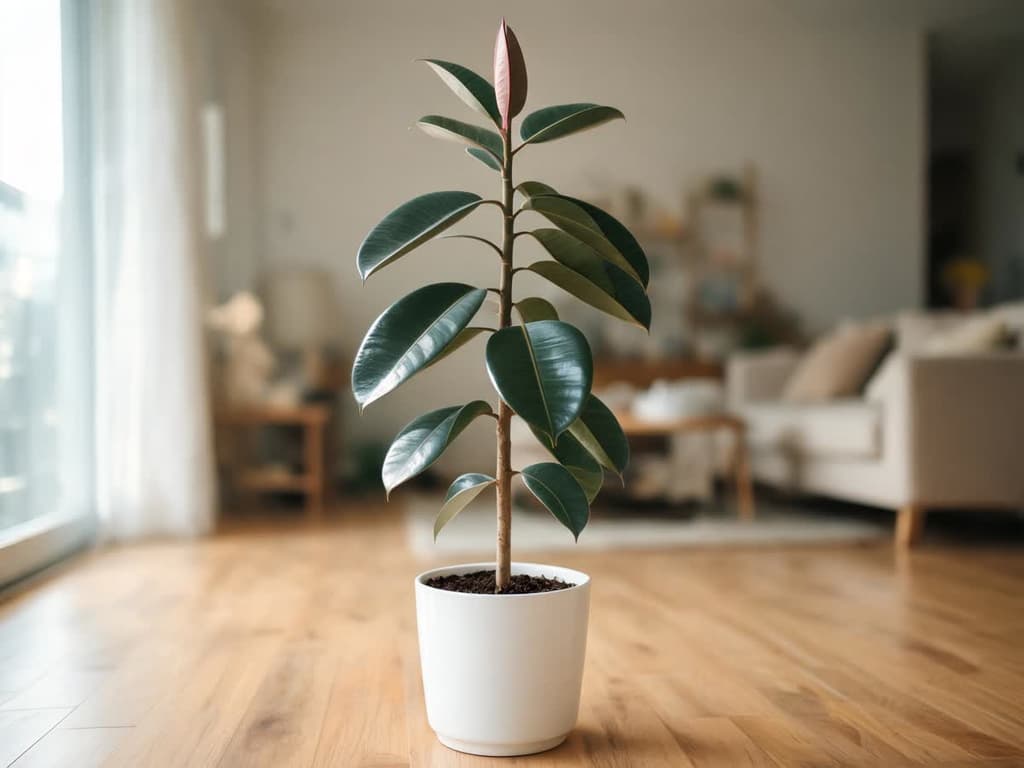
To care for a potted rubber plant, get three things right: a bright spot with direct sun only in the morning, and watering only when the top layer of soil dries out. The third is temperature: always keep it above 55°F (13°C). Once you find the right location, leave the plant in place. Nearly all leaf drop comes from overwatering, cold temperatures, drafts, or moving the plant to a new spot.
The rubber plant grows quickly and, in low light, stretches upward while shedding its lower foliage. A tall, leggy plant can be fixed: provide more light for new growth and make a clean cut in the right spot so the stem branches out again.
What | How to do it | Source |
|---|---|---|
Light | Bright all day, with direct sun only in the morning; at least 100 to 150 foot-candles (1,100 to 1,600 lux), ideally 200 to 500 foot-candles (2,150 to 5,400 lux) | Clemson, NC State |
Watering | Water thoroughly when the top layer of soil dries out; reduce watering in fall and winter | Clemson, NC State, UF/IFAS |
Temperature | 60 to 65°F (16 to 18°C) at night and 75 to 80°F (24 to 27°C) during the day; never below 55°F (13°C) | Clemson |
Humidity | Prefers humid air, but tolerates dry indoor air | Clemson |
Pets | Toxic to dogs and cats; the milky sap irritates the skin and stomach | ASPCA, Clemson |
Potted size | 2 to 10 ft (0.6 to 3 m) tall | NC State |
What is the potted rubber plant (Ficus elastica)?
The potted rubber plant is Ficus elastica, a fig tree native to Southeast Asia. In the wild it reaches up to 100 ft (30 m) in height, and in pots it stays between 2 and 10 ft (0.6 to 3 m) (NC State Extension). In Brazil, it is also sold as falsa-seringueira or ficus-borracha.
The name "rubber plant" comes from the white, milky sap, latex, once used to produce rubber (Missouri Botanical Garden). The Amazonian rubber tree, which yields natural rubber, is a different tree: Hevea brasiliensis, from an entirely different family (Pesquisa Agropecuária Brasileira). The care instructions in this guide apply only to the potted plant.
A potted rubber plant has thick, glossy, oval leaves measuring 12 to 18 inches (30 to 45 cm) attached to a woody stem (RHS). Each new leaf emerges rolled inside a pinkish or purplish sheath, the stipule, which dries up and drops off as the leaf unfurls (Missouri Botanical Garden). The falling sheath is a sign of growth, not disease.
If you received the plant as a gift and are not sure if it is a rubber plant, Bloom (available on iOS) identifies species from a photo. The free plan includes 2 identifications per month.
Rubber plant dropping leaves: can it be saved?
In most cases, yes. A rubber plant drops leaves in response to stress, and the cause is usually in the pot or its location. As long as the stem remains firm and the tip stays green, the plant is alive and will produce new leaves once you resolve the underlying problem.
Check these factors in this order:
How many leaves fall and where from. A bottom leaf turning yellow and dropping every now and then is normal: it is the oldest leaf being replaced (NC State Extension). Several leaves in the same week, or leaves from the middle and top, indicate a problem.
The soil. Sudden leaf drop usually comes from overwatering (RHS). Stick your finger into the soil: if it is wet 2 inches (5 cm) deep days after the last watering, stop watering until it dries out.
Recent move. Rubber plants prefer to stay in the same place and suffer from drafts and cold (NC State Extension). A plant that was recently bought, moved to a different room, or brought inside from a balcony typically drops leaves over the following weeks.
Cold and drafts. Temperatures below 55°F (13°C), sudden temperature drops, and cold drafts from windows or air conditioners also cause leaves to drop (Clemson Extension).
Light. Low light and dry air also cause the plant to drop leaves (Clemson Extension).
A plant grown in a nursery with high light produces leaves adapted to that light. In a study conducted in Florida with Ficus benjamina, a close relative of the rubber plant, researchers brought plants indoors. Within a few months, they dropped a large portion of the leaves formed in the sun (NC State Extension, Hortscans). The leaves formed later, under indoor light, stayed on the plant.
Because of this, if leaf drop began right after moving the plant, leave everything else alone. Changing your watering schedule, repotting, and fertilizing all at once adds compounding stress. Leave the plant in your brightest spot, water only when the soil dries out, and wait for new leaves to appear.
When a leaf turns yellow before dropping, the yellowing pattern distinguishes between overwatering, nutrient deficiency, and insufficient light. The guide on yellow leaves on houseplants illustrates the pattern behind each cause.
Light: where to place your rubber plant
A rubber plant needs medium to bright light: a bright spot all day, near a window. Direct sun only in the early morning hours. The best position is near an east-facing window, which gets morning sun (Clemson Extension). Afternoon sun should not hit the leaves (NC State Extension).
In numbers, Clemson places the rubber plant in the medium-light group. The minimum is 100 to 150 foot-candles (1,100 to 1,600 lux); the ideal range is between 200 and 500 foot-candles (2,150 to 5,400 lux) (Clemson Extension). The University of Maryland places the rubber plant in the same range and recommends east- or west-facing windows (University of Maryland Extension). A light meter app on your phone provides an approximate reading, enough to compare two spots in the house.
East-facing window: the best spot. You can set the plant right next to the glass.
West-facing window: use a sheer curtain between the glass and the plant, because afternoon sun scorches the leaves.
North-facing window: gets almost no direct sun and is bright enough if the plant stays close to the glass.
South-facing window: this gets the most sun throughout the day; protect the plant with a sheer curtain.
Middle of the room, far from a window: the plant will survive, but it will grow leggy and lose its lower leaves.
A variegated rubber plant, with leaves mottled in cream, white, or pink, requires more light than a solid dark green one. The pale sections lack chlorophyll, leaving the plant with less functional area for photosynthesis.
Rotate the pot a quarter turn every 2 weeks. A plant that receives light from only one side grows tilted toward the window (University of Maryland Extension).
How to water a rubber plant
Water your rubber plant when the top layer of soil is dry to the touch, and then soak it thoroughly until water drains through the hole in the pot (Clemson Extension). Afterward, empty the saucer: roots sitting in water will rot.
Clemson calls for letting the soil dry slightly between waterings. The University of Florida (UF/IFAS) calls for letting it dry thoroughly, especially in containers (UF/IFAS). UF/IFAS also notes that the rubber plant makes a good indoor plant as long as it is not overwatered. Neither gives the depth in centimeters. When in doubt, go with the drier option, because overwatering is the most common cause of leaf drop: stick your finger in and water only when the top 5 cm of soil are dry.
There is no fixed schedule. In the summer, near a bright window, the soil dries out much faster than in the winter in a darker corner. Therefore, check the soil before each watering instead of following a calendar. From fall through late winter, October to February, the plant grows less and needs less water (NC State Extension).
What you see | Soil | Likely cause | What to do |
|---|---|---|---|
Leaves yellowing and dropping, starting from the bottom | Damp for days | Overwatering | Stop watering until the top 2 in (5 cm) dry out; verify that the pot has a drainage hole |
Limp, drooping leaves hanging from the stem | Bone dry all the way down, lightweight pot | Underwatering | Water thoroughly until it drains out the bottom; the leaves will firm up after watering |
Drooping leaves with soggy soil and a foul smell | Waterlogged | Root rot | Unpot the plant, trim away dark, mushy roots, and repot into fresh mix |
Healthy roots are firm and light-colored. Rotten roots are dark, mushy, and fall apart when you pull on them. Root rot comes from poorly draining soil or watering too frequently (Clemson Extension).
Leggy rubber plant: how to get it to branch out
A rubber plant gets tall and bare for two compounding reasons. The first is insufficient light: the plant stretches its stem toward the window, with long spacing between leaves (University of Maryland Extension). The second is the normal shedding of older leaves: every lower leaf that drops leaves a section of bare stem.
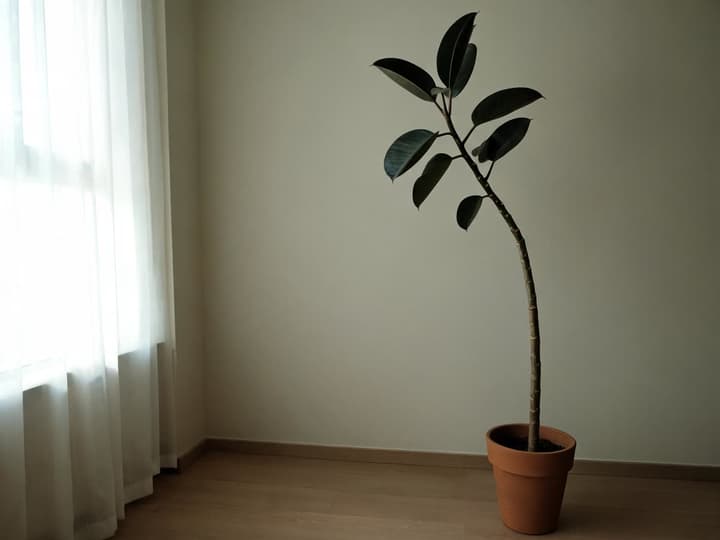
More light corrects future growth: subsequent leaves emerge closer together along the stem. However, light alone cannot fix sections of the stem that are already bare. For those portions, extension services describe two paths: prune the stem or remove the top via air layering (rooting the top while still attached to the plant before severing it).
Where and when to cut. Cut the stem just above a leaf in late winter or early spring (RHS). This runs from February to April. The RHS states that ficus tolerate even hard pruning well. After the cut, the plant usually sprouts right below it and produces several new branches (Iowa State University Extension). For that reason, choose the cutting height based on the height where you want the branches to start.
Latex. The cut stem drips a sticky white sap (NC State Extension). Wear gloves, because the sap can irritate the skin and worsen allergies (RHS). Line the floor around the pot with newspaper before cutting.
Save the top. Instead of discarding the top portion, you can root it while still attached to the plant through air layering. Iowa State recommends air layering to improve the appearance of a tall, bare houseplant (Iowa State University Extension). Once the tip roots, you cut it off and pot it in a new container, and the stem left behind in the original pot sprouts below the cut.
Variegated rubber plant. If a branch with all-green leaves appears on a variegated plant, cut that branch off. It grows faster and can take over the plant (RHS).
Without pruning, a rubber plant will not branch out reliably. There is a technique called notching: making a small cut into the stem above a node without removing the top. None of the extension services consulted describe the method or measured how many buds it produces. Pruning and air layering remain the evidence-backed approaches.
Temperature, humidity, and drafts
The ideal temperature for a rubber plant is 60 to 65 °F (16 to 18 °C) at night and 75 to 80 °F (24 to 27 °C) during the day (Clemson Extension). Below 55 °F (13 °C), the plant suffers and drops leaves. Sudden temperature drops and cold drafts also cause damage, even above that threshold.
The risk of cold runs from December to February. On cold nights, move the plant away from the window glass and do not leave the pot trapped between the closed curtain and the glass. Keep the rubber plant away from air conditioning and heating vents year-round.
The rubber plant prefers humid air, but tolerates the dry air common indoors (Clemson Extension). Dry, wrinkled leaves can indicate that humidity is too low (RHS). In that case, move the rubber plant away from heaters and air conditioning vents.
How to clean rubber plant leaves
Clean the rubber plant leaves with a soft cloth dampened with water, wiping both sides of each leaf (Clemson Extension). Use lukewarm water: hot or cold water can injure the leaf (Ohio State University Extension). You can also rinse a small plant in the shower.
Dust blocks part of the light that reaches the leaf and reduces photosynthesis (Ohio State University Extension). To tell if it is time to clean, run your finger over the leaf: if it picks up more dust than a breath can blow away, wipe it down.
Do not use leaf shine. Clemson does not recommend these products because the wax layer left on the leaf can interfere with the plant's air exchange (Clemson Extension). Support each leaf from underneath with your other hand while wiping to avoid bending the leaf.
Soil, pots, and fertilizer
Soil. Use well-draining potting soil (Clemson Extension). The RHS suggests a mix of potting compost and shredded pine bark (RHS). The pot must have a drainage hole at the bottom.
Pot. The rubber plant does not like an oversized pot. Every 2 to 3 years, in spring, move the plant to a pot only slightly larger than the current one (RHS). Do this from March to May. Too much soil around a small root system stays wet for too long, which is when roots rot. In years without repotting, scrape off the top inch (2.5 cm) of soil and replace it with fresh soil (RHS).
Fertilizer. Fertilize only in spring and summer, from March to September, with liquid foliage plant fertilizer. The RHS recommends a high-nitrogen fertilizer once a month (RHS). Clemson recommends every 2 weeks, and less often for plants in low light (Clemson Extension). This guide follows the RHS, once a month, because excess fertilizer also causes leaf drop (RHS) and indoor plants receive less light. Fertilize every 2 weeks only if your rubber plant receives direct morning sun and is actively putting out new leaves.
How to propagate a rubber plant
Rubber plants propagate from tip cuttings and air layering (Clemson Extension).
Tip cuttings. Cut the tip of a stem in spring or summer, from March to September (RHS). Use a stem that is neither soft nor fully woody, with 2 or 3 leaves. Plant in moist soil and keep in a warm, bright spot without direct sun. The RHS notes that bottom heat helps with rooting.
Air layering. This is the method for a tall plant, because the tip roots while still attached to the mother plant. Do it in spring, from March to May, or in late summer (RHS). The step-by-step from Iowa State (Iowa State University Extension):
Choose a point on the stem 12 to 18 in (30 to 45 cm) from the tip and remove the leaves surrounding that spot.
Make two cuts around the stem, 1 in (2.5 cm) apart, and remove the ring of bark between them.
Scrape the exposed surface. If you like, apply rooting hormone (it speeds up the process, but is optional).
Wrap the section in 1 or 2 handfuls of moist sphagnum moss and cover it with clear plastic wrap, tied off above and below.
Once plenty of roots develop inside the moss, cut the stem directly beneath the lower tie and plant the rooted tip into a pot with well-draining soil.
Iowa State says roots appear in a few weeks. The RHS says full rooting takes about a year (RHS). Roots visible in the moss appear sooner, while having enough roots for the tip to survive on its own takes longer. Only cut the tip when the moss is filled with roots.
Pests and common problems
Disease is rare on rubber plants indoors. The main problems are improper watering, insects, and mites (Clemson Extension). The most frequently cited pests are these (NC State Extension, RHS):
Mealybugs: white, cotton-like tufts where the leaf meets the stem.
Scale insects: small, hard, brown bumps stuck to the stem and leaf veins on the underside of the leaf.
Spider mites: light specks on the leaf and fine webbing on the underside, more common in dry air.
Thrips: silvery spots and tiny black dots on the leaf.
If your plant has leaf spots or an issue that does not match any of these descriptions, refer to our guide on what is wrong with my plant. Its 3 diagnostic questions help distinguish pests, fungal diseases, watering issues, and light problems.
Is the rubber plant toxic to cats and dogs?
Yes. The ASPCA, the American animal poison control center, classifies ficus as toxic to dogs and cats (ASPCA). The toxic principles are ficin and ficusin, and symptoms include irritation to the stomach, intestines, and skin. The ASPCA page under the English name for rubber tree, "Indian Rubber Plant," lists the scientific name Ficus benjamina, another species in the same genus.
Clemson confirms that the white sap can irritate the skin and the stomach if ingested. For this reason, it recommends keeping the plant away from pets and small children who chew on leaves (Clemson Extension).
Frequently asked questions
Does a rubber plant like a large pot?
No. A rubber plant grows best in a pot that is only slightly larger than its root ball. In an oversized pot, soil beyond the reach of the roots stays wet for too long, causing root rot. Repot every 2 to 3 years in spring, moving up only one pot size (RHS).
How can I tell if my rubber plant needs water?
A thirsty rubber plant shows limp, drooping leaves that hang from the stem, and the soil will feel dry all the way to the bottom. The pot will also feel light when you lift it. Water thoroughly until liquid drains out the bottom hole: if underwatering was the issue, the leaves will firm back up after watering.
Does the rubber plant purify indoor air?
Not in a way that makes a difference in a home. A review of 12 studies, published in the Journal of Exposure Science & Environmental Epidemiology, compared potted plants and ventilation. By the authors' calculations, it would take between 10 and 1,000 plants per square meter to match the normal ventilation of a home (Cummings and Waring).
Can a rubber plant take direct sunlight?
It can handle morning sun, which is gentler. Afternoon sun burns the foliage and should be filtered with a sheer curtain (NC State, University of Maryland). Scorched leaves turn pale, then turn brown and crispy. Variegated rubber plants burn most easily.
How do I make my rubber plant bushier without pruning?
Move the plant to your brightest indoor location with morning sun, and turn the pot a quarter turn every 2 weeks. New leaves will grow closer together along the stem. Bare sections of the stem, however, will only sprout new branches if you prune or air-layer them.
How to care for a rubber plant: what to do today
Move the plant near an east-facing window, or filter harsh afternoon sun with a sheer curtain.
Check the soil with your finger and only water if the top 2 in (5 cm) are completely dry.
Empty the drainage saucer after every watering.
Keep the pot away from air-conditioning vents and cold windowpanes during chilly nights.
Wipe dusty foliage with a damp cloth.
If the plant is tall and bare, schedule the cut for February to April.
Sources
NC State Extension, Hortscans: Acclimatization of Foliage Plants
Clemson Extension HGIC: Indoor Plants, Cleaning, Fertilizing, Containers & Light Requirements
Iowa State University Extension: How can I propagate a rubber tree?
Iowa State University Extension: How to propagate houseplants by air layering and simple layering
University of Maryland Extension: Lighting for Indoor Plants
Ohio State University Extension: Why you should clean the leaves of houseplants
Pesquisa Agropecuária Brasileira: Origin, variability, and domestication of Hevea
Cummings and Waring, Journal of Exposure Science & Environmental Epidemiology
Related articles
How to Care for a Goldfish Plant: Light, Watering, and Blooms
How to care for a goldfish plant: bright light without strong sun, water when the soil surface dries, and humid air. Learn how to tell a Nematanthus from a Columnea, why it drops leaves, and how to get it to bloom again.
Lavender Leaves Turning Yellow: Where the Yellowing Starts Shows the Cause
Lower leaves turning yellow with moist soil means overwatered roots, the most common cause. Old leaves drying one by one on woody stems is normal. Take the stem and root test, see if your plant can still be saved, and find out what to do today.
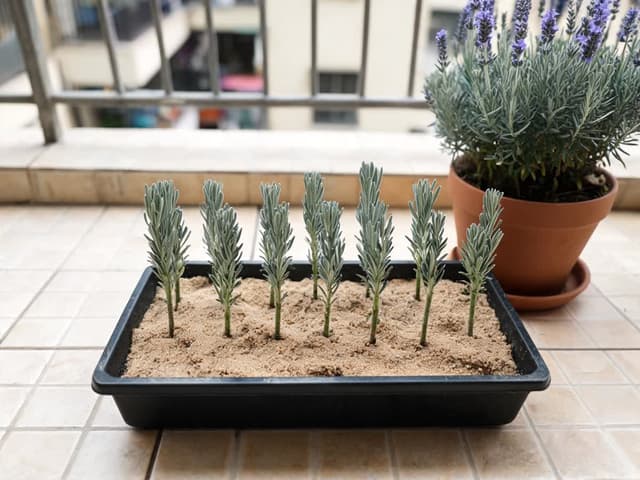
How to Propagate Lavender: Where to Cut and Why Cuttings Rot
A lavender cutting comes from a non-flowering branch tip, about 4 inches long, planted in sandy soil that never stays soggy. Learn where to cut, rooting times, seasonality in Brazil, and what to do if the base turns black.