63 Medium Foliage Plants | 2026 Guide
Find 63 medium foliage plants. Complete guide for your garden.
63 Foliage Plants with medium level
Showing 1-36 of 63
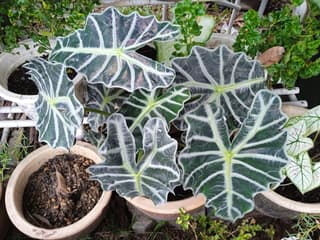
Alocasia Polly
Alocasia × mortfontanensis
Alocasia × mortfontanensis, commonly known as the African Mask Plant or Alocasia Amazonica, is a stunning hybrid featuring large, arrow-shaped leaves. The foliage is a deep, dark green, almost black, with dramatic, thick silvery-white veins and wavy, scalloped edges. It is a centerpiece plant that brings a tropical, prehistoric aesthetic to any indoor space.
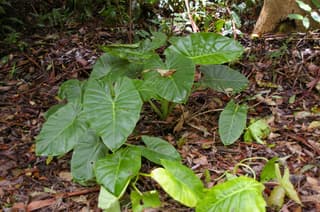
Cunjevoi
Alocasia brisbanensis
Alocasia brisbanensis, commonly known as Cunjevoi, is a large-leafed tropical perennial native to the rainforest margins of eastern Australia. It features dramatic, glossy, spade-shaped leaves up to 70 cm long on long purplish-green petioles, making it a striking ornamental plant. All parts of the plant contain calcium oxalate crystals and are highly toxic if ingested.
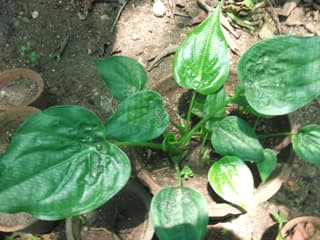
Chinese Taro
Alocasia cucullata
Alocasia cucullata, commonly known as Chinese Taro or Buddha's Hand, is a compact tropical plant native to Southeast Asia. It features glossy, heart-shaped to arrow-shaped leaves on long petioles, held upright in a striking architectural form. This evergreen perennial thrives in warm, humid environments and is widely cultivated as an ornamental houseplant. Revered across Thailand and Laos as a sacred plant of good fortune, it is traditionally placed at home entrances and Buddhist temples.
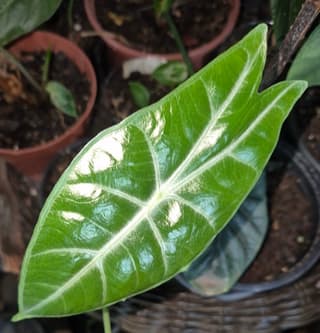
Dragon Scale Alocasia
Alocasia longiloba
Alocasia longiloba is a striking tropical plant native to the humid rainforests of Southeast Asia — Borneo, Malaysia, and Thailand. It is best known for its dramatic arrow- or heart-shaped leaves adorned with silvery-green venation that stands out boldly against a deep green background, giving it the popular name 'Dragon Scale Alocasia.' The texture of the leaf surface can appear almost reptilian, especially in the highly sought-after 'Dragon Scale' and 'Silver' cultivated forms. As a houseplant it typically reaches 60–120 cm tall, making it an elegant focal point in living rooms, offices, and indoor gardens. It belongs to the family Araceae and shares its genus with approximately 90 other fascinating species.
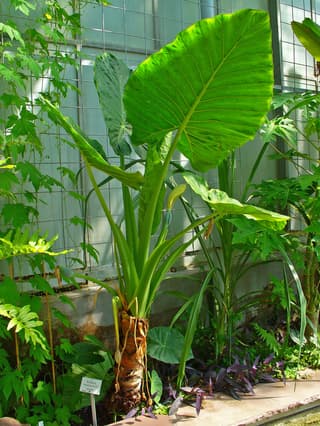
Giant Taro
Alocasia macrorrhizos
Alocasia macrorrhizos is a spectacular tropical perennial from Southeast Asia, prized for its enormous upright arrow-shaped leaves that can reach up to 1.5 meters in length. Known as Giant Elephant's Ear, this fast-growing plant makes a bold architectural statement both indoors and in tropical gardens. It belongs to the Araceae family and features thick, prominently veined, glossy green leaves on sturdy upright stems.
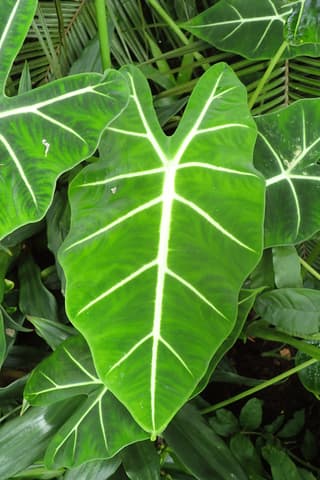
Green Velvet Alocasia
Alocasia micholitziana
Alocasia micholitziana, commonly known as the Green Velvet Alocasia or Frydek, is a striking tropical houseplant native to the Philippines. It is prized for its velvety dark green leaves with dramatically contrasting white veins and a deeply ribbed texture. A member of the Araceae family, it thrives as an indoor plant in warm, humid environments and can be a stunning focal point in any home.
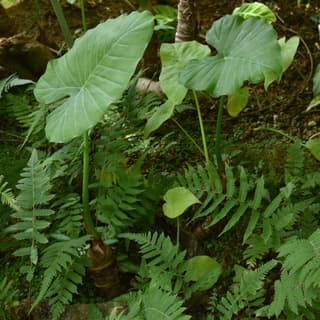
Night-Scented Lily
Alocasia odora
Alocasia odora, commonly known as the Night-Scented Lily or Asian Taro, is a striking tropical plant from the Araceae family, native to East and Southeast Asia. Its large arrow-shaped leaves can reach up to 60 cm in length, and the plant can grow to 2.4 meters tall. It produces fragrant cream-to-pale-peach flowers on a spadix during spring and summer, notably scented at night. WARNING: Toxic to humans, cats, and dogs when ingested raw due to calcium oxalate crystals.
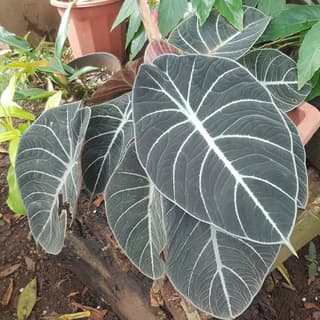
Black Velvet Alocasia
Alocasia reginula
Alocasia reginula, commonly known as Black Velvet Alocasia, is a striking compact tropical plant native to the rainforests of Borneo. It is prized for its deep, near-black velvety leaves adorned with contrasting silvery-white veins. Unlike larger Alocasia species, this jewel alocasia stays small and manageable, making it an ideal statement houseplant. Its thick, succulent-like rhizomes store water, giving it some drought tolerance but also making it highly susceptible to root rot if overwatered.
Alocasia Jacklyn
Alocasia tandurusa
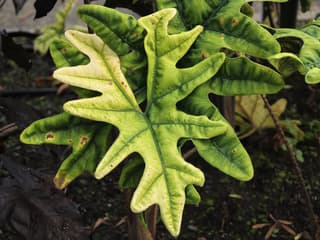
Alocasia Jacklyn (Alocasia tandurusa) is a rare and spectacular tropical plant native to the humid rainforests of Sulawesi, Indonesia. Its enormous arrow-shaped leaves with prominent venation and deep green coloration make it one of the most sought-after alocasias among plant collectors worldwide. When grown indoors, it can reach up to 4 feet in height, becoming a stunning focal point in any space.
Voodoo Lily
Amorphophallus
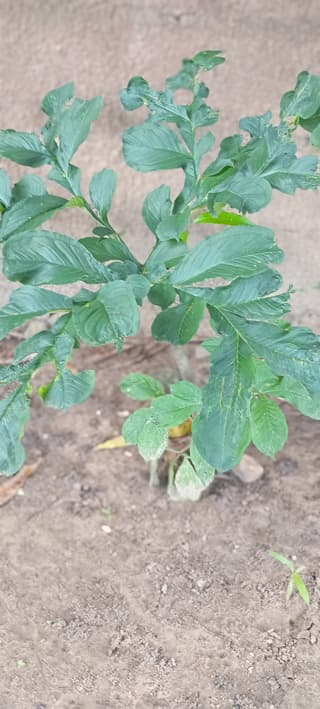
Amorphophallus is a captivating genus of approximately 200 tropical and subtropical tuberous herbaceous plants in the family Araceae, native to Asia, Africa, and Australasia. They are renowned for their spectacular inflorescences — some of the largest in the plant kingdom — which emit powerful odors to attract pollinators. A. konjac is cultivated for its glucomannan-rich corms used in Asian cuisine. A. titanum, the "corpse flower," produces the world's largest unbranched inflorescence.
Konjac
Amorphophallus konjac
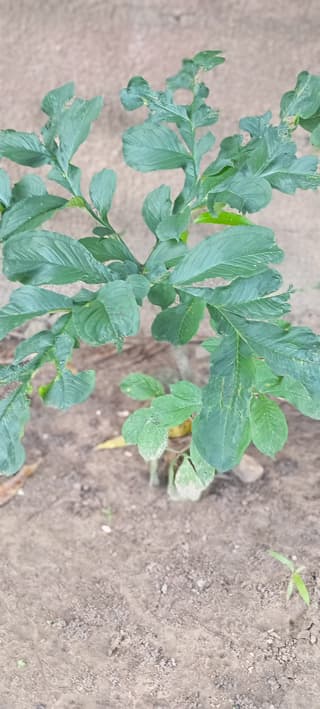
Amorphophallus konjac is an exotic tuberous plant native to Southeast Asia. It is famous for producing a single giant leaf that resembles a small tree and a spectacular dark purple inflorescence that emits a strong odor to attract pollinators. Its underground tuber is widely used in Asian cuisine for the production of konjac flour and jelly.
Anthurium / Flamingo Flower (genus)
Anthurium
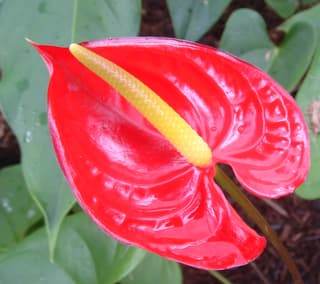
Anthurium is a large genus of tropical plants in the family Araceae, comprising over 1,000 species native mainly to Central and South America. Renowned for their striking inflorescences with colorful spathes and spadices, anthuriums are popular ornamental houseplants worldwide.
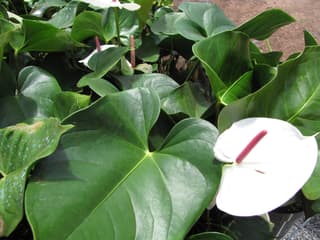
Flamingo Flower
Anthurium andraeanum
Anthurium andraeanum is a tropical plant native to the rainforests of Colombia and Ecuador. It is famous for its glossy heart-shaped spathes that come in vibrant colors like red, pink, white, and orange. Its leaves are large, shiny, and dark green. It is one of the most popular houseplants due to its nearly continuous flowering throughout the year.
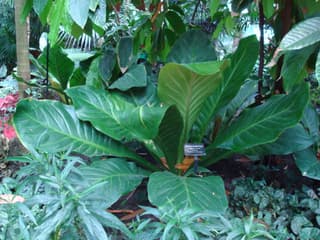
Bird's Nest Anthurium
Anthurium hookeri
Anthurium hookeri, commonly known as the Bird's Nest Anthurium, is a striking tropical plant in the Araceae family, native to the Caribbean islands and northern South America. Its broad, glossy dark-green leaves grow in a rosette arrangement resembling a bird's nest, making it a prized ornamental houseplant and garden specimen.
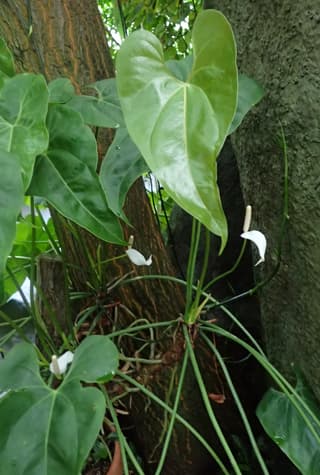
Water-Lily Anthurium
Anthurium nymphaeifolium
Anthurium nymphaeifolium is a rare and striking species native to northern South America, particularly Venezuela and Colombia. It produces large, peltate (shield-shaped) leaves arranged in an impressive rosette, resembling the leaves of water lilies (Nymphaea). This tropical foliage plant is highly prized by collectors for its exotic, architectural appearance.

Apoballis
Apoballis acuminatissima
Apoballis acuminatissima is a striking tropical perennial native to the rainforests of Sumatra. It is highly prized for its ornamental foliage, which features elongated, lance-shaped leaves decorated with intricate silver-green mottling and patterns. As an understory plant, it has adapted to lower light conditions but requires high humidity to maintain its lush appearance. It was formerly classified under the genus Schismatoglottis.
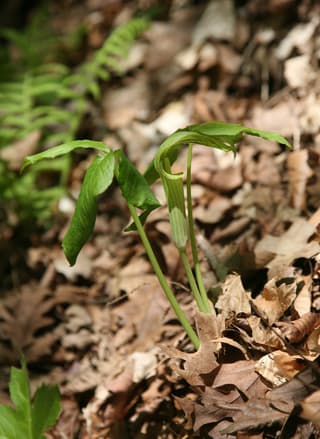
Jack in the pulpit
Arisaema
Arisaema is a genus of approximately 150 species of woodland tuberous aroids native to Asia and North America. They are celebrated for their unique hooded inflorescences (spathe and spadix) and exotic foliage. Plants go dormant in winter and re-emerge vigorously each spring. The most well-known species is A. triphyllum, commonly called Jack in the pulpit.
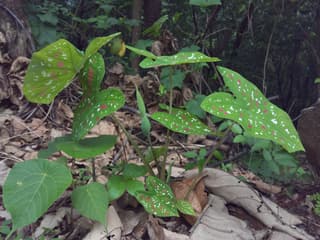
Angel Wings
Caladium bicolor
Caladium bicolor is a tropical tuberous plant native to South America, prized for its large, heart-shaped leaves in striking combinations of red, pink, white, and green. A deciduous perennial that goes dormant in winter, it is one of the most popular foliage plants for adding color to shaded gardens and indoor spaces.
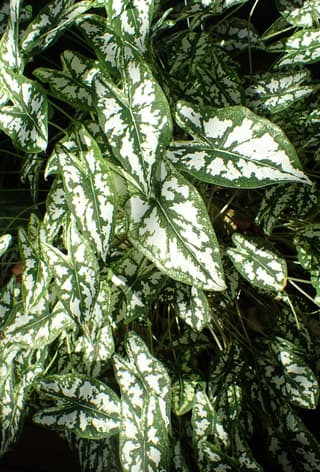
Miniature caladium
Caladium humboldtii
Caladium humboldtii, known as the miniature caladium, is a compact tropical aroid native to South America. Its small green leaves are adorned with striking white spots and veins, making it a prized specimen for terrariums, desktops, and humid indoor spaces.
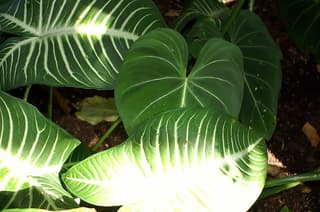
White-veined Caladium
Caladium lindenii
Caladium lindenii, commonly known as White-veined Caladium or Linden's Caladium, is a spectacular tropical foliage plant native to Colombia and Venezuela. A member of the Araceae family, it is celebrated for its dramatic heart-shaped leaves adorned with striking white veins against a deep green background. This deciduous species goes dormant in winter and reemerges in spring with lush, ornamental foliage, making it a prized specimen for indoor plant enthusiasts.
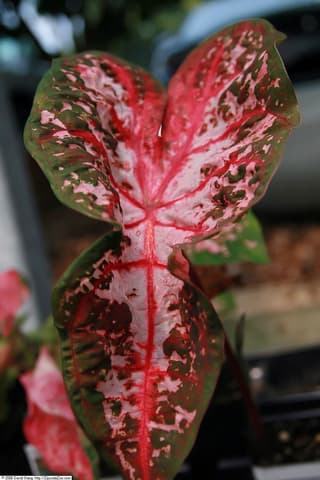
Fancy-leaf Caladium
Caladium x hortulanum
Fancy-leaf Caladium (Caladium x hortulanum) is a tropical foliage plant prized for its stunning, paper-thin leaves in combinations of red, pink, white, and green. Native to tropical South and Central America, it is widely grown as an ornamental houseplant and shade garden specimen.
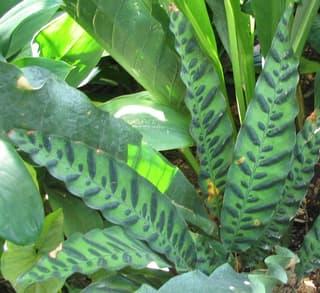
Rattlesnake Plant
Calathea lancifolia
The Calathea lancifolia, commonly known as the Rattlesnake Plant, is a tropical plant native to the rainforests of Brazil. Its elongated leaves display a dark green pattern with lighter green spots resembling rattlesnake markings, with a reddish-purple underside. Part of the Marantaceae family, it is known for its nyctinastic leaf movement, where leaves fold up at night like hands in prayer.
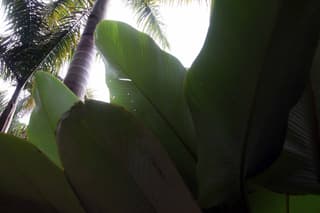
Cigar Plant
Calathea lutea
Calathea lutea, commonly known as the Cigar Plant or Cuban Cigar Calathea, is a large Neotropical Marantaceae native to tropical Americas. It is one of the tallest calatheas, with broad paddle-shaped leaves that can reach up to 1 meter long, featuring a distinctive waxy, pruinose silver-grey underside. It is widely used in tropical landscaping and traditionally used to wrap cigars in some regions.
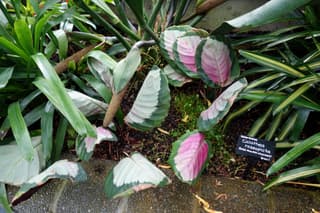
Rose Painted Calathea
Calathea roseopicta
Calathea roseopicta is a perennial rhizomatous herb native to the tropical rainforests of Brazil and South America. Part of the Marantaceae family, it is admired for its oval dark green leaves with pink and silvery-green markings, plus a purple underside. Known as a "prayer plant" because its leaves fold up at night like hands in prayer.
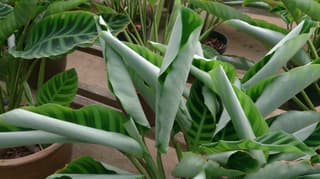
Zebra Plant
Calathea zebrina
Calathea zebrina is a tropical plant native to Brazil, belonging to the Marantaceae family. Its velvety leaves feature light green zebra-like stripes over a dark green background, with reddish-purple undersides. Known for its nyctinastic movement, the leaves fold upward at dusk as if praying.
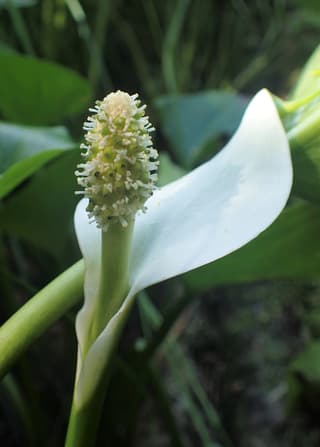
Bog Arum
Calla palustris
Calla palustris, commonly known as Bog Arum or Wild Calla, is an aquatic perennial in the Araceae family. Native to the northern temperate zones of Eurasia and North America, it grows at the margins of lakes, bogs, and wetlands. It produces an elegant white spathe in spring-summer. The entire plant contains calcium oxalate crystals and is toxic if ingested.
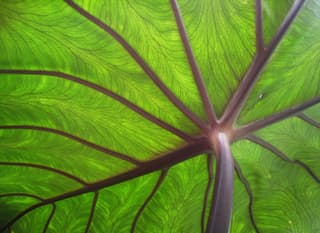
Taro
Colocasia esculenta
Colocasia esculenta, commonly known as Taro or Elephant Ear, is a tropical perennial plant prized for its dramatic heart-shaped leaves that can reach up to 60cm in length. Native to Southeast Asia, it is one of the oldest cultivated plants in the world, grown both as an ornamental foliage plant and as a food crop for its edible corms. The plant produces large, velvety green leaves on long succulent stems, creating a lush tropical appearance.
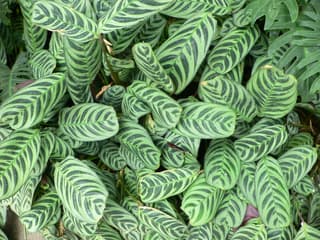
Fishbone Prayer Plant
Ctenanthe burle-marxii
Ctenanthe burle-marxii, commonly known as the Fishbone Prayer Plant, is a stunning tropical perennial native to the humid rainforests of Brazil. A member of the Marantaceae family, it is celebrated for its distinctive oval leaves featuring a silvery-green base adorned with dark green fishbone markings on top, and a rich burgundy-purple underside. Like its prayer plant relatives, it exhibits nyctinasty — the fascinating behavior of folding its leaves upward at dusk as if in prayer, and reopening them at dawn. Compact and elegant, it reaches around 40 cm in height and is perfectly suited for indoor cultivation, particularly in humid environments. It is completely non-toxic to humans and pets, making it a safe and beautiful choice for any household.
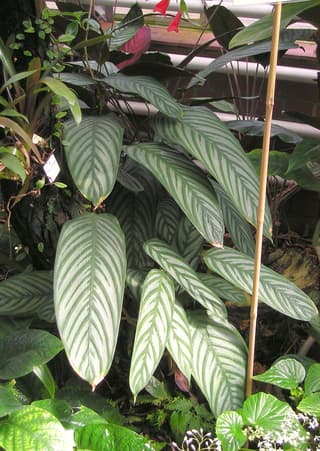
Grey Star
Ctenanthe setosa
Ctenanthe setosa, commonly known as the Grey Star or Never Never Plant, is a tropical plant native to Brazil in the Marantaceae family. It is prized for its stunning elongated leaves featuring silvery-grey and dark green striped patterns with deep purple undersides. Like other prayer plants, it exhibits nyctinasty — its leaves gently fold upward at night and open again in the morning, as if in prayer.
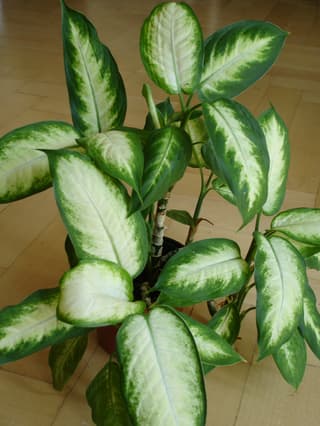
Bowmann Dumb Cane
Dieffenbachia bowmannii
Dieffenbachia bowmannii is one of the largest species in the genus, native to tropical regions of Central and South America. Its impressive leaves can reach up to 60 cm in length, displaying unique patterns of dark green with pale green to cream-white markings, making it a stunning centrepiece for indoor spaces.
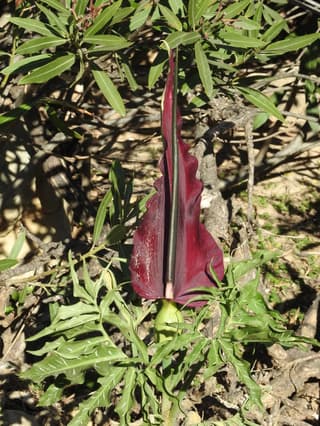
Dragon Lily
Dracunculus vulgaris
Dracunculus vulgaris, commonly known as Dragon Lily or Voodoo Lily, is a spectacular bulbous plant native to the Balkans and eastern Mediterranean. Its purple-spotted stems support a dramatic dark maroon spathe up to 50 cm long surrounding a near-black spadix. The plant emits a powerful rotting-flesh odor during bloom to attract fly and beetle pollinators. All parts contain calcium oxalate crystals and are toxic to humans, cats, and dogs.
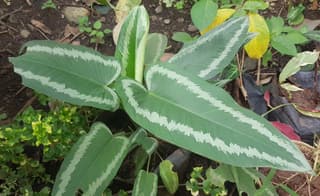
Engler's False Arum
Englerarum hypnosum
Englerarum hypnosum is a rare monotypic tropical aroid native to limestone karst forests of Southwest China, Laos, and Thailand. Formerly classified under Alocasia, it was segregated into its own genus Englerarum following molecular phylogenetic studies. It grows as a lithophyte on humid limestone ledges at 800–1000 m elevation, spreading by rhizomes to form colonies. Its large, deep-green leaves with silvery-green patterning make it a striking ornamental houseplant.
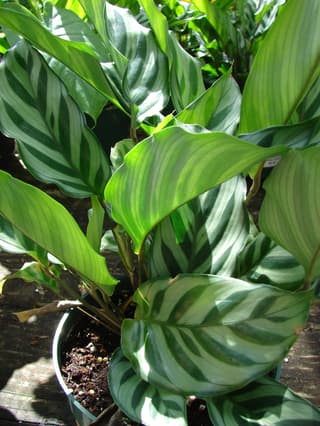
Freddie Calathea
Goeppertia concinna
Freddie Calathea (Goeppertia concinna) is a stunning tropical houseplant from Brazil, belonging to the Marantaceae family. It is celebrated for its striking striped foliage — pale green stripes over deep green leaves — that resemble a leopard's pattern. A popular choice for bringing lush, tropical vibes indoors.
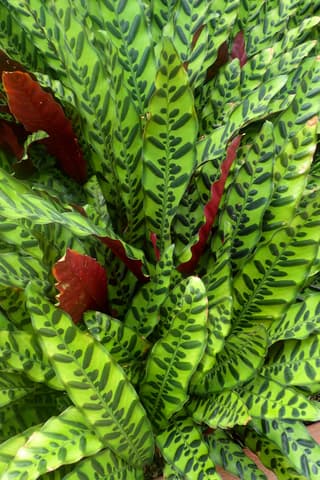
Rattlesnake Plant
Goeppertia insignis
Goeppertia insignis, commonly known as the Rattlesnake Plant (formerly Calathea lancifolia), is a tropical evergreen perennial native to the state of Rio de Janeiro, Brazil. It features long, wavy lance-shaped leaves in pale green with alternating dark green elliptical spots on top and a striking purple underside. Like other prayer plants, it folds its leaves upward at nightfall in a movement called nyctinasty.
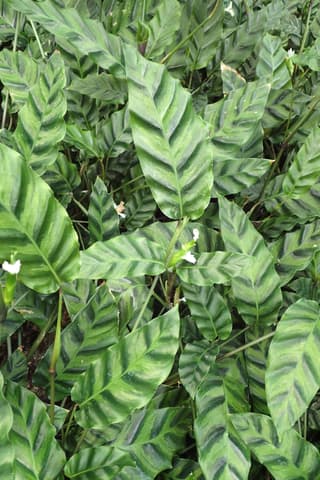
Thai Beauty Calathea
Goeppertia louisae
Goeppertia louisae, commonly known as Thai Beauty Calathea, is a tropical houseplant native to the rainforests of southeastern Brazil. A member of the Marantaceae family, it captivates with its glossy, oblong leaves featuring brush-stroke patterns of creamy yellow or pale green against a deep green surface, with striking purple undersides. One of its most enchanting traits is nyctinastic movement — the leaves open at dawn and close at dusk, sometimes producing a soft, audible rustling sound.
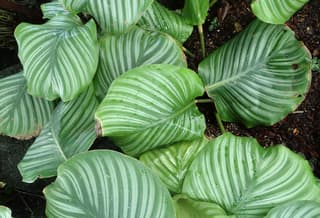
Round-leaf Calathea
Goeppertia orbifolia
Goeppertia orbifolia, commonly known as Round-leaf Calathea and previously classified as Calathea orbifolia, is a stunning tropical houseplant from the Marantaceae family, native to the forests of Bolivia. Its large, rounded leaves adorned with bold silver-green stripes make it one of the most sought-after indoor plants. Like other prayer plants, it folds its leaves upward at night in a movement called nyctinasty.
Medium Care Foliage Plants
Our selection of 63 medium foliage plants combines the characteristics of this category with moderate care needs. Ideal for those with basic experience.
Why Choose Medium Foliage Plants?
Combining the beauty of foliage plants with medium difficulty level lets you enjoy this category with a balanced care commitment. Each plant was selected to offer the best characteristics of the category at the care level you are looking for.