79 Medium Orchids | 2026 Guide
Find 79 medium orchids. Complete guide for your garden.
79 Orchids with medium level
Showing 1-36 of 79
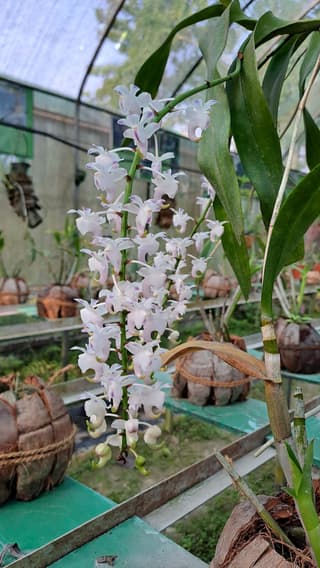
Cat's-tail orchid
Aerides
Aerides is a genus of about 30 epiphytic orchids from tropical Asia, ranging from India and Nepal to southern China, Southeast Asia, the Philippines and New Guinea. They have no pseudobulbs: they grow from a single stem with thick, leathery leaves in two rows and thick aerial roots. The flowers come in long, full, hanging sprays that look like a fox's tail. They are waxy, fragrant and long-lasting, usually white tipped with pink or purple, and in some species pink, purple or yellow. The name comes from Greek and means "of the air", after their habit of living on trees.
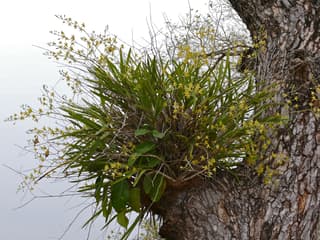
Leopard Orchid
Ansellia africana
Ansellia africana, the leopard orchid, is a large epiphytic orchid native to tropical and southern Africa, where it grows in the forks of tall trees along rivers and coastlines. It forms dense clumps of cane-like pseudobulbs topped with leathery, lance-shaped leaves, and produces branching sprays of yellow flowers boldly marked with brown spots reminiscent of a leopard's coat.
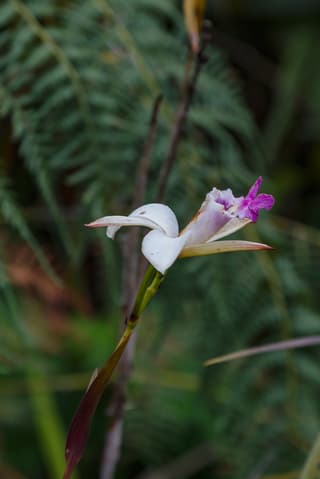
Bamboo Orchid (genus)
Arundina
Arundina is a genus of terrestrial orchids in the family Orchidaceae, native to tropical and subtropical Asia. The dominant species, A. graminifolia, features slender bamboo-like stems and delicate flowers in white, pink, and purple hues. These orchids are among the most robust and beginner-friendly in the family.
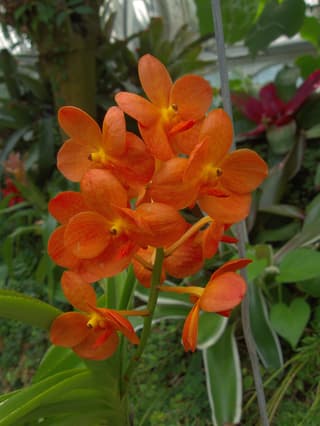
Ascocenda Orchid
Ascocenda
Ascocenda is an orchid nothogenus, a hybrid between Ascocentrum and Vanda within the family Orchidaceae. It combines the compact growth habit of Ascocentrum with the vibrant, large blooms of Vanda, producing jewel-like flowers in shades of purple, pink, orange, and yellow on upright spikes.
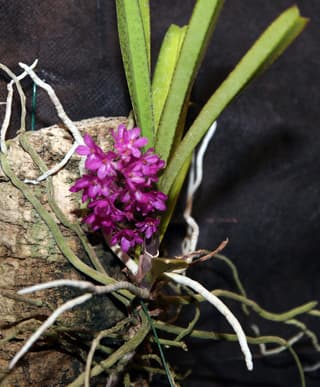
Ascocentrum orchid
Ascocentrum
Ascocentrum is a small genus of miniature epiphytic orchids from Southeast Asia and the eastern Himalayas, found from India and southern China through Thailand, Laos, Vietnam, Malaysia, Java and the Philippines. The plants are monopodial: a short upright stem carries two rows of stiff, strap-shaped or channelled leaves and thick aerial roots, usually staying under 25 cm tall. In bloom they produce dense, upright spikes packed with small, waxy flowers about 2 cm across in vivid orange, yellow, red, pink or magenta. Botanists now usually treat Ascocentrum as part of Vanda (for example Ascocentrum miniatum is Vanda miniata, A. ampullaceum is Vanda ampullacea and A. curvifolium is Vanda curvifolia), but growers and labels still widely use the name Ascocentrum. It is a parent of the Ascocenda hybrids (Ascocentrum x Vanda).
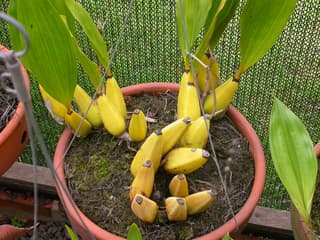
Harrison's Bifrenaria
Bifrenaria harrisoniae
Bifrenaria harrisoniae, commonly known as Harrison's Bifrenaria, is a striking epiphytic orchid endemic to Brazil. Found in the Atlantic Forest and Cerrado biomes at elevations between 200 and 1,200 meters, it produces large, waxy, fragrant flowers — predominantly white with a pink-to-burgundy labellum and dark veining — up to 8 cm across. The robust pseudobulbs store water and nutrients, enabling the plant to withstand seasonal dry periods.
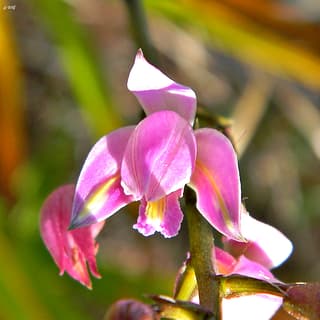
Pine-pink Orchid
Bletia purpurea
Bletia purpurea, commonly known as Pine-pink Orchid, is a terrestrial orchid native to the Caribbean, Florida, Mexico, and Central and South America. It produces oval pseudobulbs and elegant linear leaves, with impressive flower spikes carrying up to 80 pink-purple blooms on stems reaching 180 cm tall. The plant is deciduous, going dormant in winter before blooming in spring and summer.
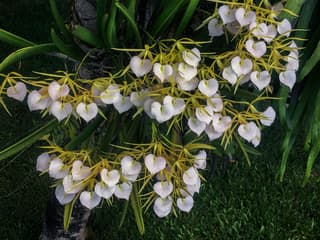
Lady of the Night
Brassavola nodosa
Brassavola nodosa, known as the Lady of the Night, is a medium-sized epiphytic orchid native to coastal regions of Central and South America, from Mexico to Brazil, where it grows on trees and even mangrove roots near the sea. Its cylindrical, succulent leaves produce stems with greenish-white flowers up to 6 inches (15 cm) wide, which release an intense, sweet fragrance at dusk to attract pollinating moths.
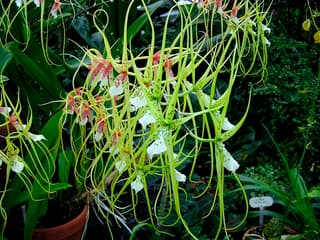
Spider Orchid
Brassia
Brassia is a genus of epiphytic orchids native to the tropical and subtropical forests of Central and South America, popularly known as spider orchids due to their long, thin petals and sepals that resemble spider legs. Their flower spikes can display up to 20 blooms in shades of yellow, cream, greenish, or reddish-brown, usually speckled with dark spots. It is a genus appreciated by both collectors and commercial hybridizers, valued for its exuberant flowering and exotic floral shape.
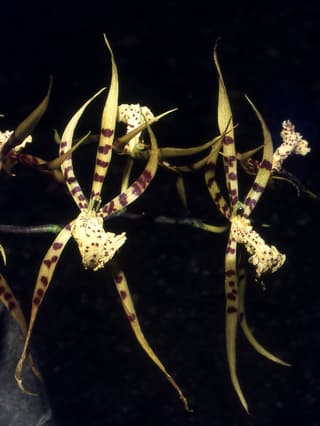
Spider Orchid
Brassia arachnoidea
Brassia arachnoidea, known as the spider orchid, is an epiphytic orchid native to the humid tropical forests of Central and South America, including Ecuador. It is named after the shape of its flowers—long, thread-like, greenish-yellow sepals and petals spotted with chocolate brown, reminiscent of a spider's legs. The leaves are broad and pleated, attached to ovoid pseudobulbs, and the flowering stems can bear up to 8 fragrant flowers, each with a diameter of 10-12 cm.
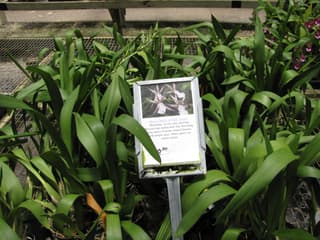
Miltassia orchid
Bratonia Charles M. Fitch
Bratonia Charles M. Fitch is a popular intergeneric orchid hybrid, a cross between Brassia verrucosa and Miltonia spectabilis. It is celebrated for its large, star-shaped flowers that resemble spiders, featuring striking lavender and purple hues with olive-green or brown spotting. The plant produces long, arching sprays of blooms that can last for several weeks, emerging from pseudobulbs with strap-like evergreen leaves.
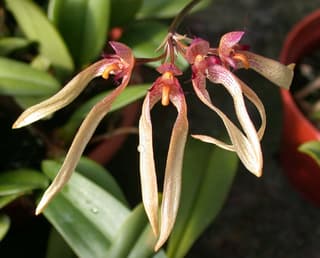
Pale Umbrella Orchid
Bulbophyllum longiflorum
The Pale Umbrella Orchid (Bulbophyllum longiflorum) is a widespread epiphytic or lithophytic orchid native to rainforests and hill forests across Africa, Madagascar, the Mascarenes, Seychelles, Southeast Asia, New Guinea, New Caledonia, Fiji and northern Australia. It grows from a creeping rhizome bearing widely-spaced, dark green pseudobulbs, each topped with a single fleshy leaf. Its most striking feature is the umbrella-like flower cluster: a semicircular umbel of small, greenish cream to yellowish blooms speckled with purple, held on an arching stem above the foliage.
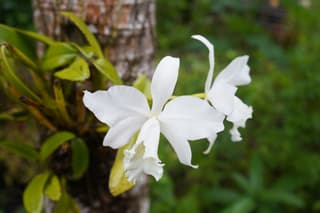
Corsage Orchid
Cattleya
Cattleya is an iconic genus of approximately 110 epiphytic and lithophytic orchid species native to the tropical Americas, ranging from Mexico to Argentina. Known as the "Queen of Orchids," the genus is celebrated for its large, fragrant, and showy flowers in vivid shades of pink, lavender, white, and yellow. In the Bloom database, a legacy entry "Cattleya spp" exists as an older collective reference for the genus. This "Cattleya" entry was created specifically for genus-level matching from Plant.id automated identifications.
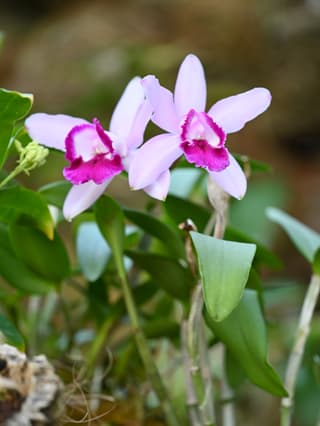
Easter Cattleya
Cattleya intermedia
Cattleya intermedia is an epiphytic orchid native to the Atlantic coastal forests of southern Brazil (São Paulo, Santa Catarina, and Rio Grande do Sul states), as well as Uruguay and Argentina. It grows on rocks and tree branches in humid coastal environments. The species produces large, fragrant, long-lasting flowers in white, lavender, and pale pink with a vibrant magenta lip, blooming in spring and summer.
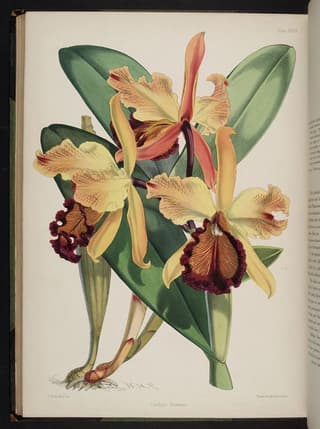
Crimson Cattleya
Cattleya labiata
Cattleya labiata is an epiphytic orchid native to northeastern Brazil, found in states such as Ceará, Pernambuco, Bahia, Sergipe, Alagoas, and Paraíba. Known as the "Queen of the Sertão" (Brazilian outback), it is one of Brazil's most emblematic orchids and was officially designated as the flower symbol of Ceará state in 2025. Its club-shaped pseudobulbs can reach 25cm in height, with a single thick, leathery light-green leaf. It produces 2 to 5 flowers per bloom, each measuring 15-20cm, in shades of pink, lilac, purple, and white, with a vibrant lip and a distinctive fragrance that inspired the famous Chanel N°5 perfume.
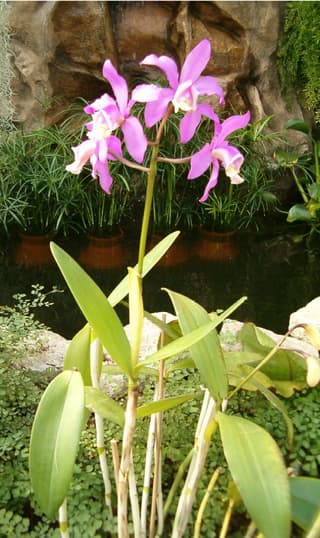
Loddiges' cattleya
Cattleya loddigesii
Cattleya loddigesii is an orchid in the Orchidaceae family, native to southern and southeastern Brazil (from Bahia southwards), eastern Paraguay and northeastern Argentina. In the Atlantic Forest it grows on trees or rocks, in sun or shade. It is a bifoliate cattleya: each slim, cylindrical pseudobulb carries two stiff, oval leaves. The flower stem comes from the top of the pseudobulb, reaches 30 cm and holds 2 to 9 flowers about 11 cm across. They are waxy and long-lasting, pale lilac to pink, and fragrant, more so towards evening. White forms also exist. It blooms in late summer. In the wild it is declining in São Paulo because of forest loss and collecting.
Mendel's Cattleya
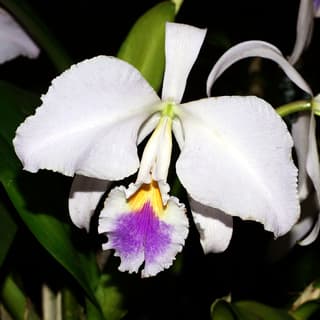
Cattleya mendelii
Cattleya mendelii, commonly known as Mendel's Cattleya, is a stunning epiphytic orchid native to the cloud forests of Colombia. It produces large, showy flowers with white to pale pink petals and sepals, crowned by a magnificent crimson-purple lip with a yellow throat. Celebrated for its intense fragrance and elegant blooms, it is considered one of the most graceful species in the Cattleya genus. It grows as a unifoliate epiphyte, meaning each pseudobulb bears a single leaf, and blooms reliably in late spring.
Cattleya Orchid
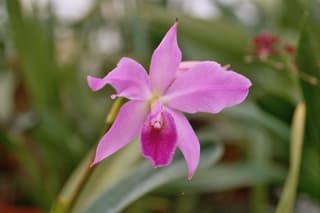
Cattleya spp
Cattleya (Cattleya spp) is a genus of epiphytic orchids native to the Atlantic Forest of Brazil and other tropical regions of South and Central America. Known as the Queen of Orchids, it produces large, showy flowers in vibrant shades of purple, pink, white, yellow, and orange. It is among the most cultivated orchids in the world, prized by collectors and orchid enthusiasts alike.
Christmas Orchid
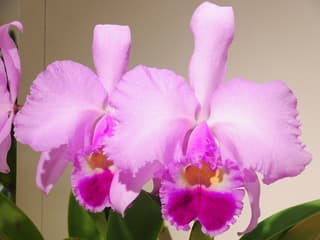
Cattleya trianae
Cattleya trianae, the Christmas Orchid or Winter Cattleya, is the national flower of Colombia. This epiphytic orchid from the Andean cloud forests produces spectacular blooms in shades of purple, white, and pink with a distinctive lip, flowering from late December through early spring.
Snow Queen Orchid
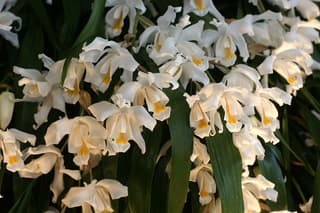
Coelogyne cristata
Coelogyne cristata is a stunning epiphytic orchid native to the cool, moist Himalayan foothills. It produces cascading sprays of pristine white flowers with golden-yellow markings on the lip, blooming in late winter to early spring. Its evergreen strap-like leaves emerge from oval pseudobulbs. This orchid is treasured by collectors for its spectacular winter blooms and intoxicating fragrance.
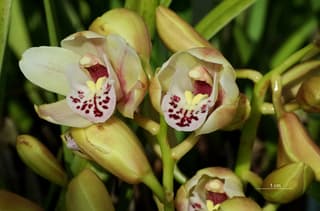
Cymbidium orchid
Cymbidium
The Cymbidium genus comprises orchids highly valued for their lush flowers and flower spikes that can last up to ten weeks. Unlike many tropical orchids, Cymbidiums prefer cooler climates and are known as cool-climate orchids. They feature oval pseudobulbs and long, strap-shaped leaves that remain green year-round.
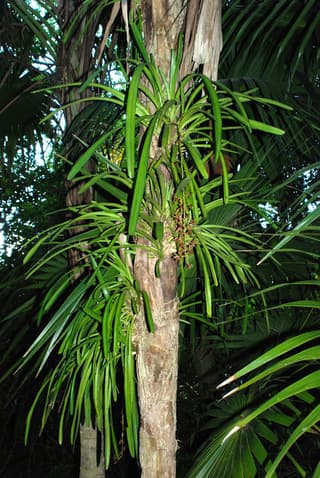
Indian Boat Orchid
Cymbidium aloifolium
Cymbidium aloifolium, commonly known as the Indian Boat Orchid or Aloe-leafed Cymbidium, is an epiphytic orchid native to tropical and subtropical forests of Asia, including India, China, and Southeast Asia. It features stiff, strap-like leaves resembling aloe foliage and produces graceful arching flower spikes with cream, pale yellow, and maroon-striped blooms.
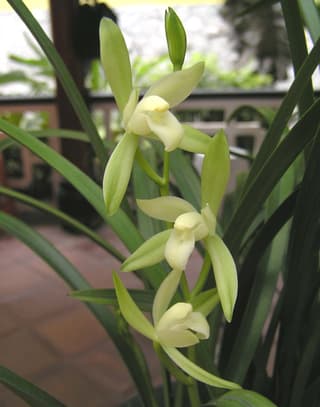
Four-season orchid
Cymbidium ensifolium
Cymbidium ensifolium is a terrestrial orchid from Asia, ranging from southern China and Japan to Vietnam, Laos, Cambodia, Sumatra and Java, where it grows in humid upland forests from sea level to 1,500 m, in soil kept damp by mist or on mossy limestone. It forms clumps of small pseudobulbs with narrow, arching, sword-shaped leaves up to 60 cm long. In summer and autumn it sends up upright 20-35 cm spikes with up to 13 flowers about 6 cm across, pale yellowish-green streaked or spotted dark red, with a strong sweet scent likened to narcissus. Because it can bloom several times a year it is known as the four-season orchid. It has been grown in China for centuries as one of the classic "lan" orchids, with many named forms in different colours and with variegated leaves.
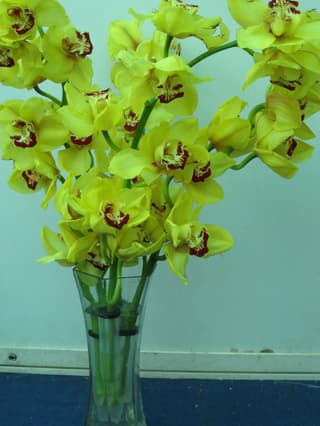
Boat Orchid
Cymbidium hybridum
Cymbidium hybridum refers to the vast group of cultivated Cymbidium hybrids (Orchidaceae) bred over more than a century from wild Asian and Australian species. These evergreen, terrestrial-to-epiphytic orchids form clumps of pseudobulbs topped with long, strap-shaped leaves, and in late winter to spring they send up sturdy arching spikes carrying a dozen or more long-lasting, waxy flowers. Modern hybrids range from miniature to large-flowered types, in shades of white, green, yellow, pink, red, cream and near-brown, often with a contrasting spotted lip. Prized as houseplants, patio specimens in mild climates, and cut flowers, boat orchids reward growers with cool nights and bright light with months of bloom.
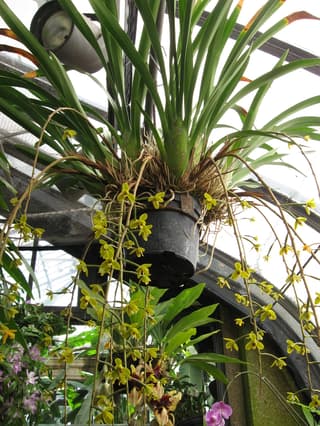
Giant Boat-lip Orchid
Cymbidium madidum
Cymbidium madidum is an orchid from eastern Australia, found from Cape York in Queensland south to the Hastings River in New South Wales. It grows on trees with thick fibrous or papery bark, such as paperbarks, and sometimes on rocks and cliffs in rainforest and other wet places. It forms large clumps of oval pseudobulbs, each carrying four to eight strap-like leaves up to 90 cm long. From late winter to summer it produces arching sprays of 10 to 70 small olive-green flowers with a yellow lip, which hang below the leaves.
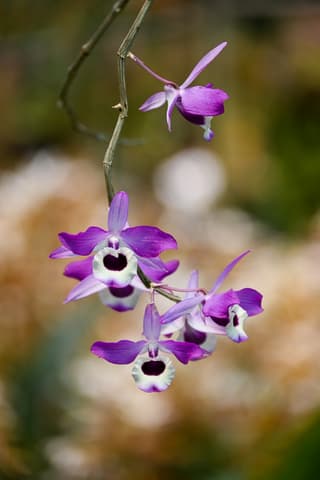
Dendrobium Orchid (genus)
Dendrobium
Dendrobium is one of the largest orchid genera, comprising over 1,800 species native to tropical and subtropical Asia, Oceania, and Pacific islands. These epiphytic plants grow on trees and are adapted to diverse climates — from humid tropical forests to cool mountain regions. They produce stunning flowers in a wide array of colors and are widely cultivated as ornamentals.
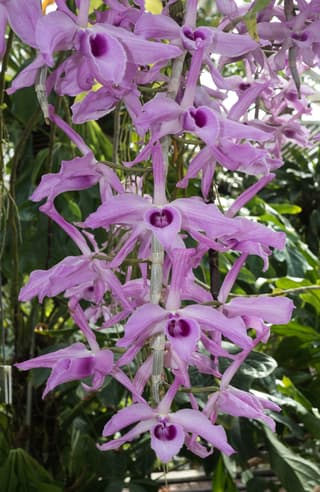
Honohono Orchid
Dendrobium anosmum
Dendrobium anosmum, commonly known as the honohono orchid or sanggumay, is a pendulous epiphytic orchid native to the Philippines, New Guinea, Thailand, and Sri Lanka. It produces long, cane-like deciduous pseudobulbs adorned with fragrant flowers in shades of pink, white, and lavender-purple, blooming profusely in spring. Despite the misleading epithet "anosmum" (odorless), most plants emit a delightfully sweet fragrance.
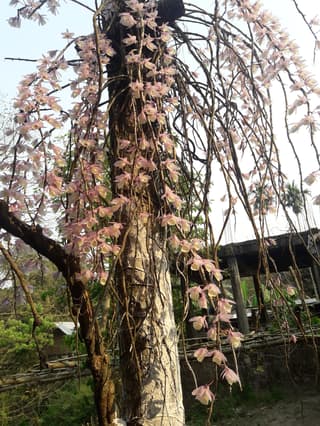
Hooded Orchid
Dendrobium aphyllum
Dendrobium aphyllum, commonly known as the Hooded Orchid, is a deciduous epiphytic orchid native to Southeast Asia, from India to Vietnam. It produces elegant, pendulous canes that shed their leaves during dormancy, then burst into bloom with delicate pinkish-violet and white fragrant flowers every spring. Its dramatic seasonal cycle makes it a prized specimen for intermediate to warm orchid growers.
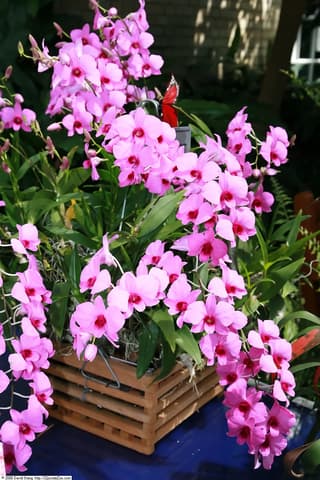
Cooktown Orchid
Dendrobium bigibbum
The Cooktown Orchid (Dendrobium bigibbum) is a stunning epiphytic orchid native to the tropical rainforests of northeastern Australia, particularly the Cape York Peninsula. It is Queensland's official state floral emblem and is prized for its arching sprays of lilac, mauve, purple, and white butterfly-shaped flowers. A popular choice for orchid enthusiasts and tropical gardens worldwide.
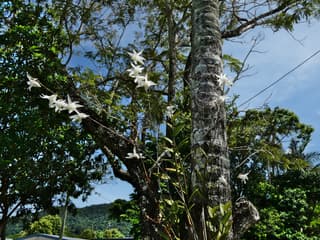
Pigeon Orchid
Dendrobium crumenatum
Dendrobium crumenatum is an epiphytic orchid in the family Orchidaceae, native to Southeast Asia and ranging from India and Sri Lanka to New Guinea. It grows on tree trunks, including the street trees of Singapore, and forms clumps of long canes swollen at the base, with leathery leaves. The fragrant white flowers with a yellow centre look like a dove in flight and last a single day. All the plants in an area bloom together about nine days after a sudden drop in temperature, usually brought by heavy rain.
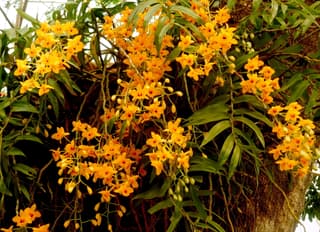
Fringe-lipped Dendrobium
Dendrobium fimbriatum
Dendrobium fimbriatum is a large epiphytic orchid native to the Himalayas (India, Nepal, Bhutan), southern China and Indochina (Myanmar, Thailand, Laos, Vietnam), where it grows on tree trunks in dense forest and on damp rocks at 600-2,400 m. Its cane-like stems reach 1-1.5 m, upright or pendulous, with leathery leaves 8-15 cm long that drop after 2-3 seasons. In spring the older, leafless canes produce hanging sprays of 6-15 lightly fragrant golden-yellow to orange flowers with a fringed lip; the form most grown (var. oculatum) has a dark maroon blotch on the lip.
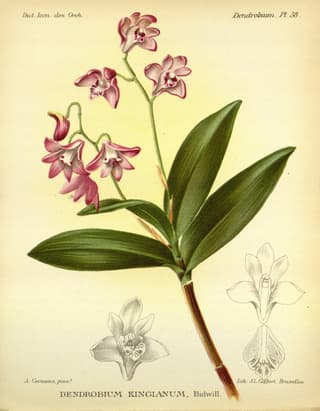
Pink Rock Orchid
Dendrobium kingianum
Dendrobium kingianum, commonly known as the Pink Rock Orchid, is a native Australian orchid that grows naturally on rocky cliff faces and outcrops along the eastern coast. It produces clusters of delicate pink, white, or purple flowers from late winter to spring, making it one of the most beloved cool-growing orchids for Australian gardeners and collectors worldwide.
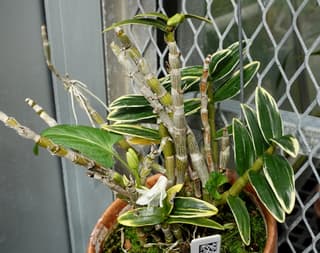
Sekkoku Orchid
Dendrobium moniliforme
Dendrobium moniliforme, known in Japan as Sekkoku and in Korea as Seokgok, is a compact epiphytic orchid native to cool, high-elevation forests of Japan, Korea, and China. Slender, cane-like pseudobulbs bear small clusters of fragrant white flowers with a yellow-green lip in late winter and spring. For centuries it has been cultivated as a prized ornamental in East Asia, admired for its resilience and delicate blooms rather than showy size.

Noble Dendrobium
Dendrobium nobile
Dendrobium nobile is a stunning deciduous orchid native to the Himalayan foothills and Southeast Asia, prized for its abundant fragrant flowers that bloom along mature canes in late winter to early spring. This sympodial orchid produces clusters of stout pseudobulbs that can reach up to 60cm in height, adorned with beautiful blooms in shades of white, pink, purple, and yellow. Popular as both an indoor and outdoor plant in warm climates, it requires a cool winter rest period to trigger flowering.

Den-Phal Orchid
Dendrobium phalaenopsis
Dendrobium phalaenopsis, commonly known as the Den-Phal orchid, is an epiphytic orchid native to northern Australia and New Guinea. Renowned for its arching sprays of purple, pink, or white blooms that last for weeks, it is the parent species behind the popular 'Den-Phal' hybrids sold in flower shops under the trade name Cooktown orchid, prized for generous flowering and comparatively easy care among orchids.
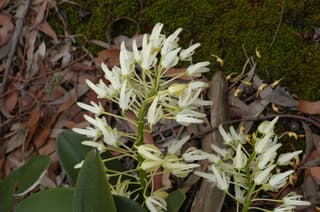
Rock Orchid
Dendrobium speciosum
Dendrobium speciosum, commonly known as the Rock Orchid or King Orchid, is a large epiphytic and lithophytic orchid native to eastern Australia. It grows naturally on rocks and tree trunks, producing robust pseudobulbs up to 45 cm long. In late winter to early spring, it produces spectacular arching sprays of white to creamy-yellow flowers with purple-spotted labellums and a soft honey fragrance.
Medium Care Orchids
Our selection of 79 medium orchids combines the characteristics of this category with moderate care needs. Ideal for those with basic experience.
Why Choose Medium Orchids?
Combining the beauty of orchids with medium difficulty level lets you enjoy this category with a balanced care commitment. Each plant was selected to offer the best characteristics of the category at the care level you are looking for.