1159 Medium Plants | 2026 Guide - Page 19
Discover 1159 medium plants for your garden. Complete care guide.
1159 Medium Plants
Showing 649-684 of 1159
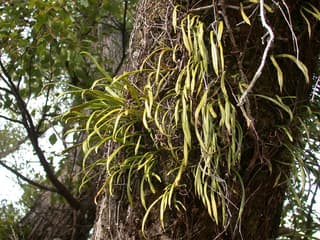
Lepisorus fern
Lepisorus
Lepisorus is a genus of mostly epiphytic and lithophytic ferns in the Polypodiaceae family, found across temperate and tropical Asia, with species such as Lepisorus thunbergianus reaching Japan, Taiwan and Hawaii. They form small tufts of leathery, strap-shaped, evergreen fronds arising from a creeping rhizome, with round sori along the underside of the fronds. They grow on tree trunks, mossy rocks and cliffs, from sea level to high elevations.
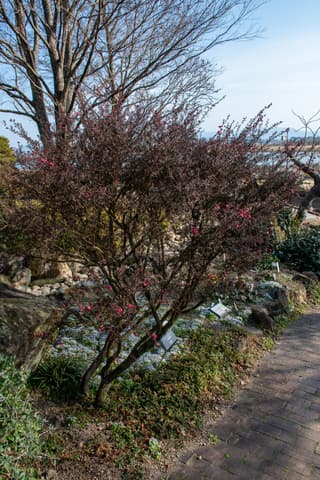
Manuka
Leptospermum scoparium
Leptospermum scoparium, commonly known as Manuka or New Zealand Tea Tree, is an evergreen shrub native to New Zealand and southeast Australia. It is widely recognized for its delicate five-petaled flowers and small, pointed, intensely aromatic leaves. This plant is the primary source for the production of the famous Manuka honey, valued worldwide for its unique antibacterial properties.
Redlead Roundhead
Leratiomyces ceres
Leratiomyces ceres, commonly known as the 'Redlead Roundhead', is a striking mushroom recognizable by its bright red to brick-red cap. It frequently appears on woodchip mulch in urban gardens and parks. Although visually attractive, it is considered poisonous and must not be consumed.
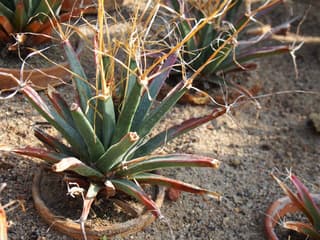
Agave Cactus
Leuchtenbergia principis
Leuchtenbergia principis, commonly known as the Agave Cactus, is a unique cactus native to central and northern Mexico. It is the only species in its genus and stands out for its long, bluish-green triangular tubercles, which give it an agave-like appearance, topped with papery and harmless spines. It develops a thick taproot and, in summer, produces large, fragrant yellow flowers.
reddening lepiota
Leucoagaricus americanus
Leucoagaricus americanus, commonly known as the reddening lepiota, is a saprobic mushroom characterized by its white cap with reddish-brown scales that stains yellow then deep red when bruised or aged. It typically grows in clusters on wood chips, mulch, or near stumps. While striking in appearance, it is not recommended for consumption due to potential gastrointestinal distress and its similarity to toxic species.
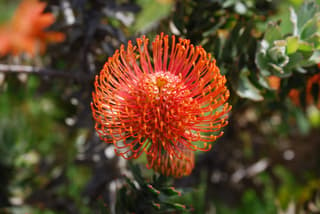
Pincushion Protea
Leucospermum cordifolium
A low, rounded evergreen shrub from the Western Cape of South Africa, endemic to the fynbos biome. It grows 1.5–2 m tall and 1.5–2.5 m wide. The leaves are heart-shaped to oblong, leathery, and glossy. Striking spherical inflorescences, 10–12 cm in diameter, with protruding styles resemble a pincushion; they bloom in orange, red, or yellow.
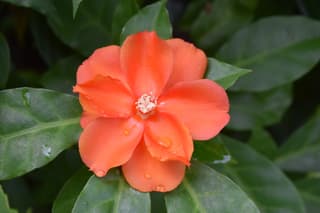
Leaf Cactus
Leuenbergeria
Leuenbergeria is a small genus of leafy, tree-like cacti native to the Caribbean basin, Central America and northern South America. Unlike most cacti, Leuenbergeria species keep true leaves and develop woody, bark-covered stems while young, so at first glance they look more like a spiny shrub than a classic cactus. The genus was split from the broader Pereskia group in 2012 and now forms its own subfamily, Leuenbergerioideae, considered the most primitive lineage within Cactaceae. The best documented species, Leuenbergeria bleo (Rose Cactus), grows as a spiny shrub or small tree up to 8 meters tall along riverbanks and in secondary forest, producing showy orange to pink rose-like flowers followed by edible yellow fruit. Leaves, fruit and bark have a long history of traditional medicinal use across Central America and Southeast Asia.
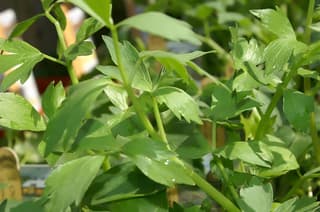
Lovage
Levisticum officinale
Levisticum officinale is a robust, perennial herb in the Apiaceae family, native to the Mediterranean region. The plant reaches a height of up to 180 cm and forms a dense clump of finely branched, glossy green leaves containing celery-scented essential oils. In summer, numerous yellow flowers appear in umbels, followed by aromatic seeds. The entire plant—leaves, stems, roots, and seeds—is edible and possesses strong medicinal and culinary properties.
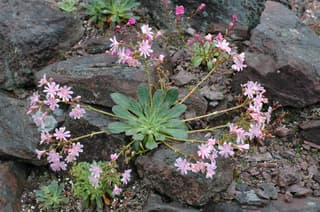
Siskiyou Lewisia
Lewisia cotyledon
Lewisia cotyledon, commonly known as Siskiyou Lewisia or Cliff Maids, is an evergreen succulent perennial native to the rocky subalpine mountains of southern Oregon and northern California. It forms compact basal rosettes of thick, fleshy leaves and produces stunning multi-petaled flowers in shades of pink, orange, white, yellow, and red from spring into early summer. A tough yet delicate-looking alpine gem, it thrives in rocky, well-drained soils and is highly prized in rock gardens and alpine containers.
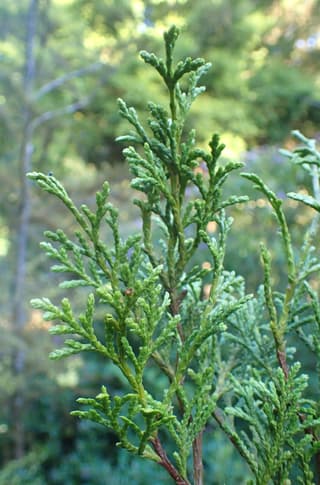
New Zealand Cedar
Libocedrus bidwillii
Libocedrus bidwillii, known as pahautea or kaikawaka in Māori, is an evergreen conifer endemic to New Zealand. This imposing conifer can reach 25 meters in height in its natural habitat, although in cultivation it usually stays between 8 and 15 meters with a narrow pyramidal crown 3 to 5 meters wide. Its leaves are small, scale-like, and glossy dark green, arranged in four rows on flattened branchlets. Adapted to the montane and subalpine forests of New Zealand's North and South Islands, at altitudes between 250 and 1,850 meters, it thrives in cool climates with high rainfall and frequent fog. It is one of New Zealand's slowest-growing conifers and can live between 800 and 1,000 years. Its wood, light reddish with a slightly purple hue when cut, was prized by the Māori for its lightness and rot resistance.
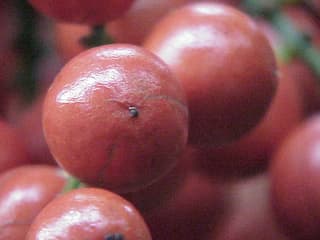
Ruffled Fan Palm
Licuala grandis
Licuala grandis, commonly known as the Ruffled Fan Palm, is a striking tropical palm native to Vanuatu in the Pacific Islands. Its distinctive circular, pleated leaves are among the most unique in the plant kingdom, growing up to 60 cm in diameter. This slow-growing palm is highly prized as an ornamental specimen for both indoor settings and tropical outdoor gardens.
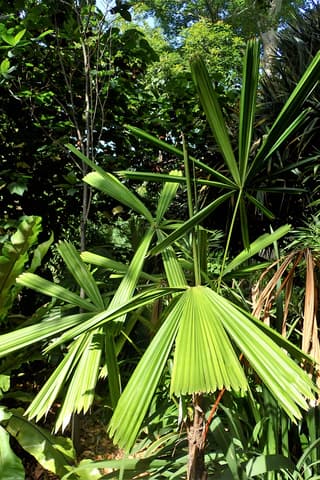
Mangrove Fan Palm
Licuala spinosa
The Mangrove Fan Palm (Licuala spinosa) is a tropical clumping palm native to Southeast Asia, recognized by its deeply divided fan-shaped leaves and spiny leaf stems. It thrives in coastal swamps, riverbanks, and mangrove edges, making it a striking ornamental specimen for tropical and subtropical gardens.
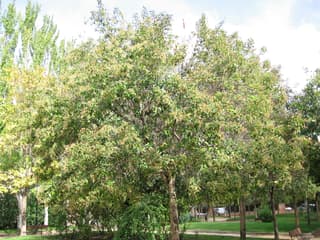
Japanese Privet
Ligustrum japonicum
Japanese privet (Ligustrum japonicum) is a dense, fast-growing evergreen shrub native to Japan, Korea, and China. It is one of the most popular hedging and screening plants in temperate and subtropical landscapes worldwide. Its leaves are thick, leathery, and glossy dark green — hence the common alias "wax-leaf privet." In late spring and summer it produces showy panicles of small white flowers with a sweet fragrance, followed by clusters of blue-black berries that persist into winter. It is prized for its tolerance of heat, drought, urban pollution, and aggressive pruning.
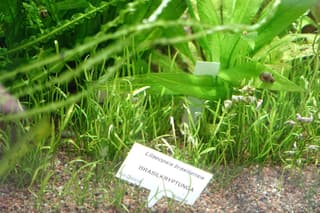
Micro Sword
Lilaeopsis brasiliensis
Lilaeopsis brasiliensis is a popular aquatic groundcover plant from the Apiaceae family, native to South American waters. It forms dense, low carpets with fine, grass-like leaves and reaches a maximum height of about 7 cm. The plant spreads via runners (stolons) and is excellent for foreground planting. It is fully aquatic and is cultivated permanently submerged.
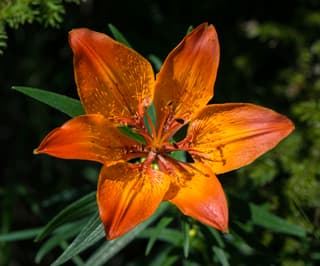
Orange Lily
Lilium bulbiferum
Lilium bulbiferum, commonly known as the Orange Lily or Fire Lily, is a hardy bulbous perennial native to south-central Europe. It produces large, upward-facing, vibrant orange flowers with dark spots, blooming from late spring to early summer. Known for its resilience in cold climates, it is a popular ornamental choice for borders, cottage gardens, and cutting gardens.
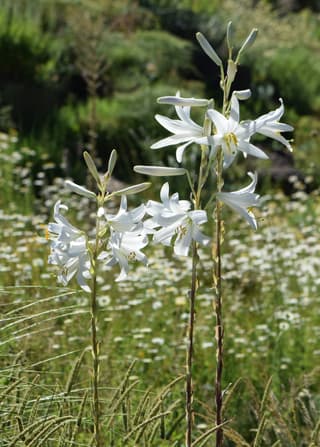
Madonna lily
Lilium candidum
Lilium candidum, the Madonna lily, is a bulbous perennial plant known for its striking, pure white trumpet-shaped flowers and heavy, sweet fragrance. Unlike most lilies that are planted deep, the Madonna lily is planted shallowly and produces a basal rosette of leaves in the autumn that remains through the winter. It has been cultivated for over 3,000 years and is one of the oldest known garden plants.
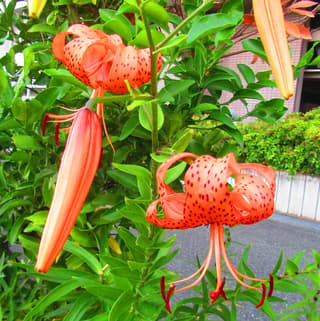
Tiger Lily
Lilium lancifolium
The Tiger Lily (Lilium lancifolium) is a bulbous perennial native to East Asia (Japan, China, Korea), prized for its striking orange flowers with dark spots and recurved petals. It blooms in mid-to-late summer and returns reliably each year. WARNING: Severely toxic to cats — all plant parts can cause fatal kidney failure even in small amounts.
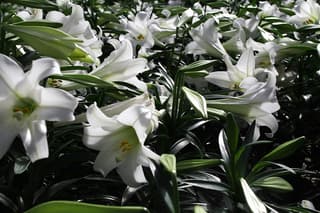
Easter Lily
Lilium longiflorum
Lilium longiflorum, popularly known as the Easter Lily, is a perennial bulbous plant native to the Ryukyu Islands of Japan. It is widely admired for its large, white, trumpet-shaped flowers that emit a sweet and intense fragrance. Its stems are erect and covered with glossy green, lanceolate leaves. While it is a garden plant in temperate climates, it is frequently grown in pots for seasonal decorations.
Regal Lily
Lilium regale
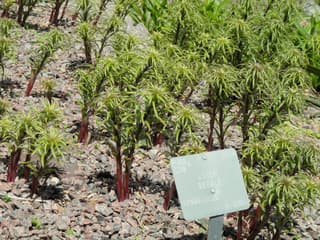
The Regal Lily (Lilium regale) is one of the most spectacular and fragrant bulbous plants in cultivation, native to the rocky river valleys of western China. Its large, trumpet-shaped flowers are pure white inside with a rich yellow throat, and flushed rose-purple on the outside. Blooming in midsummer, it fills the garden with an intoxicating, sweet fragrance. Winner of the Royal Horticultural Society Award of Garden Merit.
Necklace Fern
Lindsaea
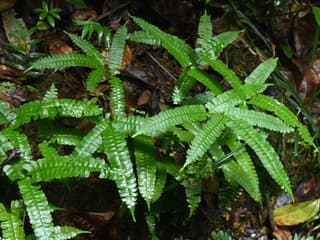
Lindsaea is a genus of roughly 180 small to medium-sized ferns in the family Lindsaeaceae, commonly known as necklace ferns. Native to moist tropical and subtropical forests across Asia, Australia, the Pacific, Madagascar, and South America, these ferns grow as low, spreading clumps of finely divided, leathery fronds. Species such as the screw fern (Lindsaea linearis) and weeping fern (Lindsaea pendula) are grown as ornamental houseplants and shade-garden specimens for their delicate, evergreen foliage.
Sweetgum
Liquidambar styraciflua
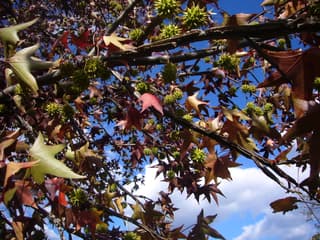
Sweetgum (Liquidambar styraciflua) is a majestic deciduous tree native to eastern North America. Celebrated for its spectacular autumn foliage in shades of red, orange, yellow, and purple, it is one of the most admired ornamental trees in parks and gardens. It can reach up to 80 feet tall and produces distinctive spiky seed pods known as "gumballs."
Lisianthus
Lisianthus russellianus
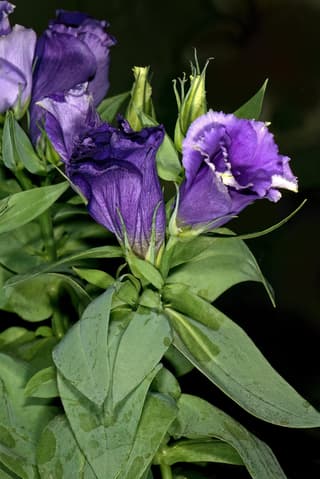
Lisianthus (Eustoma russellianum, synonym Eustoma grandiflorum) is an annual or biennial herbaceous plant in the Gentianaceae family, native to the prairies and moist fields of the southern United States, Mexico, and northern South America. Known for its large, silky, rose- or tulip-shaped flowers, it is one of the most widely cultivated cut flowers in the world, frequently used in wedding bouquets and floral arrangements due to its elegance and long vase life. Its erect stems support multiple blooms in shades of purple, white, pink, lavender, and blue, above waxy, grayish-green foliage.
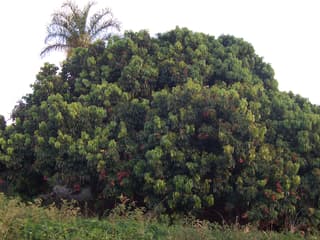
Lychee
Litchi chinensis
Lychee (Litchi chinensis) is a subtropical fruit tree native to southern China (Guangdong and Fujian provinces), belonging to the Sapindaceae family. Renowned for its delicious rose-colored fruits with juicy, translucent white flesh and a floral fragrance, it is cultivated across tropical and subtropical regions worldwide. The evergreen tree grows slowly, reaching up to 12 meters in height under ideal conditions. Small white flowers emerge in spring, developing into the characteristic clusters of rough-skinned fruits.
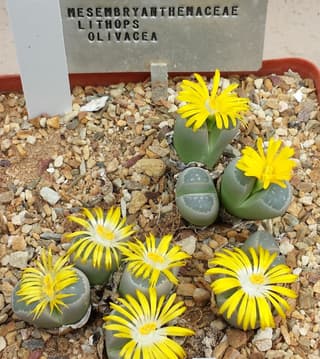
Living Stones
Lithops sp
Living Stones (Lithops sp) are fascinating succulents native to southern Africa, renowned for their extraordinary ability to mimic pebbles and rocks in their desert habitat. Belonging to the family Aizoaceae, these miniature marvels evolved thick, fleshy leaf pairs that store water, enabling survival in extreme arid conditions. Standing just 3-5 cm tall, they produce stunning daisy-like flowers in yellow, white, or orange during autumn and winter.
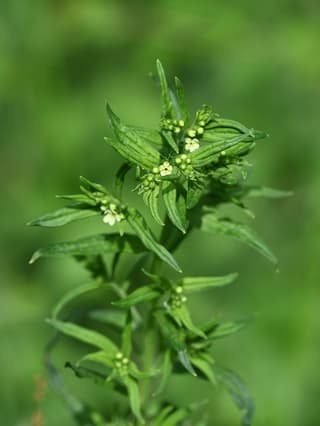
Stoneseed / Gromwell (genus)
Lithospermum
Lithospermum is a genus of drought-tolerant herbaceous perennials in the Boraginaceae family, widely distributed across temperate regions of North America, Europe, and Asia. The genus name derives from the Greek lithos (stone) and sperma (seed), referring to the characteristically hard, polished nutlets. Plants typically grow in dry prairies, open woodlands, and rocky slopes, thriving with minimal water input.
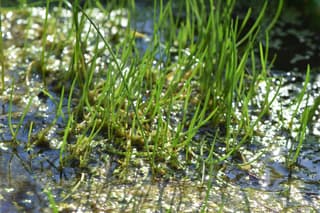
Shoreweed
Littorella uniflora
Littorella uniflora, commonly known as shoreweed, is a small aquatic perennial plant native to the shores of nutrient-poor freshwater lakes across Northwestern Europe. It forms dense, grass-like carpets on sandy or gravelly substrates and is popular in aquascaping for its fine-textured, low-growing foreground coverage. This dioecious plant produces inconspicuous white flowers when grown emersed in summer.

Chinese Fan Palm
Livistona chinensis
Livistona chinensis, commonly known as the Chinese Fan Palm or Fountain Palm, is a slow-growing tropical palm native to southern Japan, Taiwan, and southern China. Its distinctive fan-shaped fronds with gracefully drooping tips can reach up to 15 meters tall in the wild, making it a striking ornamental choice for gardens and spacious interiors.
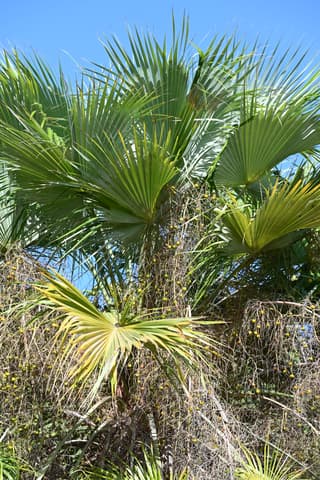
Footstool Palm
Livistona rotundifolia
Livistona rotundifolia, commonly known as the Footstool Palm, is an elegant tropical palm native to Southeast Asia. It is characterized by its large, glossy, rounded leaves that resemble a fan, hence its popular name. It is a moderate-growing plant that can reach considerable heights in its natural habitat, though its size remains more contained when grown in pots. Highly valued for its ornamental beauty, it is ideal for well-lit interiors and tropical gardens.
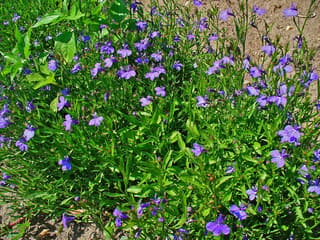
Lobelia
Lobelia
Lobelia is a large genus of roughly 400 flowering plant species in the bellflower family (Campanulaceae), ranging from low-growing bedding annuals like Lobelia erinus to the herbaceous Lobelia inflata (Indian tobacco), historically used in traditional medicine. Most garden lobelias form compact mounds or trailing mats covered in small two-lipped flowers in shades of blue, purple, pink, white, and red, blooming from spring through fall. All parts of the plant contain the alkaloid lobeline and are toxic if ingested by humans and pets.
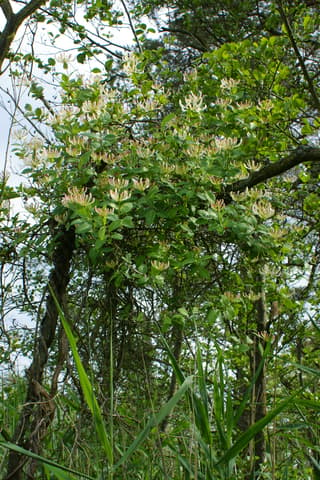
European Honeysuckle
Lonicera periclymenum
Lonicera periclymenum, commonly known as European Honeysuckle or Woodbine, is a vigorous deciduous climbing vine native to Europe and Western Asia. Celebrated for its intensely fragrant tubular flowers that transition from creamy white and pink to golden yellow, it blooms from late spring through summer, attracting bees, moths, and butterflies. Its twining stems can reach 7 metres, making it ideal for covering trellises, fences, and pergolas. The plant produces small red berries in autumn that are attractive to birds but mildly toxic to humans and pets.
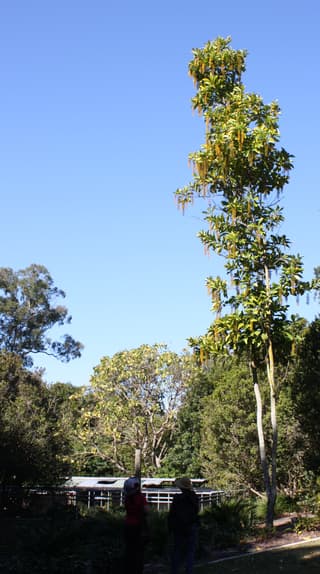
Golden Chain Tree
Lophantera lactescens
The Golden Chain Tree (Lophantera lactescens) is a stunning ornamental tree native to the Brazilian Amazon rainforest, belonging to the family Malpighiaceae. It is renowned for its spectacular long, pendulous inflorescences of bright yellow flowers that cascade downward like golden chains. Growing 10–20 metres tall with a dense pyramidal canopy, it is widely planted as a street tree and landscape specimen across tropical regions worldwide.
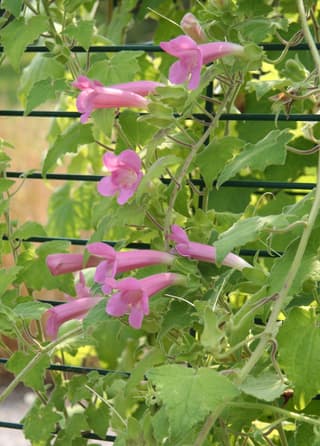
Climbing Snapdragon
Lophospermum erubescens
Lophospermum erubescens, also known as climbing snapdragon or Mexican twist, is a tender perennial climber native to the mountainous regions of Mexico, often grown as an annual in colder climates. Related to snapdragons (Antirrhinum), the plant features heart- to triangular-shaped, hairy leaves and large, pink to white trumpet-shaped flowers that bloom from spring to fall and attract hummingbirds. Its twining leaf stalks make the plant well-suited for trellises, hanging baskets, and training along fences and lattices.
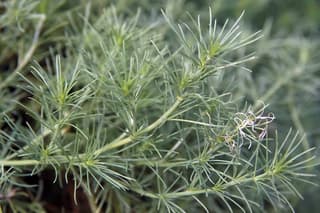
Parrot's Beak
Lotus berthelotii
Lotus berthelotii, commonly known as Parrot's Beak, is a trailing perennial native to the Canary Islands and Cape Verde. It produces striking scarlet, claw-shaped flowers that resemble a parrot's beak, set against fine silvery foliage. A favourite for hanging baskets and garden walls.
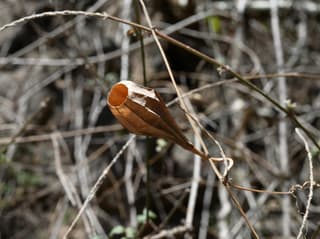
Angled Luffa
Luffa acutangula
Angled Luffa (Luffa acutangula) is a fast-growing annual climbing vine in the Cucurbitaceae family, native to tropical Asia. Its young fruits are a popular vegetable in Asian cuisine, while mature fruits develop internal fibrous networks used as natural sponges. It thrives in warm, humid climates with full sun exposure.
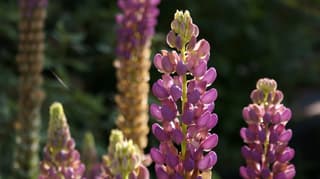
Lupine
Lupinus hybridus
Lupinus hybridus, commonly known as Lupine or Garden Lupine, is a herbaceous plant belonging to the Fabaceae family. It produces striking vertical flower spikes in shades of blue, purple, pink, white, and yellow, making it one of the most spectacular flowering plants in the garden. A product of hybridization between American and Mediterranean species, the hybrid lupine is widely prized in landscaping for its bold beauty and abundant spring and summer blooms.
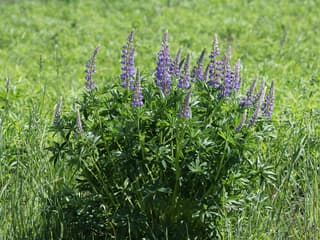
Perennial Lupine
Lupinus polyphyllus
Lupinus polyphyllus, commonly known as perennial lupine or bigleaf lupine, is a perennial herbaceous plant belonging to the Fabaceae family, native to western North America. It is distinguished by its large palmate leaves composed of 9 to 17 velvety leaflets and its majestic upright flower spikes that can reach 120 cm in height. Its butterfly-shaped flowers come in a wide range of colors, from blue to purple, as well as pink, white, red, and yellow. As a nitrogen-fixing plant thanks to its symbiotic root nodules, it naturally enriches poor soils while offering a remarkable floral display from spring to summer.
What are Medium Plants?
Medium Plants require a bit more attention and basic gardening knowledge. These plants thrive with regular care and some cultivation experience. Ideal for those who already master the basics.
Tips for Growing Medium Plants
medium plants need a balance between attention and freedom. Keep a regular care routine, watch leaves to identify problems early, and adjust watering by season.