1159 Medium Plants | 2026 Guide - Page 18
Discover 1159 medium plants for your garden. Complete care guide.
1159 Medium Plants
Showing 613-648 of 1159
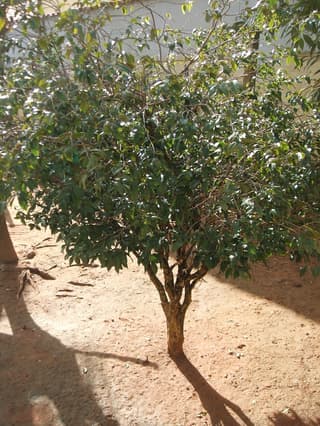
Jabuticaba
Jaboticaba
The jabuticabeira is a slow-growing, evergreen Brazilian fruit tree known for its cauliflory: white flowers and fruits emerge directly from the trunk and thick branches rather than just at the tips of the limbs. Native to the Atlantic Forest (primarily Minas Gerais, São Paulo, and Rio de Janeiro), it can take 8 to 10 years to bear fruit when grown from seed, but grafted seedlings or those obtained through air layering fruit much earlier, between 3 and 5 years. It is widely used as both a fruit-bearing and ornamental tree, including in pots and as bonsai.
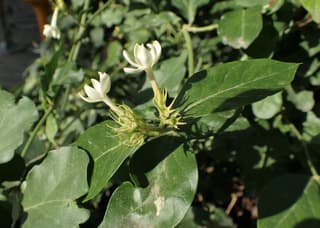
Jasmine
Jasminum
Jasminum is a genus of about 200 species of shrubs and vines in the olive family (Oleaceae), native to tropical and warm temperate regions of Asia, Africa, Australasia and Oceania. Grown for their intensely fragrant, star-shaped flowers, usually white or yellow, jasmines range from compact evergreen shrubs to vigorous climbing vines that can reach several meters with support. Popular garden and houseplant species include Jasminum officinale (common jasmine), Jasminum sambac (Arabian jasmine, used to scent jasmine tea) and Jasminum polyanthum (a fast-growing winter-flowering climber). Most jasmines bloom heaviest in spring and summer, filling gardens and homes with perfume especially in the evening. Because this entry covers the genus as a whole, care guidance below reflects typical requirements shared across common cultivated species; individual species can vary in hardiness, mature size and growth habit.
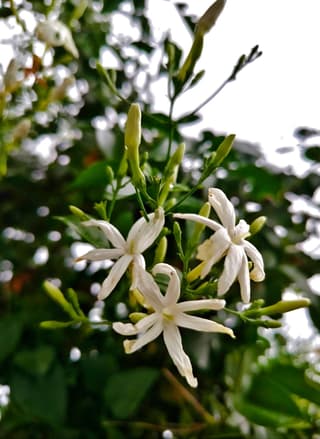
Azores Jasmine
Jasminum azoricum
Azores jasmine (Jasminum azoricum) is an evergreen climbing shrub in the olive family (Oleaceae), prized for its fragrant white flowers with a subtle citrus scent that bloom from spring through fall. With woody stems at the base and trailing, semi-woody growth above, it can reach 2.5 to 6 meters in height when given support to climb. Its glossy, dark green trifoliate leaves keep the plant attractive year-round.
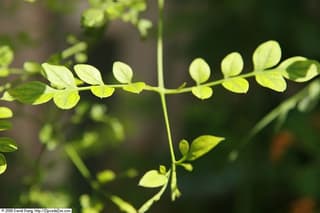
Common Jasmine
Jasminum officinale
Jasminum officinale, known as Common Jasmine or True Jasmine, is a vigorous semi-evergreen climbing vine native to Persia and the Himalayas. Celebrated worldwide for its intensely sweet, iconic fragrance, it produces clusters of delicate white flowers tinged pink in bud from late spring through autumn. A single plant can perfume an entire garden.
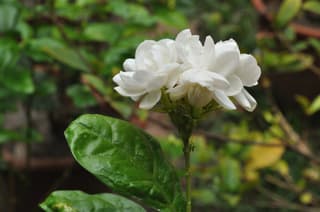
Arabian Jasmine
Jasminum sambac
Arabian Jasmine (Jasminum sambac) is a tropical, evergreen climbing shrub native to South and Southeast Asia, particularly India. Celebrated for its intensely fragrant white flowers that bloom in the evening, it is one of the most culturally significant plants in Asia. It serves as the national flower of the Philippines (sampaguita) and one of Indonesia's three national flowers (melati putih). Widely grown as an ornamental, it is also treasured for jasmine tea production, perfumery, and traditional medicine.
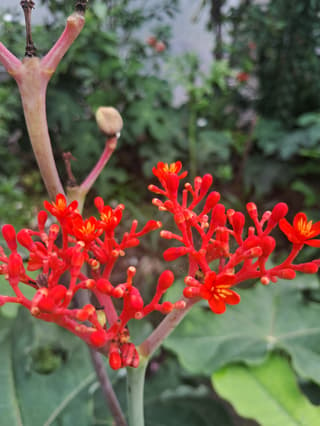
Buddha belly plant
Jatropha podagrica
Jatropha podagrica is a striking caudex-forming succulent native to Central America and southern Mexico. Its characteristic swollen, bottle-like stem stores water and nutrients, granting exceptional drought tolerance. It produces vivid orange-red flowers in dense clusters on long peduncles almost year-round, creating a striking contrast with its large, deeply lobed leaves. WARNING: all parts of the plant are highly toxic to humans, cats, and dogs.
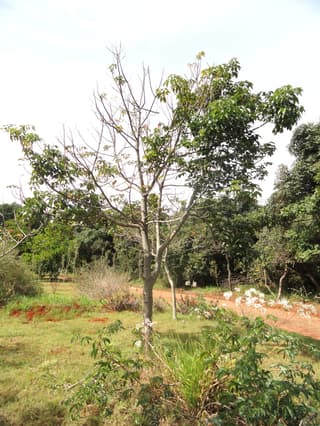
Anda-assu
Joannesia princeps
Joannesia princeps, popularly known as the Anda-assu or Cutieira, is a large deciduous tree in the Euphorbiaceae family, endemic to the Atlantic Forest of eastern Brazil, ranging from southern Bahia to Espírito Santo and Minas Gerais. It can exceed 20 meters in height, featuring a broad canopy, grayish bark, and alternate digitate leaves with 3 to 5 ovate to elliptical leaflets. It produces small white or purplish flowers between winter and early spring, followed by globose drupaceous fruits that house seeds of significant medicinal and industrial value. The species is classified as Vulnerable by the IUCN due to habitat loss.
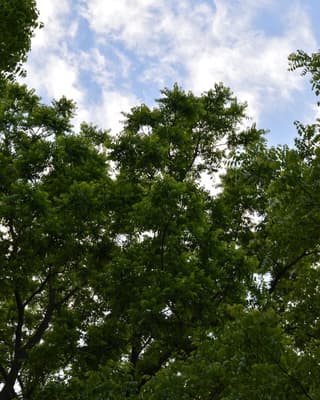
Eastern Black Walnut
Juglans nigra
Juglans nigra, the eastern black walnut, is a large deciduous tree native to the eastern and central United States, prized for its rich, dark, highly figured wood, its edible nuts, and its imposing shade canopy. Mature specimens typically reach 20-30 m tall with a broad, rounded crown and can live well over a century. The pinnately compound leaves, made up of 15-23 lance-shaped leaflets, turn a soft yellow in autumn before dropping early, and the deeply furrowed, dark gray-brown bark gives older trees a rugged, sculptural silhouette. In spring, inconspicuous green catkins appear alongside the emerging leaves, followed by round, thick-husked nuts that ripen in fall and stain hands and pavement a deep brown. One of the tree's most distinctive traits is allelopathy: its roots, leaf litter and nut husks release juglone, a chemical that suppresses or kills many nearby plants — including tomatoes, azaleas and blueberries — within its dripline, so it is best planted well away from vegetable gardens and ornamental beds. Juglone and other compounds in the shavings and hulls can also be irritating to dogs and, notably, toxic to horses if used as bedding. Despite these quirks, black walnut is a valuable wildlife tree, feeding squirrels and other mammals, and its lumber is among the most sought-after hardwoods in North America.
English walnut
Juglans regia
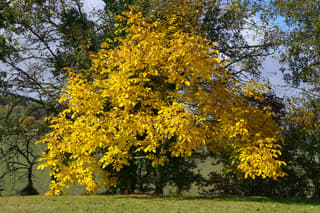
The English walnut (Juglans regia) is a deciduous tree in the Juglandaceae family, growing up to 20–30 meters tall. Originally native from the Balkans to Central Asia, it is now cultivated worldwide for its delicious, oil-rich nuts and valuable timber. It is characterized by a wide, spreading crown and fragrant, odd-pinnate leaves. In spring, its inconspicuous greenish flowers bloom in catkins and are wind-pollinated.
Juniper
Juniperus
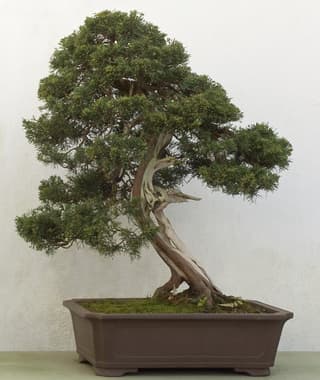
Juniper (Juniperus) is a genus of evergreen conifers in the Cupressaceae family, widely distributed across the Northern Hemisphere. It comprises 50–70 species ranging from ground-cover shrubs to tall trees. Junipers are exceptionally popular for bonsai cultivation, particularly J. chinensis, J. procumbens, J. rigida, and J. squamata.
Chinese Juniper
Juniperus chinensis
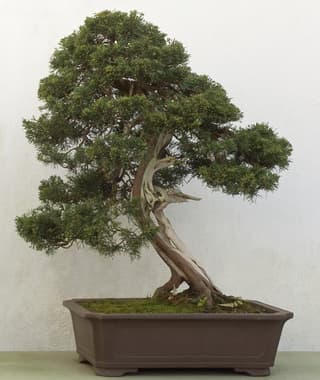
Juniperus chinensis, commonly known as Chinese Juniper, is an evergreen conifer native to China, Mongolia, Korea, and Japan. It is one of the most popular bonsai species worldwide, celebrated for its remarkable durability, adaptability to training, and striking foliage that can be either scale-like (adult) or needle-like (juvenile). Outdoor specimens can reach impressive heights, and the species offers hundreds of cultivars including Hetzii, Blue Point, Spartan, and the beloved dwarf Procumbens Nana.
Resurrection Lily
Kaempferia rotunda
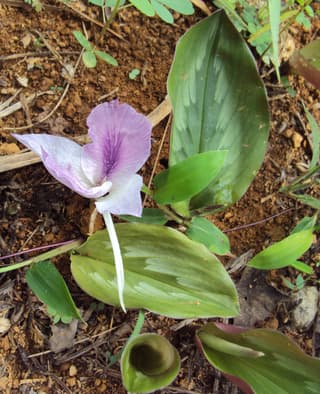
Kaempferia rotunda, commonly known as Resurrection Lily or Tropical Crocus, is a perennial herbaceous plant in the Zingiberaceae family, native to Southeast Asia including India and Myanmar. It is celebrated for its stunning purple and white flowers that emerge directly from the ground before the leaves appear each spring, creating a magical display reminiscent of a resurrection. The broad ornamental leaves feature decorative patterns in shades of green. During winter, the plant enters full dormancy, dying back completely to the rhizome, only to resurge vigorously the following season.
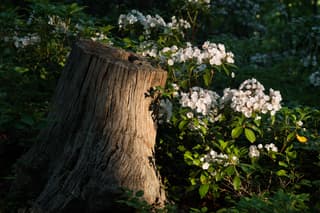
Mountain Laurel
Kalmia
Kalmia is a small genus of broadleaf evergreen shrubs native to eastern North America, best known through Kalmia latifolia, the showy mountain laurel of Appalachian woodlands. Clusters of saucer-shaped white-to-pink-to-purple flowers with intricate spring-loaded anthers open in late spring, set against glossy, leathery leaves. Every part of the plant contains grayanotoxins and is dangerously toxic if ingested.
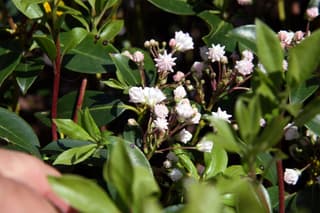
Mountain Laurel
Kalmia latifolia
Mountain laurel is a dense, rounded evergreen shrub native to the eastern United States, prized for its striking clusters of cup-shaped flowers that bloom in late spring. Its glossy, leathery leaves provide year-round structure, while the saucer-shaped pink, white, or purple-marked blooms attract pollinators. Despite its beauty, every part of the plant is highly toxic, so it is best admired at a safe distance from pets and children.
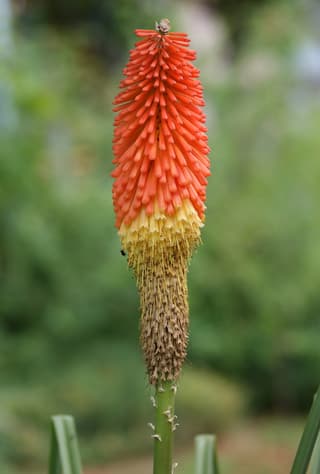
Red Hot Poker (genus)
Kniphofia
Kniphofia is a genus of herbaceous perennial plants native to Africa, famous for their tall, torch-like flower spikes in shades of red, orange, and yellow. Commonly called Red Hot Poker or Torch Lily, they are prized in ornamental gardens for their drought tolerance and spectacular late-season blooms.
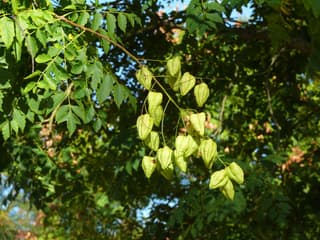
Golden Rain Tree
Koelreuteria paniculata
Koelreuteria paniculata, commonly known as the Golden Rain Tree, is a deciduous ornamental tree native to China, Korea, and Japan. It is celebrated for its spectacular cascading panicles of bright yellow flowers in midsummer and its distinctive papery, lantern-like seed pods that turn from green to pinkish-bronze in late summer and persist through winter, providing multi-season interest.
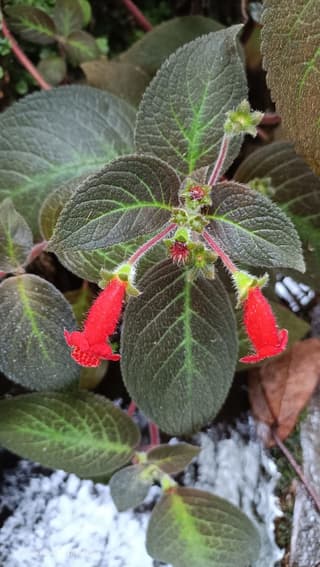
Tree Gloxinia
Kohleria amabilis
Kohleria amabilis, known as the tree gloxinia, is a rhizomatous perennial in the Gesneriaceae family native to Colombia and Honduras. It features velvety, silver-patterned oval leaves and nodding tubular flowers that are pink outside with red or purple spotting inside, blooming from late winter through summer.
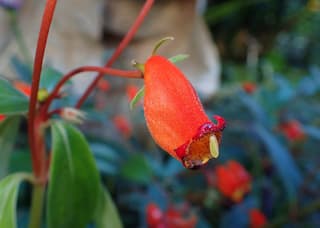
Tree Gloxinia
Kohleria eriantha
Kohleria eriantha (often treated today as a synonym of Kohleria hirsuta) is a rhizomatous (scaly-rooted) perennial from the Gesneriaceae family—the same family as the African violet—native to the tropical mountain cloud forests of South America, primarily Colombia and Ecuador. Its velvety, hairy leaves and tubular, orange-red flowers with yellow-spotted throats that bloom from summer to fall make it a popular potted houseplant. Due to its rhizomes, it tolerates drought better than persistently waterlogged soil.
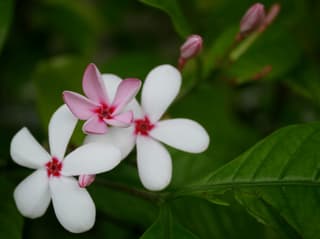
Pink Kopsia
Kopsia fruticosa
Kopsia fruticosa, commonly known as Pink Kopsia or Shrub Vinca, is a tropical evergreen shrub in the Apocynaceae family, native to Southeast Asia (Malaysia, Indonesia, Thailand, and surrounding regions). Renowned for its year-round display of soft pink flowers with a striking red center, it is a prized ornamental plant in tropical and subtropical gardens. Its glossy, leathery leaves and compact upright habit make it equally suitable for garden beds, hedges, and container growing.
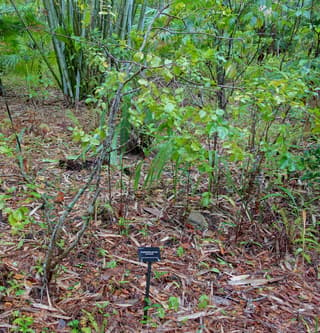
Black Ironwood
Krugiodendron ferreum
Black Ironwood (Krugiodendron ferreum) is a tree native to South Florida, the Caribbean, and Central America, belonging to the Rhamnaceae family. Famous for having the densest wood in the Americas—with a density of up to 1.42 g/cm³, so heavy that it sinks in water—it is a slow-growing and extremely long-lived species. It features opposite, leathery, oval leaves with an emarginate apex, persisting on the branches for two to three years. The flowers are small, greenish, and inconspicuous; the fruits are dark purple drupes, favored by birds and wild mammals. It grows in rocky limestone environments, dry forests, and coastal hammocks, tolerating intense drought, salt spray, and hurricane-force winds.
Sheathed Woodtuft
Kuehneromyces mutabilis
The Sheathed Woodtuft (Kuehneromyces mutabilis) is an excellent edible mushroom that grows in clusters on the stumps of deciduous trees. Its cap is hygrophanous, meaning it changes color based on moisture levels: it is yellowish-brown when wet and turns lighter in the center as it dries. The stem features a ring, below which are small dark scales; this is a critical identifying feature to distinguish it from the deadly poisonous Funeral Bell (Galerina marginata).
Scotch laburnum
Laburnum alpinum
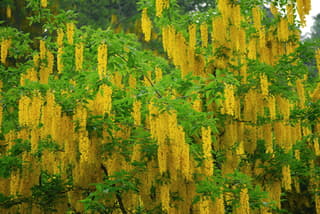
Laburnum alpinum, commonly known as Scotch laburnum or Alpine golden chain, is a small deciduous tree in the family Fabaceae, native to the mountains of central and southern Europe. It is celebrated for its exceptionally long, pendulous racemes of fragrant yellow flowers in late spring. IMPORTANT: All parts of the plant are severely toxic due to the alkaloid cytisine, particularly the seeds, which can cause life-threatening poisoning in humans, dogs, cats, and horses.
Common Laburnum
Laburnum anagyroides
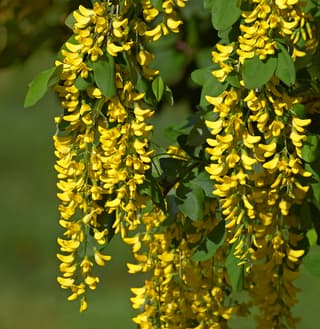
The Common Laburnum (Laburnum anagyroides) is a small, deciduous tree native to the mountainous regions of Central and Southern Europe (the Alps, Italy, the Balkans). It is known for both its toxic content and its stunning spring bloom: in May–June, it is covered with long, pendulous clusters of fragrant, golden-yellow flowers. All parts of the plant—roots, bark, leaves, flowers, seeds, pods—are highly poisonous; it contains the alkaloid cytisine, which can be fatal to humans, cats, dogs, horses, and goats alike. For adults, consuming just 15–20 seeds can be fatal. Despite its exceptional ornamental value, it must be kept at a safe distance from children and animals.
Cape Cowslip
Lachenalia
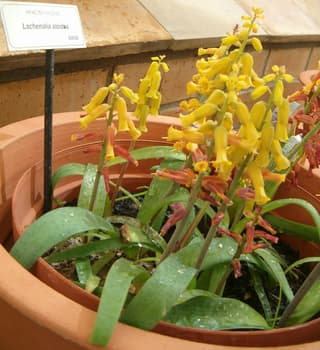
Lachenalia is a genus of roughly 130 winter-growing bulbous species native almost exclusively to the winter-rainfall regions of South Africa's Western and Northern Cape, with a few extending into Namibia. Commonly known as Cape cowslips or Cape hyacinths, these small bulbs produce strap-shaped, often mottled leaves and dense spikes of tubular, waxy flowers in vivid yellows, oranges, reds, pinks, greens and purples between late winter and early spring. This profile covers general genus-level care guidance applicable across most Lachenalia species and hybrids rather than a single species, since care needs are broadly consistent across the genus.

Wild Lettuce
Lactuca virosa
Lactuca virosa, commonly known as Wild Lettuce or Opium Lettuce, is a biennial herb native to central and southern Europe. Reaching up to 2 metres in height, it produces a rosette of leaves in its first year before sending up a tall flowering stalk in its second. The plant exudes a milky white latex when cut, known historically as lactucarium, and has been used for centuries as a mild sedative and analgesic. Its yellow flowers bloom in summer, attracting pollinators. Despite its common name, it contains no true opiates but does produce bitter compounds — lactucin and lactucopicrin — that act on the nervous system.
Laelia Orchid
Laelia
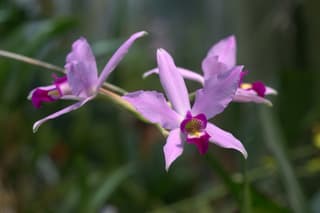
Laelia is a genus of epiphytic orchids in the family Orchidaceae, native to Mexico, Central America and the mountainous highlands of Brazil. Species form elongated pseudobulbs that store water and nutrients, each bearing one to a few leathery leaves and an upright spike of showy pink, purple or white flowers. Closely related to Cattleya, Laelia orchids are prized by growers for their toughness and spectacular blooms.
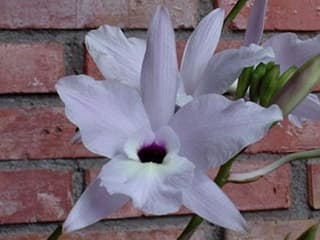
Rosy Tinted Laelia
Laelia rubescens
Laelia rubescens is an epiphytic or lithophytic orchid native to Mexico and Central America, found in seasonally dry deciduous forests at elevations between 100 and 1700 meters. It produces compact pseudobulbs and delicate flowers in shades of white, pink, and lavender with a red-brown blotch on the lip, blooming primarily in autumn and winter.
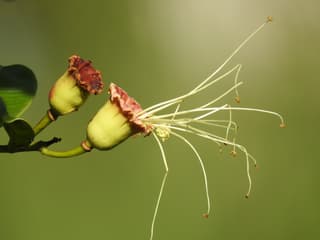
Thimble Tree
Lafoensia pacari
The Thimble Tree (Lafoensia pacari) is a native tree of the Brazilian Cerrado (savanna), belonging to the Lythraceae family. It is a medium to large deciduous tree reaching 5–18 meters tall, with a trunk 30–60 cm in diameter. Its spectacular spring and summer blooms feature large, fringed white flowers with long stamens. Highly valued in traditional Cerrado medicine, it is also widely used in urban landscaping and riparian forest restoration across Brazil.
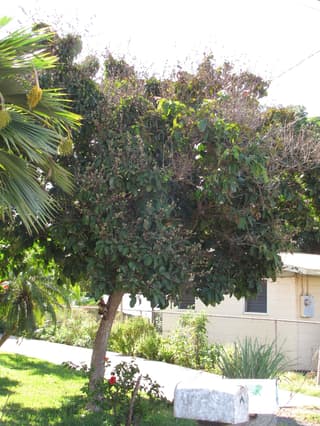
Queen's Crape Myrtle
Lagerstroemia speciosa
The Queen's Crape Myrtle is a fast-growing, deciduous flowering tree native to tropical and subtropical Asia, prized for its large panicles of crinkled pink, purple, or lavender flowers that bloom through summer and into fall. Reaching up to 18 meters tall in the landscape, it also produces smooth, peeling gray bark and woody seed capsules that persist into winter. Its leaves are the source of banaba tea, a traditional folk remedy.
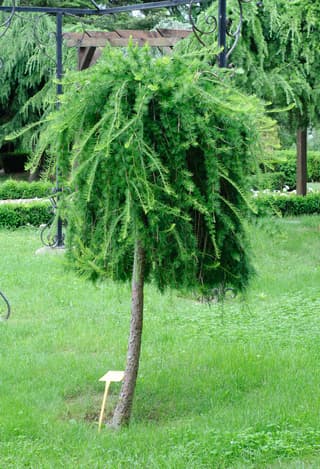
European Larch
Larix decidua
European Larch (Larix decidua) is a deciduous coniferous tree species from the pine family (Pinaceae), native to the mountains of Central Europe – the Alps and Carpathians. As one of the few conifers, it sheds its soft, bright green needles, gathered in bundles, in winter, which turn golden-yellow in autumn. It can reach heights of 30-45 m and is one of the fastest-growing coniferous trees in temperate climates, growing up to 60 cm annually when young. It is a pioneer species, exceptionally frost-hardy (USDA zones 2-6), and long-lived – some specimens in Europe reach an age of up to 500 years. Larch wood is very durable and valued in construction and carpentry.
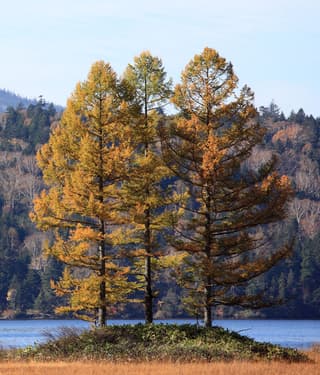
Japanese Larch
Larix kaempferi
The Japanese larch is a deciduous conifer native to the mountains of central Honshu, Japan. Unlike most conifers, it sheds its soft, light-green needles each autumn, first turning a striking golden-yellow to orange-red. It grows into a pyramidal tree, reaching large size in landscape cultivation, and is also a popular subject for bonsai.
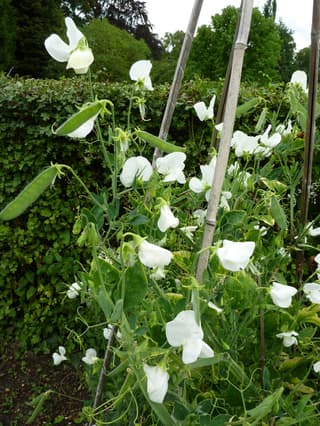
Sweet Pea
Lathyrus odoratus
Sweet Pea (Lathyrus odoratus) is an annual climbing plant native to the Mediterranean region, particularly Sicily and southern Italy. Celebrated for its intensely fragrant flowers in shades of pink, purple, white, red, and lilac, it is a beloved cottage garden classic and a favorite for cut flower arrangements. It blooms abundantly from spring through early summer and thrives in cool weather conditions.
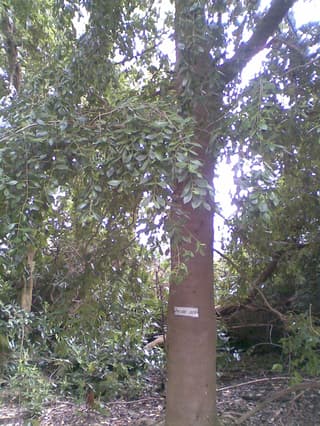
Chilean Laurel
Laurelia sempervirens
The Chilean laurel (Laurelia sempervirens) is an aromatic evergreen tree endemic to the temperate rainforests of Chile, where it can reach heights of up to 30 meters. Its opposite, leathery leaves with serrated edges, along with its smooth yellowish bark, distinguish it within the Valdivian forest. It produces small greenish-yellow flowers in early summer and dry fruits (achenes) dispersed by the wind.
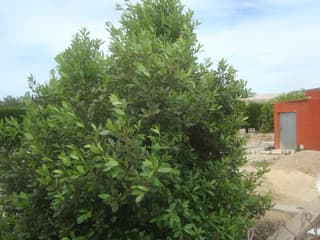
Bay Laurel
Laurus nobilis
Bay Laurel (Laurus nobilis) is a slow-growing, evergreen tree or large shrub native to the Mediterranean region. Prized for its aromatic, leathery leaves, it has been cultivated for millennia for culinary, medicinal, and ornamental purposes. In the wild it can reach up to 12 metres, but in gardens and containers it is usually kept much smaller through regular pruning and topiary.
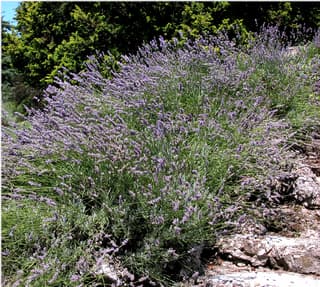
Spike Lavender
Lavandula latifolia
Spike lavender is a bushy, evergreen Mediterranean sub-shrub native to Spain, Portugal and southern France. Compared to English lavender, it has broader, grey-green leaves and single, unbranched flower spikes carried on tall stems. It produces the most potent, camphor-rich essential oil of all lavenders and is one of the two parent species used to create lavandin hybrids.
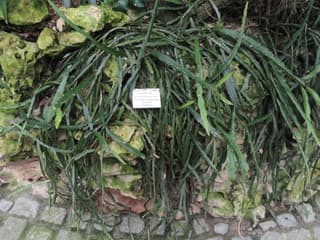
Lepismium cruciforme
Lepismium cruciforme
Lepismium cruciforme, commonly known as the Hurricane Cactus, is a striking epiphytic cactus native to the rainforests of South America. Unlike typical desert cacti, it grows on trees and features long, segmented stems that are often three-angled or flat. Under bright light, the foliage can take on a beautiful reddish-purple hue. It produces small, delicate flowers along the stem margins, followed by ornamental berry-like fruits.
What are Medium Plants?
Medium Plants require a bit more attention and basic gardening knowledge. These plants thrive with regular care and some cultivation experience. Ideal for those who already master the basics.
Tips for Growing Medium Plants
medium plants need a balance between attention and freedom. Keep a regular care routine, watch leaves to identify problems early, and adjust watering by season.