Complete Plant Guide
Explore plants by difficulty, season and more. Find the perfect plant for you.
Difficulty
Categories
Plants by City
🗺️ Plants by City3454 plants found
Showing 2809-2844 of 3454

Azalea
Rhododendron simsii
Rhododendron simsii, commonly known as Azalea, is a perennial flowering shrub highly valued for its vibrant blooms and dense foliage. Native to Asia, it is widely cultivated as an ornamental plant, both in gardens and pots, especially in temperate to subtropical climates. Its flowers, which appear in profusion, can vary in colors and shapes, adding a spectacular touch to any environment.
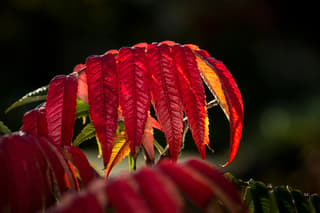
Sumac
Rhus
Sumac (Rhus) is a genus of approximately 35 species of shrubs and small trees in the family Anacardiaceae, distributed across temperate and subtropical regions of the Northern Hemisphere. They are celebrated for their spectacular autumn foliage, which transitions from green to brilliant shades of orange, red, and scarlet — among the most vibrant fall colors of any woody plant. Some species like Rhus typhina (staghorn sumac) grow as large multi-stemmed shrubs or small trees, while others like R. aromatica serve as ground cover. Note: R. radicans (poison ivy) has been reclassified to the genus Toxicodendron.
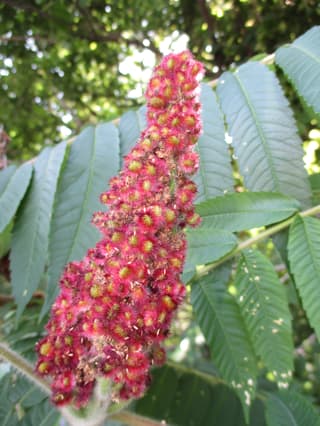
Staghorn Sumac
Rhus typhina
Staghorn Sumac (Rhus typhina) is a fast-growing, deciduous large shrub or small tree native to eastern North America. Named for its velvety, antler-like branches that resemble deer velvet, it is celebrated for its spectacular fall foliage in shades of scarlet, orange, and yellow, and for its striking upright clusters of fuzzy crimson berries that persist through winter. A champion of tough conditions, it thrives in poor, rocky soils and is highly drought-tolerant once established.
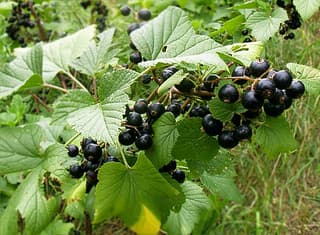
Blackcurrant
Ribes nigrum
Blackcurrant (Ribes nigrum) is a deciduous shrub native to temperate parts of central and northern Europe and northern Asia. It produces small, glossy black berries in pendant clusters, renowned for their exceptionally high vitamin C content and intense tart flavour. Widely grown for culinary and medicinal purposes, it thrives in cool climates with cold winters.
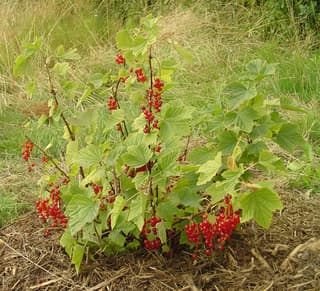
Redcurrant
Ribes rubrum
Redcurrant (Ribes rubrum) is a deciduous fruiting shrub native to Western and Northern Europe, prized for its bright red, tart berries borne in long pendant clusters called strigs. A staple of traditional European kitchen gardens, it thrives in temperate climates with cold winters and produces abundantly from mid-summer. It is one of the hardiest fruiting shrubs available, tolerating temperatures as low as -20°C.
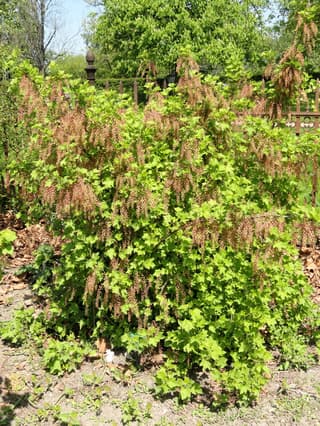
Downy Currant
Ribes spicatum
Ribes spicatum, commonly known as the downy currant or Nordic currant, is a deciduous shrub native to the boreal forests of northern Europe and northern Asia, from Scandinavia across Russia to Siberia and Mongolia. It typically reaches about 2 m (6.5 ft) in height, with duller, darker green leaves held at a right angle to the stem, distinguishing it from the closely related common redcurrant (Ribes rubrum). In spring it produces small, greenish-yellow, bell-shaped flowers in drooping racemes, followed in summer by clusters of glossy, bright red, tart-sweet berries prized for foraging and preserving in Nordic cuisine. Hardy down to about -20°C (USDA zones 3-7), it thrives in the cool, moist, well-drained soils typical of northern woodland edges.
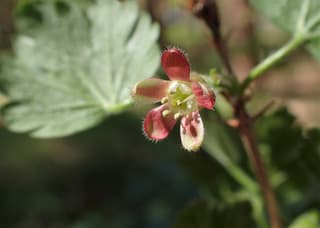
Gooseberry
Ribes uva-crispa
Ribes uva-crispa, commonly known as gooseberry, is a perennial fruit shrub from the Grossulariaceae family, widely cultivated in gardens across Europe and temperate zones. The shrub reaches 1–1.5 m in height and similar width, forming dense, thorny shoots covered with sharp spines. The leaves are palmately lobed and dark green. In spring (April–May), small, yellowish-green or pinkish flowers appear, from which oval berries develop—green, yellow, pink, or red depending on the variety. The fruits ripen in July and are exceptionally rich in vitamin C, B1, and pectins. Gooseberry is distinguished by its excellent frost resistance (up to -20°C) and is one of the most popular fruit shrubs in temperate gardens.

Crystalwort
Riccia fluitans
Crystalwort (Riccia fluitans) is a cosmopolitan aquatic liverwort belonging to the Ricciaceae family, native to stagnant marshy waters. It forms a bright green, fork-branched thallus without roots or true leaves, floating in dense, cushion-like clumps just below the water surface. It is a popular plant in the aquarium hobby, popularized by Takashi Amano: when attached to stones or driftwood, it creates a lush, pearling (oxygen-bubble-covered) green carpet. When left floating, it provides excellent hiding places for fry and shrimp.
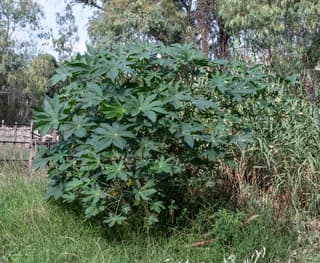
Castor Bean
Ricinus communis
Castor bean (Ricinus communis) is a fast-growing tropical shrub in the Euphorbiaceae family, native to northeastern Africa. Its giant palmate leaves can reach 60 cm across in deep green or bronzy-red varieties. WARNING: all parts are toxic, and the seeds contain ricin, one of the most lethal natural toxins known. Widely grown as a dramatic ornamental and commercially cultivated for castor oil, used across medicine and industry.

Rougeplant
Rivina humilis
Rougeplant (Rivina humilis) is a soft-stemmed evergreen perennial of the Petiveriaceae family, native to the warm Americas. It produces slender spikes of tiny white-to-pink flowers almost year-round, followed by glossy, bright-red berries that give the plant its name. The berry juice was historically used as a red dye or rouge. All parts, especially the berries and roots, are toxic if eaten.
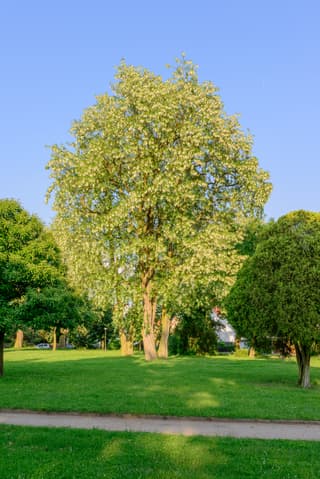
Pink Black Locust
Robinia pseudoacacia
Robinia pseudoacacia, commonly known as black locust, is a deciduous tree in the legume family. The pink-flowering variety is particularly valued in landscaping for its spectacular spring bloom. It is a very fast-growing tree with a broad canopy and branches that often feature thorns. Its flowers grow in drooping clusters and emit a very intense sweet fragrance. It is an extremely hardy species capable of fixing nitrogen in the soil, although it is considered invasive in some regions due to its high propagation capacity.
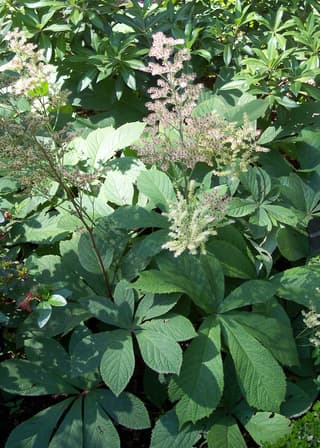
Chestnut-leaf Rodgersia
Rodgersia aesculifolia
Chestnut-leaf Rodgersia is a large, clump-forming perennial with creeping rhizomes, native to moist forests and stream banks in Northern China. Its palmate leaves can grow up to 40 cm long, are deeply lobed with 5–9 coarsely toothed leaflets resembling chestnut leaves, and have a bronze sheen when young before darkening to green throughout the season. In summer, the plant produces large, feathery flower spikes up to 60 cm tall with creamy white or pale pink flowers that eventually turn green. This species is widely used as an ornamental plant in shady perennial beds, near ponds and streams, and eventually forms large, stately colonies.
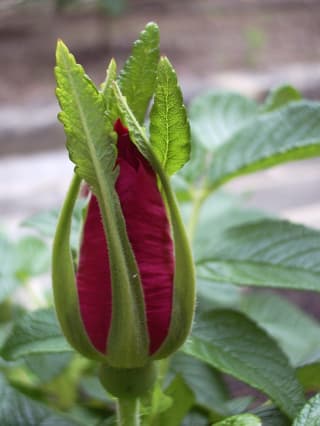
Rose
Rosa
The Rose is one of the most iconic shrubs in the world, belonging to the Rosaceae family. Known for its stunning beauty and unmistakable fragrance, it features woody stems usually protected by prickles (thorns). There are thousands of varieties resulting from centuries of hybridization, ranging from miniatures to climbing roses.
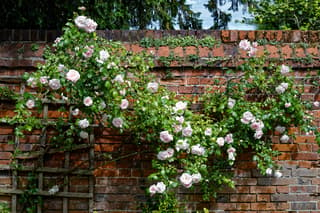
Nice Day Rose
Rosa 'CHEWNICEBELL'
Rosa 'CHEWNICEBELL', marketed as 'Nice Day', is a modern patio climbing rose bred by award-winning UK breeder Chris Warner, known for compact, disease-resistant, low-spray garden roses. It bears loose sprays of small, double, fragrant salmon-to-coral-pink blooms up to 5cm across that repeat-flower through summer and autumn, set against neat, glossy dark-green foliage. Reaching around 1.5-2.5m tall with a 0.5-1m spread, its compact climbing habit suits pillars, obelisks, fences, and large patio containers in smaller gardens.
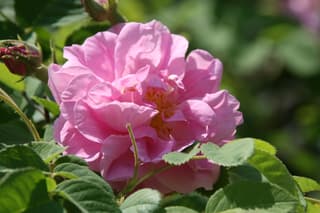
Damask Rose
Rosa × damascena
The Damask Rose (Rosa × damascena) is an ancient hybrid shrub, likely a cross between Rosa gallica and Rosa moschata. Cultivated for millennia across the Middle East, Turkey, Bulgaria, and Iran, it is the primary source of precious rose oil (attar of roses) and rose water. Its semi-double to double flowers emit an intense, sweet fragrance. It grows up to 7 feet tall with arching, thorny canes and deciduous mid-green foliage.
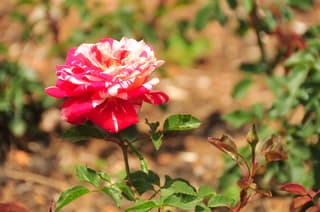
Hybrid Tea Rose
Rosa × hybrida
The Hybrid Tea Rose (Rosa × hybrida) is the world's most popular cultivar group, resulting from centuries of crossbreeding various Rosa species. Celebrated for its large, high-centered blooms and wide color range, it is grown in gardens, containers, and as a cut flower worldwide.
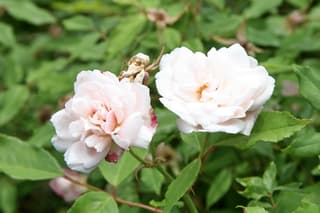
Tea Rose
Rosa × odorata
The Tea Rose (Rosa × odorata) is an elegant hybrid originating from China, a cross between Rosa chinensis and Rosa gigantea. Celebrated for its large, fragrant blooms in shades of white, pink, cream, and yellow, it became the genetic foundation for most modern hybrid tea roses. Its delicate tea-like fragrance and repeat-blooming habit made it one of the most influential rose species in horticultural history.
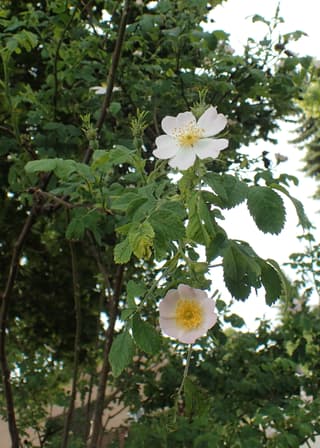
Fir-leaved Rose
Rosa abietina
Rosa abietina, commonly known as the Fir-leaved Rose or Pine Rose, is a deciduous shrub native to the mountainous regions of the European Alps across Switzerland, Austria, France, Italy, and Germany. It grows up to 2 meters tall, producing delicate pink flowers with a mild spicy fragrance from May to July. This wild rose is highly valued for alpine and naturalized gardens.
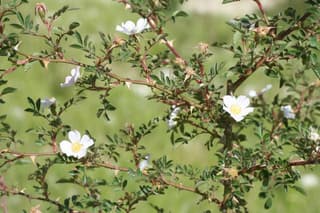
Small-leaved Sweet-briar
Rosa agrestis
Rosa agrestis, the small-leaved sweet-briar or field rose, is a deciduous wild shrub native to southern and central Europe, extending sporadically to the Caucasus. It forms an upright, bushy growth of arching stems armed with curved prickles, reaching 1.5-3 meters tall. Its pinnate leaves, made up of 5-7 small, coarsely serrated leaflets, are noticeably smaller than those of its close relative Rosa rubiginosa (sweet briar) and carry very little of the apple-like scent typical of that species. In mid-summer it bears clusters of subtly fragrant, single white to blush-pink flowers up to 4cm across, followed in autumn by small oval red hips that persist on the plant and add ornamental interest into winter.
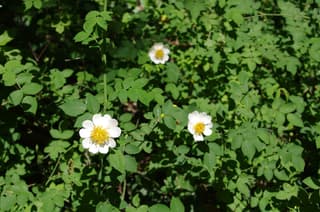
Field Rose
Rosa arvensis
Rosa arvensis, commonly known as the Field Rose, is a vigorous deciduous wild rose native to Western, Central, and Southern Europe. It produces clusters of delicate white flowers with golden stamens throughout summer, followed by small oval orange-red hips. Its arching, thorny stems make it an excellent hedgerow and ground-cover plant.
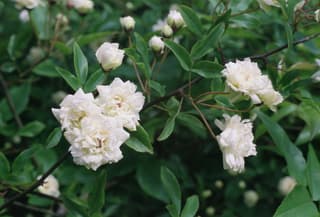
Lady Banks' Rose
Rosa banksiae
Lady Banks' Rose (Rosa banksiae) is a vigorous, nearly thornless climbing rose native to central and western China. In spring, it produces breathtaking cascades of small, fragrant flowers in white or yellow that can blanket entire walls, pergolas, and fences. One of the oldest roses in Western cultivation, it combines historical charm with remarkable toughness, drought tolerance, and disease resistance.
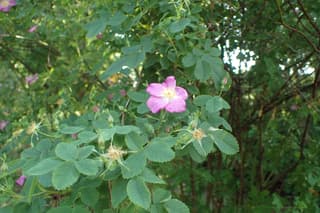
California Wild Rose
Rosa californica
Rosa californica, commonly known as the California Wild Rose, is a deciduous shrub native to the western United States, found naturally in California, Oregon, and northern Baja California. Growing up to 10 feet tall, it produces simple pink to magenta flowers with golden stamens from late spring through summer. Its bright red rose hips persist through winter and provide vital food for birds and wildlife. Once established, it is extremely drought-tolerant and low-maintenance — a true California native.
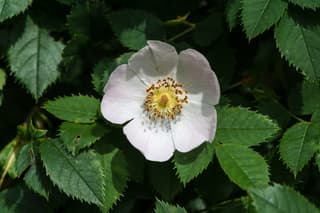
Dog Rose
Rosa canina
Rosa canina, commonly known as the Dog Rose, is a deciduous shrub native to Europe, Northwest Africa, and Western Asia. It features arching thorny branches, delicate pale pink to white flowers in late spring, and bright red oval hips that persist through winter. The hips are edible and exceptionally rich in vitamin C, making this wild rose both ornamentally beautiful and medicinally valuable.
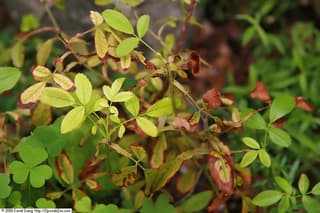
Carolina rose
Rosa carolina
Rosa carolina, commonly known as the Carolina rose or pasture rose, is a deciduous native shrub of eastern North America belonging to the Rosaceae family. Hardy across USDA zones 4–9, it typically grows 60 cm to 1.5 m tall, spreading naturally through underground stolons to form dense thickets. In late spring to early summer, it bears single, five-petaled, fragrant flowers in shades of medium to deep pink. After flowering, bright red to orange-red rose hips develop and persist through autumn and winter, providing a vital food source for birds and wildlife. Valued in naturalistic landscaping, habitat restoration, and erosion control, Carolina rose thrives along woodland edges, roadsides, and open fields, offering both ornamental appeal and ecological benefit.

China Rose
Rosa chinensis
The China Rose (Rosa chinensis) is an ornamental shrub native to China and one of the most historically significant rose species in the world. It introduced the trait of repeat-blooming to Western horticulture in the 18th century, becoming an essential parent of nearly all modern rose cultivars. It produces elegant flowers in shades of red, pink, white, yellow, and cream throughout spring, summer, and fall.
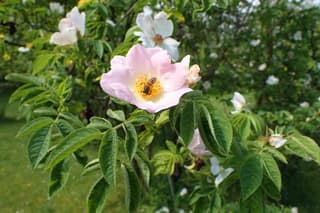
Corymb rose
Rosa corymbifera
Rosa corymbifera, commonly known as the corymb rose or hedge rose, is a vigorous deciduous shrub in the Rosaceae family, native to Europe, North Africa, the Caucasus, the Middle East, and Central Asia. Closely related to Rosa canina, it is primarily distinguished by the presence of denser hairs on the underside of the leaves. Its long, arching branches, covered in curved thorns, can reach up to 3 meters in height, forming impenetrable natural hedges. From May to July, it produces flat corymb inflorescences with 3 to 15 flowers featuring white to pale pink petals and a mild fragrance. In autumn, the intense red oval rose hips become a valuable ornament and a rich source of vitamin C. The 'Laxa' cultivar is the most widely used rootstock in Europe for garden roses.
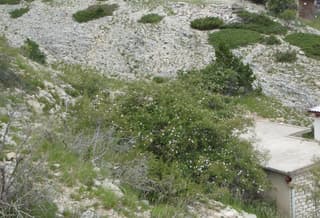
Glaucous Dog Rose
Rosa dumalis
Rosa dumalis, the glaucous dog rose, is a deciduous shrub native to Europe and parts of Western Asia, growing 1-2 m tall with arching, thorny stems. Its blue-green (glaucous) foliage and fragrant pink flowers, blooming from spring into summer, are followed by bright red hips rich in vitamin C. Closely related to the common dog rose (Rosa canina), it thrives in hedgerows, scrubland, and woodland edges across its native range.
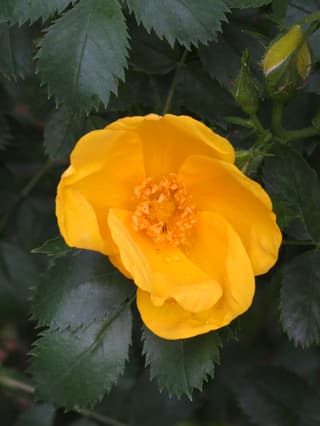
Persian Yellow Rose
Rosa foetida
Rosa foetida, commonly known as the Persian Yellow Rose or Austrian Briar, is a thorny deciduous shrub native to Southwest Asia. It produces intensely golden-yellow single flowers in late spring to early summer, with a distinctive musky scent that inspired its Latin name "foetida." It is historically significant as the ancestor of all modern yellow roses.
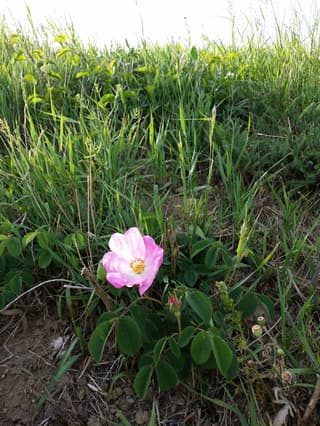
French Rose
Rosa gallica
Rosa gallica, commonly known as the French Rose or Apothecary Rose, is one of the oldest cultivated roses in the world, native to Central and Southern Europe. It produces fragrant, deep pink to crimson flowers in summer and has been prized for centuries for its ornamental, medicinal, and aromatic qualities. It is the ancestor of many modern rose cultivars.
Kordana Rose
Rosa kordana
The Kordana Rose is a miniature potted rose bred for compact size and repeat blooming, developed by the German Kordes nursery for indoor and patio cultivation. Its small, full-sized-looking flowers come in many colors and make it one of the most popular gift and houseplant roses worldwide.
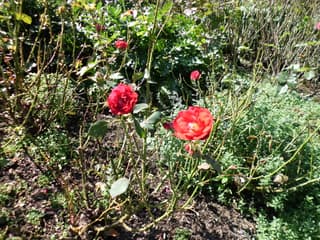
Kordes rose
Rosa kordesii
Rosa kordesii is a hardy climbing/shrub rose bred by Wilhelm Kordes in Germany during the 1940s, valued for its exceptional winter hardiness (down to USDA zone 3) and strong resistance to common rose diseases. It produces clusters of double, deep-pink repeat-blooming flowers on long, lanky canes that can be trained as a climber or left as a free-standing shrub, and it parented the disease-resistant Canadian Explorer Series roses.
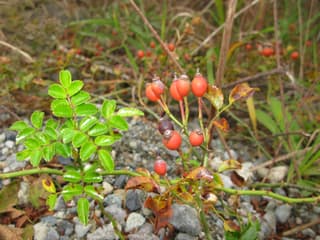
Memorial Rose
Rosa lucieae
Rosa lucieae, commonly known as Memorial Rose or Wichura Rose, is a vigorous semi-evergreen climbing and trailing rose native to East Asia. With long, thorny, trailing stems that can reach up to 6 meters, it forms dense mats and is exceptional as a ground cover or scrambling over structures. Its single white flowers with prominent yellow stamens bloom in summer, filling the garden with rich fragrance. The species is notable for its disease and mildew resistance and has been the parent of many beloved classic climbing rose cultivars such as Dorothy Perkins and New Dawn.
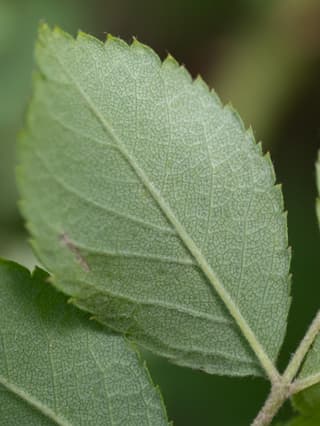
Multiflora Rose
Rosa multiflora
Rosa multiflora, commonly known as Multiflora Rose or Baby Rose, is a vigorous climbing shrub native to East Asia (Japan, Korea, and China). It produces spectacular cascading clusters of small white to light pink fragrant flowers in late spring to early summer, followed by small red hips that persist through winter. While ornamentally attractive, it is classified as a highly invasive species in much of the United States and several other countries, forming dense impenetrable thickets that displace native vegetation.
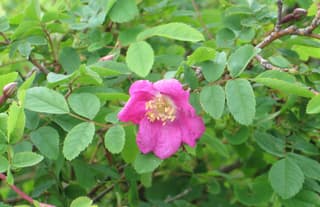
Alpine Rose
Rosa pendulina
The Alpine Rose (Rosa pendulina) is a nearly thornless wild shrub native to the mountains of central and southern Europe — the Pyrenees, Alps, Carpathians, and Apennines. It produces deep pink to fuchsia flowers with prominent yellow stamens, followed by distinctive pendulous, elongated red hips. Exceptionally cold-hardy, it tolerates temperatures down to -30°C and thrives in rocky mountain landscapes.
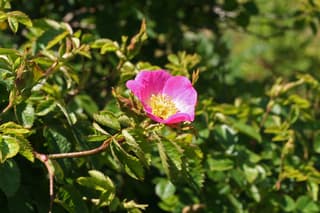
Sweet Briar
Rosa rubiginosa
Sweet Briar (Rosa rubiginosa) is a vigorous deciduous shrub native to Europe and western Asia, belonging to the Rosaceae family. Celebrated for its clear blush-pink single flowers, distinctive apple-scented foliage, and ornamental bright red hips that persist through winter, it is one of the most cherished wild roses in European gardens. Traditionally grown in hedgerows, cottage gardens, and wildlife plantings, it provides abundant food and shelter for pollinators and birds. The hips are exceptionally rich in Vitamin C and have long been used in teas, jams, and herbal remedies.
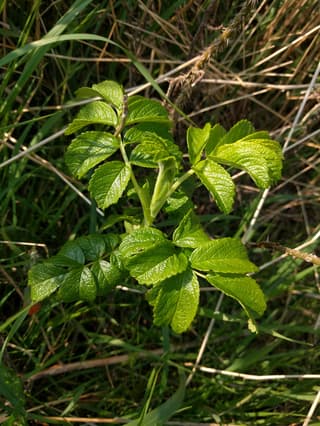
Rugosa Rose
Rosa rugosa
Rugosa Rose (Rosa rugosa) is a hardy, thorny shrub native to East Asia — Japan, China, Korea, and Russia. Renowned for its exceptional resistance to salt spray, wind, and extreme cold, it thrives in coastal gardens and temperate climates. Fragrant blooms in pink, white, and red appear from late spring through fall, followed by large orange-red hips rich in vitamin C.
Find the Perfect Plant
Our plant guide helps you find ideal species for your experience level and time of year.
Browse by Difficulty, Season & More
Use the filters below to narrow this catalog by care difficulty, season, environment, or search directly by name. Each filter leads to a focused list tailored to your specific growing conditions.