Complete Plant Guide
Explore plants by difficulty, season and more. Find the perfect plant for you.
Difficulty
Categories
Plants by City
🗺️ Plants by City3454 plants found
Showing 2845-2880 of 3454
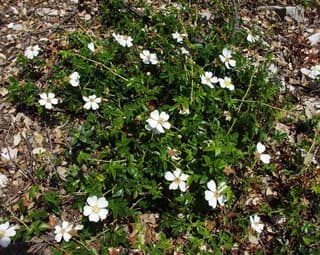
Evergreen Rose
Rosa sempervirens
Rosa sempervirens, commonly known as the evergreen rose, is a vigorous rambling rose native to the Mediterranean region, thriving across southern Europe and North Africa. It produces clusters of small, fragrant white to cream flowers in late spring and early summer, against a backdrop of glossy, semi-evergreen foliage that persists through mild winters. Widely cultivated as a climbing plant for walls, pergolas, and fences, it brings enduring charm and ecological value to gardens.
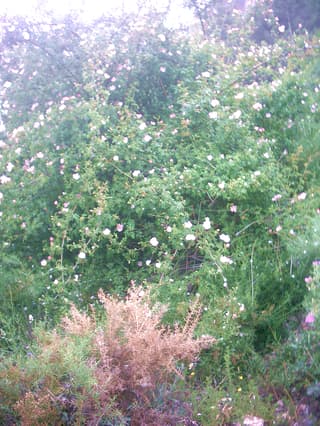
Scotch Rose
Rosa spinosissima
The Scotch Rose (Rosa spinosissima, syn. Rosa pimpinellifolia) is a low-growing, densely leaved shrub from the rose family (Rosaceae). It is also known as the burnet rose. It originates from Europe, southwestern Siberia, northwestern Iran, and Algeria; in Poland, it is found mainly in the south of the country, on dry, stony hills and in warm thickets, often on calcareous soil. It typically reaches 50–100 cm in height, forming compact, heavily thorny clumps with dark brown shoots densely covered with straight thorns and stiff bristles. The leaves are pinnate, composed of 5–11 small, rounded leaflets, often with a reddish tinge. From May to June, single, creamy-white (less often pink), fragrant flowers with five petals appear, followed in autumn by spherical, dark brown to black fruit clusters (hips).
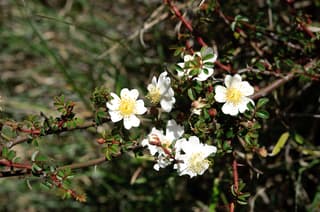
Glandular Rose
Rosa transmorrisonensis
Rosa transmorrisonensis is a climbing rose native to Taiwan and the Philippines (Luzon), found in subtropical mountain biomes. It is distinguished from related species by its glabrous (smooth) styles.
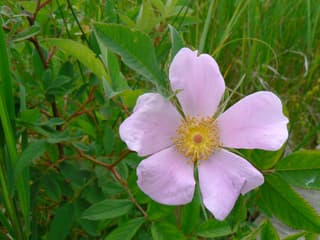
Virginia Rose
Rosa virginiana
Rosa virginiana, commonly known as Virginia rose or prairie rose, is a hardy, suckering deciduous shrub native to the eastern United States and eastern Canada, from Newfoundland south to Virginia and west to the Great Lakes. Growing 4 to 6 feet (occasionally to 10 feet) tall, it forms dense, thicket-like colonies via underground suckers, making it valuable for naturalized borders, erosion control, and wildlife gardens. Its glossy, dark green pinnate leaves turn vivid shades of purple, red-orange, and yellow in autumn, while reddish canes armed with curved prickles provide winter interest and habitat. From June through August, the shrub produces fragrant, single pink blooms with five petals and bright yellow stamens, followed by showy red rose hips that persist into winter and provide food for birds and small mammals.
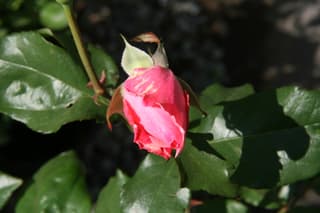
Grandiflora Rose
Rosa x grandiflora
Rosa x grandiflora, commonly known as the Grandiflora Rose, is a modern hybrid class created in the 1950s by crossing Hybrid Tea roses with Floribunda roses. The result is a vigorous, tall-growing shrub that bears large, elegant blooms in clusters on long stems, combining the best traits of both parent classes. Grandiflora roses are celebrated for their repeat blooming, remarkable height, and wide spectrum of colors ranging from pure white to deep red, golden yellow, and vivid bicolors.
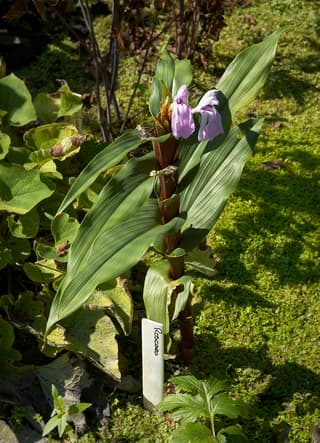
Purple Roscoea
Roscoea purpurea
The Purple Roscoea (Roscoea purpurea) is a herbaceous perennial plant from the ginger family (Zingiberaceae), native to the high altitudes of the Himalayas—primarily Nepal and Northern India—where it grows in alpine meadows, rocky outcrops, terraces, and forest edges. In early summer, it sprouts broad, orchid-like leaves and a fleshy pseudostem from a short, vertical rhizome, reaching heights of 12 to 20 inches (30 to 50 cm). From summer to early autumn, large purple to mauve flowers appear with a three-part corolla and a prominent lip, resembling tropical orchids and giving rise to the common name 'Ginger Orchid.' As a geophyte, the plant goes completely dormant in winter, surviving the cold season underground within its rhizome.
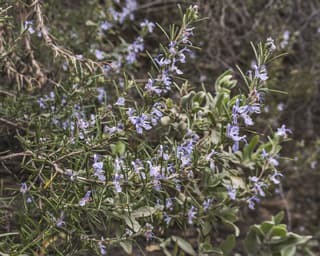
Rosemary
Rosmarinus officinalis
Rosemary (Rosmarinus officinalis) is a fragrant, evergreen perennial shrub native to the Mediterranean region. It features needle-like, dark green leaves with silvery undersides and produces small tubular flowers in shades of blue, violet, white, or pink. It is prized as a culinary herb, medicinal plant, and ornamental shrub.
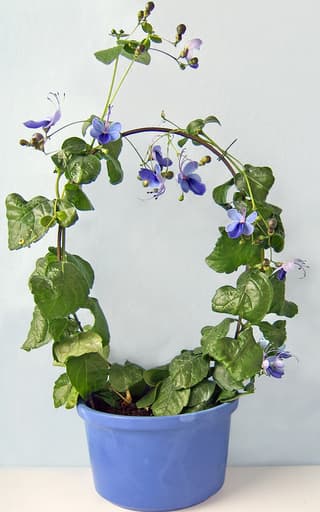
Blue Butterfly Bush
Rotheca myricoides
Rotheca myricoides, commonly known as the Blue Butterfly Bush, is an evergreen shrub native to East Africa. It produces stunning pale violet-blue, butterfly-shaped flowers with a distinctive darker blue lower petal and long curved stamens, making it a showstopper in tropical and subtropical gardens. Previously classified as Clerodendrum ugandense, it belongs to the mint family Lamiaceae.
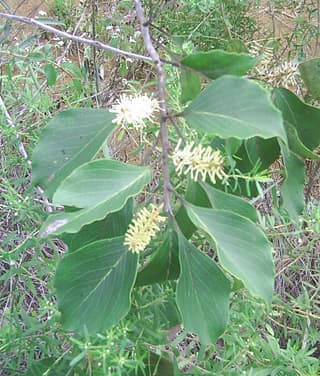
Brazilian Oak
Roupala montana
Roupala montana, popularly known as the Brazilian Oak, is a native tree or shrub from the Proteaceae family, found from Mexico to southern Brazil, Bolivia, Paraguay, and Argentina. It is typical of the Cerrado (Brazilian savanna), gallery forests, rocky fields, and restingas, generally growing between 3 and 26 feet tall, though it can reach up to 50-80 feet in favorable conditions. It features a dense, rounded crown, a cylindrical trunk, and simple or compound leaves, with young branches being densely hairy. Its small flowers, ranging from white to cream or pale yellow, gather in elongated inflorescences (racemes) that appear mainly between summer and autumn. The species is considered an 'ochlospecies' due to its high morphological variability between populations. Its noble wood, similar to European oak, is used in cabinetry, civil construction, and charcoal production, while the bark is utilized in traditional medicine.
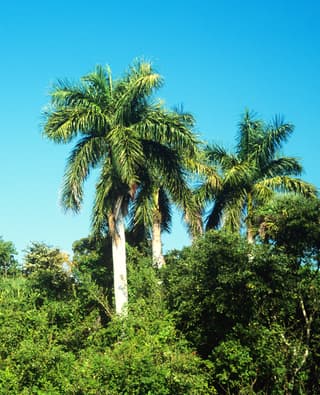
Cuban Royal Palm
Roystonea regia
The majestic Cuban Royal Palm, Roystonea regia, is a large-sized palm tree native to the tropical regions of the Americas. It is characterized by its single, smooth, light gray trunk that widens slightly at the base and is crowned by a dense canopy of large, arching pinnate leaves. It is widely used in landscaping to create a dramatic visual impact in avenues, parks, and gardens.

Madder
Rubia tinctorum
Madder (Rubia tinctorum) is a perennial, scrambling-climbing plant in the Rubiaceae family, native to the Mediterranean region and Western Asia. It can also be found growing wild in Hungary, primarily in the floodplains of the Danube and Drava rivers as a remnant of historical cultivation. Its square-shaped stems are covered in hooked hairs and branch across multiple levels, featuring whorls of lanceolate leaves with prickly margins. In early to mid-summer, it produces tiny, honey-yellow flowers that develop into black, fleshy berries. Its long, fleshy, orange-red roots contain a pigment called alizarin, which has been used for millennia to dye textiles red—from the Middle Ages until the emergence of synthetic dyes in the 19th century, it was the most important source of natural red dye.
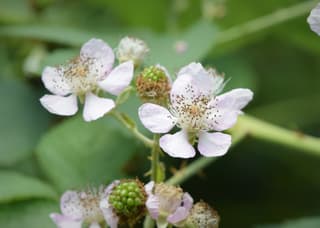
Himalayan Blackberry
Rubus armeniacus
Rubus armeniacus, commonly known as Himalayan Blackberry, is a vigorous, fast-growing, semi-evergreen shrub native to Armenia and northern Iran. Its arching biennial canes can reach 3–10 metres in length and are lined with stout thorns. Despite its common name, it is not native to the Himalayas; it was introduced to North America in 1885 and has since become one of the most widespread invasive shrubs in temperate regions worldwide. The plant produces attractive white to pale pink flowers in late spring and early summer, followed by large, sweet, jet-black berries that are prized for eating fresh, making jams, pies, and beverages. Its root bark and leaves also have a long history of medicinal use as an astringent remedy.
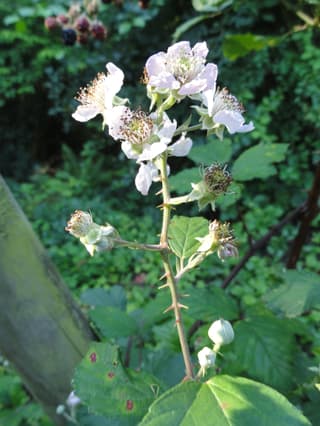
Himalayan Blackberry
Rubus bifrons
Himalayan Blackberry (Rubus bifrons) is a thorny, sprawling shrub in the Rosaceae family, native to Europe and western Asia. It grows vigorously, forming dense thickets with arching canes reaching several meters, producing white to pale pink flowers in late spring/summer followed by glossy black, sweet fruit in summer. Extremely hardy, it has become invasive in many regions outside its native range.
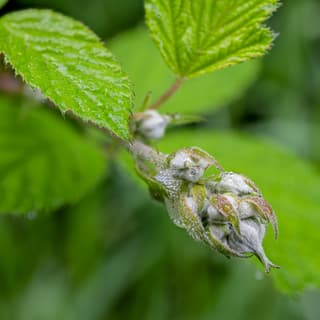
Blackberry
Rubus fruticosus
Rubus fruticosus, commonly known as blackberry or bramble, is a vigorous deciduous shrub native to Europe and widely naturalised across the world. It produces arching, thorny canes (called floricanes) that bear clusters of white to pale-pink flowers in late spring and early summer, followed by the familiar glossy black, sweet-tart fruit beloved in jams, pies and fresh eating. A true biennial-caned plant, first-year primocanes grow vegetatively while second-year floricanes fruit and then die back, making annual pruning essential. Deeply embedded in European folklore and cottage gardens alike, blackberry is one of nature's most generous edible hedgerow plants.
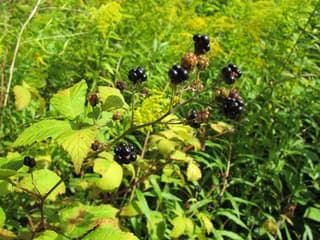
Grabowski's Bramble
Rubus grabowskii
Grabowski's Bramble is one of the roughly 330+ microspecies that make up the European blackberry group (Rubus fruticosus aggregate), a complex of apomictic (seed-clone-forming) brambles found across hedgerows, woodland edges, and waste ground in central and northern Europe. Like its relatives, it is a vigorous, thorny, arching shrub with biennial canes: first-year canes grow vegetatively, then flower, fruit, and die back in their second year while new canes rise to replace them. Botanists distinguish it from other microspecies by its tapering prickles, leaves with a notably long terminal-leaflet stalk, a broad, often pyramid-shaped flower cluster, and white or pale pink flowers with hairy carpel tips. The blackberries it produces in late summer are edible and, like all brambles in the aggregate, it is valuable to wildlife as forage, nesting cover, and a nectar source for pollinators.
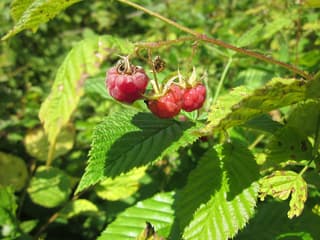
Red Raspberry
Rubus idaeus
Red Raspberry (Rubus idaeus) is a deciduous fruiting shrub native to Europe and northern Asia, belonging to the Rosaceae family. It produces arching, thorny canes that bear delicious, bright red aggregate berries in summer. Widely cultivated for both its edible fruit and ornamental hedging value, it thrives in temperate climates with cool winters and mild summers.
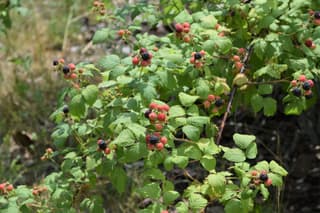
Black Raspberry
Rubus occidentalis
Rubus occidentalis, commonly known as black raspberry or blackcap, is a thorny, deciduous cane fruit native to eastern North America. Distinguished by its arching purple-tinged canes covered in a waxy white bloom, this vigorous bramble produces small, dome-shaped black berries prized for their deep, tart-sweet flavor and high antioxidant content. Unlike red raspberries, black raspberry canes root at the tip where they touch soil, forming new plants naturally. It thrives in sunny hedgerows, woodland edges, and cultivated berry patches.
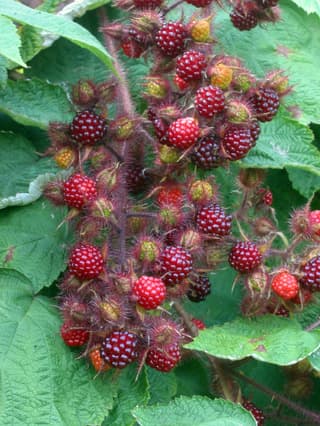
Wineberry
Rubus phoenicolasius
Rubus phoenicolasius, known as the Wineberry, is a vigorous perennial shrub in the rose family. It is native to East Asia and is easily identified by its stems, which are densely covered in reddish-purple glandular hairs. The plant produces small white flowers that develop into bright red, shiny, edible berries. The fruit is encased in a protective hairy calyx until it is fully ripe. It is highly valued for its sweet-tart flavor but is considered an invasive species in many parts of North America due to its rapid growth and ability to form dense thickets.
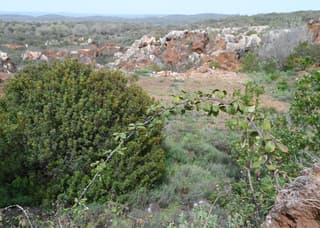
Elm-leaved Blackberry
Rubus ulmifolius
Rubus ulmifolius, commonly known as the Elm-leaved Blackberry or Silverleaf Bramble, is a vigorous semi-evergreen shrub native to Europe and the Mediterranean region. It forms dense, thorny thickets and produces edible blackberries widely used in cooking and traditional medicine. Introduced beyond its native range, it is considered invasive in parts of Australia, Chile, and New Zealand.
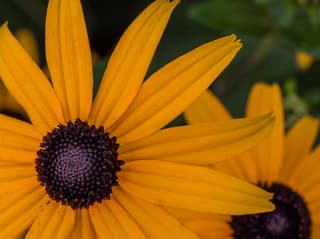
Black-eyed Susan
Rudbeckia
Rudbeckia is a genus of flowering plants in the family Asteraceae, native to North America. Widely known as black-eyed Susan or coneflower, it features cheerful golden-yellow daisy-like blooms with dark brown or black centers, blooming from summer through fall.
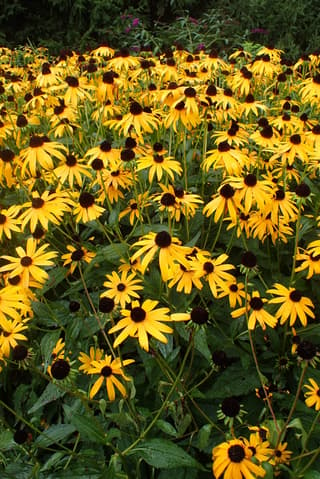
Orange Coneflower
Rudbeckia fulgida
Rudbeckia fulgida is a clump-forming herbaceous perennial native to eastern North America, prized for its cheerful daisy-like flowers with golden-orange petals surrounding a dark brown-black central cone. Blooming from late summer into fall, it forms a tidy basal rosette of hairy, toothed leaves and spreads slowly by rhizomes to create informal drifts in borders, meadows, and pollinator gardens. Popular cultivars such as Goldsturm are valued for a long bloom season and reliable performance across a wide range of climates.
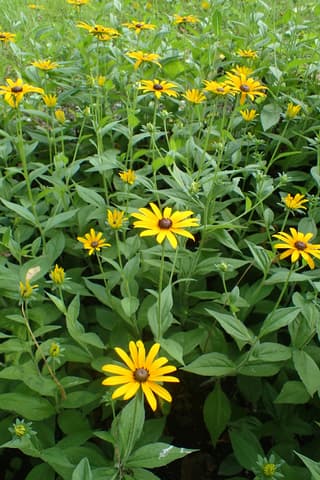
Black-eyed Susan
Rudbeckia hirta
Rudbeckia hirta, commonly known as Black-eyed Susan, is a native North American wildflower beloved for its bright yellow-orange petals surrounding a dark brown center. It blooms prolifically from summer through fall, attracting butterflies, bees, and songbirds.
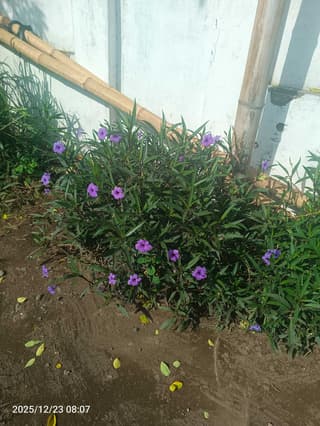
Wild Petunia
Ruellia
Ruellia, commonly known as wild petunia or Mexican petunia, is a fast-growing herbaceous perennial in the Acanthaceae family, native to Mexico and Central and South America. It forms upright, multi-stemmed clumps with slender, dark-green leaves and trumpet-shaped flowers that last only a day but bloom continuously from spring through fall. Once established it is highly drought-tolerant and low-maintenance, making it a popular choice for borders, beds, and mass plantings in warm climates.

Mexican Petunia
Ruellia brittoniana
Ruellia brittoniana (Mexican Petunia), also classified as Ruellia simplex, is a fast-growing evergreen perennial native to Mexico, prized for its petunia-like lavender-purple flowers that bloom continuously from early summer through fall. It thrives in full sun and readily adapts to both moist and drought conditions, spreading via rhizomes and self-seeding. Because of this vigorous growth habit, it is classified as an invasive species in Florida and several other warm-climate regions, so gardeners should plant it with caution or choose sterile cultivars.
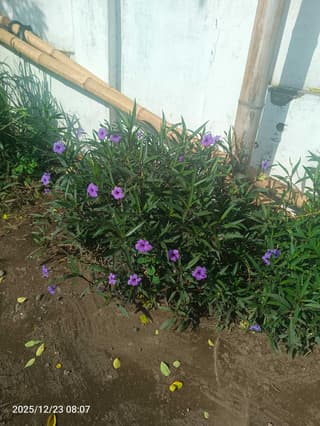
Mexican Petunia
Ruellia simplex
Ruellia simplex, commonly known as the Mexican Petunia, is a vigorous perennial herbaceous plant native to Mexico, the Caribbean, and South America. It is characterized by its long, narrow, dark green leaves and trumpet-shaped flowers that bloom in shades of purple, pink, or white. It is a fast-growing and low-maintenance plant, ideal for gardens, borders, and containers, especially in warm climates where it can bloom for much of the year. While ornamental, it is important to note that it can be invasive in some regions.

Dock
Rumex
Rumex is a genus of around 200 herbaceous annuals, biennials and perennials in the buckwheat family (Polygonaceae), commonly known as docks and sorrels. Native across the temperate Northern Hemisphere and now naturalized almost worldwide, Rumex species form tidy basal rosettes of oblong to arrow-shaped leaves topped, in season, by tall spikes of small greenish flowers that ripen into rust-red seed clusters. Several species, especially Rumex acetosa (sorrel) and Rumex crispus (curly dock), are grown for their tart, lemony edible leaves and for roots used in traditional herbal medicine, while others are common wayside weeds valued mainly for pollinators and wildlife.
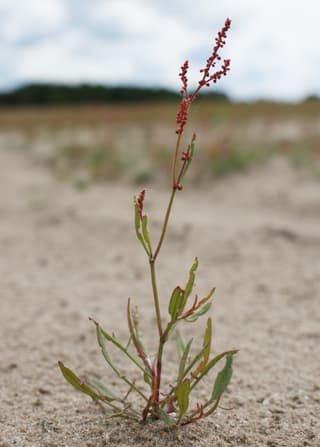
Sheep Sorrel
Rumex acetosella
Sheep Sorrel (Rumex acetosella) is a small perennial wild herb in the Polygonaceae family, native to temperate regions of Europe, Asia, and widely naturalized in North America. Its arrow-shaped leaves have a characteristic tangy, sour flavor due to oxalic acid content. A hardy plant that thrives in poor, acidic soils, it is valued as an edible herb and in folk medicine, though it can become invasive through its creeping rhizomes.
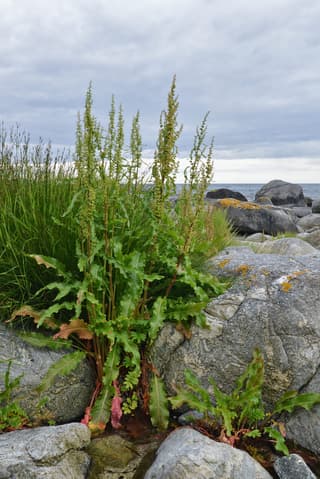
Curly dock
Rumex crispus
A perennial herbaceous plant from the Polygonaceae family, native to Europe and Western Asia. Features smooth leaves with distinctly wavy or curled margins, measuring 14-24 cm in length. Common in disturbed soils and adapted to various climates, highly tolerant of cold and drought. Forms dense rosettes and produces thousands of viable seeds per plant that can remain viable for 50+ years.
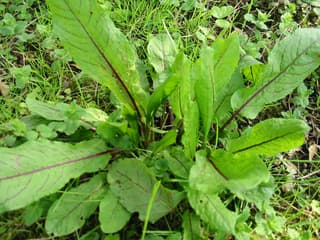
Bloody dock
Rumex sanguineus
Bloody dock (Rumex sanguineus) is an evergreen perennial herb in the Polygonaceae family, native to Europe, Southwest Asia, and North Africa. It is prized for its striking leaves with deep, blood-red veins against dark green foliage, providing a dramatic ornamental look in gardens and on tables. The plant forms compact rosette-shaped clumps and thrives in moist, well-drained soil in full sun to partial shade.
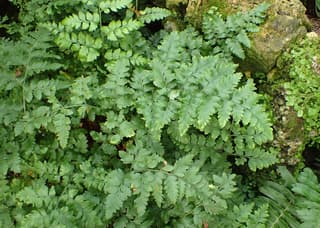
Leatherleaf fern
Rumohra adiantiformis
Rumohra adiantiformis, commonly known as the leatherleaf fern, is a robust and perennial species prized for its triangular, leathery, deep green fronds. It is extremely popular in the floral industry due to the incredible durability of its leaves after being cut, remaining fresh in arrangements for several weeks. In nature, it grows both as an epiphyte and on the forest floor.
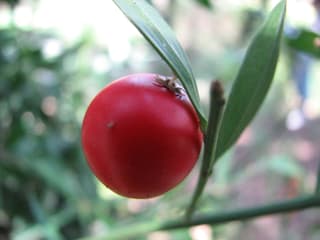
Butcher's Broom (genus)
Ruscus
Ruscus is a genus of low-growing evergreen shrubs in the family Asparagaceae, native to Europe, the Mediterranean, and western Asia. Their defining feature is cladodes — flattened stems that mimic leaves and carry both flowers and fruit. The bright red berries appearing in autumn and winter make them popular as ornamental and cut foliage plants. Best-known species include R. aculeatus (common butcher's broom) and R. hypoglossum.
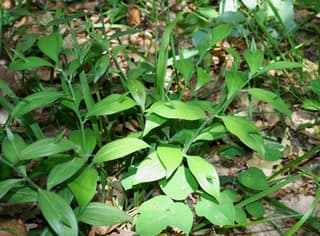
Spineless butcher's broom
Ruscus hypoglossum
Ruscus hypoglossum, the spineless butcher's broom, is a low, evergreen shade shrub in the Asparagaceae family, native to woodlands of southern Europe and Asia Minor. Unlike its spiny relative Ruscus aculeatus, its broad, glossy cladodes (leaf-like flattened stems) are soft and unarmed, making it a popular groundcover for dark corners of gardens and shady borders.
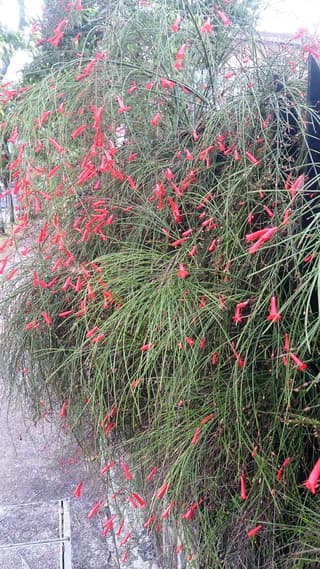
Firecracker Plant
Russelia equisetiformis
Russelia is a perennial shrub known for its slender, green, cascading branches that resemble a horse's tail or fireworks. Its tubular flowers, typically in vibrant red hues, are produced in abundance and are highly attractive to hummingbirds and butterflies. It is an extremely versatile plant, excellent for hanging baskets, retaining walls, or as ground cover on slopes.
Smoky Russula
Russula adusta
Russula adusta is a basidiomycete fungus notable for its color transition. Initially whitish, its cap turns grayish-brown and eventually black as it matures. It is a mycorrhizal species that plays a crucial role in the health of coniferous forests, aiding in nutrient exchange with tree roots. Its flesh is firm but can cause gastrointestinal discomfort if ingested.
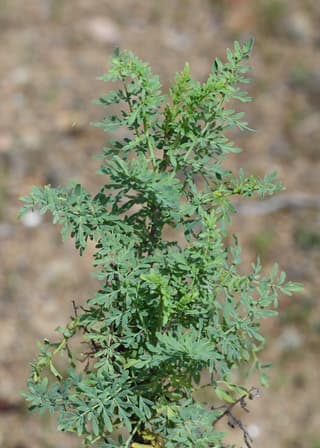
Fringed Rue
Ruta chalepensis
Ruta chalepensis, commonly known as Fringed Rue or Egyptian Rue, is a perennial evergreen aromatic shrub in the family Rutaceae, native to the Mediterranean basin, North Africa, and the Middle East. It grows to 40–80 cm tall, bearing finely pinnate grey-green leaves with a strong pungent scent and clusters of small yellow flowers in summer. The plant contains furanocoumarins, alkaloids, and flavonoids that confer potent medicinal properties but also significant toxicity. It causes phototoxic dermatitis on skin contact followed by sun exposure, and ingestion in large amounts can cause severe organ toxicity. It is widely used in traditional medicine and holds deep cultural significance as a protective talisman.
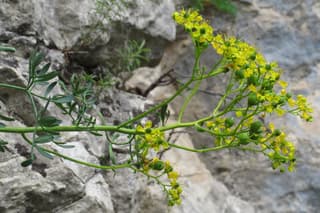
Rue
Ruta graveolens
Rue (Ruta graveolens) is a perennial shrub known for its strong aroma and medicinal properties. It has finely divided, grayish-green leaves and small, cream or yellowish flowers that appear in summer. It is a hardy plant, but requires attention due to its toxicity.
Find the Perfect Plant
Our plant guide helps you find ideal species for your experience level and time of year.
Browse by Difficulty, Season & More
Use the filters below to narrow this catalog by care difficulty, season, environment, or search directly by name. Each filter leads to a focused list tailored to your specific growing conditions.