Complete Plant Guide
Explore plants by difficulty, season and more. Find the perfect plant for you.
Difficulty
Categories
Plants by City
🗺️ Plants by City3454 plants found
Showing 2773-2808 of 3454
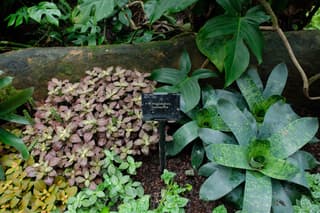
Rhaphidophora (genus)
Rhaphidophora
Rhaphidophora is a genus of tropical climbing plants in the family Araceae, native to Southeast Asia. The most popular species include R. tetrasperma (commonly called "mini monstera") and R. decursiva. These fast-growing plants feature ornamental fenestrated leaves and thrive indoors with a support structure to climb.
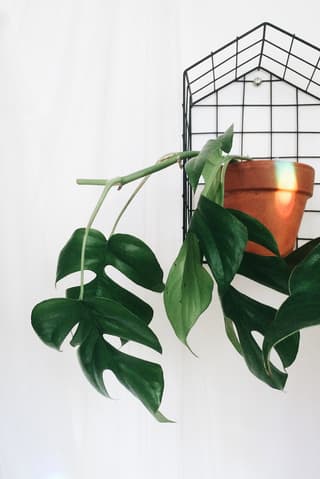
Mini Monstera
Rhaphidophora tetrasperma
Rhaphidophora tetrasperma, popularly known as the Mini Monstera, is a tropical climbing plant native to Southeast Asia. Although its fenestrated leaves resemble those of the Monstera deliciosa, it belongs to a distinct genus. It is an extremely fast-growing plant that uses aerial roots to climb trees or supports, making it a favorite choice for interior decoration due to its sculptural aesthetic and more compact size than its famous 'cousin'.
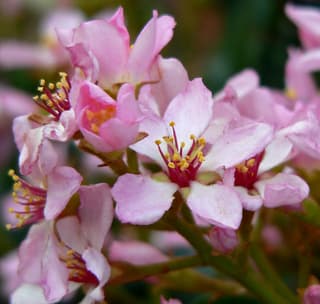
Indian Hawthorn
Rhaphiolepis
Indian Hawthorn (Rhaphiolepis) is an evergreen shrub in the Rosaceae family, native to southern China and Southeast Asia. Despite its common name, it does not originate from India. It produces clusters of fragrant white to pink flowers in spring and is widely cultivated as an ornamental plant for hedges, borders, and mass plantings.
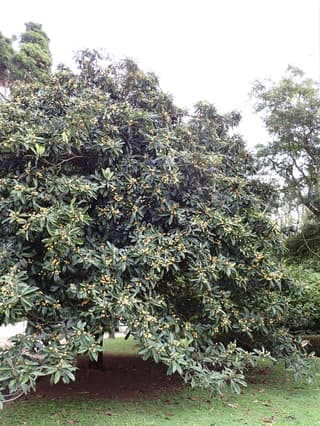
Loquat
Rhaphiolepis bibas
The loquat (Rhaphiolepis bibas, formerly Eriobotrya japonica) is an evergreen fruit tree native to Southeast China, widely cultivated in subtropical and Mediterranean regions worldwide. It reaches a height of 3 to 8 meters and is distinguished by its large, leathery, dark green leaves, its white, fragrant flowers that appear in autumn-winter, and its orange or yellow fruits that ripen in spring. It is one of the few fruit trees that blooms in winter, providing shelter and food for pollinators and birds during the cold months.
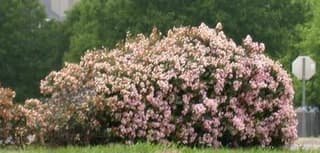
Indian Hawthorn
Rhaphiolepis indica
Indian hawthorn (Rhaphiolepis indica) is a compact, evergreen shrub native to southern China, Taiwan, and Vietnam, prized in gardens worldwide for its glossy dark-green foliage and clusters of fragrant white to pink, five-petaled flowers that bloom in spring and often again in fall. Reaching about 1.2-1.5 m (4-5 ft) in height and spread, it forms a dense, rounded mound that works well as a low hedge, foundation planting, or specimen shrub. Small blue-black pome fruits follow the flowers and are attractive to birds. The plant is a member of the rose family (Rosaceae) and, once established, tolerates heat, coastal salt spray, and moderate drought, making it a popular low-maintenance choice for warm-temperate and subtropical landscapes.
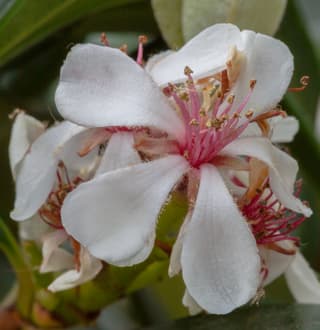
Yeddo Hawthorn
Rhaphiolepis umbellata
Rhaphiolepis umbellata, commonly known as Yeddo Hawthorn, is an evergreen shrub native to Japan and Korea, highly valued in coastal gardens for its remarkable tolerance to salt spray and wind. It features oval, leathery, glossy dark green leaves that often take on purple hues in winter. Between spring and early summer, it produces dense clusters of fragrant white or slightly pink flowers, followed by decorative blue-black berries. It is a hardy, slow-growing plant that typically reaches 3 to 6 feet in height and width.
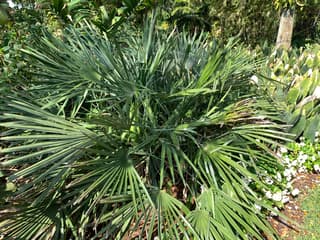
Needle Palm
Rhapidophyllum hystrix
The needle palm (Rhapidophyllum hystrix) is a slow-growing, clumping fan palm native to the coastal plains of the southeastern United States. Named for the long, sharp black spines that emerge from its leaf bases, it is the most cold-hardy palm species in the world, capable of surviving temperatures well below freezing. Its dark green, palmate leaves radiate from a short, often subterranean trunk, forming dense, multi-stemmed clumps ideal as an understory shrub.

Lady Palm
Rhapis excelsa
Rhapis excelsa, commonly known as the Lady Palm or Broadleaf Lady Palm, is an elegant fan palm native to southern China. With its slow growth and lush fan-shaped foliage, it is one of the best indoor palms for beginners. Its multiple slender stems covered in brown fibers give it a bamboo-like appearance, making it an excellent decorative choice for indoor spaces. NASA studies have recognized it as one of the top air-purifying plants.
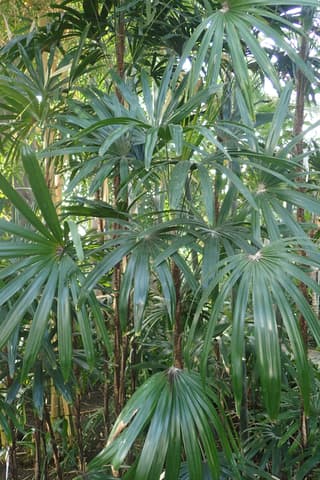
Slender Lady Palm
Rhapis humilis
Rhapis humilis, commonly known as the Slender Lady Palm or Reed Rhapis, is a clumping understory palm native to the subtropical forests of South China (Yunnan). It forms dense clusters of slender, bamboo-like stems topped with elegant fan-shaped fronds with narrow, finger-like segments. Slower growing than its cousin Rhapis excelsa, it is widely cultivated as both an indoor ornamental and a garden accent plant in warm climates.
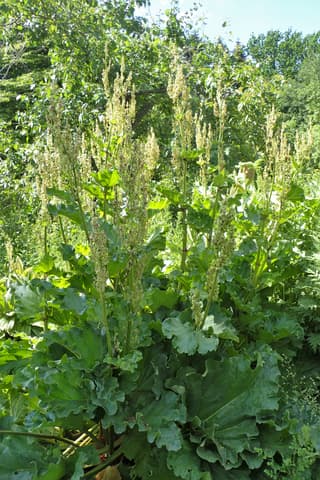
garden rhubarb
Rheum rhabarbarum
Garden rhubarb is a hardy perennial plant grown for its fleshy, tart edible stalks. It features large, heart-shaped green leaves that are toxic if ingested due to high concentrations of oxalic acid. The plant requires a cold winter dormancy period to produce a successful harvest in the following spring.
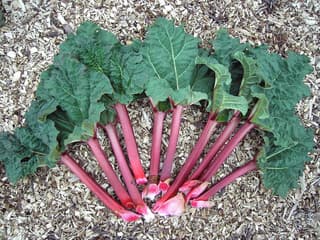
Garden Rhubarb
Rheum x hybridum
Garden rhubarb is a robust, cold-hardy perennial vegetable prized for its thick, tart, ruby-to-green stalks and enormous crinkled leaves. Though often used like a fruit in pies and jams, it is botanically a vegetable in the buckwheat family. The plant forms a dense clump from a woody rhizome and, if not removed, sends up tall flower stalks topped with creamy white plumes in late spring. Only the stalks are eaten -- the leaves contain high levels of oxalic acid and must never be consumed.
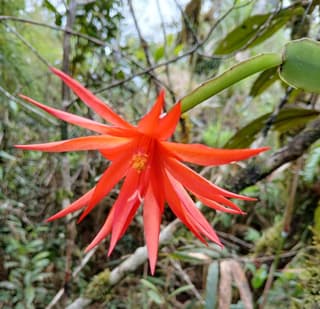
Easter Cactus
Rhipsalidopsis gaertneri
The Easter Cactus (Rhipsalidopsis gaertneri) is an epiphytic cactus native to the Atlantic Forest of Brazil, particularly Paraná and Santa Catarina states. Unlike desert cacti, it thrives in humid conditions with indirect light, producing stunning star-shaped flowers in shades of red, pink, and white during spring.
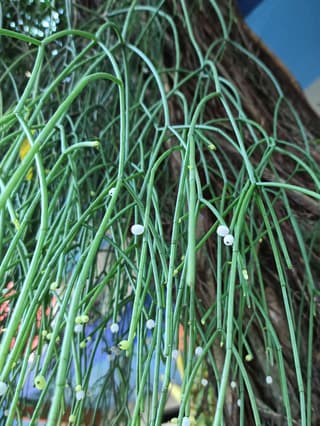
Mistletoe Cactus
Rhipsalis
Rhipsalis is a genus of epiphytic tropical cacti native to the rainforests of Central and South America, with a few species found in Africa and Sri Lanka — the only cacti native outside the Americas. Unlike desert cacti, Rhipsalis grows on trees and rocks in humid tropical forests, thriving under filtered light with regular moisture and high humidity. Its slender, pendulous, segmented stems resemble spaghetti or mistletoe strands, giving rise to its most popular common names. It produces small white or cream flowers in late winter to spring, followed by translucent pearl-like berries. Exceptionally long-lived (25+ years), and confirmed non-toxic to cats, dogs, and humans by the ASPCA.
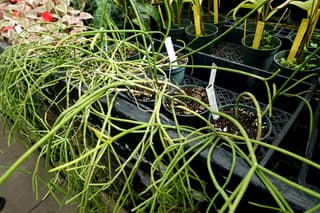
Mistletoe cactus
Rhipsalis baccifera
Rhipsalis baccifera is a unique epiphytic cactus native to Central and South America. Unlike typical desert cacti, this tropical cactus grows on trees in humid forests, hanging gracefully with cylindrical, branching stems that can reach up to 4 meters in length. It is the only cactus species found naturally outside the Americas, extending to Africa and Asia.
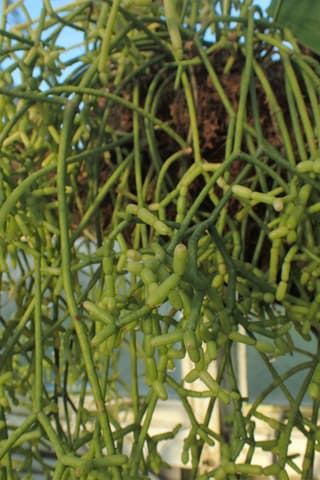
Rice Cactus
Rhipsalis cereuscula
Rhipsalis cereuscula, commonly known as Rice Cactus or Coral Cactus, is an epiphytic cactus native to the Brazilian Atlantic Forest. It features thin, segmented stems that branch profusely into small cylindrical segments resembling grains of rice or coral, giving the plant a delicate, cascading appearance ideal for hanging baskets.

Bride Cactus
Rhipsalis elliptica
Rhipsalis elliptica, commonly known as the Bride Cactus, is a trailing epiphytic cactus native to the humid tropical forests of Brazil. Unlike its desert-dwelling cousins, this jungle cactus grows without spines on trees and rocks, cascading with flat, paddle-shaped (elliptical) segments that can trail up to 2 meters long. Its stems display a rich dark green color, often blushed with purple or magenta under bright light, and in late winter to early spring it produces small, creamy white to pale yellow flowers scattered along the stem margins.
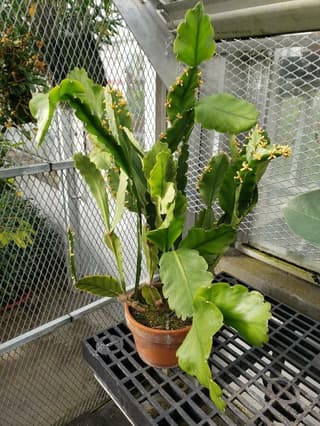
Jungle Cactus
Rhipsalis pachyptera
Rhipsalis pachyptera is a spineless epiphytic cactus native to the Atlantic Forest of southeastern and southern Brazil (Espírito Santo, Rio de Janeiro, São Paulo, Paraná, Santa Catarina and Rio Grande do Sul). In the wild it grows on tree trunks and moist rocks, producing broad, flattened, wavy-edged stems that trail up to 1.5 m long. Creamy-white to yellowish flowers appear in winter, followed by small translucent berries.
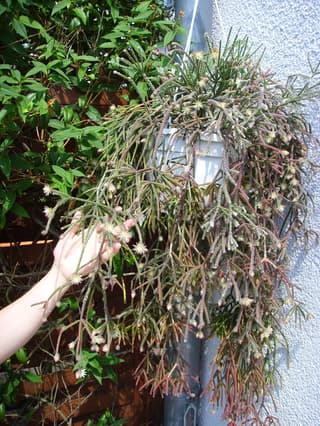
Hairy-stemmed Rhipsalis
Rhipsalis pilocarpa
Rhipsalis pilocarpa, commonly called the hairy-stemmed rhipsalis, is an epiphytic cactus endemic to Brazil's Atlantic Forest, native to the states of Espírito Santo, Minas Gerais, Rio de Janeiro, São Paulo, and Paraná. In the wild it grows harmlessly on tree trunks and branches, absorbing moisture and nutrients from humid forest air and organic debris rather than from soil. Its slender cylindrical stems, reaching up to 50 cm long, start upright and become pendant as they mature, covered in small gray-to-white bristles that give the plant a soft, fuzzy texture. Fragrant white flowers 2.5 to 4 cm wide appear from fall into early winter, followed by bristly, wine-red spherical fruits about 12 mm across. Unlike desert cacti, this forest species thrives in filtered light and higher humidity, reflecting its origins beneath the rainforest canopy.
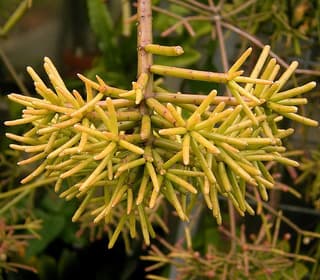
Mistletoe Cactus
Rhipsalis teres
Rhipsalis teres, commonly known as Mistletoe Cactus, is a tropical epiphytic cactus native to southeastern and southern Brazil. Its slender, cylindrical, trailing stems cascade beautifully from hanging baskets, making it a popular houseplant. Unlike desert cacti, it thrives in humid, shadier conditions that mimic its natural rainforest habitat, where it grows anchored to tree branches.

Mangrove
Rhizophora
Rhizophora is a genus of tropical "true mangrove" trees and shrubs in the family Rhizophoraceae, famous for their tangled, arching prop roots that anchor them in shifting, waterlogged coastal mud. Found across intertidal zones in the tropics and subtropics, these evergreen trees tolerate daily tidal flooding and high salinity, forming dense mangrove forests that protect shorelines from erosion and storm surge.
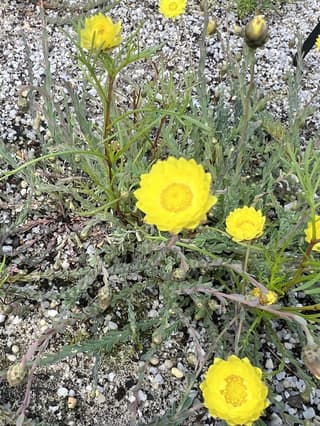
Everlasting Daisy
Rhodanthe chlorocephala
The Everlasting Daisy (Rhodanthe chlorocephala) is a popular Australian annual from the Asteraceae family, prized for its papery flower heads that retain their shape and color after drying. The plant grows to approximately 30 cm and produces upright stems with narrow, grey-green leaves. The flower heads, 1-6 cm in diameter, feature white, pink, or yellow ray bracts with a contrasting yellow-green or dark center. In its natural habitat in Western and South Australia, it grows in the sandy soils of eucalyptus forests and salt lakes, where it blooms primarily from late winter to spring.

Moroccan Daisy
Rhodanthemum hosmariense
Rhodanthemum hosmariense is a low, spreading evergreen subshrub from the Atlas Mountains of Morocco, prized for its finely divided silvery foliage and a long, generous display of white daisy-like flowers with sunny yellow centres. It forms a neat, wide mound rarely more than 30 cm tall, making it a favourite for rock gardens, gravel gardens and the front of sunny borders.
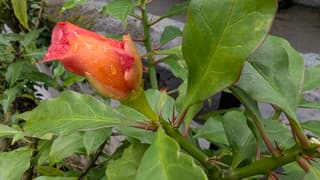
Rose Cactus
Rhodocactus grandifolius
Rhodocactus grandifolius, formerly known as Pereskia grandifolia, is a fascinating primitive cactus that possesses true, persistent leaves, unlike most cacti. Native to Brazil, it grows as a shrub or small tree, featuring long spines on its woody stems and stunning rose-like flowers, typically in shades of intense pink or magenta.
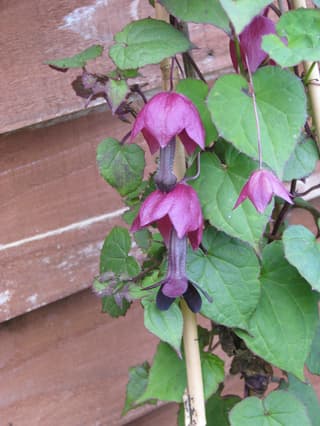
Purple Bells
Rhodochiton atrosanguineus
Purple Bells is a fast-growing, deciduous climbing vine native to southwestern Mexico, prized for its unusual pendant flowers: a bright pink or magenta calyx cupping a deep maroon-purple tubular corolla, giving the plant a bell-within-a-bell look. It climbs by twining leaf stalks around supports, reaching 2-3.5 m in a single season, and blooms continuously from summer through fall. Grown as a tender perennial in warm climates (USDA zones 9-11) or as a frost-tender annual elsewhere, it thrives in full sun with consistently moist, well-draining soil.
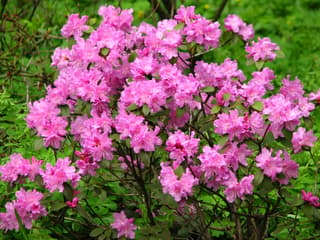
Rhododendron
Rhododendron
Rhododendron is a large genus of over 1,000 species of woody flowering plants in the family Ericaceae, encompassing both classic rhododendrons and azaleas. Native primarily to eastern Asia and the Himalayan region, with smaller numbers in North America, Europe, and Australia, these iconic shrubs and trees are prized worldwide for their spectacular spring blooms in shades of pink, red, white, purple, yellow, and orange. The genus ranges from low-growing alpine ground covers to towering trees exceeding 30 metres, and includes both evergreen and deciduous species.
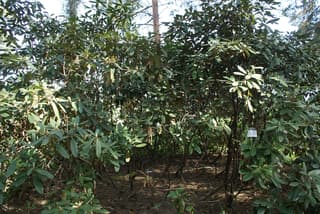
Hybrid Rhododendron
Rhododendron × hybridum
Rhododendron × hybridum is an evergreen ornamental shrub in the Ericaceae family, resulting from deliberate crosses between various rhododendron species. These garden hybrids were developed specifically for ornamental use, combining the most desirable traits of their parent species. They are woody shrubs that typically reach heights of 1.5 to 6 meters (5-20 feet), with the exact size varying by specific cultivar. They produce stunning flowers in shades of pink, purple, red, white, and yellow, typically grouped in large, bell-shaped flower clusters (trusses) during spring. The leathery, narrow leaves persist year-round, providing evergreen visual interest. Originally adapted to forest understory conditions, these plants prefer dappled or partial shade and naturally thrive in acidic woodland environments.
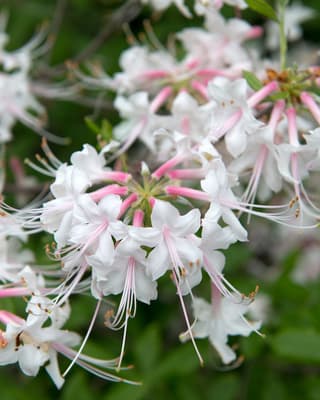
Alabama azalea
Rhododendron alabamense
Rhododendron alabamense is a refined, rounded deciduous azalea native to the southeastern United States. It produces lemon-scented white flowers with a prominent yellow blotch on the upper petal, arranged in clusters of 6–10 blooms. Flowers emerge before or alongside the foliage in mid to late spring, creating a striking display against simple, dark green deciduous leaves. The plant naturally occurs in hardwood forests, slopes, and ridges, spreading via underground runners to form loose colonies. It grows 4–6 feet tall and wide, making it an excellent choice for naturalistic woodland gardens. All parts of the plant are toxic if ingested.
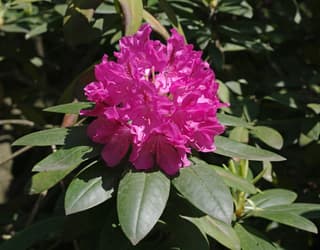
Catawba Rhododendron
Rhododendron catawbiense
Rhododendron catawbiense, commonly known as the Catawba Rhododendron or Mountain Rosebay, is a broadleaf evergreen shrub native to the Appalachian Mountains of the eastern United States. Celebrated for its spectacular late-spring blooms of lavender-pink to purple flowers, it is one of the hardiest rhododendrons available, tolerating temperatures as low as -25°F. Its large, glossy, leathery leaves remain attractive year-round, making it a prized landscape specimen.
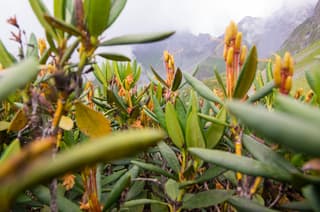
Caucasian Snow Rose
Rhododendron caucasicum
Rhododendron caucasicum, commonly known as the Caucasian Snow Rose, is a slow-growing evergreen shrub native to the subalpine and alpine zones of the Caucasus Mountains. It produces clusters of white to pale pink flowers in spring and forms dense, compact mounds of leathery dark green leaves. This species is highly toxic due to the presence of grayanotoxins, which can cause serious poisoning in humans and animals if ingested in significant quantities. It is a challenging plant to cultivate, demanding acidic, peaty, well-draining soil and consistent moisture in a partially shaded position sheltered from harsh winds.
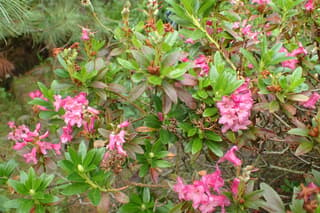
Alpenrose
Rhododendron ferrugineum
Alpenrose (Rhododendron ferrugineum) is a low, evergreen shrub native to the acidic, siliceous soils of the Alps, Pyrenees, Jura and northern Apennines, growing just above the tree line. Its glossy, leathery leaves have a distinctive rust-brown underside, and it produces clusters of bell-shaped pink to crimson flowers in early summer. All parts of the plant contain grayanotoxins and are toxic if ingested.
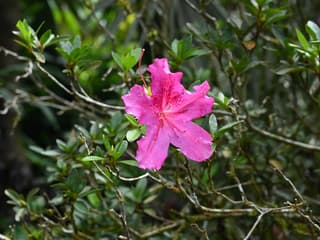
Satsuki Azalea
Rhododendron indicum
The Satsuki Azalea (Rhododendron indicum) is an evergreen shrub native to Japan, widely cultivated as a bonsai and ornamental garden plant. It produces spectacular flowers in shades of pink, red, white, and purple in late spring. It is one of the most prized species in Japanese bonsai art. WARNING: All parts of the plant are toxic to humans and animals due to grayanotoxins.
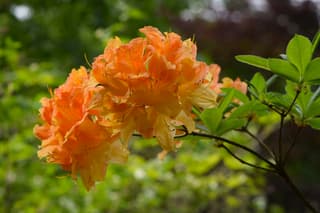
Japanese Azalea
Rhododendron japonicum
The Japanese Azalea (Rhododendron japonicum) is a deciduous shrub native to Japan, celebrated for its spectacular spring blooms in shades of pink, red, orange, yellow, and white. A cherished ornamental in temperate gardens worldwide. WARNING: The entire plant is toxic due to grayanotoxins — dangerous to humans, cats, and dogs.
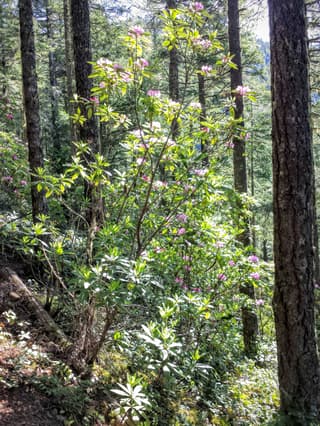
Pacific Rhododendron
Rhododendron macrophyllum
The Pacific Rhododendron is a large evergreen shrub native to coastal forests from British Columbia to northern California, and is the state flower of Washington. It forms dense, leathery, dark-green foliage and produces showy clusters of pink to rose-purple, bell-shaped flowers in late spring through summer. In the wild it thrives as an understory shrub beneath conifers, prized by gardeners for woodland and shade borders.
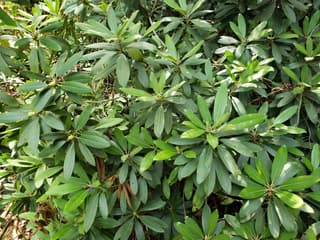
Great Laurel
Rhododendron maximum
Rhododendron maximum, commonly called great laurel or rosebay rhododendron, is a large broadleaf evergreen shrub native to the Appalachian Mountains of eastern North America, from Nova Scotia south to Alabama. It forms dense thickets in moist, shaded forest understories and along stream banks, and is the official state flower of West Virginia. In early-to-mid summer it produces large clusters of funnel-shaped white, pink, or rose-purple flowers, often marked with olive-green to orange spots, above leathery, dark green leaves with rust-colored undersides.
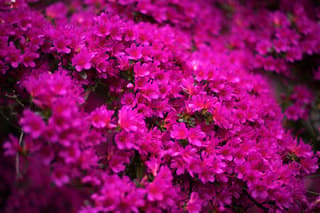
Kurume Azalea
Rhododendron obtusum
Rhododendron obtusum, known as the Kurume azalea, is a compact evergreen to semi-evergreen shrub native to Japan, prized for its dense mounding habit and profuse spring flower display. Small leathery leaves cover twiggy branches that burst into vivid red, pink, purple, or white blooms for several weeks each spring. Long cultivated in Japanese gardens and popularized in the West through the Kurume hybrid group, it remains one of the most widely planted azaleas for borders, foundation plantings, and containers.
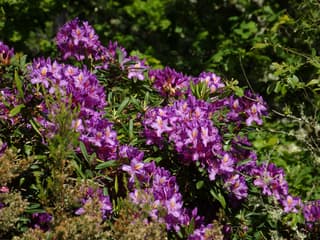
Common Rhododendron
Rhododendron ponticum
Rhododendron ponticum, commonly known as the Common or Pontic Rhododendron, is a large evergreen shrub native to the Iberian Peninsula and the Black Sea region. It produces spectacular clusters of violet-purple flowers in spring and is renowned for both its ornamental beauty and its invasive nature in the British Isles and other regions outside its native range. All parts of the plant contain grayanotoxins, making it highly toxic to pets and humans.
Find the Perfect Plant
Our plant guide helps you find ideal species for your experience level and time of year.
Browse by Difficulty, Season & More
Use the filters below to narrow this catalog by care difficulty, season, environment, or search directly by name. Each filter leads to a focused list tailored to your specific growing conditions.