Complete Plant Guide
Explore plants by difficulty, season and more. Find the perfect plant for you.
Difficulty
Categories
Plants by City
🗺️ Plants by City3454 plants found
Showing 2953-2988 of 3454
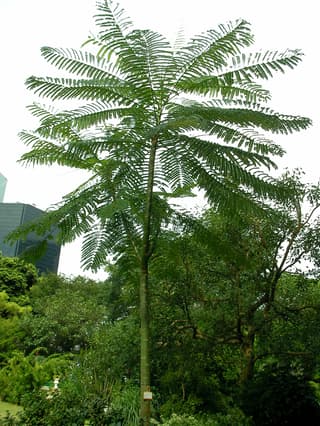
Brazilian Firetree
Schizolobium parahyba
The Brazilian firetree (Schizolobium parahyba) is a tree native to the Atlantic Forest of Brazil, belonging to the Fabaceae family. It is renowned for its extremely fast growth, reaching great heights within a few years. It is deciduous, shedding its leaves in winter and flowering profusely with vibrant yellow blossoms in spring, before or during the emergence of new leaves.
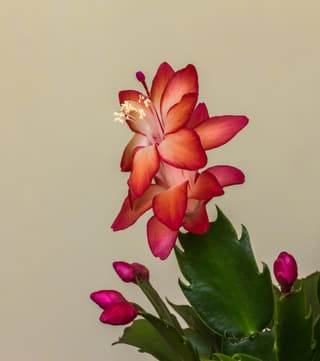
Christmas Cactus
Schlumbergera
Schlumbergera is an epiphytic cactus native to the humid coastal rainforests of southeastern Brazil, where it grows on tree branches and rock crevices in dappled shade. Unlike desert cacti, its flattened, segmented stems (cladodes) store some water but need humidity and indirect light to thrive. Grown worldwide as a popular houseplant, it produces showy tubular flowers in red, pink, white, orange, and purple during fall and winter.
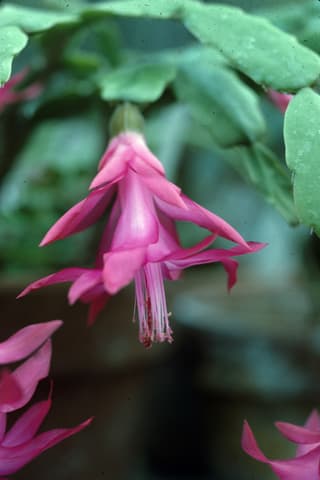
Christmas Cactus
Schlumbergera × buckleyi
Schlumbergera × buckleyi, the true Christmas Cactus, is a hybrid epiphytic cactus that originates from the crossing of S. truncata and S. russelliana, native to the cloud forests of Brazil. Unlike the more common Thanksgiving Cactus (S. truncata), it bears smooth, rounded stem segments and blooms reliably in late December, making it one of the most beloved winter-flowering houseplants in the world. Its tubular, drooping flowers range from pink and red to white and purple, and the plant can live for decades with proper care.
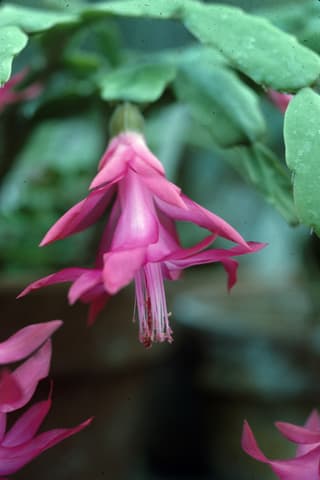
Christmas Cactus
Schlumbergera buckleyi
The Christmas Cactus (Schlumbergera buckleyi) is a tropical epiphytic cactus native to the cloud forests of southeastern Brazil. Unlike desert cacti, it thrives in humid conditions with bright indirect light, producing spectacular tubular flowers in shades of pink, red, white, purple, and coral during winter. It is one of the most beloved holiday houseplants worldwide, celebrated for blooming around Christmas.
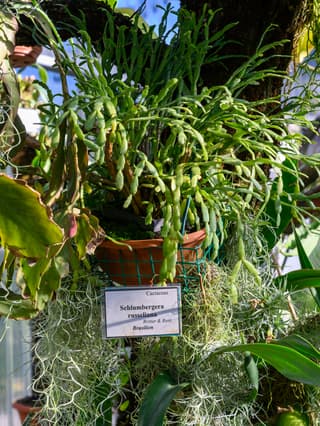
Christmas Cactus
Schlumbergera russelliana
Schlumbergera russelliana, commonly known as Christmas Cactus, is an epiphytic cactus native to the Brazilian Atlantic Forest. It is the ancestral species of garden Christmas cactus hybrids, producing tubular flowers in shades of pink, red, and purple during winter. It naturally grows on trees and rocks in filtered light and moderate humidity typical of tropical rainforests.
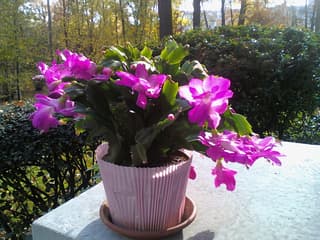
Thanksgiving Cactus
Schlumbergera truncata
The Thanksgiving Cactus is an epiphytic succulent native to the humid Atlantic Forest of southeastern Brazil, particularly found in the mountains of Rio de Janeiro state. Its flattened, pendulous stems produce spectacular tubular flowers in shades of pink, red, white, orange, and purple during fall and winter. It is highly valued as an ornamental plant for its beauty and ease of cultivation.
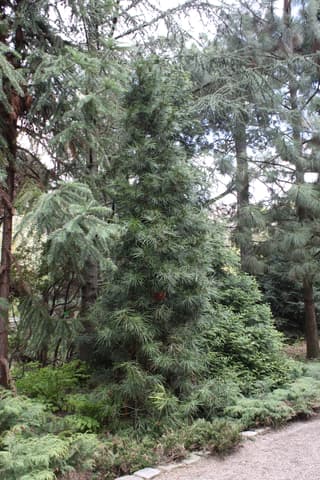
Japanese umbrella pine
Sciadopitys verticillata
The Japanese umbrella pine (Sciadopitys verticillata) is the only living species in the Sciadopityaceae family—a true "living fossil," as its closest relatives are known only from fossil records. Endemic to Japan, it is native to the mountain forests of Shikoku, Kyushu, and the Kii Peninsula, typically growing at altitudes of 700–1400 meters on rocky slopes and in river gorges. Its most distinctive feature is the umbrella-like whorls of flattened, 4–14 cm long needle-like structures (cladodes) at the tips of the shoots, from which its common name is derived. It is an extremely slow-growing evergreen tree: in its homeland, centuries-old specimens can reach 30–40 meters in height, while in garden cultivation, it may only reach a few meters even after several decades.
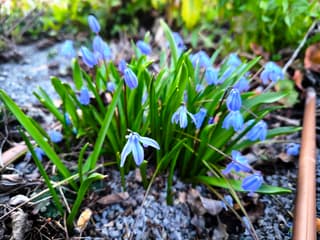
Siberian squill
Scilla siberica
The Siberian squill (Scilla siberica) is a low-growing, bulbous perennial from the Asparagaceae family that begins blooming in early spring, often immediately after the snow melts. Despite its name, it does not originate from Siberia, but from southern Russia, the Caucasus, and Turkey. On 10-15 cm tall stems, 2-5 nodding, star-shaped, bright blue (rarely white) flowers bloom, forming a dense, picturesque carpet under trees and shrubs within a few weeks. It is an undemanding, frost-hardy plant that reproduces through self-seeding and bulb division, creating large, naturalized patches over a few years. It is important to know that its bulb and all green parts contain cardiac glycosides, making it toxic and potentially irritating to the skin—keep away from pets and children.
Silver Squill
Scilla violacea
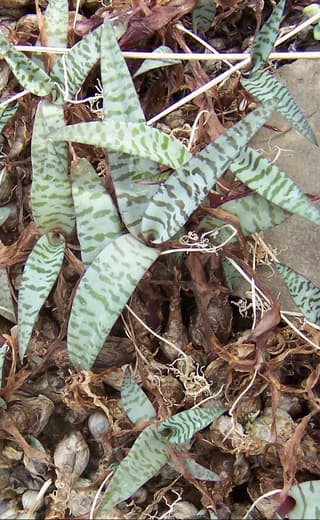
Silver Squill (Ledebouria socialis), also known as Scilla violacea, is an evergreen bulbous plant belonging to the Asparagaceae family, native to the Eastern Cape Province of South Africa. Its fleshy, lance-shaped leaves display an olive-green to silvery-gray color marbled with dark green spots, and a distinctive purple underside. The small bulbs, partly exposed above the soil, multiply into dense colonies over time. In spring and summer, slender pink flower stalks bear discreet greenish-white flowers with purple stamens.
Satin Pothos
Scindapsus pictus
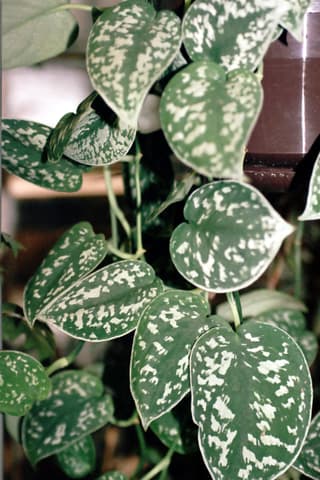
Scindapsus pictus, commonly known as Satin Pothos, is a stunning tropical vine native to Southeast Asia. It features heart-shaped matte green leaves adorned with silvery-gray spots and splashes that give it a satin-like appearance. This elegant trailing plant is beloved for its easy-care nature and ability to thrive in various indoor conditions, making it perfect for hanging baskets or climbing on supports.
Silver Satin Pothos 'Exotica'
Scindapsus pictus 'Exotica'
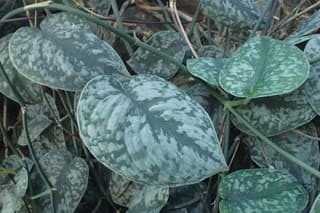
Scindapsus pictus 'Exotica' is a cultivated variety of satin pothos native to the tropical rainforests of Southeast Asia. Its heart-shaped, dark green leaves are covered in irregular, shimmering silver patches that are more concentrated than on the standard species. A trailing or climbing vine, it is ideal for hanging baskets or moss poles and is one of the hardiest, easiest aroids to grow indoors.
Satin Pothos
Scindapsus pictus argyraeus
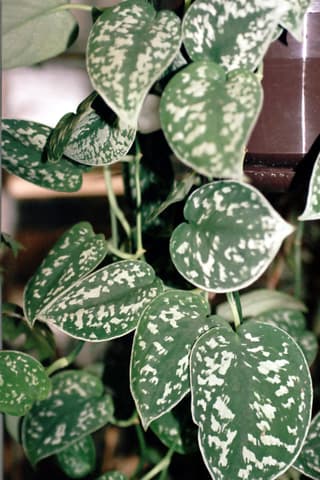
Scindapsus pictus 'Argyraeus', commonly known as Satin Pothos or Silver Pothos, is a stunning trailing vine native to Southeast Asia. It features heart-shaped, dark green leaves adorned with silver-white satin markings that shimmer in the light. Despite the name "pothos," it belongs to the genus Scindapsus and the Araceae family. It is highly popular as an indoor plant due to its low maintenance requirements and its ability to thrive in moderate to low light conditions.

Sterling Silver Scindapsus
Scindapsus treubii
Scindapsus treubii, commonly known as Sterling Silver Scindapsus or Moonlight Scindapsus, is a stunning tropical aroid native to the rainforests of Southeast Asia. It is celebrated for its thick, waxy leaves adorned with a distinctive silvery-green sheen that shimmers under light. Two main cultivars are popular among collectors: 'Moonlight', which boasts brighter silver variegation, and 'Dark Form', with deeper, darker foliage. As a slow-growing climber, it rewards patient gardeners with breathtaking leaves that become more striking as the plant matures.
Black Salsify
Scorzonera
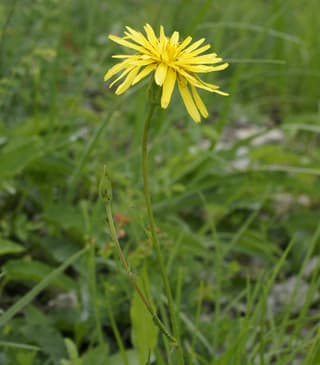
Scorzonera is a perennial root vegetable in the Asteraceae family, native to southern Europe and Central Asia. It produces long taproots with distinctive black skin and white flesh, prized for their delicate oyster-like flavor. In the second year, plants bear bright yellow dandelion-like flowers that are also edible.
Autumn Hawkbit
Scorzoneroides autumnalis
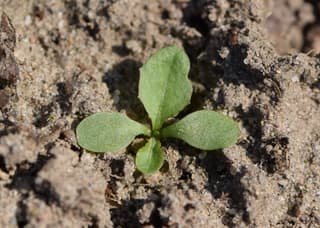
Autumn Hawkbit (Scorzoneroides autumnalis) is a perennial herb in the daisy family (Asteraceae) that resembles a dandelion but has branched stems with multiple flower heads. It forms a flat rosette of narrow, toothed leaves at ground level and sends up smooth, wiry flower stalks up to 50 cm tall. The bright yellow flower heads, up to 3.5 cm wide with reddish stripes on the outer ray florets, bloom from late summer to autumn and are an important nectar source for bees and butterflies when most other flowers have faded. The plant is widespread in Europe and Asia and thrives in meadows, roadsides, and naturalized lawns.
Water Figwort
Scrophularia auriculata
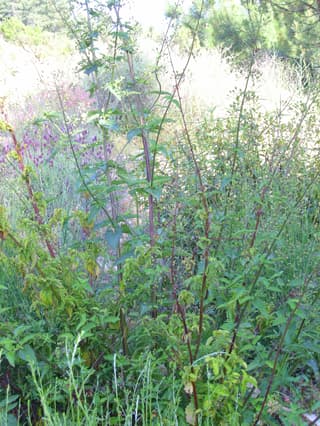
Water figwort (Scrophularia auriculata) is an upright, clump-forming herbaceous perennial native to the damp riverbanks, pond margins, and wet meadows of Western Europe and North Africa. Reaching up to 1 m tall, it has distinctive winged, square, greenish-purple stems and oval, wrinkled, crenate-margined leaves that are often auricled (eared) at the base, giving the species its name. From early summer to early autumn it produces small, globular, maroon-brown flowers with a two-lipped shape, borne on branching cymes above the foliage. Because it thrives in permanently moist to waterlogged soil, it is a popular choice for bog gardens, pond margins, and rain gardens, where it also serves as a larval host plant for the figwort sawfly.
Skullcap
Scutellaria
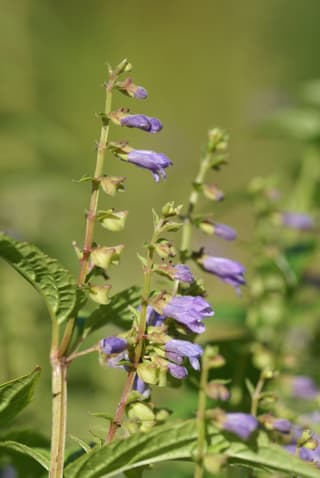
Scutellaria is a diverse genus of approximately 350 herbaceous perennials in the mint family (Lamiaceae), found across temperate and subtropical regions worldwide. Recognizable by their square stems, opposite leaves, and distinctively lipped flowers, skullcaps take their common name from the small shield-like protrusion on the calyx that resembles a miniature medieval helmet. Species range from the moisture-loving American skullcap (S. lateriflora) native to woodland streams of eastern North America, to the drought-tolerant Chinese skullcap (S. baicalensis) prized in traditional East Asian medicine. All species produce elegant tubular flowers, typically in shades of blue, purple, pink, or white, making them attractive to pollinators and gardeners alike.
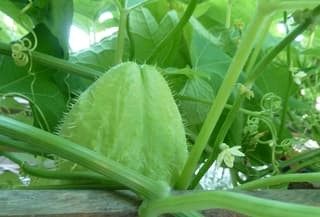
Chayote
Sechium edule
The chayote (Sechium edule) is a vigorous herbaceous climbing vine in the Cucurbitaceae family, native to Central America, whose vines can exceed 32 to 49 feet (10 to 15 meters) in length when well-supported by trellises, fences, or arbors. It produces light green fruits with smooth or prickly skin, heart-shaped leaves, and small greenish-white flowers. It is a fast-growing, highly productive plant that blooms between summer and fall and bears fruit just a few months after planting. All parts of the plant are edible—fruit, shoots, leaves, seeds, and even the tuberous root—making it both a versatile vegetable and an ornamental plant for pergolas and walls.
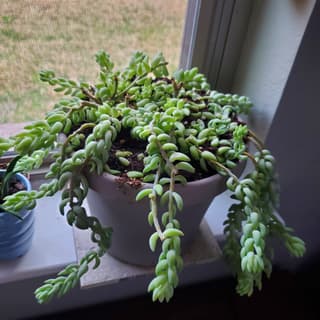
Stonecrop (genus)
Sedum
Sedum is a vast genus of over 600 succulent species in the family Crassulaceae, ranging from low-growing creeping groundcovers like S. acre to upright clump-formers like S. spectabile and the beloved trailing S. morganianum (Donkey's Tail). Incredibly hardy, drought-tolerant, and adaptable across USDA zones 3–11.
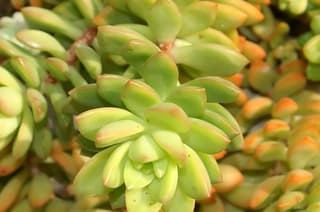
Golden Sedum
Sedum adolphi
Sedum adolphi, commonly known as Golden Sedum or Coppertone Stonecrop, is a perennial succulent in the Crassulaceae family, native to Mexico. Its fleshy yellow-green leaves turn stunning shades of orange and copper when exposed to full sun, a phenomenon known as sun stress. It is a low-maintenance, drought-tolerant plant that thrives both indoors and outdoors in warm climates.
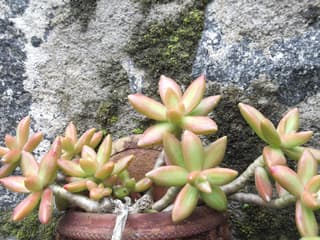
Golden Sedum
Sedum adolphii
Sedum adolphii is a versatile perennial succulent known for its fleshy, lance-shaped leaves that take on a vibrant yellow-orange hue when exposed to full sun. Native to Mexico, it forms dense rosettes and is ideal for rock gardens or hanging pots.
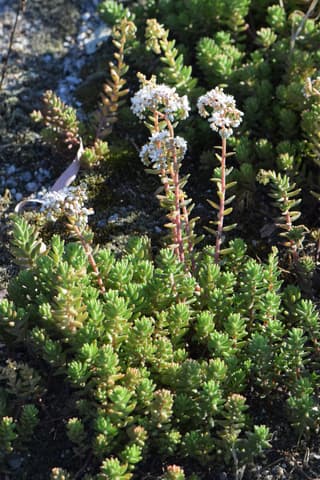
White Stonecrop
Sedum album
Sedum album, commonly known as White Stonecrop, is a low-growing evergreen succulent native to Europe, North Africa, and western Asia. It forms dense mats of small, plump green leaves that often turn reddish in full sun or during drought. In summer it produces masses of tiny starry white flowers, making it a popular choice for rock gardens, green roofs, and ground cover applications.
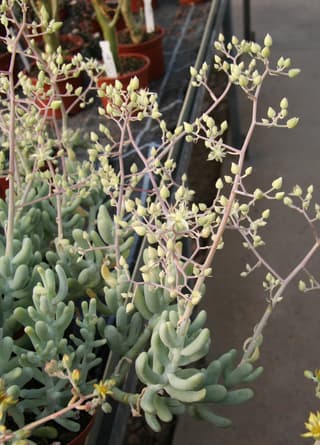
Ghost Sedum
Sedum allantoides
Sedum allantoides is a compact succulent in the Crassulaceae family, native to Mexico (Oaxaca). Its fleshy, cylindrical leaves are coated in a white powdery bloom (pruina), giving it a ghostly appearance. In summer it produces small star-shaped greenish-white flowers.
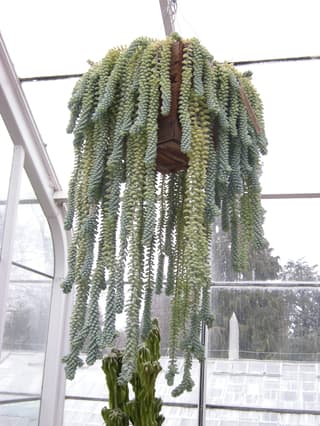
Baby Donkey Tail
Sedum burrito
Sedum burrito, often sold as Sedum morganianum 'Burrito', is a compact trailing succulent prized for its dense rows of plump, blue-green, bead-like leaves that cascade over the edge of hanging pots. Unlike its parent species Sedum morganianum, its leaves are shorter, rounder, and less prone to dropping, making it a sturdier houseplant choice.
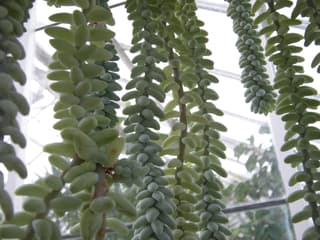
Baby Burro's Tail
Sedum burritum
Baby Burro's Tail is a compact, trailing succulent in the Crassulaceae family, closely related to the larger Sedum morganianum. It forms dense ropes of tiny, plump, blue-green leaves that overlap like beads along pendulous stems, making it a favorite for hanging baskets and shelves where its foliage can cascade freely. Native to the arid regions of southern Mexico, it is extremely drought-tolerant and thrives on benign neglect, needing only bright light and infrequent, deep watering. Mature plants may produce small star-shaped pink to red flowers at the stem tips in summer. The leaves are delicate and detach easily at the slightest touch, so the plant is best kept somewhere it will not be brushed against.

Corsican Stonecrop
Sedum dasyphyllum
Sedum dasyphyllum is a tiny, mat-forming evergreen succulent with plump, rounded blue-grey leaves that often blush lavender-pink in strong light. In early summer it carries small white star flowers on short stems. This low, spreading groundcover is perfect for troughs, rock gardens, walls and the gaps between paving.
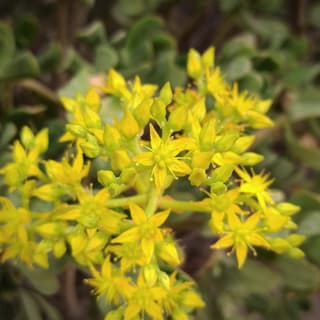
Tree Stonecrop
Sedum dendroideum
Tree Stonecrop (Sedum dendroideum) is a robust, shrubby succulent native to the mountainous regions of Mexico and Guatemala, from Chiapas and Oaxaca to Veracruz and Michoacan. It forms dense, much-branched clumps of thick woody stems topped with rosettes of fleshy, spatula-shaped green leaves that blush red or bronze under strong sun or cool temperatures. From late winter into spring it produces abundant clusters of small, star-shaped yellow flowers that attract pollinators. Easy to grow and highly drought-tolerant, it is a popular choice for rock gardens, succulent borders, ground cover, and container displays in warm, sunny climates.
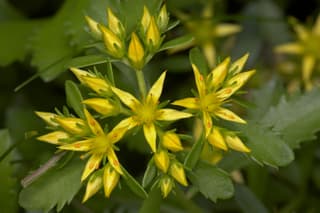
Orange Stonecrop
Sedum kamtschaticum
Sedum kamtschaticum, commonly known as Orange Stonecrop or Russian Stonecrop, is a low-growing succulent groundcover in the Crassulaceae family, native to rocky mountain slopes across Japan, Korea, northeastern China, and the Russian Far East (including the Kamchatka Peninsula, from which it takes its name). It forms dense, spreading mats of glossy, spoon-shaped green leaves that flush bronze-red in cooler weather, topped in late spring through midsummer by clusters of star-shaped golden-yellow flowers that attract bees and butterflies. Extremely drought-tolerant once established, it is prized as a rock garden, wall, or edging plant that thrives where little else will grow.
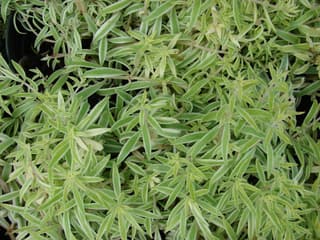
Needle Stonecrop
Sedum lineare
Sedum lineare, commonly known as Needle Stonecrop or Carpet Sedum, is a mat-forming succulent groundcover native to eastern China, Japan, and Taiwan. It has slender, branching stems covered in narrow, light green leaves arranged in whorls of three. In late spring to early summer it produces small star-shaped yellow flowers. Extremely tough, it tolerates poor soil, drought, and full sun, making it a popular choice for rock gardens, borders, and hanging containers.
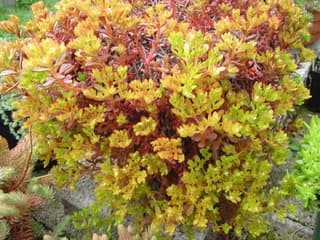
Japanese Stonecrop
Sedum makinoi
Sedum makinoi is a perennial creeping succulent plant native to Japan. It is characterized by its small, rounded, fleshy, bright green leaves that form a dense and attractive carpet. During the summer, it produces small, star-shaped yellow flowers that stand out against the foliage. It is an excellent choice for rock gardens, ground cover in sunny areas, or as a trailing plant in pots and hanging baskets.
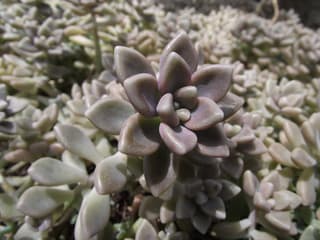
Marbled Succulent
Sedum mendozae
Sedum mendozae, commonly known as the Marbled Succulent, is a compact rosette-forming succulent in the Crassulaceae family. Native to the volcanic hillsides of Veracruz, Mexico, it features thick, fleshy leaves in grayish tones with green and pink hues depending on sun exposure. It produces small white star-shaped flowers in spring and summer. Also known as Graptopetalum mendozae, it is prized in succulent arrangements and rock gardens.
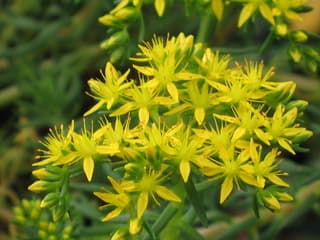
Mexican Stonecrop
Sedum mexicanum
Mexican Stonecrop (Sedum mexicanum) is a low-growing succulent groundcover in the Crassulaceae family, native to Mexico. It forms dense mats of bright green, needle-like leaves and produces masses of small, star-shaped yellow flowers in late spring to early summer. It is widely used in rock gardens, borders, and green roofs.
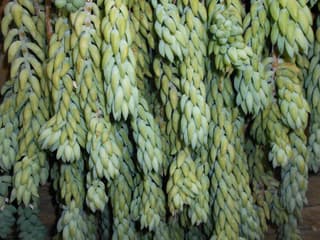
Burro's Tail
Sedum morganianum
Sedum morganianum is a trailing succulent native to Mexico, famous for its long stems covered with plump, blue-green fleshy leaves that can reach up to 60 cm (24 inches) in length. Pink to red flowers appear in summer. Perfect for hanging baskets, but must be handled carefully as leaves detach easily.
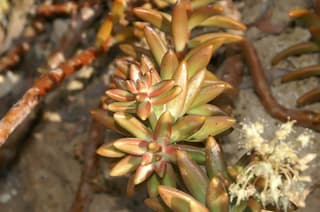
Coppertone Stonecrop
Sedum nussbaumerianum
Sedum nussbaumerianum, commonly called Coppertone Stonecrop, is a trailing succulent in the Crassulaceae family native to the volcanic highlands of Veracruz, Mexico. Its fleshy, teardrop-shaped leaves form loose rosettes that shift from pale yellow-green to a vivid copper-orange under strong sun, giving the plant its common name. Left to spread, it cascades attractively over pot edges or spills across rock gardens as ground cover.
Jelly Bean Plant
Sedum pachyphyllum
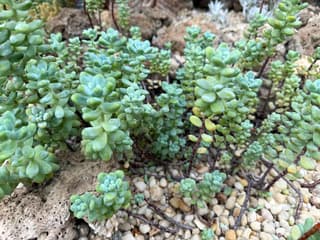
Sedum pachyphyllum is a charming perennial succulent native to Mexico. It is characterized by its short, cylindrical, fleshy leaves that grow on upright or slightly trailing stems. Its coloration is a pale bluish-green (glaucous), but what makes it special are the leaf tips, which turn bright red or pink when the plant is exposed to full sun or moderate cold. It produces small, star-shaped yellow flowers during the spring.
Palmer's Sedum
Sedum palmeri
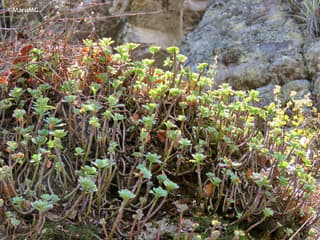
Sedum palmeri is an evergreen perennial succulent native to the rocky cliffs of the Sierra Madre in Mexico. It forms compact rosettes of glaucous blue-green leaves on trailing stems, making it an excellent choice for hanging baskets, rock gardens, and container gardens. In spring, it produces bright yellow star-shaped flowers that attract pollinators.
Find the Perfect Plant
Our plant guide helps you find ideal species for your experience level and time of year.
Browse by Difficulty, Season & More
Use the filters below to narrow this catalog by care difficulty, season, environment, or search directly by name. Each filter leads to a focused list tailored to your specific growing conditions.