Complete Plant Guide
Explore plants by difficulty, season and more. Find the perfect plant for you.
Difficulty
Categories
Plants by City
🗺️ Plants by City3454 plants found
Showing 2917-2952 of 3454
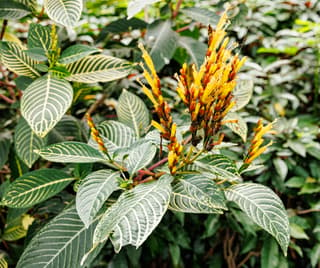
Shrubby Whitevein
Sanchezia speciosa
Sanchezia speciosa is a striking tropical shrub from the Acanthaceae family, native to tropical South America. Its standout feature is its large, glossy dark-green leaves boldly marked with vivid yellow-gold veins, creating a dramatic ornamental display. Under favorable conditions it produces tubular yellow-orange flowers in summer and fall.
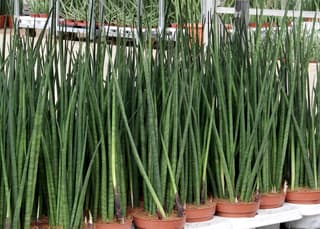
Cylindrical snake plant
Sansevieria bacularis
Sansevieria bacularis is an evergreen succulent native to the Congo and Rwanda, belonging to the Asparagaceae family. It is characterized by slender, cylindrical, fleshy leaves that form dense clusters capable of reaching up to 100 cm in height. The leaves display dark green coloration with horizontal light green stripes and a distinctive vertical groove running down each blade. The plant produces small white or cream flowers in tall inflorescences during spring and summer. It is an exceptionally tough and low-maintenance houseplant, making it ideal for both beginner and experienced plant enthusiasts seeking a reliable indoor specimen.
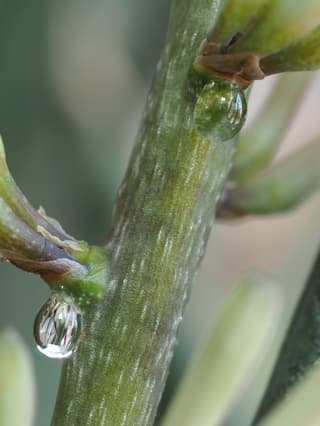
African Spear
Sansevieria cylindrica
Sansevieria cylindrica, now scientifically known as Dracaena angolensis, is a succulent native to Angola in Southern Africa. It features cylindrical green fleshy leaves with white veins that grow in a fan shape from a basal rosette. Each leaf can reach up to 1 meter in length and 3 cm in diameter. It is known for its air-purifying capabilities, designated by NASA as one of the most efficient plants for this purpose.
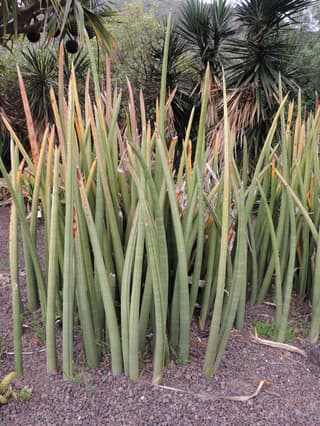
Elephant Tusk
Sansevieria stuckyi
Sansevieria stuckyi, often called the Elephant Tusk plant, is a striking succulent from East and Southern Africa prized for its rigid, cylindrical leaves that grow upright like tusks, reaching up to 2.75 m tall. Unlike its low, fan-shaped relatives, this species forms a dramatic architectural silhouette, making it a standout sculptural houseplant. It is extremely drought-tolerant, low-maintenance, and thrives on neglect, making it ideal for busy plant owners.
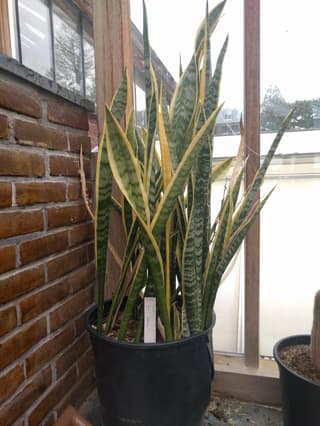
Snake Plant
Sansevieria trifasciata
The Snake Plant is a striking, architectural houseplant native to West Africa. Known for its tall, sword-shaped leaves with distinctive gray-green horizontal stripes, it is one of the most resilient and low-maintenance indoor plants. NASA research identified it as an excellent air purifier, capable of removing formaldehyde, xylene, and other toxins. It is one of few plants that converts CO2 to oxygen at night, making it ideal for bedrooms.
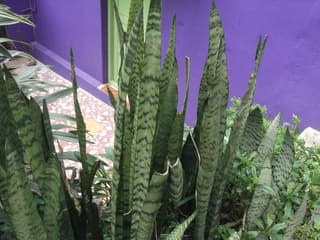
Ceylon Bowstring Hemp
Sansevieria zeylanica
Sansevieria zeylanica, also accepted as Dracaena zeylanica, is a slow-growing evergreen succulent native to the drier regions of Sri Lanka. Its stiff, sword-shaped leaves display irregular bands of dark and pale green, forming dense upright rosettes. Historically prized for its strong leaf fibers used to make bowstrings, rope, and cloth, it is now a popular low-maintenance houseplant. Often confused with S. trifasciata, the true species produces 10–16 leaves per rosette and lacks a visible petiole.
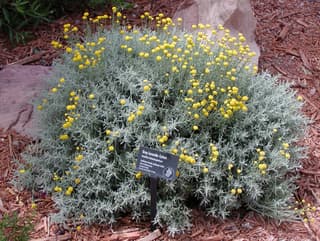
Lavender Cotton
Santolina chamaecyparissus
Santolina chamaecyparissus, commonly known as Lavender Cotton, is a compact, evergreen aromatic shrub native to the Mediterranean basin. It forms dense, rounded mounds of silvery-gray, finely textured foliage that releases a pleasant herbal fragrance when touched. In summer, it produces cheerful bright yellow, button-like flower heads on slender upright stems. Highly valued for its drought tolerance, deer resistance, and ability to thrive in poor, dry soils, it is a staple of Mediterranean, rock, and xeriscape gardens.
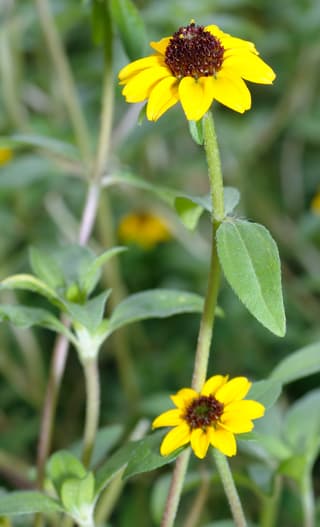
Creeping Zinnia
Sanvitalia procumbens
A low, mat-forming annual from Mexico and Guatemala prized for its cheerful yellow-orange, daisy-like flowers with dark purple-brown centers. It spreads 30-50cm wide but stays under 15cm tall, making it a favorite for ground cover, rock gardens, hanging baskets, and border edging. Blooms continuously from midsummer until the first frost with almost no maintenance.
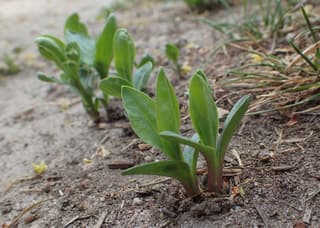
Soapwort
Saponaria officinalis
Saponaria officinalis, commonly known as Soapwort or Bouncing-bet, is a perennial herbaceous plant in the Caryophyllaceae family, native to Europe and Asia Minor. It produces delicate pink and white flowers during the summer, and its roots contain saponins—substances that create a lather with water, historically used as a natural soap.
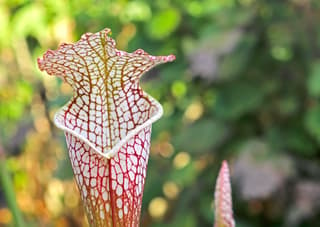
North American Pitcher Plant
Sarracenia
Sarracenias are fascinating carnivorous plants native to North America. They feature modified leaves shaped like pitchers or trumpets, which they use to attract, capture, and digest insects. Their colors range from vibrant green to deep reds, often with contrasting veins that guide prey into the trap.
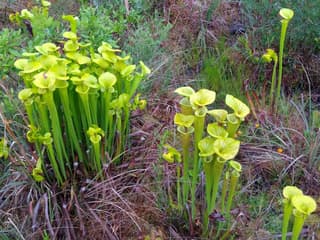
Yellow Pitcher Plant
Sarracenia flava
Sarracenia flava, known as the yellow pitcher plant or trumpet pitcher, is a carnivorous perennial native to the bogs and wet pine savannas of the southeastern United States, from Virginia to Florida and Alabama. It produces tall, slender, trumpet-shaped pitchers in yellow-green tones topped with an erect, hood-like lid, reaching up to 90cm in height. In spring, before new pitchers emerge, it produces striking nodding yellow flowers on long stalks. Like other Sarracenia species, it lures, traps, and digests insects to supplement the scarce nutrients of its boggy, nutrient-poor habitat.

Crimson Pitcherplant
Sarracenia leucophylla
A striking carnivorous bog plant native to the longleaf pine savannas of the southeastern US Gulf Coast. Tall, tubular pitchers rise to nearly a meter, topped with a wavy hood marked by reddish-purple veins on a white background. In spring, nodding, brownish-red flowers appear on tall stalks before the pitchers fully develop. Like all Sarracenia, it traps and digests insects to supplement the poor nutrients of its native peaty soil.
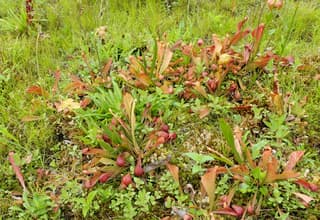
Parrot Pitcher Plant
Sarracenia psittacina
Sarracenia psittacina, the Parrot Pitcher Plant, is a fascinating carnivorous plant native to the Gulf Coast of the southeastern United States. Its unique pitchers resemble a parrot's beak and employ a lobster-trap mechanism — prey wander in following inward-pointing hairs and cannot find their way back out. It is one of the smallest Sarracenia species and demands specialized care including distilled water and acidic peat soil.
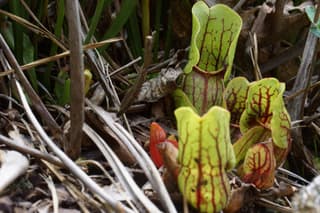
Purple Pitcher Plant
Sarracenia purpurea
Sarracenia purpurea, the purple pitcher plant, is a carnivorous perennial native to bogs and nutrient-poor wetlands across eastern North America. Its rosette of hollow, water-filled pitcher leaves traps and digests insects to supplement the poor soil it grows in. Pitchers range from green to deep red-purple, and the plant produces a single nodding red-purple flower each spring.
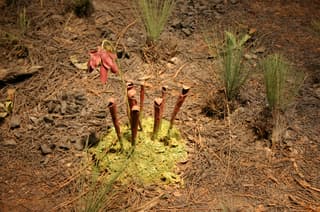
Sweet Pitcher Plant
Sarracenia rubra
Sarracenia rubra is a clump-forming carnivorous perennial native to the acidic, nutrient-poor bogs and seepage slopes of the southeastern United States, from the Florida Panhandle and Alabama through Georgia to the coastal plains of the Carolinas. Its narrow, upright pitchers -- usually under 65 cm tall -- lure insects with nectar and a sweet scent, then trap them using downward-pointing hairs and a slick, waxy inner wall. In spring the plant sends up striking maroon-red, umbrella-shaped flowers with long, dangling petals before the summer flush of taller pitchers appears. Because it evolved in soils too poor to support ordinary plants, it depends on trapped insects rather than fertilizer for nitrogen and phosphorus, and it requires a genuine winter dormancy to thrive long-term.
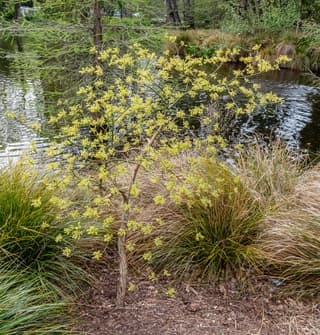
Sassafras
Sassafras albidum
Sassafras albidum is a deciduous tree native to eastern North America, ranging from southern Ontario and New England to Florida and Texas. It is recognized by its characteristic three-lobed leaves, which can have three different shapes on the same branch (entire, mitten-shaped with one lobe, and three-lobed), as well as its highly aromatic bark and roots. In spring, the tree bears small yellow-green flowers, and in autumn, the foliage turns brilliant orange, red, and purple. The species is seriously threatened by the fatal fungal disease "laurel wilt" (caused by Raffaelea lauricola), which is spread by the introduced Asian ambrosia beetle Xyleborus glabratus.
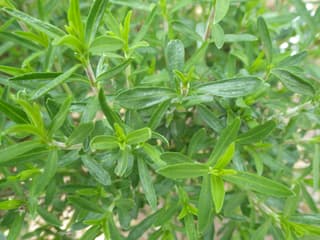
Summer Savory
Satureja hortensis
Summer savory (Satureja hortensis) is a highly aromatic annual herb in the mint family (Lamiaceae), native to the Mediterranean region. It is a branched, hairy-stemmed plant growing 30–45 cm tall, with narrow, lanceolate leaves and small, white or pale lavender tubular flowers that appear in summer. Its leaves emit a pungent, spicy aroma reminiscent of pepper and thyme, making it a popular seasoning for legumes and meats.
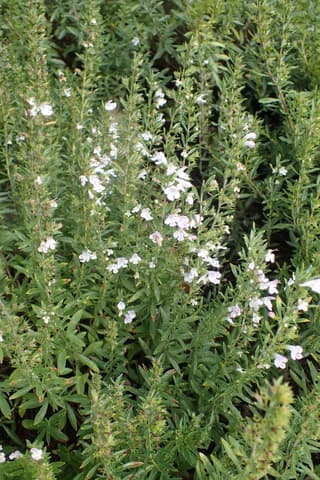
Winter Savory
Satureja montana
Winter savory (Satureja montana) is a hardy, evergreen perennial subshrub in the mint family (Lamiaceae), native to the mountainous regions of the Mediterranean. It forms low, woody-based mounds of narrow, glossy, highly aromatic leaves, with small white, lilac, or pale blue flowers appearing in summer. Prized as a culinary and medicinal herb, it has a peppery flavor reminiscent of thyme and marjoram.
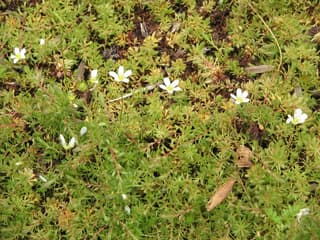
Saxifrage
Saxifraga
Saxifraga is a large genus of roughly 440 species of low-growing, mat- or cushion-forming perennials native mainly to alpine and arctic regions of the Northern Hemisphere. Commonly called saxifrage or rockfoil, the name comes from the Latin for "stone-breaker," a nod to the way these tough little plants root into rock crevices. Species range from tiny alpine cushions to trailing houseplants like strawberry saxifrage.
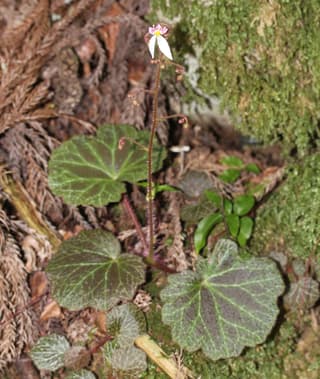
creeping saxifrage
Saxifraga stolonifera
Saxifraga stolonifera, commonly known as Strawberry Begonia, is a charming perennial that spreads via long, slender red stolons similar to strawberry runners. It features rounded, hairy, dark green leaves with striking silver veins and maroon undersides. In spring, it produces airy panicles of delicate white flowers. Despite its common names, it is neither a begonia nor a geranium, but a member of the saxifrage family.
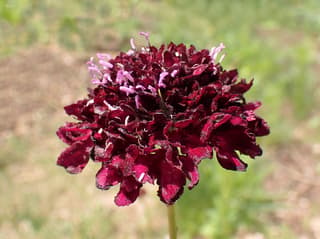
Mourning Bride
Scabiosa atropurpurea
Scabiosa atropurpurea, popularly known as Mourning Bride, is a charming herbaceous plant that produces globular flowers with prominent stamens resembling a pincushion. Its flowers are rich in nectar, making it a favorite in pollinator gardens to attract butterflies and bees. It features long, slender stems, ideal for cut flower arrangements, and very characteristic lobed basal foliage.
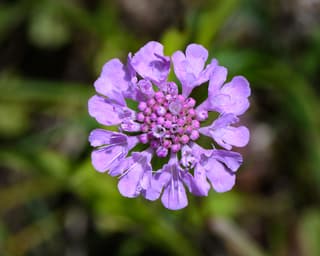
Pigeon Scabious
Scabiosa columbaria
Pigeon Scabious (Scabiosa columbaria) is a delicate perennial wild herbaceous plant from the honeysuckle family (Caprifoliaceae), native to Europe, West Asia, and North Africa. It forms finely feathered leaves and bears delicate, pincushion-like flower heads in purple, blue-violet, or pink from June to October. It thrives in calcareous, well-drained soils and is a valuable nectar source for bees, butterflies, and hoverflies. As a robust, drought-tolerant plant, it is excellently suited for natural gardens, rock gardens, gravel beds, and wildflower meadows.
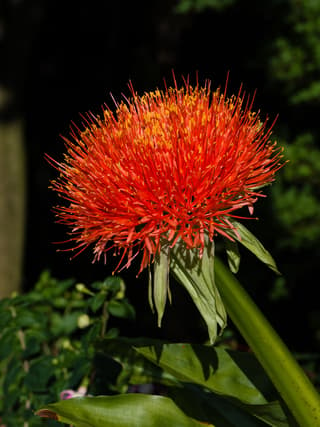
Fireball Lily
Scadoxus
Scadoxus is a small genus of bulbous perennials native to tropical and southern Africa, prized for dramatic globe-shaped flower heads made up of hundreds of tiny red florets with prominent yellow-tipped stamens, resembling a burst of fireworks or a paintbrush dipped in scarlet paint. Strap-shaped leaves emerge in a loose rosette from an underground bulb, and in several species the flowers appear on a bare stalk before the foliage unfurls. The plant dies back to the bulb during a dry dormant season, then re-emerges with fresh leaves and blooms the following year.
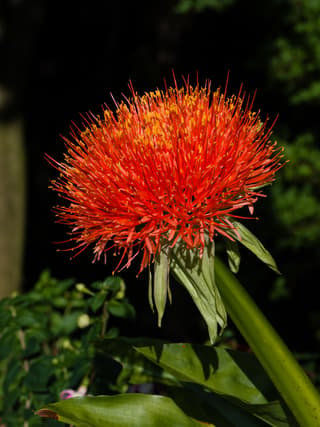
Blood Lily
Scadoxus multiflorus
The Blood Lily (Scadoxus multiflorus) is a spectacular bulbous plant native to sub-Saharan Africa, celebrated for its globe-shaped scarlet flower heads that can contain up to 200 individual blooms and reach 20 cm in diameter. It grows from a rhizomatous bulb, producing broad decorative leaves. The plant enters winter dormancy before putting on a striking floral display in spring and summer.
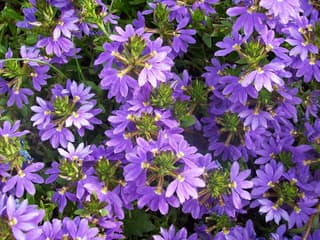
Fan Flower
Scaevola
Scaevola is a genus in the family Goodeniaceae, native to arid and semi-arid regions of Australia. The most widely cultivated species, Scaevola aemula, is a trailing, mounding plant popular in hanging baskets and containers, prized for its distinctive fan-shaped blue or purple flowers with petals arranged on one side.

Fan Flower
Scaevola aemula
Scaevola aemula, commonly known as Fan Flower or Fairy Fan Flower, is a cheerful Australian native perennial prized for its unique fan-shaped blooms. The flowers are arranged in a distinctive half-fan formation — a quirky feature that gives it its common name. Blooming prolifically from spring through summer, it produces masses of small purple, blue, or white flowers, making it a favourite for containers, hanging baskets, and garden borders. Native to the coastal regions of New South Wales and Victoria, it thrives in full sun and well-drained soils, and is remarkably tolerant of drought, heat, and salt spray.
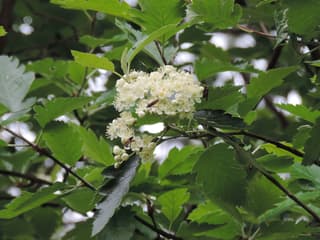
Swedish Whitebeam
Scandosorbus intermedia
Scandosorbus intermedia, commonly known as Swedish Whitebeam, is a medium-sized deciduous tree native to southern Scandinavia, the Baltic states, and parts of the UK. It is widely prized as an urban street tree for its exceptional tolerance of pollution, wind, and coastal exposure. In spring it bears clusters of white flowers, followed by ornamental orange-red berries in autumn that attract birds.
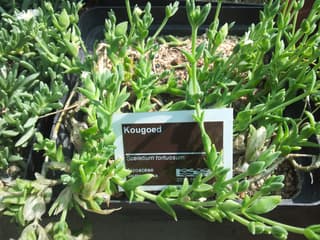
Kanna
Sceletium tortuosum
Kanna (Sceletium tortuosum) is a creeping, succulent plant with fleshy leaves native to the semi-desert, quartz-rich regions of South Africa. Its name (derived from the Greek 'skeletos', meaning skeleton) comes from the skeleton-like, veined patterns formed by dried leaves remaining on the stem. Its small, white, pale yellow, or pink flowers, measuring 20-30 mm in diameter, bloom in spring. Kanna is known in the centuries-old traditions of the Khoisan and San peoples as a mood-enhancing, calming plant, traditionally consumed by chewing or fermenting ('kougoed').
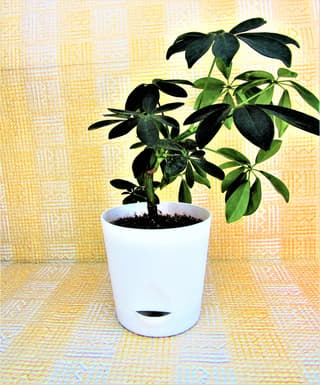
Umbrella Plant
Schefflera
Schefflera is a genus of about 600 evergreen shrubs, trees, and vines in the Araliaceae family, prized worldwide as a resilient houseplant. The most widely cultivated member, Schefflera arboricola (dwarf umbrella tree), produces glossy, palmately compound leaves arranged like the spokes of an umbrella, giving the plant its common name. Native to Taiwan and Hainan, it has become one of the most popular low-maintenance indoor foliage plants thanks to its tolerance of a wide range of light and humidity conditions.
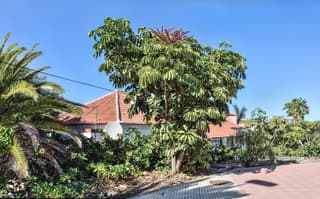
Queensland Umbrella Tree
Schefflera actinophylla
Schefflera actinophylla, commonly known as the Queensland Umbrella Tree or Australian Umbrella Tree, is a fast-growing tropical tree native to the rainforests of northern Queensland, Australia, New Guinea, and Java. Its large, glossy palmate leaves radiate from a central point like an umbrella, making it one of the most popular ornamental plants for both indoor and outdoor tropical landscapes.
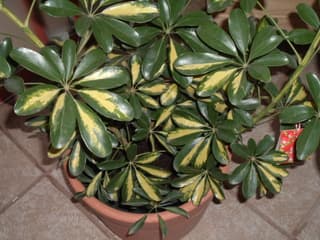
Dwarf Umbrella Tree
Schefflera arboricola
The Dwarf Umbrella Tree (Schefflera arboricola) is a versatile, attractive evergreen shrub native to Taiwan and Hainan, China. Known for its glossy, palmately compound leaves with 7-9 leaflets arranged like an umbrella, this resilient plant has become one of the most popular houseplants worldwide. It can grow as a small tree or shrub indoors and is valued for its tolerance of varying light conditions and ease of care.
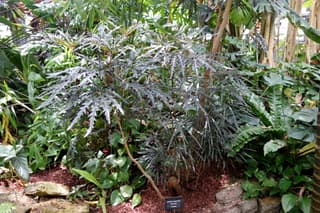
False Aralia
Schefflera elegantissima
False aralia (Schefflera elegantissima, syn. Dizygotheca elegantissima and Plerandra elegantissima) is a striking evergreen shrub from the Araliaceae family, native to New Caledonia in the South Pacific. It is prized as a houseplant for its dramatic, deeply serrated, coppery-bronze juvenile leaves that mature to a dark, glossy green with a leathery texture. Young plants have narrow, almost lacy leaflets arranged in a whorled, umbrella-like pattern, while mature specimens develop thicker leaflets and a woody, tree-like trunk that can reach 1.8-2.5 m indoors. False aralia has a reputation for being a bit temperamental compared to other Schefflera relatives, reacting quickly to drafts, sudden temperature swings, and inconsistent watering with leaf drop, so it rewards a stable spot and a steady care routine.

Peruvian peppertree
Schinus molle
Schinus molle, known in Italy as "false pepper" or "pink pepper," is a majestic evergreen tree native to the arid and semi-arid regions of Peru and the South American Andes. It can reach 15 meters in height, developing a broad, dense, and weeping canopy that gives it an unmistakable appearance, similar to a weeping willow. Its leaves are pinnate, very aromatic to the touch, composed of numerous bright green, lanceolate leaflets. In spring and summer, it produces small white or cream flowers gathered in pendulous panicles, followed in autumn by abundant clusters of pinkish-red berries — the so-called pink peppercorns — which are highly ornamental and used as a spice. Thanks to its extraordinary drought resistance and ability to adapt to poor and stony soils, it is widely used in Mediterranean landscaping, as street trees, and in parks. It was considered sacred by pre-Columbian Peruvian populations, who used it in religious rituals and traditional medicine.
Brazilian Pepper Tree
Schinus terebinthifolius
The Brazilian pepper tree (Schinus terebinthifolius) is a native tree from Brazil belonging to the Anacardiaceae family, related to poison ivy and sumac. It is widely recognized for its clusters of bright red aromatic berries, known commercially as pink pepper, used as a gourmet spice worldwide. This evergreen tree can reach up to 10 meters in height and is cultivated as an ornamental plant in warm climates, though it is considered invasive in parts of the United States.
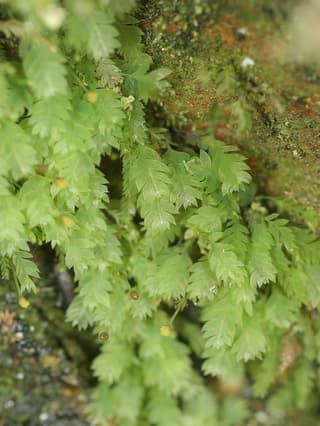
Luminous moss
Schistostega pennata
Schistostega pennata is a unique and fascinating moss from the Schistostegaceae family. This bryophyte is famous for its luminescent property: in low-light conditions, its protonema emits a soft golden-green glow. This occurs because specialized spherical cells in the protonema act as biological lenses, concentrating weak light onto the chloroplasts. The plant is small, with gametophytes of only 1.5 cm, featuring opposite leaves with a simple structure. It is native to temperate regions of the Northern Hemisphere (Europe, Asia, and North America).
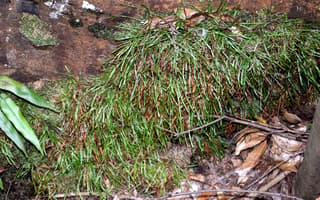
Comb Fern (genus)
Schizaea
Schizaea is a genus of primitive ferns in the family Schizaeaceae, characterized by grass-like sterile fronds and distinctive comb-shaped fertile segments. Native to tropical and subtropical humid regions worldwide, they are rarely seen outside specialist collections and greenhouses.
Find the Perfect Plant
Our plant guide helps you find ideal species for your experience level and time of year.
Browse by Difficulty, Season & More
Use the filters below to narrow this catalog by care difficulty, season, environment, or search directly by name. Each filter leads to a focused list tailored to your specific growing conditions.