Overwatering: Environmental Stress | How to Fix
Overwatering occurs when plants receive too much water, depriving roots of oxygen and causing root rot. This environmental stress is one of the most common causes of houseplant death, as waterlogged soil prevents roots from breathing and functioning properly.
Medium
14 days
What is Overwatering?
Overwatering is a environmental condition with moderate severity that affects plants. Overwatering occurs when plants receive too much water, depriving roots of oxygen and causing root rot. This environmental stress is one of the most common causes of houseplant death, as waterlogged soil prevents roots from breathing and functioning properly.
Overwatering is a environmental disease with moderate severity that spreads at a moderate rate. Recovery typically takes approximately 14 days with proper treatment. It affects 10 plant species in our database.
Unlike infectious diseases, Overwatering is caused by environmental conditions. Without correcting the environment, symptoms return even after treatment. Unlike many common diseases, Overwatering is not contagious between plants.
🔍 What Are the Symptoms of Overwatering?
TLDR: Overwatering presents 9 main symptoms. Early identification is crucial for effective treatment.
Main Symptoms
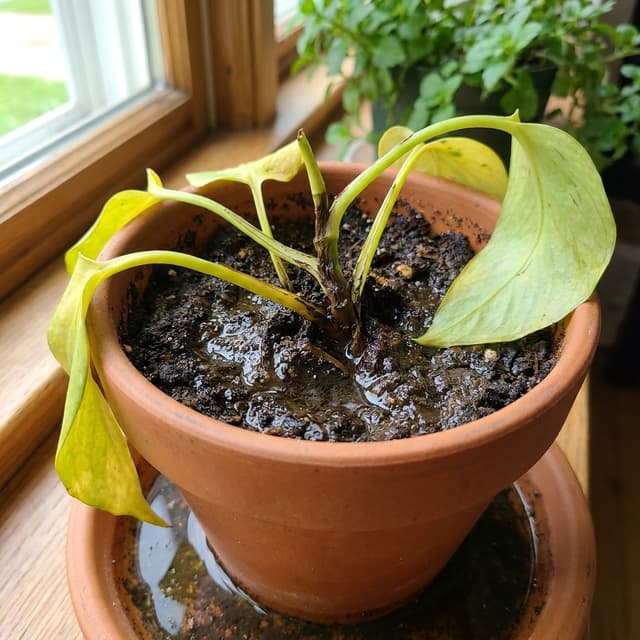
- ! Yellow or brown limp, droopy leaves that feel soft and mushy
- ! Wilting despite wet soil
- ! Dropping leaves (both old and new) that may be green, brown, or yellow
- ! Brown spots or edges with yellow halos on leaves (bacterial infection)
- ! Mushy or unstable plant stem base
- ! Fungus or mold growing on soil surface
- ! Presence of fungus gnats around the plant
- ! Rotten or foul odor from the soil
- ! Roots appear brown, grey, black, slimy, or non-existent instead of white and firm
Visual Signs
❓ What Causes Overwatering in Plants?
- → Watering too frequently without allowing soil to dry
- → Poor drainage in pot or soil
- → Using pots without drainage holes
- → Heavy, compacted soil that retains too much moisture
- → Overestimating plant water needs
- → Watering during dormant season at same rate as growing season
- → Low light conditions reducing water uptake
💊 How to Treat Overwatering?
TLDR: Treat Overwatering with 7 days of quick treatment or 14 days of organic treatment. Full recovery takes approximately 14 days.
Quick Fixes
~7 days
Step 1
Immediately stop all watering
Step 2
Tilt pot on its side and gently tap to create air pockets in soil
Step 3
If drainage holes are blocked, clear them immediately
Step 4
Place pot on elevated surface or add drainage tray with pebbles
Step 5
Improve air circulation with fan or move to ventilated area
Step 6
If soil is waterlogged after 24 hours, emergency repot into dry soil
Step 7
Monitor daily and only water when soil is dry 2 inches deep
Materials needed:
Organic Treatment
~14 days
Step 1
Stop watering immediately and move plant to area with good air circulation
Step 2
Remove plant from pot and gently shake off excess wet soil
Step 3
Inspect roots and trim any brown, mushy, or rotting sections with sterilized scissors
Step 4
Allow roots to air dry for 2-4 hours in indirect light
Step 5
Repot in fresh, well-draining soil mix (50% perlite, 50% quality potting mix)
Step 6
Place in bright indirect light and avoid watering for 7-10 days
Step 7
Resume light watering only when top 2 inches of soil are completely dry
Materials needed:
Expert Treatment
~21 days
Step 1
Document current symptoms with photos for progress tracking
Step 2
Carefully unpot plant and rinse root ball with lukewarm water to remove all soggy soil
Step 3
Sterilize cutting tools with rubbing alcohol or 10% bleach solution
Step 4
Remove all damaged roots (brown, mushy, or black) cutting back to healthy white/tan tissue
Step 5
Apply antifungal treatment: dust exposed roots with sulfur powder or dip in chamomile tea
Step 6
If over 50% root loss, reduce foliage by 30% to match reduced root capacity
Step 7
Repot in sterile, well-draining mix with added perlite/pumice (60-40 ratio)
Step 8
Use pot only 1-2 inches larger than remaining root ball
Step 9
Create humidity dome for first week if significant foliage was removed
Step 10
Apply rooting hormone to stimulate new root growth
Step 11
Implement bottom-watering method for first month to prevent crown rot
Step 12
Monitor weekly for new growth and adjust care accordingly
Step by Step
- 1
Stop watering immediately
- 2
Remove plant from pot and inspect roots
- 3
Gently brush away loose, wet soil
- 4
Cut away all black, brown, mushy, or slimy roots with sterilized pruners
- 5
Sterilize pruners with alcohol between cuts to prevent disease spread
- 6
Repot in fresh, well-draining soil
- 7
Use a pot with drainage holes
- 8
Do not fertilize until plant recovers (to avoid burning damaged roots)
- 9
Place in bright, indirect light to boost recovery
- 10
Water only when top 2-3 inches of soil are dry
🧪 Natural vs Chemical: Which Treatment Works for Overwatering?
🌱 Natural Solutions
- ✓ Stop watering immediately and allow soil to dry out
- ✓ Increase light exposure to help plant recover faster
- ✓ Improve air circulation around the plant
- ✓ Remove any moldy soil from the surface
- ✓ For mild cases, simply adjust watering schedule and wait for recovery
💉 Chemical Solutions
- ✓ Apply broad-spectrum fungicide if fungal infection is present
- ✓ Use hydrogen peroxide solution (3%) diluted 1:4 with water to treat root rot
- ✓ Apply systemic fungicide for severe fungal infections
Treatment Comparison
| Type | Estimated time | Steps | Difficulty | Best For |
|---|---|---|---|---|
| ⚡Quick | ~7 days | 7 | Advanced | Urgent cases |
| 🌿Organic | ~14 days | 7 | Advanced | Indoor plants |
| 🔬Expert | ~21 days | 12 | Advanced | Severe infections |
🛡️ How to Prevent Overwatering?
TLDR: Prevent Overwatering with 8 essential care practices. Regular monitoring is key for early detection.
- ✓ Research specific watering requirements for each plant species
- ✓ Allow top 2-3 inches of soil to dry out between waterings
- ✓ Use well-draining soil formulated for your specific plant type
- ✓ Ensure all pots have adequate drainage holes
- ✓ Invest in a moisture meter to check soil moisture accurately
- ✓ Reduce watering frequency during fall and winter dormancy
- ✓ Pay attention to plant responses and adjust watering accordingly
- ✓ Provide adequate light to help plants use water efficiently
🔗Related Diseases
Severe Defoliation
HighThis condition involves a sudden and massive loss of leaves caused by adverse environmental factors. The plant sheds its foliage in an attempt to survive extreme stress, such as abrupt temperature changes, improper watering, or transplant shock. If the underlying cause is not addressed, the plant may completely wither and die.
Severe Defoliation and Dormancy
HighThis condition is triggered by extreme environmental stress, such as sudden temperature fluctuations, insufficient light, or improper watering. In an effort to survive, the plant sheds its leaves and enters a dormant state to conserve energy.
Leaf Drop (Environmental Stress)
MediumLeaf drop occurs when a plant undergoes sudden environmental changes, such as insufficient light, excessive wind, or temperature fluctuations. It is not a fungal disease, but rather a physical response to stress.
Physical Leaf Damage
LowThis is not an infectious disease, but rather the result of external mechanical or environmental factors. It occurs due to rough handling, strong winds, hail, or pets. Leaves exhibit tears, cuts, or frayed edges, but the rest of the plant typically remains healthy and green.