Slugs and Snails: Pest Control | Identify & Treat
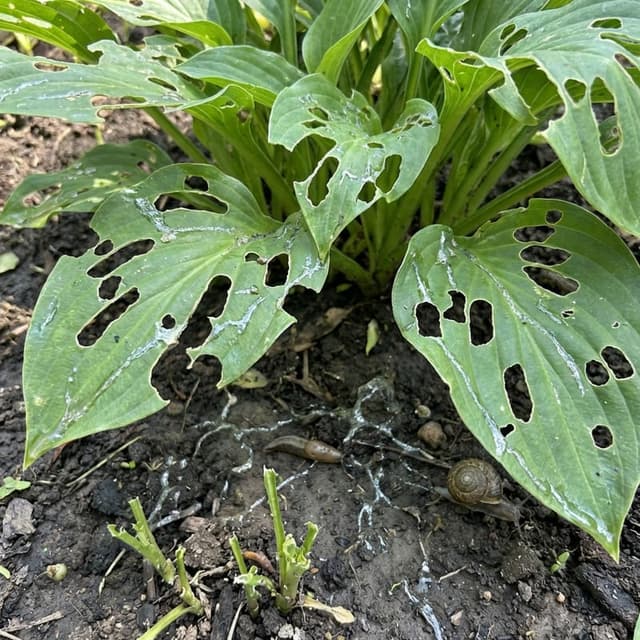
Slugs and snails are mollusks that feed on plant tissue, causing irregular holes in leaves and damage to young seedlings. They are most active at night and in moist conditions, leaving characteristic silvery slime trails. These pests can quickly devastate gardens, especially during wet seasons.
Medium
14 days
What is Slugs and Snails?
Slugs and Snails is a pest condition with moderate severity that affects plants. Slugs and snails are mollusks that feed on plant tissue, causing irregular holes in leaves and damage to young seedlings. They are most active at night and in moist conditions, leaving characteristic silvery slime trails. These pests can quickly devastate gardens, especially during wet seasons.
Slugs and Snails is a pest disease with moderate severity that spreads at a moderate rate. Recovery typically takes approximately 14 days with proper treatment. It affects 10 plant species in our database. This condition is contagious and can spread between plants.
Unlike fungal diseases, Slugs and Snails can be controlled quickly with integrated management. Without immediate action, the infestation spreads to nearby plants. Without isolation, nearby plants can become infected within days.
🔍 What Are the Symptoms of Slugs and Snails?
TLDR: Slugs and Snails presents 6 main symptoms. Early identification is crucial for effective treatment.
Main Symptoms
- ! Irregular holes in leaves with smooth edges
- ! Silvery, shiny slime trails on leaves and soil
- ! Missing or completely eaten seedlings
- ! Ragged leaf edges and damaged tender shoots
- ! Damage concentrated at ground level
- ! Visible slugs or snails on plants during evening/night
Visual Signs
❓ What Causes Slugs and Snails in Plants?
- → High moisture and humidity levels
- → Dense plant growth providing hiding spots
- → Mulch, leaf litter, and debris near plants
- → Overwatering and poor drainage
- → Cool, damp weather conditions
- → Presence of host plants with tender foliage
💊 How to Treat Slugs and Snails?
TLDR: Treat Slugs and Snails with 7 days of quick treatment or 14 days of organic treatment. Full recovery takes approximately 14 days.
Quick Fixes
~7 days
Step 1
Apply iron phosphate baits (Sluggo) around affected plants following package directions
Step 2
Scatter pellets in evening when slugs are active, using 1 teaspoon per square yard
Step 3
Focus application near hiding spots and damaged plants
Step 4
Handpick any visible slugs during evening inspection
Step 5
Reapply bait every 7-10 days or after heavy rain
Step 6
Monitor for reduced damage after 3-5 days
Step 7
Continue treatment for 2 weeks minimum
Materials needed:
Organic Treatment
~14 days
Step 1
Handpick slugs and snails during evening hours when they are most active
Step 2
Set beer traps by burying shallow containers filled halfway with beer near affected plants
Step 3
Sprinkle diatomaceous earth in a 2-inch wide barrier around plant base
Step 4
Wrap copper tape around pots or create copper barriers around beds
Step 5
Remove hiding spots like boards, rocks, and dense mulch
Step 6
Water plants in the morning only to reduce nighttime moisture
Step 7
Check traps daily and refresh beer every 2-3 days
Step 8
Reapply diatomaceous earth after rain or watering
Materials needed:
Expert Treatment
~21 days
Step 1
Conduct comprehensive garden assessment to identify all hiding spots and moisture sources
Step 2
Remove all hiding spots: boards, pots, dense mulch, leaf litter, and debris
Step 3
Install permanent copper barriers around vulnerable beds and valuable plants
Step 4
Apply iron phosphate or ferric sodium EDTA baits strategically in problem areas
Step 5
Implement drip irrigation system to replace overhead watering
Step 6
Adjust watering schedule to morning only, allowing soil to dry by evening
Step 7
Create wildlife-friendly areas to encourage natural predators (birds, frogs, ground beetles)
Step 8
Set up monitoring traps using boards to check population levels weekly
Step 9
Apply diatomaceous earth barriers around new seedlings and transplants
Step 10
Handpick during evening patrol 2-3 times per week for first month
Step 11
Establish companion planting with slug-resistant plants (lavender, rosemary, fennel)
Step 12
Monitor and maintain barriers, reapplying baits every 10-14 days as needed
Step 13
Document progress with photos and notes to adjust strategy as needed
Step by Step
- 1
Remove visible slugs and snails by handpicking in evening
- 2
Set up beer traps by burying containers level with soil
- 3
Apply diatomaceous earth barrier around affected plants
- 4
Create copper barriers around valuable plants or pots
- 5
Monitor plants regularly and repeat treatments as needed
- 6
Reduce moisture by adjusting watering schedule
🧪 Natural vs Chemical: Which Treatment Works for Slugs and Snails?
🌱 Natural Solutions
- ✓ Beer traps placed near affected plants
- ✓ Diatomaceous earth barriers around plants
- ✓ Copper tape or mesh around pots and beds
- ✓ Handpicking during evening hours
- ✓ Crushed eggshells or coffee grounds as deterrents
- ✓ Encourage natural predators like birds and frogs
💉 Chemical Solutions
- ✓ Iron phosphate baits (Sluggo) - organic certified
- ✓ Ferric sodium EDTA baits for faster action
- ✓ Metaldehyde baits (use with extreme caution around pets)
- ✓ Commercial slug pellets containing iron phosphate
Treatment Comparison
| Type | Estimated time | Steps | Difficulty | Best For |
|---|---|---|---|---|
| ⚡Quick | ~7 days | 7 | Advanced | Urgent cases |
| 🌿Organic | ~14 days | 8 | Advanced | Indoor plants |
| 🔬Expert | ~21 days | 13 | Advanced | Severe infections |
🛡️ How to Prevent Slugs and Snails?
TLDR: Prevent Slugs and Snails with 6 essential care practices. Regular monitoring is key for early detection.
- ✓ Remove hiding spots like boards, pots, and dense mulch
- ✓ Water plants in the morning to reduce nighttime moisture
- ✓ Create barriers using copper tape or diatomaceous earth
- ✓ Reduce dense plant growth to improve air circulation
- ✓ Keep garden clean by removing plant debris regularly
- ✓ Use drip irrigation instead of overhead watering
🔗Related Diseases
Whitefly
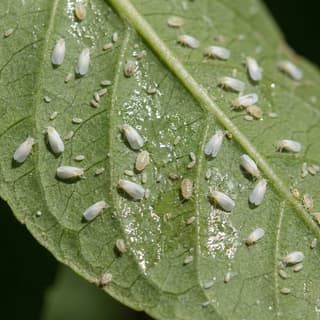
Whiteflies (family Aleyrodidae) are tiny, sap-sucking insects that thrive in warm, still air. They are common on houseplants, greenhouse crops, and garden plants such as tomatoes, peppers, cucumbers, fuchsias, hibiscus, poinsettias, citrus, and many herbs. You’ll often see small white adults flutter up when you touch the plant, sticky honeydew on leaves or nearby surfaces, black sooty mould growing on that honeydew, and leaves that yellow, curl, or drop. Check the undersides of leaves for pale, scale-like nymphs and tiny eggs laid in small arcs. Heavy infestations weaken plants and slow growth.

Woolly Beech Aphid
Phyllaphis is a genus of woolly aphids that primarily attack beech (Fagus), typically common beech and copper beech in hedges and as trees. They suck plant sap from young shoots and the undersides of leaves in spring and early summer. Signs of infestation include curled or rolled leaves, sticky honeydew, black sooty mold, and a white, cottony coating around the colonies. The plants usually survive, but heavy infestations can weaken new growth and make the hedge sticky and unsightly. The aphids often overwinter as eggs on thin twigs near buds.
Flea beetle damage
MediumFlea beetles are small, jumping insects that feed on the leaves of many vegetable crops. They chew numerous small, circular holes, creating a characteristic 'shothole' appearance. While established plants can often tolerate the damage, young seedlings are highly susceptible and can be stunted or killed if the infestation is severe.
Woolly Aphid
Prociphilus is a genus of woolly aphids that feed by sucking sap from plants. They produce a fluffy, white, cotton-like coating on leaves, shoots, or sometimes roots. Signs include sticky honeydew, black sooty mold growing on the honeydew, leaf curling or distortion, and clusters of tiny, soft-bodied insects hidden in the "wool." Ants are often active around them because they feed on the honeydew. These aphids commonly affect alder and maple (woolly alder aphid) and ash (woolly ash aphid). They rarely kill established trees, but they can stress young plants and create a messy, sticky problem.