Air Plant with a Soft Base: How to Tell if You Can Save It
An air plant with a soft, dark base has crown rot. Take the center leaf test, see when it can still be saved, what to remove, how to dry it, and how to rescue pups.
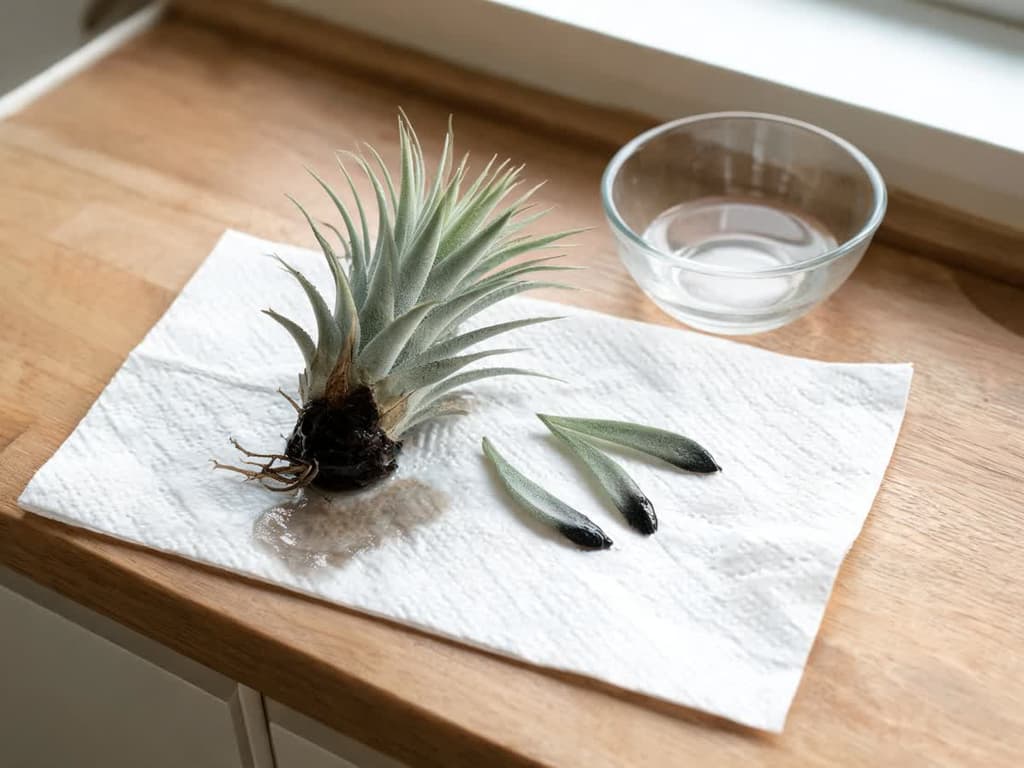
An air plant with a soft, dark, or black base has crown rot. Water sat trapped between the leaves where they meet, and the tissue rotted. If the center leaves pull free with a gentle tug, the plant cannot be saved. If the rot only hit a few outer leaves and the center remains firm, the plant can stay alive. Strip away the rotting leaves and dry the air plant upside down.
This guide applies to any air plant in the genus Tillandsia, whether loose, mounted on a display, or sitting inside a glass globe.
Quick summary:
A soft, slimy, foul-smelling base, or leaves that pull free with a gentle tug, points to rot. When rot reaches the base, recovery is very unlikely, according to the US university extension system.
Curled, dull leaves with brown tips and a firm base mean dehydration, not rot.
After any watering, shake the plant out and let it dry upside down in a spot with good airflow. It should dry completely within 4 hours.
If the mother plant (the large air plant) has rotted, the pups (small air plants attached to its base) may still be alive.
Air plant with a soft base: can it be saved?
The plant can be saved when the rot stays on the outer leaves and the center of the plant remains firm. It cannot be saved when the base, the point where all the leaves emerge, has already softened. Ask Extension is the question-and-answer service of the university extension system in the United States. It advises checking the base and states that if the base is rotting, the plant "most likely will not recover."
Run this 3-step test with the dry plant in your hands:
Gently squeeze the base with two fingers. A healthy base feels hard. A rotted base gives way, leaks moisture, or feels squishy.
Smell the base. A rotten smell is a sign of rot.
Hold the base with one hand and gently wiggle the center leaves with the other, without pulling hard. Inner leaves that come out on their own, with a black bottom tip, show that rot has reached the center. This test comes from the nursery Air Plant Design Studio, which sells tillandsias.
The results determine what you do next:
Firm base, no loose leaves: The plant is not rotting. Check the table in the next section.
Firm base, 1 to 3 outer leaves black and mushy at the bottom: The rot is in its early stages. Follow the rescue walkthrough.
Soft base or center leaves pulling free: The mother plant cannot be saved. If it has pups with firm bases, separate and rescue the pups.
Trimming off the soft base will not save the plant. The base is the anchor point from which every leaf emerges, and Ask Extension considers recovery very unlikely once it rots. Without the base, any remaining leaves will simply fall apart.
What is crown rot in an air plant
Crown rot is the rotting of the plant's crown: the point in the center of the rosette (the circle of leaves) where all the leaves join. It turns the center or some leaves brown or black and soft. The cause is almost always water trapped in the center of the plant, combined with poor ventilation, according to the Royal Horticultural Society (RHS), the British horticultural society.
NC State Extension, of North Carolina State University, cites crown rot and mealybugs as problems for tillandsias. Both attack most indoor plants. Bloom's disease profile lists the symptoms:
This guide provides steps designed for plants that grow in soil: remove from the pot and repot into fresh soil. Tillandsias do not go into soil. The New York Botanical Garden (NYBG) warns that tillandsias should not grow in soil or on moisture-retaining surfaces. Soil and moisture-retaining surfaces lead to rot. Rescuing a tillandsia means removing the rotted tissue and drying the plant, as shown in the step-by-step instructions below.
Crown rot, underwatering, or something else: how to tell them apart by sight
A soft, blackened base indicates rot. Other warning signs on a struggling air plant occur with a firm base and require a completely different response. Always inspect the base first, then check the foliage.
What you see | What it means | What to do |
|---|---|---|
Soft, dark, or blackened base, foul odor, center leaves pulling free | Crown rot | Mother plant is lost; save the pups |
Outer leaves black and mushy at the base, center remains firm | Early-stage rot | Remove affected leaves and dry the plant thoroughly |
Curled leaves, dull color, dry brown tips, firm base | Underwatering | Soak overnight in water, then shake out and dry upside down |
1 or 2 bottom leaves dry, brown, and papery, center remains firm | Natural leaf aging | Gently peel away only leaves that release with zero resistance |
Brown or bleached white patches after direct sun through glass | Sunburn | Move away from direct sunlight |
Plant has already flowered, leaves slowly fading, pups at the base | End of the mother plant's natural life cycle | Focus care on the pups |
Underwatering makes foliage feel dry and brittle. According to Clemson University Extension, a thirsty air plant curls its leaves, loses its vibrant color, and develops dry, brown leaf tips. The RHS notes that a severely dehydrated plant can sometimes be revived with an overnight soak, followed by thorough drying.
Natural leaf aging happens when lowermost leaves turn brown, dry, and papery while the base stays firm. The nursery Air Plant Design Studio notes that it is completely normal for a few baseline leaves to wither and die back. The RHS cautions that shedding lower leaves can also indicate environmental stress or rot. One or two dry, papery leaves with a firm center simply point to natural shedding. A mushy, darkened leaf points to rot, even if it is only a single leaf.
Sunburn turns leaves brown or bleached, and the base remains firm. The RHS explains that it comes from the plant overheating behind glass, in direct sun, with dry air. The NYBG advises against leaving glass globes in direct sun because it burns the plant. In Brazil, the window that receives the strongest sun faces north. The guide on sunburn in air plants shows the signs of sunburn beyond a brown or bleached color.
The end of the mother plant's life cycle happens after flowering. Tillandsia blooms only once, according to the UVM and the RHS. After blooming, the adult plant slowly dies and new plants sprout from it, according to UF/IFAS, the University of Florida Extension. According to the University of Vermont (UVM) Extension, the mother plant's leaves lose their color while the pups grow. The end of the life cycle is not a disease and cannot be fixed.
Not sure which air plant you have? Bloom (available for iOS) identifies species from a single photo. Knowing your exact species helps guide watering: silver varieties covered in fine trichome hairs need less water than smooth, green species, according to the NYBG.
How to save an air plant when rot is limited to the outer leaves
When rot has only affected a few outer leaves and the core remains firm, your plant can still pull through. The rescue process takes just a few minutes of hands-on work and about 4 hours of drying time. You will need paper towels and a shaded spot with active air movement.
Remove only the rotted leaves. Support the plant by its base and gently peel away each blackened, mushy outer leaf with a sideways motion. Remove only foliage that detaches without force. UVM includes the occasional removal of dead or damaged foliage as part of standard care. During a rescue, never pull on the center leaves.
Shake the plant. Hold the air plant upside down and shake gently to remove water trapped between the leaves. Clemson explains that water collects between the center leaves.
Dry the plant upside down. Rest the plant inverted on dry paper towels in an airy location. A spot near an open window or a running fan works well. The NYBG emphasizes placing the plant where it can dry completely within 4 hours; remaining damp past the 4-hour mark indicates insufficient airflow.
Keep out of direct sunlight. Direct sun, especially behind glass, can scorch the plant and leave foliage brown or bleached. NC State notes that while many species tolerate full sun, Clemson, the NYBG, and the RHS all call for filtered light. For a stressed plant recovering from rot, follow their combined advice: provide bright light without direct sun.
Inspect the base the following day. A firm, dry base with intact center leaves means the rot has stopped spreading. Center leaves sliding loose indicates the rot penetrated the core, meaning only healthy pups can still be salvaged.
Wait until the base is dry and firm before watering again. None of the cited references provides an exact timetable for the first watering post-rot. The safest route is waiting until the base feels completely dry and firm to the touch. When you do water, shake the plant out and dry it upside down once more.
One commercial grower suggests applying powdered cinnamon to combat rot. However, no university extension service or botanical garden consulted recommends cinnamon or hydrogen peroxide for air plants. What these experts consistently advise is stripping away rotted tissue, drying out the plant, and improving surrounding airflow.
Rotting base: how to save air plant pups
Pups are the miniature offset plants that develop directly against the base of the mother plant. If the mother plant rots but a pup retains a firm, green base, that pup can survive on its own. The RHS and UVM recommend separating pups once they reach at least one-third the size of the parent plant. The NYBG recommends keeping pups attached to the parent for as long as possible because the mother plant actively nourishes them.
None of these sources directly addresses what to do when the mother plant is actively rotting. The safest strategy is detaching the pup the moment the mother plant's base turns soft, provided the pup's own base remains firm and green. Do this even if the offset has not yet reached one-third of the parent's size. If rot spreads into the pup's base, it will die as well.
To separate the offsets:
Grip the mother plant with one hand and support the pup by its base with your other hand.
Gently twist the pup and pull away, as described by UVM. If it does not release cleanly, sever it close to the mother plant using clean shears, taking care not to take any darkened, decaying tissue with it.
Dry the detached pup upside down in a well-ventilated space before providing any water.
Discard the rotted mother plant.
Why an air plant's base rots
The base rots when it stays wet for extended periods. Water settles between the leaves in the center of the rosette and fails to evaporate. Four common mistakes cause this:
Storing the plant wet. Returning it to a globe, shell, or mount while still wet leaves standing water in the center. Penn State Extension calls for at least 4 hours of drying after watering before putting the plant back into a glass globe or terrarium (glass container).
Soaking the plant for too long. The RHS warns that air plants cannot tolerate sitting submerged for excessive periods or remaining continuously wet. An overnight soak should serve only as an occasional rescue method for severely dehydrated specimens with firm bases.
Cold temperatures. Ask Extension cites sharp drops in temperature, cold drafts, chilly windowpanes, and icy tap water as triggers for rot. The RHS advises against watering air plants below 12 °C (54 °F), because evaporation slows down drastically at lower temperatures.
Closed, unventilated globes. The NYBG warns against keeping air plants inside unvented containers. If standing water pools at the bottom of the glass, remove the plant immediately before rot sets in.
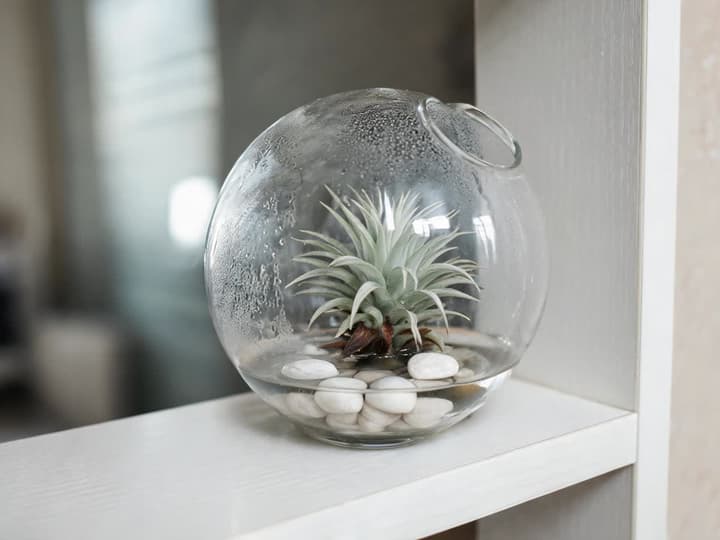
Stagnant air leaves foliage damp for too long: NDSU Extension at North Dakota State University notes that moving air helps leaves dry effectively. The guide on poor airflow in air plants illustrates the symptoms stagnant conditions leave on the plant.
How to prevent air plant base rot in the future
Preventing rot comes down to fast, complete drying after every watering session. Authoritative sources offer varying watering schedules. The RHS recommends soaking plants 2 to 3 times a week from spring through autumn, while Clemson suggests once a week. The RHS explains the reason behind the variance: hot, dry conditions demand more water, whereas cold, humid rooms require less. Start with a once-weekly schedule following Clemson's advice, increasing frequency only during hot, dry weather. Across all guidelines, allowing the plant to dry out thoroughly between waterings is the universal rule.
Shake and dry upside down after every watering. Clemson emphasizes that flipping the plant inverted is essential for draining trapped water and preventing rot.
Dry plants in a location with steady airflow. The NYBG standard is for the plant to dry completely within 4 hours. In humid or stuffy indoor spaces, set the plant near an open window or a running fan.
Display plants in open glass globes away from direct sun. Return the plant to its globe only after 4 full hours of drying and once the foliage feels dry to the touch, matching Penn State's guidance. If moisture collects at the base of the display, take the plant out and dry the vessel.
Mount the plant facing downward or tilted. The RHS recommends securing air plants with the center tilted downward so water naturally runs out.
Avoid moisture-retaining mounts. The NYBG cautions against using moss or any damp bedding that stays pressed against the plant.
Never water on cold days. When room temperatures dip below 12 °C (54 °F), hold off on watering until the air warms up, following RHS guidance.
Keep the flowers dry. UVM cautions that wet flowers quickly turn soft and rot away.
Frequently Asked Questions
What does a dead air plant look like?
A dead air plant has a soft, dark, or blackened base, and the center leaves come away easily when tugged. In advanced cases, the entire plant falls apart in your hands. Dry, curled foliage paired with a firm base indicates dehydration, which a prolonged soak can often fix.
Can a completely dried-out air plant be revived?
Yes, as long as the base remains firm. The RHS states that a dehydrated plant can sometimes recover after an overnight soak. Afterwards, shake the plant out and let it dry upside down for roughly 4 hours. The RHS notes that deep soaking is only sometimes successful and that long-term care requires adjusting your watering routine.
Why is the base of my air plant turning brown?
A brown, soft base indicates crown rot caused by water lingering between the leaves from slow drying, chilly temperatures, or unventilated glass containers. A brown, hard base with 1 or 2 papery lower leaves simply reflects natural aging. Squeeze the base gently with two fingers to confirm which situation you are dealing with.
How long do air plants live?
Each mother plant blooms only once and then enters a slow decline. Before dying, it produces offsets around its base that carry on the plant's life. Both UVM and the NYBG note that air plants grow slowly, though neither organization cites a fixed number of years before flowering occurs.
What to do today with a soft-based air plant
Gently press the base and give the central leaves a light wiggle. If the base feels firm and only outer leaves have rotted, pull off the damaged leaves, shake the plant out, and dry it inverted away from direct sun. If the base feels mushy or the center leaves slide loose, detach any healthy pups and throw out the mother plant. From here on, always let your air plant dry completely within 4 hours after every watering before returning it to its display.
Related articles
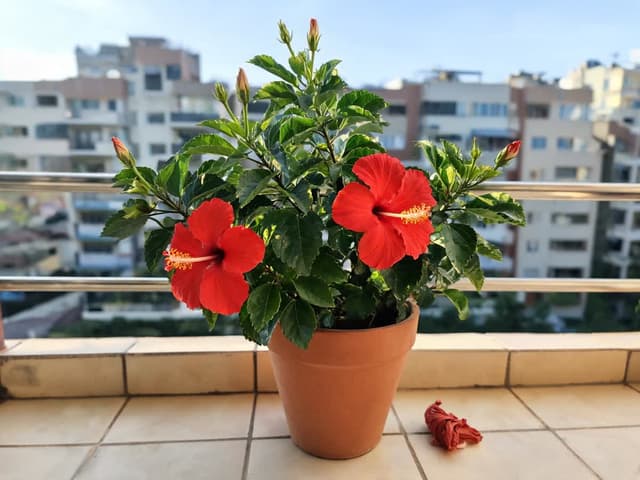
How to Care for Hibiscus: Sun, Watering, Fertilizer, and Pruning for Flowers
How to care for hibiscus: 6 hours of direct sun, evenly moist soil without waterlogging, half-strength fertilizer in spring and summer, and pruning in early spring. Find out why the flower lasts one day and why buds drop before opening.
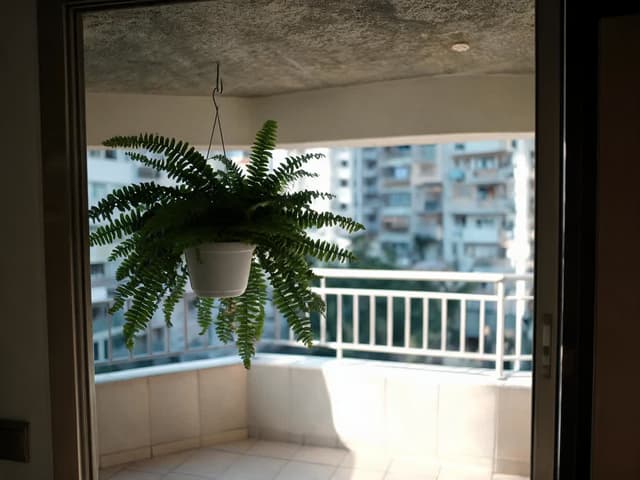
Do Ferns Like Sun or Shade? It Depends on the Type
Ferns prefer bright shade: plenty of light, but no direct sun on their fronds. Tuberous sword fern is the exception that handles sun. Here is the ideal light for each type, where to place pots, and how fronds show too much or too little light.
African Violet Yellow Leaves: Causes and What to Do
Yellow leaves on an African violet usually stem from overwatering, and the first place to check is the center of the plant. Losing one lower leaf at a time is normal. Identify whether age, watering, cold water, sunlight, cold drafts, or fertilizer is the culprit based on the yellowing pattern, and see what to do today.