How to Care for a Croton: Light for Vibrant Color, Watering, and Leaf Drop
Crotons get their vibrant color from bright light: put yours in the sunniest spot inside with some morning sun, or in full sun outside. Water when the top inch dries out, and avoid moving the pot around, as sudden environmental changes trigger leaf drop.
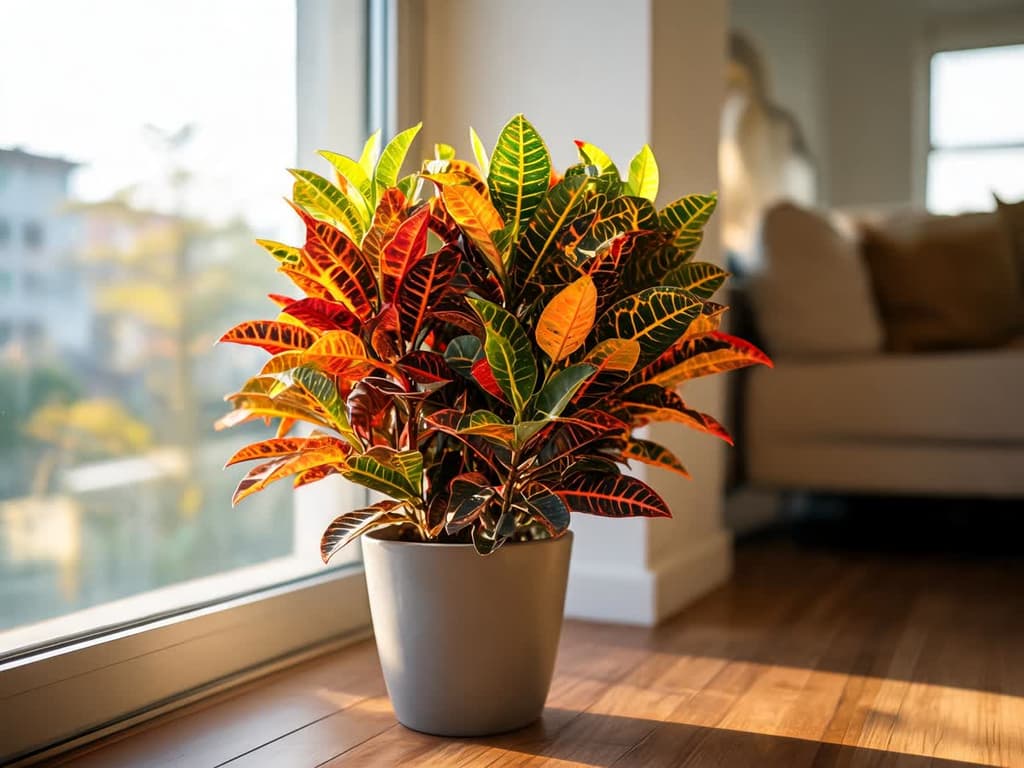
To keep a croton happy, start with light. It needs the brightest spot in your home, ideally with some morning sun, or full sun out in the garden. Bright light is what fuels those vivid red, orange, and yellow foliage colors. Water whenever the top inch of soil dries out. Most importantly, keep the plant in one place: moving it to a new spot is the single most common cause of sudden leaf drop.
If your croton turned plain green, faded, or shed a bunch of leaves right after you brought it home, don't panic. It probably isn't dying.
Quick summary:
Factor | Care guideline | Source |
|---|---|---|
Light | Bright light all day; direct morning sun once acclimated; full sun to partial shade outdoors | UW–Madison, UF/IFAS, NC State |
Watering | When the top 0.5 to 1 inch of soil is dry; reduce watering in winter | UW–Madison, NC State |
Temperature | 60 to 85 °F (16 to 29 °C); below 50 °F (10 °C) causes leaf drop | UW–Madison |
Soil and pot | Rich, well-draining potting mix in a container with drainage holes | NC State |
Fertilizer | 1 to 2 times during spring and summer | UW–Madison |
Pets and people | Toxic if ingested; the sap irritates the skin | Pet Poison Helpline, NC State |
What is a croton (Codiaeum variegatum)?
Croton is a shrub with thick, glossy leaves native to Malaysia, the Pacific islands, and northern Australia (NC State Extension). It belongs to the spurge family (Euphorbiaceae), plants that generally have milky sap (UW–Madison Extension). There are hundreds of varieties, with broad, narrow, twisted, or lobed leaves, always marked with yellow, orange, red, pink, or purple. In the wild, it reaches 8 feet in height; in an indoor pot, it usually tops out near 3 feet.
Despite the common name, the botanical genus Croton is actually a completely different group of plants in the same family, which includes dragon's blood (Croton lechleri). Nothing in this guide applies to true botanical crotons. The familiar potted houseplant and garden shrub is Codiaeum variegatum.
In Brazil, crotons appear in two roles: as indoor potted plants and as garden shrubs or hedges in full sun. Care is the same in both cases; what changes is how much light and water the plant receives.
Light: the secret to vibrant foliage
The croton needs bright light to maintain its leaf color: the more light, the more vivid the color (UW–Madison Extension). In low light, it survives, but the leaves revert to shades of green and the lower ones fall off (NC State Extension).
Indoors, the sources disagree on direct sun. UW–Madison calls for bright, indirect light; NC State says the best color comes with some direct sun. The University of Florida (UF/IFAS) sits in the middle: a plant already acclimated to the spot responds well to partial sun. This guide follows UF/IFAS, because it explains when direct sun helps: when the plant is already acclimated to the spot.
In practice, place the pot right next to your home's brightest window, with bright light all day. If morning sun hits that spot (an east-facing window), leave it: it is the weakest direct sun of the day. UF/IFAS recommends varieties like 'Petra' for indoors, and notes that even they lose some of their color when light is lacking.
In the garden, crotons tolerate full sun, meaning 6 hours or more of direct sun per day. Partial shade (2 to 6 hours) also works, according to NC State. UF/IFAS notes that many varieties grow best in full sun, and that many others tolerate and even prefer light shade. A plant that lived indoors or in a shaded store needs to get used to the sun gradually (UW–Madison Extension). First leave it in light shade, then only in the morning sun, and finally in full-day sun.
Croton losing its color or turning green
Three distinct situations cause a croton's leaf color to shift:
Older leaves are turning solid green: this is due to a lack of light. Leaves can revert to shades of green when light is insufficient (UW–Madison Extension). Move the pot closer to a window or to a spot with more hours of sun.
Only the new leaves at the top are green: this is normal. New leaves emerge green and gain color as they mature (UF/IFAS). If the older leaves remain colorful, the plant is doing well.
Leaves look dull, grayish, or washed out: this is a sign of too much harsh direct sun. Excessive sunlight can make foliage look dull and gray (UW–Madison Extension) and bleach the leaf colors (UF/IFAS). This bleaching occurs most often when a plant is moved from a dim indoor room directly into blazing outdoor sun without acclimation.
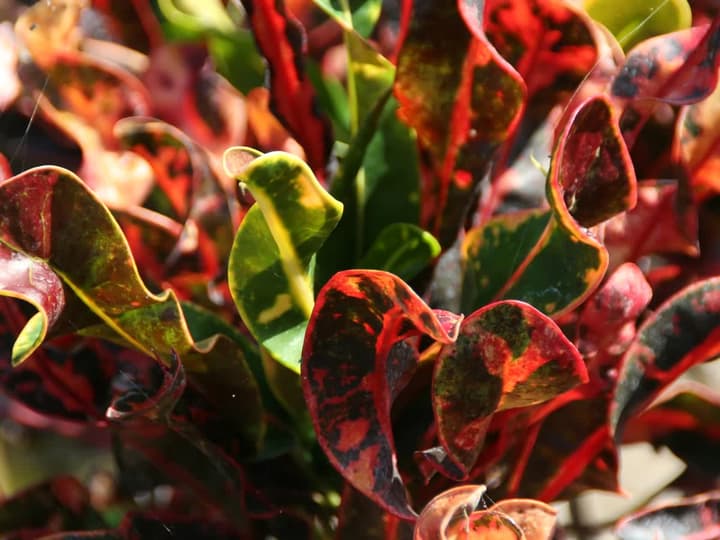
Croton dropping leaves after being moved
In most cases, the plant can be saved: a croton shedding leaves right after arriving in a new home is simply reacting to environmental shock. UW–Madison Extension notes that moving a croton too abruptly triggers stress and widespread leaf drop.
Here is how to help your croton stabilize:
Set the plant in your brightest available spot and leave it alone. Every subsequent move restarts the shock cycle.
Only water when the top layer of soil dries out. Watering more to compensate for dropped leaves leaves the soil soggy, and soil that stays either too wet or too dry for too long also causes leaf drop (UW–Madison Extension).
Hold off on repotting for now. Crotons are sensitive to root disturbance and frequently drop foliage following a transplant (Illinois Extension).
Check the stem: as long as it is firm, rather than soft or shriveled, the plant is alive and will sprout again from the tips.
If the leaf drop isn't related to a recent move, investigate three other frequent culprits. Temperatures dropping below 50 °F (10 °C) trigger rapid leaf loss (UW–Madison Extension). Dense shade causes the lower foliage to drop off (NC State Extension). Finally, spider mites, a pest that thrives in dry indoor air, also cause leaf drop (see the pest section below). Our detailed guide on why croton leaves fall off covers the rest of the potential causes.
How to water a croton
Water your croton when the top 0.5 to 1 inch (1 to 2.5 cm) of soil is dry (UW–Madison Extension). Stick your finger into the soil: if it feels dry down to your first knuckle, water until liquid drains from the hole in the pot. Afterward, empty the water that collects in the saucer.
New leaves also give a warning. When water is lacking, young leaves wilt, and this sign can guide watering (UF/IFAS). In winter, the plant grows less and needs less water. NC State recommends watering thoroughly from spring through fall, and sparingly in winter.
A fixed number of waterings per week does not work for every croton. A landscaper consulted by UOL recommends watering once a week indoors and 2 to 3 times outdoors. The difference comes from sun, heat, and pot size. A croton in full sun in the garden dries out in a few days; a potted one indoors can take more than a week. The finger test works for both cases.
Potting soil, containers, and repotting
Use a soil rich in organic matter that drains freely (NC State Extension), in a pot with drainage holes. Soil that stays soggy for days rots the roots.
Only repot once the roots have fully filled the existing pot, and choose a new container just 1 to 2 inches larger in diameter (UW–Madison Extension). Gently slide the plant out with its root ball intact without tearing the root system, because crotons often shed foliage when their roots are disturbed (Illinois Extension).
Temperature, humidity, and cold protection
Crotons grow best between 60 and 85 °F (16 and 29 °C) (UW–Madison Extension). Below 50 °F (10 °C), they usually drop leaves. Sudden temperature changes also cause leaf drop. For this reason, keep the pot away from drafts, doors that open to the outside in winter, and air conditioning vents.
Humidity is one point where sources disagree. NC State mentions low to average relative humidity; UW–Madison mentions moderate to high humidity. Neither gives an exact number. The safest approach is to avoid very dry air and keep the pot away from the air conditioner. If the air in your home is dry, set the pot on a tray with wet pebbles, as suggested by NC State. The water in the tray should not touch the bottom of the pot.
Fertilizing croton plants
Fertilize your croton once or twice during the spring and summer, which is when it grows (UW–Madison Extension). If you want faster growth, you can fertilize more frequently during this period. If the color has faded, the first thing to adjust is the light: extra fertilizer will not restore color to a plant sitting in the shade.
Pruning: how to make a croton bushy
To encourage bushy, compact growth, prune back long, leggy stems in early spring before fresh seasonal growth starts. UW–Madison Extension notes that crotons tolerate hard pruning well at this time of year, helping thin, leggy plants branch out. Make your cuts just above a leaf node, as new branches will sprout directly from that point.
Always wear protective gloves when pruning. Croton stems leak a milky white sap that irritates bare skin and permanently stains clothing (NC State Extension).
Crotons in the garden and landscape
In frost-free zones, crotons make striking outdoor shrubs, hedges, and landscape accent plants (NC State Extension). In outdoor beds they can easily reach over 6 feet tall, and UF/IFAS recommends spacing individual shrubs 2 to 3 feet apart. Full sun or moving, dappled light throughout the day will bring out the most intense foliage colors.
Frost burns the leaves, but the plant usually recovers quickly (UF/IFAS). In regions with nights below 50 °F (10 °C), bring potted crotons indoors on those nights (NC State Extension). An in-ground croton that went "bald" after being transplanted is reacting to disturbed roots: leave it in place, water using the finger test, and wait for new growth to sprout.
Croton pests: spider mites and mealybugs
Spider mites are the most troublesome pest for indoor crotons. NC State notes that they can even limit the plant's use in indoor environments. The signs are tiny pale speckles on the leaves and a fine webbing between the leaves and stem, and they spread more in dry air. See how to identify and control spider mites.
Fluffy white cotton-like clusters gathered at leaf axils indicate mealybugs. They are another common croton pest, along with scale insects and thrips (UF/IFAS). Treating mealybugs requires a different strategy than dealing with mites; follow our step-by-step instructions on how to get rid of mealybugs.
Yellow leaves on a croton
Yellow on a croton is not always a problem. Many varieties naturally have yellow spots, speckles, or veins (NC State Extension), and new leaves gaining color transition through yellow tones. Problematic yellowing appears on leaves that were previously a different color, generally lower leaves, and is followed by leaf drop. To find the cause, follow the step-by-step guide on how to find out why leaves are yellow.
How to propagate crotons
The most common way is with stem tip cuttings. UF/IFAS recommends a cutting of 3 to 4 inches (7.5 to 10 cm) with 3 to 5 leaves. Dip the cut end in rooting hormone and plant it in moist, well-draining soil. At temperatures between 70 and 80 °F (21 to 27 °C), roots appear in less than a month. Air layering (rooting the branch while still attached to the plant) also works and is done in the spring (UW–Madison Extension). Seeds do not replicate the parent plant's colors, which is why branch cuttings are the only way to preserve the variety.
Are croton plants toxic?
Yes. Crotons are toxic to dogs and cats, according to the Pet Poison Helpline. Chewing the plant causes mild oral and digestive irritation, with drooling, vomiting, or diarrhea. The sap from the leaves, stems, and roots can also irritate the skin. Keep the plant away from young children and pets that chew on leaves (UF/IFAS).
In people, the sap can cause itching and swelling upon contact with sensitive skin and eyes. Wash your hands after handling the plant, keep your hands away from your eyes, and wear gloves when pruning and propagating (NC State Extension).
An app that shows toxicity alongside the plant's name helps dog and cat owners check a species before bringing it home. We compared plant apps for pet owners based on what each one reports about toxicity.
Frequently asked questions
Do crotons prefer sun or shade?
Crotons thrive in abundant light. Indoors, they need your brightest windowsill with plenty of ambient light and some morning sun. In the garden, they grow in full sun to partial shade (NC State). In shade, leaves fade back to dull green. Always transition plants from shade to full sun gradually to prevent leaf bleaching.
How many times a week should you water a croton?
There is no one-size-fits-all schedule. Water whenever the top 0.5 to 1 inch of potting mix feels dry (UW–Madison). In a hot, sunny outdoor bed, this can happen in just a few days, while an indoor potted plant might take a week or longer. Cut back on watering frequency during winter.
Why are my croton leaves drooping?
Drooping young leaves almost always indicate thirst: UF/IFAS suggests watching for this slight wilt as a watering indicator. If the soil is dry, drench the pot until water drains freely. However, if the soil is already soggy and leaves are still wilting, the roots may be damaged from overwatering. In that case, let the soil dry out thoroughly before adding more water.
Can a croton survive in a room without windows?
Not for long. Deprived of bright light, crotons shed their lower leaves and lose their vibrant colors (NC State). Kept in a windowless office or bathroom, the plant quickly turns green and leggy. If you must use a lower-light room, cultivars bred specifically for indoor use, such as 'Petra', maintain color longer than others (UF/IFAS).
Will dropped croton leaves grow back on the bare stem?
No. Individual leaves do not grow back in the exact spots where they fell, but the croton can push out fresh branching lower down the trunk. UW–Madison recommends pruning stems back hard in early spring to encourage dense new growth. Trimming tall, bare stems at that time is the best way to fill out a croton that lost its lower leaves.
Caring for your croton: next steps
Take a close look at your croton's current spot. If the foliage is fading to green, move the pot right up to your sunniest window. If the plant just arrived and is shedding leaves, keep it right where it is, water only when the top layer of soil dries, and put off repotting.
If leaves continue to drop and you don't know whether it's spider mites, cold, or excess water, take a photo of the leaf. Bloom compares the photo with known symptoms and points out the likely cause (diagnosis is on the Premium plan). To find the name of another plant in the house, photo identification is also on the free plan, with 2 identifications per month. The app is only for iPhone.
Sources
NC State Extension, Codiaeum variegatum (North Carolina Extension Gardener Plant Toolbox): origin, growth habits, lighting, humidity, watering, hedging use, cold tolerance, spider mites, sap irritation.
UW–Madison Extension (Wisconsin Horticulture), Croton, Codiaeum variegatum: color and light intensity, watering, temperature ranges, relocation shock, potting, pruning, air layering, seeds.
UF/IFAS Gardening Solutions, Croton: sunlight and leaf pigmentation, indoor cultivars, green juvenile foliage, watering by foliage wilt, landscape spacing, frost recovery, cuttings, pests, toxicity.
Illinois Extension, Croton: root disturbance, leaf drop, cold sensitivity.
Pet Poison Helpline, Croton: clinical signs in dogs and cats, skin irritation from sap.
Related articles
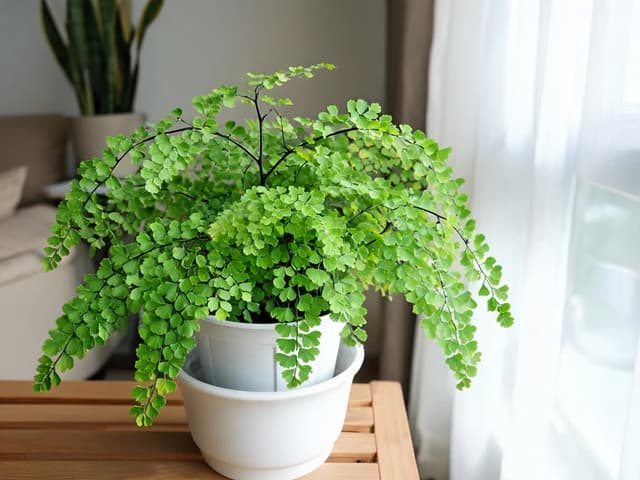
How to Care for a Maidenhair Fern: Light, Water, and Revival Tips
Learn how to care for a maidenhair fern indoors: bright indirect light, consistently moist soil, high humidity, and how to revive it if it dries out completely.
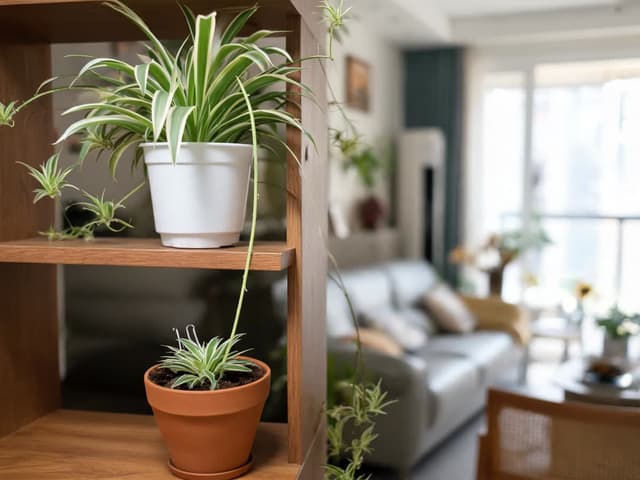
How to Propagate Spider Plants: Root the Pup Before Cutting
The safest spider plant cutting comes from a pup still attached to the mother plant: rest the plantlet on soil in a small pot, wait for roots to establish, and only then cut the stolon. Learn when the pup is ready, whether rooting in water is worth it, how to divide the clump, and why plants fail to produce babies.
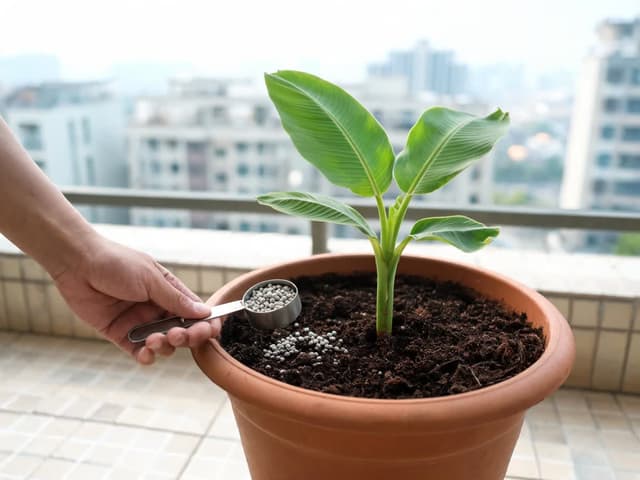
Banana plant fertilizer: fertilizing potted and backyard plants
Banana plant fertilizer needs more potassium than nitrogen, in a 3-1-6 ratio. For a potted plant on a balcony, use the label dose in spring and summer. In the backyard, fertilize every 2 months, adjusting the amount by mat age. Learn the formula, timing in Brazil, and signs of deficiency or excess.