Dumb Cane with Brown Tips and Spots: Is It Dry Air, Cold, or Disease?
Dry, crispy brown leaf tips that creep inward slowly point to dry air, watering issues, or fertilizer salts. Dark, wet-looking patches with yellow halos or tiny black dots mean disease, even when starting at the tips. Here is how to tell them apart and treat the leaves.
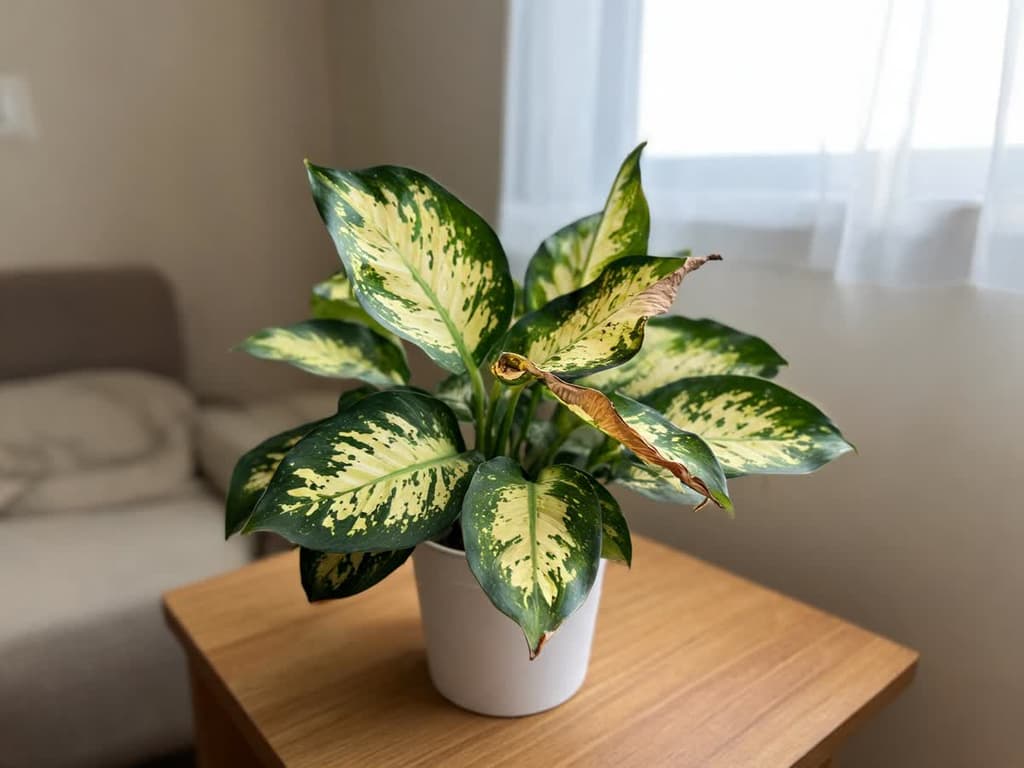
Brown patches on dumb cane usually fall into two categories. If the brown is dry, crispy, sits on the tips or edges, and spreads slowly, your routine is the culprit: dry air, inconsistent watering, or fertilizer salt buildup. If the spot is dark, looks water-soaked, carries a yellow halo around it, or shows tiny black dots inside while spreading over a few days, you are dealing with disease. Cut off the entire leaf while wearing gloves and stop getting water on the foliage.
On dumb cane (Dieffenbachia), three common leaf diseases start right at the tips and margins, exactly where dry air causes burns. That means looking only at the location of the damage is not enough for this plant. A leaf spot will not kill dumb cane as long as the base of the cane stays firm and new leaves keep unrolling at the top.
Quick summary:
Brown tip or edge, dry and paper-thin, no halo: dry air, uneven watering, or fertilizer salts. Adjust your care routine and trim away only the dead tissue.
Dark, nearly black spot with a yellow halo: bacterial leaf spot. Remove the entire leaf and isolate the plant.
Straw-colored patch with tiny black dots in rings: fungal leaf spot. Cut off the leaf and keep the foliage dry.
Light brown patches between leaf veins after a cold night: chilling injury, usually from temperatures dipping below 55 °F (12.8 °C).
Mushy spot with a fishy odor: bacterial soft rot. Inspect the base of the cane immediately.
Dry Tips vs. Leaf Disease: How to Tell on Dumb Cane
Three key signs separate dry margins from active disease: a yellow halo, a wet or greasy texture, and tiny black fruiting bodies inside the dead patch. Hold the leaf up to a light source and use your phone camera's zoom to check both the brown area and the underside of the leaf.
What you see | Texture to the touch | Probable cause | What to do |
|---|---|---|---|
Thin brown strip on tips and margins, green center | Dry, brittle | Dry air or uneven watering | Water when the top inch dries out and move away from AC drafts |
Brown edges, smaller new leaves curling downward, white crust on the pot | Dry | Fertilizer salts combined with soggy soil | Flush the soil thoroughly with water and pause feeding |
Pale brown patches between main veins | Dry | Chilling injury | Move away from window glass at night |
Faded, bleached patch turning brown, only on the window side | Dry and papery | Direct sunlight | Move out of direct sun |
Nearly black spot with yellow halo, near the margin, spreading fast | Water-soaked at first | Bacterial leaf spot | Cut off the entire leaf and isolate the plant |
Straw-colored spot with yellow halo and black dots in concentric rings | Dry center | Anthracnose (fungal infection) | Remove the leaf and stop wetting the foliage |
Spot on the leaf tip or near a tear, with black and white dots in rings underneath | Dry | Myrothecium fungus | Prune the leaf and protect other foliage from mechanical damage |
Mushy spot, foul fishy smell, center collapses into a hole | Soft and watery | Bacterial soft rot | Check the base of the cane immediately |
Spot location can be deceptive on dumb cane because its foliar diseases rarely start in the middle of the leaf blade. University of Florida Extension (UF/IFAS) research on commercial Dieffenbachia production notes that both bacterial leaf spot and anthracnose frequently begin along leaf margins. The Myrothecium fungus enters through wounds, particularly on leaf tips or along midrib tears.
A leaf tip scorched by dry air, improper watering, or fertilizer salts will be brown and crisp, sometimes bordered by a faint lighter line before meeting green tissue. If that tip lesion has a distinct yellow halo, feels wet, or shows pinpoint black specks, treat it as a pathogen. If it is simply dry and brown, adjust your cultural care.
Dry Brown Tips: Low Humidity, Erratic Watering, and Fertilizer Salts
Dieffenbachia leaf margins routinely dry out and turn brown indoors, according to UF/IFAS. Clemson Cooperative Extension lists the common culprits behind brown tips and edges on houseplants: hot, dry air, irregular watering, insect feeding, and soil salt accumulation.
Erratic watering. Allowing potting mix to dry out excessively between waterings leads directly to tip dieback, according to Clemson. Water thoroughly whenever the top inch of soil feels dry, letting water drain freely through the drainage holes, and empty the drip saucer promptly. When lower leaves turn yellow alongside crispy tips, watering is your prime suspect. Our yellow leaves guide helps differentiate between overwatering and underwatering based on soil moisture.
Fertilizer salts. Heavy feeding leaves mineral salts behind in the root zone, which scorches leaf margins. UF/IFAS describes the full picture on dumb cane: stunted, downward-cupped foliage with margin burn, often accompanied by root loss when potting mix stays excessively wet alongside salt buildup. A white or grayish crust on top of the soil or around the pot rim is your visual warning sign, according to Clemson. To leach away excess salts:
Stop all fertilizer applications immediately.
Take the pot to a sink and run lukewarm water through the soil slowly until it runs freely from the drainage holes. Let it drain, then repeat two more times.
Gently scrape away the white crust on the surface and replace it with fresh potting mix.
Let the top inch dry out before giving the plant its next drink.
A newly purchased dumb cane rarely requires fertilizer for at least two months, according to UF/IFAS. After that settling period, apply a liquid fertilizer once a month at the weakest recommended dilution. Clemson suggests using rainwater where practical, since certain indoor plants react poorly to fluoride and chlorine in municipal tap water.
Dry air. Air conditioning running all day and the dry months of the year leave leaf tips brown even when watering is on schedule. The temperature range where dumb cane thrives indoors is 70 to 85 °F (21 to 29 °C), safely away from drafts, according to UF/IFAS. Misting the foliage does not solve the problem: Penn State Extension explains that moisture from misting disappears in minutes. A humidifier near the plant solves it. Grouping several plants in the same corner also helps.
Light speckling on the leaf with fine webbing on the underside and drying edges indicates spider mites, a pest that thrives in dry air. The spider mite guide shows how to confirm and treat an indoor infestation.
Pale Brown Patches Between Veins After a Chilly Night
Dumb cane suffers cold damage below 55 °F (12.8 °C), according to UF/IFAS. The symptom described by the same source is distinctive: the areas between the main veins turn light yellow or light brown, and the edge is not the first place to dry.
Leaves marked by the cold do not recover, but new leaves emerge normal if you keep the plant in a spot with stable temperatures. In winter (in Brazil, from June to August), move the plant away from window panes at night and away from doors that open to the outside. The guide on dumb cane with yellow leaves shows how to distinguish cold damage from magnesium deficiency, which creates the same yellow pattern between the veins.
Faded, dry spots facing the window: direct sun
Direct sun gives dumb cane foliage a washed-out look, according to UF/IFAS, and the faded area later dries out and turns brown. Epic Gardening, an American gardening website, describes sun scorch as irregular brown patches in the center and along the edge of the leaf. Sometimes yellow appears around it. Sunburn appears only on the side facing the window and stops spreading once you move the plant out of the sun, which distinguishes it from a disease spot.
UF/IFAS and the Missouri Botanical Garden advise protecting the plant from direct sun. Clemson Extension accepts direct sun in winter, when it is weaker. Follow UF/IFAS from spring to fall: it is the source that studies dumb cane in production and describes the damage from excessive light. In winter, the plant can receive direct sun, which Clemson accepts during that season. Place the plant 3 feet (1 meter) from a bright window, without sun hitting the leaf.
Dark Spots with Yellow Halos: Dieffenbachia Foliar Diseases
Brown lesions bordered by bright yellow halos, water-soaked textures, or black dots mean disease on dumb cane. Clemson notes that foliar disease remains uncommon indoors because indoor air does not favor bacteria or fungi. What triggers an outbreak is persistent moisture sitting on the leaf blade, according to UF/IFAS: overhead misting, rain on a balcony, or careless splashback during watering.
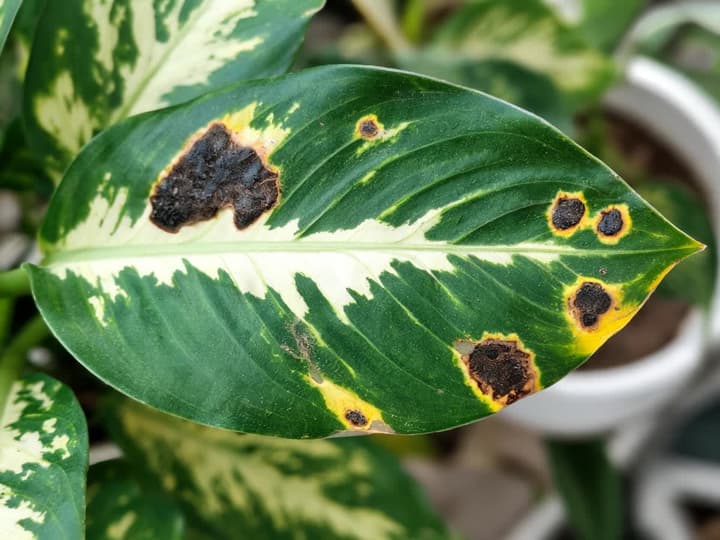
Bacterial Leaf Spot (Xanthomonas)
Bacterial leaf spot on dumb cane is nearly black and has a yellow halo around it, according to UF/IFAS. It starts at the leaf edge and grows fast. When the spot reaches a thick vein, the entire leaf collapses. In humid conditions, bacterial spots enlarge and merge. In dry conditions, they stop growing, dry up, and turn reddish-brown, according to Clemson.
Bacteria spread from plant to plant through splashing water drops and scissors. The pathogen also attacks other plants in the dumb cane family, including Chinese evergreen (Aglaonema), anthurium, and arrowhead vine (Syngonium), according to UF/IFAS. If you keep any of these companions nearby, isolate the infected specimen right away.
Anthracnose
Anthracnose leaves a straw-colored, water-soaked spot with a yellow halo along the leaf margin, according to UF/IFAS. Its characteristic sign is tiny black dots inside the spot, arranged in rings. Those specks are the fungus spores. Clemson describes anthracnose starting at the tip: the tip turns yellow, then tan, and then dark brown. The tip is the part of the margin where UF/IFAS also sees the disease start, so both sources describe the same place. The fungus likes wet foliage on cool nights, and Clemson recommends not misting the leaves of a plant with anthracnose.
Myrothecium Leaf Spot
The fungus Myrothecium enters where the leaf was injured, primarily at the tip and along tears in the midrib, according to UF/IFAS. The sign is on the underside of the leaf: tiny black and white dots arranged in a circle. The fungus enters through foliage that bumped against a wall, bent during transport, or was cut carelessly.
Mushy Spots with a Fishy Odor
A soft, water-soaked lesion accompanied by an offensive, fishy rotting odor points to bacterial soft rot caused by Erwinia, according to UF/IFAS. The spots spread aggressively, and the decomposing centers can drop out entirely, leaving jagged holes. Soft rot frequently starts on low-hanging foliage, which yellows before forming lesions. Our guide on dieffenbachia yellow leaves walks through evaluating the cane and saving top cuttings.
What to Do About Diseased Leaves
No spray or treatment will restore damaged leaf tissue. UF/IFAS notes that there are no chemical cures capable of clearing soft rot once it infects a plant. Copper sprays only manage bacterial spot when applied preventatively before symptoms take hold. Clemson recommends fungicides or copper treatments only after removing all diseased foliage to protect future growth. At home, cut away infected leaves and keep surrounding foliage bone dry:
Put on protective gloves and cut off the entire diseased leaf flush with the main cane, then bag and discard it. Never leave it in the pot or toss it into home compost.
Disinfect your pruning shears after every single cut using a solution of one part household bleach to nine parts water.
Water only the potting soil at the base of the plant in the morning, making sure no water splashes onto leaves.
If your plant lives on a porch or patio, move it out of the rain until fresh, clean growth emerges.
Space containers apart to allow generous airflow, and keep the plant away from aglaonemas, anthuriums, and syngoniums.
If the spot does not look like any of these drawings, the photo diagnosis tool in the Bloom app's Premium plan compares your leaf photo with the plant's most common diseases.
Should I Cut Off Brown Leaves on Dumb Cane?
Tips dried out by low humidity, missed waterings, or salt buildup can either stay on the plant or be trimmed for appearance. Leaves with active bacterial or fungal lesions must come off completely, because trimming only the brown center leaves the pathogen active on the plant.
To trim a dry tip, cut strictly inside the brown, dead area, leaving a thin sliver of brown tissue next to the healthy green. Slicing into green tissue creates an open wound, and two dieffenbachia fungal diseases rely on open cuts to enter: Myrothecium leaf spot, according to UF/IFAS, and anthracnose, according to Clemson. Follow the leaf's natural outline with your scissors so the tip keeps its pointed silhouette.
Always wear protective gloves before cutting. Dumb cane sap contains microscopic, needle-sharp calcium oxalate crystals. These crystals cause severe skin and eye irritation, according to UF/IFAS and the Missouri Botanical Garden. NC State Extension warns that sap getting into eyes can lead to corneal abrasions, so keep your hands away from your face and wash pruning blades thoroughly when finished.
Will Brown Spots Ever Turn Green Again?
No. Brown leaf tissue on dumb cane is dead and cannot regenerate, whether the damage came from dry air, cold exposure, sunburn, or an infection. Visible recovery happens when fresh, clean leaves emerge from the top stem once you fix the underlying issue. A leaf with only a tiny brown edge still produces energy through photosynthesis, so you can safely leave it in place until it matures and drops naturally.
Frequently Asked Questions
How do you treat brown spots on dumb cane?
First, determine whether the problem is cultural or biological. Dry tips without halos call for adjustments to your watering schedule, flushing fertilizer salts, or raising room humidity. Dark patches with yellow rings or black dots require removing the entire leaf, sanitizing your shears, and watering only the soil in the morning. No product can reverse existing leaf discoloration.
Can a dumb cane with brown spots be saved?
Almost always, provided the base of the cane remains firm and rot-free. Dumb cane grows from its central stem tip, so losing a few spotted leaves will not kill it. Prune away diseased leaves, correct environmental stressors, and watch new growth at the top. Oscillating between overwatering and underwatering will not cure an infection; clean new foliage is the only reliable sign of recovery.
What are the signs of overwatering in dumb cane?
Lower leaves turning pale yellow, soft dark patches on foliage, potting mix staying saturated for days, and a mushy cane base are classic indicators. A soft patch giving off a fishy smell indicates bacterial soft rot. Squeeze the base of the cane right above the soil line: if it feels spongy or collapses, rot has reached the stem.
Can spots on dumb cane spread to other houseplants?
Disease spots spread, but dry tips do not. Bacterial leaf spot spreads through splashing water, shears, and insects, and it attacks aglaonema, anthurium, and syngonium, according to UF/IFAS. Quarantine any plant with dark spots and yellow halos, and disinfect your shears between plants.
Does misting leaves help with brown tips?
No. Penn State Extension notes that humidity from misting evaporates in a few minutes. On dumb cane, wet foliage actively promotes anthracnose and bacterial leaf spot, and Clemson specifically advises against misting plants showing anthracnose symptoms. For brown tips caused by dry indoor air, run a cool-mist humidifier near the plant.
What to Do Today for Dumb Cane with Brown Spots
Examine the spot closely using your phone camera zoom: a yellow halo, greasy texture, or tiny black specks indicate disease.
If it is an infection, put on gloves, clip off the whole leaf, sterilize your shears, and water only the potting mix.
If it is a dry tip, check soil moisture an inch down and look for white mineral crust on the pot.
Think back to recent cold snaps and assess how much direct window light hits the leaves.
Keep an eye on emerging leaves: if they unfurl clean and green, your adjustments worked.
If the spots do not align with any symptoms in this guide, another issue might be at play. Our guide on how to tell what is wrong with your plant offers a complete troubleshooting walkthrough, from root to tip, for any indoor houseplant.
Bloom is currently only available on iPhone.
Sources
UF/IFAS Extension, Dieffenbachia Diseases: Identification and Control in Commercial Greenhouse Operations (PP286; Norman): bacterial leaf spot caused by Xanthomonas (margin, yellow halo, aroids), anthracnose, Myrothecium, soft rot caused by Erwinia, copper control only preventative.
UF/IFAS Extension, Cultural Guidelines for Commercial Production of Interiorscape Dieffenbachia (EP137; Chen, McConnell, Henny, and Everitt): margins drying out indoors, salt combined with overly wet soil, no fertilizer for two months, 21 to 29 °C (70 to 85 °F), cold damage below 12.8 °C (55 °F), no direct sun, irritating sap.
Clemson Cooperative Extension, Home & Garden Information Center, Houseplant Diseases & Disorders (HGIC 2251, updated on 02/28/2025): causes of brown tip and margin, salt crust, rainwater, anthracnose on the tip, bacterial spot in humid and dry air, rare disease at home, 1:9 bleach.
Clemson Cooperative Extension, Dieffenbachia: direct sun accepted in winter.
Penn State Extension, Humidity and Houseplants (updated 12/13/2024): misting, grouping plants, and humidifiers.
Missouri Botanical Garden, Plant Finder, Dieffenbachia seguine: indirect light without direct sun, sap irritates skin and eyes.
NC State Extension, Gardener Plant Toolbox, Dieffenbachia seguine: sap in the eye and corneal damage.
Epic Gardening, 7 Causes of Wilted and Brown Dieffenbachia Leaves (Jerad Bryant, 03/23/2025): sunburn appearance.
Related articles
How to Care for a Maidenhair Fern: Light, Water, and Revival Tips
Learn how to care for a maidenhair fern indoors: bright indirect light, consistently moist soil, high humidity, and how to revive it if it dries out completely.
How to Propagate Spider Plants: Root the Pup Before Cutting
The safest spider plant cutting comes from a pup still attached to the mother plant: rest the plantlet on soil in a small pot, wait for roots to establish, and only then cut the stolon. Learn when the pup is ready, whether rooting in water is worth it, how to divide the clump, and why plants fail to produce babies.
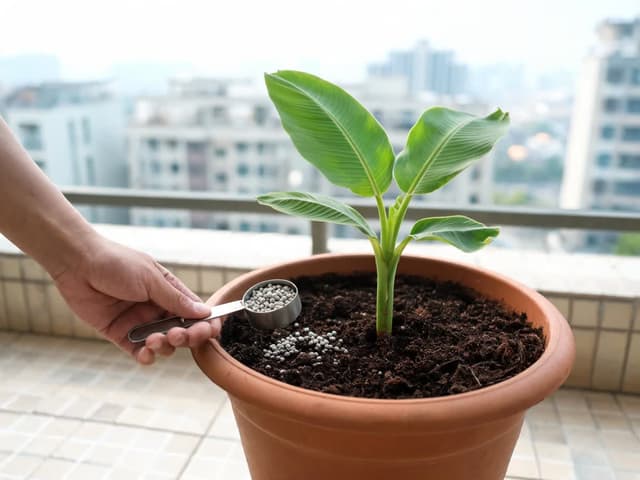
Banana plant fertilizer: fertilizing potted and backyard plants
Banana plant fertilizer needs more potassium than nitrogen, in a 3-1-6 ratio. For a potted plant on a balcony, use the label dose in spring and summer. In the backyard, fertilize every 2 months, adjusting the amount by mat age. Learn the formula, timing in Brazil, and signs of deficiency or excess.