How Often to Water Petunias in Pots, Hanging Baskets, and Garden Beds
Petunias in pots, hanging baskets, or window boxes can need daily watering in the heat. In garden beds, watering is deep and spaced 7 to 10 days apart without rain. Learn the soil test, the best time to water, and how to tell if wilting comes from heat, thirst, or waterlogged roots.
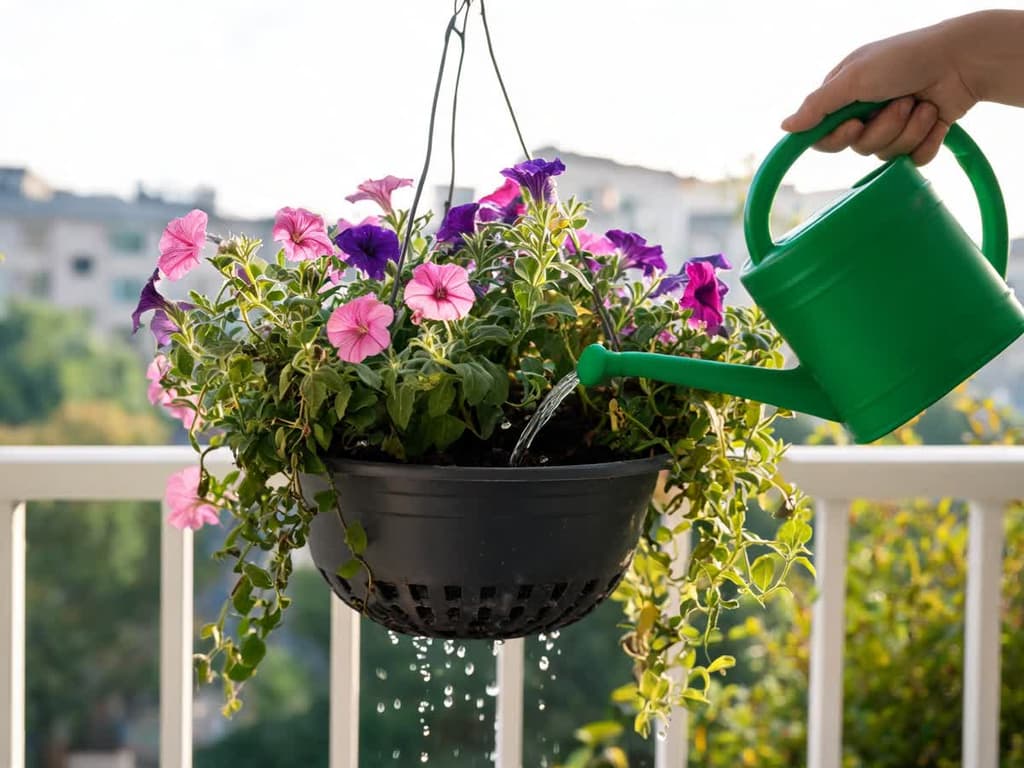
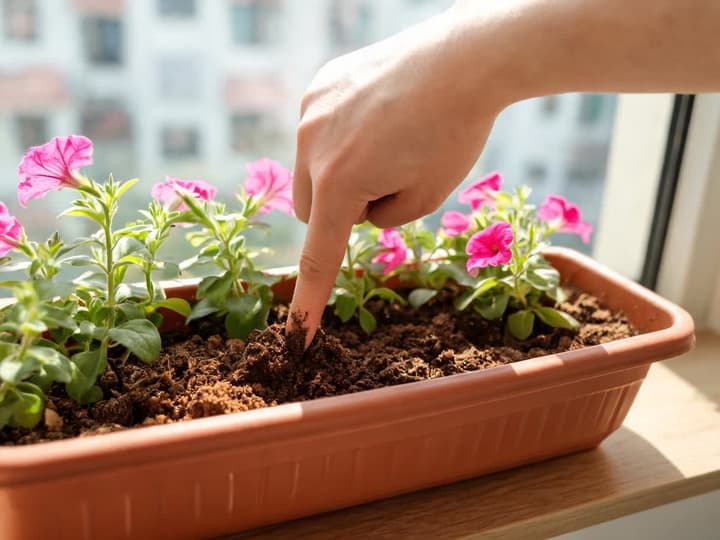
How often to water petunias depends on where they are planted. Water when the top 1 inch (2.5 cm) of soil feels dry to the touch. In pots, hanging baskets, and window boxes, this can happen every day in the heat, sometimes twice in the same day.
In the garden bed, established petunias need a deep watering of 1 to 2 inches (25 to 50 mm) of water (25 to 50 liters per square meter) every 7 to 10 days without rain. That is the recommendation from the University of Florida Extension and the Clemson University Extension. A university extension is a university service that guides growers based on research. There is no set day of the week that works for all petunias.
Quick summary:
Pots, baskets, and window boxes: check the soil daily in the heat and water until water runs out the bottom drainage hole.
Garden beds: 1 to 2 inches (25 to 50 mm) of water every 7 to 10 days without rain, in a single deep soaking.
Water the soil early in the morning without wetting the leaves and flowers.
A petunia wilting at midday with moist soil does not need water: wait for late afternoon.
How often to water petunias in each location
The interval between waterings changes with the volume of soil around the root system. The less soil there is, the faster it dries out.
Where the petunia is | Checking the soil | Watering in hot weather | Watering in cool weather |
|---|---|---|---|
Hanging basket | every day | once a day, sometimes twice | less often: only when the soil dries out |
Window box and small pot | every day | once a day, sometimes twice | less often: only when the soil dries out |
Large pot | every day in summer | when the soil dries out | 1 or 2 times a week |
Garden bed | every few days and after rain | 1 to 2 inches (25 to 50 mm) every 7 to 10 days without rain | only if the week passes without rain and the soil dries out |
The pot numbers come from the Iowa State University Extension. A small pot in heat and wind may need 1 or 2 waterings a day. A large pot in cool weather may only need 1 or 2 a week. Use the table to know how often to check the soil. Watering happens only when the soil is dry.
Petunias in hanging baskets and window boxes
Hanging baskets are among the places where the soil dries out fastest. They have little soil, multiple plants close together with rapidly growing roots, and get sun and wind from all sides. The Iowa extension advises checking the basket every day once the plants take root. On hot, sunny days, you may need to water more than once.
In a window box, the same rule applies, because it is also a container with little soil. On the hottest days, the North Carolina State University extension recommends two waterings for container petunias: the first early in the morning and the second in the afternoon.
With each watering, pour water slowly until it drains from the bottom holes. That way the soil gets wet from top to bottom, not just on the surface. With practice, the weight of the basket is enough: a light basket is dry, a heavy basket still holds water.
The basket material also changes the pace. A wire basket lined with coconut coir or moss drains heavily and loses water through the sides. A plastic basket does not lose water through the wall and dries out more slowly, according to the same Iowa extension.
If the soil dries out before the end of the day even with daily watering, the basket may be overcrowded. The Iowa extension recommends 3 to 5 plants in a basket 12 to 14 inches (30 to 35 cm) in diameter. In a 16-to-18-inch (40 to 45 cm) basket, 5 to 7 fit. Baskets with too many plants start needing water more often toward the end of the season, according to the same extension.
Petunias in the garden bed: deep, infrequent watering
In garden beds, petunia roots have much more soil to seek out water. Clemson University recommends 25 to 50 mm (1 to 2 inches) of water every 7 to 10 days once seedlings take root. In liters, 25 mm equals 25 liters per square meter of garden bed.
The Clemson extension advises avoiding light, frequent waterings because they cause roots to grow shallow, near the surface. Shallow roots depend on moisture in the top layer of soil, which is the first to dry out in the heat. Track the week's rainfall: if it rained well, skip watering and check the soil again later.
There are two different recommendations for garden beds. A petunia seed company and an American gardening website mention watering every 2 to 3 days in the heat. The Florida and Clemson extensions recommend 1 to 2 inches (25 to 50 mm) every 7 to 10 days. This guide follows the two universities, because they have more research backing than a store and a gardening site. In addition, short, frequent watering is precisely what they advise avoiding.
Mulch is the layer of straw, bark, or dry leaves spread over the soil. It retains moisture and spaces out waterings. Wave, a petunia brand, recommends 5 to 8 cm of mulch in the garden bed and about 3 cm in pots.
Too little water and too much water reduce petunia flowers
Underwatering cuts petunia flowering in half. In a study published in the journal HortScience in 2009, petunias in 2-liter pots received only a quarter of the water they lost per day. They produced an average of 33 flowers per plant, compared to 71 for fully watered petunias.
In the same study, underwatered petunias were 33% shorter and had 13% smaller flowers.
Keeping the soil constantly wet does not help either. Another study from HortScience, from 2015, tested potted petunias with wetter soil and a lot of slow-release fertilizer (granules that release nutrients gradually). Under this combination, they produced fewer flowers. In the wettest soil of the test, the leaves grew to twice the size of the leaves in the drier soil.
The two petunia studies show both sides: too little water reduces flowering, and constantly wet soil with too much fertilizer does too. In practice, let the top 1 inch (2.5 cm) of soil dry out between waterings, but never let the pot dry out completely. Proven Winners, which breeds Supertunia petunias, says the same: the plant tolerates a little more or a little less water, and what cuts flowering is soil that is too dry or waterlogged.
How to water petunias: at the soil, in the morning
Water the soil at the base of the plants without wetting the leaves and flowers. The Clemson and Florida extensions give the same reason: wet flowers and foliage encourage disease. One example is petal blight, common in rainy, very humid weather.
The most common petal blight is caused by the fungus Botrytis, or gray mold. According to the University of Maryland extension, it blights flowers quickly, and a diseased petal that drops onto a leaf carries the disease with it. Prevention means not leaving leaves and flowers wet for long periods.
Water early in the morning. If water splashes onto the leaves, they dry before nightfall, as the North Carolina extension recommends. Evening watering leaves foliage wet until the next day.
To keep water off the basket's flowers, guide the spout of your watering can beneath the stems, directly onto the soil. In garden beds, a soaker hose or a watering can without a rose solves the same problem.
Soil in the basket dried out too much: water runs down the sides
When container soil dries out completely, it shrinks and pulls away from the pot wall. Irrigation water then runs down the gap between the soil and the container, escaping through the bottom in seconds. The soil in the center stays dry, and the petunia remains wilted even after watering.
The fix is bottom-watering. Place the basket or pot in a basin of water and let the soil drink through the drainage holes in the bottom. The Iowa State extension recommends 1 to 2 hours for a hanging basket and warns: more than 2 hours in water can rot the roots. For a standard pot, the same extension recommends 20 to 30 minutes.
After bottom-watering, lift the basket from the basin and let it drain thoroughly before hanging it back up. From there, resume the daily soil test.
Wilting petunia: midday heat, lack of water, or waterlogged roots
Petunias wilt for three different reasons, and only one gets resolved with water. Before watering a wilting petunia, insert your finger into the soil and check the time of day.
Wilting between 12 p.m. and 4 p.m. with moist soil that recovers in the late afternoon: this is heat. The North Carolina Extension explains that many well-watered plants wilt during peak heat to lose less water. If the soil is moist 1 to 2 inches (2.5–5 cm) deep, do not water. Check again in the late afternoon.
Wilting that persists until the next morning with dry soil: this is lack of water. Leaves feel dry and brittle, and lower leaves can turn yellow and drop. Water until water drains from the bottom. If water runs down the edges without wetting the soil, bottom-water in a basin.
Wilting with moist soil that does not recover even at night: roots are suffering from too much water. Constantly saturated soil deprives roots of oxygen, and roots begin to rot. Lower leaves can also yellow: what separates this case from underwatering is the moist soil. In this scenario, more water makes it worse: stop watering, empty the saucer beneath the pot, and make sure the bottom hole is not clogged.
A petunia with wilted leaves can have causes other than watering. Root symptoms and treatment are covered on the root rot in petunias page.
Watering petunias throughout the year in Brazil
The petunia is a spring and summer plant in Brazil. Watering increases as the heat rises and the plant grows, peaking at the height of summer, from December to February. Hanging baskets and window boxes, during this period, shift to a daily watering schedule.
When nights cool down, starting in April or May in Brazil, the soil stays moist longer after each watering. Proven Winners notes that the plant begins to require less water during this period. Continue with the soil test and the interval widens on its own.
In frost-free climates, petunias can also last through fall and winter: in Florida, the local university extension treats petunias as a winter flower. With cool weather and slow growth, soil takes longer to dry out and watering becomes much more spaced out. Water only when the soil test calls for it.
Proven Winners notes that most petunias struggle at the peak of hot, humid summer, with heavy afternoon rain. The brand suggests moving the pot to a spot protected from heavy rain, without taking the pot out of the sun. On rainy days, skip watering the flower bed and check the soil the next day.
Frequently asked questions
Do I need to water petunias every day?
Only in pots, hanging baskets, or window boxes, and only when the soil test indicates it. In hot weather, soil in these containers often dries out daily, and sometimes twice. In garden beds, watering daily produces shallow roots: there, watering should be deep, every 7 to 10 days without rain. Before watering, check whether the top 1 inch (2.5 cm) of soil is dry.
Can you overwater petunias?
Yes, especially in pots without drainage holes or with saucers full of standing water beneath them. Waterlogged soil deprives roots of air, and the petunia wilts even in wet soil. In HortScience, petunias kept with wetter soil and heavy fertilizer produced fewer flowers. Let the top 1 inch (2.5 cm) of soil dry out between waterings and empty the saucer once drainage stops.
Can I water petunias at night?
Early morning is best. Evening watering keeps leaves and flowers wet until the next day, and wet flowers over many hours encourage gray mold. If a basket dries out completely by the end of the day, water the soil anyway, beneath the stems, without wetting the flowers. The Iowa extension warns that soil that dries out completely becomes difficult to rewet.
Are petunias toxic to dogs and cats?
No. The ASPCA, an American animal protection organization, classifies petunias as non-toxic to dogs, cats, and horses.
Before watering petunias the next time
Baskets, window boxes, and pots require daily soil checks in the heat, while garden beds need deep watering every 7 to 10 days without rain. In all cases, dry soil down 1 inch (2.5 cm) is your signal to water. Water the soil in the morning: in pots and baskets, until water drains from the bottom; in beds, with 1 to 2 inches (25 to 50 mm) of water.
To track multiple plants, Bloom (available for iOS) sets up a custom watering schedule per plant, even on the free plan. Use the reminder as your cue to inspect the petunia's soil, and water only if your finger finds dry soil. The full petunia care guide covers light, temperature, and common pests.
Related articles

How to Care for Hibiscus: Sun, Watering, Fertilizer, and Pruning for Flowers
How to care for hibiscus: 6 hours of direct sun, evenly moist soil without waterlogging, half-strength fertilizer in spring and summer, and pruning in early spring. Find out why the flower lasts one day and why buds drop before opening.

Do Ferns Like Sun or Shade? It Depends on the Type
Ferns prefer bright shade: plenty of light, but no direct sun on their fronds. Tuberous sword fern is the exception that handles sun. Here is the ideal light for each type, where to place pots, and how fronds show too much or too little light.

African Violet Yellow Leaves: Causes and What to Do
Yellow leaves on an African violet usually stem from overwatering, and the first place to check is the center of the plant. Losing one lower leaf at a time is normal. Identify whether age, watering, cold water, sunlight, cold drafts, or fertilizer is the culprit based on the yellowing pattern, and see what to do today.