How Often to Water a Ponytail Palm: The Soil and Trunk Test
A ponytail palm has no fixed watering schedule. It drinks when the soil is completely dry to the bottom and its swollen base feels firm. Here is how to test both, how to water properly, winter care adjustments, and what to do if the trunk goes soft.
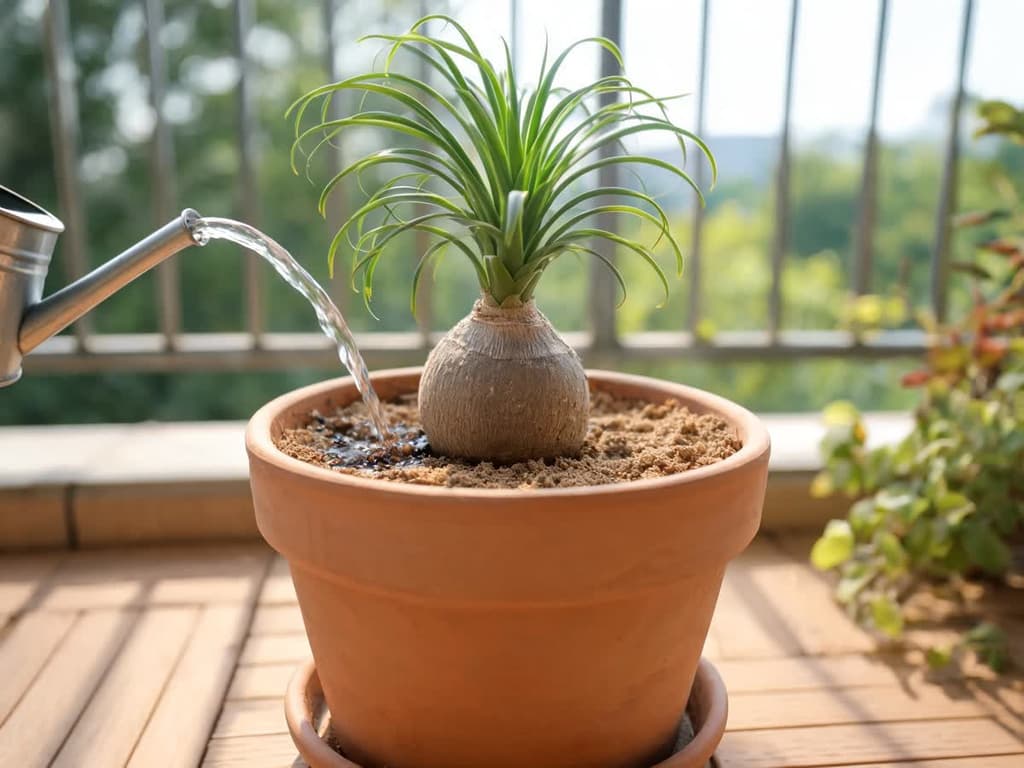
How often you should water a ponytail palm depends entirely on when the soil dries out all the way to the bottom of the pot, not on a calendar schedule. Once the potting mix is dry from top to bottom and the bulbous base feels firm, water thoroughly until it drains out the bottom. If there is still moisture deep down, wait a few more days.
Indoors, potted ponytail palms usually hit this point every 2 to 4 weeks during the warmer months, and much less frequently in winter. The plant in this guide is Beaucarnea recurvata, sometimes called the elephant's foot or nolina. It is not the spineless yucca (Yucca elephantipes), which occasionally shares the elephant's foot nickname.
Quick summary:
Water when the soil dries out all the way to the bottom of the pot. The NYBG, the New York Botanical Garden, sums up the rule in three words: "when in doubt, wait."
Soak the entire root ball at once, then empty the drip tray. Water slowly until it runs freely through the drainage hole, and never let the pot sit in standing water.
Give the base a squeeze before watering. A firm trunk means a healthy plant. A soft, squishy base with damp soil points to root rot, where adding more water only makes things worse.
Scale back significantly in winter. Ponytail palms come from regions with dry winters and slow down during colder weather, meaning the soil takes much longer to dry out.
Planted in the ground, it rarely needs watering. The University of Florida describes it as drought-tolerant year-round. Extra watering is reserved for the driest weeks.
How often to water a ponytail palm
You water a ponytail palm when the potting mix dries out completely, from top to bottom. The number of days between waterings is simply a result of how fast that happens, which changes with pot size, sunlight, and the season. That is why published care advice varies up to fourfold for the exact same plant.
Three American stores give three different numbers. Greenery Unlimited, a New York shop, recommends watering "about once a week" for most plants in the pots they sell. Bouqs, an American florist, mentions watering once every 2 to 3 weeks in spring and summer. Scotts Miracle-Gro, a soil and fertilizer manufacturer, estimates watering once every 3 to 4 weeks indoors.
The ponytail palm plant profile here on Bloom says 14 days in the heat and once a month in winter. No university extension service and no botanical garden we consulted gives a set number of days. All four ranges can be right, each for a specific pot in a specific home.
The table below shows what speeds up and what slows down drying time. Use 14 days as a starting point for your first soil check, never as a strict rule.
Factor | Soil dries faster (shorter intervals) | Soil dries slower (longer intervals) |
|---|---|---|
Pot type | Small, unglazed terracotta | Plastic or glazed ceramic, oversized |
Soil mix | Mix with coarse sand or grit | regular garden soil that holds water |
Light | Several hours of direct sunlight | Low-light window, far from the glass |
Season | Warm summer | Cold winter |
Location | Breezy patio or porch | Enclosed corner with stagnant air |
The swollen base stores water, letting the plant go weeks without a drink
The swollen base of the ponytail palm is a caudex, a stem structure that functions as a water reservoir. North Carolina State University (NC State) describes this thick, swollen stem as the organ that stores the plant's water. This reserve allows the ponytail palm to go weeks with dry soil.
The species is native to Mexico and grows in rocky, nutrient-poor soil, according to NC State. The same plant profile notes that it prefers a dry winter. Despite its English common name, it is not a palm, and belongs to the asparagus family (Asparagaceae).
Ponytail palms also do not behave like thick-leaved succulents. Their moisture reserve sits in the trunk rather than their thin, strap-like leaves. Because the leaves reveal little about whether the plant is thirsty, checking the base and the soil tells you far more.
How to tell when it is time to water: the soil is dry to the bottom
The time to water arrives when the soil is dry through its entire depth. Your finger only checks the top 2 inches (5 cm), but in a 10-inch (25 cm) pot, the root system sits much deeper. Three simple methods reach all the way down.
The wooden skewer test. Push a wooden skewer straight to the bottom of the pot, away from the bulbous trunk, and pull it out after a minute. A clean, dry skewer means the soil is dry. A skewer with damp soil clinging to it means moisture remains down below, so wait 3 to 5 days and test again.
The pot lift test. Bloomscape, an American plant shop, suggests lifting the pot right after watering and again when the soil is dry. After two waterings, the difference in weight becomes easy to recognize.
The moisture meter test. NYBG recommends a simple moisture meter to read moisture at the bottom of the pot. It measures the same thing as the wooden skewer, just with a number.
Before watering, also press the base with your thumb. A firm base with dry soil all the way to the bottom is the signal to water. The section on overwatering and underwatering, further below, shows what to do when the base is not firm.
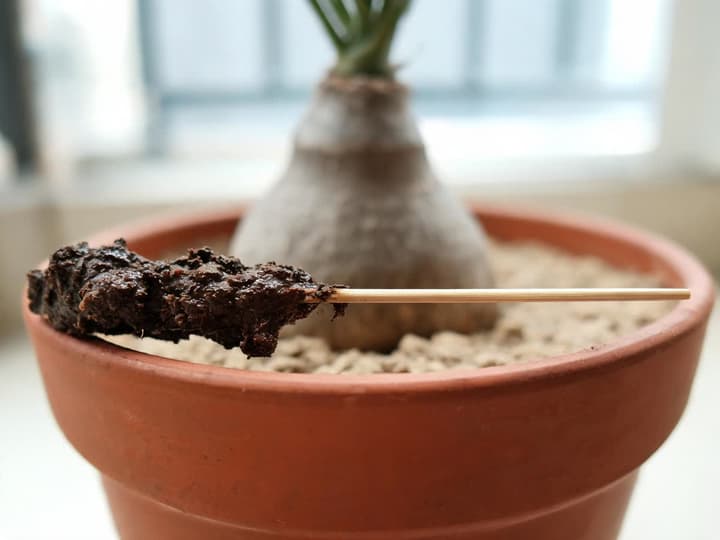
Many ponytail palms arrive as gifts without care tags or instructions. If you just received or bought the plant, do the test before the first watering. Dry soil all the way to the bottom and a firm base call for a thorough watering that day. A small watering once a week, out of fear of overdoing it, only wets the top layer and leaves the bottom always dry.
How to water a ponytail palm
Watering a ponytail palm means soaking all the soil at once, letting it drain, and only watering again when it dries out completely. The five steps below follow the guidance from NYBG.
Water in the morning with room-temperature water. NYBG recommends both this time of day and this water temperature.
Pour water directly onto the soil around the base. Do not pour water over the foliage or on the top of the trunk. NYBG warns that standing water on the caudex can cause diseases.
Water slowly until water runs out the drainage hole. All of the soil needs to be moist from top to bottom.
Wait for the water to drain completely. Leave the pot over the sink or in a place where water can run freely out of the drainage hole.
Empty the saucer. NYBG considers a detached saucer better than an attached saucer because attached saucers do not let the water drain as well.
Very dry soil sometimes stops absorbing water. Water runs down the sides of the pot and drains out the hole in seconds, and the center of the soil block stays dry. In this case, bottom watering solves the problem. Bloomscape advises placing the pot, without its saucer, into a basin with 3 to 4 inches (8 to 10 cm) of water for at least 45 minutes.
After bottom soaking, take the pot out of the basin and let it drain well before returning it to its spot. Use bottom watering only to rehydrate a block of soil that has dried out too much, not as a routine. The guide on how to water a snake plant shows the same problem: soil that repels water, on a plant that also needs to dry out between waterings.
Pot choice and soil mix change how often you water
The pot must have drainage holes. Without them, excess water pools around the roots, and no watering schedule can compensate for that. Cachepots (decorative pots without drainage) should only be used as outer covers and must be emptied after every watering.
Choose a pot only slightly larger than the base. NYBG cautions that moving a ponytail palm into an oversized container raises the risk of stem and root rot. A huge volume of soil around a modest root system stays wet for weeks.
The potting mix must drain quickly. NYBG recommends an unfertilized cactus mix. Another option they suggest is blending 3 parts coarse sand or fine gravel with 1 part regular potting soil, adding a bit of coco coir or pine bark. Standard garden soil stays soggy far too long in a container.
Never bury the base any deeper than it was sitting in its previous container. According to NYBG, burying the caudex causes it to rot.
In winter, water less without letting it dry out completely
In the winter, the ponytail palm grows more slowly and drinks less, so the soil takes longer to dry out. NYBG calls for a drier winter rest, mimicking the rainfall of the plant's native region. In the northern hemisphere, where NYBG is located, this rest runs from November to February. In the southern hemisphere, as in Brazil, it runs from May to August.
Drier does not mean without water. The same source cautions against leaving the roots dry for too long during this period. Keep using the wooden skewer test, and accept that the interval between waterings can double.
Cold weather calls for even more care with wet soil. NC State lists 10 °C (50 °F) as the minimum temperature the plant tolerates. NYBG is more cautious and warns that 10 to 12 °C (50 to 54 °F) can kill the plant, so follow the NYBG number. In the cold, the soil stays damp longer, and the roots spend more days sitting in wet conditions.
Growing ponytail palms in the ground outdoors
Planting a ponytail palm outdoors in the landscape drastically reduces its watering needs compared to potted plants. The University of Florida describes the plant as highly drought-tolerant year-round. Their profile notes that supplemental irrigation during dry periods simply keeps leaves deeper green and minimizes leaf drop.
The condition is that the soil drains well. The University of Florida profile warns that root rot can kill the plant in waterlogged soil. In a clay soil bed, which forms puddles after rain, plant on a higher mound or mix coarse sand into the soil.
In the garden, water only during weeks without rain when the soil is dry 4 inches (10 cm) deep. Water deeply, soaking the soil around the base, and let it dry out again before the next watering.
Is your ponytail palm overwatered or underwatered?
Both overwatering and underwatering produce similar symptoms on ponytail palm foliage, including brown tips and drooping fronds. What tells them apart is the condition of the soil and the base. Always check the soil first, squeeze the trunk next, and evaluate the foliage last.
Indicator | Overwatered | Underwatered |
|---|---|---|
Soil | Damp deep down several days after watering | dry from top to bottom, sometimes pulling away from the pot edges |
Base | soft, gives under pressure, sometimes dark near the soil | firm, more shriveled or wrinkly than normal |
Leaves | Yellow tips before turning brown, drooping | Limp, drooping leaves with crispy, brown tips |
Action | Stop watering immediately and inspect roots | Give a thorough, deep drenching until it drains |
Greenery Unlimited, the New York shop, points out yellow tips as the first sign of overwatering in a ponytail palm. Yellow leaves with dry soil, or yellowing that starts on new leaves, have other causes, and the guide on yellow leaves breaks each of them down.
The most frequent point of confusion is a wrinkled trunk. NYBG explains that a wrinkled base is normal on many specimens, especially mature plants, as long as it remains firm. Bloomscape notes that underwatering causes the trunk to look wrinkled and shrunken. NYBG clarifies that a wrinkled base that feels squishy usually signals rot.
Both descriptions fit together when you also check the soil. A wrinkled base with soil that has been dry for weeks indicates thirst. A soft base with moist soil indicates rot. When the two sources seem to disagree, follow the NYBG, which is a botanical garden: when in doubt, treat it as rot and do not water.
If the soil is dry and the base is merely shriveled, give it a thorough soak and feel the base again one week later. If it firms back up, it was simply thirsty. If it remains soft or the mushy area expands, rot has set in.
Can you save a ponytail palm with a soft trunk?
A soft base can be saved if the decay is localized to a small spot that has not reached the main root core. NYBG notes that if rot spreads beyond a small patch, the plant rarely recovers. The right move depends on what you find after unpotting.
The causes NYBG lists for trunk rot all trace back to water: overwatering, pots without drainage holes, undrained saucers, and dense soil. Correct the underlying moisture issue before trimming, or rot will simply return.
Stop watering and remove the plant from its pot. Gently shake away all wet soil from the root ball.
Inspect the roots and the base below the soil line. Healthy roots are firm and pale; rotted roots are dark, mushy, and fall apart easily.
Cut away the soft tissue using a sterilized knife or blade. NYBG recommends this cut for small spots that have not reached the roots. Cut back until firm, pale tissue shows, and also cut away any rotted roots.
Let the cut air-dry, away from direct sunlight. Do not wet the cut area while it callouses over, as NYBG recommends for any cut on the trunk.
Repot into a clean pot using fresh, dry potting mix. Keep the base at its original depth without burying it.
Hold off on watering. Wait until the cut has calloused and closed completely before giving the first light drink, then return to testing with a wooden skewer.
If rot has taken over most of the base, healthy side shoots can save the plant. NYBG recommends separating the shoot in spring when it reaches at least 6 inches (15 cm) tall, noting that results vary.
Brown tips: irregular watering is usually the culprit
Brown tips are common on ponytail palms. The leading cause NYBG cites is inconsistent watering: too much, too little, or alternating between the two. Overwatering and then stopping for weeks is an exact example of this. The fix is returning to the wooden skewer test and maintaining the same thorough soak whenever the soil dries out.
NYBG lists other causes: low light, cold temperatures below what the plant can tolerate, and nearby air conditioning or heating vents. Fertilizer salt buildup in the soil and heavily mineralized water round out the list. The same source considers dry air the least likely cause. The plant prefers low humidity, and misting the leaves is unnecessary.
Feel free to trim brown tips using clean scissors. The cut tips will not turn green again, but healthy new leaves will emerge once your watering stabilizes. A few lower, older leaves drying up and shedding completely is just natural renewal, according to NYBG.
Frequently asked questions
How long can a ponytail palm go without water?
The ponytail palm lasts weeks without water, thanks to the reserve stored in its base. No consulted source measures a limit in days. Even in winter, NYBG asks that the root ball not stay dry for too long. A base that is more shriveled than normal and drooping leaves with dry soil are the sign that you have waited too long.
Do I need to mist ponytail palm leaves?
No. NYBG says that the ponytail palm prefers low humidity and does not need misting. Water on the leaves can also run down and collect at the top of the trunk, where the same source warns that it can cause diseases. All the water the plant takes in enters through the soil.
Can I water my ponytail palm with tap water?
Yes. If your tap water leaves white marks on the kettle, it has high mineral content, and NYBG cites these minerals as one cause of brown tips. In this case, alternate with rainwater or filtered water. A thorough watering, until plenty runs out the drainage hole, also flushes accumulated salt from the soil.
Should I water my ponytail palm right after repotting?
That depends on the roots. With healthy roots and dry new potting mix, water thoroughly until it drains right after repotting, then wait for the soil to dry out again. If you trimmed away rotted roots or cut into a rotted base, do not water until the cut dries and calluses over. NYBG recommends repotting in spring, and only when the base touches the rim of the pot.
Before your next ponytail palm watering
Next time you reach for the watering can, grab a wooden skewer instead of looking at the calendar. If it pulls out clean and dry and the base feels firm, water deeply until moisture drains freely from the bottom. If damp soil clings to the skewer, hold off and test again in 3 to 5 days.
Bloom (available for iOS) identifies the species from a photo and sets up a watering schedule for that species. It helps when a plant arrives as an unlabeled gift and you do not know whether it is a ponytail palm or a spineless yucca.
Related articles
How to Care for a Maidenhair Fern: Light, Water, and Revival Tips
Learn how to care for a maidenhair fern indoors: bright indirect light, consistently moist soil, high humidity, and how to revive it if it dries out completely.
How to Propagate Spider Plants: Root the Pup Before Cutting
The safest spider plant cutting comes from a pup still attached to the mother plant: rest the plantlet on soil in a small pot, wait for roots to establish, and only then cut the stolon. Learn when the pup is ready, whether rooting in water is worth it, how to divide the clump, and why plants fail to produce babies.
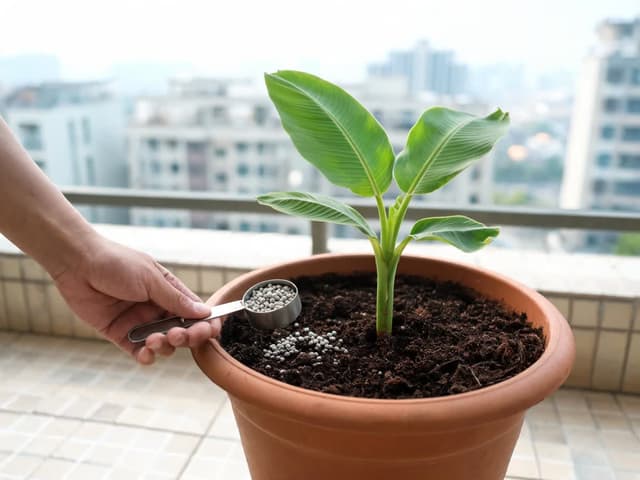
Banana plant fertilizer: fertilizing potted and backyard plants
Banana plant fertilizer needs more potassium than nitrogen, in a 3-1-6 ratio. For a potted plant on a balcony, use the label dose in spring and summer. In the backyard, fertilize every 2 months, adjusting the amount by mat age. Learn the formula, timing in Brazil, and signs of deficiency or excess.