How to Care for a Maidenhair Fern: Light, Water, and Revival Tips
Learn how to care for a maidenhair fern indoors: bright indirect light, consistently moist soil, high humidity, and how to revive it if it dries out completely.
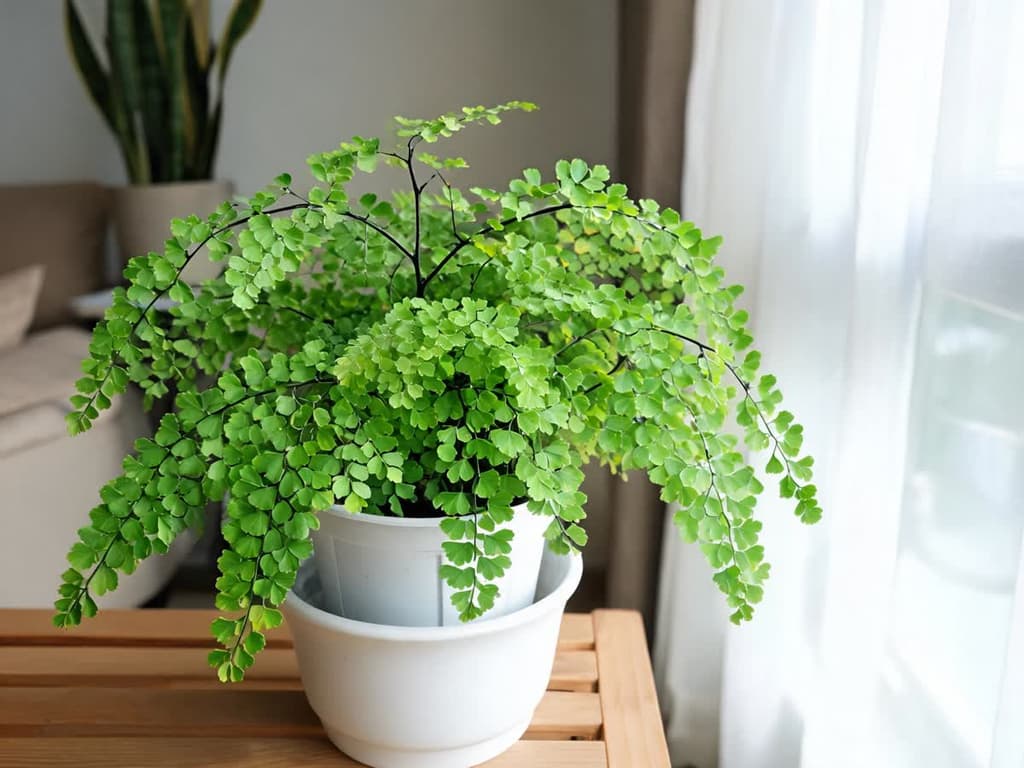
To care for a maidenhair fern, place the pot in a very bright spot, but without direct sun hitting the leaves, and away from drafts. Keep the soil in the pot moist, never waterlogged. Water when only the top inch (2.5 cm) is dry to the touch, until water comes out of the hole. The maidenhair fern requires more air humidity than most homes have, and this is what burns the tips of the leaflets.
If your maidenhair fern dried out completely, it might still be alive. The maidenhair fern grows from a stem that runs along the soil surface, the rhizome. The New York Botanical Garden explains that it sometimes loses all its leaves and resprouts a few weeks later. Cut back the dried growth level with the soil and keep the soil moist.
Maidenhair fern quick facts
Care | What to do |
|---|---|
Light | Bright light all day, without direct sun hitting the leaves |
Window in Brazil | South-facing, or east-facing with a sheer curtain |
Watering | When the top inch (2.5 cm) of soil feels dry, until water drains from the hole; the bottom soil never dries out |
Air humidity | Around 50% or more; misting does not solve the problem |
Temperature | Between 15 and 21 °C is ideal; never below 10 °C |
Drafts | Away from open windows, doors, and air-conditioning drafts |
Fertilizer | Once a month, at half the label dose, only in spring and summer |
Repotting | Every 2 years or so, in early spring |
Pets | The ASPCA, an American animal protection organization, does not have a profile for any maidenhair fern; keep it out of reach |
How to identify the maidenhair fern and tell which one is yours
The maidenhair fern has black, thin, shiny stems that look like wire, and light-green, fan-shaped leaflets. Each stem with its leaflets is a frond, the name for a fern leaf. The maidenhair fern does not produce flowers. NC State Extension is the North Carolina State University service that brings research to the public. It describes the maidenhair fern stem as black and wiry.
The brown dots on the lower edge of the leaflets are spores, not pests. Spores play the role of seeds in ferns and remain protected by a fold of the leaflet edge itself. Do not scrape these dots off or apply any product to them.
The common maidenhair fern has the scientific name Adiantum raddianum and is native to tropical America, according to NC State. Two closely related species also appear in flower shops: the brittle maidenhair fern (Adiantum tenerum), with delicate and brittle leaflets, and the southern maidenhair fern (Adiantum capillus-veneris). The care instructions in this guide apply to all three, with an exception regarding soil acidity, explained in the pot section.
If you inherited the plant and do not know if it is a maidenhair fern, take a photo of the leaflets in the Bloom app (available for iOS). It shows the species name and its care.
Light: do maidenhair ferns like sun?
The maidenhair fern does not like direct sun, which burns the small leaves. It needs bright light all day, and NC State notes that it loses vigor in both too much sun and too much shade.
American extension services recommend a window that does not receive direct sun, which there is a north-facing window. In Brazil, that is a south-facing window. An east-facing window receives only morning sun and works with a sheer curtain between the glass and the plant. At a west- or north-facing window, which receive strong sun, use a sheer curtain. It also works to keep the maidenhair fern far enough from the glass so the sun does not reach the leaves, as Purdue Extension, from Purdue University, advises.
The maidenhair fern is not suitable for a windowless room. For a room like that, choose one of the plants that tolerate low light, such as the ZZ plant or the snake plant.
How to water maidenhair fern
Water the maidenhair fern when the top inch (2.5 cm) of soil is dry to the touch, and never let the soil at the bottom dry out. According to NC State, maidenhair fern roots must not dry out. The New York Botanical Garden advises letting only this top inch (2.5 cm) dry between waterings during the growing season. Purdue and Clemson call for moist soil at all times. Both rules work together: the surface dries out slightly while the bottom remains moist.
To check, poke your finger into the soil up to the first knuckle, about an inch (2.5 cm) deep. If your finger comes out dry, water. If it comes out damp or dirty with wet soil, wait another day.
When watering, wet the entire potting soil until water drains from the hole. Purdue recommends room-temperature water and says the pot cannot sit in the drained water. Empty the saucer 15 minutes after watering, as the New York Botanical Garden advises.
Do not water on a schedule. A fixed rule such as "3 to 4 times a week" does not take into account the heat, the pot size, and the wind in the area. In summer, the soil dries faster than in winter, and a small pot dries out before a large one.
Maidenhair fern problems usually stem from alternating between dry soil and waterlogged soil, according to the New York Botanical Garden. The two extremes show up in different ways:
soil that dried out: the fronds wilt and dry up all at once;
soil waterlogged for days: mold grows on the soil surface and the root rots. The leaflets drop in both cases, according to Purdue.
If the soil has been waterlogged for days and the base of the plant turned soft and dark, check the maidenhair fern rot page before watering again.
Air humidity: what works and what does not work
Dry air burns the tips of maidenhair fern leaflets. Clemson Extension, part of Clemson University, says that thin-leaved ferns, such as maidenhair fern, more frequently get brown fronds from a lack of humidity. Clemson recommends around 50% air humidity, and Purdue, 40 to 50%. The New York Botanical Garden calls for more than 60% and cites a lack of humidity as the main cause of failure with maidenhair ferns.
A hygrometer, an air humidity meter sold in houseware stores, shows how much humidity your room has. Watering more does not compensate for dry air, warns the New York Botanical Garden: the soil becomes waterlogged and the tips continue drying out.
Misting water on the leaves does not increase humidity. Three extensions say the same thing. The Iowa State Extension explains that the leaf dries right after misting, and that you would need to mist several times a day. The Penn State Extension says that the effect lasts until the water evaporates, which takes minutes. The Purdue Extension says that misting only removes dust from the leaves.
A pebble tray with water divides sources. Purdue, Iowa State, and the New York Botanical Garden recommend it: the pot sits on the pebbles, above the water, and the evaporating water humidifies the air. This tray is different from a drainage saucer because the bottom of the pot does not touch the water.
Penn State disagrees, saying that the vapor spreads through the room and barely changes anything. Nobody has measured the effect of the tray on a maidenhair fern. This guide follows the side with more sources: the pebble tray does not harm the plant, but do not rely on it alone.
What works without disagreement among the sources:
Turn on a humidifier in the maidenhair fern's room, as the three extensions recommend.
Group several plants together, because the water that evaporates from the leaves and soil humidifies the air between them (Iowa State and Penn State).
Use a cloche or a large terrarium, which keep humidity around the plant (Penn State and New York Botanical Garden).
NC State says that maidenhair fern does well in the bathroom. Penn State points out that this depends on the shower being used every day and the bathroom having a window. A bright bathroom, with a window and a daily shower, can work, and a hygrometer confirms whether the air reaches 50%; see other bathroom plants that like the same humid air.
Wind, air conditioning, and temperature
Wind dries out maidenhair fern fronds. NC State recommends avoiding cold drafts and sudden temperature changes. Move the maidenhair fern away from open windows, balcony doors, and fans. Also keep it out of the direct air stream of air conditioning, which blows cold, dry air onto the leaves.
The sources give a mild home temperature range. The New York Botanical Garden says the maidenhair fern does well between 15 and 21 °C and should not go below 10 °C. Clemson gives the same range for the day and 10 to 15 °C for the night.
Purdue says that, for house ferns in general, the daytime temperature should not exceed 22 °C (72 °F). No source gave a heat limit just for the maidenhair fern. In the heat of the Brazilian summer, the soil and air dry faster, so check the soil with your finger every day. In the winter of the South and the mountains (in Brazil, from June to August), move the maidenhair fern away from the window on nights below 10 °C.
How to care for maidenhair fern in a pot: pot, potting soil, and repotting
Use a pot with a drainage hole at the bottom and sized to the plant. Purdue calls the idea that a small plant in a large pot has "room to grow" a common mistake. According to Purdue, the roots will likely drown in the water that the extra soil holds. Purdue accepts clay, plastic, or decorative pots, as long as they have a hole at the bottom.
Soil for maidenhair fern needs to be rich in organic matter, lightweight, and able to hold moisture without becoming waterlogged. Purdue uses equal parts peat moss (decomposed moss remains, sold in bags), sand, and garden soil. In Brazil, peat moss is rare and coconut coir can replace it, but no source has tested this swap for maidenhair fern. The mixture is 1 part potting soil, 1 part coconut coir, and 1 part coarse sand. The New York Botanical Garden calls for slightly acidic soil for potted maidenhair fern. The exception is southern maidenhair fern: NC State notes that it prefers neutral to alkaline soil.
A layer of gravel or expanded clay at the bottom of the pot also divides sources. Washington State University says that it interferes with drainage. An experiment published in PLOS ONE in 2025 measured the opposite: the layer reduced water retained in the soil, in a test conducted without a plant. Neither of them tested maidenhair fern, so what matters is that the pot has a drainage hole and water drains through it with every watering.
Repot the maidenhair fern when the roots appear on the soil surface, roughly every 2 years. Do this in early spring (in Brazil, in September). The New York Botanical Garden warns: do not bury the rhizome deeper than it was. When repotting, you can divide the cluster of stems with a clean knife into sections that have roots and fronds. No source says into how many parts. NC State points to this division as the way to propagate maidenhair fern.
Fertilizer for maidenhair fern
Fertilize the maidenhair fern once a month in spring and summer (in Brazil, from October to March). Use liquid houseplant fertilizer, diluted to half the label dose, as Clemson Extension recommends for indoor ferns. In fall and winter, do not fertilize.
The New York Botanical Garden gives a range of 2 to 4 weeks. It says that once a month is enough when the potting soil has garden soil in the mix. This guide follows Clemson: once a month, at half strength.
My maidenhair fern dried out: can it still be saved?
A dried-out maidenhair fern may still be alive: the rhizome, the stem level with the soil, gives it greater drought resistance, according to the New York Botanical Garden. The same botanical garden reports that the maidenhair fern sometimes goes through a rest period: it loses all its leaves and resprouts in a few weeks. No source has measured resprouting after a drought caused by a lack of watering. Each frond also lives about 6 months and then dries out on its own.
The maidenhair fern usually dries out all at once from 3 causes. The soil dried out completely, a draft hit the fronds, or the air became too dry, in winter or near air conditioning. The small leaves turn dry and brown, but the rhizome, the stem level with the soil, may still be alive.
To save a maidenhair fern that dried out:
Cut back all dried fronds level with the soil, using clean shears. Leave fronds that are still green.
Push the soil away near the base and look at the rhizome. No source describes this test. A firm rhizome is a sign of a living plant; a soft, dark rhizome with a bad smell indicates rot.
Keep the soil moist as during the rest of the year, watering when the top inch (2.5 cm) dries out.
Place the pot in a bright spot, away from direct sun and drafts.
Do not fertilize until the new fronds open.
Wait a few weeks for the curled shoots, which emerge from the soil like a snail and open into a new frond.
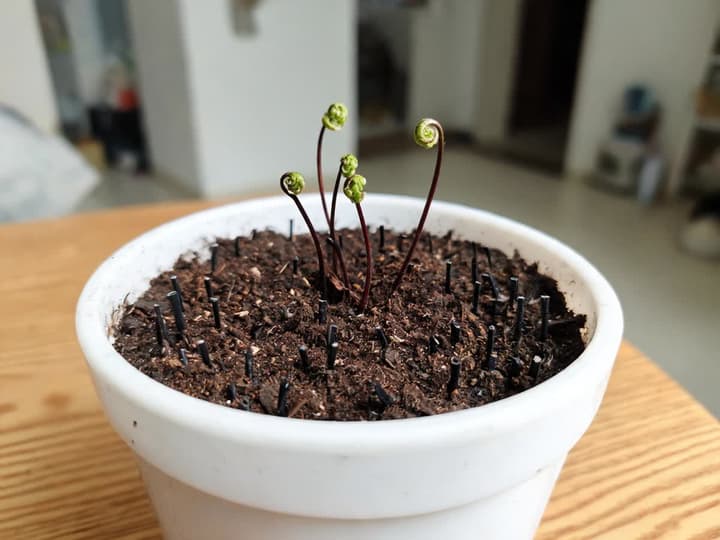
The New York Botanical Garden mentions a few weeks until resprouting. No source gives a deadline to give up: as long as the rhizome remains firm, it is worth continuing to water and wait. To separate the causes by symptom, see dry tips on maidenhair fern and the other plant problem pages.
Pests and diseases of the maidenhair fern
The maidenhair fern has few pests. For the common maidenhair fern and the southern maidenhair fern, NC State does not record any significant disease or pest and cites only a caterpillar that eats fern leaves. For the brittle maidenhair fern, it cites mites, aphids, and root rot in waterlogged soil. Clemson points to scale insects and mites on indoor ferns.
Scale insects appear as hard, brown dots stuck to the black stem, not on the edge of the leaflets like spores. Remove the scale insects with a cotton swab; the guide on how to get rid of scale insects explains the treatment.
The maidenhair fern's constantly moist soil also attracts fungus gnats, small black flies that fly around the pot. The larvae live in the top few centimeters of the moist soil. The fungus gnat guide starts with the same watering care as the maidenhair fern: let the top soil dry out between waterings.
Is maidenhair fern toxic to cats and dogs?
The maidenhair fern does not appear on the ASPCA list, neither as toxic nor as safe. The ASPCA is an American animal protection organization that maintains a list of toxic and non-toxic plants. The list has no profile for any plant in the genus Adiantum. The lack of a record does not guarantee that the plant is safe.
Keep maidenhair fern out of reach of cats and dogs and, if your pet eats the plant, call the vet. To find out which household plants are actually dangerous, see the list of toxic plants for dogs and cats.
Frequently asked questions about the maidenhair fern
Can you keep a maidenhair fern indoors?
Yes, you can. Indoors, it is easier to protect the maidenhair fern from direct sun and wind. It needs humid air and a bright room, near a window without direct sun (in Brazil, a south-facing one) or an east-facing window with a sheer curtain. NC State cites the maidenhair fern as an indoor plant that does well in a bright bathroom.
What is the best place in the house for a maidenhair fern?
The best spot is a bright room, without direct sun on the leaves, away from drafts and with humid air. A bathroom with a window and a shower used every day works well, as does a corner of the living room with a humidifier. In any room, keep the maidenhair fern away from open windows.
Is the maidenhair fern a fern?
Yes. The maidenhair fern is a fern in the Pteridaceae family, according to NC State. Like other ferns, it does not produce flowers and reproduces by spores. It grows in the ground from a rhizome close to the soil surface, not attached to trees.
Why is my maidenhair fern drying out?
Maidenhair fern dries out when the soil at the bottom of the pot dries out, when the air is dry, or when wind hits the fronds. Direct sun also burns the small leaves. If the soil was moist and the fronds dried out, look for drafts or air conditioning near the plant.
What to do today with your maidenhair fern
Stick your finger into the soil before the next watering. Then check if direct sun or wind reaches the leaves where the pot sits. If the maidenhair fern has already dried out, cut back the dried fronds level with the soil and keep the soil moist as long as the rhizome remains firm.
Related articles
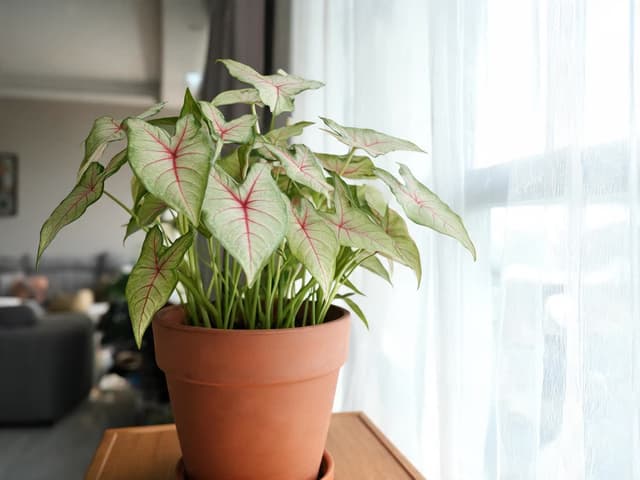
How to Care for Syngonium: Light, Watering, Cuttings, and Pests
How to care for syngonium indoors: bright indirect light, watering when the soil surface dries, 64 to 81°F (18 to 27°C), and 40 to 60% humidity. Also cover water cuttings, thrips, yellow leaves, and pet toxicity.
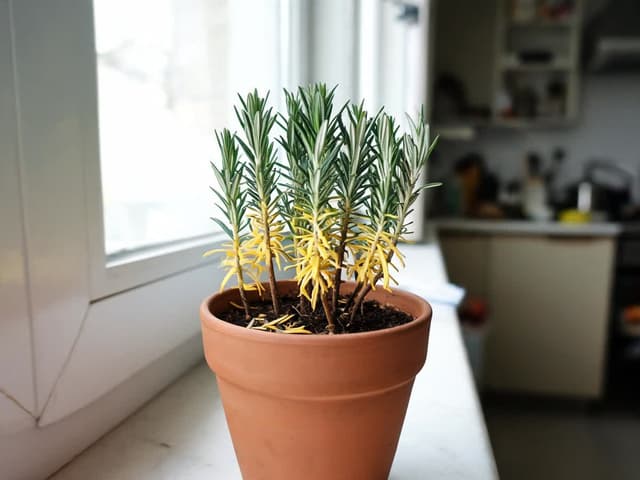
Rosemary Leaves Turning Yellow: Causes and Solutions
Rosemary with yellow leaves usually has overly wet roots. Check where the yellowing appears to see if it stems from wet roots, low light, spider mites, powdery mildew, or normal leaf shed, and learn how to save the plant.
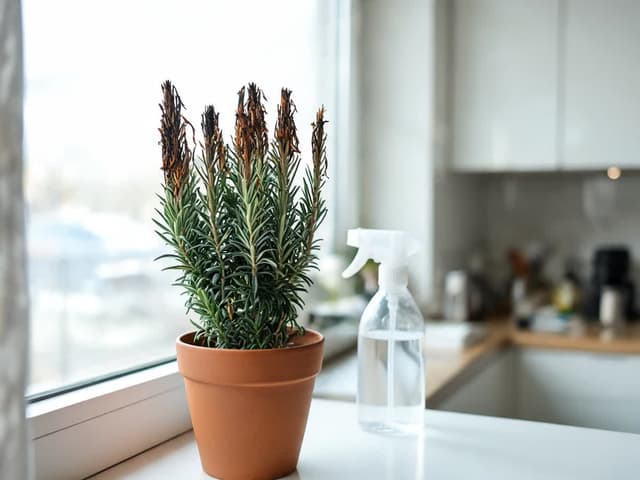
Is Your Rosemary Dying? How to Save Soap-Burned Rosemary
Rosemary with soap-burned leaves can usually be saved: the damage stays on the affected needles. Rinse the leaves, wait a week, scrape the stems, and prune only what is brown inside.