How to water aloe vera: how much water, where to pour, and which pot
Water aloe vera soil slowly until water drains from the drainage hole, empty the saucer, and do not wet the center of the rosette. Learn which water to use, why bottom watering is not recommended, and what to do if your aloe turns soft.
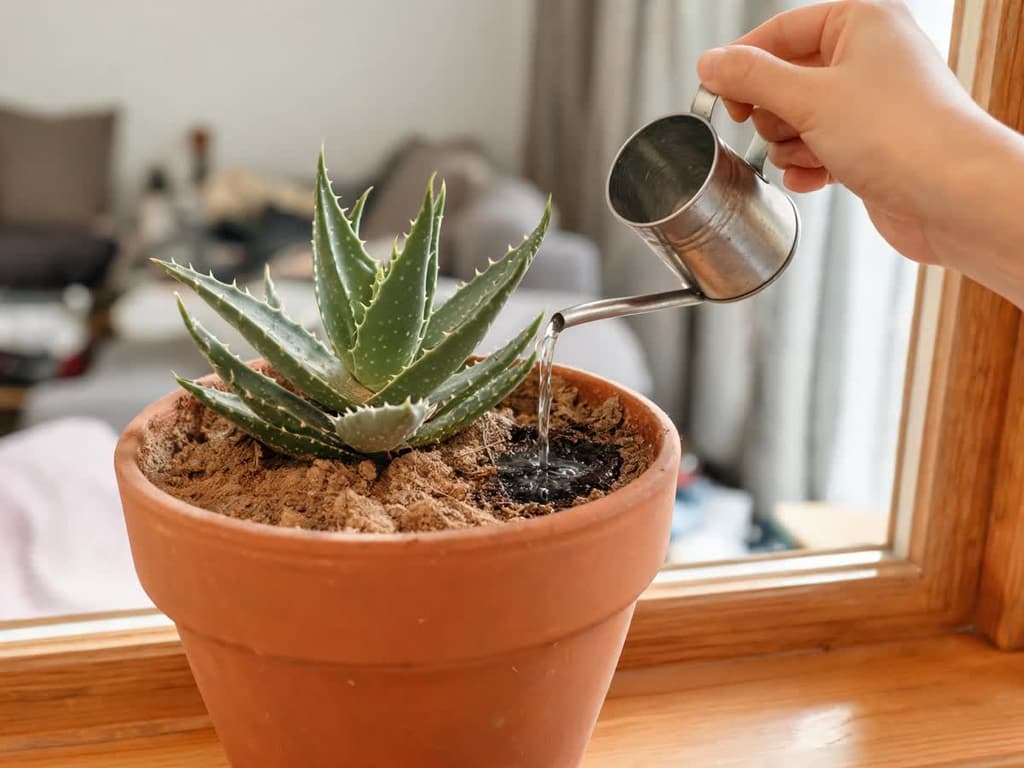
To water aloe vera (Aloe vera), pour water slowly onto the potting soil until it runs out the drainage hole at the bottom. Water the soil around the plant, not the center of the leaf rosette. After 10 to 20 minutes, discard any water left in the saucer.
Water again only when the soil is completely dry all the way to the bottom of the pot. Aloe vera handles drought well and rots in standing water. Because of that, a pot with a drainage hole and free-draining soil matter more than any calendar.
Quick summary:
Amount: water until it runs out the hole, thoroughly wetting all the soil. Giving just a little water at a time wets only the top layer.
Where: from the top, onto the soil, keeping the watering can spout away from the center of the plant.
Saucer: empty 10 to 20 minutes after watering. Standing water in the saucer can cause root rot.
Water: tap water works. For succulents, rainwater is ideal, but no source on aloe vera requires it.
Pot: always with a hole in the bottom. Stones at the bottom do not replace a drainage hole.
Winter (June to August in Brazil): water less, just enough so the leaves do not wrinkle.
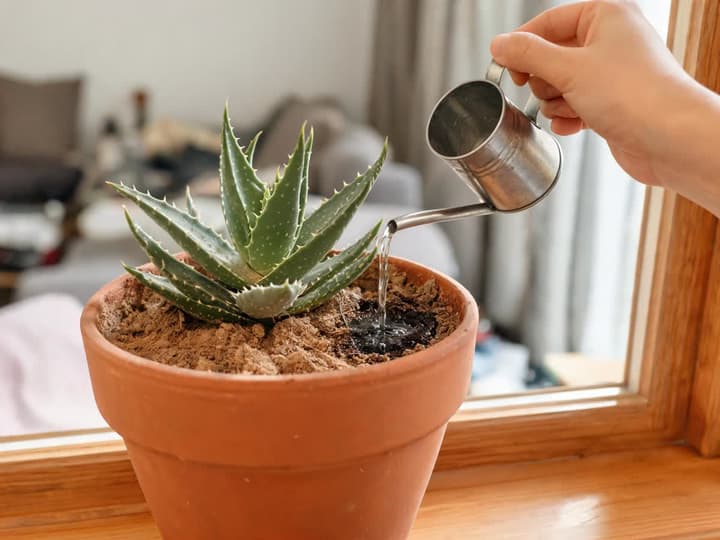
How much water to give aloe vera at each watering
Water until water comes out the hole in the pot, thoroughly wetting all the soil. Iowa State University Extension (Iowa State) calls this method a wet-and-dry cycle. An extension is the service a university uses to advise the public on plants. You wet the entire root ball (the block of soil containing the roots) until it drains. Then, wait for the soil to dry completely before watering again (Iowa State).
The opposite advice exists: give aloe vera only a little water, more frequently. The argument is that it stores water in its leaves and does not need much. The University of Maryland Extension indicates the opposite. Every watering needs to wet the entire soil to avoid leaving dry pockets, and excess water needs to run out the hole (Maryland).
This guide follows watering until water drains. None of the 14 university extensions and horticultural societies consulted recommends watering lightly and frequently. With only a little water at a time, the top layer of soil stays damp almost constantly. The bottom part, where the roots sit, stays dry.
The volume of water depends on the pot size. The signal that it is enough is water flowing out the bottom hole. Other succulents in the home require the same soak-and-drain method, and the guide on how to water succulents shows how to check whether the soil has dried at the bottom.
Top watering vs. bottom watering for aloe vera
Water from above, directly onto the soil. For most houseplants, the University of Wisconsin Extension recommends a narrow-spout watering can pointed at the soil (Wisconsin). The narrow spout lets you place the water near the rim of the pot, away from the leaves.
None of the consulted extension services cover bottom watering for aloe vera or other succulents. Bottom watering has two problems. The first is the amount of time the pot sits in water. A cachepot is the outer decorative pot. According to Iowa State, water should never sit in the saucer or cachepot for more than a few hours (Iowa State).
The second problem is salt from fertilizers and water, which forms a white crust on the soil. The North Carolina State University Extension (NC State) teaches how to remove this salt with water running slowly through the soil for several minutes (NC State). Water that rises from the saucer does not pass through the soil from top to bottom. None of the sources consulted tested whether it washes the salt away, so watering from the top is the safer option.
If you still water from the bottom, remove the leftover water as soon as the soil surface darkens. Never leave the pot sitting in water for more than a few hours.
The saucer also needs to be emptied after watering from the top. NC State gives three reasons to remove water from the saucer. Removing the water prevents root rot and salt buildup, and stops mosquitoes from breeding there (NC State). For houseplants in general, Wisconsin suggests waiting 10 to 20 minutes for the water to drain and then emptying the saucer (Wisconsin).
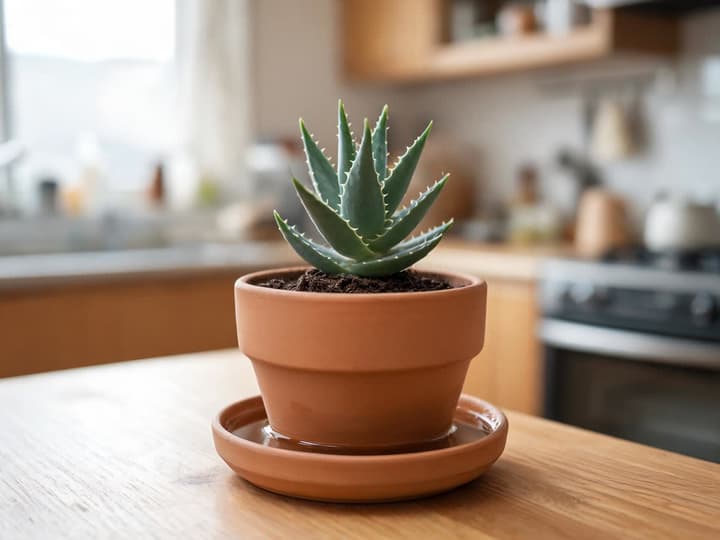
Why you should not wet the center of the aloe vera rosette
The rosette is the circle of leaves that grows from a single point in the center of the plant. The crown is this center of the rosette, the point where the leaves emerge. According to the Texas A&M University plant disease handbook, bacterial soft rot of aloe appears to start in the crown, where water collects (Texas A&M).
Because of this, point the watering can at the soil, right along the rim of the pot, and work your way around the pot until all the soil is wet. If you accidentally wet the center, gently tip the pot so the water runs out from between the leaves.
What kind of water to use for aloe vera
Tap water works. None of the consulted sources on aloe vera call for another type of water. For cacti and succulents, the Royal Horticultural Society of the United Kingdom (RHS) recommends tepid rainwater as ideal. The same page states that minerals in tap water can build up in the soil to harmful levels (RHS).
Over time, salts from water and fertilizer build up. They form a white crust on the soil surface or the rim of the pot. When it appears, water slowly for several minutes, letting the water run through the pot and out the hole, as instructed by NC State (NC State).
For houseplants, Wisconsin recommends letting tap water sit for at least 24 hours in an open container. That way, chlorine evaporates before watering (Wisconsin). This is a measure for houseplants in general. There is no specific recommendation for aloe vera.
Pots with drainage holes and well-draining soil
The pot needs a drainage hole at the bottom. Aloe vera in a pot without a hole leaves the roots sitting in water after every watering. Iowa State accepts ceramic, clay, plastic, or glass pots, as long as they have a drainage hole. It also states that a layer of gravel at the bottom of the pot does not replace a drainage hole (Iowa State).
A decorative pot without a drainage hole (a cachepot) works only as an outer cover. Plant the aloe vera in a pot with a drainage hole and place that pot inside the cachepot. Leave space between the hole and the bottom of the cachepot so water can drain (Penn State). After each watering, take the pot out of the cachepot and pour out the water that collected at the bottom.
An unglazed clay pot dries faster than a plastic one because the porous wall loses water. NC State says this is an advantage for cacti and succulents (NC State). When repotting, choose one only slightly larger than the old one. A pot that is too large holds too much water and encourages root rot (UF/IFAS).
Standard potting soil holds too much water for aloe vera. A mix with coarse sand or perlite and the drainage test can be found in the complete guide to caring for aloe vera. The same quick-drying soil works for other succulents, as explained in the guide to caring for succulents.
Misting aloe vera
Do not mist aloe vera. Aloe vera does not need extra humidity, according to South Dakota State University (SDSU) Extension. According to SDSU, indoor air, especially dry winter air, is ideal for aloe vera (SDSU). For houseplants in general, NC State says misting increases air humidity only briefly. The same source points to wet foliage as an important cause of bacterial leaf diseases (NC State).
Aloe vera outdoors in the rain
Most aloes, the plant group aloe vera belongs to, tolerate frequent rain when the soil drains very well, especially during warm months. In cold, overcast weather, keep the soil drier, including in winter, when the plant grows less (Wisconsin). Planted directly in garden soil and once established, aloe vera can survive on rainfall alone in the Florida climate (UF/IFAS).
During the rainy season, remove the saucer from under outdoor pots. A saucer full of rainwater leaves the roots waterlogged for days and becomes a breeding ground for mosquitoes (NC State).
During a rainy week, do not water outdoor aloe vera. If the rain comes with cold temperatures and overcast skies for several days, bring the pot indoors. Keep it in a bright spot until the weather improves, as recommended by Wisconsin.
When to water aloe vera again
Water again only when the soil has dried all the way to the bottom of the pot. To check, push a wooden skewer down to the bottom: if it comes out with moist soil sticking to it, wait longer. The interval in days changes with pot size, light, and season. The guide on how often to water aloe vera details the interval for each pot size, light condition, and season. Cacti follow the same dry soil rule, but with their own intervals, as shown in the guide on how often to water a cactus.
In the cold months, which in Brazil run from June to August, aloe vera grows less and uses less water. The Pennsylvania State University Extension (Penn State) instructs to reduce watering during this period. Keep the soil only slightly moist, just enough so the leaves do not shrivel (Penn State). In cold weather, this lighter watering replaces watering until it drains.
The watering schedule in Bloom tracks when to check each plant's soil. It is included in the free tier of the app.
Watering aloe vera after repotting or separating offsets
After repotting aloe vera or planting a separated offset, wait about a week before the first watering. Sources differ on this point. Iowa State advises watering lightly right after repotting succulents (Iowa State). Montana State University Extension directs waiting a week when the roots are damaged during repotting (Montana State). The University of California, Davis says that watering succulents right after repotting leads to rot (UC Davis).
Penn State PlantVillage, by contrast, advises watering newly planted offsets well, without overdoing it (Penn State PlantVillage). This guide follows the one-week wait, because that is the recommendation from the two succulent-specific sources that address damaged roots. A week without water does not harm a plant that stores water in its leaves.
Soft aloe vera or a translucent base: overwatering or underwatering?
Gently press the base of the plant, the point where the leaves emerge, and feel the soil. A soft, brown, translucent-looking base with moist soil indicates rot caused by overwatering. Wrinkled, wilting leaves that are not waterlogged, paired with soil that has been dry for days, indicate underwatering.
Soft leaves are deceptive because both overwatering and underwatering cause them to lose their firmness. With underwatering, the leaves become wrinkled and wilted, and the plant recovers after a watering (SDSU). With rot from overwatering, the leaf becomes waterlogged and darker, and new leaves wilt and collapse (Penn State PlantVillage). One or two bottom leaves drying up on a plant that is growing well is normal, according to Iowa State (Iowa State).
Root rot caused by overwatering cannot be treated and can kill the plant if not caught early (SDSU).
Because there is no cure, the solution is to salvage what remains firm. If only part of the base is soft, unpot the plant and cut away the rotten tissue. Repot in dry soil, as shown in the aloe vera care guide. If the entire base is soft, the mother plant will rarely recover, but firm surrounding offsets can become new plants.
After any salvage, the first watering follows the same rule as repotting: wait one week without water.
Frequently asked questions about watering aloe vera
How do I know if my aloe vera needs water?
Insert a wooden skewer down to the bottom of the pot. If it comes out clean and dry, water until water flows from the drainage hole. If it comes out with moist soil sticking to it, wait. Wrinkled lower leaves with soil that has been dry for days also indicate thirst. Aloe vera bounces back after a thorough watering.
Can I water aloe vera every day?
No. Aloe vera stores water in its thick leaves, and wet soil every day can rot the roots. The right watering approach is spaced out and thorough: water until it runs out the drainage hole, and water again only when the soil dries completely to the bottom of the pot. Giving a little water every day leaves the top soil layer perpetually damp.
Can you bottom water aloe vera?
No university extension consulted recommends this method for aloe vera. Top watering is the safest option. Water runs through the soil and out the drainage hole, flushing salts away, as NC State points out. If you do bottom water, discard excess water as soon as the soil surface darkens, and never leave the pot sitting in water.
Does aloe vera need rainwater?
It does not. Tap water works fine for watering aloe vera. For cacti and succulents, the RHS notes that tepid rainwater is ideal. If a white crust appears on the soil, water slowly for several minutes, allowing water to flush through the hole to wash away salts.
In summary
Watering aloe vera means soaking all the soil until water runs out the drainage hole, emptying the saucer, and waiting for the soil to dry to the bottom. Water in the center of the rosette, a full saucer, and a pot without a drainage hole are the three main causes of rot. In cold weather, water less; during a rainy week, do not water outdoor aloe vera plants.
Bloom creates a watering schedule tailored to every plant in your home and is available for iPhone and iPad.
Sources
Iowa State University Extension: Common Problems and Issues with Succulents
University of Maryland Extension: What causes aloe leaves to turn yellow? (2023)
NC State Extension Gardener Handbook, ch. 18: Plants Grown in Containers
Royal Horticultural Society: Cacti and succulents as houseplants
UF/IFAS Extension Charlotte County: Aloe, easy going growing (2025)
Related articles
How to Care for a Goldfish Plant: Light, Watering, and Blooms
How to care for a goldfish plant: bright light without strong sun, water when the soil surface dries, and humid air. Learn how to tell a Nematanthus from a Columnea, why it drops leaves, and how to get it to bloom again.
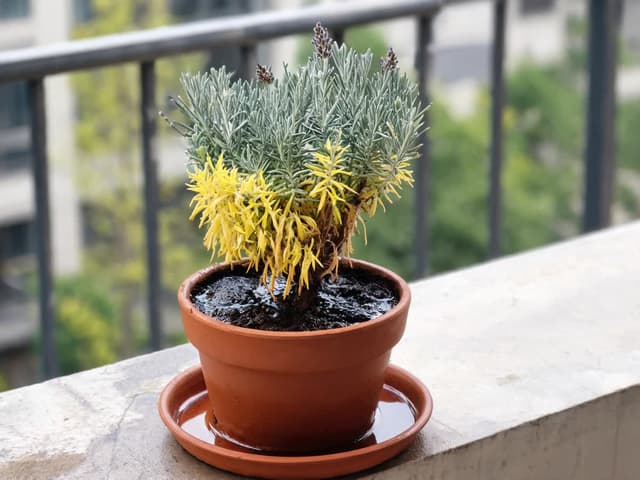
Lavender Leaves Turning Yellow: Where the Yellowing Starts Shows the Cause
Lower leaves turning yellow with moist soil means overwatered roots, the most common cause. Old leaves drying one by one on woody stems is normal. Take the stem and root test, see if your plant can still be saved, and find out what to do today.
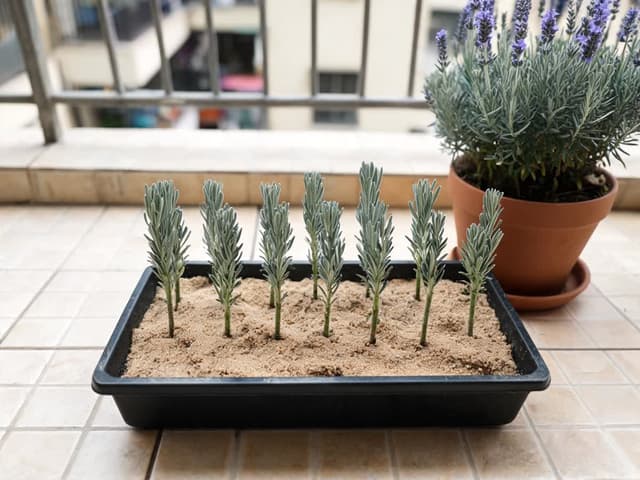
How to Propagate Lavender: Where to Cut and Why Cuttings Rot
A lavender cutting comes from a non-flowering branch tip, about 4 inches long, planted in sandy soil that never stays soggy. Learn where to cut, rooting times, seasonality in Brazil, and what to do if the base turns black.