Aloe Turning Yellow: Where It Yellows and How the Leaf Feels Reveal the Cause
An aloe turning yellow one outer leaf at a time is normal. A soft, yellow leaf with a dark base means standing water. A firm, orange leaf means too much sun at once. Here are the three questions that separate the causes and how to save an aloe from rot.
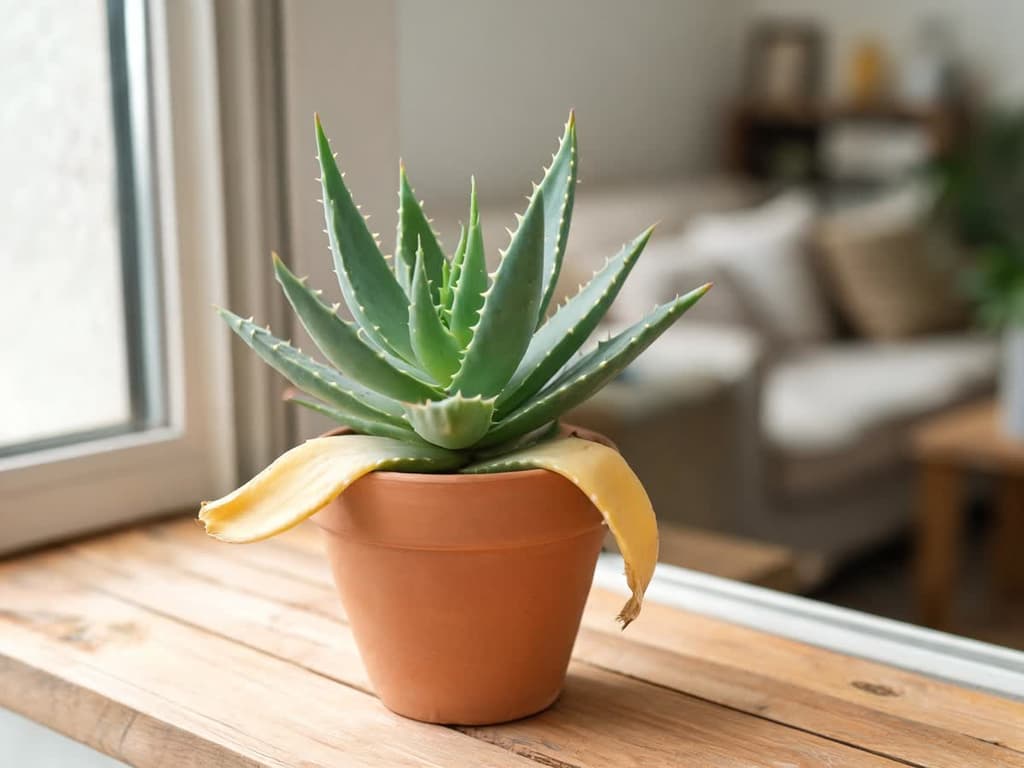
An aloe turning yellow has usually received too much water. A soft, yellow, almost translucent leaf, with the potting soil still damp, is the most common sign of suffocated roots. Before changing your watering routine, check where the yellowing is. A single outer, older leaf turning yellow on its own while the center pushes out new growth is the normal leaf turnover of aloe (Aloe vera).
A pale-yellow leaf will not turn green again. An orange or reddish, firm leaf appears after moving the plant to a spot with more sun. It is a light reaction, and the color fades when sun exposure decreases. What separates the causes are three questions, in this order: where it turned yellow, how the leaf feels to the touch, and what the color is.
Three questions that separate the causes of yellow aloe vera
1. Where is the yellow? Aloe vera grows in a rosette (the leaves all radiate from the center in a circle). New leaves emerge in the middle and older leaves remain on the outside, at the bottom. Each location points to a different cause:
One outer leaf, the lowest one: aging. If the center is green and firm, this is normal.
Several outer leaves at the same time, starting from the base: root trouble, almost always from standing water.
The base of the leaves, right at soil level, dark and soft: rot. This is the urgent situation covered in this article.
Only the leaves facing the window, or just the tips: light that is too intense.
The entire plant pale, with thin leaves flopping over: not enough light.
2. How does the leaf feel to the touch? Gently squeeze the yellow leaf between two fingers without forcing it. Soft, watery, or almost translucent indicates excess water or rot. Firm and plump indicates sun. Thin, shriveled, and wrinkled indicates lack of water, which is far less common in aloe vera. In that case, water until it drains from the pot hole and only water again once the soil is dry all the way to the bottom.
3. What is the color? Pale yellow, straw-colored, is a loss of chlorophyll (the leaf's green pigment): the leaf will not become green again. Orange, copper, or reddish with a firm leaf is, most likely, a protective pigment against light, and it disappears when sun exposure decreases. Beige or white that later turns into dry brown is burned tissue, and that mark remains permanently.
Map of causes for an aloe vera with yellow leaves
What you see | Probable cause | What to do |
|---|---|---|
One outer leaf turning yellow, center green and firm | Old leaf being replaced | Nothing. Cut it off when it is completely yellow or dried out |
Several yellow, soft leaves, damp soil | Standing water at the roots | Stop watering; if the leaves stay soft, unpot the plant and inspect the roots |
Dark, soft, mushy base, foul odor | Rot | Unpot today and trim away the rotted part |
Orange or reddish, firm leaves | Intense sun too suddenly | Move out of direct midday sun and increase sun gradually |
Beige or white patches that dry out and darken | Sunburn | Protect from strong sun; the mark is permanent |
Pale plant, thin, stretched leaves flopping over | Not enough light | Move close to a sunny window |
Soft, dark leaves after a cold night | Cold damage | Move away from the cold and do not water until the soil dries |
Outer leaves turning yellow gradually, pot crowded with pups | Nutrient deficiency or cramped pot | Fertilize once, lightly, or separate the offsets |
Outer leaf turning yellow one at a time: the aloe is shedding old foliage
Every plant loses older leaves from time to time, because they contribute less and less to the plant and accumulate minor damage (University of Maryland Extension). Before the leaf drops, the plant withdraws part of the nutrients stored in it. In aloe vera, this turnover shows up as an outer, lower leaf turning yellow and then withered and dry, while the center pushes out new green growth.
One leaf at a time over several weeks requires no change in care. Cut the leaf once it has turned completely yellow or dried out. Use a clean knife and cut close to the base without injuring the short stem where the leaves emerge. A partly green leaf is still producing food for the plant, so wait.
The diagnosis changes when multiple leaves turn yellow together over a few days, or when the yellow leaf feels soft. That is not a sign of aging: the root cause lies in the roots, the lighting, or the cold.
Yellow, soft, almost translucent leaf: standing water at the roots
A yellow leaf that yields to the touch and looks watery indicates excess water, especially if the soil stays moist days after watering. Waterlogged soil lacks air, suffocating the roots and preventing them from taking up water and nutrients for the leaves. According to the University of Maryland Extension, with fewer healthy roots, the plant cannot support all its leaves. It sacrifices the oldest, bottom leaves first.
Alternating between underwatering and overwatering will not solve it: diseased roots cannot make use of extra water. Stop watering and let the soil dry out completely to the bottom of the pot. UF/IFAS considers it fine to water when just the top inch has dried, but for an aloe that has already turned yellow and soft, follow the safer rule: bone-dry soil down to the bottom. The guide on how to care for aloe vera shows the skewer test: slide a wooden skewer all the way to the bottom of the pot; the soil is only dry if it comes out completely clean. That same guide explains the right pot for proper drainage.
A pot that is too large also keeps the soil wet for too long, because small roots cannot consume all that water. When repotting aloe vera, do not go up more than two pot sizes at once (UF/IFAS Gardening Solutions). Standing water in the saucer also keeps the soil wet: empty the saucer right after each watering.
Dark, soft base with an odor: the aloe vera is rotting
A spot starting at the base of the leaves, right against the soil, with the pulp turning into a dark, foul-smelling slime, is rot. In an aloe vera plantation in India, a bacterium caused soft rot, where the leaf tissue rots and turns into a slimy mass. It began as water-soaked spots at the base of the leaves, and the entire plant died in 2 to 3 days. The disease was severe when there was excessive moisture from watering or rain (Mandal and Maiti, 2005, New Disease Reports).
A yellow, soft leaf with a firm base still points to overwatering. A dark, soft base means rot, with or without an odor, and rescue action must happen the same day.
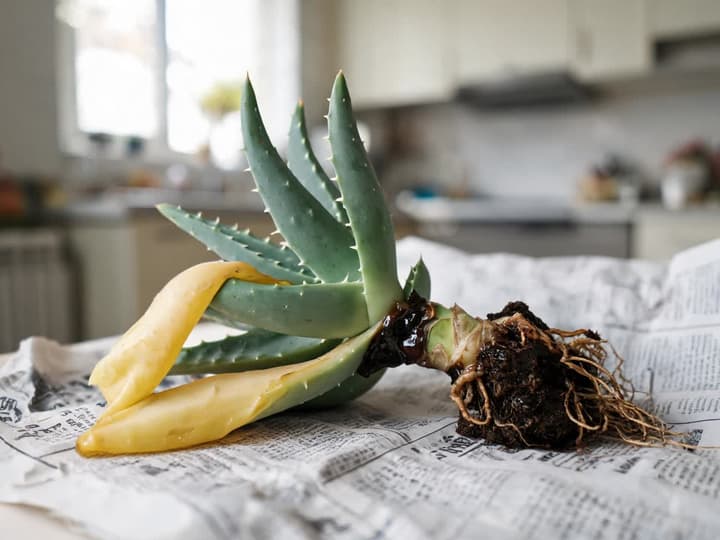
How to save an aloe vera from rot, step by step
Aloe vera has a good chance of survival if the center of the rosette is firm and green. It also needs at least some pale, firm roots remaining, or an unblemished stem. If the center is already soft and dark, the mother plant will not recover. Even then, healthy pups around the base can be grown into new plants.
Remove the plant from its pot and gently clean away the wet soil using your hands.
Trim off everything that is soft, dark, or foul-smelling: leaves, roots, and affected stem sections. Use a clean knife and cut back until you reach pale, firm tissue.
Let the plant air-dry for 2 to 3 days in the shade until the cuts form a dry callus. This is the same drying time the aloe vera care guide recommends for pups before planting. None of the consulted sources measured this timeline specifically on rotted plants.
Pot into fresh, dry succulent mix, choosing a container with drainage holes sized to the remaining root mass. Do not reuse the old soil.
Do not water during the first week. After that, water only when the potting mix is dry all the way to the bottom.
Ground cinnamon on cuts appears in many home remedies. None of the consulted sources measured the effect of cinnamon on aloe vera. Without measured data, consider cinnamon optional and do not skip drying the cut surface (step 3). If the mother plant is beyond saving, separate any healthy offsets that have at least three leaves and roots, let the cut surface dry for 2 to 3 days, and plant each in a small pot with succulent potting mix.
Leaves that have already turned yellow will not turn green again. The rescue is successful once a new leaf emerges from the center firm and green, which can take weeks because aloe vera grows slowly.
Orange or reddish, firm aloe vera: too much sun all at once
An orange, copper, or reddish leaf that stays plump and firm has received more sun than it was adjusted to. UF/IFAS from the University of Florida notes that aloe vera can scorch when moved too quickly from low light to high light. The classic situation is a plant moved outdoors from inside the house directly onto a balcony or sunny patio.
In a close relative, Aloe arborescens, strong sun or sun combined with drought caused the leaves to accumulate a red pigment, rhodoxanthin. The authors argue that this pigment may protect the leaf against strong light (Merzlyak and colleagues, 2005). No one has measured this pigment in aloe vera, so the explanation is likely, not proven. The aloe vera care guide states that, if the leaf remains firm, the color fades when sunlight decreases.
A beige or whitish patch that dries out and turns brown is actual sunburn: the tissue died and the scar will not go away. It usually appears on the tips and the sides of leaves facing the sun directly.
Move the plant to a very bright spot away from direct midday sun, and increase direct sun gradually over a few weeks. In Brazil, as in the entire southern hemisphere, a north-facing window receives the most sun for most of the year.
Pale, stretched, drooping aloe vera: not enough light
An aloe vera that is entirely pale, with thin, elongated, and flopping leaves, is not getting enough light. According to the University of Maryland Extension, too much light indoors is rare, and too little light is far more likely. According to the same source, it grows best with a few hours of direct sun near a window or under a dedicated grow light for plants. The aloe care guide suggests morning sun or bright light filtered through a sheer curtain as the safest way to start.
In a 12- to 18-month experiment, aloe veras grown in deep shade received 10% of full sunlight. They developed only 13% of the root dry mass of plants in full sun (Páez and colleagues, 2000).
Move the aloe near the brightest window in your home, introducing direct sun gradually over several weeks to avoid scorching the leaves. A pale, stretched leaf will not regain its original compact shape. The newest leaf in the center will show whether the light is now sufficient: it should emerge firm and green.
Cold: soft, dark leaves after a cold night
A soft, dark, or water-soaked leaf right after a cold night indicates cold damage, especially if the soil was wet. In cultivation, the minimum temperature aloe vera can withstand is 3 °C below zero, and it tolerates up to 2 consecutive months at 4 °C or lower (Frontiers in Plant Science, 2016). The danger lies in combining cold and wet soil: a dry plant endures, a waterlogged plant rots.
In Brazil, winter runs from June to August. During these months, space out waterings, and at night, move the pot away from window glass and doors leading outside. If only the leaf is soft and the base is firm, wait for the leaf to dry out before cutting it. If the base darkens, treat it as rot, following the step-by-step instructions to save the aloe vera.
Fertilizer, cramped pots, and pests
Nutrient deficiency is a possible cause, but less common. For an aloe that has gone many months without fertilizer, the University of Maryland Extension suggests a single light feeding. Choose a fertilizer where the first of the three numbers on the label is the highest, such as 10-5-5. That number represents nitrogen, the N in the N-P-K ratio. Follow the packaging instructions. An aloe that has filled its pot with offsets is sharing scarce soil with all of them: dividing the pups provides more soil volume for each plant.
NC State Extension lists three aloe vera pests: mealybugs, aphids, and scale insects. The first resembles white cotton at the base of the leaves, and the last looks like small brown shells stuck to the leaf. Maryland recommends controlling the pest before fertilizing, to avoid feeding the insects alongside the plant.
Can you use the gel from a yellow aloe vera leaf?
A yellow and soft leaf, or one showing any sign of rot, belongs in the trash: do not use the gel. For a leaf that is yellow but still firm, none of the consulted sources evaluated whether the gel's composition changes. The safe approach is to harvest gel solely from green, firm leaves.
The yellow sap that drains from the cut of any leaf, green or not, is not a sign of disease. It is the aloe latex, where aloin is located, a substance that the study found only in the latex and not in the gel (Páez and colleagues, 2000). According to the NC State Extension, this latex can irritate the skin. For this reason, let the cut drain before using the gel and test it on a small area of skin.
Aloe vera is toxic to dogs and cats: the ASPCA lists vomiting, lethargy, and diarrhea when the animal eats the leaf (ASPCA). Dispose of cut leaves out of reach of pets.
Frequently asked questions
Should I cut off the yellow leaf on my aloe vera?
Yes, once it is entirely yellow or dried out. Cut close to the base using a clean knife. A leaf with a dark, soft base must be removed immediately because it indicates rot. A yellow, soft leaf with a firm base should be left to dry before cutting. A leaf that is still partly green and firm continues nourishing the plant: wait until it dries out. Discard trimmed leaves out of reach of dogs and cats.
Will a yellow aloe leaf turn green again?
It depends on the color. A pale-yellow leaf has lost its chlorophyll and will not recover, even once the underlying issue is fixed. An orange or reddish, firm leaf caused by intense sun regains its green shade when light exposure decreases. In both cases, the new center leaf shows if care conditions were corrected: it must emerge firm and green.
How long does an aloe vera take to recover?
Aloe vera grows slowly, and even more slowly in winter. After correcting watering or lighting, expect several weeks before the first firm new leaf appears in the center. In the meantime, the sign that your corrections worked is that the plant stops deteriorating: no new leaves softening and the base remaining firm.
How often should you water aloe vera to prevent yellowing?
There is no set schedule: the soil decides. Water only when it has dried out all the way to the bottom of the pot, and pour water until it drains out through the hole. Afterward, empty the saucer. In winter, soil takes longer to dry, so waterings are spaced further apart. The guide on how to care for aloe vera explains the skewer test to confirm when the soil is dry.
The first step with your aloe vera
Start with the location of the yellowing. One outer leaf at a time with a green center: trim it once it dries out. Multiple soft leaves with damp soil: stop watering and inspect the root system. A dark base with an odor: unpot today. Orange, firm leaves: provide less direct sun, and the foliage will return to green.
The yellow leaves on aloe vera guide in Bloom compiles other causes, from fungi to scale insects, along with treatments for each. The watering and potting rules for aloe vera apply equally to other houseplants in the succulent family. You can find them in the guide to succulent care and how to water succulents. The cactus guide follows the same logic of waiting for the soil to dry. Aloe vera is native to the mountains of northern Oman, and the Aloe vera profile details this native habitat and related species.
On nearly every houseplant, the position of a yellowing leaf is the first clue to the cause. The guide on yellow leaves applies this diagnostic test to other species. When the symptoms go beyond yellowing, the guide what is wrong with my plant organizes signs for any potted specimen. If you still have doubts between rot and sun stress, a photo of the base of your plant in the Bloom app (iOS, diagnosis on the Premium plan) provides the most probable diagnosis.
Related articles
How to Care for a Goldfish Plant: Light, Watering, and Blooms
How to care for a goldfish plant: bright light without strong sun, water when the soil surface dries, and humid air. Learn how to tell a Nematanthus from a Columnea, why it drops leaves, and how to get it to bloom again.
Lavender Leaves Turning Yellow: Where the Yellowing Starts Shows the Cause
Lower leaves turning yellow with moist soil means overwatered roots, the most common cause. Old leaves drying one by one on woody stems is normal. Take the stem and root test, see if your plant can still be saved, and find out what to do today.
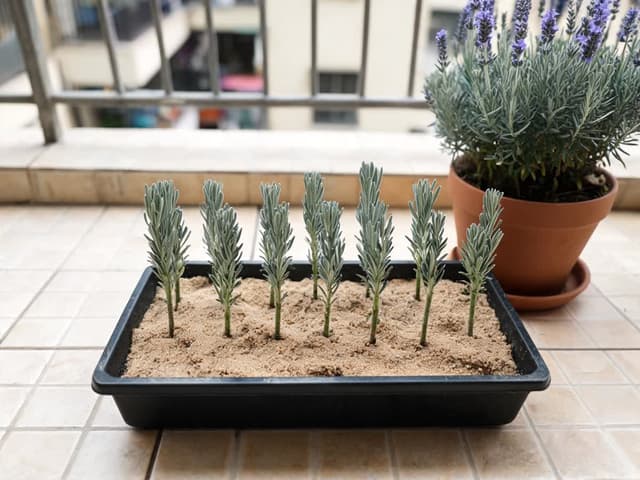
How to Propagate Lavender: Where to Cut and Why Cuttings Rot
A lavender cutting comes from a non-flowering branch tip, about 4 inches long, planted in sandy soil that never stays soggy. Learn where to cut, rooting times, seasonality in Brazil, and what to do if the base turns black.