How to Water Amaryllis: Proper Watering for Every Bulb Stage
How to water amaryllis from planting to dormancy: water once and wait for the sprout, keep soil moist during bloom and foliage, stop watering for dormancy, and keep the neck dry.
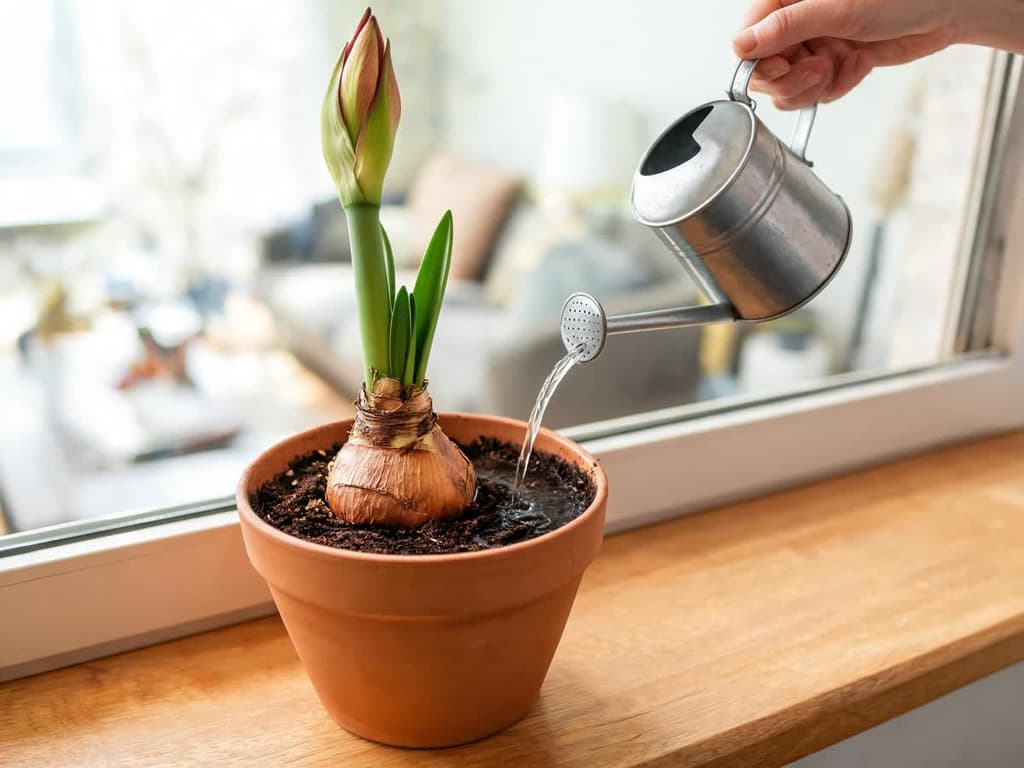
To know how to water amaryllis, first figure out which stage the bulb is in. A newly planted bulb gets one thorough watering and almost nothing until the sprout reaches 2 inches (5 cm). With a scape, flower, or leaves, water when the top layer of soil dries out. In dormancy, which begins when the leaf cycle ends, watering stops and the leaves dry up on their own. In any stage, water goes onto the soil, away from the bulb neck. The neck is the narrow top part where the scape and leaves emerge.
If your amaryllis (Hippeastrum) has a wilted scape and dry soil, stick your finger into the soil. If the top ½ inch (1.3 cm) is dry, water around the edge until water drains out through the hole. Before watering, gently squeeze the base of the bulb. A firm bulb can take watering. A soft bulb is a sign of rot, and more water will make it worse.
Quick summary:
Right after planting, water once until all the soil is thoroughly moist and wait until the sprout reaches 2 inches (5 cm).
With a scape, flower, or leaves, water when the top ½ inch (1.3 cm) of soil feels dry.
After flowering, keep watering: the leaves produce the food that the bulb will use for its next bloom.
During dormancy, stop watering and only resume when the bulb wakes up.
Water the soil around the edge of the pot. Keep the bulb neck above the soil line and dry.
Waxed bulbs get no water. Bulbs in glass stay above the water line, with only their roots submerged.
Bulb stage | How to recognize | How to water | Source |
|---|---|---|---|
Newly planted | Bulb in soil, no sprout | 1 thorough watering, then lightly moist soil until the sprout reaches 2 inches (5 cm) | UF/IFAS, Iowa State |
Scape and bloom | Growing scape or open bloom | Water when the top ½ inch (1.3 cm) dries out | University of Maryland |
Leaves after bloom | Cut scape, green strap-like leaves | Water when the top ½ inch (1.3 cm) dries out | Iowa State, University of Maryland |
Dormancy | End of the leaf cycle; without water, leaves turn yellow and dry up | Stop watering | Iowa State, NYBG |
Waxed | Bulb covered in colored wax | Do not water | Iowa State |
In glass | Bulb resting on the rim of the glass vase | Water level just below the bulb base | University of Kentucky |
Why amaryllis doesn't have a fixed watering schedule
Amaryllis does not have a fixed watering schedule because it is a bulb, and the bulb stores food reserves to grow and bloom. The plant goes through stages throughout the year: sprout, flower, leaves, and rest (dormancy, a period when the bulb rests without foliage). Each stage uses a different amount of water.
How often should you water an amaryllis, then? It depends on the stage, the pot size, and the temperature of your home. A calendar-based routine, such as "once a week," overwaters a bulb that does not have roots yet. And it underwaters a bulb full of leaves in hot weather. Checking the soil with your finger solves both situations.
Newly planted bulb: water once and wait for the sprout
Right after planting, water the soil once, until water drains from the hole in the pot. The University of Florida (UF/IFAS Extension) states that no further watering should be necessary until the bulb sprouts. Iowa State University advises only keeping the soil slightly moist after this first watering. The risk is rot. Without new roots, the bulb does not drink, and wet soil sits around it.
A bulb bought pre-planted in a gift pot requires a quick check before the first watering. Turn the pot over and look for a drainage hole. Iowa State recommends taking the bulb out of a pot without drainage and repotting it into one with a hole, or drilling a hole in the bottom.
Guides differ on when to return to normal watering. German public radio (BR) says to wait until the stalk reaches a hand's height; German public television (NDR) says 10 cm. UF/IFAS and Iowa State increase watering again once the sprout appears. The University of Maryland Extension waits for 2 to 3 inches (5 to 7.5 cm) of growth. A rootless bulb rots with too much water, so follow the most cautious advice: at 2 inches (5 cm) of sprout, water when the top 1/2 inch (1.3 cm) of soil dries out.
When to water amaryllis during growth and blooming
With the scape growing or the flower open, water when the top ½ inch (1.3 cm) of soil dries out. This is the guideline from the University of Maryland Extension. It calls for regular watering during blooming, keeping the soil moist and never waterlogged. The Royal Horticultural Society (RHS), the British gardening charity, says the same: do not let the soil dry out completely.
The New York Botanical Garden (NYBG) lets it dry out more: the top half of the soil between waterings. We follow Maryland: it is a university extension, and the RHS also says not to let the soil dry out completely.
A German plant retailer (Pflanzen-Kölle) states that amaryllis needs "very little water" during blooming. University extensions say the opposite, and this article follows them. Heat shortens the bloom: Maryland notes that above 65 °F (18 °C), flowering does not last as long. Once the flower opens, move the pot away from direct sunlight and heat sources.
After blooming: watering during the foliage stage
After the flower fades, watering continues. Iowa State recommends cutting the scape 1 to 2 inches (2.5 to 5 cm) above the bulb while keeping the leaves intact. Place the pot in a sunny window and water when the soil surface is nearly dry, meaning when the top ½ inch (1.3 cm) has dried out. In this phase, the leaves produce the stored reserves the bulb will draw on for its next bloom.
Lack of water in this phase can prevent the following year's flower. The RHS lists lack of water during the previous summer among the causes of amaryllis producing only leaves. In Brazil, where amaryllis naturally blooms in spring, the leaf phase falls in summer. With the pot outdoors, Iowa State advises watering whenever the weather is dry.
Amaryllis planted in the garden
In garden soil, amaryllis needs less water once the bulb establishes itself. UF/IFAS recommends keeping the soil of a newly planted bulb moist until it establishes. After that, the plant resists drought and only needs watering during long dry spells.
Dormancy: when to stop watering amaryllis
Stop watering amaryllis when the leaf cycle ends and you want it to bloom again. Iowa State begins the rest period in late September in the Northern Hemisphere, the equivalent of late March in Brazil. Iowa State places the pot in a cool, semi-dark place and cuts off water. The University of Maryland, the University of Wisconsin, and the NYBG also stop watering.
Without water, the leaves naturally turn yellow and dry up on their own. This is dormancy, not disease. The NYBG explains what happens if watering continues: the previous year's leaves remain green, grow awkwardly, and look unattractive. To bloom, the bulb requires temperatures of 50 to 55 °F (10 to 13 °C) for at least 8 to 10 weeks, according to Iowa State.
The RHS outlines a second method: keep the pot in good light at 55 °F (13 °C) with reduced, but not completely withheld, watering for 8 to 10 weeks. One bulb shop (amarylia.com) suggests a light monthly watering during rest, without citing a source. When in doubt, follow the majority of university extensions: dry soil from the start to the end of dormancy.
To wake the bulb, Iowa State waters after the weeks of cold. Then, they move the pot to a bright spot at 70 to 75 °F (21 to 24 °C). The NYBG waits for the tip of the scape to emerge before the first watering. For a bulb without roots, the NYBG method is the safest choice. From that point on, water as you would a newly planted bulb.
How to water amaryllis around the rim without wetting the neck
To water amaryllis without rotting the bulb, pour water onto the soil along the rim of the pot. Do not pour water over the bulb neck. UF/IFAS advises leaving 1/4 to 1/3 of the bulb exposed above the soil specifically to prevent water from collecting in the top.
Stick your finger into the soil to check whether the top ½ inch (1.3 cm) is dry.
Water slowly around the rim until moisture drains out through the bottom hole.
Wait until water stops dripping from the drainage hole and empty the saucer.
Rotate the pot slightly with every watering so the scape grows straight (University of Maryland). While the scape is growing, Iowa State rotates the pot every day.
Care guides differ regarding bottom watering through the saucer. A German gardening magazine (Mein schöner Garten) recommends watering via the saucer and discarding whatever remains. A German retailer (Baldur-Garten) advises against saucers that collect standing water. We follow the RHS, which recommends avoiding standing water in the saucer: water around the rim and empty the saucer afterward.
Do not mist the plant. A German radio station (BR) recommends daily misting until the flower opens. We follow UF/IFAS, which is a university extension. UF/IFAS recommends eliminating overhead watering to manage red blotch (Stagonospora curtisii), a fungal disease that causes red spots on foliage and scapes.
Waxed amaryllis bulbs do not need watering
Waxed amaryllis, the bulb covered in colored wax sold as a gift, gets neither water nor soil. Iowa State explains that the bulb already contains the reserves to bloom once. Place the bulb in a spot with bright, indirect light and let the flower open.
The wax coating prevents the bulb from rebuilding its reserves after flowering. Because of that, Iowa State treats waxed amaryllis as a single-bloom plant. If you want to try growing it again, carefully peel away the wax and plant the bulb in soil, following the watering routine for newly planted bulbs.
Amaryllis in water: keep the water level below the bulb
With amaryllis in glass, water touches only the roots, never the bulb. The University of Kentucky directs resting the bulb 1/8 to 1/4 inch (3 to 6 mm) above the water. Use a glass vase with a narrow neck that holds the bulb up high.
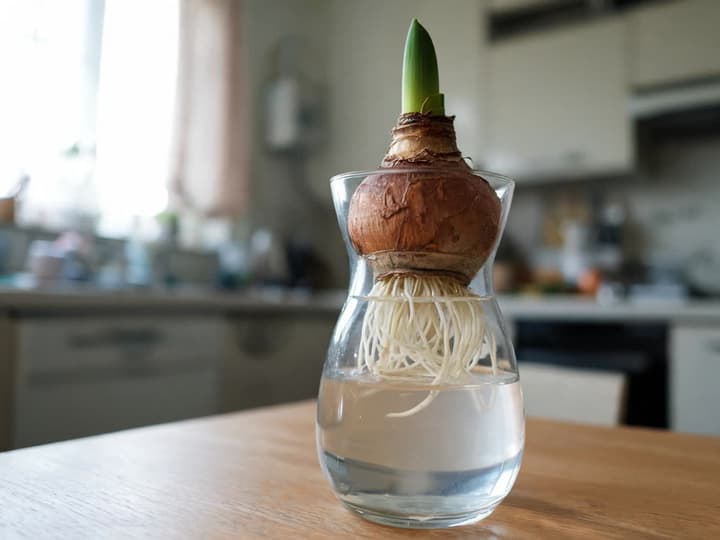
Roots reach down into the water as the bulb wakes up. In bloom, Kentucky advises adding water every 2 to 3 days. The water level sits right below the base of the bulb. With pebbles at the bottom, the University of Vermont Extension fills the glass until the water touches the roots.
Overwatering vs. underwatering amaryllis: how to tell them apart
Overwatering amaryllis shows up in the bulb, while underwatering shows up in the leaves and the subsequent bloom cycle. Before adjusting how you water, gently press the base of the bulb and check the soil with your finger.
Sign | Soil | Likely cause | What to do |
|---|---|---|---|
Bulb soft, sunken, or dark at the base | Moist | Rot caused by overwatering | See the soft bulb section |
Weak, floppy scape | Moist | Low light or overwatering | More light and less water (Chicago Botanic Garden) |
Thin, drooping leaves | Any | Low light | Move to a brighter window (University of Maryland) |
Leaves gradually yellowing after the foliage phase | Dry | Beginning of dormancy | See the dormancy section |
Only foliage, no blooms the following year | Any | Underwatering, overwatering, or low light the prior year (RHS, UF/IFAS) | Water consistently during the foliage phase |
Soft amaryllis bulb base: can it be saved?
Iowa State advises discarding an amaryllis bulb that turns soft at the base. Soft, sunken, or discolored patches on the bulb indicate rot. Bacterial soft rot is one of the causes that leaves the bulb in this state.
A firm bulb in waterlogged soil has not rotted yet: wait to water again only when the top 1/2 inch (1.3 cm) of soil dries out. A scape that falls over along with a soft bulb has the exact same problem. Heat from a heater does not call for more water: the University of Wisconsin notes that heat causes weak scapes and smaller blooms. The page on amaryllis rot covers the signs and treatment.
To find out which disease has affected your bulb, Bloom (available for iOS) provides photo diagnosis through its Premium plan.
Wilted scape with dry soil
A wilted scape paired with dry soil in the top ½ inch (1.3 cm) means the plant needs water. Squeeze the bulb first: if it feels firm, water around the pot rim until water runs out of the drainage hole, then empty the saucer. Do not water again until the top ½ inch (1.3 cm) dries out.
A scape that leans over while the bulb stays firm has a different cause: the sheer weight of the bloom. The University of Maryland advises staking the scape using a gentle tie. Iowa State rotates the pot every day while the scape grows so it does not lean toward the light.
Frequently asked questions
How often should you water amaryllis?
Water your amaryllis based on soil moisture rather than a calendar. When it has a scape, flower, or foliage, water whenever the top ½ inch (1.3 cm) of soil dries out, as recommended by the University of Maryland. Right after planting, give it one watering and almost nothing until the sprout reaches 2 inches (5 cm). In dormancy, provide no water at all. Warm temperatures and smaller pots dry out soil faster.
Why does an amaryllis sometimes need no water?
An amaryllis bulb stores food reserves to produce flowers. Because of this, a waxed amaryllis can bloom with zero water, according to Iowa State. During dormancy, the bulb also goes without water for at least 8 to 10 weeks. When there are no active roots, water in the soil simply raises the risk of rot.
When should you stop watering amaryllis?
Stop watering the amaryllis when you want it to go dormant, after the leaf cycle. Iowa State cuts off water at the end of September in the Northern Hemisphere, the equivalent of the end of March in Brazil. The leaves turn yellow and dry up on their own. Resume watering when the tip of the scape appears.
What does amaryllis dislike?
Amaryllis dislikes waterlogged soil, standing water in the saucer, and moisture pooling on the bulb neck, all of which cause rot. It also dislikes excess warmth during blooming: above 65 °F (18 °C), flowers fade faster, according to the University of Maryland. Any pot without drainage holes should be swapped out or drilled.
Conclusion
Watering an amaryllis matches its growth cycle: water once and wait after planting, keep the soil moist through scapes, blooms, and leaves, and keep it dry in dormancy. Always water around the edge of the pot, empty the drainage saucer, and keep the neck of the bulb dry. Before watering a drooping plant, squeeze the bulb. If it is firm, it can take water. If it is soft, adding water will only make the rot worse.
Related articles

How to Care for Hibiscus: Sun, Watering, Fertilizer, and Pruning for Flowers
How to care for hibiscus: 6 hours of direct sun, evenly moist soil without waterlogging, half-strength fertilizer in spring and summer, and pruning in early spring. Find out why the flower lasts one day and why buds drop before opening.

Do Ferns Like Sun or Shade? It Depends on the Type
Ferns prefer bright shade: plenty of light, but no direct sun on their fronds. Tuberous sword fern is the exception that handles sun. Here is the ideal light for each type, where to place pots, and how fronds show too much or too little light.

African Violet Yellow Leaves: Causes and What to Do
Yellow leaves on an African violet usually stem from overwatering, and the first place to check is the center of the plant. Losing one lower leaf at a time is normal. Identify whether age, watering, cold water, sunlight, cold drafts, or fertilizer is the culprit based on the yellowing pattern, and see what to do today.