Can Jasmine Survive the Cold? Winter Care for Each Species
It depends on the species. Common jasmine tolerates hard frost from −10 to −15 °C; primrose jasmine down to about −5 °C; pink jasmine and Arabian jasmine cannot freeze. See how much cold each jasmine can handle, how to protect against frost, and how to overwinter indoors.
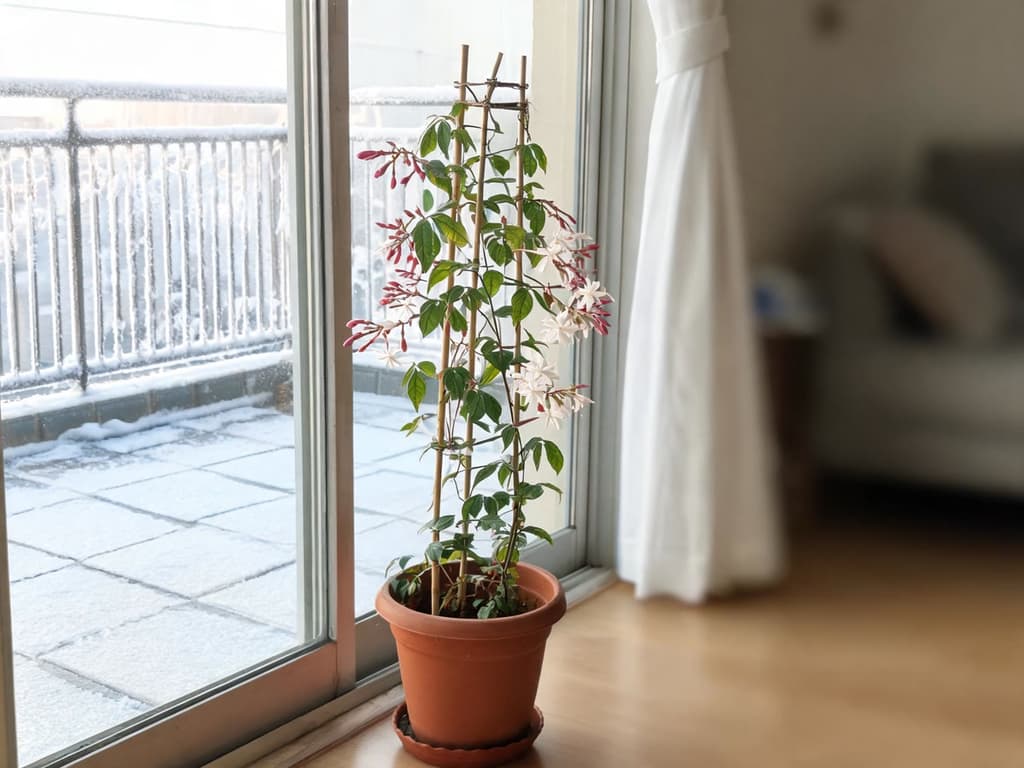
Jasmine tolerates cold depending on the species. Common jasmine (Jasminum officinale) withstands hard frost, with minimum temperatures between −10 and −15 °C. Primrose jasmine (Jasminum mesnyi) tolerates down to around −5 °C. Pink jasmine (Jasminum polyanthum) and Arabian jasmine (Jasminum sambac) do not survive freezing: their minimum threshold is between 1 and 5 °C. These four ranges come from the Royal Horticultural Society (RHS), the British gardening charity.
In Brazil, frost only occurs in parts of the South, Southeast, and Mato Grosso do Sul. Common jasmine spends the winter outdoors throughout the country. Pink jasmine and Arabian jasmine need protection on nights below 5 °C and on frosty nights. German shops sell star jasmine as "climbing jasmine," which is a different plant and has a different cold hardiness.
Quick summary:
Among common jasmine, primrose jasmine, pink jasmine, and Arabian jasmine, common jasmine is the hardiest. It withstands −10 to −15 °C and loses its leaves in winter.
Pink jasmine and Arabian jasmine tolerate cool nights, with a minimum of 1 to 5 °C, but they die if they freeze.
Pink jasmine sets flower buds with nights below 15.5 °C and above 0 °C for about 4 weeks. This rule comes from nurseries that cultivate the plant.
How much cold each jasmine can handle
Each jasmine species has a different minimum temperature threshold, and these minimums range from −15 °C to 5 °C. The RHS classifies plants into hardiness ratings (the lowest temperature a plant can tolerate in the ground in the UK climate). The table lists the rating for each jasmine, converted to degrees.
Species | How to recognize | Minimum temperature | Leaves in winter |
|---|---|---|---|
Common jasmine (Jasminum officinale) | leaf divided into 7 to 9 leaflets (the individual segments forming a single leaf); white flowers in summer and early fall | −10 to −15 °C | drop |
Primrose jasmine (Jasminum mesnyi) | leaf with 3 leaflets; pale yellow 4 cm semi-double flower (with extra petals) | −5 to 1 °C | remains |
Pink jasmine (Jasminum polyanthum) | leaf with up to 7 narrow leaflets; pink bud that opens into a white flower | 1 to 5 °C, without freezing | remains |
Arabian jasmine (Jasminum sambac) | simple, glossy, undivided leaf; highly fragrant white flower measuring 2.5 cm | 1 to 5 °C, without freezing | remains |
The numbers come from the RHS plant profiles for Jasminum officinale, Jasminum mesnyi, Jasminum polyanthum, and Jasminum sambac. The North Carolina State University Extension service (NC State) confirms the range for common jasmine. Its range begins in zone 7b, the coldest it tolerates on the US hardiness map (NC State, Jasminum officinale). In zone 7b, the lowest temperature of the year averages between −12 and −15 °C.
The RHS rating applies to plants growing in the ground. The roots of a potted plant suffer from cold before roots in the ground do. The damage usually appears only when the weather warms up, according to the University of Florida (UF/IFAS, Cold Protection of Landscape Plants). None of the consulted sources specifies how many degrees warmer a pot needs. To be safe, protect potted jasmine on nights when the forecast reaches the table's minimum.
Each species has its own plant profile with watering, lighting, and the rest of its care: common jasmine, pink jasmine, and Arabian jasmine. The general jasmine profile covers all species within the genus Jasminum (the botanical group of true jasmines).
Star jasmine is not a jasmine
Star jasmine (Trachelospermum jasminoides) belongs to a different botanical family and is not closely related to true jasmines. Its cold hardiness does not apply to Jasminum. NC State notes that Jasminum is often confused with Trachelospermum (NC State, genus Jasminum). In German stores, star jasmine is sold as "frost-hardy climbing jasmine," promising −10 to −18 °C with no cited source. This guide follows the RHS, which places star jasmine in the −5 to −10 °C rating (RHS, Trachelospermum jasminoides).
To tell the two plants apart, examine the foliage. Star jasmine has simple, oval, dark green, glossy leaves that frequently turn reddish in winter (RHS). Common jasmine, primrose jasmine, and pink jasmine have leaves divided into leaflets. Arabian jasmine also has simple, glossy leaves, so leaf shape alone is not enough to distinguish it from star jasmine. If you lost the pot's plant tag, Bloom (available for iOS) identifies the plant from a photo. It tells you whether your plant is a Jasminum or a Trachelospermum. Care instructions for star jasmine are in its dedicated profile.
The cold exposure that makes pink jasmine bloom
According to nurseries, pink jasmine sets flower buds after cool nights in autumn and winter. The American nursery Logee's grows the plant and explains the process (Logee's). Consecutive nights below 15.5 °C and above 0 °C initiate the buds. The plant also needs plenty of light during this period.
The nursery White Flower Farm describes the same process in numbers. For about 4 weeks, it chills the plants to 5.6 °C at night, without letting the temperature drop below 4.4 °C (White Flower Farm). The same nursery states that short days "probably" also matter, but that it lacks studies to confirm it. We found no published study that has measured the effect of cold: the rule comes from the practice of commercial growers.
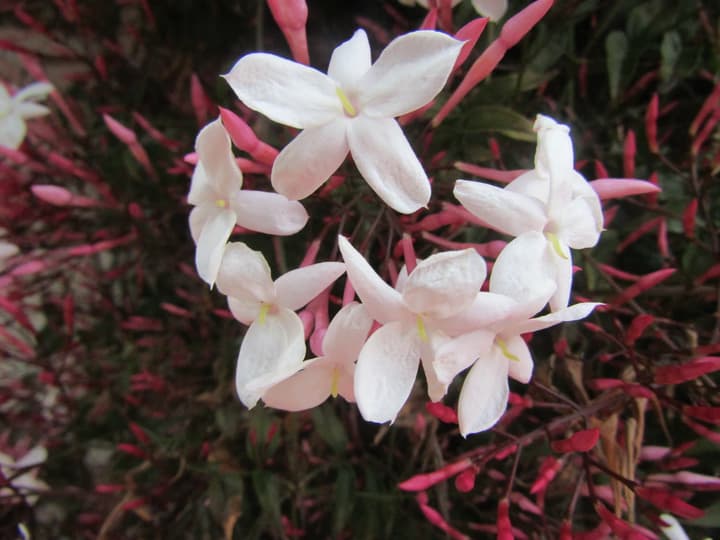
In practice, do not move pink jasmine into a heated room when autumn turns cool. Keep the container outdoors as long as night temperatures remain above 5 °C, in a sunny spot. Commercial growers tolerate slightly colder nights (4.4 °C at White Flower Farm). This guide uses 5 °C as the safer limit because the RHS hardiness rating spans 1 to 5 °C. Arabian jasmine follows a different pattern: the RHS notes that it blooms in summer and occasionally during other seasons. None of the sources consulted link Arabian jasmine blooming to cold exposure.
Jasmine in Brazilian winter: where frost requires protection
In Brazil, winter runs from June to August. Common jasmine spends the season outdoors in any region; pink jasmine and Arabian jasmine, where night temperatures stay above 5 °C. The National Institute of Meteorology (INMET) records frost in the South, the Southeast, and Mato Grosso do Sul (INMET, winter outlook). The frost risk is highest from southern Paraná to northern Rio Grande do Sul, especially in higher-altitude cities. The data comes from a study in the Brazilian Journal of Climatology (Wrege and colleagues).
Action steps depend on the species:
Common jasmine: planted in the ground, it withstands frost between −10 and −15 °C and stays outdoors year-round. In containers, root systems suffer cold damage sooner: on frosty nights, protect the pot as detailed in the following section. Common jasmine drops its leaves in cold weather and puts out new growth in spring.
Primrose jasmine: the RHS classifies it in the −5 to 1 °C range, but recommends planting it in a sheltered, frost-free location. This guide follows the sheltered recommendation as the safer choice: cover the plant on frosty nights.
Pink jasmine and Arabian jasmine: their minimum threshold is 1 to 5 °C. When nights stay above 5 °C, they remain outdoors without extra precautions. On nights reaching 5 °C or below, bring the container to a sheltered spot or cover the plant; whenever frost threatens, always provide protection.
How to protect jasmine from frost
Frost protection traps heat radiated by the ground overnight near the plant. The steps below follow UF/IFAS (Cold Protection of Landscape Plants).
In-ground jasmine:
Water the soil the day before a frost. Moist soil absorbs more solar heat and releases that warmth overnight. Do not saturate the ground: waterlogged soil lasting several consecutive days damages root systems.
Cover the plant before dark using frost fabric, a bedsheet, or a blanket. The cover must drape all the way to the ground because that is where trapped heat collects.
Prop the cover up on stakes so it does not touch the foliage, and weigh down the edges with stones or bricks in windy conditions.
If using plastic sheeting, remove it or vent the sides in the morning as soon as the sun comes out to prevent excessive heat buildup underneath.
Potted jasmine:
Bring the pot indoors, into a garage, or under an overhang on frosty nights.
If the container must stay outside, cluster pots together and mulch the soil surface with dried leaves or straw. Clustered pots lose less warmth through their sidewalls.
Separate the containers again once the frost passes, as crowding plants together for multiple days can also cause damage.
UF/IFAS warns that covers protect effectively against frost, but offer minimal defense against severe cold. If temperatures drop below 0 °C for more than one night in a row, move potted pink jasmine and Arabian jasmine indoors.
Overwintering potted jasmine indoors
Pink jasmine overwinters best in a bright, cool spot, between 5 and 10 °C. The University of Washington horticulture library cites two references with ranges that include 5 to 10 °C (UW, Miller Library). The Houseplant Encyclopedia indicates 8 to 10 °C. British gardener Alan Titchmarsh indicates a minimum of 4 °C and a maximum of 15 °C. An unheated room, an enclosed porch, or a hallway with a window will work.
Light: place the pot by the window that gets the most winter sun. In Brazil, this is the north-facing window. Sources disagree: Logee's calls for full sun, and White Flower Farm calls for indirect light, with no direct sun. This guide follows the RHS, which recommends bright, filtered light: if direct sun hits the pot, place a sheer curtain between the glass and the plant.
Watering: water only enough to keep the potting mix from drying out entirely, as advised by the UW library. White Flower Farm warns that pink jasmine allowed to dry to the point of wilting develops brown leaves and recovers poorly.
Excessive heat: in a warm room, the plant becomes more prone to aphids, according to the same library.
Arabian jasmine shares the same cold floor as pink jasmine (1 to 5 °C). Even so, the RHS recommends it exclusively for indoor culture or heated greenhouses, alongside bright light and restrained winter watering. The RHS does not specify an overwintering indoor temperature: keep Arabian jasmine above 5 °C as the safest option.
Dipladenia, another flowering vine, is significantly more tender: it suffers when nighttime temperatures drop below 10 °C, according to the RHS. Review our care guide for dipladenia in winter if both plants share your balcony.
Frost damage: did the jasmine die?
Frost can kill branch tips while sparing older wood, according to UF/IFAS. To determine how far back the stem died, scratch the bark with your fingernail. Green underneath indicates a living branch; brown or black indicates a dead branch at that point (UF/IFAS). Test at multiple points, moving from the tip toward the base of the stem.
Wait until the plant resumes active growth before pruning. Scorched foliage and damaged stems offer slight protection to the rest of the plant during subsequent frosts, according to UF/IFAS. Once new buds appear, cut each stem within the green wood, just past where the brown section ends, toward the base. After severe cold, new growth can take time to emerge. UF/IFAS specifies no timeline; waiting until the danger of frost has passed is the safest way to determine whether the plant survived.
Winter leaf drop is not always caused by cold damage. Common jasmine drops all its foliage every winter, and the RHS classifies it as a deciduous plant (one that sheds its foliage seasonally). By contrast, pink jasmine, primrose jasmine, and Arabian jasmine are evergreen (they retain leaves year-round). If one of these evergreens drops heavy foliage following a cold night, perform the fingernail test. Other potential causes of jasmine dropping leaves require separate diagnosis.
Frequently asked questions
Which jasmine is the most cold-hardy?
It is winter jasmine (Jasminum nudiflorum), rare in Brazil. NC State recommends it down to zone 6a, colder than the zone for common jasmine (NC State). In zone 6a, the lowest temperature of the year averages between −21 and −23 °C. The RHS puts both in the same class, from −10 to −15 °C; this guide follows NC State, which separates the two plants by zone. Winter jasmine produces yellow, unscented flowers in late winter before the leaves appear. For a balcony without space to store the pot in winter, the safest of the four jasmines in the table is common jasmine. Protect its pot on frosty nights, because the roots of a potted plant suffer from the cold before roots in the ground.
My jasmine is losing leaves indoors during winter. Can it still be saved?
Before discarding the plant, scratch a branch with your fingernail: green tissue underneath reveals live wood capable of resprouting. NC State notes that jasmine suffers more pests and diseases when overwintered indoors. If your plant is common jasmine or star jasmine, which tolerate frost, move the pot outdoors or into an unheated room. Pink jasmine should go to a bright space kept between 5 and 10 °C.
Is there a cold-hardy jasmine that keeps its leaves?
Primrose jasmine is the hardiest variety among jasmines that retain their foliage: it withstands roughly −5 °C, according to the RHS. The same organization advises planting it in a sheltered, frost-free location. Common jasmine tolerates colder conditions, but loses its foliage in winter. Star jasmine stays evergreen and handles −5 to −10 °C, but it is not a true jasmine.
Can I prune jasmine before winter?
No. UF/IFAS advises against pruning in late summer and early fall. Pruning stimulates new growth flushes, and tender shoots are the most vulnerable to freezing temperatures. The RHS recommends pruning common jasmine and pink jasmine after flowering. Common jasmine flowers into early fall: on this species, perform only light trimming in late winter, after the final frost. NC State notes that jasmine blooms on old wood. Applying fertilizer in late fall creates the same problem: wait until spring.
Can jasmine handle full sun in winter?
Yes. The RHS recommends full sun or partial shade for common jasmine, primrose jasmine, and pink jasmine. Logee's nursery notes that pink jasmine requires as much light as possible while setting flower buds, even during shorter days. Indoors, White Flower Farm prefers indirect light; in that environment, follow the RHS guidance by filtering direct sunlight with a sheer curtain. Arabian jasmine favors partial shade: the RHS recommends sheltering it from intense sun.
Conclusion
Jasmine tolerates cold depending on the species. Common jasmine withstands −10 to −15 °C; pink jasmine and Arabian jasmine die if they freeze. In Brazil, common jasmine spends the winter outdoors in any region. Tender species stay outside without special care where nights remain above 5 °C. On nights of 5 °C or below and on frost nights, cover or bring inside tender species, and wait for new growth before pruning what was damaged. If you do not know which jasmine you have, compare the leaf and the flower with the table before the first cold snap, because protection depends on the species.
Related articles

How to Care for Hibiscus: Sun, Watering, Fertilizer, and Pruning for Flowers
How to care for hibiscus: 6 hours of direct sun, evenly moist soil without waterlogging, half-strength fertilizer in spring and summer, and pruning in early spring. Find out why the flower lasts one day and why buds drop before opening.

Do Ferns Like Sun or Shade? It Depends on the Type
Ferns prefer bright shade: plenty of light, but no direct sun on their fronds. Tuberous sword fern is the exception that handles sun. Here is the ideal light for each type, where to place pots, and how fronds show too much or too little light.

African Violet Yellow Leaves: Causes and What to Do
Yellow leaves on an African violet usually stem from overwatering, and the first place to check is the center of the plant. Losing one lower leaf at a time is normal. Identify whether age, watering, cold water, sunlight, cold drafts, or fertilizer is the culprit based on the yellowing pattern, and see what to do today.