Poinsettias in Winter: Cold Tolerance and Care Guide
Poinsettias cannot tolerate frost and begin suffering cold injury below 50 °F (10 °C). Check research-backed temperature limits, where to place potted plants during Brazilian winters, and how to revive a cold-damaged plant.
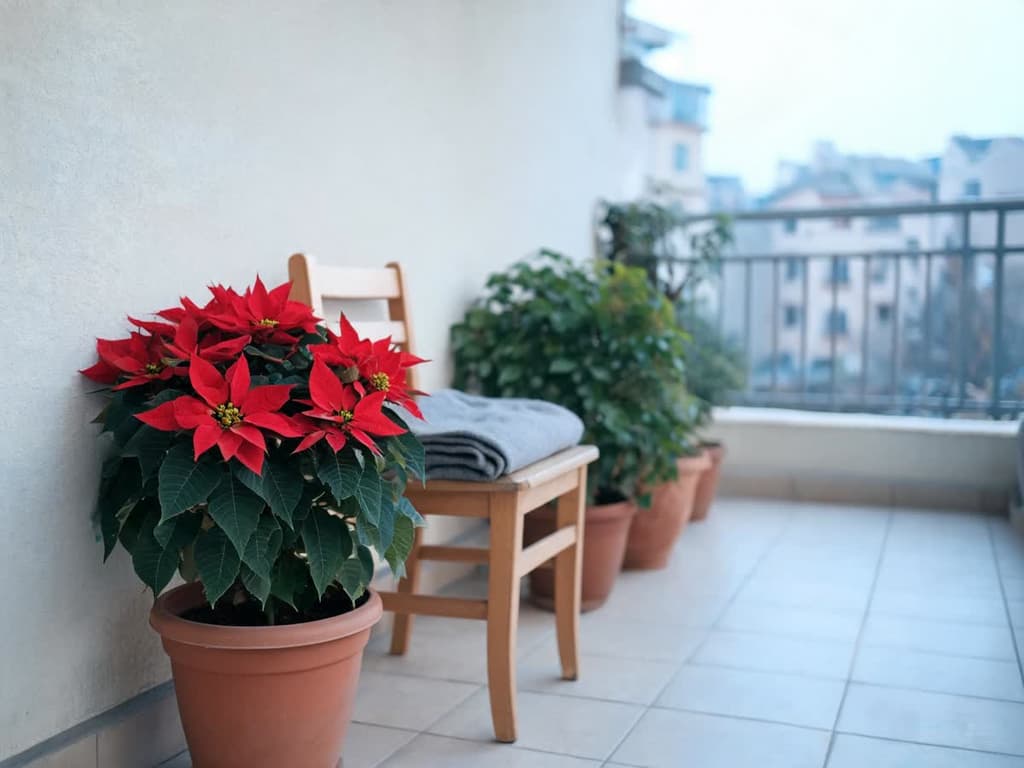
No: poinsettias cannot withstand frost and are not cold-climate plants. Below 50 °F (10 °C), they already suffer cold damage, according to the extension services of NC State University and Clemson University. Embrapa summarizes the species this way: "tropical plant, does not tolerate frost."
In winter, poinsettias need two things: nights above 55 °F (13 °C) when kept outdoors, never below 50 °F (10 °C), and no cold drafts blowing directly on them. In Brazil, winter runs from June to August, six months after Christmas. That is why the cold catches the plant you kept from Christmas and placed in the garden or on the balcony by June.
Quick summary:
Cold damage begins below 50 °F (10 °C). NC State, Clemson, and the University of Connecticut (UConn) cite the same number: 50 °F (10 °C). The more hours spent below it, the worse the damage.
Frost is the biggest hazard. Embrapa states that the species "does not tolerate frosts," and the University of Florida (UF/IFAS) notes that it requires frost protection. None of the sources measured the precise temperature that kills the plant.
In Brazil, the cold arrives when the plant is colored. Embrapa notes that the species forms bracts (the colored leaves that resemble petals) in winter. UConn describes cold damage on them: bluish or dried margins.
Poinsettia temperature limits
The poinsettia (Euphorbia pulcherrima) is a shrub native to Mexico and Central America. It thrives between 60 °F and 70 °F (15 °C and 21 °C) at night and sustains cold damage below 50 °F (10 °C). Cold damage refers to injury caused by low temperatures without the tissue freezing: leaves drop, and the bracts lose their color.
A bract is a colored leaf that resembles a flower petal. The true flowers are the tiny yellow structures clustered in the center.
Sources do not cite a single uniform threshold. Each evaluates a different scenario:
Temperature | What happens to the poinsettia | Source |
|---|---|---|
60 °F to 70 °F (15 °C to 21 °C) at night | Optimal comfort range; the plant preserves foliage and bracts | Michigan State and Illinois (60 °F to 70 °F); UF/IFAS (18 °C at night); RHS (minimum 13 °C to 15 °C while bracts are present) |
Below 55 °F (13 °C) | NC State reports indoor injury; during commercial transport, bract color fades below this threshold | NC State; Nell, Leonard, and Barrett, Acta Horticulturae, 1995 |
Below 50 °F (10 °C) | Chilling injury: premature leaf shedding, alongside bracts showing bluish or whitish margins | NC State, Clemson, UConn |
Below 45 °F (7 °C) for prolonged periods | Cold damage, according to Michigan Extension (1992 publication, now archived) | Michigan State University, 1992 |
Frost | Embrapa states that the species does not tolerate it; UF/IFAS advises protecting the plant | Embrapa; UF/IFAS |
This guide considers 50 °F (10 °C) as the damage threshold, as three university extensions cite this exact figure. To keep the plant outdoors without risk, rely on a forecast minimum of 55 °F (13 °C). This value is supported by two sources, including a published study, and safeguards bract coloration.
The Royal Horticultural Society (RHS), the British horticultural society, places the species in hardiness rating H1B. This is the rating for plants that can remain outdoors only in summer and require a minimum of 50 °F to 59 °F (10 °C to 15 °C).
None of the sources measured the specific frost temperature that kills a poinsettia. The available consensus indicates that the plant cannot tolerate frost and that, after cold injury occurs, UF/IFAS recommends pruning back to live tissue.
In Brazil, the cold arrives when the plant is colorful
The poinsettia is a short-day plant: the bracts turn red only after weeks of long nights. In the Southern Hemisphere, long nights occur in autumn and winter. The fact sheet from Embrapa Genetic Resources and Biotechnology, based in Brasília, states that the plant forms colored bracts "in winter." The Botanical Garden of USP in Ribeirão Preto points to autumn. Both seasons feature long nights, which is why this guide treats the color as an autumn and winter event.
In Europe, the colorful plant arrives in December and faces the cold indoors. Here, the garden poinsettia colors up in fall and winter, outdoors, during the coldest nights of the year.
Cold leaves marks on the bracts. The UConn Extension describes the damage this way: bluish or dried margins on red bracts, and whitish central bracts.
The same Embrapa factsheet records another effect of cold temperatures: poinsettia leaves are "deciduous during harsher winters," meaning they drop when the winter is severe. In a harsh winter, garden plants shed green leaves and remain alive.
Balcony, yard, or indoors: where to keep your pot in winter
Keep the pot outdoors as long as your local forecast predicts nighttime lows above 55 °F (13 °C). Once the forecast drops to 55 °F (13 °C) or lower, bring the pot inside by late afternoon. This ensures the plant is sheltered well before temperatures decline toward the 50 °F (10 °C) cold injury threshold.
Indoors, choose the brightest room. In Brazil, the window that receives the most sun in winter faces north. Place the pot near the window, making sure no leaves touch the glass.
Where winters remain mild and minimum temperatures rarely dip below 55 °F (13 °C), the pot can stay on the balcony throughout the season. Even so, check the weather forecast whenever a cold front arrives, as lows can fall for two or three consecutive days.
On the balcony, the most sheltered spot is against the house wall, away from the railing and the corner where wind enters. Direct cold wind is also harmful: Clemson Extension advises protecting the bracts "from wind and cold rain."
In-ground poinsettias: frost in the South vs. the rest of Brazil
Planted in the ground, poinsettia becomes a 2 to 3 m (6.5 to 10 ft) shrub. NC State considers it winter-hardy in United States Department of Agriculture (USDA) zones 9 to 11. USDA zones divide the map by the lowest temperature of the year, and zone 9 goes down to −6.7 °C (20 °F).
Embrapa states that the plant "does not tolerate frost," and Florida's UF/IFAS notes that it "requires frost protection." This guide follows Embrapa and UF/IFAS: both address frost directly, and zone 9 includes sub-freezing nights. If cold damages the branches, UF/IFAS advises pruning back to the surviving living tissue.
In the South and in the southeastern mountain ranges, where frost occurs: in-ground plants can lose leaves during harsh winters, as recorded by Embrapa. Choose the most protected corner of the yard, against a north-facing wall. UF/IFAS cites warmer air around the house as a condition for the plant to survive in the garden. Avoid the lowest part of the terrain, where cold air collects at dawn.
In the rest of Brazil: poinsettias live in the garden year-round. In Brasília, Embrapa describes them as garden bed shrubs, used in rows and plant groupings.
The weather forecast warns of frost before the thermometer reaches 0 °C. The forecast minimum is measured in a weather shelter, the ventilated box of the official thermometer, above the ground. It is colder right at ground level. By the criteria that Embrapa Western Agriculture uses, a minimum of 3.1 °C to 4.0 °C in the shelter already constitutes light frost.
In Dourados (MS), Embrapa recorded 47% of frost occurrences in July, 25% in June, and 16% in August between 1980 and 2015. These figures apply strictly to a single municipality rather than the entire country. Check your local forecast for regional data.
Because an in-ground shrub cannot be relocated indoors, its protective measures begin on frost nights rather than at the 55 °F (13 °C) indoor pot threshold. None of the cited sources tested protective blankets or fabrics specifically on poinsettias, so the guidance below serves as a safe precaution rather than a verified protocol. If forecasts predict 39 °F (4 °C) or colder, cover the entire plant down to ground level with a sheet or drop cloth in the late afternoon. Never allow plastic sheeting to press directly against foliage. Remove the cover the following morning.
Indoor cold hazards: glass, doorways, and air conditioning
Poinsettias can also suffer cold damage indoors. NC State warns against placing the plant near exterior doors, as incoming cold drafts inflict chilling injury. Michigan Extension adds two further guidelines: avoid letting leaves contact chilled window glass, and keep plants clear of direct drafts, whether hot or cold.
In a Brazilian winter, watch out for these three hazard zones inside your home:
Window panes at night. Leaves touching glass drop to lower temperatures than the surrounding room air.
Balcony or kitchen doors. Every time a door opens on a 46 °F (8 °C) night, cold air flows straight past the foliage.
Air conditioning set to heating mode. According to Michigan Extension, direct blasts of hot air damage the plant just like cold drafts do.
Draft-induced leaf loss displays a distinctive pattern: foliage drops nearly all at once while still green, within days of an environment change. If soil stays soggy while lower leaves turn yellow before falling, an alternate issue is responsible. The troubleshooting chart in why poinsettias lose leaves categorizes four common causes based on soil moisture and shedding speed.
Recognizing cold damage and reviving your plant
A cold-damaged poinsettia exhibits the following symptoms:
Bracts with bluish or desiccated margins, alongside pale central bracts (UConn; NC State).
Premature loss of green leaves (Clemson). When green leaves fall abruptly in large quantities, cold temperatures are usually the cause; leaves that turn yellow before dropping point to a different problem.
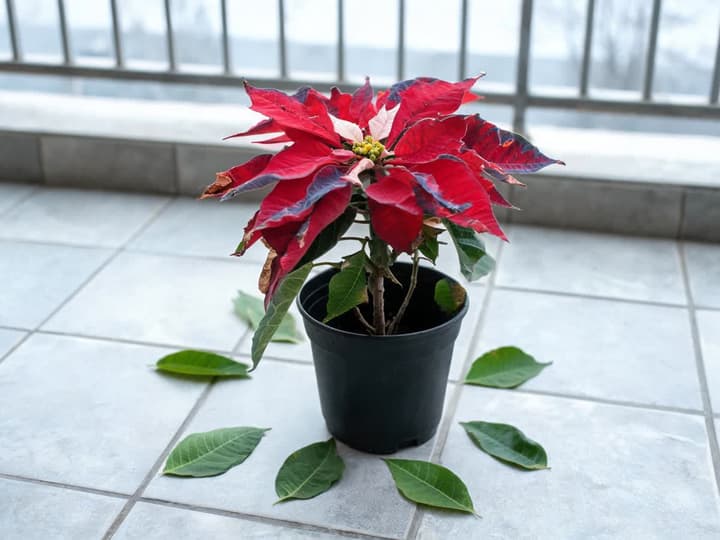
Fallen leaves do not indicate a dead plant. You can only confirm stem viability once active growth resumes: surviving branches send out new shoots, while dead wood remains desiccated.
Follow these steps, in this sequence:
Move the pot to a bright, draft-free spot today, maintained between 60 °F and 70 °F (15 °C and 21 °C). Never place the plant directly against a heater to warm it up quickly.
Avoid watering out of habit. Insert your finger about an inch (2 cm) into the potting soil and water only if the medium feels dry. Defoliated plants consume far less moisture, and cold, saturated soil invites root rot.
Do not apply fertilizer. A plant without active leaves cannot utilize added nutrients.
Wait for new growth before pruning. Fresh shoots take several weeks to emerge. These buds reveal which parts of the stems remain alive.
Cut back damaged, unsprouted growth in early spring once all frost danger has passed. UF/IFAS recommends pruning cold-damaged specimens "back to living tissue." In practice, cut each dead stem just above the topmost green shoot.
Wear protective gloves while pruning, as the milky white sap can irritate skin and eyes. If you are uncertain whether symptoms stem from cold exposure or root rot, Bloom (available for iOS) provides photo-based plant diagnostics.
Watering and fertilizing poinsettias in cold weather
In winter, poinsettias drink less water, and soil takes longer to dry out. Maintain the finger-test guideline: water only after the top inch (2 cm) of soil feels dry, soaking until water drains freely from the base, then empty the drip saucer. Because watering intervals stretch longer in cool conditions than in summer, check soil moisture before every watering session.
Soil that remains cold and waterlogged for days promotes root rot. Early signs include yellowing lower leaves combined with softening stems near the soil line.
Stop fertilizing from mid-fall through late winter. UF/IFAS only recommends fertilizer during the plant's growing season. In Brazil, this season runs from spring to early fall.
From Christmas to winter: the year of the poinsettia in Brazil
Potted plants purchased in December are typically forced into bloom in greenhouses outside their natural cycle. After purchase, they adjust to regional seasons in Brazil. The complete poinsettia care guide covers watering, light exposure, and pruning routines in depth. The overview below outlines seasonal tasks linked to cold temperatures:
Season in Brazil | What to do |
|---|---|
December to February (summer) | Pots can move to balconies or gardens in bright light, protected from intense midday sun. |
March to May (autumn) | Nights lengthen and the plant initiates bract color. Gardeners in the South should start tracking nighttime temperature forecasts. |
June to August (winter) | Bring pots indoors when night temperatures are forecast at or below 55 °F (13 °C); shelter in-ground plants on nights with frost warnings. |
September (early spring) | Prune stems once bracts fade, cutting away any branches killed by winter chills. |
US extension services instruct moving the plant outdoors when nighttime temperatures exceed 50 °F (10 °C), in May in the Northern Hemisphere. They instruct bringing it back inside when night falls to 55 °F to 60 °F (13 °C to 16 °C), in September there. In Brazil, the same numbers fall in other months, and plants in the Southeast may not even need to come inside.
Bracts naturally regain color in gardens without artificial nighttime lighting. Potted indoor plants need long, unbroken dark nights to rebloom; view step-by-step instructions in the guide on how to get poinsettias to bloom.
Frequently asked questions
How much cold can a poinsettia handle?
Poinsettias experience chilling injury below 50 °F (10 °C), according to NC State, Clemson, and UConn. Below 55 °F (13 °C), bract coloration can begin to fade. Poinsettias cannot tolerate frost. To keep a potted plant outside safely, overnight forecasts should stay above 55 °F (13 °C).
Can I leave my poinsettia on the balcony in winter?
Yes, provided your local minimum temperatures stay above 55 °F (13 °C) and the pot remains sheltered from wind. Keep the container against an exterior house wall, away from outer railings. On nights when forecasts show 55 °F (13 °C) or below, bring the pot inside by late afternoon and return it outside the next morning.
Why is my poinsettia dropping leaves in winter?
In winter, poinsettias lose leaves due to four main factors: nighttime temperatures falling below 50 °F (10 °C), direct cold winds, low light levels, and waterlogged soil that fails to dry. Embrapa notes that garden poinsettias shed leaves in harsh winters while remaining alive. Green leaves dropping all at once point to cold exposure or wind drafts; yellow leaves over wet soil suggest overwatering.
Do poinsettias only live until Christmas?
No. The poinsettia is a perennial shrub capable of living for years. In containers, Iowa State University notes that bracts retain attractive color for 2 to 3 months after purchase. After that, the plant sheds its bright hues while remaining healthy. With proper pruning and long autumn nights, it colors up again the following year.
Conclusion
Poinsettias cannot withstand frost and suffer below 50 °F (10 °C), so winter care comes down to checking the low temperature forecast. Open the weekly forecast right now: if any night shows 55 °F (13 °C) or less, bring the pot inside for that night, placing it near the sunniest window and keeping the leaves from touching the glass.
If your plant was already exposed to the cold and you do not know whether the issue is cold damage or root rot, a photo of the plant helps separate the two causes.
Related articles

Do Ferns Like Sun or Shade? It Depends on the Type
Ferns prefer bright shade: plenty of light, but no direct sun on their fronds. Tuberous sword fern is the exception that handles sun. Here is the ideal light for each type, where to place pots, and how fronds show too much or too little light.

African Violet Yellow Leaves: Causes and What to Do
Yellow leaves on an African violet usually stem from overwatering, and the first place to check is the center of the plant. Losing one lower leaf at a time is normal. Identify whether age, watering, cold water, sunlight, cold drafts, or fertilizer is the culprit based on the yellowing pattern, and see what to do today.
How to Repot Lucky Bamboo in Water and Soil
How to repot lucky bamboo: in water, clean pot and pebbles plus rainwater or distilled water; in soil, a pot 2 inches wider, with drainage. See when to repot, how to handle roots and braided stalks, and how to tell normal stress from rot.