Poinsettias: How to Care for Them and Make Them Bloom Again
The poinsettia that dies in January rarely died of thirst. It suffocated inside its decorative foil wrapper. This guide covers the first 48 hours, how to diagnose leaf drop, and why your plant needs long nights to turn red.

How to care for a poinsettia, in one sentence: take the pot out of the foil gift wrapping today, water only when the top inch of soil feels dry, and keep the plant in bright, indirect light away from drafts and heaters. The poinsettia that dies in January rarely died of thirst. It drowned, its roots rotting at the bottom of a plastic wrapper with zero drainage.
This guide is for anyone who got a red potted plant for Christmas and watched it drop half its leaves within three weeks. Now you do not know whether to water it, throw it out, or try to save it. You can save it.
And the most useful thing you can know about it is that, in Brazil, it does not turn red in December. It does in June.
Quick summary:
The gift wrapping kills faster than neglect. The cellophane or foil around the pot has no drainage holes. Water pools at the bottom, rotting the roots in a matter of weeks.
It is not poisonous, it is an irritant. A survey of 22,793 exposures recorded in United States poison control centers found zero deaths. And 92.4% of people developed no toxicity at all (Krenzelok, Jacobsen e Aronis, American Journal of Emergency Medicine, 1996).
It is a short-day plant. The colored leaves only appear after weeks of long nights. In the Southern Hemisphere, long nights mean autumn and winter, and that is why one of its popular names in Brazil is flor-de-são-joão.
What you have at home (and what you do not)
The poinsettia is Euphorbia pulcherrima, a shrub native to Mexico and Central America. In its native habitat, it easily grows over 6 feet tall and can reach up to 13 feet. That is a far cry from the tiny 5-inch pot you brought home from the grocery store.
Two common mix-ups cause confusion before you even start caring for it. First, in some languages, the common name refers to orthopedic conditions, but we are strictly talking about the plant here.
Second, depending on where you are, other plants might share similar names. If your plant has star-shaped red leaves surrounding tiny yellow buds in the center, it is Euphorbia pulcherrima. This guide is for you.
What look like flowers are not actually flowers. The bright red petals are bracts, modified leaves that change color to attract pollinators. The real flowers are those tiny, greenish-yellow buds in the very center of the leaf rosette.
If those yellow buds are wide open and shedding pollen, the plant has already finished blooming, and the red bracts will drop sooner. When buying a new one, choose a plant whose central buds are still closed, as it will last weeks longer in your home.
The first 48 hours
Most gift poinsettias do not make it past their first month. What happens in the first 48 hours in your home makes all the difference.
Remove the foil. Aluminum foil, cellophane, decorative bags, bows: all of these turn into a basin with no exit under the pot. The Colorado State University Extension is direct about this: remove the wrapping to water, or poke holes in the bottom of it. Throw away the water that accumulates in the saucer (CSU Extension). If the plastic pot is inside a decorative planter, the planter stays, but the pot comes out of it every time you water.

Check for drainage holes. If the plastic nursery pot inside does not have holes at the bottom, repot it immediately. You cannot water a plant properly without drainage.
Find a spot and leave it there. This plant hates being moved around. Sudden changes in temperature, light, or drafts will cause it to drop its leaves.
Do not water on autopilot. Push your finger into the soil down to the first knuckle. If it feels damp, do not water, even if the plant looks wilted. Wilted leaves on wet soil usually mean root rot, and adding more water will only make it worse.
Where to place your plant
Keep it in bright, indirect light all day if possible, making sure no direct sunlight hits the colorful bracts. Direct sun can bleach and burn the colored leaves in just a few hours. On the other hand, deep shade will make the plant leggy and cause the lower leaves to drop. A bright window with a sheer curtain is the perfect spot.
This is where translated care guides often fall short. Many guides focus entirely on European or North American winters, worrying about radiators, fireplaces, and drafty windows, while ignoring the climate challenges in warmer regions.
In Italy, the plant arrives home in December at 43°F (6°C) on the street and 72°F (22°C) in the living room. In Brazil, it arrives in December at 90°F (32°C).
How this changes things:
Dry heat is the enemy, not just radiators. Once temperatures climb past 85°F to 90°F, the plant suffers from heat stress even in the shade. The colorful bracts will not last as long, and the plant will drop its leaves much faster.
Air conditioning is the draft of the tropics. Cold air blowing directly from an AC unit does the same damage as a drafty winter window. Never place your pot directly in the path of cold drafts.
Fans blowing directly on the plant dry out the leaves. A well-ventilated room is great, but direct wind on the foliage is not.
Cold still matters in winter. Below 50°F, the plant will struggle, and frost is fatal. If you live in a cold region, keep it indoors during winter.
Watering: trust your finger, not the calendar
There is no such thing as watering a poinsettia "every 7 days." The actual watering schedule depends on pot size, temperature, air humidity, and soil type. It can range from every two days in a hot, humid summer to every two weeks in a cold, dry winter. Any fixed schedule will be wrong half the time.
Here is the rule that actually works: push your finger an inch into the soil. If it is dry, water. If it is damp, wait.
When you water, pour thoroughly until water runs out of the drainage holes at the bottom, let it finish draining, and then empty the saucer. Leaving water in the saucer causes the exact same root rot issues as the foil gift wrapping.
Different guides often contradict each other on this exact point. Some tell you to let the soil dry out completely between waterings, while others insist the soil must never dry out. The safest middle ground is keeping it moderately moist, which is easy to monitor with your finger.
If you follow advice to keep the soil constantly wet in a small pot with poor drainage, you will lose the plant to root rot. Most experts agree that letting the top layer dry slightly is the safest approach.
As for how much water to use, a good starting point is about 10% to 20% of the pot's volume. For a standard 5-inch pot, that is roughly 3 to 6 ounces of water. This works well for a store-bought pot indoors, but if your plant is growing on a warm balcony in the summer, you will need to water more thoroughly until it drains.
Two more watering tips: always use room-temperature water, as cold water shocks tropical roots. If your tap water is very hard, let it sit out overnight in an open container before using it.
Why is it losing leaves? The four main causes
Poinsettias drop their leaves for four main reasons: root rot from overwatering, temperature or environmental shock, underwatering, or its natural rest period after blooming. You must identify the cause before acting, because two of these require opposite solutions. Watering a drowning plant will only speed up its death.
What you see | Soil condition | Likely cause | What to do |
|---|---|---|---|
Lower leaves yellow and drop; mushy stems near the soil | Wet, sometimes with a sour smell | Root rot from overwatering or no drainage | Stop watering. Take the plant out of the pot and check the roots. If they are brown and mushy, they are dead. Trim them and repot in well-draining soil and a pot with holes. |
Sudden leaf drop, almost all at once, while leaves are still green | Any condition | Temperature or environmental shock from moving, drafts, or AC | Place the plant in a stable spot and leave it alone. It will grow back, but it takes weeks. |
Leaves wilt, turn soft, and drop; dry and crispy edges | Dry an inch or deeper | Severe underwatering | Water thoroughly until it drains out the bottom. The plant should recover in a few hours. |
Gradual leaf loss over several weeks; leggy stems | Normal | Insufficient light, or normal post-bloom dormancy | Move it closer to a bright window. If it is post-bloom, this is normal dormancy and it is time to prune. |
Gradual leaf drop after blooming is the most alarming but least dangerous stage. Once the colorful bracts fade, the plant enters a resting phase and sheds its leaves. This is not a disease; it is actually the perfect time to prune, not throw the plant away.
If you cannot figure out what is wrong by looking at the plant, try a systematic approach. Check out our guides on why your plant leaves are turning yellow and how to diagnose your plant's symptoms.
Are poinsettias toxic?
They are not deadly toxic, but they are irritants, and knowing the difference matters if your pet takes a bite. The poinsettia (Euphorbia pulcherrima) contains a milky sap that can irritate the mouth, stomach, and eyes, but it is not a lethal plant. The largest study on poinsettia exposure recorded zero deaths.
The myth has already been measured. Krenzelok, Jacobsen, and Aronis analyzed 22,793 poinsettia exposures recorded by United States poison control centers and found no deaths. Of the total, 92.4% developed no toxicity at all and 96.1% did not even require treatment in a healthcare facility (American Journal of Emergency Medicine, 1996, 14(7):671-674). CSU Extension translates this to a household scale: a 23 kg child would have to eat more than 500 bracts to experience symptoms.
This does not mean that the plant is edible or harmless. The ASPCA classifies Euphorbia pulcherrima as toxic to dogs, cats, and horses. The milky sap is the toxic principle, with mouth and stomach irritation as the sign. And it adds on the factsheet itself that its toxicity is "generally overrated" (ASPCA).
In short, a cat that chews on a leaf might drool or vomit once, but will quickly recover. Just move the plant out of reach and keep an eye on them. Emergency vet visits are rarely necessary.
For humans, the main risk comes during pruning. The white sap that drips from cut stems can irritate your skin and, more importantly, your eyes. Always wear gloves and wash your hands before touching your face.
Why it never turned red again (and how to fix it)
It did not turn red again because the house never got dark enough, for long enough. And, in Brazil, even if it does, the color will not return in December: it will return around June.
The Euphorbia pulcherrima is a short-day plant. The bracts only change color after weeks of long, uninterrupted nights. Experts recommend 14 hours of total darkness per night, every single night, until the color begins to show.
During this phase, the plant still needs bright light during the day and night temperatures between 60°F and 70°F. Any light turned on in the middle of the night, even a hallway bulb or a street lamp shining through the window, resets the clock for that night.
In the southern hemisphere, a 14-hour night does not happen in December. It happens in autumn and winter. That is why the University of São Paulo records the blooming season of the species in Brazil as autumn.
This explains why its local common names in those countries are often tied to winter festivals rather than Christmas. The plant is simply following its natural calendar.
The red plant you bought in December did not grow on this natural schedule. It was forced in a commercial greenhouse, where growers cover the plants to simulate long nights out of season so they color up just in time for the holidays. At home, without this controlled environment, the plant reverts to its natural local rhythm.
How to bring the color back, in the Brazilian calendar:
Starting in early April, begin the dark treatment. Every day, at the same time, cover the plant with an opaque cardboard box for 14 consecutive hours. If you prefer, move it to a room with no light leaks. A closed closet works.
During the day, give it normal bright light and keep up with regular care: water when the soil feels dry, and do not let it sit in pooled water.
Repeat this for 8 to 10 weeks without skipping a single night. A single night of interrupted darkness can delay or ruin the entire process.
Once the bracts start showing color, you can stop covering it. By then, the natural days are short enough for the plant to finish coloring on its own.
Fertilizer: during its active growth phase through spring and summer, feed it with a complete liquid fertilizer every 15 to 20 days. Stop fertilizing as soon as the bracts begin to change color.
If you live in a mild climate and have your plant growing in the garden, you often do not need to cover it at all. As long as it is away from streetlights or porch lights, it will color up naturally in its own season. Urban light pollution is the main reason outdoor poinsettias fail to turn red.
Keep in mind that different gardening guides offer varying advice on the exact number of dark hours required. The 14-hour recommendation comes from verified university extension programs, which rely on peer-reviewed horticultural research rather than unsourced online tips.
Pruning and repotting schedule
Pruning is another area where generic online calendars can ruin your plant. Many guides written for the northern hemisphere tell you to prune in late winter (around February or March), which is right after their holiday season. If you apply this blindly in the southern hemisphere, you would be pruning in the middle of summer during the active growing season.
The golden rule is simple: prune your poinsettia after the colorful bracts fade and the plant enters its resting phase. For a forced holiday plant, this usually happens in late winter or early spring.
How to prune:
Cut back the stems, leaving about 4 to 6 inches of growth from the base, with 2 or 3 buds on each branch. Being too timid with your cuts will result in a leggy, sparse plant.
Use sharp, clean pruning shears. Make your cuts just above a bud node and wear gloves to protect your skin from the irritating milky sap.
After pruning, reduce watering for a few weeks while the cut stems heal.
Repotting: in spring, after pruning, move the plant to a pot that is only one size larger than the current one. A pot that is too large holds too much moisture around the roots, increasing the risk of rot. Use a well-draining, slightly acidic soil mix containing perlite or coarse sand, and ensure the pot has excellent drainage.
If you want to propagate new plants from cuttings, do it during active growth in spring or early summer. Cut a 4-to-5-inch stem. Dip the cut end in water briefly to stop the sap flow, let the cutting dry for a day to form a callus, and then plant it in a light, moist rooting mix.
Common pests
A stressed poinsettia is a magnet for pests, and environmental stress almost always invites the bugs. Here are the three most common pests you will find on indoor plants:
Whiteflies. These are the classic poinsettia pest. They look like tiny white moths and flutter in a cloud when you disturb the plant, leaving a sticky residue called honeydew on the lower leaves.
Mealybugs. Look for cottony white clusters or brown scale-like bumps along the stems and leaf veins, also accompanied by sticky honeydew.
Spider mites. These thrive in dry heat. The leaves will look dusty with tiny pale yellow spots, and in severe infestations, you will see fine webbing under the leaves.
The initial treatment for all three is the same and does not require harsh chemicals. Wash the plant thoroughly, making sure to spray the undersides of the leaves, and apply insecticidal soap or neem oil. Repeat every 7 days for three weeks. For more details, check out our indoor plant pest guide.
Frequently Asked Questions
How often should I water my poinsettia?
There is no set schedule. The watering interval can range from 2 to 14 days depending on pot size, room temperature, and the season. Push your finger an inch into the soil: if it feels dry, water thoroughly until it drains out the bottom and empty the saucer. If it feels damp, wait.
What should I do if my poinsettia is losing its leaves?
First, identify the cause. Leaf drop with wet soil means overwatering, and adding more water will kill it. Sudden green leaf drop points to temperature or draft shock. Wilted leaves with dry soil mean the plant is thirsty. Gradual leaf drop after the red bracts fade is just normal dormancy, which is when you should prune.
How do I get my poinsettia to turn red again?
It needs 14 hours of total darkness per night, without any light interruption, for 8 to 10 consecutive weeks. In Brazil, start in early April to have color in June. Cover the plant at the same time every day and maintain bright light during the day.
Are poinsettias dangerous for cats and dogs?
They are mild irritants, not highly toxic. The ASPCA lists the milky sap as the primary irritant, causing mild mouth and stomach upset, and notes that their toxic reputation is generally exaggerated. A study of over 22,000 cases reported zero deaths. Still, keep the plant out of reach of pets.
Can poinsettias grow outdoors?
Yes, you can, and in Brazil it usually does better outside than inside. Choose a bright spot, protected from direct midday sun and heavy rain. Bring it inside if the temperature drops below 54°F (12°C). Frost kills. Watch out for streetlights or backyard lights left on at night if you want the color to return.
Does putting sugar in the water help the plant?
No. Green plants make their own sugar through photosynthesis. Adding sugar to the soil feeds harmful bacteria and fungi rather than the roots, creating a sweet, damp environment that invites mold and fungus gnats. This only applies to potted plants; cut flowers in a vase are a different story.
Conclusion
Go check on your plant right now and do two things. Remove the foil gift wrapping if it is still there, and push your finger an inch into the soil. These two simple, free actions will prevent the vast majority of poinsettia deaths.
Then, mark April on the calendar. That is when the dark treatment begins to bring the color back in June.
If you want to diagnose leaf drop, overwatering, pests, or dormancy using photos, Bloom can help. The app is available on iOS.
Related articles
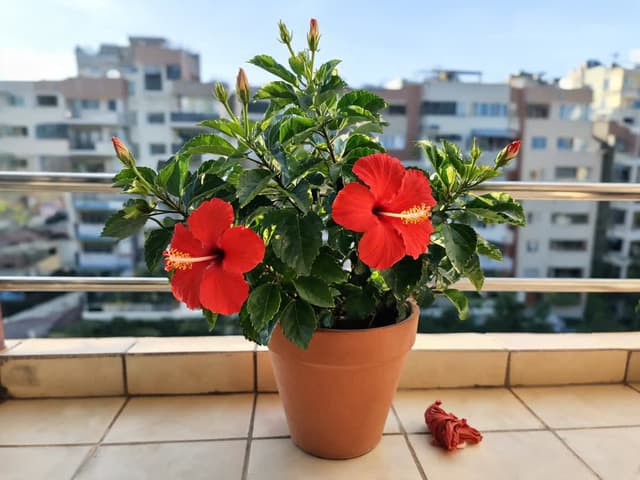
How to Care for Hibiscus: Sun, Watering, Fertilizer, and Pruning for Flowers
How to care for hibiscus: 6 hours of direct sun, evenly moist soil without waterlogging, half-strength fertilizer in spring and summer, and pruning in early spring. Find out why the flower lasts one day and why buds drop before opening.
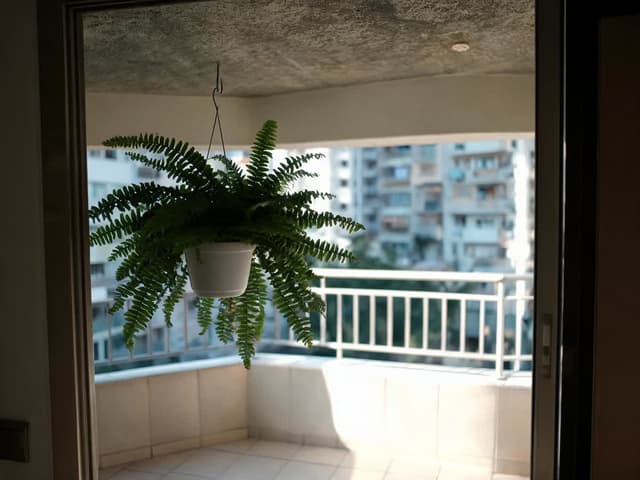
Do Ferns Like Sun or Shade? It Depends on the Type
Ferns prefer bright shade: plenty of light, but no direct sun on their fronds. Tuberous sword fern is the exception that handles sun. Here is the ideal light for each type, where to place pots, and how fronds show too much or too little light.
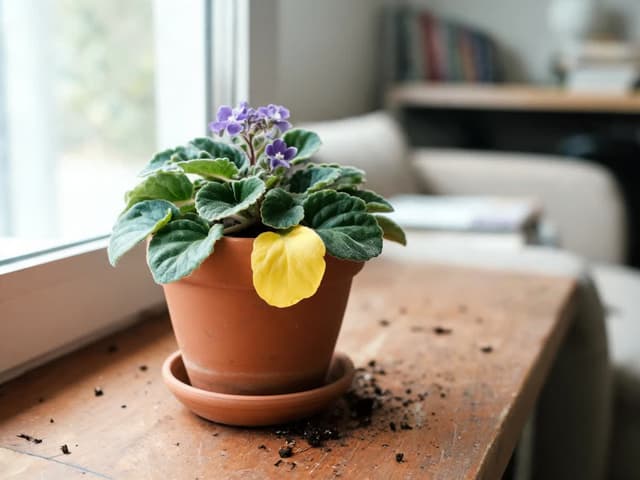
African Violet Yellow Leaves: Causes and What to Do
Yellow leaves on an African violet usually stem from overwatering, and the first place to check is the center of the plant. Losing one lower leaf at a time is normal. Identify whether age, watering, cold water, sunlight, cold drafts, or fertilizer is the culprit based on the yellowing pattern, and see what to do today.