2332 Easy Easy Care | 2026 Guide - Page 24
Find 2332 easy easy care. Complete guide for your garden.
2332 Easy Care with easy level
Showing 829-864 of 2332
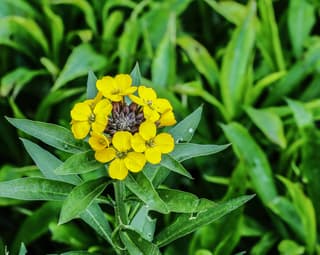
Wallflower
Erysimum × cheiri
Erysimum × cheiri, the common wallflower, is a fragrant-flowering subshrub in the family Brassicaceae, native to the Aegean region of Greece and widely naturalized across Europe. Typically grown as a biennial, it forms compact rosettes of narrow, lance-shaped, grey-green leaves in its first year before producing abundant clusters of four-petalled flowers in shades of yellow, orange, red, burgundy, and purple from spring into early summer. Flowers emit a rich, sweet, spicy fragrance that intensifies in the evening, making the wallflower a long-favoured cottage garden classic. The plant thrives in well-drained, slightly alkaline soils and tolerates dry, rocky conditions—historically establishing itself on old walls and masonry, from which its common name derives. All parts contain cheiranthin, a cardiac glycoside, and are toxic if ingested in quantity.
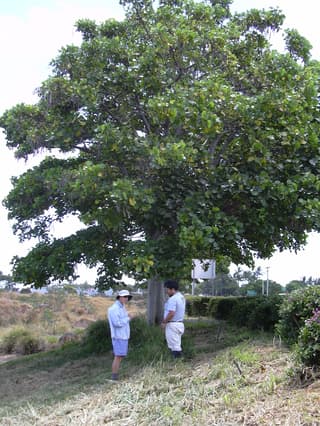
Indian Coral Tree
Erythrina variegata
Erythrina variegata, commonly known as the Indian Coral Tree or Tiger's Claw, is a large tropical tree in the Fabaceae family. Native to tropical Asia and the Pacific, it is celebrated for its stunning scarlet-red flower clusters that emerge before or alongside new leaves. A fast grower capable of reaching 27 meters in height, it is widely planted as an ornamental shade tree, living fence, and in agroforestry systems. The tree also holds significant importance in traditional medicine across South and Southeast Asian cultures.
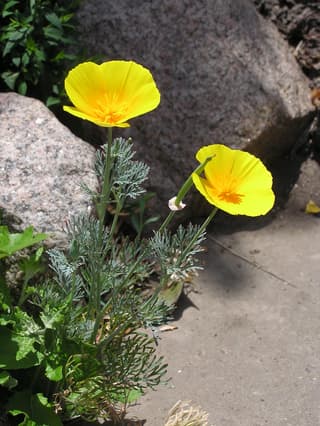
California Poppy
Eschscholzia californica
Eschscholzia californica, commonly known as the California poppy, is an annual or perennial wildflower native to the western United States and Mexico. It produces vibrant blooms in shades of orange, yellow, red, and white from spring through summer. As the official state flower of California, it is celebrated for its drought tolerance, low maintenance needs, and stunning visual impact in gardens and naturalized landscapes.
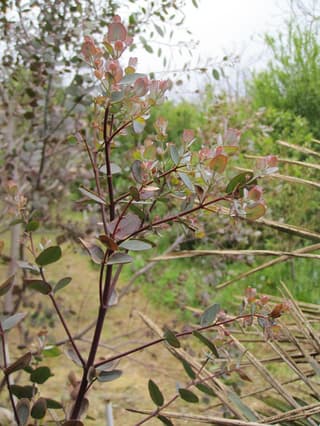
Cider Gum
Eucalyptus gunnii
Eucalyptus gunnii, commonly known as Cider Gum, is a fast-growing evergreen tree native to Tasmania, Australia. It is one of the hardiest eucalyptus species, tolerating frost down to -18°C. Its distinctive silvery-blue rounded juvenile leaves are prized in floral arrangements and landscaping. The tree produces small white flowers in summer and has smooth, flaking bark in cream, pink, and brown tones.
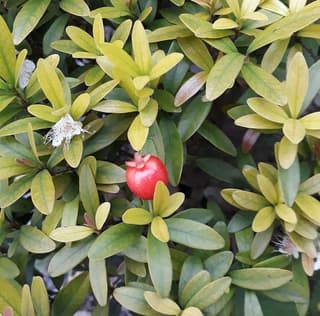
Dwarf Eugenia
Eugenia mattosii
Eugenia mattosii, popularly known as the Dwarf Eugenia, is an evergreen shrub native to Brazil, belonging to the Myrtaceae family. It features dense, compact foliage with small, oval, glossy leaves that display reddish tones when young, turning dark green at maturity. During spring and summer, it produces delicate white flowers that give rise to small, globose, deep red fruits. These fruits are edible, with a slightly acidic flavor, and are highly attractive to birds. Due to its controlled growth and small leaves, it is one of the most valued species for the art of bonsai and for landscaping in small spaces.
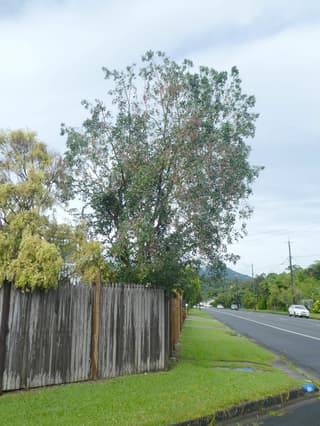
Brush Cherry
Eugenia myrtifolia
Evergreen shrub with bronze, green and red foliage producing delicate white flowers in spring and summer followed by edible magenta-red fruits. Height 4-6 meters in cultivation. Native to humid areas of eastern Australia. Highly valued as ornamental tree, hedging plant and for topiary. Non-toxic to pets and humans.
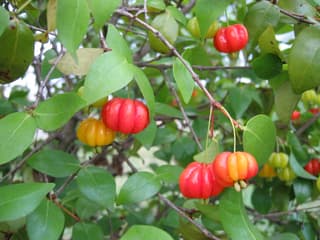
Surinam Cherry
Eugenia uniflora
Surinam Cherry (Eugenia uniflora) is an evergreen fruiting tree native to the Atlantic Forest of South America, spanning Brazil, Argentina, Uruguay and Paraguay. It is celebrated for its distinctive small fruits — deeply ribbed, turning from green through orange to deep red or nearly black when fully ripe — with a sweet-tart, resinous flavour. The tree produces clusters of fragrant white flowers in spring and fall, and its glossy leaves release a spicy-resinous scent when crushed. Both fruits and leaves have significant medicinal value recognised by traditional and modern science.

Chilean Corkscrew Cactus
Eulychnia castanea
Native to the arid coastline of northern and central Chile, between Los Molles and the Talinay mountains, Eulychnia castanea is a slow-growing columnar cactus that forms creeping clumps several meters in diameter in its coastal desert habitat, surviving on sea fog (camanchaca) in one of the driest regions on the planet. The grayish-green stems, featuring 6 to 8 ribs and spines ranging from brown to yellowish, produce fragrant white flowers in summer and greenish-yellow fruits with mucilaginous pulp and a slightly acidic flavor. The 'Varispiralis' cultivar, with spiraled or crested stems, is highly sought after by collectors.
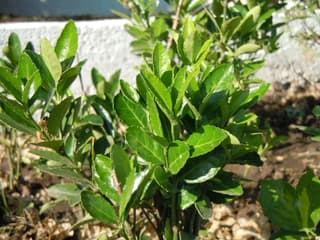
Spindletree
Euonymus
Euonymus is a diverse genus of over 130 species of shrubs, small trees, and climbers in the family Celastraceae, native to temperate regions of Asia, Europe, and North America. These hardy ornamentals are prized for their year-round interest: evergreen species like Euonymus japonicus provide dense hedging and bright variegated foliage, groundcover forms like Euonymus fortunei spread readily across slopes and borders, while the deciduous Euonymus alatus (burning bush) delivers spectacular crimson autumn color. Caution: all parts are moderately toxic if ingested.
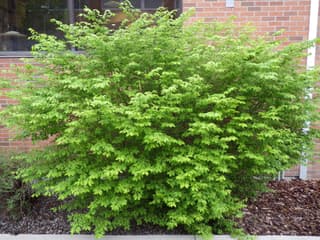
Burning Bush
Euonymus alatus
Burning bush (Euonymus alatus) is a deciduous shrub native to Siberia, China, Japan and Korea, prized for the corky "wings" that run along its stems and for foliage that turns a brilliant scarlet-red every autumn. It grows into a rounded, medium-textured mound 4.5-6 m tall and wide at maturity, with inconspicuous greenish-yellow flowers in late spring followed by small red-orange seed capsules that split open in fall. It is tough, adaptable to many soils, and tolerates urban conditions well, which has made it a landscape staple - though it is now considered invasive in parts of the eastern and central United States, so gardeners in those regions should check local guidance before planting.
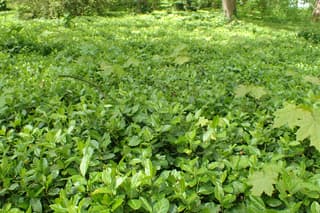
Wintercreeper
Euonymus fortunei
Euonymus fortunei, commonly known as Wintercreeper or Fortune's Spindle, is an evergreen woody vine and groundcover native to East Asia (China, Korea, and Japan). Highly adaptable, it can climb walls and trees up to 10 meters tall or spread as a dense, low groundcover. Its leathery, glossy leaves remain green year-round, with many popular variegated cultivars available. WARNING: All parts of this plant are toxic to humans, cats, and dogs — ingestion can cause cardiac and gastrointestinal problems.
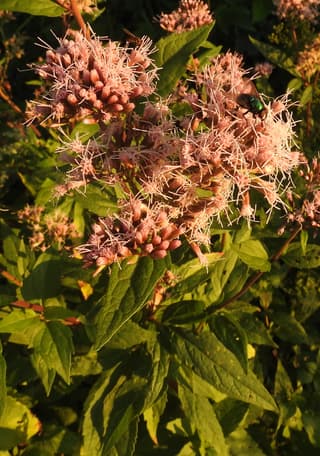
Boneset
Eupatorium
Eupatorium is a diverse genus of flowering perennial herbs in the family Asteraceae, encompassing well-known species such as Eupatorium cannabinum (hemp-agrimony), native to Europe and Asia, and Eupatorium perfoliatum (boneset), native to North America. These robust plants produce dense, flat-topped clusters of small fluffy flowers in white, pink, and mauve, highly attractive to butterflies, bees, and pollinators. Typically growing 1–1.5 metres tall, Eupatorium thrives in moist, humus-rich soils and tolerates wet ground, making it ideal for rain gardens, pond margins, and naturalistic borders. The genus has a rich ethnobotanical history: boneset was extensively used by Native Americans and colonial physicians to treat fevers and influenza, while hemp-agrimony has featured in European herbal medicine for centuries.
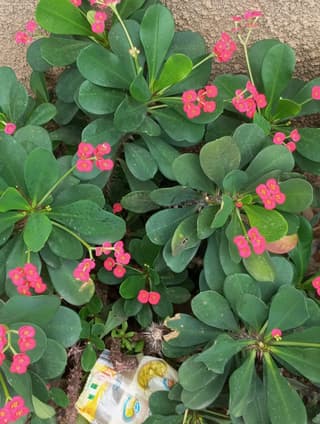
Giant crown of thorns
Euphorbia × lomii
Euphorbia × lomii is a hybrid crown of thorns, a cross between Euphorbia milii and Euphorbia lophogona, prized for its thick spiny stems, large leaves, and oversized colorful bracts. It grows as a sculptural, drought-tolerant succulent shrub that thrives in bright, sunny spots and rewards good light with near year-round blooms.
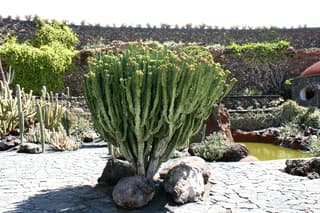
Desert Candle
Euphorbia abyssinica
Euphorbia abyssinica, commonly known as the Desert Candle, is a striking columnar succulent tree native to the dry highlands of Ethiopia and Eritrea, at elevations of 840–2,400 meters. It can reach up to 9 meters tall and is frequently mistaken for a cactus. The plant produces a highly toxic white latex sap that causes severe skin irritation and potential blindness on eye contact. Ideal for xeriscaping and dry gardens.
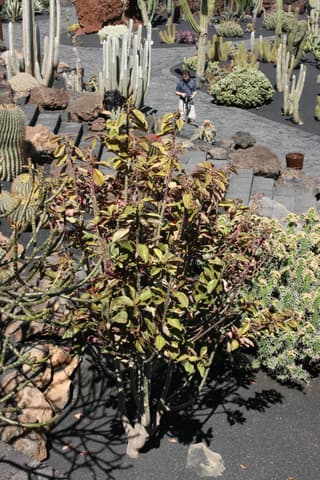
Green African Milk Bush
Euphorbia bicompacta
Euphorbia bicompacta, commonly known as the Green African Milk Bush, is a succulent shrub native to East Africa, with natural occurrences in Tanzania, Rwanda, and Kenya. Belonging to the Euphorbiaceae family, this species can reach up to 7 meters tall in its natural habitat, though in cultivation it rarely exceeds 1–2 meters. Its erect, fleshy bright-green stems give it a clean geometric appearance. The popular variety rubra (Euphorbia bicompacta var. rubra) features reddish stems and leaves, making it even more sought-after as an ornamental houseplant across Europe and the United States. The milky latex exuded by the plant is toxic and caustic — always wear gloves when handling. In its native range, the latex has traditional medicinal use for tick control in cattle.
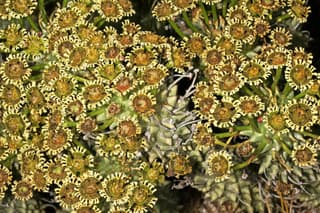
Medusa's Head
Euphorbia caput-medusae
Medusa's Head (Euphorbia caput-medusae) is a striking succulent native to the Western Cape of South Africa. It features a short, stout central stem from which numerous snake-like branches radiate outward, closely resembling the serpentine locks of the mythological Medusa. A member of the Euphorbiaceae family, it is prized as a unique ornamental plant in rock gardens, containers, and succulent collections worldwide.
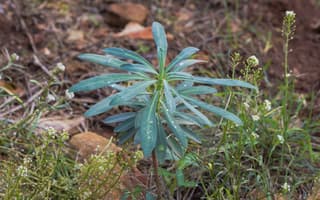
Mediterranean Spurge
Euphorbia characias
Euphorbia characias, the Mediterranean spurge, is a robust evergreen sub-shrub native to rocky, sun-baked slopes across the Mediterranean basin. It forms dense clumps of upright stems lined with narrow, blue-green leaves, topped in late winter and early spring by dramatic chartreuse flower heads. Every part of the plant exudes a milky latex when cut, which is a skin and eye irritant, so it should be handled with gloves. Prized by gardeners for its drought tolerance and architectural presence, it thrives on neglect once established.
Caribbean Copper Plant
Euphorbia cotinifolia
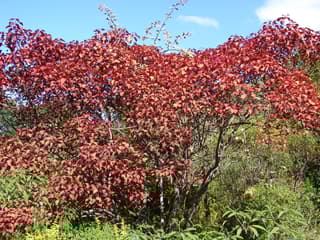
Euphorbia cotinifolia, commonly known as the Caribbean Copper Plant or Tropical Smokebush, is a striking ornamental shrub native to Mexico and Central/South America. Prized for its deep burgundy-red foliage, it belongs to the Euphorbiaceae family and can reach up to 15 feet as a shrub or 30 feet as a tree in ideal conditions. The milky white sap is highly toxic and requires protective gloves when handling. It is widely grown in tropical and subtropical gardens for its bold visual impact.

Fire on the Mountain
Euphorbia cyathophora
Euphorbia cyathophora, commonly called fire on the mountain or dwarf poinsettia, is an herbaceous plant in the Euphorbiaceae family, a close relative of the classic Christmas poinsettia. Its upper leaves develop vivid red patches at the base that mimic colorful bracts, while the true flowers are tiny green structures called cyathia. Native to the Americas, it is a hardy, fast-growing plant well suited to sunny gardens and borders. All parts of the plant release a milky latex sap when cut, which is toxic and can irritate skin and eyes.
David's Spurge
Euphorbia davidii
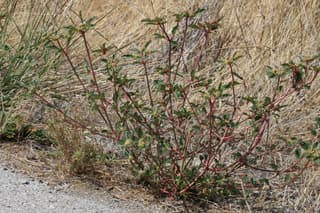
David's Spurge (Euphorbia davidii) is an annual herb in the Euphorbiaceae family, native to south-central United States and Mexico, now naturalized across Europe, South America, and Australia. It grows up to 61 cm tall in full sun and well-drained soil. Like all euphorbias, it produces a milky white latex that is severely toxic and a strong irritant to skin, eyes, and mucous membranes of humans, cats, and dogs.
Decary's Euphorbia
Euphorbia decaryi
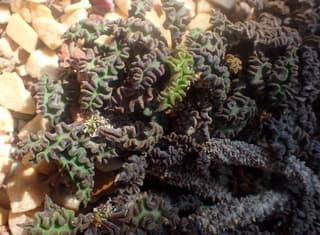
Euphorbia decaryi is a rare, compact caudiform succulent endemic to Madagascar. It belongs to the Euphorbiaceae family and develops a thickened base (caudex) that stores water, with wavy stems and textured gray-green leaves. An extremely slow grower, it is highly prized by succulent and Madagascar plant collectors worldwide.
Toothed spurge
Euphorbia dentata
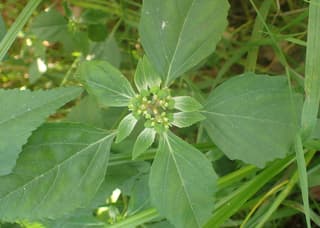
Euphorbia dentata, commonly called toothed spurge or green poinsettia, is a hairy summer annual herb in the spurge family (Euphorbiaceae), native to the central and east-central United States south to northeastern Mexico. It grows in disturbed open ground such as prairies, roadsides, pastures, and waste areas, and is recognized by its toothed, lance-shaped leaves and the milky latex sap that oozes from broken stems. Sap contact can irritate skin and eyes, so gloves are recommended when handling the plant.
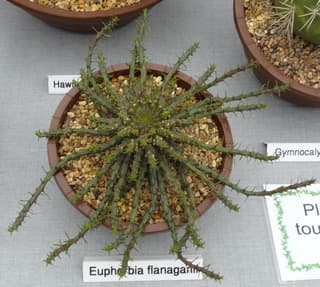
Octopus Plant
Euphorbia flanaganii
Euphorbia flanaganii, commonly known as Medusa's Head, is a South African succulent in the Euphorbiaceae family. It forms a low rosette of snake-like, grayish-green stems ("tentacles") radiating from a thick central trunk, resembling the serpent hair of the mythological Medusa. It is a slow-growing succulent, popular as a container ornamental, producing tiny yellow flowers (cyathia) from late winter into spring. The entire plant exudes a toxic, irritant milky latex that requires careful handling.
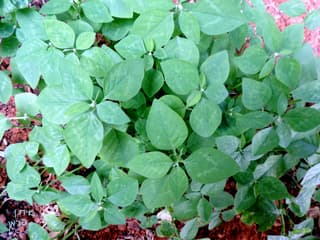
Grassleaf Spurge
Euphorbia graminea
Euphorbia graminea, commonly known as grassleaf spurge, is a herbaceous to subshrubby plant in the Euphorbiaceae family, native to Mexico, Central America, and parts of South America and the Caribbean. It grows 10 to 50 cm tall, occasionally reaching up to 1 meter. Thin, branching stems bear opposite leaves up to 4 cm long, and tiny flower clusters (cyathia) are surrounded by white bract-like appendages that create a cloud-like, baby's-breath effect. It is the wild species behind the popular ornamental cultivar Diamond Frost, prized for its near-continuous white blooms. Like all spurges, it produces a milky latex sap that can irritate skin and eyes and is toxic if ingested.
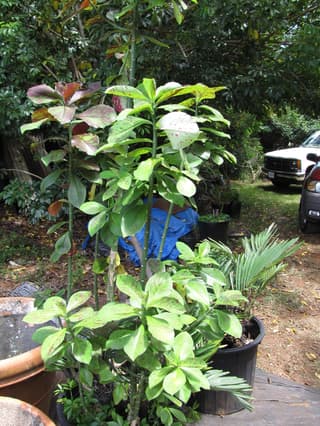
African Milk Bush
Euphorbia grantii
The African milk bush (Euphorbia grantii, synonym Synadenium grantii) is a succulent evergreen shrub in the Euphorbiaceae family, native to tropical East Africa (Tanzania, Uganda, Rwanda, Burundi and the Democratic Republic of Congo). It is a fast-growing, low-maintenance plant popular as an ornamental hedge or container specimen for its fleshy, paddle-shaped leaves that range from green to reddish-purple. Every part of the plant exudes a thick, milky white latex when cut, a sap that is toxic and strongly irritating to skin, eyes and mucous membranes, and is toxic if ingested by people or pets.
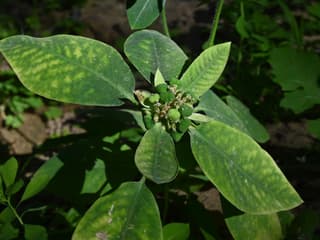
Mexican Fireplant
Euphorbia heterophylla
Euphorbia heterophylla, commonly known as Mexican fireplant or wild poinsettia, is a herbaceous annual or short-lived perennial in the family Euphorbiaceae. Native to tropical and subtropical Americas, it grows 30–100 cm tall with variably shaped leaves and upper bracts that turn bright red or white, giving it a striking ornamental appearance similar to the cultivated poinsettia. It produces a milky white latex sap that is a skin irritant and toxic if ingested, causing dermatitis and potentially anaphylaxis in latex-sensitive individuals. The plant flowers rapidly — within 30 days of emergence — and seeds mature in another 25–30 days, making it highly prolific. It is widely naturalized across the tropics and considered an invasive agricultural weed in parts of Asia.
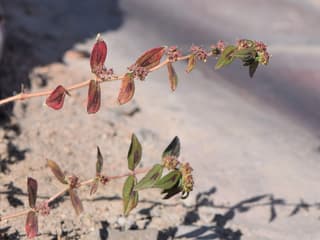
Asthma-plant
Euphorbia hirta
Euphorbia hirta, commonly known as the Asthma-plant, is a pantropical annual herb. It is characterized by its hairy, reddish stems and opposite, elliptical leaves with serrated edges. The plant contains a milky white latex that is typical of the Euphorbia genus. It is widely known for its presence in traditional medicine, particularly for respiratory and gastrointestinal ailments, though it is often considered a weed in agricultural settings.
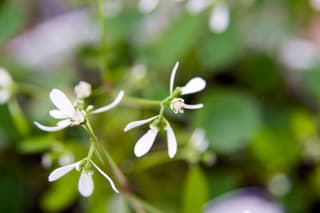
Diamond Frost Euphorbia
Euphorbia hypericifolia
Diamond Frost Euphorbia (Euphorbia hypericifolia) is a tender ornamental annual prized for its delicate white bracts that create an airy, cloud-like effect. Native to tropical Americas from Mexico to South America, it belongs to the Euphorbiaceae family. The milky sap is toxic and can irritate skin, eyes, and mucous membranes. Widely used in containers, hanging baskets, and garden borders for its non-stop blooming from spring until frost.
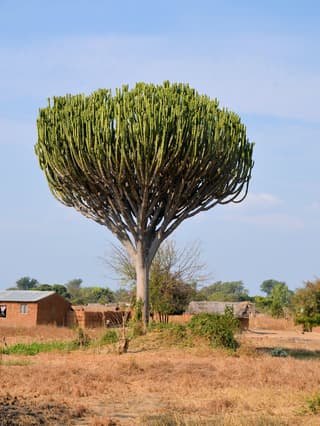
Candelabra Tree
Euphorbia ingens
Euphorbia ingens, commonly known as the Candelabra Tree, is a striking succulent tree native to southern Africa. In its natural habitat it can grow over 12 meters tall, with upright green columnar branches arranged like a giant candelabra. It is widely cultivated as an ornamental plant in tropical and subtropical gardens and is increasingly popular as a large indoor specimen. WARNING: the milky white sap is severely toxic to humans, cats, and dogs — always handle with thick gloves and eye protection.
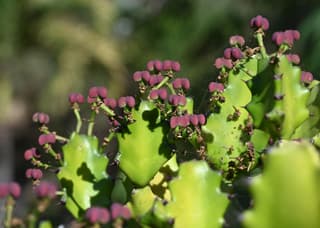
Mottled Spurge
Euphorbia lactea
Euphorbia lactea is a succulent shrub native to India and Southeast Asia. Its angular candelabra-like stems display distinctive silver-white zigzag markings, making it a striking ornamental plant. It exudes a milky white latex sap that is severely toxic on contact.
Caper spurge
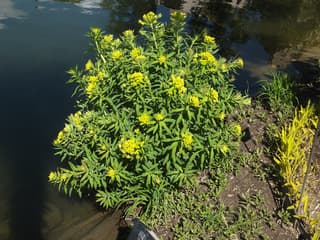
Euphorbia lathyris
Euphorbia lathyris is an erect biennial in the Euphorbiaceae, native to Asia and widely naturalised in temperate regions. It forms a rosette in its first year and a stem up to 1.5 m tall in its second, clothed in blue-green, lance-shaped leaves arranged in tidy opposite ranks with a pale midrib. Small green to yellow-green flowers without petals appear from spring into early summer, followed by rounded seed capsules that resemble capers. It is architectural and tolerates poor, dry soils, but every part, especially the milky latex, is toxic and irritant. It is reputed to repel moles, though this is unproven. It self-seeds freely and can become weedy.
Madagascar Euphorbia
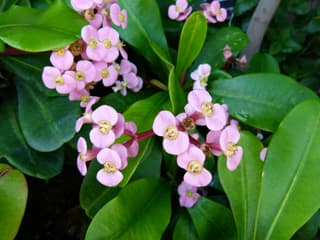
Euphorbia lophogona
Euphorbia lophogona is a succulent shrub native to Madagascar. It features erect, spiny stems and produces small yellowish flowers with white to pink bracts in summer. It exudes a highly toxic milky latex when cut, requiring careful handling.
Spotted spurge
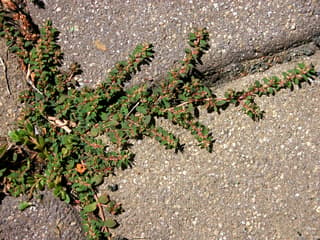
Euphorbia maculata
Euphorbia maculata is a low-growing, mat-forming annual weed native to North America and now naturalized worldwide. Its small, opposite leaves are marked with a distinctive maroon-purple central spot, and the trailing reddish stems exude a milky, irritant latex when broken. Tiny greenish-white to pink cup-shaped flowers appear from summer into early fall, followed by hairy seed capsules that enable rapid self-seeding.
Yellow Milkbush
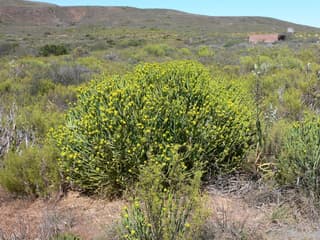
Euphorbia mauritanica
Euphorbia mauritanica is a spineless, much-branched succulent shrub native to the Succulent Karoo of South Africa and Namibia, where it is one of the most widespread shrubby euphorbias. It grows upright, pencil-thin, yellowish-green cylindrical stems from a woody base, reaching up to 1.5 m tall. Small, bright yellow flower clusters (cyathia) appear at the branch tips from late winter into spring. All parts contain a milky latex sap that is irritant and toxic if it contacts skin or eyes, or if ingested.
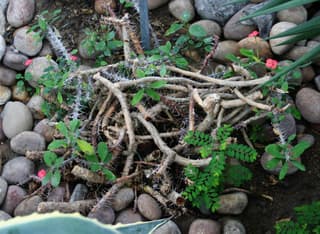
Crown of Thorns
Euphorbia milii
Euphorbia milii is a striking thorny succulent shrub native to Madagascar, prized for its colorful bracts that bloom nearly year-round. Despite its fierce thorns, it is one of the easiest flowering houseplants to grow, thriving on bright light and minimal water. The showy red, pink, white, or yellow bracts surround tiny true flowers, creating a vibrant display even in the driest conditions.
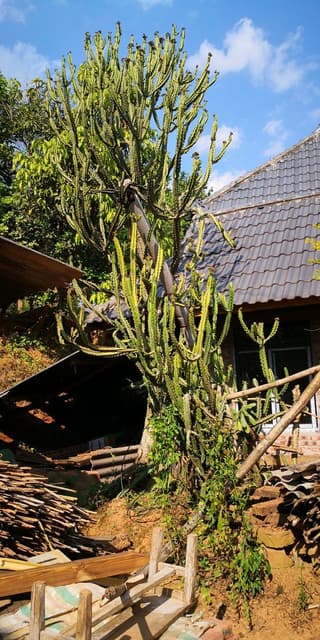
Indian Spurge Tree
Euphorbia neriifolia
Euphorbia neriifolia, commonly known as the Indian spurge tree, is a large, cactus-like succulent shrub or small tree native to India and naturalized across Southeast Asia. Its thick, pentagonal, spiny branches store water for long periods of drought, while its milky latex, used historically in traditional medicine, is toxic and irritating on contact. It produces small clusters of yellow-green flowers with bright red bracts and is popularly grown as an ornamental hedge or living fence.
Easy Care Easy Care
Our selection of 2332 easy easy care combines the characteristics of this category with reduced care needs. Perfect for beginners who love this category.
Why Choose Easy Easy Care?
Combining the beauty of easy care with easy difficulty level lets you enjoy this category without excessive maintenance worries. Each plant was selected to offer the best characteristics of the category at the care level you are looking for.