2332 Easy Easy Care | 2026 Guide - Page 25
Find 2332 easy easy care. Complete guide for your garden.
2332 Easy Care with easy level
Showing 865-900 of 2332
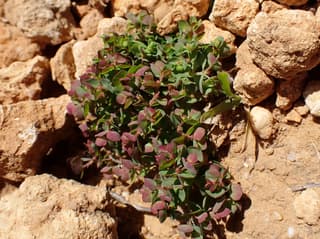
Petty Spurge
Euphorbia peplus
Euphorbia peplus, commonly known as petty spurge, is a small annual herbaceous plant in the Euphorbiaceae family, native to Europe and western Asia. It grows 10-40 cm tall with slender stems and alternate oval leaves. Small greenish-yellow flowers appear at the branch tips. The plant is well known for its toxic milky latex sap, historically used in folk medicine for skin ailments.
Dwarf Medusa's Head
Euphorbia ramiglans
Euphorbia ramiglans is a dwarf medusoid succulent native to the arid, winter-rainfall coastal regions of South Africa (Western and Northern Cape). It forms a central "head" from which dozens of thin, spineless, sinuous branches radiate outward, resembling the snake hair of the Gorgon Medusa from Greek mythology. It is closely related to Euphorbia caput-medusae and is treated by some authorities as its dwarf variety (var. confluens). Like all Euphorbias, it exudes a toxic milky latex when a branch is cut or damaged.
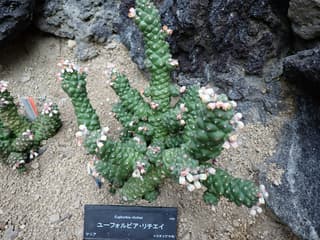
Ritchie's Euphorbia
Euphorbia ritchiei
Euphorbia ritchiei, formerly known as Monadenium ritchiei, is a striking succulent native to Kenya. It features thick, fleshy, spine-covered stems and circular green leaves. In spring, it produces beautiful bright pink to red cyathia (false flowers). Like all euphorbias, it exudes a toxic milky latex when damaged that should be handled with care.
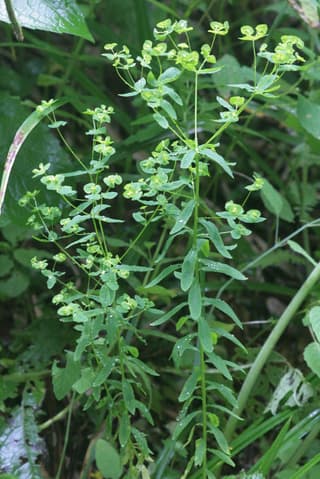
Upright Spurge
Euphorbia stricta
Upright Spurge is a bushy, self-seeding member of the Euphorbiaceae native to Europe and southwest Asia. Slender, branching stems carry spear-shaped, pale to yellowish-green leaves and are topped from June to September by clusters of small greenish-yellow flowers. Like all spurges, its stems ooze a milky, irritant latex when cut, so gloves are recommended when handling it. It thrives as an easy-going garden plant, tolerating a wide range of soils and both sun and part shade.
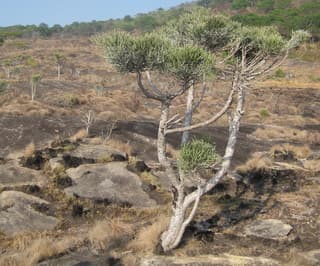
Pencil Cactus
Euphorbia tirucalli
Euphorbia tirucalli, commonly known as Pencil Cactus or Pencil Tree, is a striking succulent shrub native to tropical and subtropical Africa. Despite its common name, it is not a true cactus but belongs to the Euphorbiaceae family. It produces dense clusters of cylindrical, pencil-thin green stems that turn brilliant orange-red in cooler temperatures or high light conditions — a cultivar known as Firesticks. The plant produces a highly caustic white latex sap that is one of the most dangerous among houseplants, capable of causing severe chemical burns and temporary blindness on eye contact.
Devil's Backbone
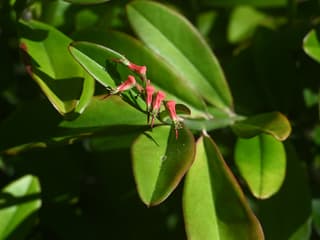
Euphorbia tithymaloides
Devil's Backbone (Euphorbia tithymaloides) is a succulent shrub native to Tropical Americas, prized for its striking zigzag stems and colorful foliage. Easy to grow and drought-tolerant, it thrives in bright light with minimal watering. Its milky white latex sap is toxic and irritating to skin — always handle with gloves.
Chandelier Tree
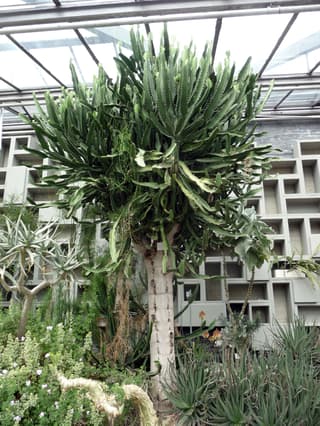
Euphorbia triangularis
Euphorbia triangularis is a tree-like succulent native to South Africa, distinguished by its triangular central stem and chandelier-like branching. It grows slowly but can reach several meters tall in warm climates.
African Milk Tree
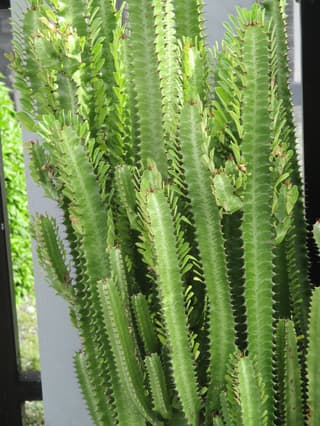
Euphorbia trigona
The African Milk Tree is a striking succulent native to Central Africa, featuring tall, columnar stems with ridges lined with small leaves and thorns. Despite its cactus-like appearance, it belongs to the Euphorbia family. This architectural plant can grow up to 2.7 meters tall indoors and makes a dramatic statement in any space. The plant produces a toxic milky white sap when damaged, so handle with care.
African Milk Bush
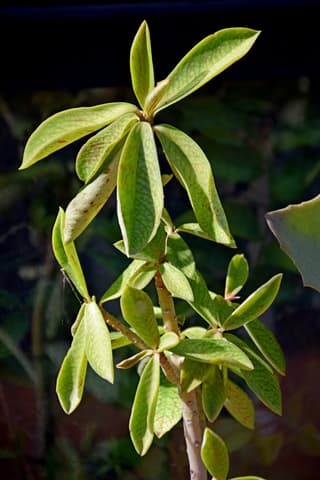
Euphorbia umbellata
Euphorbia umbellata, commonly known as the African Milk Bush, is a fast-growing, semi-succulent evergreen shrub or small tree in the family Euphorbiaceae, native to eastern and southern Africa. In cultivation it typically reaches 3–5 metres in height, though specimens in their natural habitat can exceed 10 metres. The plant features thick, fleshy green stems and large, dark green, oval leaves with prominent veins arranged oppositely on the branches. When any part of the plant is cut or damaged, it exudes a white milky latex that is severely toxic and highly irritating to skin, eyes, and mucous membranes. Small dark red to maroon flowers appear in winter, clustered in the cyathia typical of Euphorbia species. This species is widely cultivated as an ornamental in tropical and subtropical gardens worldwide, and in Brazil (where it is known as "leitosinha" or "janaúba") it holds additional cultural significance as a folk medicinal plant.
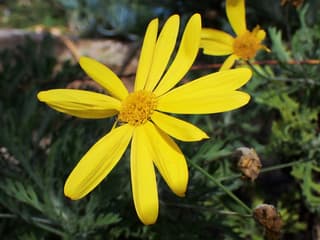
Gray-leaved Euryops
Euryops pectinatus
Gray-leaved Euryops (Euryops pectinatus) is an evergreen shrub native to South Africa, belonging to the Asteraceae family. It is prized for its silvery-gray aromatic foliage and vivid bright-yellow daisy-like flowers, which bloom almost year-round in mild climates. The plant forms a rounded mound 90–180 cm tall and wide, making it ideal for borders, slopes, and coastal gardens.
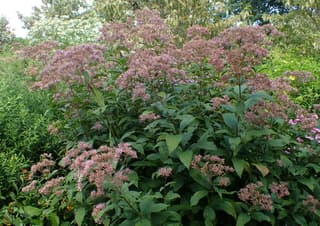
Spotted Joe-Pye Weed
Eutrochium maculatum
Spotted Joe-Pye weed (Eutrochium maculatum, synonym Eupatorium maculatum) is a perennial herbaceous plant native to North America in the Asteraceae family, growing naturally in moist meadows, stream banks, and marshy areas. The plant forms upright, sturdy, often purple-spotted stems up to 210 cm tall and bears large hemispherical pinkish-purple flower heads in late summer and autumn that attract butterflies and bees. In gardens, it is used as a background plant for moist borders, rain gardens, and naturalistic plantings.
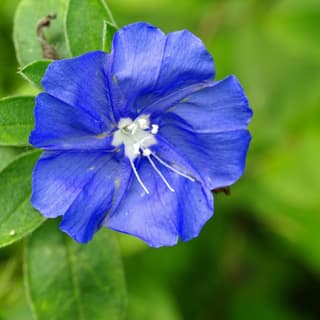
Blue Daze
Evolvulus glomeratus
Blue Daze (Evolvulus glomeratus) is a low-growing, spreading perennial native to Brazil, belonging to the Convolvulaceae family. It produces a continuous display of sky-blue flowers with white centers that open each morning and close in the evening or on cloudy days. It is widely used as ground cover, border plant, and in hanging baskets.
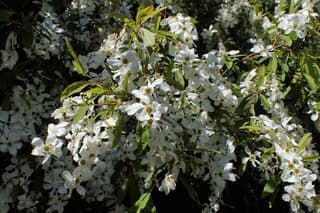
common pearlbush
Exochorda racemosa
A deciduous ornamental shrub native to China and Korea, common pearlbush is prized for its brief but spectacular spring display: masses of pure-white, five-petaled flowers open from round buds that resemble strings of pearls along arching branches. It grows 8-10 ft (2.4-3 m) tall and often wider, with a graceful, fountain-like habit. Medium-green, oval leaves show no notable fall color. Once established it is drought- and heat-tolerant, low-maintenance, and largely free of serious pests or diseases, making it a reliable backbone shrub for borders, foundation plantings, and mixed hedges.
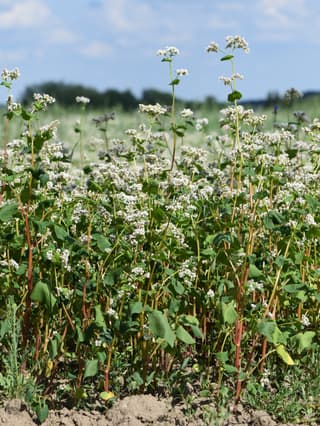
Buckwheat
Fagopyrum esculentum
Buckwheat is an extremely fast-growing annual herbaceous plant. Although it is used as a cereal, it is technically a pseudocereal belonging to the Polygonaceae family. Its leaves are heart-shaped, and it produces clusters of small white or pink flowers that are very attractive to bees. Its triangular grains are highly nutritious and gluten-free.
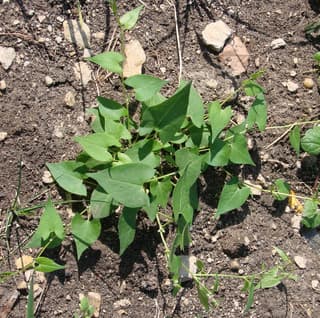
Black bindweed
Fallopia convolvulus
Black bindweed (Fallopia convolvulus, syn. Polygonum convolvulus) is an annual twining vine in the family Polygonaceae, native to Eurasia and North Africa. It has heart-shaped leaves and slender, twining stems that climb over other plants and structures, producing small greenish-white flowers, sometimes tinged pink, from late spring through fall. It is a common agricultural weed found in cultivated fields and disturbed ground, but is also grown as a fast-growing ground cover.
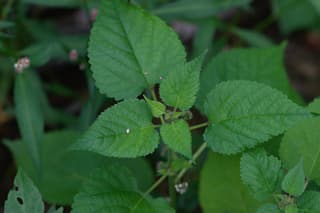
Hairy crabweed
Fatoua villosa
Hairy crabweed (Fatoua villosa) is a summer annual in the mulberry family, native to eastern Asia and now a common weed across the southern and eastern United States. It looks like a small mulberry seedling, with heart-shaped, toothed, hairy and slightly sticky leaves on erect, branched stems that range from a few inches to over 4 feet tall. It favors moist, shaded, disturbed ground such as flower beds, nursery containers, greenhouses and wetland edges. Tiny flower clusters appear from spring through fall, and seedlings can flower within about 12 days of reaching the two-leaf stage.
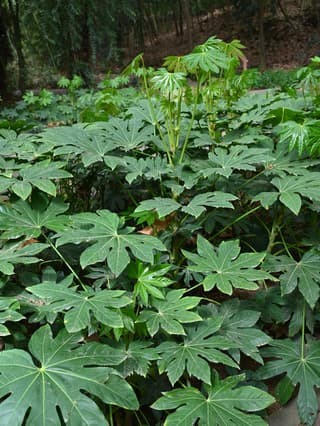
Japanese Aralia
Fatsia japonica
Fatsia japonica is an evergreen shrub native to Japan with dramatic, glossy, hand-shaped leaves that can have 7-11 lobes and grow up to 40 cm wide. Highly valued as an ornamental plant for both indoor spaces and shaded gardens, it is one of the few tropical-looking foliage plants that thrives in deep shade.
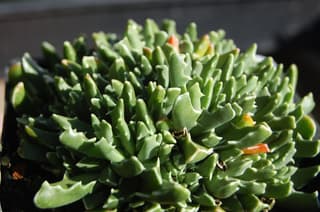
Tiger's Jaws
Faucaria bosscheana
Faucaria bosscheana is a compact succulent from the Aizoaceae family, native to the arid regions of South Africa (Eastern Cape). It forms low rosettes of thick, triangular, grayish-green leaves with soft, interlocking teeth along the margins that resemble the jaws of a feline, hence its common name. In autumn and winter, it produces solitary, bright yellow daisy-like flowers that open during the day. It is a slow-growing plant, ideal for rock gardens, pots, or succulent arrangements in very bright indoor spaces.
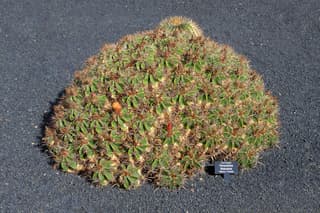
Barrel Cactus
Ferocactus
Ferocactus is a genus of roughly 30 species of barrel-shaped cacti native to the deserts of the southwestern United States and northern Mexico, ranging from California and Arizona to Sonora and Baja California. Young plants start out columnar and gradually swell into the thick, ribbed, barrel-like form that gives the genus its common name. Most species grow as solitary stems covered in dense, often hooked or brightly colored spines, though a few species such as F. robustus and F. glaucescens form clumping colonies over time. In cultivation, barrel cacti are prized as sculptural, low-maintenance succulents for xeriscapes, rock gardens, and sunny windowsills.

Emory's Barrel Cactus
Ferocactus emoryi
Ferocactus emoryi is a tall, barrel-shaped cactus native to the Sonoran Desert of Arizona, Sonora and Baja California. Young plants are globular and become cylindrical with age, eventually reaching barrel or column form armed with strong, hooked spines. In late summer to early fall it produces bell-shaped yellow, orange or red flowers in a crown at the apex.
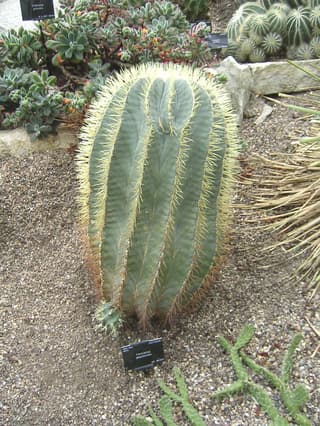
Blue Barrel Cactus
Ferocactus glaucescens
The Blue Barrel Cactus (Ferocactus glaucescens) is a globular to barrel-shaped cactus native to central Mexico, prized for its striking blue-green (glaucous) epidermis and dense crown of golden-yellow radial spines. Mature plants form a compact, ribbed barrel that can reach about 60 cm in height and 50 cm in diameter, eventually clustering into small colonies via basal offsets. In late spring and summer it produces funnel-shaped, lemon-yellow flowers near the crown, followed by small white berry-like fruits. It is a slow-growing, low-maintenance succulent that thrives in full sun and well-draining soil, making it a popular choice for xeriscaping and container gardens.
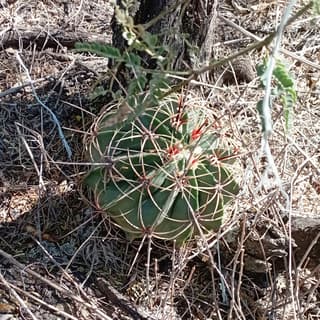
Mexican Barrel Cactus
Ferocactus histrix
Ferocactus histrix, commonly known as the Mexican Barrel Cactus, is a globular succulent species native to the arid regions of Mexico. It is characterized by its bluish-green body with prominent ribs and robust yellowish or reddish radial spines. Over time, the plant may transition from perfectly spherical to slightly columnar. It produces funnel-shaped flowers at the top of the crown, usually in shades of yellow, followed by fleshy fruits.
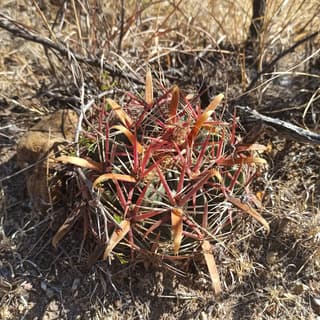
Devils Tongue Cactus
Ferocactus latispinus
Ferocactus latispinus is a solitary, globular to short-cylindrical cactus native to central Mexico, prized for its broad, flattened, hooked central spines that range from red to yellow. It grows slowly to about 30-100 cm tall and 40-45 cm wide, producing funnel-shaped pink to purple (occasionally yellowish) flowers in late autumn and early winter.
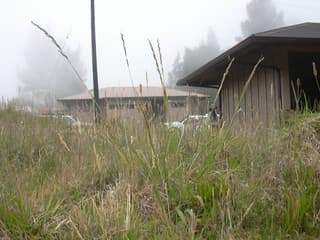
Tall Fescue
Festuca arundinacea
Tall fescue (Festuca arundinacea) is a coarse-textured, cool-season perennial bunchgrass in the Poaceae family, native to Europe and North Africa and now widely grown across temperate regions as a low-maintenance turf and forage grass. It forms dense clumps of dark green, ribbed leaves and can reach up to 1.5 m when left unmowed. It is prized for its deep root system, which provides excellent drought, heat, and wear tolerance compared to other cool-season grasses. Taxonomic note: molecular studies have reclassified the species under the synonyms Schedonorus arundinaceus and, more recently, Lolium arundinaceum, but Festuca arundinacea remains the name most widely used in horticultural and agronomic literature.
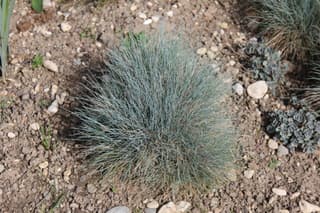
Blue Fescue
Festuca glauca
Blue fescue is a compact, clump-forming ornamental perennial grass known for its striking silvery-blue, needle-thin foliage. Native to Europe, it is prized in low-maintenance gardens, borders, and rock gardens for its year-round color and textural contrast.
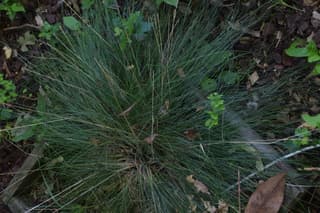
Sheep's Fescue
Festuca ovina
Festuca ovina, commonly known as sheep's fescue, is a densely tufted, cool-season perennial grass in the Poaceae family. Native to Europe and Asia and naturalized across North America, it forms neat, low-growing clumps of narrow, wiry, blue-green to gray-green blades. Non-rhizomatous and slow to spread, it stays put as a tidy mound rather than running through the garden. In late spring to early summer it sends up slender, slightly one-sided flowering panicles on wiry stems. Prized for its fine texture, drought tolerance, and ability to thrive in poor, sandy or rocky soils, sheep's fescue is a low-maintenance choice for rock gardens, borders, slopes, and mass ground-cover plantings.
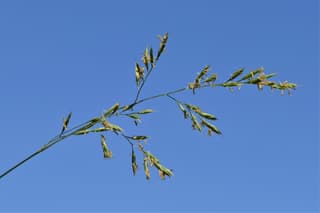
Red Fescue
Festuca rubra
Red Fescue (Festuca rubra) is a cool-season perennial grass in the Poaceae family, widely used for lawns, meadows, and shaded garden areas. Its fine, thread-like, deep green blades form dense tufts that spread slowly via rhizomes, creating a soft, resilient turf. It is valued for its shade tolerance, drought resistance once established, and lower maintenance needs compared to many other turfgrasses.
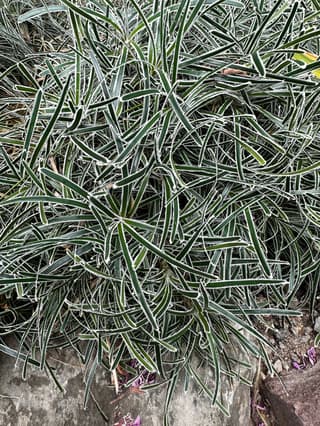
Sedge
Ficinia
Ficinia is a genus of some 70-90 tufted, evergreen sedges (family Cyperaceae), the great majority endemic to South Africa's Cape Floristic Region, with a few species reaching New Zealand and Australia. Ornamental cultivars, most famously Ficinia truncata 'Ice Crystal', form neat clumps of narrow, grass-like foliage and are prized as low-maintenance border, container or rockery plants. This is a genus-level care profile; individual species vary in size, colour and exact habitat.

Afghan Fig
Ficus afghanistanica
The Afghan Fig (Ficus afghanistanica) is a deciduous fig tree native to the arid, mountainous regions of Afghanistan and Central Asia. It has small, silvery, lobed leaves and reddish bark, distinguishing it from the common fig. Hardy and drought-tolerant, it produces small, dark, sweet edible figs and is grown both as an ornamental container plant and as a landscape tree in warm, dry climates.
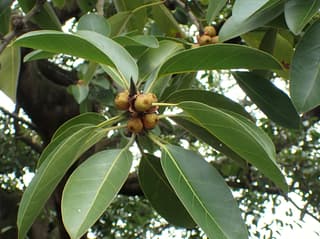
Council Tree
Ficus altissima
The Council Tree (Ficus altissima) is a large tropical fig native to Southeast Asia, widely grown as an indoor ornamental for its big, glossy, leathery leaves. In the wild it behaves as a "false banyan," sending down aerial roots over host trees. Its common name comes from the historic practice of village communities gathering for meetings and deliberations in the shade of its broad canopy.
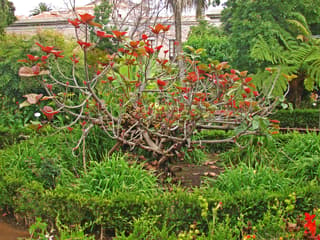
Roxburgh Fig
Ficus auriculata
Ficus auriculata, commonly known as the Roxburgh fig or Elephant Ear fig, is a striking tropical tree native to South and Southeast Asia (India, Nepal, southern China). It is famous for its enormous heart-shaped leaves that can reach up to 38 cm (15 inches) in diameter, and for its edible figs that grow directly from the trunk and main branches in a phenomenon known as cauliflory.
Indian Banyan
Ficus benghalensis
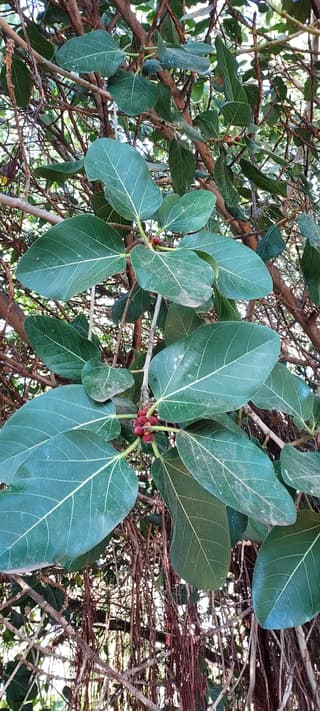
The Indian Banyan (Ficus benghalensis) is one of the world's most remarkable trees, native to the Indian subcontinent. Famous for its aerial roots that descend to the ground and become secondary trunks, it can spread across entire acres in the wild. As a houseplant, it is grown in the compact "Audrey" form, beloved for its large velvety deep-green leaves and for being far more forgiving than the fiddle leaf fig.
African Fig
Ficus cyathistipula
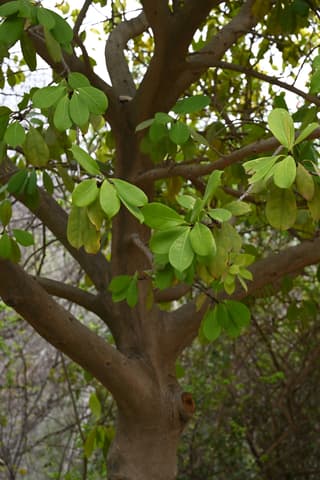
Ficus cyathistipula, commonly known as the African Fig, is a robust evergreen tree native to the tropical forests of Central and Western Africa. It features large, leathery, deep glossy green leaves with a characteristic obovate shape. It is one of the most resilient Ficus species for indoor cultivation, being more tolerant of humidity and light variations than Ficus benjamina. Its persistent cup-shaped stipules at the base of the leaves give rise to its scientific name.

Rubber Plant
Ficus elastica
A hardy tropical plant native to Southeast Asia, known for its large, glossy, dark green leaves. One of the most popular houseplants due to its striking appearance and easy care. Can grow up to 6-10 feet indoors and is an excellent air purifier.
Narrow-Leaf Fig
Ficus longifolia
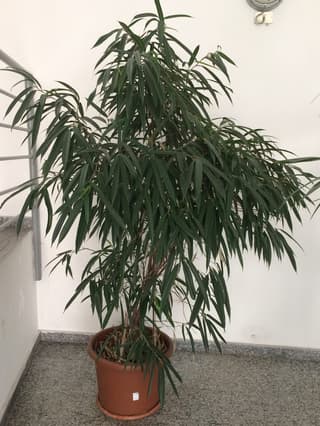
Ficus longifolia, widely sold in the houseplant trade as the narrow-leaf fig (also known as Ficus Alii), is a tropical evergreen fig in the Moraceae family. Native to tropical regions of Africa and Asia, it is grown almost exclusively as an ornamental indoor tree, prized for its slender, glossy, lance-shaped leaves that give it a graceful, weeping silhouette distinct from broader-leaved ficus relatives. Like other figs, it produces its tiny flowers hidden inside an enclosed syconium (fig), so showy blooms are not part of its appeal - the foliage is the star. Indoors it can be trained into a small tree or braided-trunk form, reaching up to about 3 m (10 ft) in a container over many years.
Natal Fig
Ficus natalensis
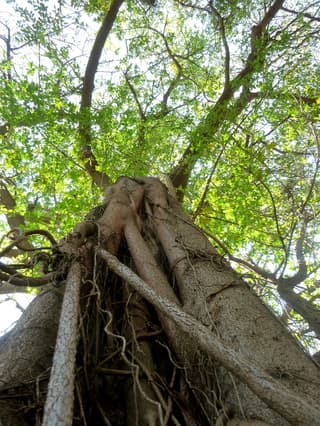
Ficus natalensis, commonly known as the Natal fig, is an evergreen tree in the fig family (Moraceae), native to eastern and southern Africa, ranging from north-eastern South Africa up through Uganda and Kenya. In the wild it can grow from 10 to 30 meters tall, forming a wide-spreading crown with characteristic aerial roots typical of strangler figs. Its leaves are glossy, elliptical and leathery, and it bears small reddish or yellowish figs. Thanks to its vigorous growth, thickening trunk, and excellent tolerance to pruning and wiring, it has become one of the most popular species for bonsai cultivation and is also grown as a low-maintenance houseplant.
Easy Care Easy Care
Our selection of 2332 easy easy care combines the characteristics of this category with reduced care needs. Perfect for beginners who love this category.
Why Choose Easy Easy Care?
Combining the beauty of easy care with easy difficulty level lets you enjoy this category without excessive maintenance worries. Each plant was selected to offer the best characteristics of the category at the care level you are looking for.