283 Easy Succulents | 2026 Guide - Page 6
Find 283 easy succulents. Complete guide for your garden.
283 Succulents with easy level
Showing 181-216 of 283
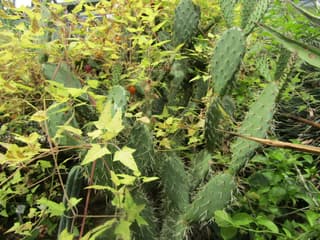
Prickly Pear
Opuntia orbiculata
Opuntia orbiculata is a paddle-type cactus belonging to the Cactaceae family, native to arid and semi-arid regions of the Americas. It forms shrubby clumps with flattened, succulent segments (pads) covered in glochids—tiny, fine, barbed spines that detach easily when touched. It is a hardy plant that grows in stacked segments, blooming in late spring and early summer with large, showy flowers followed by edible fruits (known as 'tunas').
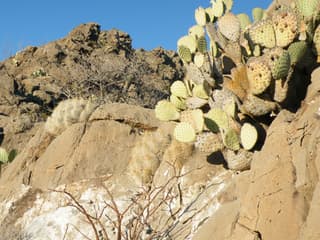
Blind Prickly Pear
Opuntia rufida
Opuntia rufida is a shrubby, many-branched cactus native to the Chihuahuan Desert of Big Bend, Texas and northern Mexico. Its flattened, blue-green pads (cladodes) are spineless but densely covered in reddish-brown glochid clusters that give the plant its cinnamon-colored look and its common name, since livestock that brush against the glochids can be blinded. In summer it produces yellow flowers that fade to apricot or red, followed by reddish edible fruit.
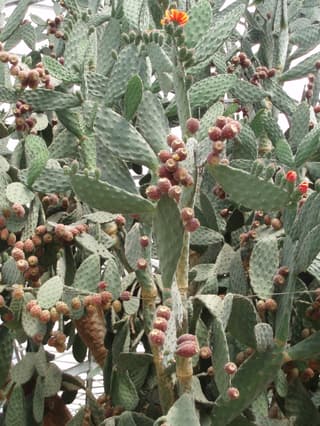
Woollyjoint Prickly Pear
Opuntia tomentosa
Opuntia tomentosa, the woollyjoint prickly pear, is a tree-forming cactus native to central Mexico's semi-arid highlands. Over years it develops a short, thick trunk topped with broad, velvety green pads covered in fine, felt-like hairs (hence 'tomentosa'), eventually reaching 3-6 m and occasionally up to 8 m in the wild. In spring and summer it bears yellow-to-orange, sometimes red-tinged flowers followed by sweet, edible reddish-purple fruit ('tunas'). Extremely drought tolerant once established, it thrives in full sun and sandy, fast-draining soil, and is grown both ornamentally and for its edible pads and fruit.
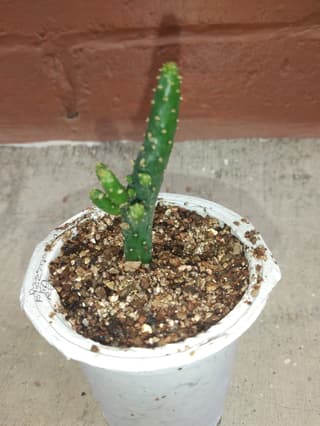
Tuna Prickly Pear
Opuntia tuna
Opuntia tuna, commonly known as tuna prickly pear or Caribbean prickly pear cactus, is a robust columnar cactus native to the Caribbean and tropical Americas. Its flattened pads (cladodes) are armed with spines and glochids, and it produces showy yellow-to-orange flowers in spring and summer, followed by edible reddish fruits.

Old Man of the Andes
Oreocereus celsianus
A slow-growing columnar cactus native to the Andes of Bolivia, Peru, and Argentina, where it grows at altitudes between 2,900 and 3,600 meters. Its upright stems, which branch at the base, are covered in dense white wool and long yellowish spines. They can reach up to 3 meters in height in the wild, though they rarely exceed 1 meter in cultivation. The white 'beard' covering the top of the stems protects the plant from intense solar radiation and the extreme temperature fluctuations of its high-altitude habitat, giving it its popular names. In spring, it produces tubular pinkish-purple flowers, usually pollinated by hummingbirds, followed by small globose fruits.
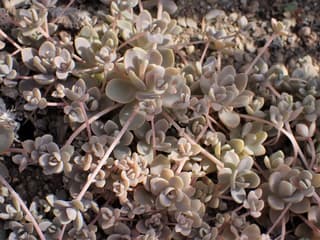
Green Dunce Cap
Orostachys malacophylla
Orostachys malacophylla is a hardy, monocarpic succulent from the Crassulaceae family (the same family as stonecrops and sedums). The plant forms dense rosettes of fleshy, bluish-green to green leaves with a diameter of 4-15 cm and spreads via runners (stolons), forming dense mats of rosettes. In the autumn, mature rosettes produce a conical inflorescence up to approximately 20 cm with white to greenish flowers and yellow stamens—after which the specific flowering rosette dies, while the numerous offsets ensure the colony lives on. The species is very hardy (USDA zones 3a-8b) and tolerates heavy frost, and the plant is not considered toxic to humans or pets.
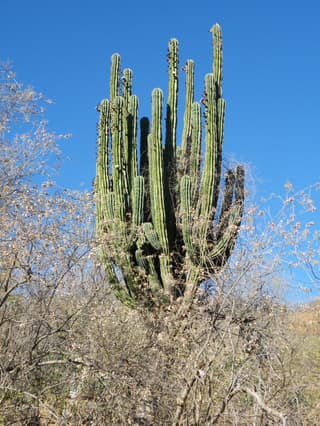
Indian Comb Cactus
Pachycereus pecten-aboriginum
Pachycereus pecten-aboriginum, known as the Indian Comb Cactus, is a massive columnar cactus native to western Mexico, from Sinaloa and Sonora to Chiapas. It can grow up to 20 meters tall with stems up to 1 meter in diameter. Its white nocturnal flowers are pollinated by bats, and its golden spiny fruits were historically used by indigenous peoples as hairbrushes — giving rise to its common name.
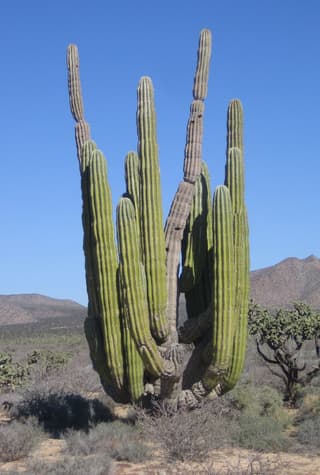
Mexican giant cardón
Pachycereus pringlei
Pachycereus pringlei, commonly known as the Mexican giant cardón or elephant cactus, is the tallest cactus species in the world and a defining feature of the Sonoran and Baja California deserts in northwestern Mexico. This columnar giant can grow up to 19.2 meters (63 feet) tall, live for over 300 years, and weigh as much as 25 tons at full maturity. Its blue-green trunk bears 10 to 16 ribs lined with clusters of brownish spines, and mature plants produce large, nocturnal white flowers followed by spiny red fruits that were historically a vital food source for the indigenous Seri people.
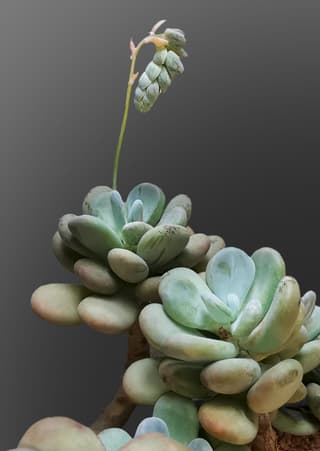
Moonstones
Pachyphytum
Pachyphytum is a genus of succulents in the stonecrop family (Crassulaceae), native to central-eastern Mexico, comprising about 25 to 27 species. Commonly known as "moonstones," these plants form compact rosettes of thick, plump, oval leaves coated in a fine powdery farina that gives them blue-grey, greenish, or pinkish tones. The care information here is based primarily on Pachyphytum oviferum, the most widely cultivated species in the genus.
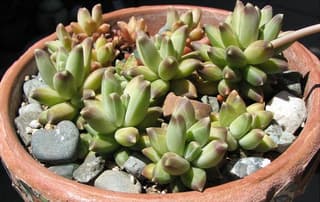
Little Jewel
Pachyphytum compactum
Succulent native to Mexico (Hidalgo and Querétaro) with compact rosettes of plump, cylindrical leaves covered in a grayish waxy bloom. It forms branching clumps up to about 15 cm tall and flowers in late spring.
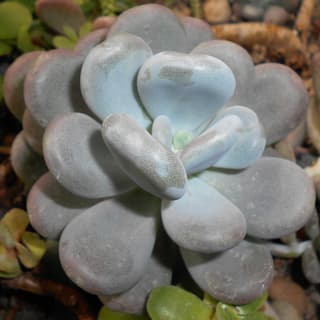
Moonstone Succulent
Pachyphytum oviferum
Pachyphytum oviferum, commonly known as the Moonstone Succulent, is a charming species native to the rocky cliffs of San Luis Potosí, Mexico. It belongs to the family Crassulaceae and is prized for its plump, egg-shaped leaves coated in a silvery-white farina (pruina) that gives them a dreamy, translucent appearance reminiscent of precious moonstones.
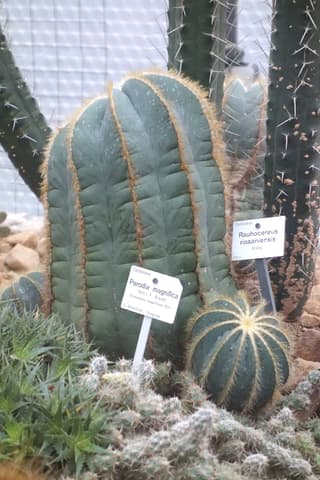
Parodia / Ball Cactus (genus)
Parodia
Parodia is a genus of globular and columnar cacti native to South America, particularly Argentina, Bolivia, Brazil, and Uruguay. These compact plants are highly prized in cactus collections for their ease of care and vibrant flowers in shades of yellow, orange, and red that emerge from the crown.
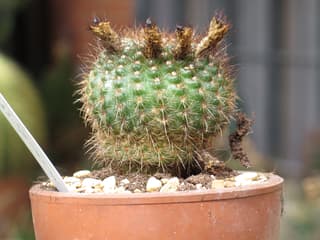
Hybrid Ball Cactus
Parodia × erubescens
Parodia × erubescens is a hybrid cactus from the Cactaceae family, native to South America. It features a compact globular form with golden spines and brilliant yellow flowers that bloom in spring and summer. Extremely drought-tolerant and low-maintenance, it is ideal for cactus collectors and succulent beginners alike.
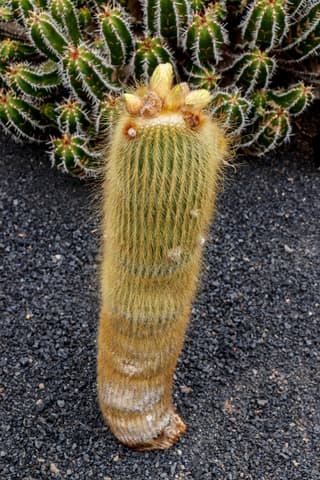
Golden Ball Cactus
Parodia leninghausii
Parodia leninghausii, commonly known as the golden ball cactus or lemon ball cactus, is a columnar cactus native to Rio Grande do Sul in southern Brazil, where it grows on rocky outcrops and cliff faces. Young plants are spherical, gradually becoming columnar with age and reaching up to 1 meter tall. The plant is covered in fine, soft golden spines that give it its characteristic shining appearance. Mature specimens produce bright yellow flowers at the crown during the growing season.
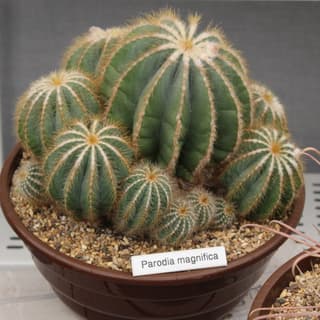
Balloon Cactus
Parodia magnifica
Parodia magnifica, commonly known as the Balloon Cactus, is a small globular cactus native to the grasslands and rocky slopes of southern Brazil and Uruguay. Its blue-green, ribbed body is covered in fine golden spines and often forms dense clusters over time. In summer, it crowns itself with vivid yellow flowers that open only in bright sunlight, making it a rewarding and low-maintenance addition to any sunny windowsill or succulent garden.
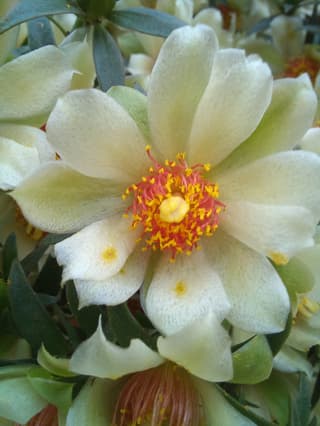
Ora-pro-nobis
Pereskia aculeata
Pereskia aculeata, popularly known as Ora-pro-nobis, is a unique climbing cactus that features true, succulent leaves. Native to Brazil, it is renowned as a superfood, containing high levels of protein, iron, and fiber. Its flowers are white and fragrant, attracting pollinators, and its branches have thorns that make it excellent for living fences.
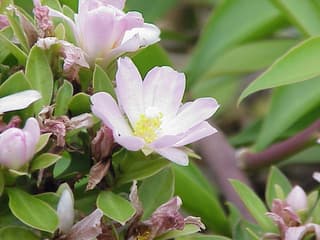
Rose Cactus
Pereskia grandifolia
Pereskia grandifolia, known as the rose cactus, is a tree-like cactus native to eastern and southern Brazil. Unlike typical cacti, it has broad, non-succulent leaves and a spiny woody stem. It grows 3-6 m tall and produces showy bright pink flowers from spring through summer. It is widely grown as an edible leaf vegetable and as an ornamental hedge.
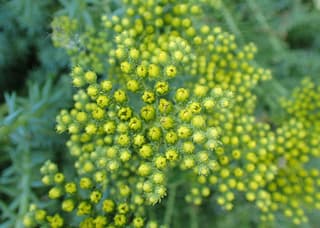
Stonecrop
Petrosedum
Petrosedum is a genus of hardy, mat-forming stonecrops segregated from Sedum, including the popular blue and Jenny stonecrops (such as P. rupestre). These evergreen succulents form low spreading carpets of needle-like blue-green to golden foliage and lift bright yellow star-shaped flowers on short stems in summer.
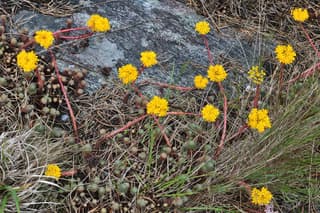
Rock Stonecrop
Petrosedum forsterianum
Petrosedum forsterianum, commonly known as Rock Stonecrop, is a mat-forming evergreen succulent native to rocky cliffs and coastal outcrops of Atlantic Europe. It produces dense cushions of blue-green foliage and bright yellow star-shaped flowers in summer.
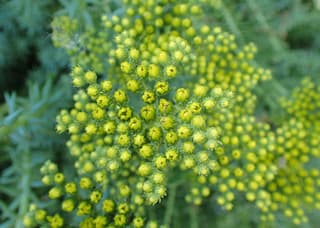
Blue Stonecrop
Petrosedum rupestre
Petrosedum rupestre, formerly known as Sedum rupestre, is a creeping perennial succulent native to Europe. Its leaves are cylindrical, pointed, and have a bluish-green or grayish hue, resembling small pine branches. In summer, the plant produces upright stems bearing dense clusters of star-shaped yellow flowers, which are highly attractive to pollinators.
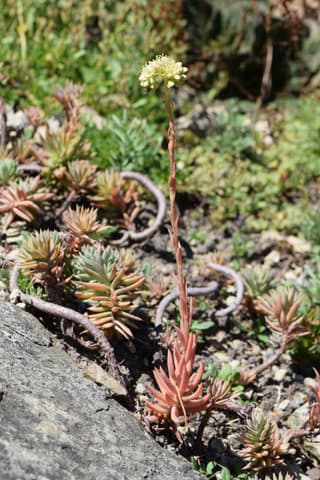
Pale Stonecrop
Petrosedum sediforme
Petrosedum sediforme (syn. Sedum sediforme) is a Mediterranean perennial succulent in the family Crassulaceae. It forms dense mats of compact rosettes with fleshy blue-green or grey-green leaves and produces pale yellow to cream flowers in late spring and summer. Exceptionally drought-tolerant, it thrives in rock gardens, walls, and xeriscape plantings across USDA zones 7–10.
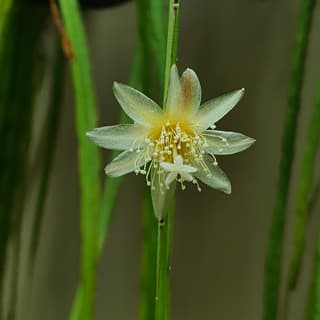
Bolivian Forest Cactus
Pfeiffera boliviana
Pfeiffera boliviana (synonym Lepismium bolivianum) is an epiphytic cactus native to the montane forests of Bolivia and northwestern Argentina, where it grows hanging from tree branches and other plants in a non-parasitic manner. The species features flat, ribbon-like green stems with wavy margins that can reach up to one meter in length, making it a highly valued indoor hanging plant. During spring and summer, small funnel- or rosette-shaped flowers develop in white or pale pink, often appearing individually at the stem areoles. Unlike desert cacti, this species is adapted to a more humid, shaded forest climate and thrives best in filtered light with consistent watering.
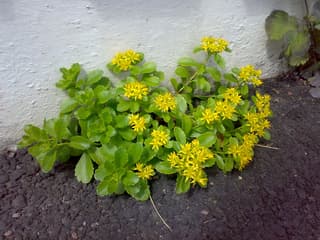
Siberian Stonecrop
Phedimus hybridus
Phedimus hybridus (formerly Sedum hybridum), commonly called Siberian stonecrop, is a low-growing succulent groundcover native to eastern and central Siberia and Central Asia, now widely naturalized across northern Europe. It forms dense mats via branching, woody rhizomes, with fleshy leaves and clusters of star-shaped yellow flowers appearing on short stems from late spring through summer. Extremely cold-hardy and drought-tolerant, it thrives in rocky, well-drained soils on sunny slopes and is a popular choice for rock gardens, green roofs, and ground cover plantings.
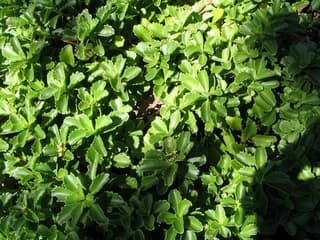
Kamchatka Stonecrop
Phedimus kamtschaticus
Phedimus kamtschaticus, commonly known as Kamchatka Stonecrop or Orange Stonecrop, is a low-growing succulent perennial in the Crassulaceae family. Native to rocky slopes of the Russian Far East, northern China, Japan, and Korea, this tough groundcover produces star-shaped golden-yellow flowers in summer over a mat of fleshy, bright green scalloped leaves that turn shades of orange and bronze in autumn. Its remarkable cold hardiness — surviving down to -34°C (-29°F) — combined with drought tolerance and fast spreading habit makes it one of the most versatile and low-maintenance groundcover plants available for temperate and cold climates.
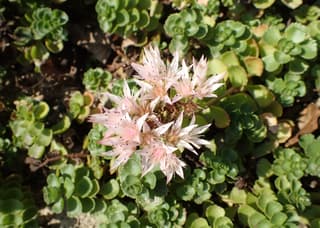
Two-row Stonecrop
Phedimus spurius
Phedimus spurius, commonly known as Two-row Stonecrop or Caucasian Stonecrop, is a hardy perennial succulent groundcover in the family Crassulaceae, native to the Caucasus region. Formerly classified as Sedum spurium, it is prized for its exceptional cold and drought tolerance, spreading mat-forming habit, and starry summer flowers in shades of pink, red, and white. It excels in rock gardens, slopes, borders, and as a lawn alternative.
Pilosocereus (genus)
Pilosocereus
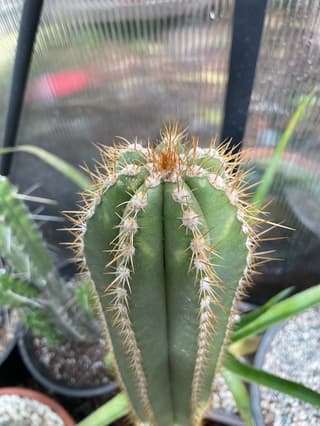
Pilosocereus is a genus of columnar cacti native to Brazil and the Caribbean, recognized by their striking blue-green waxy stems and dense white woolly hair. Many species grow several meters tall and produce nocturnal flowers.
Brazilian Blue Cactus
Pilosocereus azureus
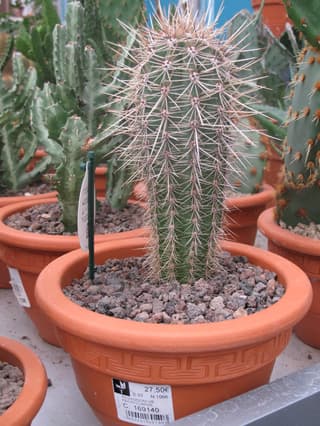
Pilosocereus azureus, commonly known as the Brazilian Blue Cactus, is a columnar cactus native to Brazil's rocky caatinga and cerrado scrublands. Its most striking feature is the blue-grey coloration of the stem, caused by a waxy epicuticular coating that shields it from intense sunlight. In habitat it can grow up to 10 meters tall, branching into clusters covered in golden-yellow spines. It produces large white, night-blooming flowers pollinated by bats and moths, typically appearing from spring into summer.
Brazilian Cactus
Pilosocereus chrysostele
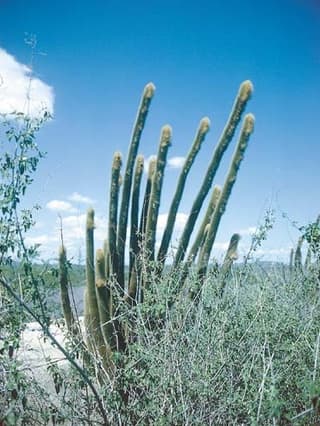
Pilosocereus chrysostele is a columnar cactus native to the Caatinga, a seasonally dry tropical forest in northeastern Brazil (Ceará, Paraíba, Pernambuco and Rio Grande do Norte). It grows in clumps that branch only near the base, forming upright columns with a blue-green epidermis and pale yellow spines, reaching up to 3 m tall in the wild. Its flowers emerge at night from a woolly lateral structure called a cephalium and are pollinated mainly by bats.
Blue Torch Cactus
Pilosocereus pachycladus
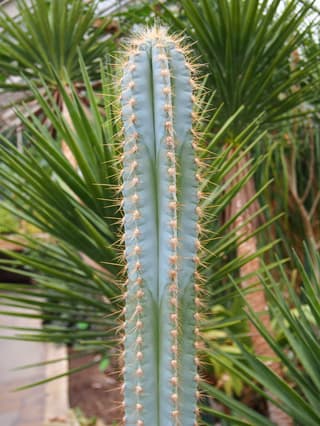
Pilosocereus pachycladus, commonly known as the Blue Torch Cactus or Blue Columnar Cactus, is a columnar cactus native to Brazil, specifically the Caatinga region. Its most striking feature is its intense, waxy blue epidermis, which serves as protection against solar radiation and water loss. It has well-defined ribs with areoles bearing yellowish spines. Its flowers are large, white, and bloom at night, being pollinated primarily by bats.
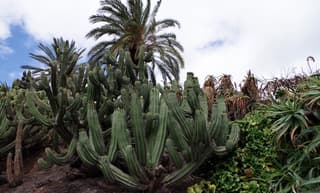
Chichipe Cactus
Polaskia chichipe
Polaskia chichipe is an arborescent and branched columnar cactus, endemic to the Tehuacán-Cuicatlán Valley in the states of Puebla and Oaxaca, Mexico. It grows at altitudes between 1,600 and 2,300 meters in the thorny vegetation known as "chichipera." It reaches 4 to 5 meters in height with a defined trunk and numerous glaucous-green branches with 9 to 12 prominent ribs, armed with short, grayish spines with dark tips. Its flowers are small (2-3 cm), white or yellowish-green with a central pink stripe, with partially nocturnal anthesis in spring-summer. The fruits, called chichitunas, are sweet, red globose berries that ripen in mid-summer; they are consumed fresh and used in artisanal jams and ice creams. The species has a long history of domestication and human management in the indigenous communities of the valley, being considered a fundamental cultural and food element.
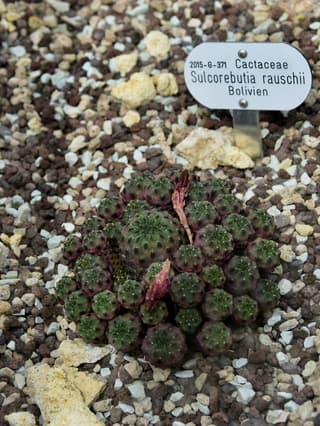
Crown Cactus
Rebutia canigueralii
Rebutia canigueralii is a small globular cactus native to the mountainous regions of Bolivia, where it grows among rocks and stony soils at high altitudes. It forms compact colonies of spherical stems that rarely exceed 10 cm in height, covered with fine, whitish radial spines. In spring, it produces numerous showy flowers in shades of orange, pink, or red with a contrasting center, which open around the base of the stem. It is a slow-growing species highly valued by collectors for its small size, abundant flowering, and hardy nature.
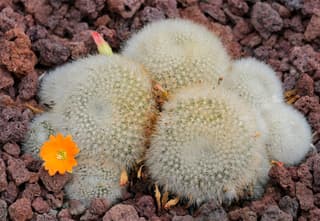
Red Crown Cactus
Rebutia minuscula
Rebutia minuscula, commonly known as the Red Crown Cactus, is a tiny globular cactus native to the mountainous regions of Argentina. Despite reaching only 8 cm in height, it produces an impressive display of red, pink, and orange funnel-shaped flowers from the base of the plant each spring and summer. It is widely regarded as one of the easiest cacti to grow and flower indoors.
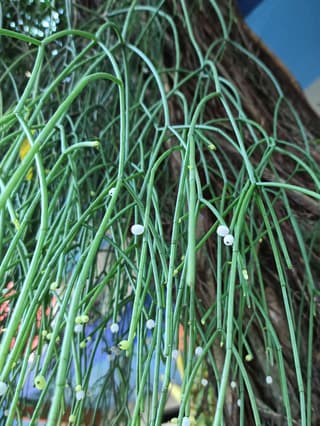
Mistletoe Cactus
Rhipsalis
Rhipsalis is a genus of epiphytic tropical cacti native to the rainforests of Central and South America, with a few species found in Africa and Sri Lanka — the only cacti native outside the Americas. Unlike desert cacti, Rhipsalis grows on trees and rocks in humid tropical forests, thriving under filtered light with regular moisture and high humidity. Its slender, pendulous, segmented stems resemble spaghetti or mistletoe strands, giving rise to its most popular common names. It produces small white or cream flowers in late winter to spring, followed by translucent pearl-like berries. Exceptionally long-lived (25+ years), and confirmed non-toxic to cats, dogs, and humans by the ASPCA.
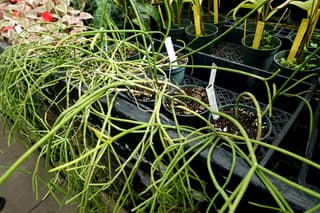
Mistletoe cactus
Rhipsalis baccifera
Rhipsalis baccifera is a unique epiphytic cactus native to Central and South America. Unlike typical desert cacti, this tropical cactus grows on trees in humid forests, hanging gracefully with cylindrical, branching stems that can reach up to 4 meters in length. It is the only cactus species found naturally outside the Americas, extending to Africa and Asia.
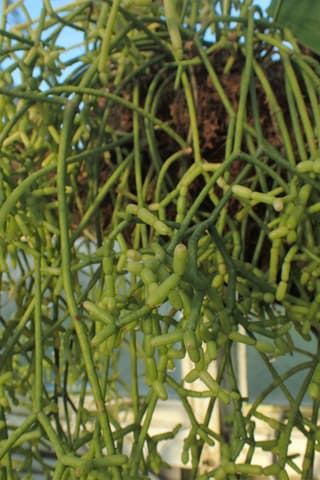
Rice Cactus
Rhipsalis cereuscula
Rhipsalis cereuscula, commonly known as Rice Cactus or Coral Cactus, is an epiphytic cactus native to the Brazilian Atlantic Forest. It features thin, segmented stems that branch profusely into small cylindrical segments resembling grains of rice or coral, giving the plant a delicate, cascading appearance ideal for hanging baskets.

Bride Cactus
Rhipsalis elliptica
Rhipsalis elliptica, commonly known as the Bride Cactus, is a trailing epiphytic cactus native to the humid tropical forests of Brazil. Unlike its desert-dwelling cousins, this jungle cactus grows without spines on trees and rocks, cascading with flat, paddle-shaped (elliptical) segments that can trail up to 2 meters long. Its stems display a rich dark green color, often blushed with purple or magenta under bright light, and in late winter to early spring it produces small, creamy white to pale yellow flowers scattered along the stem margins.
Easy Care Succulents
Our selection of 283 easy succulents combines the characteristics of this category with reduced care needs. Perfect for beginners who love this category.
Why Choose Easy Succulents?
Combining the beauty of succulents with easy difficulty level lets you enjoy this category without excessive maintenance worries. Each plant was selected to offer the best characteristics of the category at the care level you are looking for.