2332 Easy Plants | 2026 Guide - Page 47
Discover 2332 easy plants for your garden. Complete care guide.
2332 Easy Plants
Showing 1657-1692 of 2332
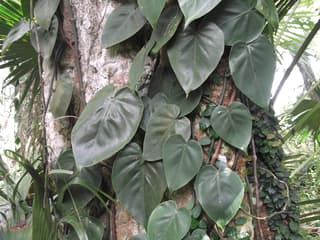
Heartleaf Philodendron
Philodendron hederaceum
Philodendron hederaceum is a climbing or trailing vine native to Central and South America. Its heart-shaped leaves and vigorous growth make it one of the most popular houseplants. It is resilient, adaptable, and an excellent air purifier.

Lemon Lime Philodendron
Philodendron hederaceum 'Lemon Lime'
Philodendron hederaceum 'Lemon Lime' is a chartreuse-leaved cultivar of the heartleaf philodendron, a fast-growing evergreen vine in the Araceae family native to Central America and the Caribbean. Its glossy, heart-shaped leaves emerge lime-yellow and hold their neon color best in bright, indirect light. In its natural habitat the species behaves as a semi-epiphyte, climbing tree trunks with aerial roots, but as a houseplant it is most often grown trailing from a hanging basket or shelf.
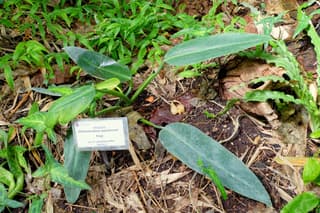
Flask Philodendron
Philodendron martianum
Philodendron martianum, commonly known as the Flask Philodendron or Fat Boy Philodendron, is a species native to the Brazilian Atlantic Forest. It is distinguished by its uniquely swollen, flask-shaped petioles that store water, and its large, glossy, solid dark-green leaves. A robust and ornamental houseplant, it thrives in bright indirect light and is well-suited for indoor cultivation.
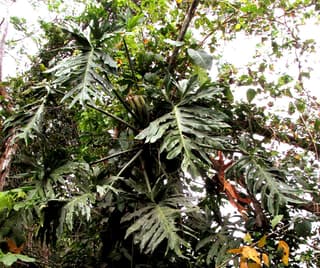
Split-leaf Philodendron
Philodendron radiatum
Philodendron radiatum is a robust, evergreen root-climbing aroid native to the rainforests of southern Mexico, Belize, Guatemala, Honduras, Nicaragua, Costa Rica and Panama. In the wild it lives as an epiphyte or hemiepiphyte, sending down long aerial roots that anchor onto tree trunks as the vine climbs toward the forest canopy, eventually reaching heights of 25 m (82 ft) or more. Its most striking feature is the mature foliage: large, triangular-ovate leaves up to 1 m long and 1 m wide at the base, so deeply lobed with radiating segments that they appear almost pinnate, which is the source of both its scientific epithet "radiatum" and its common name, Split-leaf Philodendron. Juvenile plants carry simpler, less-divided leaves that become progressively more dissected as the vine matures and climbs.
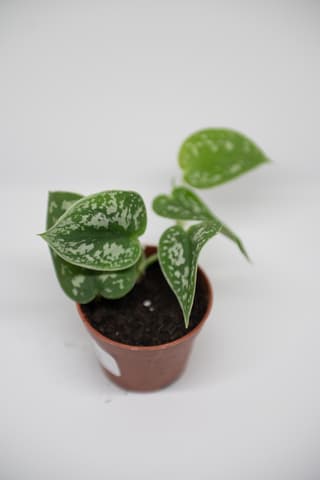
Heartleaf Philodendron
Philodendron scandens
The Heartleaf Philodendron (Philodendron scandens, syn. Philodendron hederaceum) is an evergreen tropical climbing plant from the Araceae family, native to Central and South America. Its glossy, dark green heart-shaped leaves can reach up to 30 cm in length under ideal conditions. It is one of the most popular houseplants in the world due to its ease of care and adaptability to various light conditions.
Xanadu Philodendron
Philodendron xanadu
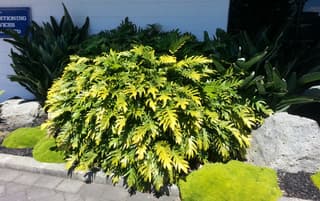
The Xanadu Philodendron (Philodendron xanadu) is a tropical plant native to Brazil, prized for its deeply lobed, glossy dark-green leaves. Compact compared to other philodendrons, it grows in a dense, lush clump and is widely popular as both an indoor and outdoor tropical garden plant. It belongs to the Araceae family and is reclassified by modern botanists under the genus Thaumatophyllum.
Blue Star Fern
Phlebodium aureum
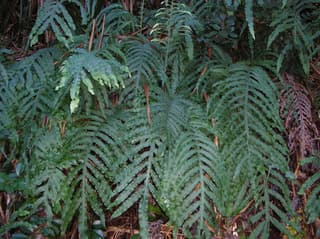
A fascinating epiphytic fern, known for its deeply lobed, blue-green or glaucous fronds. Native to the tropical regions of the Americas, it grows from creeping rhizomes covered in dense, golden scales, which gives it the name 'aureum'. Unlike many ferns, it has a more robust and waxy texture to its leaves.
Timothy-grass
Phleum pratense
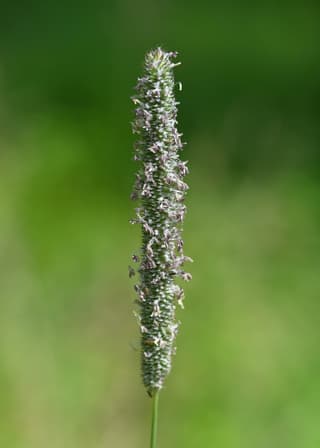
Phleum pratense, commonly known as Timothy-grass or Cat's Tail, is a perennial forage grass belonging to the Poaceae family, native to Europe and temperate Asia, and now naturalized in much of the temperate world. It forms erect clumps up to 100-115 cm tall, with linear leaves and a distinctive compact, cylindrical, greenish-purple inflorescence (a false spike). It is one of the most widely cultivated forage grasses in cool and mountainous regions for hay production and for grazing cattle, horses, sheep, and goats.
Jerusalem sage
Phlomis
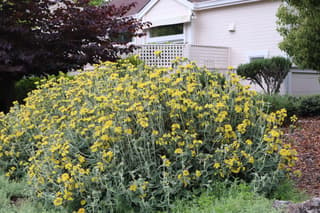
Phlomis is a genus of roughly 100 evergreen to deciduous subshrubs and perennials native to the Mediterranean and Southwest Asia, in the mint family (Lamiaceae). Plants form mounds of wrinkled, woolly gray-green leaves topped by tiered whorls of hooded yellow or pink flowers held on upright spikes from late spring through summer. Highly drought-tolerant once established, Phlomis is prized for xeriscaping, cottage gardens, and pollinator borders.
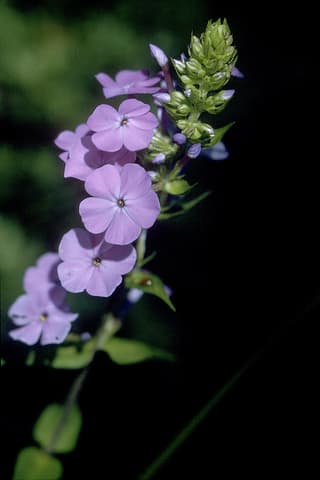
Wild Sweet William
Phlox maculata
Wild Sweet William (Phlox maculata) is a clump-forming herbaceous perennial native to the eastern United States, belonging to the family Polemoniaceae. Its distinctively spotted red-purple stems grow 60–90 cm (2–3 ft) tall and bear dense cylindrical clusters of fragrant flowers in shades of pink, lavender, purple, and white from early to midsummer. Significantly more resistant to powdery mildew than garden phlox (P. paniculata), this native wildflower thrives in moist meadows, woodland edges, and streambanks, attracting butterflies, hummingbirds, and sphinx moths.
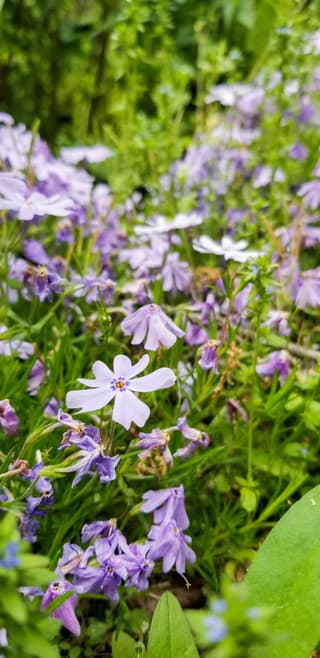
moss phlox
Phlox subulata
Phlox subulata, commonly known as moss phlox, is a vigorous, mat-forming evergreen perennial. It is celebrated for its needle-like foliage and its ability to produce a dense carpet of star-shaped flowers in early spring, often completely obscuring the leaves. It is native to the eastern and central United States and is a staple in rock gardens and as a flowering ground cover.

Date Palm
Phoenix dactylifera
Phoenix dactylifera, commonly known as the Date Palm, is a majestic palm tree native to the Middle East and North Africa. It can reach up to 30 meters in height and has been cultivated for over 5,000 years for its nutritious fruits — dates — and exceptional ornamental value.

Mountain Date Palm
Phoenix loureiroi
The Mountain Date Palm (Phoenix loureiroi) is a small, tough palm native to the hills and forests of southern Asia, from India and Pakistan through Burma, Thailand, Vietnam, China, Taiwan and the Philippines. It grows as a solitary or clustering palm reaching 1-4 m tall, with a trunk clad in diamond-shaped old leaf bases and stiff, plumose pinnate fronds up to 2 m long. Small yellow flowers are followed by bluish-black, single-seeded fruits. In the wild it thrives from sea level to 1,500 m altitude, tolerating both seasonal drought and periodic flooding, and is often found colonizing disturbed ground such as roadsides and rice-paddy borders. As a landscape or container plant it is prized for being slow-growing, drought-tolerant once established, and largely free of the serious pest and disease problems that trouble other ornamental palms.
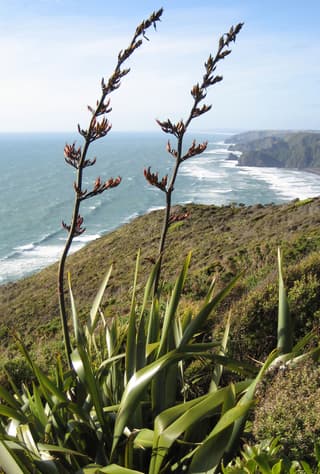
New Zealand Flax
Phormium
Phormium is a small genus of evergreen, clump-forming perennials native to New Zealand, grown for their bold, sword-shaped leaves and striking architectural form. The genus contains two main species, Phormium tenax (New Zealand flax) and the smaller Phormium cookianum (mountain flax), plus dozens of ornamental cultivars in green, bronze, purple, and variegated striped foliage. Tough, wind- and salt-tolerant, and largely pest-resistant once established, Phormium is a mainstay of coastal gardens, mixed borders, and large containers.

New Zealand Flax
Phormium tenax
Phormium tenax, commonly known as New Zealand Flax or Harakeke, is a bold, evergreen perennial native to New Zealand and Norfolk Island. It forms striking clumps of long, sword-shaped leaves that can reach up to 3 meters in height, making it a dramatic focal point in gardens. The plant produces tall flowering spikes of dark red tubular flowers in summer, attracting nectar-feeding birds. It is highly adaptable, tolerating coastal winds, drought, and a wide range of soil conditions once established.
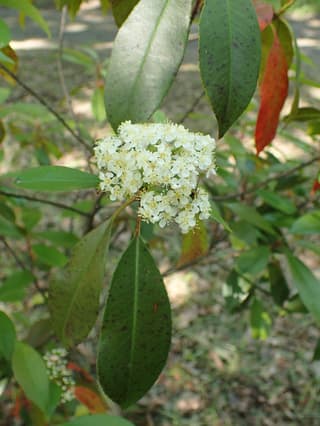
Photinia / Christmas Berry (genus)
Photinia
Photinia is a genus of evergreen shrubs and small trees in the Rosaceae family, prized for their strikingly bright red new growth. The most popular cultivar, Photinia × fraseri 'Red Robin', is widely used as a hedge plant across Europe and temperate regions worldwide. Species range from compact shrubs to small trees reaching up to 5 m, bearing white flower clusters in spring.
Red Tip Photinia
Photinia × fraseri
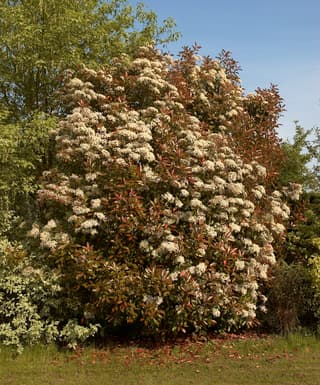
Red Tip Photinia (Photinia × fraseri) is an evergreen hybrid shrub in the rose family, bred from Photinia glabra and Photinia serratifolia. It is widely planted as a hedge for its vivid red new leaves, which contrast with the glossy dark green mature foliage. Small clusters of white flowers appear in spring, followed by red berries in autumn.
Chinese Photinia
Photinia serratifolia
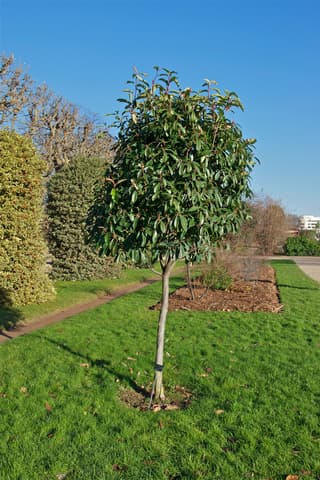
Photinia serratifolia, commonly known as Chinese Photinia or Oriental Photinia, is a broadleaf evergreen shrub or small tree in the Rosaceae family, native to China and Taiwan. It is prized for its striking new growth that emerges apple green to bronze or reddish-purple before maturing to glossy dark green. In spring, it bears terminal clusters of small, white, mildly fragrant flowers followed by small red pome fruits that persist into winter, providing wildlife value. A fast-growing, adaptable plant widely used for hedging, screening, and ornamental planting in temperate gardens worldwide.

Common Reed
Phragmites australis
The Common Reed (Phragmites australis) is a tall, perennial wetland grass that grows in dense stands—known as reed beds—along the banks of standing and slow-flowing bodies of water. It reaches heights of up to four meters and often spreads extensively via vigorous underground rhizomes. The characteristic dark purple to silvery-gray flower panicles appear in late summer and autumn above narrow, blue-green leaves that turn golden-brown in winter. Distributed worldwide, the reed is considered an ecologically significant habitat for birds and insects, but once established, it can spread very aggressively.

Aztec Sweet Herb
Phyla dulcis
Aztec Sweet Herb (Phyla dulcis, syn. Lippia dulcis) is a perennial herb in the Verbenaceae family, native to southern Mexico, Central America, the Caribbean (Cuba, Hispaniola, Puerto Rico), and northern South America (Colombia, Venezuela). The Aztecs used it as a natural sweetener and medicinal herb long before the arrival of Europeans; it was first scientifically described in the 16th century by Spanish physician Francisco Hernández. The leaves contain an extremely sweet substance called hernandulcin, but also contain camphor, so they should only be consumed in small quantities. The plant forms low, creeping to trailing mats with tiny white flowers and is popular in hanging baskets as well as a groundcover.
turkey tangle fogfruit
Phyla nodiflora
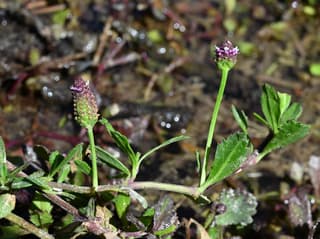
Phyla nodiflora, commonly known as turkey tangle fogfruit or frogfruit, is a vigorous, low-growing perennial groundcover. It features small, serrated green leaves and unique cylindrical flower heads surrounded by tiny white to pinkish-purple flowers. It is highly valued as a sustainable lawn alternative due to its ability to handle foot traffic and its high attractiveness to pollinators like butterflies and bees.
Stonebreaker
Phyllanthus amarus
A small annual tropical herb that grows rapidly to 30-60 cm in height. Native to tropical and subtropical regions of Africa, Americas, India, and Southeast Asia. Characterized by alternately arranged small elliptic-oblong leaves (5-10mm), tiny greenish-yellow flowers, and small seeds. The plant is drought-tolerant and thrives in warm, humid climates. Reaches maturity in 2-3 months.
Golden Bamboo
Phyllostachys aurea
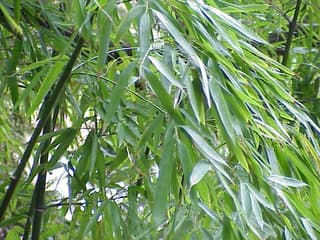
Golden Bamboo (Phyllostachys aurea) is a fast-growing, clump-forming bamboo native to southern China. Its canes start green and develop a golden-yellow hue when exposed to full sun, giving the plant its popular name. It can reach up to 9 meters tall and is widely used as a privacy screen, windbreak, and ornamental feature. However, it is classified as invasive in many regions due to its aggressive underground rhizome spread.
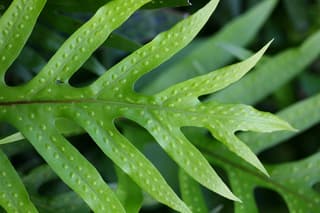
Wart Fern
Phymatosorus grossus
Phymatosorus grossus, commonly called the wart fern or maile-scented fern, is a rhizomatous fern native to the tropical Pacific and Australasia. Its glossy, leathery fronds emerge from creeping, scaly rhizomes and release a maile-like fragrance when crushed. In Hawaii, where it naturalized after being introduced in the early 20th century, its fronds are woven into lei and used to scent traditional kapa cloth. As a houseplant it forms dense, spreading mats of deeply lobed foliage that tolerates low light better than most ferns.
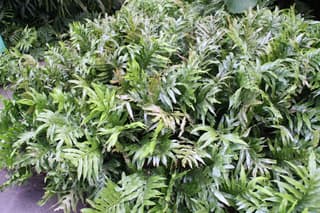
Wart Fern
Phymatosorus scolopendria
Phymatosorus scolopendria, popularly known as the Wart Fern, is a perennial, rhizomatous fern native to the tropical regions of Africa, Asia, and Oceania. Its fronds are leathery, bright green, and deeply lobed, reaching up to 90 cm (35 inches) in height. A striking feature is its sori (reproductive organs) which form rounded protuberances on the upper surface of the leaves, resembling small warts, hence its common name 'wart fern'. Extremely versatile, it can grow as an epiphyte on trees, as ground cover in tropical gardens, or as an indoor ornamental plant in environments with good humidity. It adapts well to shade and partial shade conditions, making it ideal for interiors, well-lit bathrooms, and shaded gardens.
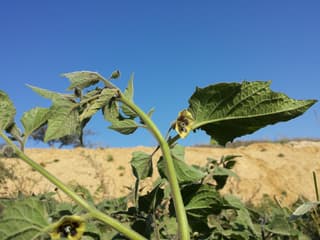
Groundcherry (genus)
Physalis
Physalis is a large genus of the nightshade family (Solanaceae) comprising over 100 species, including the cape gooseberry (P. peruviana), tomatillo (P. ixocarpa), and Chinese lantern (P. alkekengi). All species produce fruit enclosed in a papery husk (calyx), the genus's hallmark trait. They thrive in full sun with well-draining soil and are easy to grow.
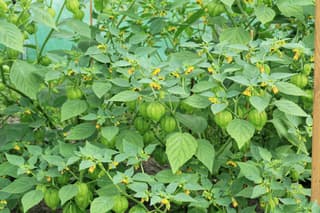
Tomatillo
Physalis ixocarpa
Physalis ixocarpa, commonly known as tomatillo, is an annual plant in the Solanaceae family native to Mexico and Central America. It produces green fruits enclosed in a distinctive papery husk, widely used in traditional Mexican cuisine for salsas, moles, and sauces.

Tomatillo
Physalis philadelphica
Tomatillo (Physalis philadelphica) is an annual herbaceous plant native to Mexico, grown for its small green fruits encased in a papery husk. A staple of Mexican cuisine, tomatillos are essential in salsas, green sauces, and stews. The plant grows vigorously in warm climates with full sun and well-drained soil, often noted as a synonym of Physalis ixocarpa.
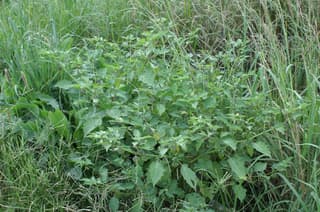
Ground Cherry
Physalis sp
Physalis is a genus of about 90 species in the Solanaceae family, native to the Americas, particularly Central and South America. Known for their distinctive papery husk enclosing an orange berry, these plants are valued for ornamental beauty, edible fruit, and medicinal properties. White to yellow flowers bloom in spring and summer, followed by nutritious fruits rich in vitamins and antioxidants.
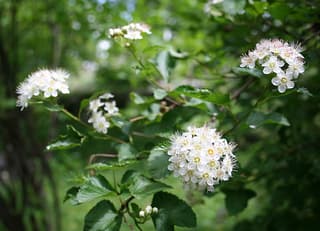
Common Ninebark
Physocarpus opulifolius
Common Ninebark (Physocarpus opulifolius) is a deciduous shrub native to eastern North America, renowned for its distinctive exfoliating bark that peels in multiple thin layers revealing reddish and light-brown inner bark. It produces clusters of creamy-white to pink-tinged flowers in late spring, and is widely valued in landscape gardening for its hardiness, multi-season interest, and adaptability.
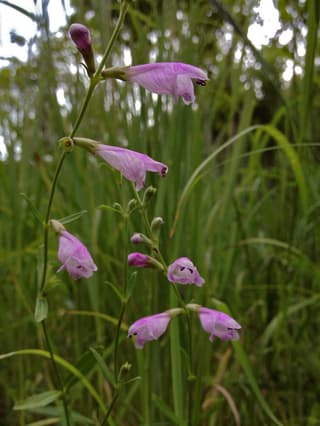
Obedient Plant
Physostegia virginiana
Obedient Plant (Physostegia virginiana) is a hardy, rhizomatous perennial from the mint family (Lamiaceae), native to moist meadows, stream banks, and prairies of North America. Its square stems bear spikes of pink, white, or purplish, dragonhead-like flowers from July to October. It gets its name from the fact that individual flowers, when manually moved, will temporarily hold their new position, as if obeying. It spreads quickly, forming dense clumps, so it's advisable to thin it out occasionally in the garden by division.
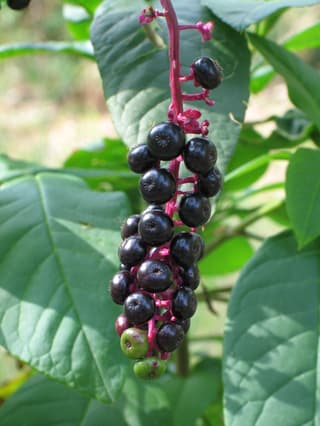
Pokeweed (genus)
Phytolacca
Phytolacca is a genus of approximately 25 species of perennial herbs, shrubs, and trees native to tropical and temperate regions worldwide. The most notable species are Phytolacca americana (American pokeweed), a vigorous weedy perennial of eastern North America, and Phytolacca dioica (ombú), the iconic giant tree-herb of the Argentine pampas. All species are extremely toxic — every part contains saponins and phytolaccatoxin, with berries being particularly dangerous.
Indian Pokeweed
Phytolacca acinosa
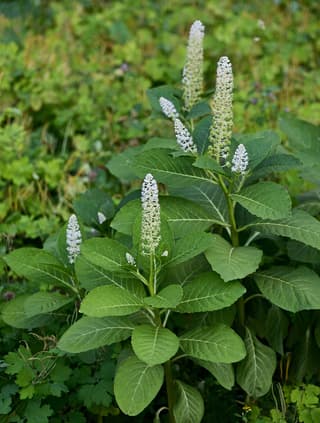
Phytolacca acinosa is a robust, fast-growing herbaceous perennial in the pokeweed family (Phytolaccaceae), native to temperate and tropical Asia (the Himalayas, China, Japan, Korea and Vietnam). It forms clumps of large ovate leaves on reddish-green stems, topped in summer by upright racemes of small white to greenish flowers that ripen into dark purple-black berries. Widely naturalized in parts of Europe and North America, it is grown ornamentally for its bold foliage and berry spikes, though every part of the plant is toxic if eaten raw.
American pokeweed
Phytolacca americana
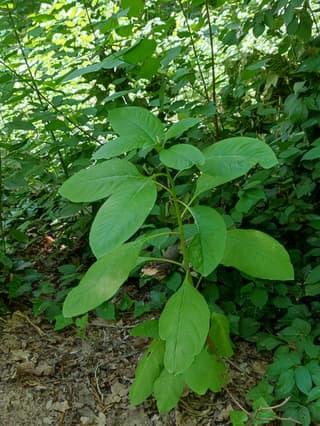
Phytolacca americana, commonly known as American pokeweed, is a large, fast-growing herbaceous perennial native to eastern North America. It can reach up to 10 feet tall with stout reddish-purple stems and large leaves that emit an unpleasant odor when crushed. In summer it produces long racemes of small white flowers followed by striking dark purple-black berries beloved by birds. WARNING: All parts of the plant are highly toxic to humans, dogs, and cats.

Dwarf Alberta Spruce
Picea glauca 'Conica'
Picea glauca 'Conica', or the Dwarf Alberta Spruce, is a slow-growing evergreen conifer derived from the native white spruce (Picea glauca) and discovered in Alberta, Canada, in 1904. This cultivar is renowned for its perfect, symmetrical conical shape—growing only 2 to 4 inches (5–10 cm) per year, making it ideal for small gardens, rockeries, and containers. Its short, soft, bright green needles are densely packed on the stems, giving the plant an elegant, compact appearance. This variety is very cold-hardy (down to -40 °F/-40 °C) and requires minimal maintenance, but it is highly susceptible to spider mites and does not tolerate high humidity or hot summers.
White Spruce
Picea laxa
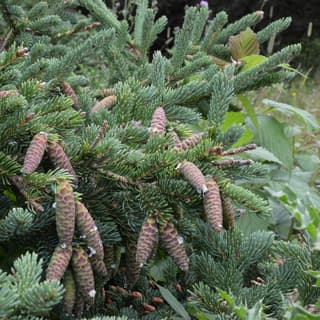
White spruce (Picea glauca), also known as Canadian spruce, is a majestic coniferous tree native to the northern regions of North America—from Alaska to Newfoundland and south to Montana. It is characterized by a dense, conical crown, short four-sided needles of a blue-green color with a characteristic pungent odor, and small, thin cones. It is among the hardiest trees in the world, withstanding freezing temperatures down to -50 °C and surviving harsh northern winters. It grows to a height of up to 25 meters, naturally growing at a slower pace. It is a foundational species of northern forests and provides shelter for many birds and mammals. Dwarf cultivars such as 'Conica' are popular as ornamental plants for both gardens and containers.
What are Easy Plants?
Easy Plants are ideal for beginners or people with little time for care. These species are tolerant of watering mistakes, light variations, and don't require constant attention. Perfect for those just starting out with plants.
Tips for Growing Easy Plants
To succeed with easy plants, remember: less is more. Avoid overwatering, choose a spot with adequate light, and let the soil dry between waterings. Most of these plants prefer to be 'forgotten' occasionally.