283 Easy Succulents | 2026 Guide
Find 283 easy succulents. Complete guide for your garden.
283 Succulents with easy level
Showing 1-36 of 283
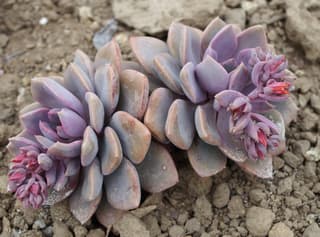
Graptoveria
× Graptoveria
Graptoveria is an intergeneric hybrid succulent genus created by crossing plants from Graptopetalum and Echeveria, two rosette-forming genera native to Mexico and Central America. The result is a compact, symmetrical rosette of thick, fleshy leaves in shades of blue-green, lavender, dusty pink, or silvery white, often covered in a soft powdery bloom (farina) that reflects sunlight and helps the plant conserve moisture. Popular cultivars include 'Fred Ives', 'Moonglow', 'Debbie', and 'Bashful'. Like its parent genera, Graptoveria is an easy-care, drought-tolerant succulent well suited to sunny windowsills, rock gardens, and container displays in warm, dry climates.
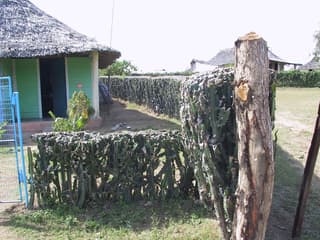
Fairy Castle Cactus
Acanthocereus tetragonus
Acanthocereus tetragonus 'Fairy Castle' is a dwarf, branching variant of the cactus native to the Americas. Its five-sided stems have short spines and grow in dense clusters, creating a silhouette reminiscent of a castle with multiple medieval towers. It is a slow-growing plant, extremely popular for interior decoration due to its sculptural appearance and ease of maintenance.
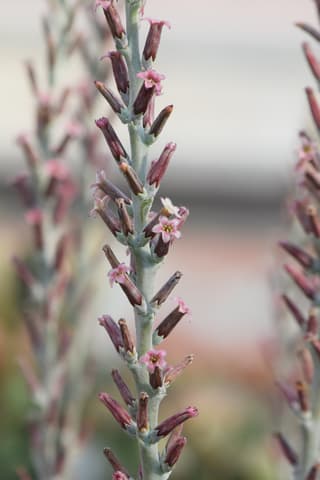
Plover Eggs Plant
Adromischus
Adromischus is a charming genus of small, clumping succulents native to Southern Africa, belonging to the Crassulaceae family. With about 28 known species, these plants are prized by collectors for their uniquely shaped, often spotted or mottled thick leaves. They thrive in bright light and are exceptionally drought-tolerant, making them ideal low-maintenance houseplants. In spring, they produce slender tubular flowers in white, pink, or red on long spikes.
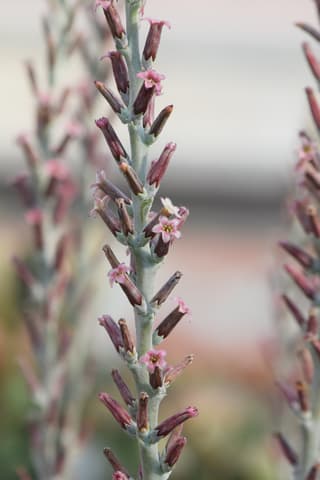
Plover Eggs Plant
Adromischus cooperi
Adromischus cooperi, commonly called the Plover Eggs Plant, is a compact, slow-growing succulent native to the Eastern Cape province of South Africa. Its thick, wavy-tipped leaves are speckled with purple or reddish-brown blotches that resemble the mottled eggs of a plover, giving the plant its common name. Nearly stemless when young, it slowly develops short, fleshy trunks with age.
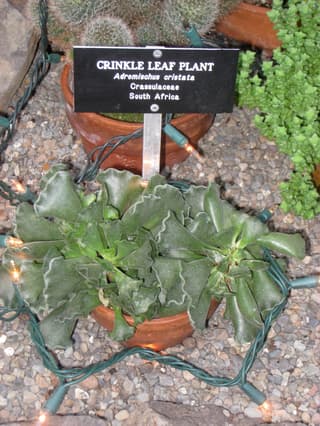
Crinkle-leaf Plant
Adromischus cristatus
Adromischus cristatus is a compact succulent native to South Africa, prized for its distinctive triangular leaves with wavy, crinkled margins and rough texture. A member of the Crassulaceae family, it is a popular ornamental houseplant ideal for beginners.
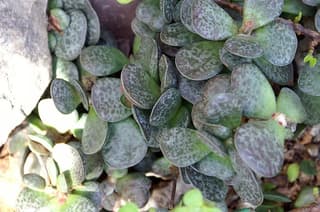
Calico Hearts
Adromischus maculatus
A small perennial succulent endemic to the Western and Eastern Cape provinces of South Africa, where it grows on the sandy slopes of the Langeberg mountains. It forms small clusters of obovate, grayish-green to bronze leaves covered in brownish-purple spots that create a mottled pattern similar to calico fabric. An excellent choice for pots and water-wise succulent gardens.

Aeonium
Aeonium
Aeonium is a genus of succulents with approximately 35 species, primarily native to the Canary Islands. Unlike most succulents, Aeonium grows actively in the fall and winter, entering dormancy during the hot summer. Its perfect rosettes of glossy leaves form stunning ornamental colonies, making it one of the most elegant succulents for Mediterranean gardens and pots.
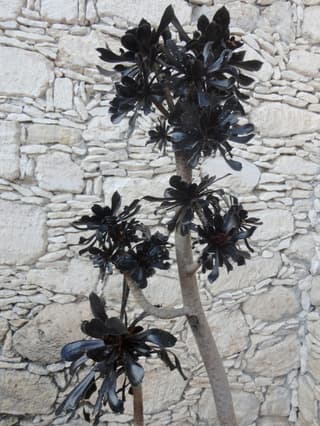
Black Rose
Aeonium 'Zwartkop'
Aeonium 'Zwartkop' is a striking succulent shrub prized for its near-black, burgundy-purple rosettes that sit atop slender, woody stems. A cultivar of Aeonium arboreum, native to the Canary Islands, it forms an architectural, sculptural silhouette in gardens and containers alike. The dark foliage deepens to almost jet black in full sun and softens to green-purple in shade, making it a dramatic focal point in succulent arrangements. In spring, mature rosettes can send up conical clusters of bright yellow star-shaped flowers, though the flowering rosette dies back afterward while the rest of the plant continues to grow.
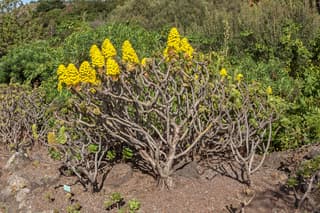
Tree Aeonium
Aeonium arboreum
Aeonium arboreum is a woody-stemmed succulent native to the Canary Islands and North Africa, renowned for its striking rosettes of fleshy leaves atop branching stems. The dark-purple cultivar 'Schwarzkopf' (also spelled 'Zwartkop') is one of the most popular ornamental succulents worldwide.

Giant Velvet Rose
Aeonium canariense
Aeonium canariense, commonly known as the Giant Velvet Rose or Canary Island Aeonium, is a perennial succulent endemic to the Canary Islands and native to the laurel forest edges and high-mountain scrub of the archipelago. It forms large, velvety rosettes of spirally arranged leaves that can reach 15 to 30 cm across. In spring and early summer, mature rosettes send up a tall flowering stalk, up to 1 meter high, topped with clusters of small, star-shaped yellow flowers. The species is monocarpic: each rosette dies after flowering, though the plant persists through offsets produced at its base.
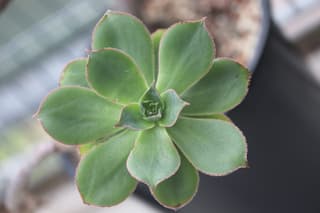
Green Pinwheel
Aeonium decorum
Aeonium decorum is a compact, multi-branched succulent from the Canary Islands, forming rosettes of pale green, spoon-shaped leaves often edged in red. Its architectural pinwheel shape makes it a popular ornamental succulent for pots and rock gardens.
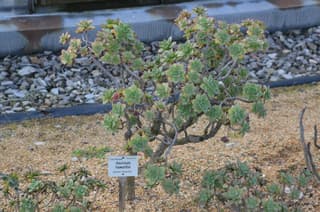
Pinwheel Aeonium
Aeonium haworthii
Aeonium haworthii is a branching succulent shrub native to the Canary Islands, prized for its rosettes of blue-green leaves edged in red, arranged like the blades of a pinwheel. It grows into a low, multi-stemmed shrub and produces star-shaped white to pale yellow flowers in spring.

Sim's Aeonium
Aeonium simsii
Aeonium simsii is a compact, mat-forming succulent endemic to the rocky highlands of Gran Canaria in the Canary Islands, where it grows on cliffs and outcrops between 500 and 1,900 meters elevation. It forms dense clumps of short, branching stems tipped with cup-shaped rosettes of yellowish-green leaves marked with brownish longitudinal stripes on their undersides. Unusually for the genus, individual rosettes of A. simsii can flower repeatedly and survive, unlike almost all other Aeonium species, whose rosettes die after a single bloom.
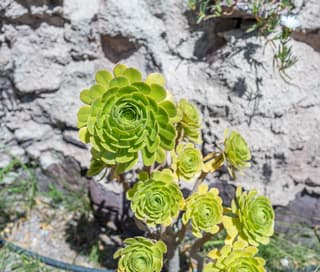
Stalked Aeonium
Aeonium undulatum
Aeonium undulatum is a striking succulent subshrub native to the Canary Islands, specifically Gran Canaria. Known for its large rosettes of bright, glossy, wavy-edged green leaves, it can grow over 2 meters tall on a single unbranched stem, making it one of the tallest species in the Aeonium genus. It is monocarpic, producing stunning pyramidal panicles of yellow star-shaped flowers after approximately 5 years.
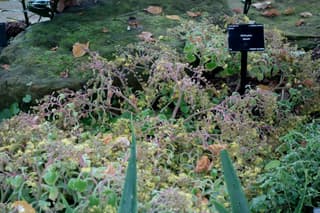
Tree of Love
Aichryson laxum
The Tree of Love (Aichryson laxum) is a compact succulent native to the Canary Islands, belonging to the Crassulaceae family. It features fleshy heart-shaped leaves arranged in rosettes at the tips of its branches, and produces small star-shaped yellow flowers in spring and summer. It is an annual or biennial plant that naturally dies after flowering.
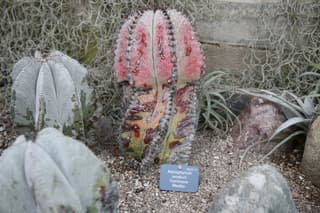
Monk's Hood Cactus
Astrophytum ornatum
The Monk's Hood Cactus (Astrophytum ornatum) is a slow-growing, typically solitary, columnar cactus native to Mexico, where it thrives on rocky terrain in full sun. The body reaches approximately 12 cm in diameter and can grow over one meter tall in its natural habitat; it features 7-8 spiraling ribs adorned with whitish to brownish spines and fine white scales. Starting at around five years of age, it produces large, vibrant yellow flowers over 7 cm in diameter, each lasting only a few days.
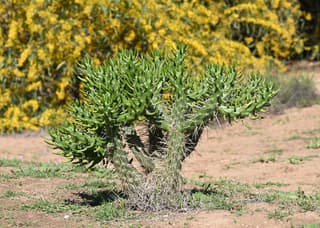
Eve's Pin Cactus / Cane Cholla (genus)
Austrocylindropuntia
Austrocylindropuntia is a genus of Andean columnar cacti native to South America, primarily Peru, Bolivia, and Ecuador. The most well-known species are A. subulata (Eve's Pin) and A. cylindrica (Cane Cholla). These are robust, fast-growing plants with cylindrical stems covered in sharp spines.
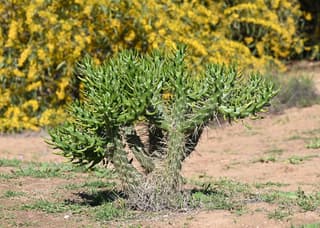
Eve's Needle Cactus
Austrocylindropuntia subulata
Austrocylindropuntia subulata, commonly known as Eve's Needle Cactus, is a columnar cactus native to the Peruvian Andes. Its dark green cylindrical stems can reach up to 4 meters in height in their natural habitat, and it is distinguished by its persistent needle-like leaves — a remarkable feature among cacti. This robust, drought-tolerant plant is highly ornamental and thrives in sunny gardens and bright indoor spaces.
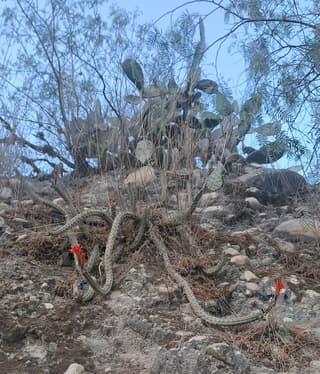
Cleistocactus
Borzicactus
Borzicactus is a genus of columnar or prostrate cacti native to the Andes of South America (Peru, Bolivia, Ecuador, Argentina), often treated as a synonym of Cleistocactus or included within Loxanthocereus. Its stems, densely covered with fine spines, can grow upright or form hanging clumps. It produces very showy tubular flowers - usually red, orange, or pink - adapted for hummingbird pollination. It is a long-lived, drought-resistant, slow-growing plant, highly valued in cactus collections for its sculptural form.
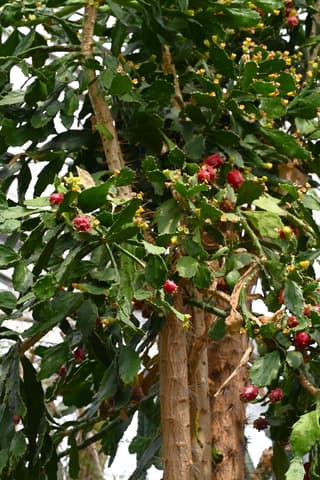
Brazilian Tree Cactus
Brasiliopuntia brasiliensis
Brasiliopuntia brasiliensis, commonly known as the Brazilian Tree Cactus, is a monotypic tree-like cactus native to Brazil, Argentina, and Paraguay. It is the sole species of the genus Brasiliopuntia and stands out for its arborescent structure — a woody cylindrical trunk topped with flattened cladodes on branch tips — which can reach over 20 meters in its natural habitat.
Cactus
Cactaceae
Cactaceae is a family of succulent plants adapted to arid environments. They are distinguished by the presence of areoles, from which spines, branches, and flowers grow. Most species have thickened, photosynthetic stems that store water, allowing them to survive in conditions of extreme drought.
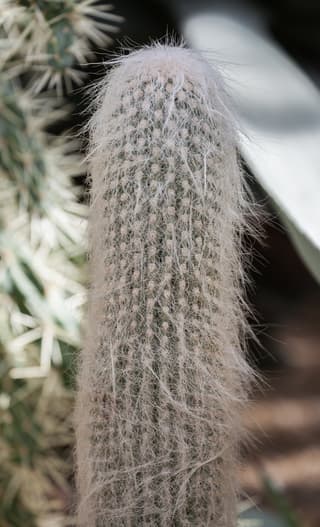
Old Man Cactus
Cephalocereus senilis
Cephalocereus senilis, the Old Man Cactus, is a slow-growing columnar cactus native to the mountains of northeastern Mexico. It is famous for the long, shaggy coat of white hair-like spines that cloaks its stem, shielding the plant from intense sun and cold. In the wild it can eventually tower many meters tall over a century or more, but as a container plant it stays a compact, sculptural, and remarkably low-maintenance houseplant.
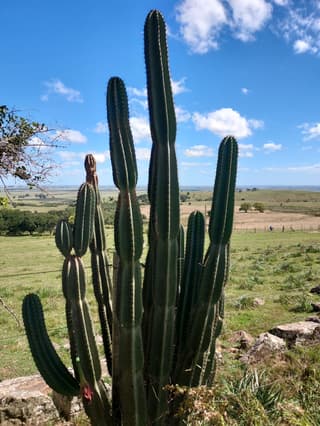
Cereus / Hedge Cactus (genus)
Cereus
Cereus is a genus of tall columnar cacti native to South America, including species like C. hildmannianus, C. repandus, and C. peruvianus. These robust, fast-growing cacti produce spectacular white nocturnal flowers and are widely grown as ornamental plants in gardens and sunny interiors.

Beach Apple Cactus
Cereus fernambucensis
The beach apple cactus is a shrubby, richly branching columnar cactus endemic to the eastern coast of Brazil, where it grows on sand dunes, restinga scrub, and rocky coastal outcrops, forming dense clumps up to 5 meters across. Its ribbed, spiny stems bear large, night-blooming white flowers followed by edible fruit with tangy white pulp. It is a tough, drought- and salt-tolerant species well suited to hot, sunny coastal conditions.
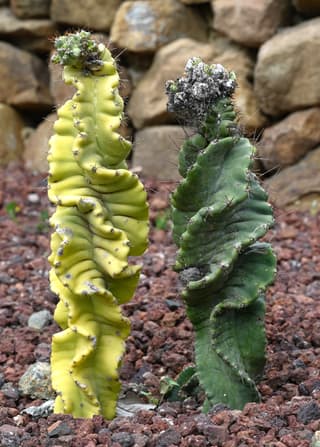
Spiral Cactus
Cereus forbesii 'Spiralis'
Cereus forbesii 'Spiralis' is a columnar cactus featuring blue-green, waxy-coated stems with ribs that twist spirally around the trunk, creating a striking decorative effect. In its natural South American habitat, it can reach several meters in height, but in container cultivation, it grows much slower and remains more compact. During summer nights, mature specimens may produce large, funnel-shaped white flowers. It is an easy-to-care-for plant, drought-tolerant and resilient to neglect, making it ideal for beginner succulent enthusiasts.
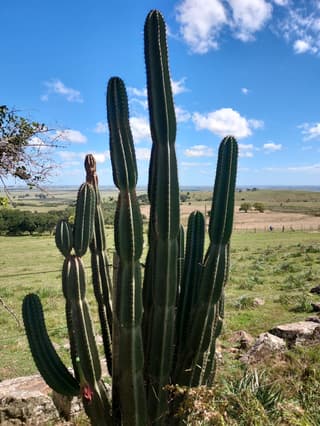
Monster Cactus
Cereus hildmannianus
Cereus hildmannianus f. monstrosus, commonly known as Monster Cactus, is a fascinating and sculptural variant of the columnar cactus native to South America. Its most striking characteristic is its irregular and twisted growth, resulting from mutations in the growth points, which creates unique and 'monstrous' forms. It has a bluish-green coloration and, although rarely in pots, can produce large nocturnal white flowers followed by reddish, sweet fruits.
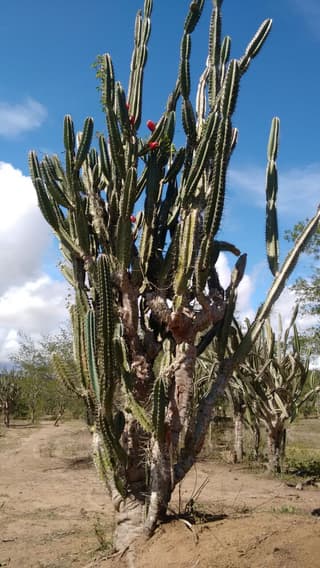
Mandacaru Cactus
Cereus jamacaru
Cereus jamacaru, popularly known as Mandacaru, is an iconic columnar cactus native to the Brazilian semi-arid region. It is characterized by its imposing stature, thorny branches, and magnificent white flowers that bloom only at night and wither by dawn. A symbol of the Caatinga's resilience and vitality, it is capable of storing large amounts of water in its succulent stem.
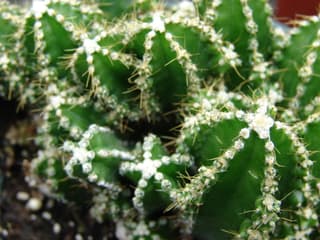
Giant Peruvian Cereus
Cereus peruvianus
The Giant Peruvian Cereus (Cereus peruvianus) is a fast-growing columnar cactus native to South America, closely related to other Cereus species and prized for its dramatic upright form and large, fragrant, night-blooming flowers. It can grow several meters tall, featuring blue-green ribbed stems armed with sturdy spines. Its cream to white flowers open only at night and wilt by morning. Extremely drought-tolerant, it is commonly grown as an ornamental accent, security hedge, or living fence in warm climates.
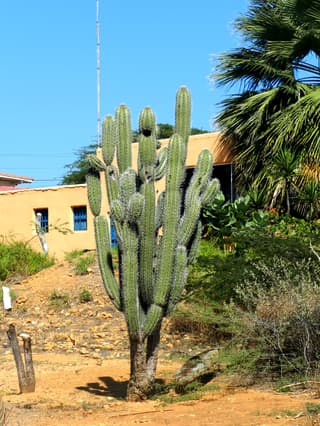
Peruvian Apple Cactus
Cereus repandus
Cereus repandus, commonly known as the Peruvian Apple Cactus, is a tall columnar cactus native to South America, particularly Venezuela and Colombia. Its gray-green to blue-green cylindrical stems can reach up to 33 feet (10m) in the wild, adorned with 8-13 ribs and robust spines. In late spring through fall, fragrant white flowers bloom for a single night before giving way to edible red fruit. This fast-growing species is celebrated worldwide for its architectural beauty and remarkable drought tolerance.
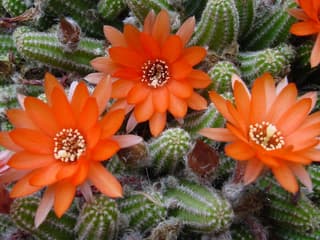
Peanut Cactus
Chamaecereus silvestrii
Chamaecereus silvestrii, commonly known as the Peanut Cactus, is a succulent native to Argentina. It features cylindrical, branched stems that grow in a prostrate manner, resembling peanuts. It is famous for its spectacular spring blooming, producing large, vibrant orange and red flowers that contrast with the light green of its stems.
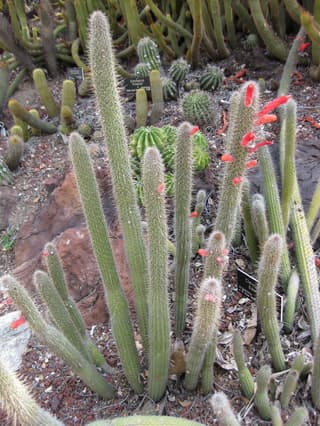
Scarlet Bugler
Cleistocactus baumannii
Cleistocactus baumannii is a columnar, shrubby cactus native to the semi-arid regions of Argentina, Bolivia, Paraguay, Uruguay and Brazil. It forms clumps of upright or arching stems, branching from the base, that can reach up to 2 meters tall and are covered in dense rows of yellowish to brown spines. Between spring and summer it produces striking tubular flowers in shades of yellow, orange and red that attract hummingbirds. It is a hardy, easy-to-grow species popular among cactus collectors for its showy blooms and low maintenance.
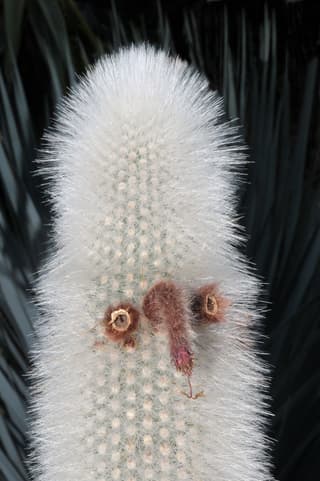
Silver Torch Cactus
Cleistocactus strausii
Cleistocactus strausii, known as the Silver Torch Cactus, is a perennial columnar cactus native to the mountainous regions of Bolivia and Argentina. It is widely appreciated for its erect stems covered in a dense layer of short white spines, which give it a distinct silvery appearance. Upon reaching maturity, it produces tubular burgundy-red flowers that do not fully open, projecting horizontally from the stems.
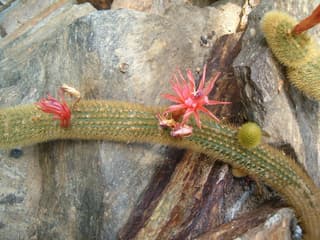
Golden Rat-tail Cactus
Cleistocactus winteri
The Golden Rat-tail Cactus (Cleistocactus winteri) is a trailing cactus native to the mountainous slopes of Bolivia. Its slender, golden-spined stems can cascade over 90 cm from a hanging basket, producing striking tubular orange to salmon-pink flowers in spring and summer. Prized as a houseplant, it is easy-going as long as its need for excellent drainage and bright light is respected.
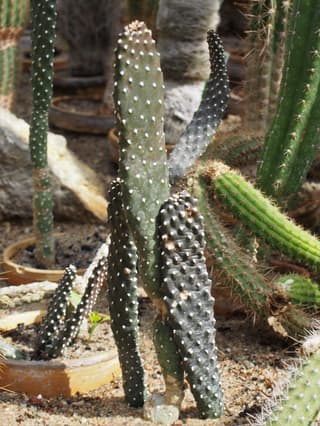
Road Kill Cactus
Consolea rubescens
Consolea rubescens is a tall, tree-like cactus from the Cactaceae family, native to the Caribbean islands (Puerto Rico, Virgin Islands, Lesser Antilles). It forms a woody trunk from which flattened, oval segments (pads) grow, taking on a reddish-purple hue in strong sunlight. In nature, it can reach up to 6 meters in height. In spring and summer, yellow-orange-red flowers appear, followed by edible, tart fruits.
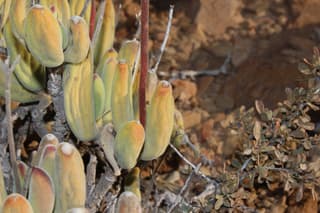
Bear's Paw
Cotyledon ladismithiensis
Cotyledon ladismithiensis, popularly known as Bear's Paw, is a compact shrubby succulent native to the Little Karoo region of South Africa, near Ladismith and Laingsburg. Its fleshy, fuzzy leaves end in reddish-toothed tips that resemble a bear cub's claws, giving rise to its common name. It is a slow-growing plant, widely cultivated as an ornamental indoor and outdoor succulent in mild climates, and belongs to the Crassulaceae family, known for species containing bufadienolides (toxic defense compounds).
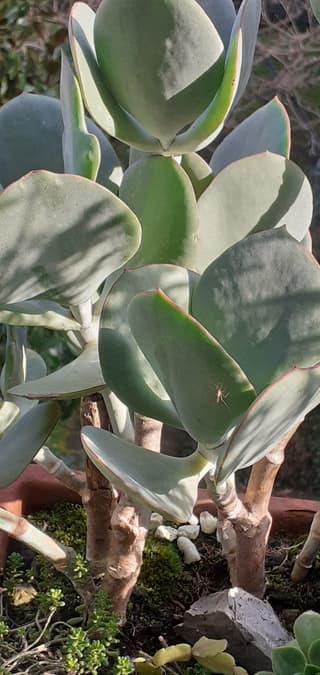
Pig's Ear
Cotyledon orbiculata
Cotyledon orbiculata, commonly known as Pig's Ear, is a robust succulent native to Southern Africa. It features distinctive rounded, silvery-white fleshy leaves often edged in red, and produces elegant orange to red tubular bell-shaped flowers on tall stems in late summer. A member of the Crassulaceae family, it is widely cultivated as an ornamental in gardens and as a houseplant.
Easy Care Succulents
Our selection of 283 easy succulents combines the characteristics of this category with reduced care needs. Perfect for beginners who love this category.
Why Choose Easy Succulents?
Combining the beauty of succulents with easy difficulty level lets you enjoy this category without excessive maintenance worries. Each plant was selected to offer the best characteristics of the category at the care level you are looking for.