Complete Plant Guide
Explore plants by difficulty, season and more. Find the perfect plant for you.
Difficulty
Categories
Plants by City
🗺️ Plants by City4045 plants found
Showing 73-108 of 4045
Adromischus triflorus
Adromischus triflorus
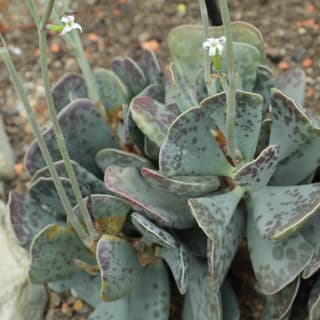
Adromischus triflorus is a small succulent from the Western Cape of South Africa, mainly the Little Karoo, where it grows among gravel and in rock crevices in intense heat with little rain. Its stems creep along the ground with upturned tips, and the plant stays about 10 cm tall. The thick, almost heart-shaped leaves are covered in reddish-brown spots and have a hard edge near the tip. In Afrikaans it is called "eendevoet", duck's foot. In summer it sends up as many as three spikes, up to 35 cm, with small tubular white to pink flowers, often in threes.
Urn Plant
Aechmea
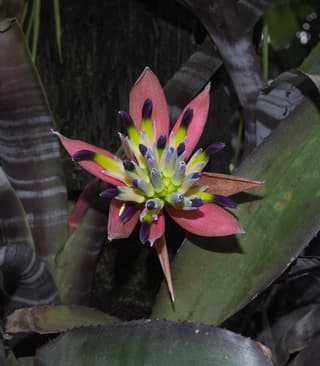
Aechmea is a genus of approximately 250 epiphytic bromeliads native to the tropical and subtropical Americas. Their distinctive tank-shaped rosettes form a central cup that holds water — a remarkable adaptation to life in the forest canopy. The most popular houseplant species, Aechmea fasciata (Silver Vase or Urn Plant), is celebrated for its long-lasting pink bracts and small violet flowers.
Blue Rain Bromeliad
Aechmea 'Blue Rain'
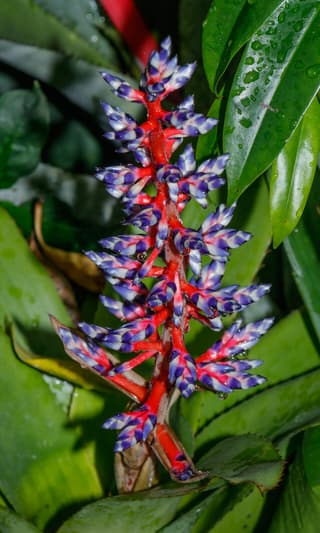
Aechmea 'Blue Rain' is a stunning tropical bromeliad hybrid producing dramatic summer blooms with deep blue to purple-blue flowers accented by vibrant purple-red bracts on striking red stems. This evergreen epiphytic perennial forms a characteristic basal rosette of glossy, strap-shaped deep green leaves and grows to approximately 60–100 cm tall. The plant is beloved by tropical plant enthusiasts for its ornamental appeal and relatively easy care requirements, making it an excellent choice for indoor cultivation in bright, filtered light.
Orange Bromeliad
Aechmea blanchetiana
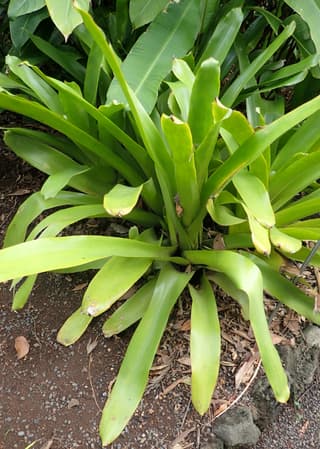
Aechmea blanchetiana, commonly known as the Orange Bromeliad, is a stunning tropical bromeliad native to the restinga coastal forests of Brazil's Atlantic Forest. Its stiff, linear leaves form a classic vase-shaped rosette that can hold up to one liter of water in the central cup. When grown in full sun, the foliage transforms into brilliant shades of orange, red, and apricot, making it one of the most striking bromeliads for tropical and subtropical landscapes. After flowering, the mother plant produces offsets that ensure continuity of growth.
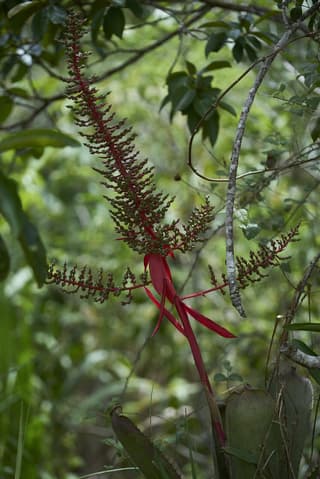
Teata Bromeliad
Aechmea bracteata
The Teata Bromeliad (Aechmea bracteata) is an epiphytic bromeliad native to Central America, belonging to the Bromeliaceae family. It forms a rosette of rigid, spiny leaves that create a central "tank" for water collection. Its inflorescence is striking, with bracts in shades of pink, orange, and green.
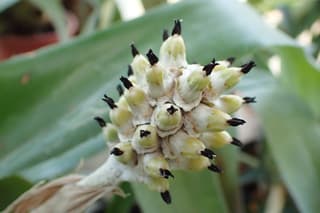
Wax Mallow Bromeliad
Aechmea bromeliifolia
Aechmea bromeliifolia, commonly called Wax Mallow Bromeliad, is a terrestrial bromeliad native to the tropical regions of South and Central America. It forms a striking rosette of stiff, spine-edged leaves and produces a showy inflorescence with colorful bracts. It is one of the most widespread Aechmea species, found in gallery forests, cerrado, and open scrublands.
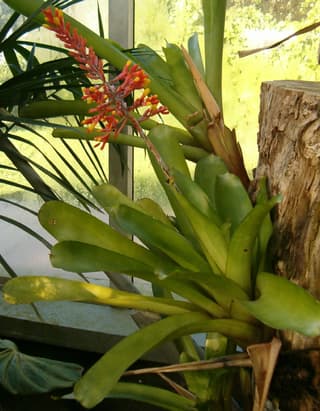
Tail Bromeliad
Aechmea caudata
Aechmea caudata is a bromeliad native to Brazil's Atlantic Forest, occurring from Espírito Santo to Rio Grande do Sul across epiphytic, rupicolous, and terrestrial habitats. It forms a funnel-shaped rosette of long arching leaves up to 128 cm, with serrated margins and a sharp tip. The erect spike inflorescence rises above the rosette, bearing yellowish flowers with orange-red sepals — a striking tropical display. Like all monocarpic bromeliads, it flowers once in its lifetime (typically in summer), then slowly declines while producing offsets.
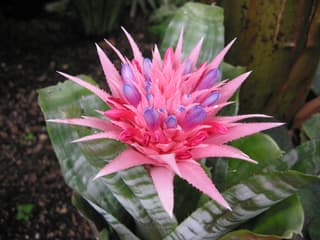
Urn Plant
Aechmea fasciata
Aechmea fasciata is an epiphytic bromeliad native to southeastern Brazil, renowned for its striking silver-banded leaves and spectacular pink inflorescence with tiny blue-violet flowers. It is one of the most popular bromeliads for indoor cultivation, valued for its exotic beauty and ease of care.
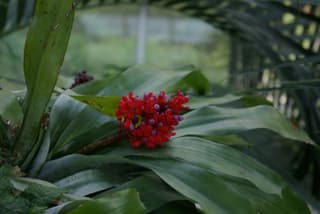
Coral Berry Bromeliad
Aechmea fulgens
Aechmea fulgens, commonly known as the Coral Berry Bromeliad, is an epiphytic bromeliad native to northeastern Brazil, particularly the states of Bahia and Pernambuco. It forms an elegant rosette of bright green, waxy leaves with marginal spines. Its striking inflorescence features red bracts and numerous purple flowers, followed by long-lasting red globose berries that persist for many months after blooming. This makes it one of the most decorative bromeliads for both indoor cultivation and tropical gardens.
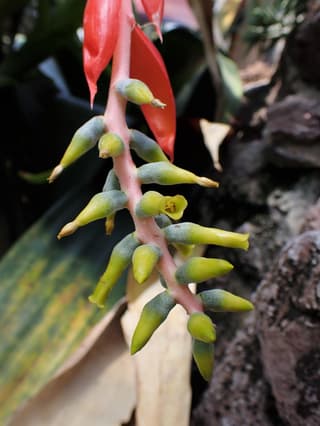
Nakedstem Bromeliad
Aechmea nudicaulis
Aechmea nudicaulis, commonly known as the Nakedstem Bromeliad or Naked-stemmed Living Vase, is a stunning epiphytic and terrestrial bromeliad native to Brazil's Atlantic Forest, with distribution extending through the Caribbean and northern South America. It forms a rosette of stiff, dark green, strap-like leaves with serrated margins, from which emerges a striking inflorescence: a bright red spike bearing greenish-yellow flowers tipped with blue-purple, appearing in summer through fall. The plant is prized for its architectural beauty, low maintenance requirements, and resilience. After flowering — a once-in-a-lifetime event — the mother plant produces offsets (pups) that carry on the colony. Its central tank collects rainwater, creating a vital microhabitat for wildlife in its native forest.
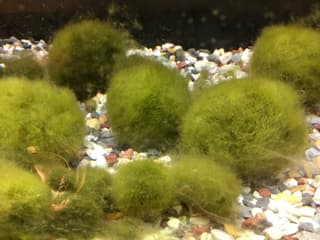
Marimo Moss Ball
Aegagropila linnaei
Aegagropila linnaei, known as the Marimo moss ball, is not a true moss but a rare form of filamentous green algae that grows into spherical colonies. Native to cold, alkaline lakes in Japan, Iceland, and Estonia, its round shape develops naturally due to wave action and periodic rotation on the lake bed. At Lake Akan in Japan, it is protected as a special natural monument.
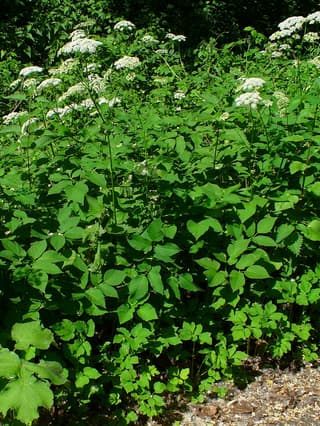
Ground elder
Aegopodium podagraria
Ground elder (Aegopodium podagraria) is a perennial herbaceous plant in the carrot family (Apiaceae), native to Europe and Asia. It is known for its extremely rapid growth and spread via rhizomes, making it one of the most hardy and invasive ground covers in temperate regions. The plant forms dense carpets of light green, ternate leaves and bears white umbels (flower clusters) from May to June. It thrives in shade to partial shade and tolerates most soil types. Historically, it was cultivated as a food and medicinal plant during the Middle Ages.
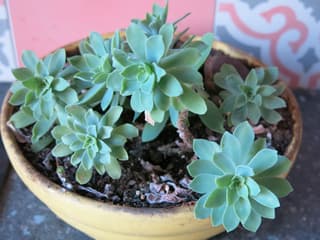
Aeonium
Aeonium
Aeonium is a genus of succulents with approximately 35 species, primarily native to the Canary Islands. Unlike most succulents, Aeonium grows actively in the fall and winter, entering dormancy during the hot summer. Its perfect rosettes of glossy leaves form stunning ornamental colonies, making it one of the most elegant succulents for Mediterranean gardens and pots.
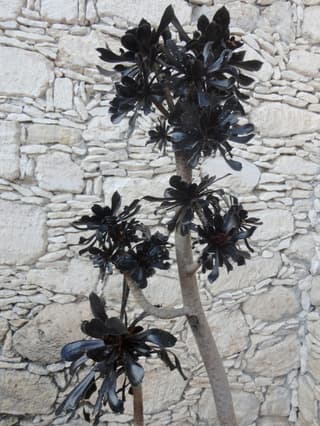
Black Rose
Aeonium 'Zwartkop'
Aeonium 'Zwartkop' is a striking succulent shrub prized for its near-black, burgundy-purple rosettes that sit atop slender, woody stems. A cultivar of Aeonium arboreum, native to the Canary Islands, it forms an architectural, sculptural silhouette in gardens and containers alike. The dark foliage deepens to almost jet black in full sun and softens to green-purple in shade, making it a dramatic focal point in succulent arrangements. In spring, mature rosettes can send up conical clusters of bright yellow star-shaped flowers, though the flowering rosette dies back afterward while the rest of the plant continues to grow.
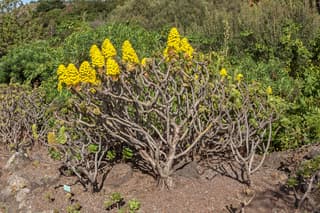
Tree Aeonium
Aeonium arboreum
Aeonium arboreum is a woody-stemmed succulent native to the Canary Islands and North Africa, renowned for its striking rosettes of fleshy leaves atop branching stems. The dark-purple cultivar 'Schwarzkopf' (also spelled 'Zwartkop') is one of the most popular ornamental succulents worldwide.
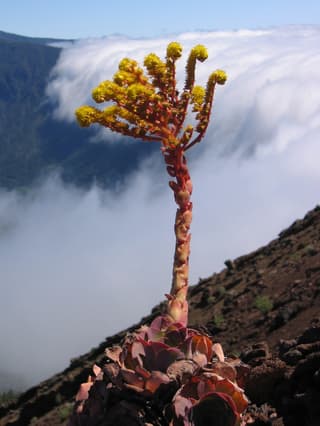
Canary Island Rose
Aeonium aureum
Aeonium aureum, commonly known as the Canary Island Rose, is a striking rosette-forming succulent native to the volcanic slopes of Tenerife in the Canary Islands. Its tightly packed, spoon-shaped leaves form a perfectly symmetrical, rose-like rosette in shades of blue-green to golden-green, giving the plant its species name "aureum" (golden). Unlike many succulents, this species follows a winter-growing, summer-dormant cycle: it grows actively through the cool, damp months of autumn, winter and spring, then closes its rosette tightly and rests through the hot, dry summer to conserve moisture. After several years of growth, mature rosettes may send up a tall, golden-yellow flower spike, a rare and spectacular event, though the flowering rosette dies afterward, leaving offsets behind to continue the plant.

Giant Velvet Rose
Aeonium canariense
Aeonium canariense, commonly known as the Giant Velvet Rose or Canary Island Aeonium, is a perennial succulent endemic to the Canary Islands and native to the laurel forest edges and high-mountain scrub of the archipelago. It forms large, velvety rosettes of spirally arranged leaves that can reach 15 to 30 cm across. In spring and early summer, mature rosettes send up a tall flowering stalk, up to 1 meter high, topped with clusters of small, star-shaped yellow flowers. The species is monocarpic: each rosette dies after flowering, though the plant persists through offsets produced at its base.
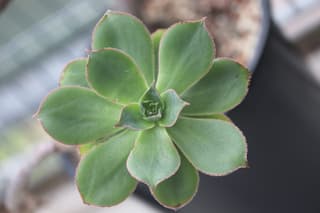
Green Pinwheel
Aeonium decorum
Aeonium decorum is a compact, multi-branched succulent from the Canary Islands, forming rosettes of pale green, spoon-shaped leaves often edged in red. Its architectural pinwheel shape makes it a popular ornamental succulent for pots and rock gardens.
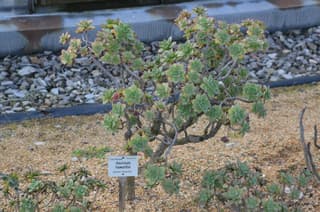
Pinwheel Aeonium
Aeonium haworthii
Aeonium haworthii is a branching succulent shrub native to the Canary Islands, prized for its rosettes of blue-green leaves edged in red, arranged like the blades of a pinwheel. It grows into a low, multi-stemmed shrub and produces star-shaped white to pale yellow flowers in spring.

Sim's Aeonium
Aeonium simsii
Aeonium simsii is a compact, mat-forming succulent endemic to the rocky highlands of Gran Canaria in the Canary Islands, where it grows on cliffs and outcrops between 500 and 1,900 meters elevation. It forms dense clumps of short, branching stems tipped with cup-shaped rosettes of yellowish-green leaves marked with brownish longitudinal stripes on their undersides. Unusually for the genus, individual rosettes of A. simsii can flower repeatedly and survive, unlike almost all other Aeonium species, whose rosettes die after a single bloom.
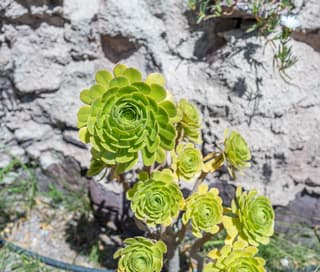
Stalked Aeonium
Aeonium undulatum
Aeonium undulatum is a striking succulent subshrub native to the Canary Islands, specifically Gran Canaria. Known for its large rosettes of bright, glossy, wavy-edged green leaves, it can grow over 2 meters tall on a single unbranched stem, making it one of the tallest species in the Aeonium genus. It is monocarpic, producing stunning pyramidal panicles of yellow star-shaped flowers after approximately 5 years.
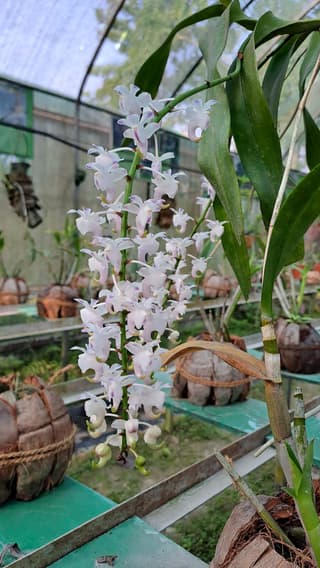
Cat's-tail orchid
Aerides
Aerides is a genus of about 30 epiphytic orchids from tropical Asia, ranging from India and Nepal to southern China, Southeast Asia, the Philippines and New Guinea. They have no pseudobulbs: they grow from a single stem with thick, leathery leaves in two rows and thick aerial roots. The flowers come in long, full, hanging sprays that look like a fox's tail. They are waxy, fragrant and long-lasting, usually white tipped with pink or purple, and in some species pink, purple or yellow. The name comes from Greek and means "of the air", after their habit of living on trees.
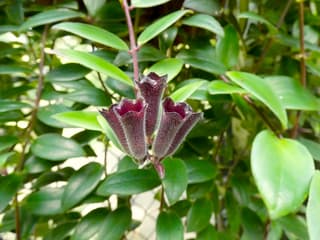
Lipstick Plant
Aeschynanthus
Aeschynanthus is a genus of trailing, epiphytic plants in the Gesneriaceae family, native to the tropical forests of Southeast Asia, including Thailand, the Malay Peninsula, Sumatra, and Borneo. Grown widely as a hanging houseplant, it produces glossy, leathery dark-green leaves along cascading stems and tubular scarlet flowers that emerge from dark maroon calyces, resembling tubes of lipstick -- the source of its common name.
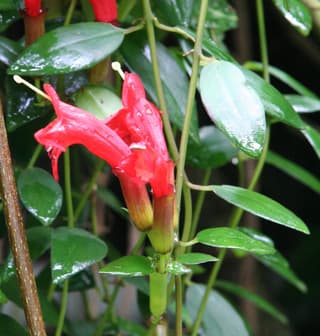
Lipstick Plant
Aeschynanthus radicans
The Lipstick Plant (Aeschynanthus radicans) is a stunning tropical epiphyte native to the humid rainforests of Southeast Asia. Known for its cascading vines adorned with glossy, waxy leaves and striking tubular red flowers that emerge from dark burgundy calyxes resembling a lipstick tube, this plant is a favorite among indoor gardeners. It thrives in hanging baskets where its trailing stems can gracefully drape, creating a lush, eye-catching display.
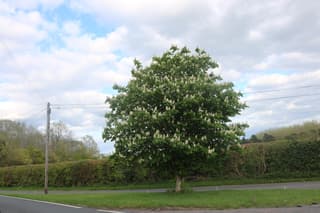
Horse Chestnut
Aesculus hippocastanum
The horse chestnut (Aesculus hippocastanum) is a large, fast-growing deciduous tree native to the Balkan Peninsula, prized across Europe and North America as a stately shade and ornamental tree. It has a broad, rounded crown, palmately compound leaves with five to seven leaflets, and produces spectacular upright clusters of white flowers with yellow-to-red throats each spring. In autumn it drops its glossy brown seeds, known as conkers, encased in spiny green husks.
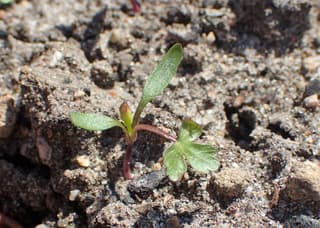
Fool's Parsley
Aethusa cynapium
Aethusa cynapium, commonly known as Fool's Parsley or Dog Poison, is a highly toxic annual herb in the family Apiaceae, native to Europe, western Asia, and northwest Africa. It closely resembles common parsley but is dangerous — all parts of the plant are poisonous when fresh, containing the alkaloid cynopine. It commonly grows as a weed in gardens and cultivated ground.
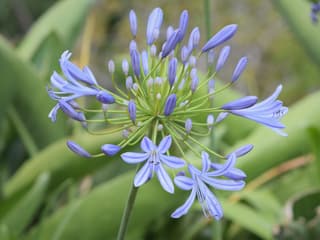
Lily of the Nile
Agapanthus africanus
Lily of the Nile (Agapanthus africanus) is a perennial plant native to the Western Cape region of South Africa. It forms compact clumps of long, strap-like evergreen leaves, from which sturdy flower stalks emerge, topped with dense umbels of trumpet-shaped flowers ranging from blue to violet. It is widely used in gardens, borders, and containers, prized for its striking summer blooms and toughness.
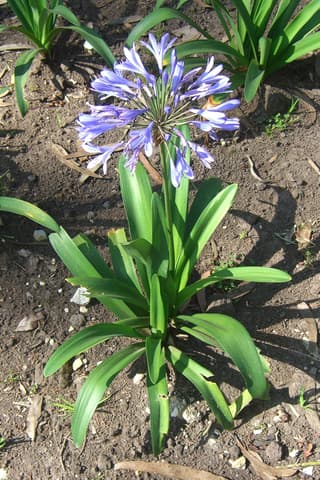
Oriental Agapanthus
Agapanthus orientalis
Agapanthus orientalis is an evergreen, clump-forming perennial native to South Africa, prized for its tall, sturdy flower stalks topped with large spherical umbels of trumpet-shaped blooms in blue, lavender, purple, or white. Its strap-like, glossy dark-green leaves form a dense mound at the base, making it a popular border and container plant in warm climates.
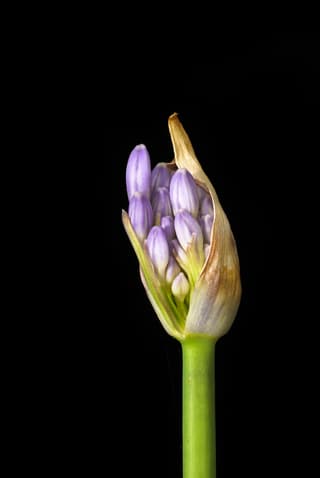
African Lily
Agapanthus praecox
Agapanthus praecox is an evergreen perennial plant native to South Africa. It is characterized by its long, strap-like green leaves and spectacular globular umbels of blue or white flowers that rise on tall, sturdy stems. It is an extremely hardy species and popular in Mediterranean landscaping.
Pavement mushroom
Agaricus bitorquis
Agaricus bitorquis, known as the pavement mushroom, is an edible species of fungus in the family Agaricaceae. It is characterized by an exceptionally firm, fleshy fruiting body and a distinct, double-edged ring on the stem. Frequently found in urban environments, it is capable of pushing through asphalt or compacted soil on sidewalks. It features a white or slightly creamy cap and pale pink gills that darken to chocolate brown as it matures.
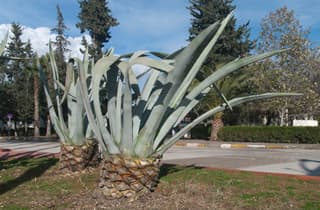
Century Plant (genus)
Agave
Agave is a large genus of monocarpic succulents native to the Americas, particularly Mexico. Their stiff, spine-tipped leaves form striking rosettes. The plant blooms only once in its lifetime, sending up a towering flower spike before dying.
Century Plant
Agave americana
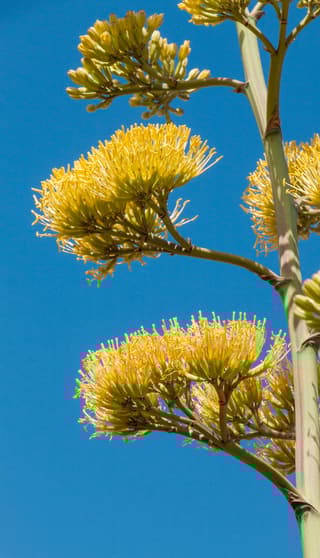
Agave americana, commonly known as the Century Plant, is a large succulent native to Mexico and the southern United States. Its striking blue-gray leaves are long, rigid, and tipped with sharp spines. It is monocarpic — blooming only once in its lifetime after 10 to 30 years, producing a spectacular flower stalk up to 25 feet tall, then dying. Before dying, it produces numerous basal pups that ensure the species' continuation.
Caribbean Agave
Agave angustifolia
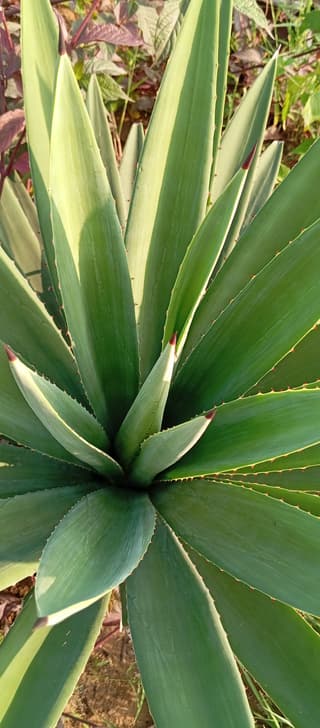
Caribbean Agave (Agave angustifolia) is a perennial succulent in the Asparagaceae family, native to Mexico and Central America. It forms dramatic rosettes of long, rigid, sword-shaped leaves in greyish-green to bluish-grey tones, with serrated margins and sharp terminal spines. A monocarpic plant, it blooms only once in its lifetime — after 10 to 30 years — producing a towering flower spike up to 16 ft (5 m) tall with greenish-yellow flowers, then dies. It leaves behind offsets (pups) that continue the colony. Prized both as an ornamental landscape specimen and historically for mezcal and textile fiber production.
Rough Agave
Agave asperrima
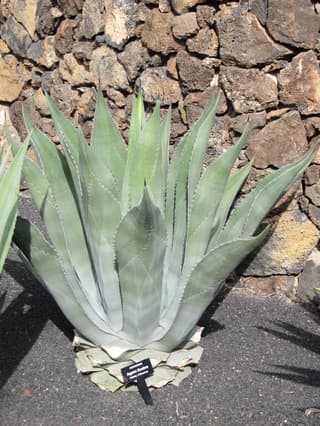
Agave asperrima is a stemless, evergreen succulent native to the arid scrublands of southern Texas and central-northern Mexico. It forms a dense rosette of 30-40 broad, gray-green leaves edged with sharp marginal teeth and tipped with a stout terminal spine, reaching roughly 1 meter tall and up to 2 meters across. After 7 to 15 or more years of slow growth, a mature rosette sends up a tall flowering stalk 4-7 meters high bearing yellow blooms, then dies - but not before producing offsets (pups) around its base that carry the plant forward. In its native Mexico it is a traditional source for mezcal-style spirits distilled from the roasted, fermented core.
Foxtail Agave
Agave attenuata
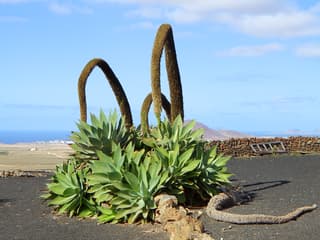
Agave attenuata is a sculptural perennial succulent, famous for its rosettes of wide, soft, light-green leaves that lack the sharp spines typical of other agaves. Native to Mexico, it develops a thick trunk and, when mature, produces a long, curved inflorescence resembling a swan's neck, which gives it one of its common names.
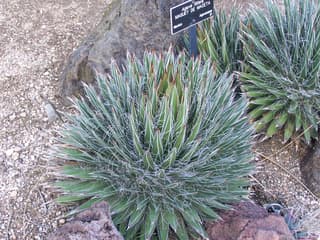
Thread-leaf Agave
Agave filifera
Agave filifera is a compact, slow-growing succulent native to central Mexico, prized for the distinctive white threads or filaments that curl away from the edges of its dark green leaves. It forms a tight, symmetrical rosette and is an excellent choice for sunny gardens, rock gardens, or bright indoor spaces. Highly drought-tolerant and low-maintenance.
Find the Perfect Plant
Our plant guide helps you find ideal species for your experience level and time of year.
Browse by Difficulty, Season & More
Use the filters below to narrow this catalog by care difficulty, season, environment, or search directly by name. Each filter leads to a focused list tailored to your specific growing conditions.