Complete Plant Guide
Explore plants by difficulty, season and more. Find the perfect plant for you.
Difficulty
Categories
Plants by City
🗺️ Plants by City3951 plants found
Showing 37-72 of 3951
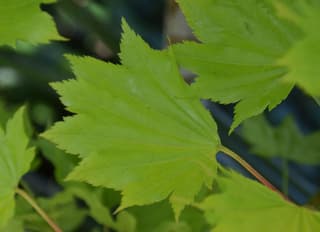
Full Moon Maple
Acer shirasawanum
Acer shirasawanum, or the Full Moon Maple, is a slow-growing deciduous tree or large shrub native to Japan, prized for its rounded, star-shaped leaves that emerge bright yellow-green in spring and turn brilliant orange and red in autumn. Reaching 5-6 meters (16-20 feet) tall and wide at maturity, it forms an elegant, rounded canopy that works beautifully as a specimen tree or understory planting.
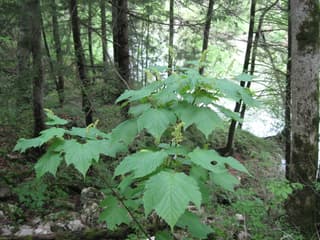
Mountain Maple
Acer spicatum
Mountain Maple (Acer spicatum) is a small deciduous shrub or understory tree native to eastern North America. It thrives on rocky slopes and stream banks in cool, shaded forests, producing brilliant yellow, orange, and red foliage in autumn. Its erect racemes of small greenish-yellow flowers appear in early summer.
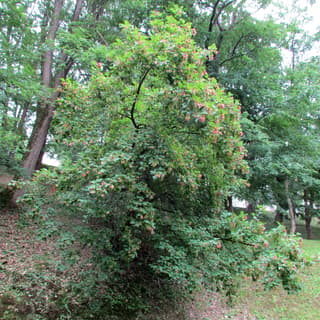
Tatarian Maple
Acer tataricum
Acer tataricum is a deciduous, multi-stemmed small tree or large shrub native to central and southeastern Europe and temperate Asia, growing 4–9 metres tall with a broad, spreading crown. It produces greenish-white flowers in upright panicles during spring, followed by showy paired red samaras (winged fruits) that persist into autumn, and simple to shallowly-lobed leaves that turn yellow and red in fall. It is exceptionally cold-hardy, tolerating temperatures down to −30 °C, and adapts readily to a wide range of soil types including clay.
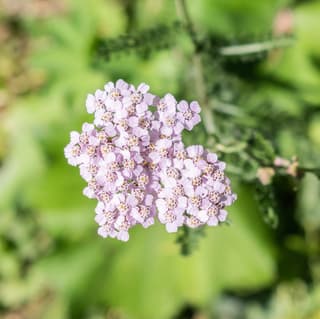
Yarrow
Achillea
Achillea, commonly known as yarrow, is a genus of roughly 85 species of flowering perennials in the daisy family (Asteraceae), native to temperate regions of Europe, Asia, and North America. The most widespread species, Achillea millefolium (common yarrow), forms low mounds of soft, feathery, aromatic foliage topped by flat-headed clusters of tiny flowers in white, yellow, pink, or red, blooming from late spring through summer. Extremely hardy and drought-tolerant, yarrow spreads by rhizomes to form dense colonies and is prized by pollinator gardens, xeriscapes, and herbalists alike.
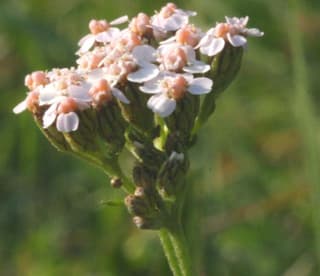
Pink Yarrow
Achillea × roseoalba
Achillea × roseoalba is a hardy, drought-tolerant perennial hybrid yarrow prized for its flat-topped clusters of pink and white flowers and finely divided, aromatic, fern-like foliage. A vigorous garden plant, it attracts pollinators such as bees and butterflies while thriving in poor, well-drained soil under full sun.
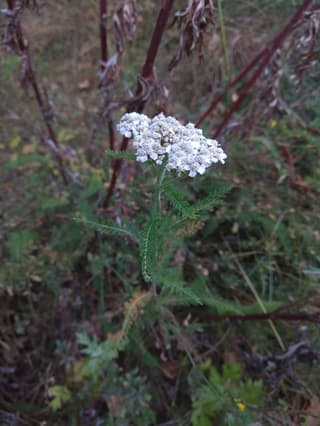
Asian Yarrow
Achillea asiatica
Asian yarrow (Achillea asiatica) is a cold-hardy, rhizomatous perennial native to the steppes and mountains of Siberia, Central Asia, Mongolia, and northern China. It forms low mats of finely dissected, fern-like grey-green foliage topped by flat-topped clusters of small flowers in shades of white, soft pink, and lilac. Closely related to common yarrow (Achillea millefolium), it has long been gathered in Mongolian and Chinese folk medicine for its leaves, flowers, and roots, and is valued in gardens for its drought tolerance and long summer bloom.
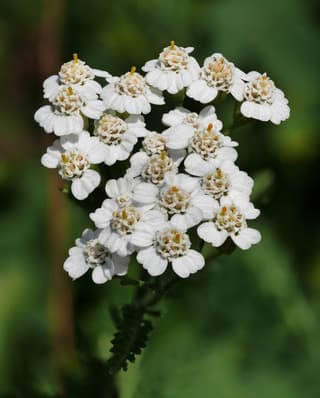
Yarrow
Achillea millefolium
Yarrow (Achillea millefolium) is a perennial, extremely hardy herbaceous plant that grows wild throughout Finland in meadows, fields, roadsides, and dry open areas. The plant is known for its finely divided, fern-like leaves and small, dense flower clusters (umbels) that range in color from white to pink. A familiar perennial herb in both nature and gardens, Yarrow has a long history of both medicinal and ornamental use dating back to antiquity—its name refers to the Greek hero Achilles, who according to legend used the plant to treat the wounds of his soldiers.
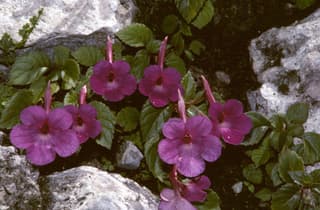
Hot Water Plant
Achimenes grandiflora
Achimenes grandiflora is a tender, rhizomatous perennial in the Gesneriaceae family, native to the mountainous regions of Mexico and Central America. Known as the "hot water plant" for its dislike of cold irrigation, it is the largest-flowered species in its genus, producing velvety, deep reddish-purple to carmine-pink blooms with a contrasting white throat above dark green, hairy foliage with purplish-red undersides. Multiple upright, slightly hairy stems arise each spring from small scaly rhizomes, flowering profusely from summer into fall before dying back to dormancy in winter.
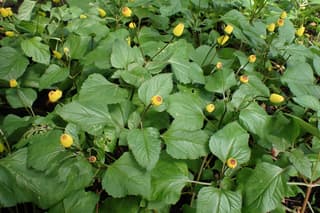
Toothache plant
Acmella oleracea
Jambu (Acmella oleracea) is an herb from the Asteraceae family, typical of the Amazon region and widely used in Pará cuisine. Its leaves and yellow flowers cause a tingling and numbing sensation in the mouth due to the presence of spilanthol.
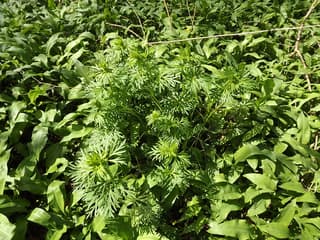
Monkshood
Aconitum napellus
Aconitum napellus is a perennial herbaceous plant native to western and central Europe, growing to 90–150 cm tall with erect stems and deeply palmate lobed leaves. It bears distinctive helmet-shaped flowers in deep blue-violet to purple hues on tall terminal spikes in mid to late summer. All parts of the plant contain highly potent alkaloids — primarily aconitine — making it one of the most poisonous plants in Europe; extreme caution is required in handling.
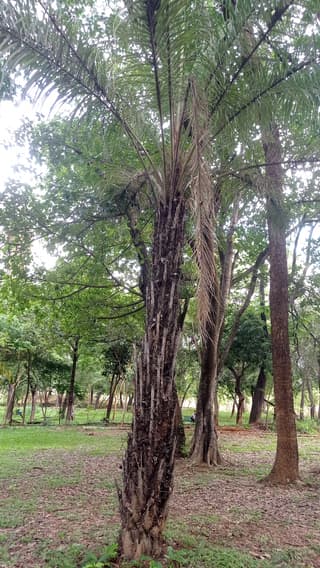
Macaw Palm
Acrocomia aculeata
Acrocomia aculeata, commonly known as the Macaw Palm or Grugru Palm, is a native Brazilian and tropical American palm tree widely distributed across the Cerrado, Atlantic Forest, and transitional zones. Its spiny trunk can reach up to 15 meters in height, crowned by long, arching pinnate leaves that give it a majestic tropical appearance. It produces abundant oil-rich fruits, making it one of the most versatile and economically promising palms in the Americas. Highly resistant to drought and fire, it adapts to different soil types and is increasingly valued in tropical landscaping and sustainable agroindustry.
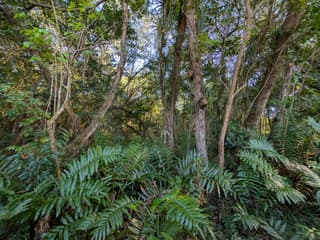
Golden Leather Fern
Acrostichum aureum
Acrostichum aureum, commonly known as the Golden Leather Fern or Mangrove Fern, is one of the largest tropical ferns in the world. Native to pantropical mangrove swamps and coastal wetlands, this robust species develops long, leathery fronds reaching up to 3 metres in length. It tolerates both saline and freshwater environments, making it one of the most adaptable ferns on Earth.
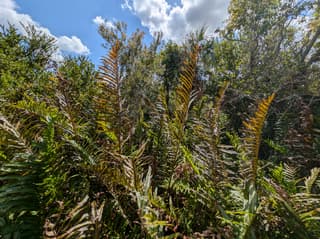
Giant Leather Fern
Acrostichum danaeifolium
The Giant Leather Fern (Acrostichum danaeifolium) is one of the largest ferns in the Americas, native to mangrove swamps and coastal wetlands of tropical America. It can reach up to 12 feet tall and thrives in consistently wet, even flooded, soils with high humidity.
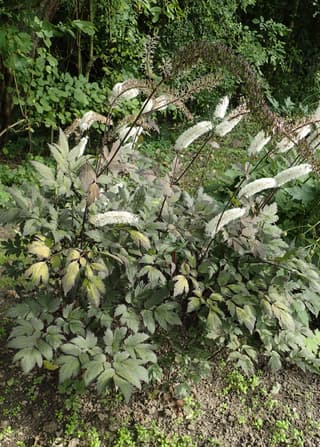
Kamchatka Bugbane
Actaea simplex
Actaea simplex is a clump-forming, rhizomatous herbaceous perennial native to Kamchatka, Sakhalin, Siberia, western China, Manchuria, Mongolia, Korea and Japan. It forms mounds of dark green, trifoliate, deeply divided foliage from which tall, wiry, arching stems rise in late summer, topped with fragrant terminal racemes of small white to cream flowers held well above the leaves. Reaching up to 150cm tall, it is prized for shade and woodland gardens for its late-season blooms, upright architectural habit, and tolerance of moist, humus-rich soil.
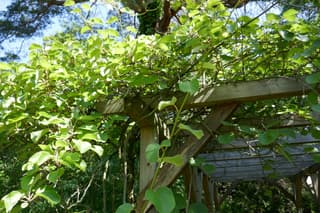
Golden Kiwifruit
Actinidia chinensis
Actinidia chinensis is a vigorous deciduous climbing vine native to China, grown for its sweet, golden-fleshed edible fruit. It is dioecious, requiring both male and female plants for fruit set, and needs sturdy support such as a trellis or pergola to climb.

Baobab
Adansonia
Baobab (Adansonia) is a genus of iconic trees in the family Malvaceae, native to African savannas, Madagascar, and Australia. Known as the "Tree of Life," it stores thousands of liters of water in its massive swollen trunk, sustaining entire ecosystems during prolonged droughts. There are 8 species, all characterized by a colossal bottle-shaped trunk, wide spreading crown, and palmate leaves. Some specimens live over 1,000 years and are considered living natural monuments.
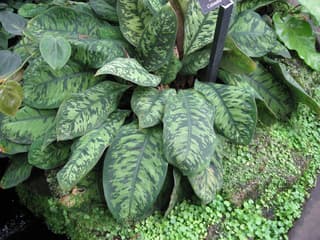
Camouflage Plant
Adelonema wallisii
Adelonema wallisii, commonly called the Camouflage Plant, is a compact, rhizomatous aroid native to the rainforest floor of Venezuela, Colombia, and Panama, where it grows as an understory groundcover in deep, humid shade. Its broad, elliptic-to-ovate leaves reach 13-20 cm long on short stalks and display a striking marbled pattern of bright green and silvery-yellow that mimics dappled forest light, giving the plant its common name. Long classified within Homalomena, it was moved to the segregate Neotropical genus Adelonema, though specimens are still widely sold under the trade name Homalomena wallisii Camouflage. The plant stays low and clump-forming, rarely exceeding 40 cm tall, and is prized by collectors for its foliage rather than its inconspicuous aroid inflorescence.
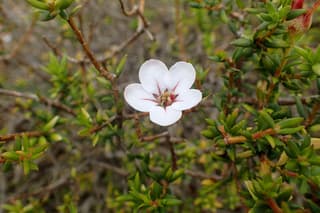
China Flower
Adenandra uniflora
Adenandra uniflora is a small evergreen shrub in the Rutaceae family, endemic to the fynbos of the southwestern Cape Province in South Africa. It forms a low, spreading bush, 10 to 45 cm high, with thin woody stems tinged with red. Its small dark green foliage releases an aromatic scent when crushed, typical of most Rutaceae. From mid-winter to spring (July to October in its native habitat), it is covered with large white five-petaled flowers, which have red buds before opening. These flowers have a porcelain-like appearance and are lightly scented. In the wild, it grows in sandy soils and among sandstone outcrops, often in recently burned areas. It is valued as an ornamental plant for rock gardens or containers.

Blue-green Adenia
Adenia glauca
Adenia glauca is a fascinating caudiciform climber from Southern Africa, where it grows wild in the bushveld on rocky or sandy soil in Botswana and South Africa's northern provinces (Limpopo, Mpumalanga, Gauteng, and North West). The species forms a large, bottle-shaped, greenish-gray caudex (swollen stem base) that can reach up to 1 meter in height and 40 cm in diameter, serving as the plant's water reservoir during drought periods. From the caudex emerge thin, twining stems with palmately lobed, blue-green leaves ('glauca' means 'blue-green' in Latin). The plant is dioecious, and fragrant yellow flowers appear from late summer to winter. Important: the leaves and seeds contain cyanogenic glycosides, and the sap is toxic upon contact and ingestion – only the thickened caudex/root is traditionally considered non-toxic and has historically been used as an emergency water source by local populations, but the plant as a whole should be treated as poisonous and kept out of reach of children and pets.
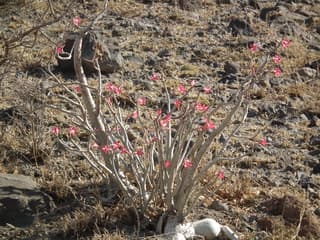
Desert Rose (genus)
Adenium
Adenium is a genus of succulent shrubs and small trees native to arid regions of Africa and the Arabian Peninsula. Famous for their swollen, water-storing caudex (trunk base) and showy trumpet-shaped flowers in shades of pink, red, and white. The most widely cultivated species is A. obesum.
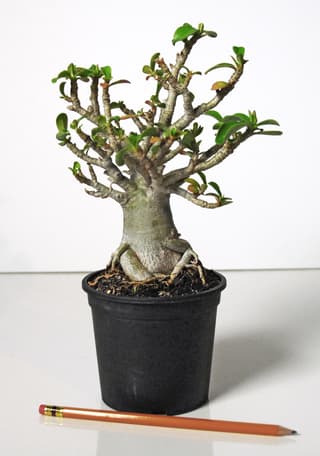
Impala Lily
Adenium multiflorum
The Impala Lily (Adenium multiflorum) is a striking succulent shrub native to southern Africa, celebrated for its spectacular winter blooms of white and crimson bicolor flowers that appear on bare branches. It develops a thick basal stem called a caudex that stores water and gives the plant a dramatic bonsai-like appearance over time.
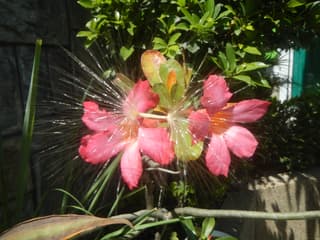
Desert Rose
Adenium obesum
Adenium obesum, commonly known as the Desert Rose, is a striking succulent shrub native to East Africa and the Arabian Peninsula. Renowned for its thick, swollen caudex and vibrant trumpet-shaped flowers in shades of pink, red, and white, it is a favorite among bonsai enthusiasts and ornamental plant collectors. Despite its exotic appearance, it is well-suited for indoor cultivation in bright, sunny spots.
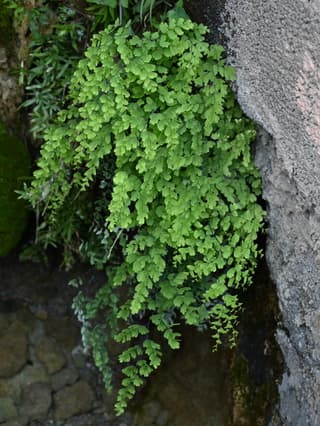
Maidenhair Fern (genus)
Adiantum
The Maidenhair Fern (genus Adiantum) is one of the most elegant and delicate ferns in cultivation, prized for its fine, fan-shaped leaflets borne on dark, wiry stems. With roughly 250 species distributed worldwide, the most popular indoors are A. capillus-veneris (Southern Maidenhair) and A. raddianum (Delta Maidenhair). It is notoriously demanding — high humidity and consistent moisture are non-negotiable.

Common Maidenhair Fern
Adiantum aethiopicum
Adiantum aethiopicum, commonly known as the common or bush maidenhair fern, is a small evergreen fern native to tropical and southern Africa, Madagascar, Australia, New Zealand and New Caledonia. Its delicate, fan-shaped leaflets are carried on thin, glossy, near-black stems that contrast beautifully with the bright green foliage. It spreads through creeping rhizomes, forming dense colonies in shaded, moist environments, whether in protected outdoor gardens or in pots indoors.
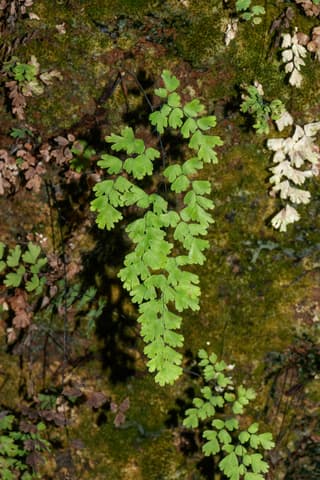
Maidenhair Fern
Adiantum capillus-veneris
Adiantum capillus-veneris, commonly known as the Maidenhair Fern, is one of the most elegant and delicate ferns in cultivation. Native to temperate and tropical regions worldwide, it features graceful, fan-shaped pinnae on black, wiry stems. Despite its ethereal beauty, it is notoriously demanding, requiring consistent moisture and high humidity to thrive. Its name derives from Latin, meaning "hair of Venus," reflecting its longstanding association with beauty and mythology.
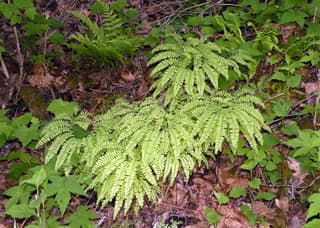
Northern Maidenhair Fern
Adiantum pedatum
Adiantum pedatum, the northern maidenhair fern, is a deciduous, clump-forming fern native to moist deciduous woodlands across North America and temperate East Asia. It is prized for its wiry black stems and delicate, fan-shaped fronds that arch outward like open hands, dying back to the rhizome each winter and returning each spring.
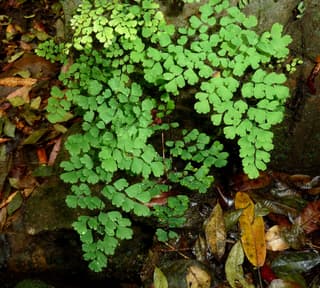
Poiret's maidenhair fern
Adiantum poiretii
Adiantum poiretii is a maidenhair fern in the Pteridaceae family with one of the widest ranges in its genus: tropical and subtropical America from Mexico to Uruguay and Chile, much of sub-Saharan Africa, Madagascar and the Indian Ocean islands, south-west Arabia, southern India and Sri Lanka. It is a mountain fern, found at roughly 1,150-2,700 m on moist banks of permanent streams, wet rocks and walls, in light shade. The rhizome creeps and sends out slender underground runners that start new clumps. The arching fronds reach 75 cm, with a shiny dark chestnut stalk and a blade divided up to five times into small fan- to kidney-shaped segments. The sori sit along the lobe margins over a yellow powder, a detail that separates it from the common maidenhair (Adiantum raddianum). It has no flowers and reproduces by spores.
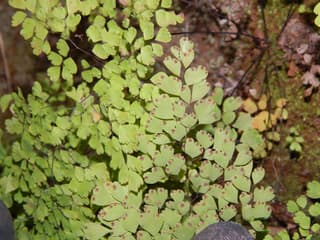
Delta Maidenhair Fern
Adiantum raddianum
Adiantum raddianum is a delicate and elegant fern native to South America, known for its fan-shaped fronds with triangular pinnules and shiny black stems. It is one of the most popular houseplants due to its ethereal and graceful appearance that brings freshness to any space.
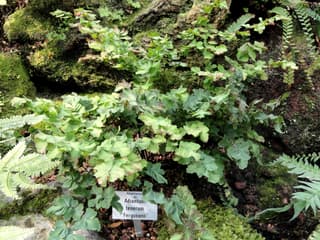
Fan Maidenhair Fern
Adiantum tenerum
The fan maidenhair fern (Adiantum tenerum), family Pteridaceae, genus Adiantum, is native to Florida and the tropical and subtropical forests of Central and South America and the West Indies, where it grows on shaded, moist limestone ledges and grottoes. It bears light, fan-shaped fronds with wavy, deeply cut pinnae on slender, wiry, near-black stems. Like all ferns, it produces no flowers or seeds, reproducing by spores on the underside of its fronds, and can also be propagated by dividing its rhizome.
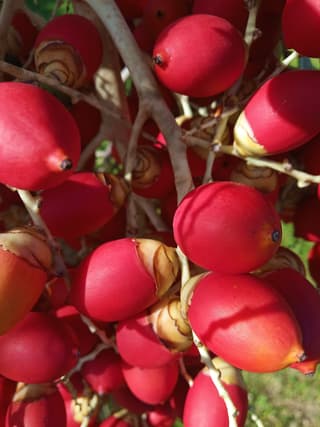
Christmas Palm
Adonidia merrillii
Adonidia merrillii, commonly known as the Christmas Palm, is an elegant and compact species native to the Philippines. It is distinguished by its smooth, single trunk and, most notably, its large clusters of berries that turn bright red in winter, resembling Christmas ornaments. It is one of the world's most popular ornamental palms for tropical landscapes and bright indoor spaces.
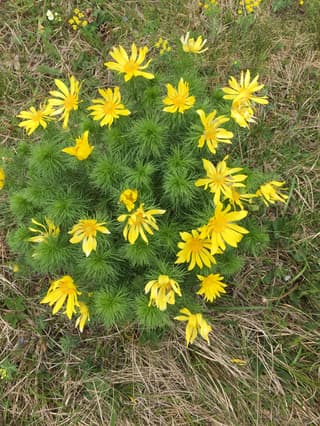
Pheasant's eye
Adonis vernalis
The Spring pheasant's eye (Adonis vernalis) is a perennial herbaceous plant in the Ranunculaceae family, native to the calcareous meadows and steppes of Central and Eastern Europe and Western Asia. It grows up to 40 cm in height, featuring fine, dill-like foliage and solitary, golden-yellow flowers, 6-8 cm in diameter, which appear in early spring between April and May. All parts of the plant contain potent cardiotonic glycosides (cymarin, adonitoxin) and are severely toxic if ingested.
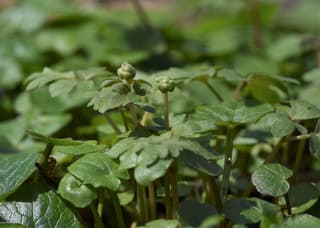
Moschatel
Adoxa moschatellina
Moschatel (Adoxa moschatellina) is the only species in the genus Adoxa within the family Adoxaceae. It is a low-growing perennial, 8–15 cm tall, that thrives in shady, damp forests, along stream banks, and in rock crevices, often found under alder or oak trees. Its defining characteristic is the cube-shaped inflorescence composed of tiny, greenish-yellow flowers: four lateral flowers and one terminal flower, which gives rise to its folk name 'Town Hall Clock'. The flowers emit a faint musky scent in the evening. It blooms between March and June, then retreats underground into its hidden rhizomes for the summer.
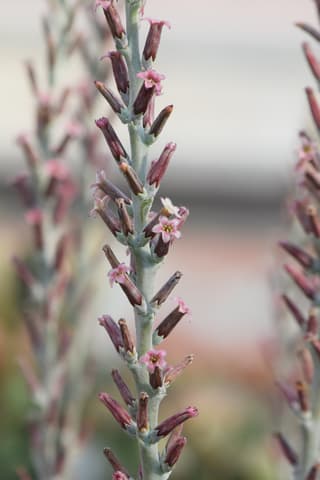
Plover Eggs Plant
Adromischus
Adromischus is a charming genus of small, clumping succulents native to Southern Africa, belonging to the Crassulaceae family. With about 28 known species, these plants are prized by collectors for their uniquely shaped, often spotted or mottled thick leaves. They thrive in bright light and are exceptionally drought-tolerant, making them ideal low-maintenance houseplants. In spring, they produce slender tubular flowers in white, pink, or red on long spikes.
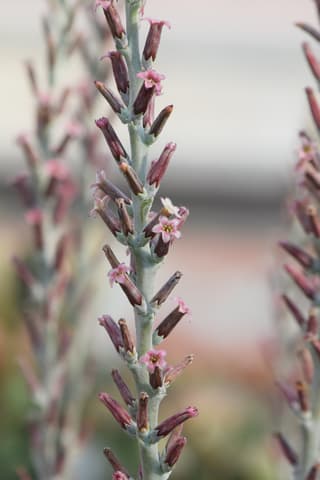
Plover Eggs Plant
Adromischus cooperi
Adromischus cooperi, commonly called the Plover Eggs Plant, is a compact, slow-growing succulent native to the Eastern Cape province of South Africa. Its thick, wavy-tipped leaves are speckled with purple or reddish-brown blotches that resemble the mottled eggs of a plover, giving the plant its common name. Nearly stemless when young, it slowly develops short, fleshy trunks with age.
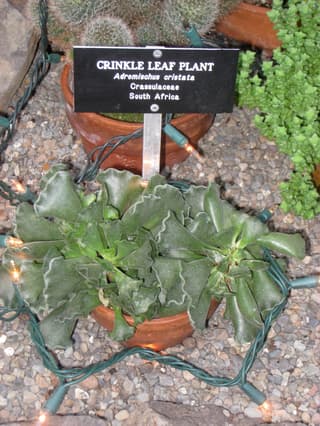
Crinkle-leaf Plant
Adromischus cristatus
Adromischus cristatus is a compact succulent native to South Africa, prized for its distinctive triangular leaves with wavy, crinkled margins and rough texture. A member of the Crassulaceae family, it is a popular ornamental houseplant ideal for beginners.
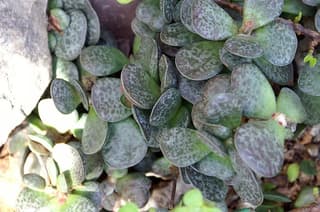
Calico Hearts
Adromischus maculatus
A small perennial succulent endemic to the Western and Eastern Cape provinces of South Africa, where it grows on the sandy slopes of the Langeberg mountains. It forms small clusters of obovate, grayish-green to bronze leaves covered in brownish-purple spots that create a mottled pattern similar to calico fabric. An excellent choice for pots and water-wise succulent gardens.
Find the Perfect Plant
Our plant guide helps you find ideal species for your experience level and time of year.
Browse by Difficulty, Season & More
Use the filters below to narrow this catalog by care difficulty, season, environment, or search directly by name. Each filter leads to a focused list tailored to your specific growing conditions.