Complete Plant Guide
Explore plants by difficulty, season and more. Find the perfect plant for you.
Difficulty
Categories
Plants by City
🗺️ Plants by City3951 plants found
Showing 109-144 of 3951
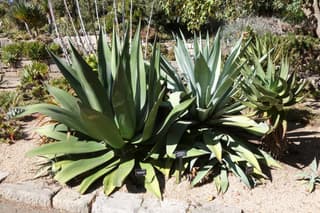
Pulque Agave
Agave salmiana
Agave salmiana, commonly known as Pulque Agave or Giant Agave, is one of the largest and most impressive agaves native to central Mexico. Its massive succulent leaves can reach up to 2 meters in length, armed with sharp spines. This species is the primary source of aguamiel (sap) used to produce pulque, a fermented beverage consumed in Mexico for thousands of years. It is monocarpic — flowering only once after 15–25 years, producing a spectacular flowering stalk up to 12 meters tall.
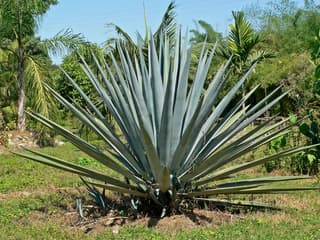
Blue Agave
Agave tequilana
Agave tequilana, commonly known as Blue Agave, is a striking succulent native to the highlands of Jalisco, Mexico. Its thick, blue-gray leaves form a dramatic rosette that can reach up to 2.4 m across, tipped with sharp spines along the margins and tip. Best known as the sole legal source of tequila, this drought-tolerant succulent grows slowly for years before sending up a towering flower stalk once in its lifetime, then setting offsets (pups) at its base to continue the cycle.

Queen Victoria Agave
Agave victoriae-reginae
Agave victoriae-reginae, or Queen Victoria Agave, is an extremely slow-growing monocarpic succulent native to the Chihuahuan Desert in the Mexican states of Coahuila, Durango, and Nuevo León. It forms a compact and perfectly geometric rosette of short, rigid, dark green leaves marked with white lines that appear hand-painted. After several decades of growth, it produces a single inflorescence several meters high with cream-colored flowers, after which the mother rosette dies, often leaving offsets at its base.
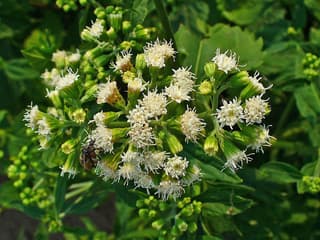
white snakeroot
Ageratina altissima
White snakeroot is a shade-tolerant, clump-forming herbaceous perennial native to woodlands and forest edges across eastern North America. It grows two to five feet tall on smooth, branching stems with opposite, heart-shaped, coarsely toothed leaves, and from late summer into fall it produces flat-topped clusters of small, fluffy white flowers that draw bees, butterflies, and other pollinators. Every part of the plant contains the toxin tremetol, making it dangerous to livestock, pets, and people if ingested.
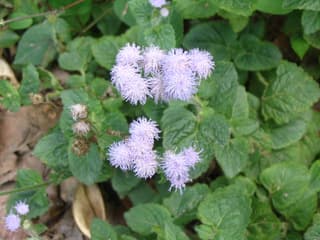
Billygoat Weed
Ageratum conyzoides
Billygoat weed (Ageratum conyzoides) is a fast-growing annual herb in the daisy family (Asteraceae), native to tropical America and now naturalized throughout tropical and subtropical regions worldwide. It has softly hairy stems and oval, serrated leaves with a distinctive musky scent when crushed. Small blue-lavender to white flower heads cluster in terminal clusters, attracting bees and butterflies. Common in gardens, roadsides, and disturbed ground, it is regarded by many growers as a weed but is also widely valued in traditional medicine.
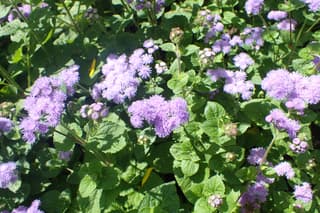
Floss Flower
Ageratum houstonianum
Ageratum houstonianum, commonly known as Floss Flower, is a frost-tender annual native to Central America (Guatemala, Belize, and adjacent Mexico), prized for its dense, fluffy, pom-pom-like flower clusters in shades of blue, purple, pink, and white. Growing 15–90 cm tall, it features soft, ovate to triangular, slightly hairy leaves and blooms continuously from late spring until frost. A favorite in summer bedding, borders, and containers, it reliably attracts butterflies and other pollinators throughout its long flowering season.
Anyamanee Chinese Evergreen
Aglaonema 'Anyamanee'
Aglaonema 'Anyamanee' is a hybrid Chinese evergreen bred in Thailand, part of the Aglaonema rotundum breeding line that produced the red and pink aglaonemas. It forms a compact, upright clump of broad, glossy leaves in reddish pink to magenta, edged and blotched dark green, on pale stalks. A slow-growing houseplant in the arum family (Araceae), it is grown for its colorful foliage.
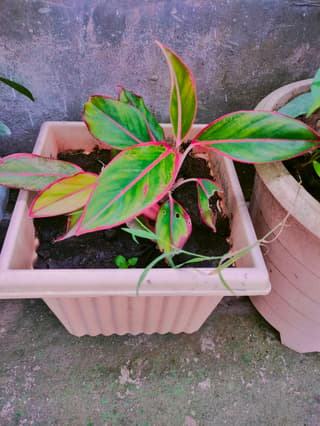
Chinese Evergreen 'Crete'
Aglaonema 'Crete'
Aglaonema 'Crete' is a compact evergreen cultivar of Chinese evergreen (Araceae, Aglaonema) prized for its lance-shaped, dark green leaves splashed with vivid pink and burgundy-red variegation along the veins and margins, carried on pale pink stems. Native to the understory forests of tropical Southeast Asia, it thrives as a low-maintenance houseplant that tolerates a wide range of indoor light levels while showing its boldest color in bright, indirect light. Like other aroids, its tissues contain insoluble calcium oxalate crystals, making the whole plant mildly to moderately toxic if chewed or ingested.
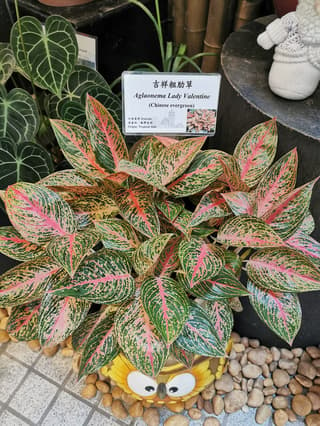
Lady Valentine Chinese Evergreen
Aglaonema 'Lady Valentine'
Aglaonema 'Lady Valentine' is a foliage cultivar in the arum family (Araceae), in the same genus as the Chinese evergreens native to tropical Asian forests. Its leaves are glossy, elongated and pointed, mostly pink, with green midsections and veins and a few cream specks. How pink they are depends on light: brighter indirect light gives deeper pink, while shade turns them greener. It forms a clump about 30 to 60 cm tall and grows slowly. It occasionally produces a small pale green spathe with a white spadix, but it is grown for the leaves. Like other aroids, it contains calcium oxalate crystals and is toxic if eaten.
Red Valentine Chinese Evergreen
Aglaonema 'Red Valentine'
Vibrant hybrid cultivar selected for dramatic pink-red foliage accented by green margins and occasional yellow-green flecks. This tropical houseplant from the Araceae family is renowned for air-purifying abilities and easy care requirements.

Red Aglaonema
Aglaonema 'Siam Aurora'
Aglaonema 'Siam Aurora', widely known as Red Aglaonema, is a compact evergreen cultivar of Chinese Evergreen prized for its striking foliage — deep green leaves splashed and edged with vivid red, pink and cream variegation. Native to the tropical understories of Southeast Asia, this Araceae family member is one of the most popular colored-leaf houseplants thanks to its resilience, moderate light tolerance, and low-maintenance nature. It grows as a bushy, clumping plant reaching about 90 cm (3 ft) tall and wide indoors, and occasionally produces small greenish spathe flowers with white spadixes in late summer to fall.
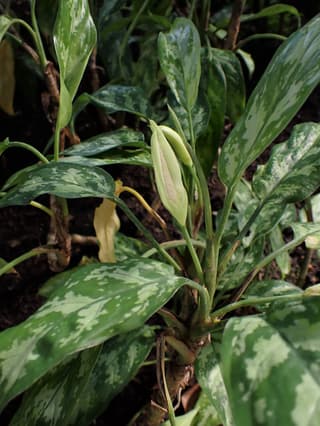
Chinese Evergreen
Aglaonema commutatum
Aglaonema commutatum, commonly known as Chinese Evergreen, is a popular tropical houseplant native to the Philippines and northeastern Sulawesi. Prized for its attractive variegated foliage with silver and green patterns, this slow-growing plant is perfect for beginners due to its tolerance of low light conditions and minimal care requirements. It has been cultivated for centuries in Asia as a symbol of good fortune.
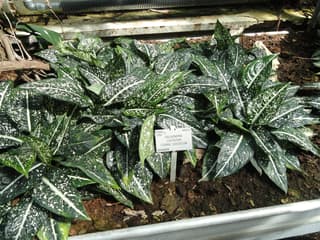
Spotted Evergreen
Aglaonema costatum
Aglaonema costatum, commonly known as the Spotted Evergreen, is a compact tropical aroid native to the rainforests of Southeast Asia. It features striking dark green leaves adorned with silver-white spots and a distinctive white midrib, making it one of the most visually appealing low-light houseplants available.
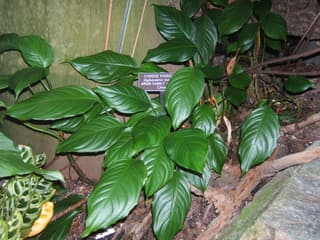
Chinese Evergreen
Aglaonema modestum
Aglaonema modestum, commonly known as Chinese Evergreen, is a tropical foliage plant native to China, Vietnam, and the Philippines. With long, glossy dark-green leaves, it is one of the most resilient and adaptable houseplants, thriving in low light and tolerating dry indoor air. It belongs to the Araceae family.
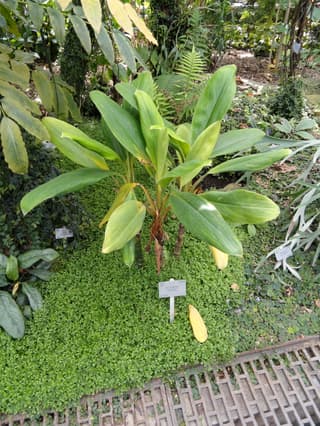
Glossy Aglaonema
Aglaonema nitidum
Aglaonema nitidum, commonly known as Glossy Aglaonema or Painted Drop Tongue, is a striking tropical foliage plant native to the rainforests of Southeast Asia. Its broad, lance-shaped leaves display a deep glossy green, sometimes adorned with silver or light green markings, making it a prized ornamental houseplant. As a member of the Araceae family, it is one of the most adaptable and low-maintenance indoor plants available.
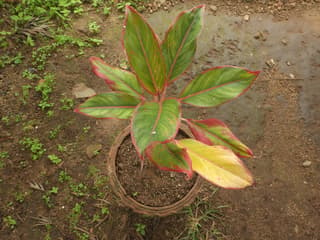
Round-Leaf Aglaonema
Aglaonema rotundum
Aglaonema rotundum is a striking true species of Chinese evergreen native to the shaded rainforest understory near Medan, North Sumatra, Indonesia. It is prized for its rounded, leathery, near-black leaves marked with vivid pink to wine-red veins, one of the boldest color contrasts found in any Aglaonema species. Compact and slow-growing, it typically reaches 30-50 cm indoors, making it well suited to shelves, side tables, and low-light corners of the home.

Agrimony
Agrimonia eupatoria
Agrimony (Agrimonia eupatoria) is a perennial herbaceous plant in the Rosaceae family, native to Europe and Southwest Asia, where it grows wild in damp meadows, pastures, roadsides, and stream banks. It reaches between 60 and 100 cm in height, featuring dark green pinnate leaves covered in soft downy hairs, and long terminal flower spikes of five-petaled yellow flowers that emit a spicy, apricot-like scent. It blooms between June and September, producing small hooked fruits that cling to animal fur to disperse its seeds. It is a hardy, low-maintenance plant traditionally cultivated for its medicinal properties rather than its ornamental value.
Common Fieldcap
Agrocybe pediades
Agrocybe pediades is a small, cosmopolitan saprophytic fungus that frequently grows in nutrient-rich soils, such as lawns, gardens, and pastures. It is characterized by its initially hemispherical cap that flattens with age, displaying a yellowish-ochre or cinnamon color. It is an essential organism for the decomposition of organic matter and nutrient recycling in the soil. Although edible, its small size and the potential for confusion with similar toxic species require caution.

Creeping bentgrass
Agrostis stolonifera
Agrostis stolonifera, commonly known as creeping bentgrass, is a perennial cool-season grass native to temperate Europe and Asia. It is prized worldwide for producing extremely fine, dense turf through its creeping stolons that root at every node. Widely used on golf course putting greens, bowling greens, and elite sports fields, it demands intensive management but rewards with an unmatched carpet-like appearance.
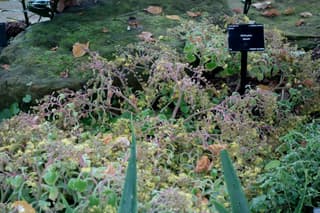
Tree of Love
Aichryson laxum
The Tree of Love (Aichryson laxum) is a compact succulent native to the Canary Islands, belonging to the Crassulaceae family. It features fleshy heart-shaped leaves arranged in rosettes at the tips of its branches, and produces small star-shaped yellow flowers in spring and summer. It is an annual or biennial plant that naturally dies after flowering.
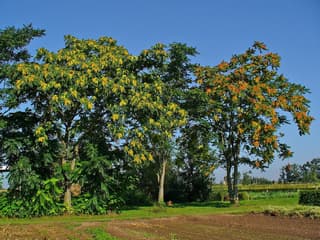
Tree of Heaven
Ailanthus
The Tree of Heaven (Ailanthus altissima) is an extremely fast-growing deciduous tree native to northern China and Taiwan. Belonging to the family Simaroubaceae, it can reach up to 25 metres in height and is renowned for its extraordinary resilience in harsh urban environments, tolerating pollution, poor soils, drought, and extreme temperatures. While classified as an invasive species in most temperate regions worldwide, Ailanthus has a rugged beauty with its large, pinnately compound leaves. The plant contains allelopathic compounds that inhibit the growth of surrounding vegetation, and contact with its sap may cause contact dermatitis in sensitive individuals. It carries mild toxicity and should be handled with care, especially during pruning.
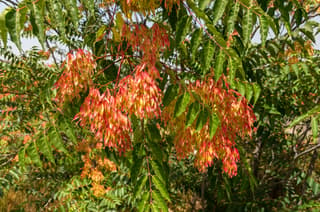
Tree of Heaven
Ailanthus altissima
Tree of Heaven (Ailanthus altissima) is an extremely fast-growing deciduous tree native to northern and central China, belonging to the family Simaroubaceae. It is widely regarded as one of the most aggressive invasive species in the world, rapidly colonizing roadsides, vacant lots, and disturbed urban environments across 30+ U.S. states and much of Europe. A single female tree can produce over 300,000 seeds per year and spreads aggressively via root sprouts. Despite its invasive character, it has traditional medicinal uses in Chinese medicine. WARNING: invasive species — illegal to plant in many jurisdictions. Contact with sap may cause skin irritation and respiratory allergic reactions.
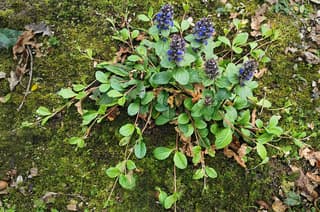
Bugleweed
Ajuga
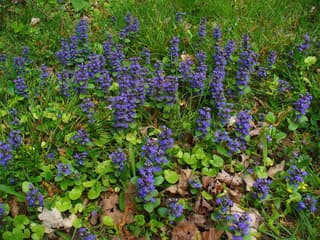
Bugleweed (Ajuga reptans) is a low-growing, mat-forming perennial groundcover native to Europe. It spreads via creeping stolons, forming dense carpets of foliage that range from deep green to bronze-purple, topped with spikes of blue to purple flowers in spring and summer.
Bugleweed
Ajuga reptans
Ajuga reptans, commonly known as Bugleweed or Carpet Bugle, is a low-growing perennial herb in the Lamiaceae family, native to Europe, northern Africa, and southwestern Asia. It forms a dense, compact mat of glossy, oval leaves with scalloped edges, spreading rapidly via stolons. In spring, it produces spikes of blue-violet, white, or pink flowers highly attractive to pollinators. It is one of the most versatile and hardy ground covers available, thriving in shady spots where grass and other plants struggle.
Chocolate Vine
Akebia quinata
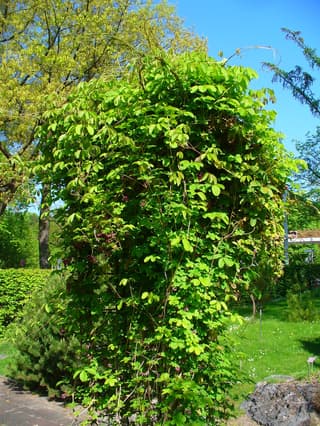
Akebia quinata, commonly known as chocolate vine, is a vigorous, twining, semi-evergreen to deciduous climber native to Japan, Korea and China. In spring, it produces clusters of small, fragrant, chocolate-scented flowers in shades of deep purple and maroon, followed in autumn by sausage-shaped, edible purple seed pods. Its five-lobed leaflets and rapid growth make it a popular choice for covering fences, pergolas and trellises, though it can become invasive in mild climates if left unchecked.
Silk Tree / Mimosa (genus)
Albizia
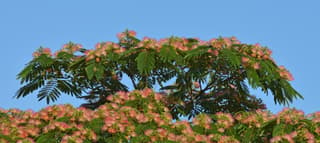
Albizia is a genus of tropical and subtropical ornamental trees in the Fabaceae family, known for their delicate pink powder-puff flowers and feathery bipinnate foliage. The most widely grown species is Albizia julibrissin.
Silk Tree
Albizia julibrissin
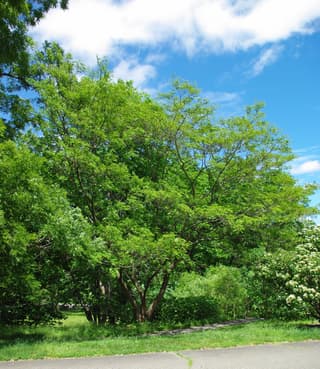
Albizia julibrissin, commonly known as the Silk Tree or Mimosa, is a fast-growing deciduous tree native to Iran, India, China, and Japan. It is celebrated for its stunning pink and white powder-puff flowers that bloom in spring and summer, attracting bees, butterflies, and hummingbirds. Its light, airy canopy — like an open parasol — can reach up to 12 meters tall and 15 meters wide, casting dappled shade below. The finely cut, fern-like bipinnate leaves fold at night and during rain, giving the tree a dreamy, animated quality. Introduced to the United States in 1745, it has become a beloved ornamental tree across temperate climates worldwide.
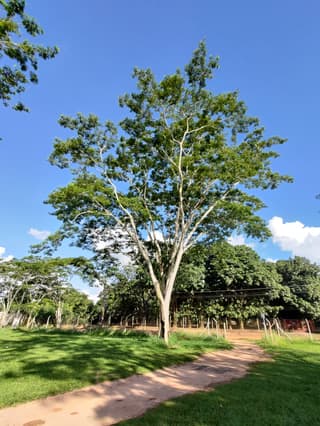
White Silk Tree
Albizia niopoides
Albizia niopoides, commonly known as White Silk Tree or Farinha Seca, is a fast-growing deciduous tree native to South America and Central America, belonging to the Fabaceae family. It can reach 10 to 35 meters in height, developing a characteristic wide, umbrella-shaped crown. Its delicate white to light-pink feathery flowers bloom from spring through summer, attracting bees and hummingbirds. The tree is known for nitrogen fixation, making it valuable for reforestation and agroforestry. It is highly drought-tolerant once established and adapts well to a wide range of tropical and subtropical conditions.
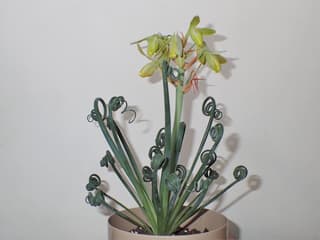
Slime Lily
Albuca
Albuca is a large genus of bulbous geophytes in the family Asparagaceae (subfamily Scilloideae), with over 100 species native mainly to southern Africa, extending into tropical Africa and Arabia. The genus name and the common nickname "slime lily" refer to the mucilaginous sap released when the leaves or bulb scales are cut. Most species are winter-growers: they produce leaves during the cool, wet months, flower in late winter to spring, then lose their foliage and go fully dormant through the hot, dry summer. Popular cultivated species such as Albuca spiralis and Albuca namaquensis are prized for their narrow, curly, spiral-tipped leaves and upright stalks of pendent, yellow-green, vanilla-scented flowers. As desert-adapted geophytes they are tough and forgiving once their dormancy cycle is respected, but are highly sensitive to overwatering while the bulb is dormant.
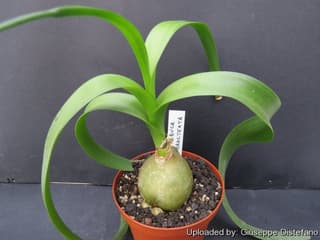
Pregnant Onion
Albuca bracteata
Albuca bracteata, popularly known as the Pregnant Onion, is a perennial bulbous plant native to South Africa (Cape Provinces and KwaZulu-Natal). Its large, bright green bulb grows mostly above the substrate surface, from which arching lanceolate leaves up to 60 cm long sprout. In spring and summer, it produces long flower stalks up to 90 cm tall, topped with dense racemes of small white flowers with a green central vein. It is a popular houseplant due to its unusual appearance and ease of cultivation.
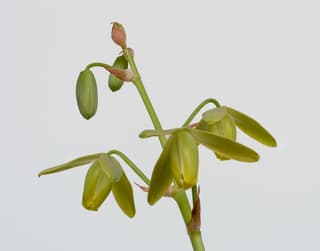
Curly Tamarak
Albuca spiralis
Albuca spiralis, commonly known as 'Frizzle Sizzle', is a unique bulbous succulent native to South Africa. It is celebrated for its distinctive, corkscrew-shaped leaves that curl more tightly when exposed to high light levels. In late spring, it produces spikes of nodding, bell-shaped yellow-green flowers that emit a sweet vanilla fragrance. The plant undergoes a summer dormancy period where its foliage may die back completely.
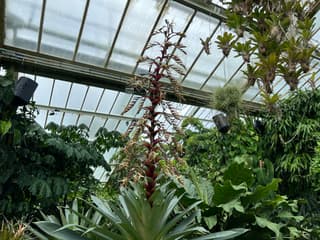
Alcantarea / Imperial Bromeliad (genus)
Alcantarea
Alcantarea is a genus of giant bromeliads native to rocky outcrops and cliff faces in Brazil, particularly in Rio de Janeiro state. These monumental plants form a central water-holding tank with their massive leaf rosettes and are adapted to full sun and periodic drought, making them outstanding specimens for tropical and subtropical gardens.
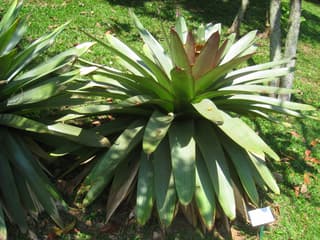
Imperial Bromeliad
Alcantarea imperialis
Alcantarea imperialis, commonly known as the Imperial Bromeliad, is one of the largest bromeliads in the world and a truly spectacular ornamental plant endemic to Brazil. Native to the rocky slopes of the Serra dos Órgãos mountain range in Rio de Janeiro state, this magnificent species forms enormous rosettes of leathery leaves that can reach 1.5 m in diameter, with a central tank capable of holding up to 30 liters of rainwater. When it eventually blooms — an event that occurs after 10 to 40 years — it produces a towering flower spike up to 3.5 m tall bearing white-yellowish flowers with reddish bracts that attract hummingbirds and other pollinators.
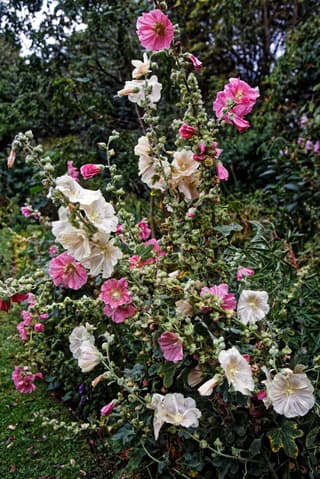
Hollyhock
Alcea
Alcea is a genus of about 60-80 tall, showy flowering plants in the mallow family (Malvaceae), native to southwestern and central Asia and southeastern Europe. The most widely cultivated species, Alcea rosea, is a beloved cottage-garden classic prized for its towering flower spikes, which can reach 2-3 m and bear large, saucer-shaped blooms in shades of pink, red, white, yellow, purple, and near-black. Hollyhocks are typically grown as biennials or short-lived perennials, flowering in their second year before often self-seeding. They are a favorite backdrop plant for cottage borders, fences, and walls.
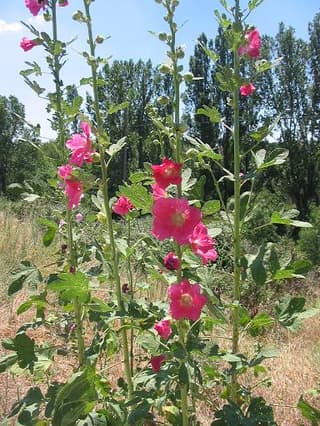
Hollyhock
Alcea rosea
Hollyhock (Alcea rosea) is a biennial or short-lived perennial flowering plant in the family Malvaceae, native to southwestern and central Asia, including Turkey and China. Renowned for its towering flower spikes reaching up to 2.5 metres (8 feet) in height, it produces abundant blooms in shades of pink, red, white, yellow, purple, and orange throughout summer. A cottage garden classic, hollyhocks thrive along fences, walls, and borders.
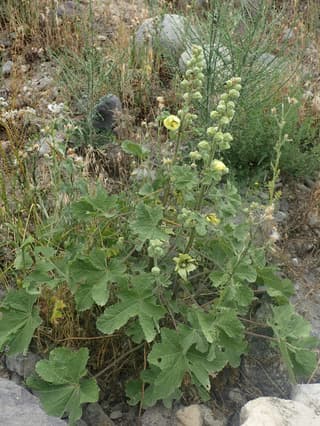
Russian Hollyhock
Alcea rugosa
A vigorous biennial or short-lived perennial native to Ukraine, Crimea, southern European Russia, and the Caucasus. Alcea rugosa is prized for its superior resistance to hollyhock rust compared to common hollyhock varieties. The plant produces tall, sturdy flower spikes with outward-facing, funnel-shaped, pale yellow flowers adorned with conspicuous staminal columns. Flowers bloom from bottom to top throughout late spring and summer, attracting hummingbirds and bees.
Find the Perfect Plant
Our plant guide helps you find ideal species for your experience level and time of year.
Browse by Difficulty, Season & More
Use the filters below to narrow this catalog by care difficulty, season, environment, or search directly by name. Each filter leads to a focused list tailored to your specific growing conditions.