Complete Plant Guide
Explore plants by difficulty, season and more. Find the perfect plant for you.
Difficulty
Categories
Plants by City
🗺️ Plants by City3454 plants found
Showing 1045-1080 of 3454
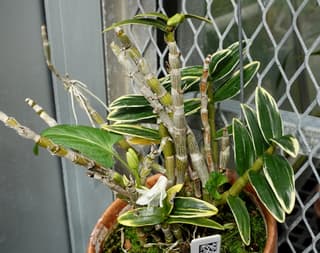
Sekkoku Orchid
Dendrobium moniliforme
Dendrobium moniliforme, known in Japan as Sekkoku and in Korea as Seokgok, is a compact epiphytic orchid native to cool, high-elevation forests of Japan, Korea, and China. Slender, cane-like pseudobulbs bear small clusters of fragrant white flowers with a yellow-green lip in late winter and spring. For centuries it has been cultivated as a prized ornamental in East Asia, admired for its resilience and delicate blooms rather than showy size.

Noble Dendrobium
Dendrobium nobile
Dendrobium nobile is a stunning deciduous orchid native to the Himalayan foothills and Southeast Asia, prized for its abundant fragrant flowers that bloom along mature canes in late winter to early spring. This sympodial orchid produces clusters of stout pseudobulbs that can reach up to 60cm in height, adorned with beautiful blooms in shades of white, pink, purple, and yellow. Popular as both an indoor and outdoor plant in warm climates, it requires a cool winter rest period to trigger flowering.

Den-Phal Orchid
Dendrobium phalaenopsis
Dendrobium phalaenopsis, commonly known as the Den-Phal orchid, is an epiphytic orchid native to northern Australia and New Guinea. Renowned for its arching sprays of purple, pink, or white blooms that last for weeks, it is the parent species behind the popular 'Den-Phal' hybrids sold in flower shops under the trade name Cooktown orchid, prized for generous flowering and comparatively easy care among orchids.
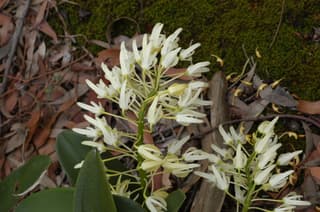
Rock Orchid
Dendrobium speciosum
Dendrobium speciosum, commonly known as the Rock Orchid or King Orchid, is a large epiphytic and lithophytic orchid native to eastern Australia. It grows naturally on rocks and tree trunks, producing robust pseudobulbs up to 45 cm long. In late winter to early spring, it produces spectacular arching sprays of white to creamy-yellow flowers with purple-spotted labellums and a soft honey fragrance.
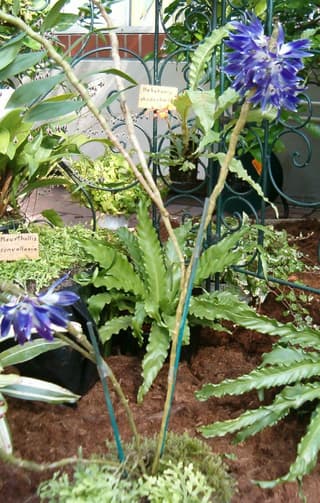
Queen Victoria's Dendrobium
Dendrobium victoriae-reginae
Dendrobium victoriae-reginae, known as Queen Victoria's dendrobium, is a striking epiphytic orchid endemic to the high-elevation cloud forests of the Philippines, found on Luzon, Mindanao, Mindoro, Negros, and Camiguin. It grows among oaks, rhododendrons, and azaleas at 1,300 to 2,700 meters elevation, where cool temperatures and near-constant moisture prevail. Its pendulous, cane-like stems are basally branching and swollen at the nodes, bearing papery, lance-shaped leaves. Short, erect racemes carry one to three flowers in variable shades of lilac to deep violet-blue, among the most prized colors in the genus.
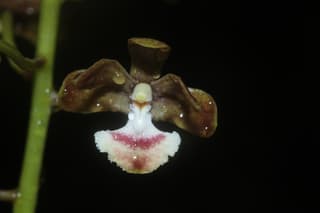
Virot's Dendrobium
Dendrobium virotii
Dendrobium virotii is a rare endemic orchid from New Caledonia, first described by Guillaumin in 1941. A medium-sized epiphyte, it grows on tree trunks in montane rainforests and scrubland at elevations from sea level to 1,000 meters. Its slightly zigzag, branching stems carry elliptic, clasping leaves, and in late spring it produces small racemes of 6 to 22 delicate flowers.
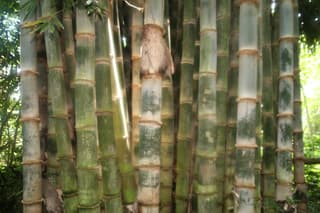
Giant Bamboo
Dendrocalamus giganteus
Dendrocalamus giganteus, commonly known as Giant Bamboo, is one of the largest bamboo species in the world, capable of reaching heights of up to 30 meters. Native to Southeast Asia — particularly India and Myanmar — it is prized for its impressive stature, extraordinarily fast growth, and versatile uses from construction to ornamental landscaping.
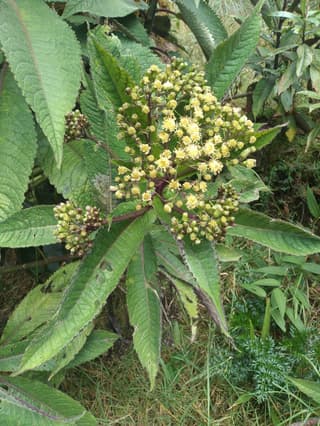
Dendrophorbium
Dendrophorbium
Dendrophorbium (Cuatrec.) C.Jeffrey is a genus of roughly 84 species of shrubby daisies in the tribe Senecioneae (Asteraceae), split off from the mega-genus Senecio in 1992. All species are Neotropical, concentrated in the northern Andes (Colombia, Ecuador and Peru, with a few outliers in Bolivia, Argentina and Brazil, plus one Caribbean species). Plants are erect, woody-based (suffrutescent) shrubs to small trees with fairly large, toothed leaves and terminal clusters of yellow, daisy-like flower heads, usually with ray florets. Nearly every species is a narrow-range endemic of subtropical/tropical montane cloud forest or high-elevation montane scrub, roughly between 2,000 and 3,800 m elevation, and many are considered threatened by habitat loss. Because the genus has essentially no history in cultivation and is known almost entirely from herbarium and taxonomic study, detailed horticultural data (exact light, water, soil and hardiness tolerances, mature size) has not been established for the genus as a whole; figures given here are cautious, habitat-based estimates rather than confirmed cultivation records.
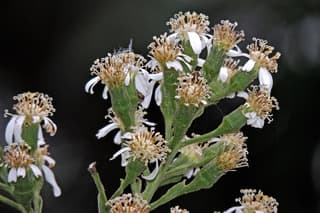
Dendrophorbium peregrinum
Dendrophorbium peregrinum
Dendrophorbium peregrinum is a shrub in the Asteraceae family (Senecioneae tribe), native to the subtropical montane forests of northwestern Argentina and Bolivia, typically occurring between 1,300 and 2,800 m in altitude. It was originally described by August Grisebach in 1879 as Senecio peregrinus and later transferred to the genus Dendrophorbium by C. Jeffrey in 1992. Like other species in the genus, it has a shrubby (arborescent) habit, large leaves with serrated/toothed margins, and corymbiform inflorescences with numerous radiate flower heads: white ray florets surrounding a central disk of light yellow tubular florets. It should not be confused with the popular ornamental succulent called "string of dolphins" (Curio/Senecio peregrinus), a completely different garden hybrid that shares only a similar historical scientific name.
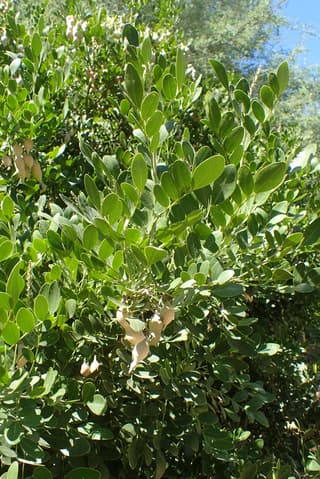
Texas mountain laurel
Dermatophyllum secundiflorum
Evergreen shrub or small tree in the Fabaceae family, native to southwestern USA and northern Mexico. Features showy clusters of fragrant purple flowers that resemble grape soda in scent. Extremely drought-tolerant and adapted to rocky limestone soils. Slow-growing, reaching 4-5 meters (15 feet) at maturity with a spread of 3-5 meters (10-15 feet). Dense, glossy compound foliage with leathery leaflets.
ringless honey fungus
Desarmillaria tabescens
Desarmillaria tabescens, commonly known as the ringless honey fungus, is a species of mushroom in the family Physalacriaceae. It is a plant pathogen that causes Armillaria root rot. Unlike its close relatives, it lacks a ring (annulus) on the stem. It typically grows in dense clusters on wood, often appearing to grow from the soil but actually attached to buried roots or stumps of deciduous trees.
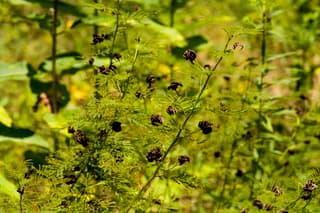
Illinois bundleflower
Desmanthus illinoensis
Desmanthus illinoensis, commonly known as Illinois bundleflower, is a perennial herbaceous legume native to the prairies of central and southern North America. Belonging to the Fabaceae family, it is characterized by bipinnate, fern-like leaves that fold at night and during the hottest hours of the day. It produces small, white, spherical star-shaped inflorescences composed of 25-50 florets that bloom from late spring through summer. As a nitrogen-fixing legume, it naturally enriches the soil and is extremely drought-resistant once established.
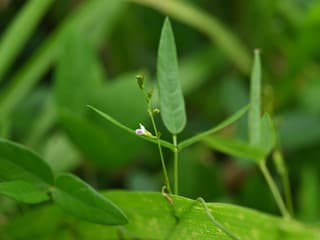
Panicledleaf ticktrefoil
Desmodium paniculatum
Panicledleaf ticktrefoil is an erect, spreading perennial herb in the pea family (Fabaceae), native to eastern North America from Quebec to Florida and west to Texas, Nebraska, and Ontario. Its alternate, trifoliate leaves have lance-to-oblong leaflets, and loose panicles of light pink to lavender flowers appear from June through September. These give way, from August to October, to distinctive segmented seed pods called loments that are covered in tiny hooked hairs and cling readily to clothing and animal fur for seed dispersal. As a legume, it fixes nitrogen in the soil and typically colonizes sunny disturbed ground such as roadsides, meadow edges, and abandoned fields.
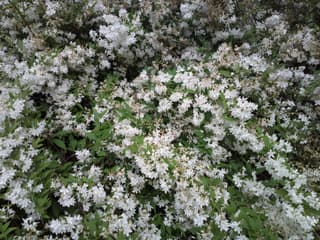
Slender Deutzia
Deutzia gracilis
The Slender Deutzia (Deutzia gracilis) is a deciduous, low-growing ornamental shrub native to Japan and a member of the hydrangea family (Hydrangeaceae). It typically grows 100-150 cm tall and spreads about 120 cm wide, featuring elliptical, light green leaves that turn a yellowish hue in autumn. Between late April and early June, it produces lush clusters of tiny, star-shaped, snow-white flowers that are lightly fragrant and attract bees and other pollinators. It is an easy-to-grow, hardy species that tolerates both sunny and semi-shaded locations, making it a popular choice for front gardens, hedges, or mixed shrub borders.
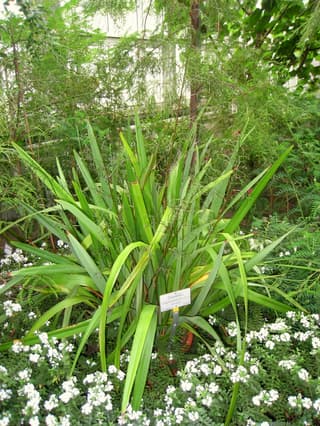
Tasman Flax Lily
Dianella tasmanica
Dianella tasmanica, commonly known as the Tasman Flax Lily, is an evergreen perennial native to Australia. It features long, strap-like glossy green leaves and produces delicate star-shaped blue-purple flowers in spring, followed by striking violet-blue berries. Hardy and low-maintenance, it thrives in garden borders, containers, and as ground cover.
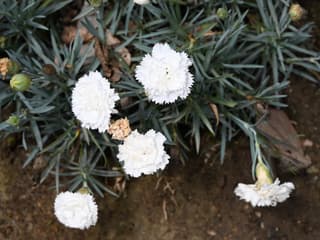
Pink / Carnation (genus)
Dianthus
Dianthus is one of the most beloved flowering genera in horticulture, comprising over 300 species including carnations (D. caryophyllus), sweet williams (D. barbatus), and cottage pinks (D. plumarius). Known for their spicy-clove fragrance and fringed petals, they are easy to grow, long-blooming, and perfect for borders, containers, and cutting gardens.
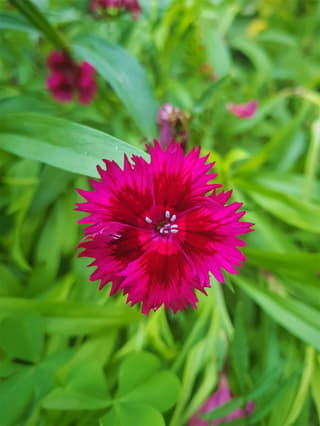
Sweet William
Dianthus barbatus
Sweet William (Dianthus barbatus) is a charming biennial or short-lived perennial native to southern Europe. It produces dense, flat-topped clusters of small fragrant flowers in vivid shades of pink, red, white, and bicolor patterns. The blooms have a delightful clove-like scent and appear in late spring to early summer, making it a cottage garden favorite.
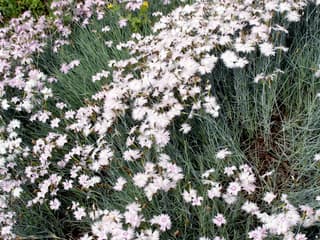
Carnation
Dianthus caryophyllus
Dianthus caryophyllus, commonly known as Carnation or Clove Pink, is a species of Dianthus native to the Mediterranean region. One of the oldest cultivated flowers in history, carnations have been grown for over 2,000 years. They produce fragrant, fringed blooms in a wide range of colors — white, pink, red, purple, orange, and yellow — atop stiff, glaucous stems. Carnations are prized for their long vase life, spicy clove-like fragrance, and deep cultural symbolism across many traditions.
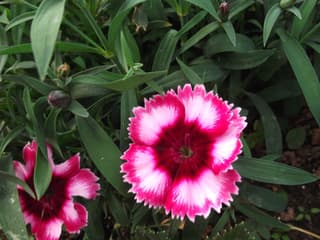
China Pink
Dianthus chinensis
Dianthus chinensis, commonly known as China Pink, is a charming flowering annual or short-lived perennial native to China. It produces vibrant, fringed flowers in shades of pink, red, white, and bicolor patterns. A classic cottage garden plant, it thrives in borders, containers, and rock gardens, blooming from spring through fall with minimal care.
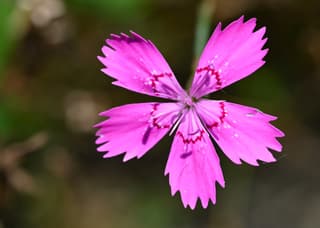
Maiden Pink
Dianthus deltoides
Dianthus deltoides, known as Maiden Pink, is a low-growing, mat-forming perennial in the carnation family (Caryophyllaceae). Native to Europe and western Asia, it forms dense evergreen-to-semi-evergreen cushions of narrow, gray-green foliage topped with small, fragrant, deep-pink to magenta flowers marked with a darker central ring. It blooms prolifically from late spring through summer and is prized as a groundcover, rock garden plant, and edging border because of its drought tolerance and rapid spread.
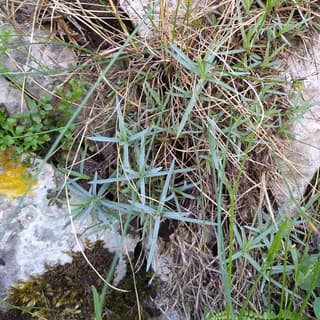
Cheddar Pink
Dianthus gratianopolitanus
Dianthus gratianopolitanus is a low, mat-forming evergreen perennial in the carnation family, native to limestone cliffs and grasslands of western Europe (including the Cheddar Gorge in England, which gives it its common name). It forms dense cushions of narrow, blue-grey foliage topped in late spring and early summer by fragrant, clove-scented pink flowers with fringed petals.
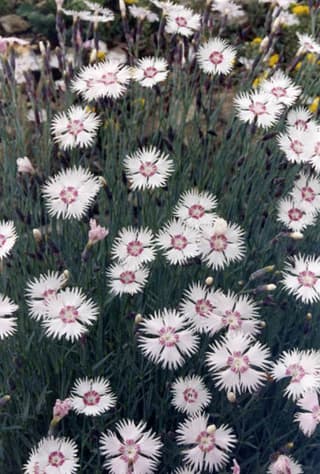
Cottage Pink
Dianthus plumarius
Dianthus plumarius, commonly called cottage pink or garden pink, is a low-growing evergreen perennial in the carnation family (Caryophyllaceae), native to the mountains of Central and Southern Europe from the Eastern Alps to the Balkans. It forms dense, grass-like mats of blue-gray foliage topped from late spring through summer with fragrant, clove-scented single or double flowers in shades of pink, red, and white, often with fringed (feathered) petal edges and a contrasting eye. A classic cottage-garden plant since Elizabethan times, it is prized for borders, rock gardens, and edging.
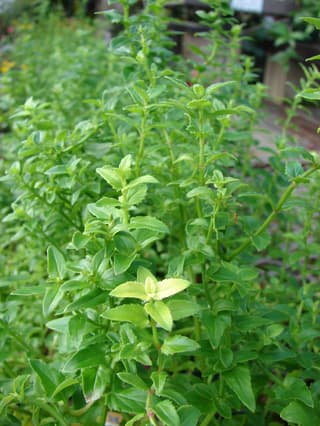
Twinspur
Diascia spp
Diascia, commonly known as Twinspur, is a genus of around 70 species of herbaceous annual and perennial flowering plants native to South Africa, belonging to the family Scrophulariaceae. These charming low-growing plants are celebrated for their dainty, spurred flowers in shades of pink, red, orange, and white, blooming prolifically from spring through autumn. They thrive in well-draining soil with full sun and are popular in garden borders, hanging baskets, and containers.
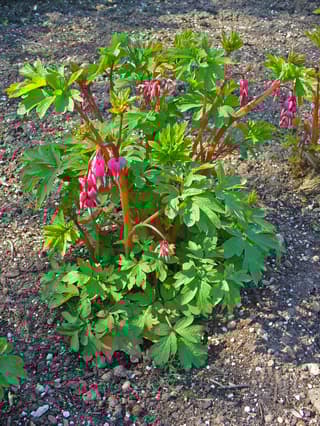
Bleeding Heart
Dicentra spectabilis
Dicentra spectabilis, commonly known as Bleeding Heart, is a shade-loving perennial native to northeastern China, Japan, and Korea. It produces stunning arching stems adorned with heart-shaped pink, red, or white flowers in spring, before going dormant in summer heat.
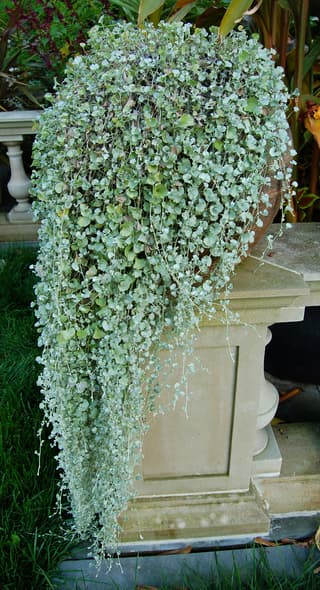
Silver Falls
Dichondra argentea
Dichondra argentea, commonly known as Silver Falls or Silver Ponysfoot, is a trailing and cascading ornamental plant in the Convolvulaceae family, native to the southwestern United States and northern Mexico. Its small, fan-shaped leaves coated in fine silver hairs create stunning metallic cascades up to 120 cm long, making it a favourite for hanging baskets, window boxes, and container gardens. The evergreen silvery foliage remains attractive throughout the growing season.
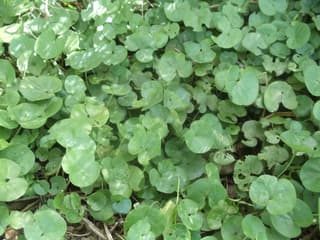
Asian Ponysfoot
Dichondra micrantha
Dichondra micrantha, commonly known as Asian Ponysfoot or Kidney Weed, is a low-growing creeping groundcover native to East Asia (Japan, China, Korea). It features small, kidney-shaped leaves on slender stems that hug the ground, forming a dense, lush carpet. It is widely used as a lawn alternative, between stepping stones, or as a trailing plant in hanging baskets.
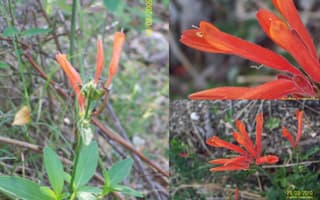
Hummingbird plant
Dicliptera squarrosa
Dicliptera squarrosa is a perennial subshrub in the Acanthaceae family, native to central South America—occurring in Peru, Bolivia, Paraguay, northern Argentina, Uruguay, and the south, southeast, and midwest of Brazil, including Cerrado areas. Also known as the hummingbird plant and firecracker plant, it owes its nicknames to its tubular orange-red flowers, which are highly sought after by hummingbirds and butterflies. It is a low to medium-sized subshrub with an upright to trailing habit and thin stems, reaching about 24 inches (60 cm) in height by 18 inches (45 cm) in width (potentially reaching 3 feet in more vigorous cultivation). The leaves are opposite, ovate, soft, and velvety, covered by a fine grayish down that gives them a characteristic gray-green tone. The flowers, 0.8 to 1.5 inches (2 to 4 cm) long, appear in axillary and terminal clusters and bloom from spring to fall, peaking between summer and early autumn.
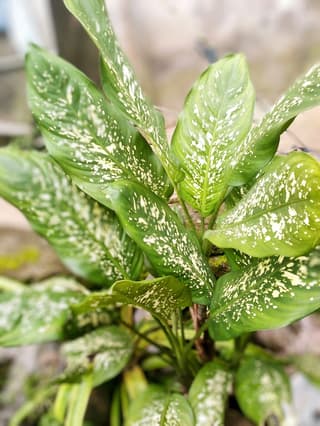
Dumb Cane
Dieffenbachia
Dieffenbachia is a genus of tropical foliage plants in the Araceae family, native to the tropical Americas. Widely grown as indoor ornamentals for their large, variegated leaves in shades of green, cream, and white. Data represents the genus as a whole (D. seguine, D. amoena, D. picta). All parts are toxic due to calcium oxalate crystals.
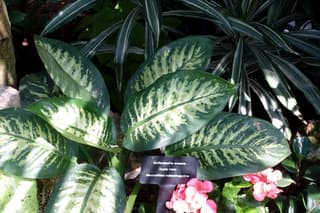
Giant Dumb Cane
Dieffenbachia amoena
Dieffenbachia amoena, commonly known as Giant Dumb Cane, is a tropical houseplant native to the tropical Americas. It is prized for its large, bold leaves featuring deep green coloration with creamy white variegation. WARNING: this plant is severely toxic to humans, cats, and dogs due to calcium oxalate raphides present in all plant tissues.
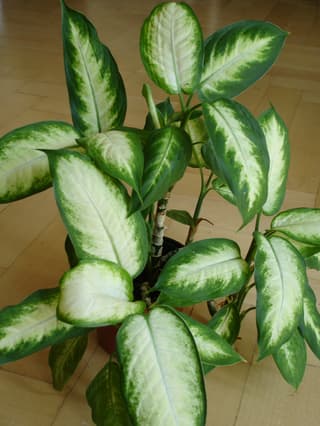
Bowmann Dumb Cane
Dieffenbachia bowmannii
Dieffenbachia bowmannii is one of the largest species in the genus, native to tropical regions of Central and South America. Its impressive leaves can reach up to 60 cm in length, displaying unique patterns of dark green with pale green to cream-white markings, making it a stunning centrepiece for indoor spaces.
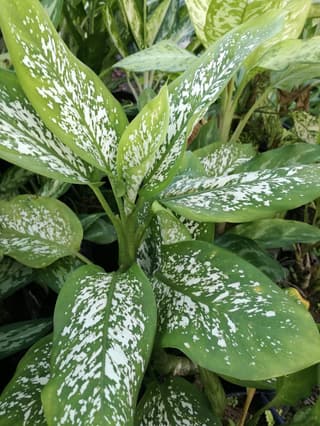
Spotted Dumb Cane
Dieffenbachia picta
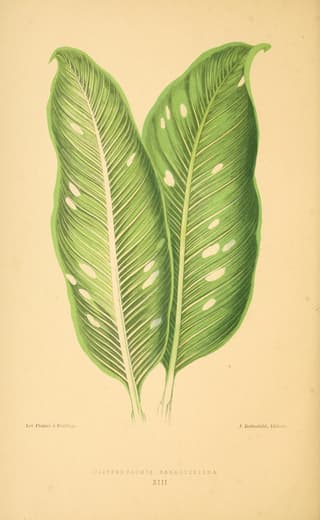
Dieffenbachia picta, widely sold simply as "dumb cane" or "spotted dieffenbachia," is a striking tropical foliage houseplant in the arum family (Araceae), native to the humid forests of the Caribbean and Central and South America. Its broad, glossy leaves are marbled with irregular cream, white, or pale-green blotches over a dark green background, making it a long-standing favorite for adding jungle texture to shaded interiors. Botanically, "picta" is most often treated today as a synonym or a spotted cultivar group within Dieffenbachia seguine (=D. maculata), and nursery tags reading "D. picta" typically refer to this same variegated horticultural type. All parts of the plant are HIGHLY TOXIC: the sap contains needle-shaped calcium oxalate crystals (raphides) that, when chewed or bitten, pierce the soft tissue of the mouth and throat, causing intense burning pain, excessive drooling, and swelling severe enough to temporarily impair speech — the origin of the common name "dumb cane."
Dumb Cane
Dieffenbachia seguine
Dieffenbachia seguine is a tropical plant from the Araceae family, native to the Caribbean and Central America. It is known for its large decorative dark green leaves with white or cream spots. It can reach up to 3 meters in height under optimal conditions. It is extremely toxic due to calcium oxalate crystals in its sap, which can cause severe irritation and throat swelling if ingested.
Yellow Wild Iris
Dietes bicolor
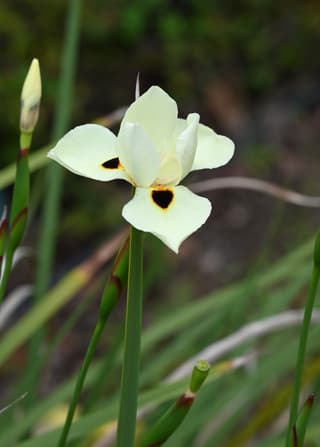
Dietes bicolor, commonly known as the Yellow Wild Iris or Butterfly Iris, is a striking evergreen perennial native to the Eastern Cape of South Africa. It forms graceful clumps of long, sword-like pale-green leaves from which elegant pale yellow flowers emerge in spring and summer. Each bloom features distinctive brown and violet markings at the base of the outer petals, giving the flower a butterfly-like appearance. It is prized in landscaping for its toughness, drought tolerance once established, and its ability to thrive in a wide range of conditions.
Fairy Iris
Dietes grandiflora
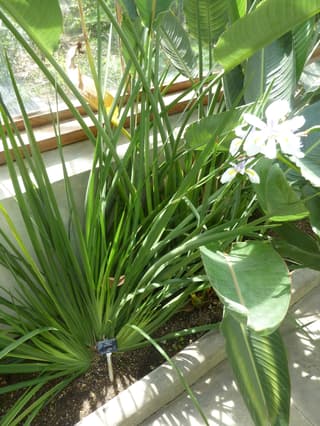
Dietes grandiflora, commonly known as Fairy Iris or Large Wild Iris, is an evergreen perennial native to South Africa. It produces beautiful white flowers with yellow and brown markings resembling orchids, blooming continuously throughout summer in two-week cycles. Highly drought-tolerant once established, it is an excellent low-maintenance plant for gardens, borders, and mass plantings.
African Iris
Dietes iridioides
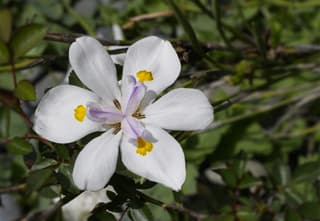
Dietes iridioides, commonly known as African Iris or Fortnight Lily, is a tough, evergreen perennial native to South Africa. It produces elegant white flowers adorned with violet and yellow markings that bloom in two-week intervals during spring and summer. Its sword-shaped leaves form attractive, low-maintenance clumps.
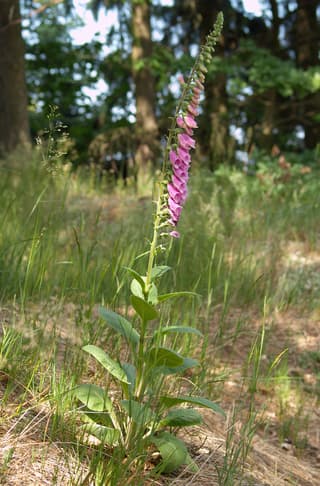
Common Foxglove
Digitalis purpurea
Common Foxglove (Digitalis purpurea) is a striking European biennial renowned for its tall spires of tubular flowers in shades of purple, pink, white, and cream. In its first year it forms a low rosette of leaves; in the second year it sends up dramatic flowering stalks reaching 1.5 meters tall. Beloved in cottage gardens, it is highly toxic yet historically invaluable as the source of cardiac glycosides used in modern medicine.
Find the Perfect Plant
Our plant guide helps you find ideal species for your experience level and time of year.
Browse by Difficulty, Season & More
Use the filters below to narrow this catalog by care difficulty, season, environment, or search directly by name. Each filter leads to a focused list tailored to your specific growing conditions.