Complete Plant Guide
Explore plants by difficulty, season and more. Find the perfect plant for you.
Difficulty
Categories
Plants by City
🗺️ Plants by City3475 plants found
Showing 1081-1116 of 3475
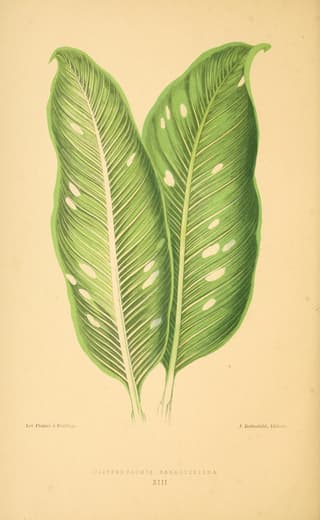
Dumb Cane
Dieffenbachia seguine
Dieffenbachia seguine is a tropical plant from the Araceae family, native to the Caribbean and Central America. It is known for its large decorative dark green leaves with white or cream spots. It can reach up to 3 meters in height under optimal conditions. It is extremely toxic due to calcium oxalate crystals in its sap, which can cause severe irritation and throat swelling if ingested.
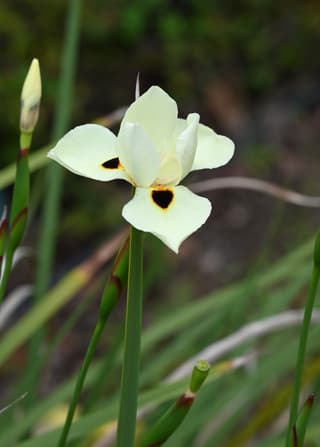
Yellow Wild Iris
Dietes bicolor
Dietes bicolor, commonly known as the Yellow Wild Iris or Butterfly Iris, is a striking evergreen perennial native to the Eastern Cape of South Africa. It forms graceful clumps of long, sword-like pale-green leaves from which elegant pale yellow flowers emerge in spring and summer. Each bloom features distinctive brown and violet markings at the base of the outer petals, giving the flower a butterfly-like appearance. It is prized in landscaping for its toughness, drought tolerance once established, and its ability to thrive in a wide range of conditions.
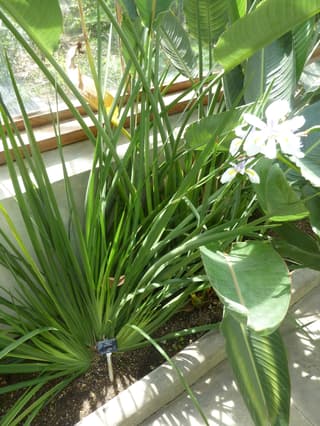
Fairy Iris
Dietes grandiflora
Dietes grandiflora, commonly known as Fairy Iris or Large Wild Iris, is an evergreen perennial native to South Africa. It produces beautiful white flowers with yellow and brown markings resembling orchids, blooming continuously throughout summer in two-week cycles. Highly drought-tolerant once established, it is an excellent low-maintenance plant for gardens, borders, and mass plantings.
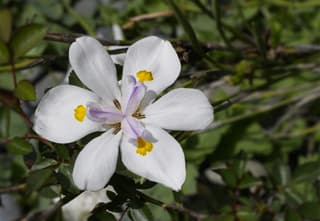
African Iris
Dietes iridioides
Dietes iridioides, commonly known as African Iris or Fortnight Lily, is a tough, evergreen perennial native to South Africa. It produces elegant white flowers adorned with violet and yellow markings that bloom in two-week intervals during spring and summer. Its sword-shaped leaves form attractive, low-maintenance clumps.
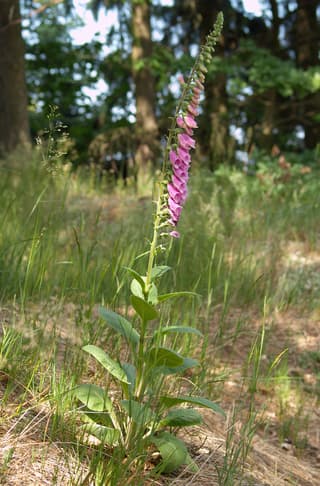
Common Foxglove
Digitalis purpurea
Common Foxglove (Digitalis purpurea) is a striking European biennial renowned for its tall spires of tubular flowers in shades of purple, pink, white, and cream. In its first year it forms a low rosette of leaves; in the second year it sends up dramatic flowering stalks reaching 1.5 meters tall. Beloved in cottage gardens, it is highly toxic yet historically invaluable as the source of cardiac glycosides used in modern medicine.

Crabgrass
Digitaria
Digitaria is a large genus of annual and perennial grasses in the family Poaceae, comprising roughly 300 species found across tropical, subtropical, and warm temperate regions worldwide. The genus name comes from the Latin "digitus" (finger), referring to the finger-like arrangement of the flowering spikes that radiate from a central point atop each stem. Most species are low-growing and sprawling, rooting readily at the nodes where stems touch the soil, which gives them a crab-like spreading habit and the common name "crabgrass." While several species, such as Digitaria sanguinalis (large crabgrass) and Digitaria ischaemum (smooth crabgrass), are considered aggressive lawn and garden weeds valued for their toughness and drought tolerance, others are cultivated purposefully: Digitaria exilis (white fonio) and Digitaria iburua (black fonio) are ancient West African cereal crops, among the oldest cultivated grains in the world, prized for their fast maturation and ability to thrive in poor, dry soils.
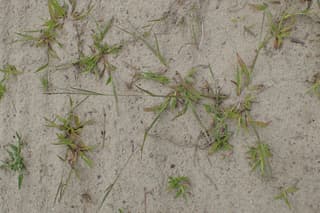
Smooth Crabgrass
Digitaria ischaemum
Smooth crabgrass is a warm-season annual grass in the Poaceae family, native to Eurasia and now widespread throughout temperate regions as an introduced species and common lawn and garden weed. It displays a ground-hugging clumping habit, with flat, hairless leaves up to 4 inches long. The plant frequently roots at the leaf nodes, making it difficult to remove. A single plant can produce over 140,000 seeds.
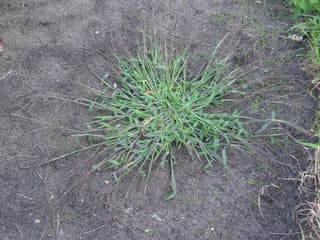
hairy crabgrass
Digitaria sanguinalis
Digitaria sanguinalis is a summer-annual weedy grass native to Eurasia, now naturalized worldwide, belonging to family Poaceae. It develops several branching, hairy stems from the base that sprawl horizontally and root at nodes, bearing linear leaves 3–6 inches long with hairy sheaths. The inflorescence consists of up to nine long, radiating finger-like raceme spikes bearing tiny spikelets that may appear reddish or purplish at maturity.
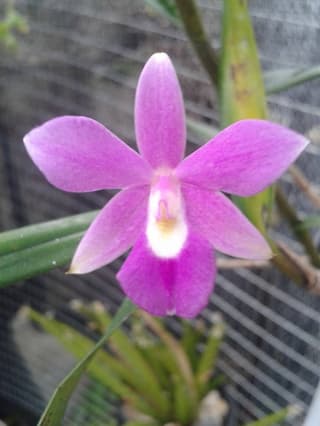
Pink Butterfly Orchid
Dimerandra emarginata
Dimerandra emarginata is a medium-sized epiphytic orchid native to the rainforests of Central America, northern South America, and the Caribbean, from Mexico south to Brazil. It grows on tree bark or rocks, producing slender, cane-like stems with leathery, notch-tipped leaves. From summer through fall, it bears clusters of small but vivid pink flowers with a white-and-pink lip, blooming successively over weeks. Commonly called the Pink Butterfly Orchid, it thrives mounted or in open, well-draining bark mixes that mimic its natural epiphytic habitat.
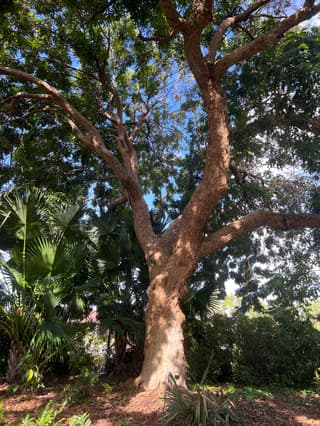
Longan
Dimocarpus longan
Dimocarpus longan, commonly known as longan or 'dragon's eye,' is an evergreen fruit tree belonging to the soapberry family (Sapindaceae), native to Southeast Asia. It grows up to 12 meters tall, forming a spreading crown with paripinnate, leathery leaves. Small, yellowish-white flowers appear in spring in abundant panicles and are faintly aromatic. The fruits—round, with a brown, brittle skin—contain a translucent, sweet pulp surrounding a single shiny, dark brown seed, resembling an eye. Longan is closely related to lychee and rambutan. It is primarily cultivated in China, Thailand, Vietnam, and other tropical countries for its delicious fruits, timber, and numerous medicinal uses.
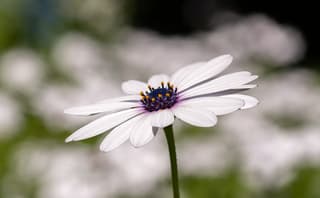
Cape Marguerite
Dimorphotheca ecklonis
The African Daisy (Dimorphotheca ecklonis) is a perennial shrub native to South Africa, famous for its daisy-like flowers with white, pink, or purple petals and an intense dark blue center. Widely cultivated in gardens and pots, it blooms abundantly from spring to fall and is highly appreciated by bees and pollinators.
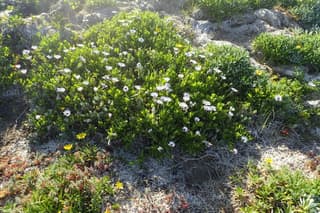
Trailing African Daisy
Dimorphotheca fruticosa
Trailing African Daisy (Dimorphotheca fruticosa, syn. Osteospermum fruticosum) is a fast-growing, evergreen perennial native to South Africa. It forms a dense, spreading mat of semi-succulent, mid-green leaves and produces abundant daisy-like flowers with white or pale lilac petals surrounding a deep purple center. Widely planted as a groundcover on slopes, embankments and along roadsides, it is prized for its drought tolerance, salt tolerance and long bloom period from spring through fall.
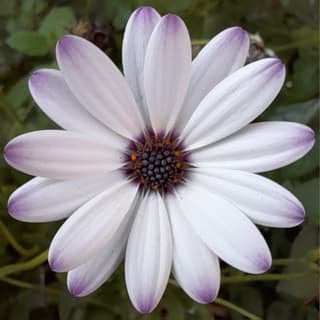
Cape Marigold
Dimorphotheca pluvialis
Dimorphotheca pluvialis, commonly known as Cape Marigold or Rain Daisy, is a South African annual daisy with striking white ray flowers, yellow-brown disc centers, and purple-tinged petal bases. True to its common name, the flowers close before rain and at dusk, making it a natural weather indicator. It is drought-tolerant and thrives in full sun with poor, well-drained soils.
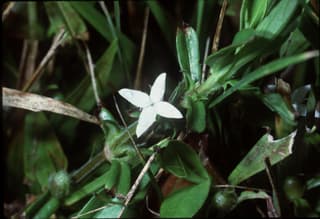
Virginia buttonweed
Diodia virginiana
Virginia buttonweed is a low-growing, mat-forming perennial in the coffee family (Rubiaceae), native to wetlands and disturbed wet ground across the southeastern and south-central United States, Mexico, Cuba, and Nicaragua. Square, sprawling stems creep along the ground and root at the nodes, bearing opposite, lance-shaped leaves and small, four-petaled white (occasionally pink-streaked) star-shaped flowers from early summer through fall. It naturally colonizes swamps, ditches, marsh edges, and pond margins, and is notorious in the southern U.S. as one of the most persistent, hard-to-eradicate broadleaf weeds of lawns and turfgrass, since even small root or stem fragments can re-sprout into new plants.
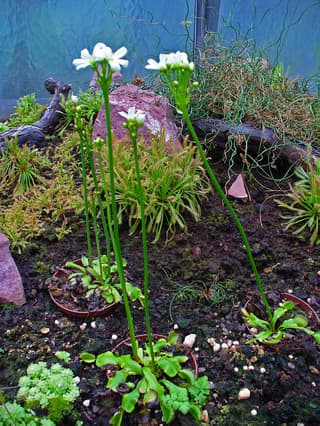
Venus Flytrap
Dionaea muscipula
The Venus Flytrap is one of the most fascinating carnivorous plants in the world, native to the subtropical wetlands of North and South Carolina, USA. Its iconic hinged traps snap shut when trigger hairs are stimulated by unsuspecting insects, digesting prey over 4-10 days. Despite its exotic appearance, it is a surprisingly compact rosette plant that rarely exceeds 30 cm in height.
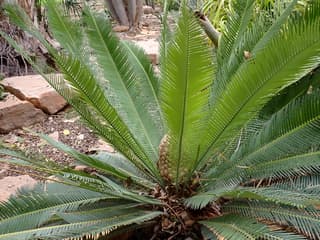
Virgin's Palm
Dioon edule
Dioon edule, commonly known as the Virgin's Palm, is a prehistoric cycad native to Mexico. This plant resembles a palm tree but is botanically closer to conifers. It features stiff, pinnate, matte blue-green leaves that grow in a symmetrical rosette from a short central trunk. It is an extremely long-lived 'living fossil,' capable of living for hundreds of years, and is highly valued in xeriscaping for its resilience and sculptural form.
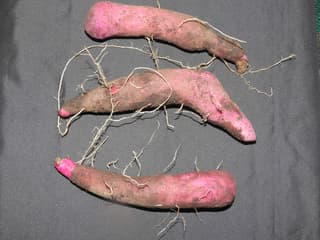
Yam
Dioscorea
Dioscorea is a large genus of over 600 species of twining vines in the family Dioscoreaceae, found across tropical and subtropical regions worldwide. The genus includes important food crops such as D. alata (water yam/purple yam), D. rotundata (white yam), and D. cayenensis (yellow yam), as well as the ornamental D. elephantipes (elephant's foot). Plants produce starchy, edible tubers and vigorous climbing vines that die back to dormancy in cooler or dry seasons.
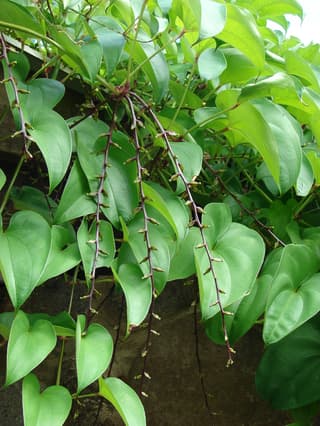
Purple Yam
Dioscorea alata
Purple Yam (Dioscorea alata) is a vigorous tropical climbing vine grown for its starchy, purple-to-white tubers. Native to Southeast Asia, it has spread throughout tropical Africa, the Americas, and the Pacific. It is one of the most widely cultivated yam species in the world, prized for its culinary versatility and cultural significance.

Elephant's Foot
Dioscorea elephantipes
Elephant's Foot (Dioscorea elephantipes) is a slow-growing caudiciform from South Africa, prized for its huge, corky, cracked caudex that resembles an elephant's foot or a tortoise shell. From the caudex, slender twining vines with heart-shaped leaves emerge in the growing season and die back during dormancy. It is a long-lived collector's succulent that can live for decades.
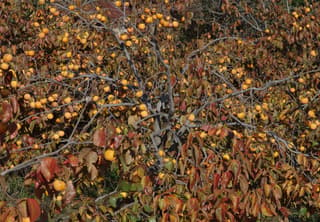
Japanese Persimmon
Diospyros kaki
The Japanese persimmon (Diospyros kaki) is a deciduous fruit tree native to China and Japan, widely cultivated across temperate regions worldwide. Belonging to the family Ebenaceae, it can grow up to 9 meters tall and is prized for its spectacular autumn foliage in shades of gold, orange, red and burgundy, as well as its glossy orange-red fruits that cling to the bare branches well into winter. The persimmon fruit, with its honeyed, floral flavor reminiscent of mango and apricot, is one of the oldest cultivated fruits in East Asia, with records of its cultivation dating back over 2,000 years.
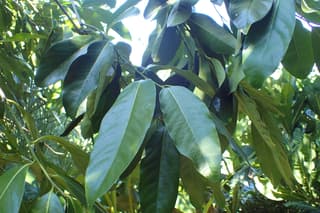
Black Sapote
Diospyros nigra
Black Sapote (Diospyros nigra) is a tropical fruit tree native to Mexico and Central America, belonging to the Ebenaceae (ebony) family. Nicknamed the "chocolate pudding fruit," its ripe pulp develops a deep dark-brown color with a mild, sweet flavor reminiscent of chocolate. It is a slow-growing, evergreen tree that can reach up to 25 meters in its natural habitat, though cultivated specimens are typically kept at 5–10 meters through regular pruning.

American Persimmon
Diospyros virginiana
The American persimmon (Diospyros virginiana) is a slow-growing deciduous fruit tree native to central and eastern North America, prized for its sweet, honey-flavored fruit that ripens only after the first frost. Reaching 30 to 80 feet tall in the wild, it has deeply furrowed, alligator-hide bark, glossy dark green leaves that turn yellow to reddish-purple in fall, and small bell-shaped white to greenish-yellow flowers. Trees are dioecious, meaning separate male and female trees are typically needed for fruit set. Hardy and low-maintenance, it tolerates poor soils, drought, heat, and urban conditions once established.
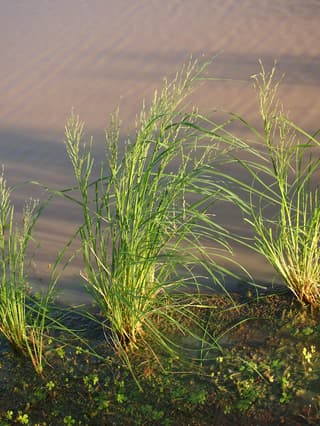
Kallar grass
Diplachne fusca
Diplachne fusca (syn. Leptochloa fusca) is a robust, fast-growing grass, either annual or short-lived perennial, native to tropical and subtropical regions of the Americas, Africa, Asia, and Australia. It grows in dense, erect clumps that can reach up to 1.5 m in height. Its leaves are long, narrow, and slightly rough in texture, with a prominent midrib. The floral panicles are airy, branched, and take on green, brown, and yellow tones as they mature. It is a notable halophyte, capable of thriving in saline, sodic, and waterlogged soils where most grasses cannot survive. It is widely used in bioremediation programs to recover agricultural lands degraded by excess salt.

Mandevilla
Dipladenia sanderi
Mandevilla (Dipladenia sanderi, synonym Mandevilla sanderi) is an ornamental climbing vine from the Apocynaceae family, native to Brazil. It is widely cultivated in pots, trellises, and planters for its showy trumpet-shaped flowers, which bloom abundantly from spring to fall in shades of pink, red, white, or yellow. Its leaves are dark green, glossy, and slightly leathery in texture. It is a vigorous, fast-growing plant when well-cared for, frequently used to cover fences, pergolas, and trellises in warm climates.
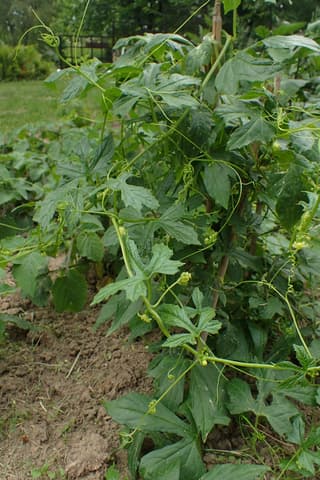
Native Bryony
Diplocyclos palmatus
Diplocyclos palmatus, commonly known as the Lollipop Climber or Native Bryony, is a perennial climbing vine in the Cucurbitaceae family. It is most famous for its highly decorative, marble-sized fruits that transition from green with white stripes to a vibrant red with white stripes as they mature. The leaves are palmately lobed and provide a dense green screen when grown on trellises. While visually striking, the plant is toxic if ingested.
Hyacinth Orchid
Dipodium squamatum
Dipodium squamatum is a rare, leafless, mycoheterotrophic terrestrial orchid of the family Orchidaceae. Native to eastern Australia (Queensland, New South Wales, Victoria, and South Australia), New Caledonia, and Vanuatu, this species is one of the most challenging orchids to study and conserve. Completely lacking photosynthetic leaves, it depends entirely on fungal symbiosis for its nutrients. The erect, reddish-brown flowering stem reaches up to 100 cm tall, bearing 9 to 60 pink to purple flowers, each approximately 2.5 cm across. Blooms occur in summer and fall across its Southern Hemisphere range. In its native habitat, it inhabits open forests, woodlands, drier ridges, and coastal areas at elevations from 10 to 1100 meters in well-drained soils.

Wild Teasel
Dipsacus fullonum
Wild Teasel is a biennial herbaceous plant from the honeysuckle family (Caprifoliaceae). In its first year, it forms a basal rosette of prickly leaves; in the second year, it sends up an upright, thorny stem reaching up to 250 cm, topped with striking cylindrical flower heads. Small lavender-purple to pink flowers bloom sequentially from the center of the inflorescence toward the edges from July to September, frequently visited by bumblebees, bees, and butterflies. The dry seeds are a favorite winter food source for goldfinches and other songbirds. After flowering and seed maturation, the parent plant dies, but it maintains its presence easily through prolific self-seeding. Dried flower heads are traditionally used in floral arrangements and decorations, and historically served for carding (combing) wool cloth—hence the Latin species name "fullonum" (fuller).
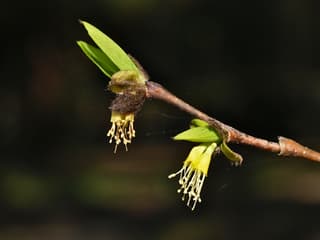
Eastern Leatherwood
Dirca palustris
Dirca palustris, commonly known as Eastern Leatherwood, is a slow-growing native deciduous shrub of eastern North America. It reaches about 6 feet tall and wide, producing delicate pale yellow bell-shaped flowers in early spring before leaf emergence. Its bark is extraordinarily pliable and strong, historically used by Native Americans for rope, baskets, and bowstrings.
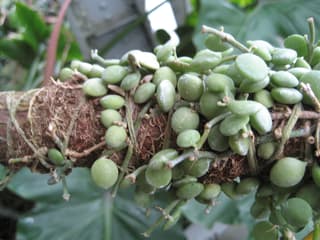
String of Nickels
Dischidia nummularia
Dischidia nummularia, commonly known as String of Nickels, is a tropical epiphytic plant in the Apocynaceae family, native to Australia and Southeast Asia. Its small, round, succulent-like leaves resemble coins strung along slender trailing stems, making it a popular choice for hanging baskets, terrariums, and shelf displays. A slow-growing but resilient houseplant, it thrives with bright indirect light, well-draining substrate, and moderate to high humidity.
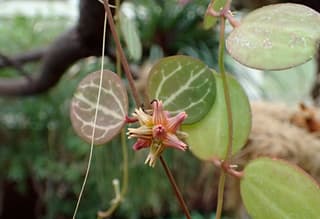
Watermelon Dischidia
Dischidia ovata
Dischidia ovata is a charming epiphytic vine native to New Guinea and Queensland, Australia, known for its small fleshy leaves patterned like watermelon rind. It thrives in bright indirect light with excellent drainage.
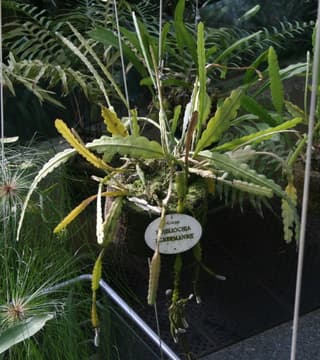
Orchid Cactus
Disocactus
Disocactus is a genus of epiphytic cacti native to the tropical forests of Mexico and Central America, prized for their flattened, leaf-like stems and spectacular funnel-shaped flowers in shades of red, pink, and white. Unlike desert cacti, Disocactus species grow on trees in humid, shaded environments, making them a striking choice for hanging baskets indoors.
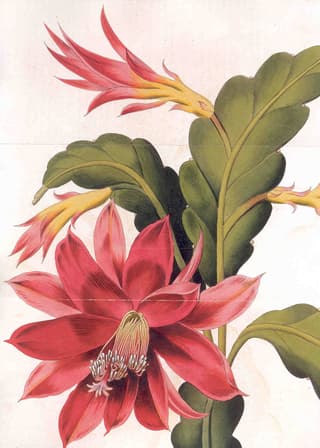
Red Orchid Cactus
Disocactus ackermannii
Disocactus ackermannii is an epiphytic orchid cactus with flattened, arching green stems and spectacular, large scarlet-red flowers with yellow stamens. Native to Mexican rainforests, it grows on trees rather than in soil and is a favorite for hanging baskets.
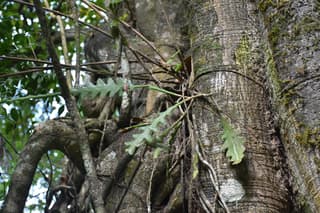
Fishbone Cactus
Disocactus anguliger
Disocactus anguliger is an epiphytic cactus native to the mountain forests of Guerrero, Mexico, prized for its flat, deeply lobed stem segments that zigzag like a fishbone. Unlike desert cacti, it grows in the dappled shade of tree canopies and produces large, fragrant, night-blooming flowers in creamy white to pale pink in autumn.
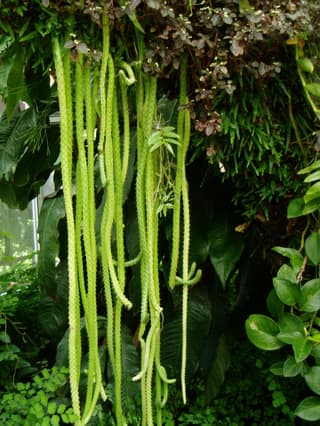
Rat Tail Cactus
Disocactus flagelliformis
Disocactus flagelliformis, commonly known as the Rat Tail Cactus, is an epiphytic cactus native to Mexico. Its long, trailing cylindrical stems can reach up to 2 meters in length and are covered in fine spines. It is prized for its spectacular magenta to bright red flowers that bloom in spring, making it a popular choice for hanging baskets.
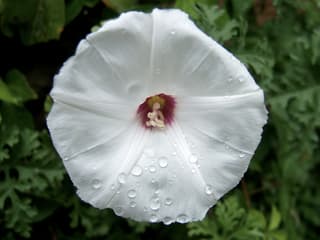
Alamo vine
Distimake dissectus
Distimake dissectus, commonly known as the Alamo vine or Noyau vine, is a vigorous perennial climbing vine in the morning glory family. It is easily recognized by its deeply lobed, palmate leaves that resemble a hand and its striking funnel-shaped white flowers with a deep magenta or purple throat. It is a fast grower that can quickly cover fences, trellises, or arbors.
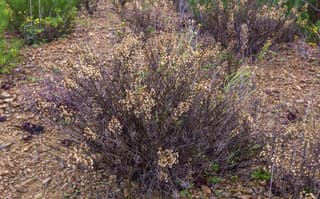
False Yellowhead
Dittrichia viscosa
Dittrichia viscosa (syn. Inula viscosa), commonly known as false yellowhead or sticky fleabane, is a perennial evergreen shrub in the Asteraceae family, widespread throughout the Mediterranean basin. It typically grows along roadsides, wasteland, riverbeds, and degraded areas up to 1500 m in altitude, colonizing even the poorest and stoniest soils. It has a bushy habit with erect and highly branched stems, woody at the base, which can reach 50-150 cm in height. The leaves are elongated, pointed, with serrated margins and covered with glandular hairs that release a sticky resin with a resinous and balsamic scent, from which the name 'viscosa' derives. In autumn, it produces numerous yellow flower heads that provide an important source of pollen and nectar for bees and pollinating insects when most other blooms have ended.
Find the Perfect Plant
Our plant guide helps you find ideal species for your experience level and time of year.
Browse by Difficulty, Season & More
Use the filters below to narrow this catalog by care difficulty, season, environment, or search directly by name. Each filter leads to a focused list tailored to your specific growing conditions.