Complete Plant Guide
Explore plants by difficulty, season and more. Find the perfect plant for you.
Difficulty
Categories
Plants by City
🗺️ Plants by City3478 plants found
Showing 2125-2160 of 3478
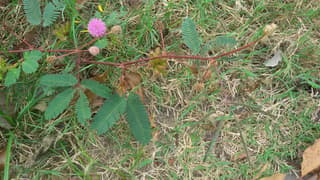
Sensitive Plant
Mimosa pudica
The sensitive plant is a creeping herbaceous plant native to tropical Central and South America, now naturalized throughout the tropics worldwide. It is best known for its nyctinastic movement: its compound leaves fold rapidly when touched or shaken, a defense mechanism against herbivores. It produces small, fluffy pink-lavender globular flowers in summer and has spiny stems.
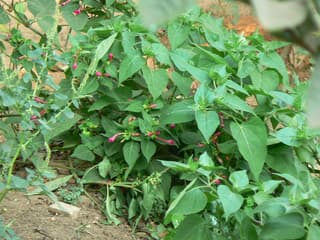
Four O'Clock Flower
Mirabilis
Mirabilis is a genus of herbaceous flowering plants in the family Nyctaginaceae, native to Mexico and Central America. Best represented by Mirabilis jalapa, it is prized for its fragrant, trumpet-shaped flowers that open in the late afternoon and wilt by the next morning, often displaying several different colors on the very same plant.
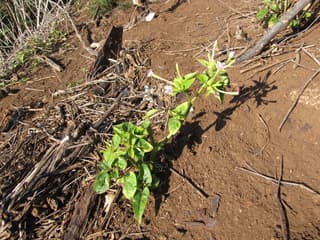
Four O'Clock Flower
Mirabilis jalapa
Four O'Clock Flower (Mirabilis jalapa) is a perennial plant native to Peru and Central America, widely grown for its fragrant, trumpet-shaped blooms that open in the late afternoon and close by morning. It belongs to the Nyctaginaceae family and is prized for its vivid multicolored flowers and hardiness.
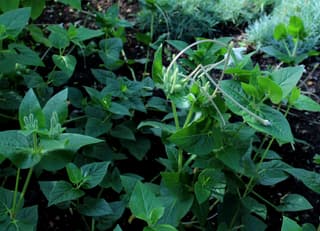
Sweet Four O'Clock
Mirabilis longiflora
Mirabilis longiflora, the sweet four o'clock, is a tuberous perennial native to the scrubby canyons and riverbanks of the southwestern United States and northern Mexico. It produces long, slender white-to-pink tubular flowers with a purplish throat that open at dusk and release a sweet, orange-blossom-like fragrance through the night.
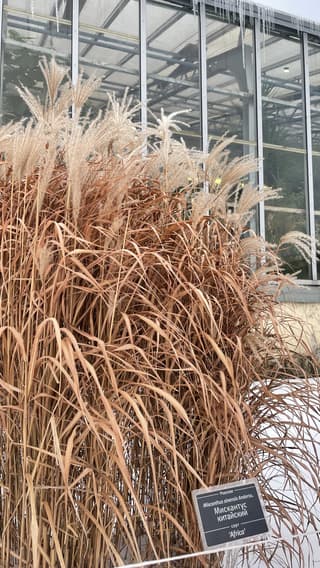
Chinese Silver Grass
Miscanthus sinensis
Miscanthus sinensis, commonly known as Chinese Silver Grass or Eulalia, is a perennial ornamental grass native to eastern Asia. It forms elegant clumping tufts with arching foliage and feathery silvery plumes that persist through autumn and winter, making it a standout feature in gardens during the cooler seasons.
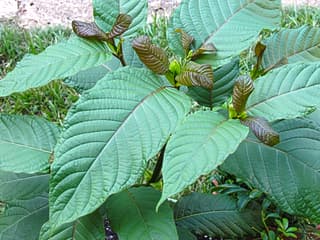
Kratom
Mitragyna speciosa
Kratom (Mitragyna speciosa) is a tropical evergreen tree in the Rubiaceae family, native to Southeast Asia (Thailand, Malaysia, Indonesia, Myanmar, Papua New Guinea). In the wild, it can reach heights of 15-25 meters, with a sturdy trunk that can exceed 90 cm in diameter. The leaves are large, glossy, and dark green, growing up to 20 cm long, while the small, yellowish-white flowers gather in spherical inflorescences resembling a bishop's miter, from which the genus name Mitragyna is derived. The leaves have been traditionally used for centuries in Southeast Asian communities, chewed fresh or dried and prepared as an infusion.
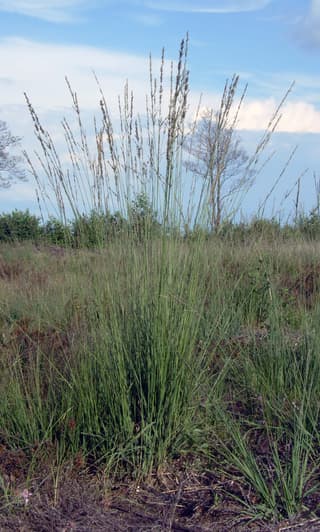
Purple Moor Grass
Molinia caerulea
Purple moor grass (Molinia caerulea) is a deciduous, clump-forming grass from the genus Molinia, native to moist heaths, bogs, and woodland edges in Europe and Asia. The plant forms dense, upright clumps of narrow, light green leaves that turn golden yellow in autumn. From mid to late summer, slender, arching flower stalks emerge with dark purple to reddish-brown spikelets on yellowish stems, giving a light and transparent appearance in the garden bed.
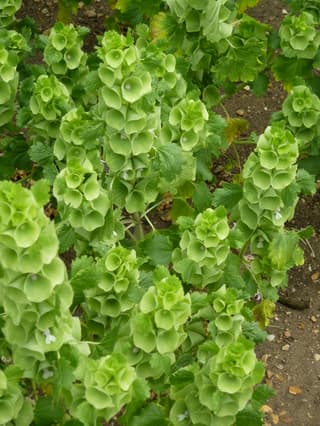
Bells of Ireland
Moluccella laevis
Moluccella laevis, commonly known as Bells of Ireland, is an annual flowering plant native to western Asia (Turkey, Syria, Caucasus region). It produces tall, elegant spikes adorned with distinctive green, bell-shaped calyces encasing small white fragrant flowers. Despite its Irish name, it has no connection to Ireland. Cultivated since 1570, it is prized in fresh and dried floral arrangements worldwide.
Bitter Melon
Momordica charantia
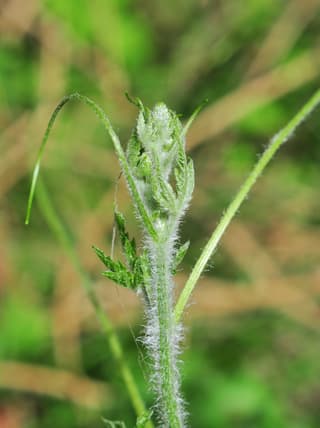
Bitter melon is a vigorous tropical vine, famous for its elongated fruits with a warty surface. When immature, the fruits are green and very bitter, turning orange and splitting open to expose seeds encased in a vibrant red aril when ripe. It is a hardy plant, but requires heat and full sun to develop fully and produce quality fruit.

Ritchie's Spurge
Monadenium ritchiei
Ritchie's Spurge (Monadenium ritchiei, synonym Euphorbia ritchiei) is a clumping succulent in the spurge family (Euphorbiaceae), native to Kenya. The plant features a thick, fleshy caudex and upright or decumbent stems with distinct, cone-shaped tubercles and fleshy leaves clustered at the tips of the shoots. The leaves often drop during dry periods, and the stems can develop a reddish glow in bright sunlight. In summer and fall, the plant may produce pink flowers (cyathia). Like other Euphorbia species, it contains a white, toxic milky sap (latex) in all parts of the plant.
Scarlet Bee Balm
Monarda didyma
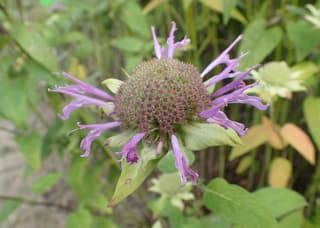
Monarda didyma (scarlet bee balm) is a perennial plant in the mint family native to the moist woods and riverbanks of North America. It features dense, globular flower heads with bright red (also pink, purple, or white in cultivars) tubular flowers that bloom from mid-summer to early fall, attracting hummingbirds, butterflies, and bees. The aromatic leaves on square stems release a spicy scent when crushed. The plant spreads via rhizomes and forms expanding clumps.
Hooker's monerereba
Monerereba hookeri
Monerereba hookeri, commonly known as Hooker's Monerereba, is a tropical climbing epiphyte native to the rainforests of Central and South America. It is characterized by its glossy, deep green leaves that develop elegant fenestrations and pinnate lobes as the plant matures. It utilizes aerial roots to climb trees in its natural habitat, making it an excellent candidate for moss poles in indoor settings.
Ghost Pipe
Monotropa uniflora
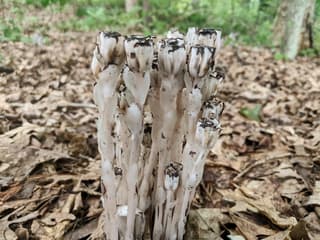
Monotropa uniflora, known as the ghost pipe or Indian pipe, is a perennial herb native to mature forests in North America, Latin America, and East Asia. Unlike the vast majority of plants, it is completely devoid of chlorophyll: the stem, reduced scale-like leaves, and the single flower per stalk are waxy white and translucent. It reaches between 5 and 30 cm in height and emerges from the forest floor in dense shade environments, blooming from early summer to early autumn. Because it does not perform photosynthesis, it obtains all its energy through a mycoheterotrophic relationship: it parasitizes mycorrhizal fungi (primarily Russulaceae) connected to the roots of nearby trees. It is a wild understory plant, essentially impossible to cultivate outside of its natural forest ecosystem.

Swiss Cheese Plant
Monstera
Monstera is a genus of approximately 50 species of tropical plants in the family Araceae, native to Mexico and Central America. Famous for their large, glossy leaves with distinctive natural holes and splits (fenestrations), Monsteras are among the most popular houseplants worldwide. The most iconic species is Monstera deliciosa, followed by M. adansonii and M. obliqua.
Swiss Cheese Vine
Monstera adansonii
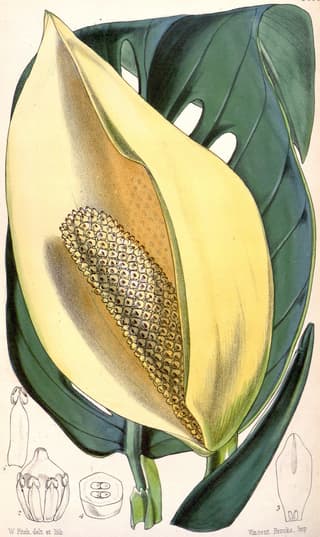
Monstera adansonii is a charming tropical climber known for its heart-shaped leaves with characteristic natural perforations. Native to Central and South America, this epiphytic plant naturally grows climbing trees in the tropical rainforest. It is a fast-growing and easy-to-care plant, ideal for beginners.
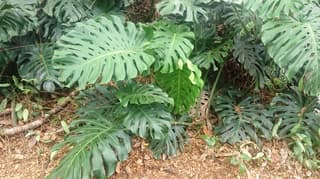
Swiss Cheese Plant
Monstera deliciosa
Tropical plant native to Mexico and Central America, known for its large, perforated leaves. It is one of the most popular houseplants in the world due to its exotic appearance and ease of care.
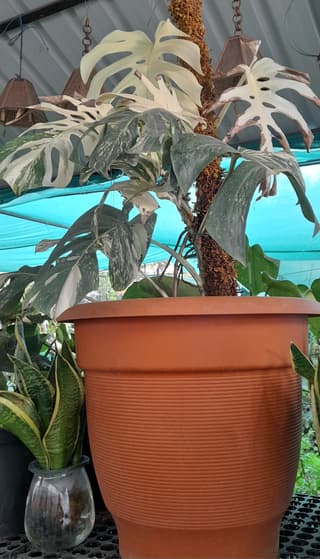
Monstera Albo
Monstera deliciosa 'Albo Borsigiana'
Monstera deliciosa 'Albo Borsigiana' is a highly coveted variegated cultivar of the classic Swiss cheese plant, prized for the irregular white patches (variegation) that cover portions of its iconic fenestrated leaves. This unstable variegation results from a lack of chlorophyll in affected leaf sectors, making every plant one-of-a-kind — and also more delicate, since the white tissue cannot photosynthesize, grows more slowly, and burns easily under strong direct light. A climbing aroid in the Araceae family, it is one of the most sought-after houseplants among collectors for its rarity and striking ornamental value.
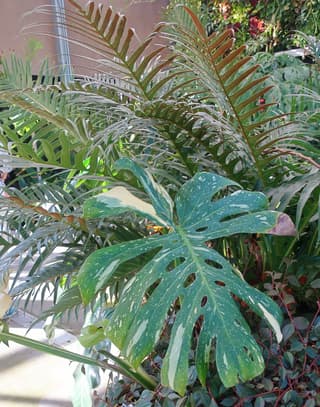
Monstera Thai Constellation
Monstera deliciosa 'Thai Constellation'
Monstera deliciosa 'Thai Constellation' is a rare, lab-developed variegated cultivar of the Swiss cheese plant, prized for its dark green leaves splashed with creamy-white to yellow marbling that resembles a starry night sky. Unlike naturally occurring variegated Monsteras, the Thai Constellation was produced through tissue culture (reportedly involving controlled mutagenesis) at a Thai laboratory, which makes its variegation pattern genetically stable and far less prone to reverting to solid green than chimeric variegated forms. Because the white sections of its leaves contain little to no chlorophyll, the plant photosynthesizes less efficiently and grows noticeably slower than the standard green Monstera deliciosa, making it a more demanding, higher-maintenance collector's plant.
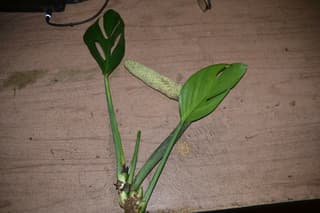
Monstera Peru
Monstera karstenianum
Monstera Peru, scientifically known as Monstera karstenianum, is a unique climbing plant prized for its unusually thick and leathery leaves. Unlike other Monstera species, it typically does not develop holes or fenestrations, but instead stands out for its rugose surface and a metallic dark green sheen that gives it a prehistoric and elegant appearance.
Swiss Cheese Vine
Monstera obliqua
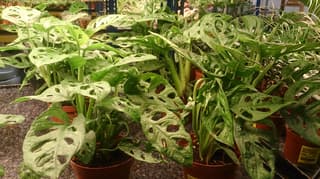
Monstera obliqua is one of the rarest and most extraordinary plants in the Monstera genus, native to the rainforests of Central and South America. Its leaves are famous for being almost entirely holes — up to 90% fenestration — making them appear nearly transparent, with just thin strips of leaf tissue connecting the margins. This radical fenestration makes true M. obliqua unlike any other houseplant. It is extremely rare in cultivation; the vast majority of plants sold under this name are actually Monstera adansonii, a much more robust species. True M. obliqua is a collector's plant, demanding high humidity, warm temperatures, and expert-level care.
Silver Monstera
Monstera siltepecana
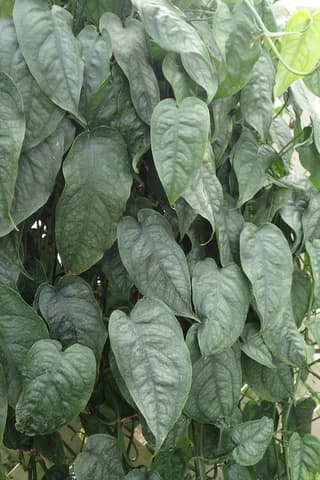
Monstera siltepecana, commonly called Silver Monstera, is a fast-growing climbing vine native to southern Mexico and Central America. Its juvenile leaves are small, lanceolate, and distinctively patterned with silvery-grey markings between dark green veins — a trait that earns it its popular name. As the plant matures on a support structure, adult leaves enlarge and develop characteristic Monstera fenestrations, losing the silver sheen. It belongs to the family Araceae and thrives as a low-maintenance, decorative foliage houseplant equally suited to hanging baskets (juvenile phase) or climbing a moss pole (adult phase).
Mexican Daisy Bush
Montanoa bipinnatifida
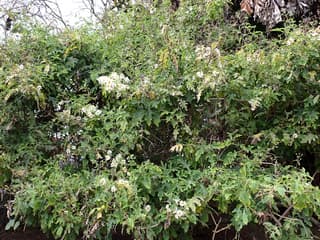
Montanoa bipinnatifida, commonly known as the Mexican Daisy Bush or Tree Chrysanthemum, is a fast-growing shrub or small tree in the Asteraceae family, native to Mexico and Central America. It can reach up to 5 meters in height, featuring deeply lobed leaves and clusters of white or yellowish daisy-like flowers with a delightful sweet fragrance reminiscent of chocolate or freshly baked cookies. It blooms in fall and winter, making it a standout specimen in the garden during the cooler months.
Moccmocc
Montrichardia arborescens
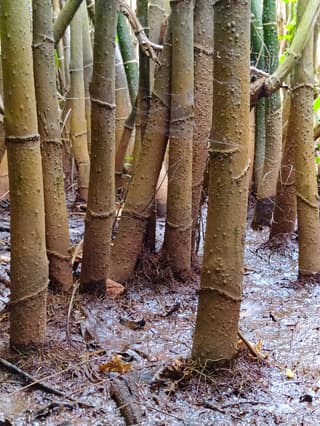
The moccmocc (Montrichardia arborescens) is a perennial aquatic shrub in the Araceae family, native to mangroves, flooded forests (igapós), and the banks of rivers and streams across tropical America, the Caribbean, and Mesoamerica to the Brazilian Amazon. It forms vigorous clumps with erect stems up to 3 m (occasionally 7 m), supported by prop roots and featuring spines on the internodes, along with large arrow-shaped leaves. Its spadix inflorescences, with a spathe that is light green on the outside and white on the inside, give rise to edible infrutescences, and the plant is traditionally used by riverside communities for medicinal and nutritional purposes.
Oiti
Moquilea tomentosa
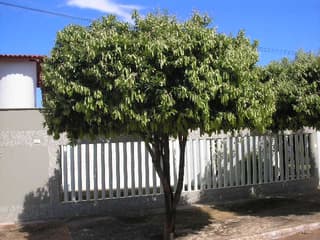
Moquilea tomentosa, popularly known as Oiti, is a tree native to the Atlantic Forest and Brazilian flora. It is widely used in urban landscaping for streets, parks, and squares due to its dense, rounded canopy that provides excellent shade. It can reach heights of 30 to 50 feet. Its leaves are simple, dark green, and have a velvety texture. It blooms in winter with small white or cream flowers of low ornamental value, and bears fruit between November and January, producing oval, yellow-orange drupes with fibrous, aromatic pulp that is edible for both humans and local wildlife.
Landscaping Black Morel
Morchella importuna
Morchella importuna is an edible mushroom species from the Morchellaceae family, known as the garden morel. It often appears in landscaped areas with bark mulch, gardens, and recently disturbed urban areas. It has a distinctive cap with deep pits and parallel vertical ridges, ranging from grayish-brown to black when mature. It is a saprophytic species, but its fruiting behavior is often unpredictable.
Noni
Morinda citrifolia
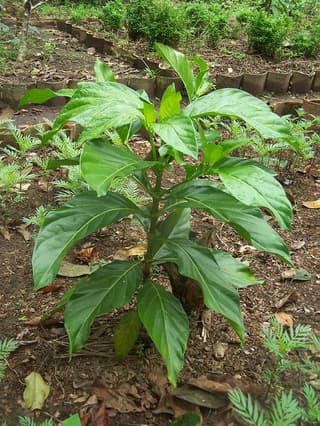
Morinda citrifolia, commonly known as Noni or Indian Mulberry, is a tropical evergreen tree native to Southeast Asia, Australasia, and the Pacific Islands. Growing up to 9 metres tall, it produces distinctive white flowers year-round and lumpy, pungent fruits that are central to traditional Polynesian and Ayurvedic medicine. The plant thrives in warm, humid coastal environments, tolerating poor soils, drought, and even salinity.
Moringa
Moringa oleifera
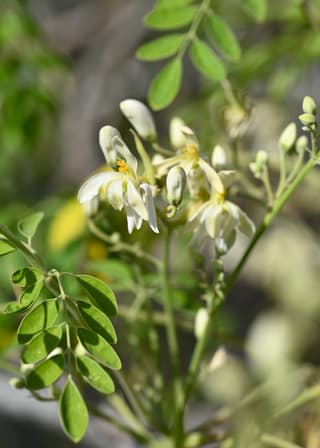
Moringa oleifera, commonly known as the drumstick tree, horseradish tree, or ben oil tree, is a fast-growing, drought-resistant tree native to the foothills of the Himalayas. It is widely cultivated in tropical and subtropical areas for its highly nutritious leaves, pods, seeds, and flowers. The tree has a slender trunk, a spreading crown, and compound leaves that are feathery in appearance. It produces clusters of fragrant, white to cream-colored flowers and long, slender, triangular pods.
White mulberry
Morus alba
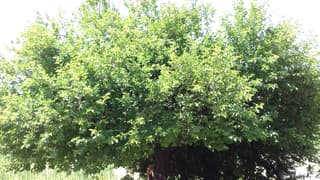
Morus alba, known as white mulberry, is a fast-growing, small to medium-sized tree that typically reaches 10 to 20 meters in height. Native to northern China, it is historically significant as the primary food source for silkworms. The tree features highly variable leaf shapes, often exhibiting deep lobes on younger branches. The fruit is a collective drupe that transitions from white or green to pink or dark purple when fully ripe, offering a sweet flavor profile.
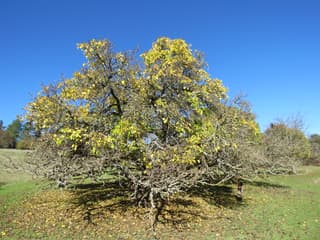
Black Mulberry
Morus nigra
Morus nigra, commonly known as the Black Mulberry, is a deciduous fruit tree native to Southwest Asia, prized for its dark, juicy berries and ornamental value. It can grow up to 12 meters tall with a wide spreading canopy, making it an excellent choice for large gardens and orchards.

Red Mulberry
Morus rubra
Morus rubra, the red mulberry, is a deciduous tree native to eastern North America, prized for its heart-shaped leaves and sweet, blackberry-like fruit that ripens from red to deep purple in summer.
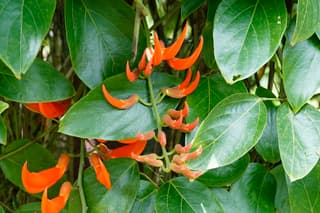
New Guinea Creeper
Mucuna bennettii
The New Guinea Creeper (Mucuna bennettii) is one of the most spectacular tropical vines in the world. Native to Papua New Guinea and surrounding islands, this vigorous liana of the Fabaceae family produces long pendulous clusters of claw-shaped, fiery scarlet flowers. A fast-growing climber capable of reaching 20 feet in length, it creates a stunning focal point on pergolas, fences, and large trees in tropical gardens.
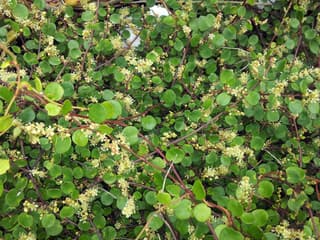
Wire Vine
Muehlenbeckia
Muehlenbeckia is a genus of fast-growing creeping and climbing plants from the Polygonaceae family, native to New Zealand and South America. Recognised by their wiry dark stems, tiny rounded leaves, and intricate lace-like texture, these plants are widely used as ground covers, in hanging baskets, and as trailing accents in containers. They are highly adaptable and easy to care for.
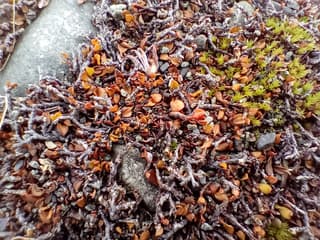
Creeping Wire Vine
Muehlenbeckia axillaris
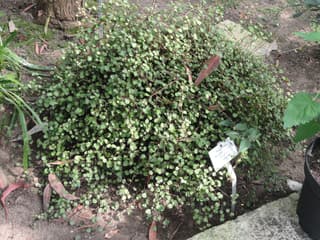
Muehlenbeckia axillaris, known as creeping wire vine, is a low, mat-forming evergreen-to-semi-evergreen shrub native to New Zealand and parts of southeastern Australia (Tasmania, New South Wales, Victoria). Its wiry, red-brown stems spread along the ground, studded with tiny, glossy, rounded leaves less than 1 cm across. Small yellowish-white flowers appear in the leaf axils in summer, followed by small black, shiny fruits in late summer to fall. Valued as a tough, drought-tolerant ground cover for rockeries, pathways, and container topiary, it forms dense mats up to 1 metre wide while staying only around 10-30 cm tall.
Maidenhair Vine
Muehlenbeckia complexa
Muehlenbeckia complexa, commonly known as Maidenhair Vine or Angel Vine, is a fast-growing deciduous climber native to New Zealand. It features delicate, wiry interlacing stems adorned with small, round to heart-shaped leaves that create an intricate lacy texture. Versatile and resilient, it thrives both indoors and outdoors, making it popular for hanging baskets, ground cover, topiary frames, and trellises.
Pink Muhly Grass
Muhlenbergia capillaris
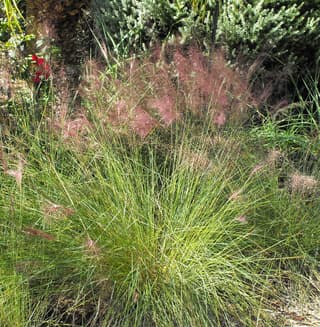
Pink muhly grass (Muhlenbergia capillaris) is a stunning warm-season perennial bunchgrass native to the eastern United States. It forms dense, fine-textured clumps of narrow, arching green blades that reach 60–90 cm tall. In late summer and fall, it erupts into a breathtaking cloud of airy, pink-to-purple panicles that can double its height, creating a spectacular misty effect in the landscape. Hardy from USDA zones 5 to 9b, it thrives in full sun with dry to well-drained soils and is highly drought tolerant once established. Its low-maintenance nature and striking fall display make it one of the most popular ornamental grasses for mass plantings, borders, meadows, and xeriscaping.
Curry tree
Murraya koenigii
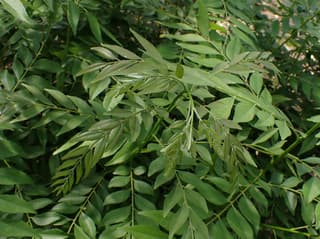
Murraya koenigii, commonly known as the curry tree, is an evergreen shrub or small tree in the citrus family (Rutaceae), native to the forests of South Asia—specifically India and Sri Lanka. Its fragrant, compound, pinnate leaves are indispensable spices in South Indian and Sri Lankan cuisine: when fried fresh or dried in hot oil, they release a characteristic aroma into dishes. The plant produces small, white, fragrant flowers in spring and summer, which develop into shiny black berries—though the seeds are poisonous, only the pulp is edible. It is well-suited for container gardening, although it can grow up to 4 meters tall in open ground.
Find the Perfect Plant
Our plant guide helps you find ideal species for your experience level and time of year.
Browse by Difficulty, Season & More
Use the filters below to narrow this catalog by care difficulty, season, environment, or search directly by name. Each filter leads to a focused list tailored to your specific growing conditions.