Complete Plant Guide
Explore plants by difficulty, season and more. Find the perfect plant for you.
Difficulty
Categories
Plants by City
🗺️ Plants by City3478 plants found
Showing 2089-2124 of 3478
Warty Knight
Melanoleuca verrucipes
Melanoleuca verrucipes, commonly known as the Warty Knight, is a distinctive mushroom characterized by its white cap and a stem covered in dark, warty scales or granules. It typically appears in gardens, parks, and compost-rich areas. Unlike many other Melanoleuca species, its stem texture makes it easily identifiable to mycologists.
Chinaberry Tree
Melia azedarach
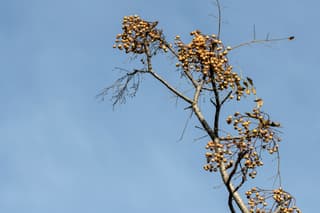
The Chinaberry tree is a fast-growing deciduous tree prized for its rounded canopy of fern-like leaves and fragrant lavender flower clusters that appear in spring. Native to Asia and Australia but now widely naturalized in warm climates worldwide, it tolerates heat, drought, and poor soils with ease, making it a tough, low-maintenance shade tree. All parts of the tree, especially the yellow berries, are toxic if ingested, so it is best planted away from children and pets.
White sweet clover
Melilotus albus
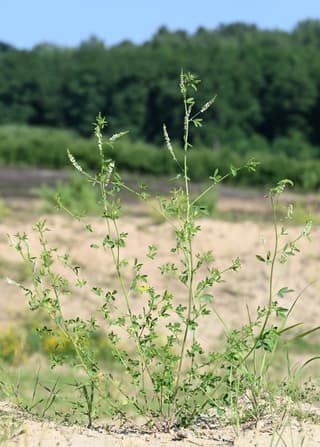
White sweet clover (Melilotus albus) is an annual or biennial herbaceous plant in the legume family (Fabaceae), native to Eurasia and now widely distributed throughout the world's temperate regions. The plant can grow up to 2 meters tall and bears long, narrow racemes of small white flowers with a subtle, sweet scent of coumarin. Thanks to its deep taproot, it is particularly drought-resistant and improves the soil through nitrogen fixation in symbiosis with Rhizobium bacteria.
Yellow Sweet Clover
Melilotus officinalis
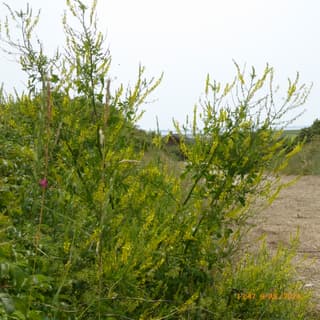
Yellow sweet clover (Melilotus officinalis) is a biennial herb in the Fabaceae (legume) family, native to Europe and Asia and now naturalized across much of the world. It forms freely branching stems up to about 1.5 m tall, with trifoliate leaves and small, fragrant yellow flowers borne in slender racemes that are highly attractive to bees. It grows from a deep taproot, fixes nitrogen in the soil through symbiosis with rhizobia, and is widely used as a green manure and honey plant.
Lemon Balm
Melissa officinalis
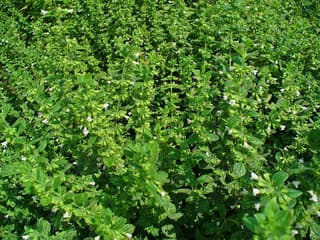
Lemon balm (Melissa officinalis) is a perennial aromatic herb in the Lamiaceae family, native to the Mediterranean and Southern Europe. Prized for its delicate lemon scent, it is widely cultivated for medicinal, culinary, and ornamental purposes. Its dark green leaves are rich in essential oils with calming, antioxidant, and antiviral properties.
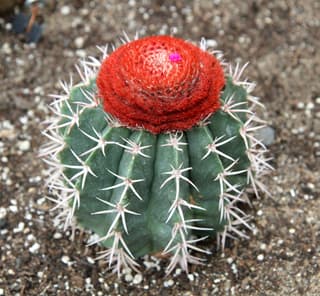
Turk's Cap Cactus
Melocactus zehntneri
Melocactus zehntneri, commonly known as Turk's Cap Cactus, is a globose cactus native to the Caatinga biome of northeastern Brazil. Its most distinctive feature is the cephalium — a cylindrical structure of white bristles and wool that develops at the apex of the plant only at maturity, from which small pink flowers and red fruits emerge. It is perfectly adapted to the harsh conditions of one of Brazil's most arid ecosystems.
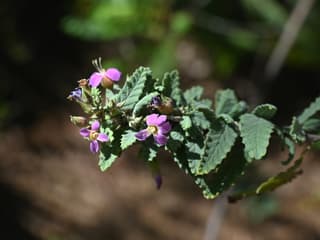
Woolly Pyramidbush
Melochia tomentosa
The Woolly Pyramidbush (Melochia tomentosa) is a perennial shrub in the Malvaceae family, native to arid and semi-arid regions of tropical and subtropical America, ranging from the southwestern United States to South America. It reaches between 0.3 and 2.5 meters in height, with stems and ovate leaves covered in a dense, whitish stellate pubescence that gives it a velvety appearance. It produces small pink to purple flowers clustered in the leaf axils, with a blooming period extending primarily from spring to fall, attracting abundant pollinators such as butterflies and native bees. Its fruits are winged pyramidal capsules, a distinctive characteristic of the genus. It grows naturally along roadsides, rocky slopes, xerophytic scrublands, and dry forests, from sea level up to 1,600 meters in altitude.
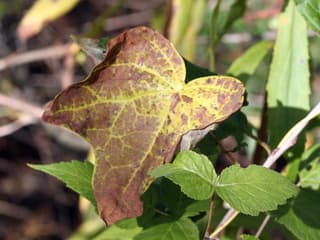
Moonseed
Menispermum canadense
Menispermum canadense, commonly known as Moonseed or Canada Moonseed, is a vigorous, deciduous climbing vine native to eastern North America, ranging from southern Canada to northern Florida and west to Manitoba and Texas. It grows in moist thickets, woodland edges, and stream banks, twining to heights of up to 6 metres (20 feet). The large, heart-shaped to palmately lobed leaves (5–20 cm across) are its most recognisable feature. In late spring and early summer (May–August), it bears small, inconspicuous greenish-white to yellowish-green flowers in drooping panicles. These are followed in autumn by clusters of blue-black, grape-like drupes, each containing a single distinctive crescent-shaped seed — the source of the common name. CAUTION: all parts of the plant, especially the fruit, are severely toxic. The alkaloid dauricine causes convulsions and can be fatal; the fruit has caused deaths in children who mistook it for wild grapes.
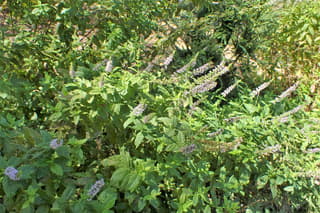
Mint (genus)
Mentha
Mentha is a genus of aromatic herbs in the Lamiaceae family, widely grown for culinary and medicinal uses. It includes peppermint (M. piperita) and spearmint (M. spicata). Mint grows vigorously and can become invasive in garden beds.
Peppermint
Mentha × piperita
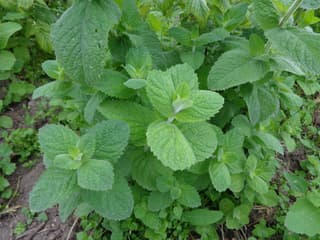
Peppermint (Mentha × piperita) is a hybrid aromatic herb, a cross between watermint (Mentha aquatica) and spearmint (Mentha spicata), belonging to the family Lamiaceae. One of the most widely cultivated herbs in the world, it is prized for its intensely refreshing menthol aroma and its broad range of medicinal and culinary applications. It spreads vigorously through underground rhizomes.
Apple Mint
Mentha × rotundifolia
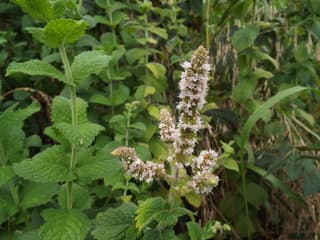
Apple Mint (Mentha × rotundifolia) is a vigorous hybrid perennial herb in the Lamiaceae family, a natural cross between Mentha suaveolens and Mentha longifolia. It features soft, rounded, woolly leaves that release a pleasant fruity apple-like scent when crushed. Known for its fast, spreading growth via underground rhizomes, it is a popular and easy-to-grow culinary and aromatic herb suitable for gardens and containers.

Water Mint
Mentha aquatica
Mentha aquatica, commonly known as water mint, is an aromatic perennial herb in the mint family (Lamiaceae), native to Europe, North Africa, and western Asia. It grows naturally along pond edges, streams, ditches, and marshy meadows, where its square stems and oval, toothed leaves spread rapidly by creeping runners. From midsummer into fall, dense whorls of small pink to lilac flowers cluster at the stem tips, attracting bees, butterflies, and other pollinators. Every part of the plant carries a strong minty-menthol fragrance, released readily when the leaves are brushed or crushed.
Field Mint
Mentha arvensis
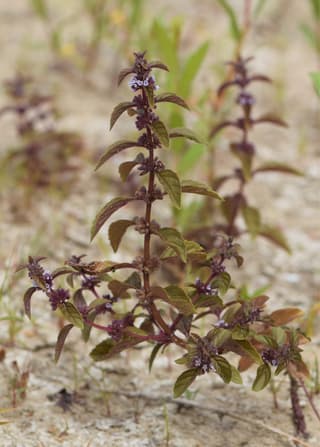
Field Mint (Mentha arvensis) is an aromatic perennial herb in the Lamiaceae family, native to temperate regions of Eurasia and North America. Renowned for its intense menthol fragrance, it is widely used in cooking, traditional medicine, and as a natural insect repellent. It spreads vigorously through underground rhizomes and can become invasive if not contained.
Horse Mint
Mentha longifolia
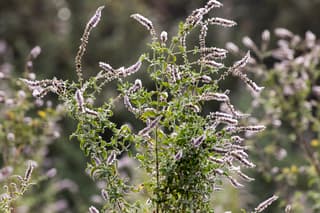
Mentha longifolia, commonly known as horse mint or wild mint, is a vigorous perennial herb in the Lamiaceae family, native to Europe, Asia, and Africa. It grows up to 120 cm tall with lance-shaped, grey-green leaves covered in soft silvery hairs. During summer it produces dense spikes of pale lilac to mauve flowers that are highly attractive to bees, butterflies, and other pollinators. It has a strong, fresh menthol-like fragrance and a long history of culinary and medicinal use.
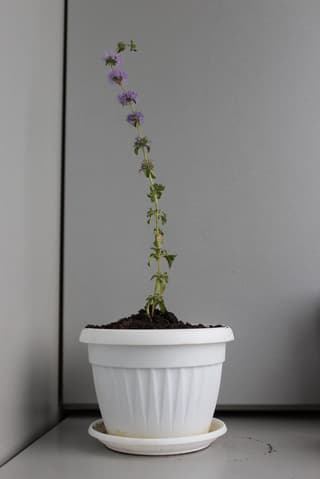
Pennyroyal
Mentha pulegium
Pennyroyal (Mentha pulegium) is a fast-growing, low, mat-forming perennial herb in the mint family (Lamiaceae), native to the Mediterranean region, Europe, and North Africa. It bears small, aromatic mint-scented leaves and dense whorls of tiny lilac-purple flowers in summer. Caution: it contains pulegone, a compound that is highly toxic in concentrated (essential oil) form — it should never be ingested, especially by pregnant people, children, or pets.
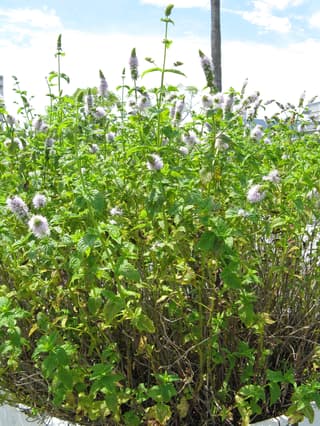
Mint
Mentha sp
Mint (Mentha sp) is a genus of aromatic perennial herbs in the family Lamiaceae, native to Europe and Asia. Renowned for its refreshing scent and intense flavor, it is widely cultivated in gardens, pots, and kitchen herb plots. It spreads vigorously through underground stolons and can become invasive if not contained. Its leaves are used fresh or dried in cooking, folk medicine, and aromatherapy.
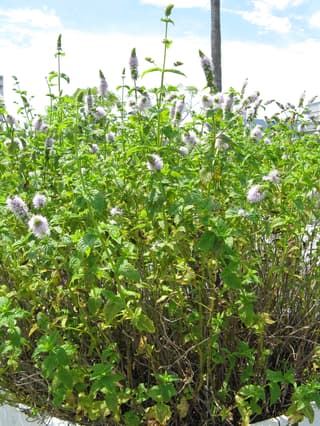
Spearmint
Mentha spicata
Spearmint (Mentha spicata) is a vigorous perennial herb in the Lamiaceae family, native to Europe and the Mediterranean but now naturalized worldwide. It is prized for its fresh, mildly sweet menthol fragrance — gentler than peppermint — and is one of the most widely cultivated culinary and medicinal herbs on the planet. The plant spreads aggressively through underground rhizomes, forming dense colonies. Bright green serrated leaves top upright stems that produce slender spikes of lilac or white flowers in summer, attracting bees and butterflies.

Pineapple Mint
Mentha suaveolens
Mentha suaveolens, commonly called pineapple mint or apple mint, is an aromatic perennial herb in the mint family (Lamiaceae), native to southern and western Europe and the Mediterranean. It forms low, spreading clumps of soft, woolly, rounded leaves with a sweet, fruity fragrance reminiscent of apples or pineapple, and spreads vigorously by underground runners (stolons). Small white to pale pink flower spikes appear in summer, attracting bees and pollinators.

Peppermint
Mentha x piperita
Peppermint (Mentha x piperita) is a natural hybrid between watermint (M. aquatica) and spearmint (M. spicata), cultivated for centuries for its intense menthol aroma and remarkable medicinal properties. This vigorous perennial herb features ovate, sharply-toothed dark green leaves that release their characteristic cool, refreshing scent when touched. In late summer, it produces small pale purple to pink flowers in dense terminal spikes, attracting pollinators. A fast spreader via underground rhizomes, peppermint is one of the most widely used aromatic plants in the world.
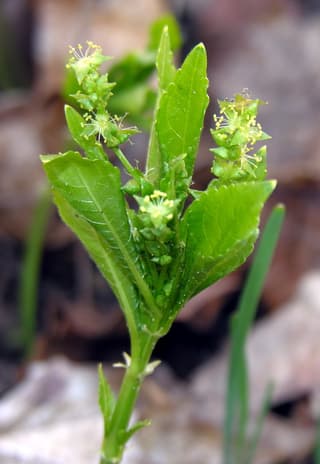
Dog's Mercury / Annual Mercury
Mercurialis
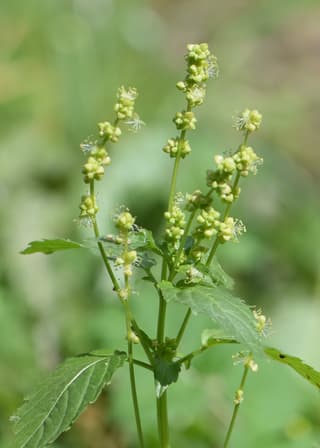
Herbaceous plants of the Euphorbiaceae family, native to Europe, Asia, and North Africa. The genus includes both annual (M. annua) and perennial (M. perennis) species that thrive in shaded woodland habitats. All parts are highly poisonous to humans and livestock. M. perennis spreads vigorously via underground rhizomes, often carpeting woodland floors in dense mats. Both species exhibit dioecious reproduction with separate male and female plants producing small green, apetalous flowers.
Annual mercury
Mercurialis annua
An annual herbaceous plant in the Euphorbiaceae family, native to the Mediterranean and the Near East. It is a common weed in cultivated fields, gardens, roadsides, and wasteland. It typically reaches 30-50 cm in height, occasionally up to 1 meter. The stem is erect and branched. Leaves are opposite, lanceolate with serrated margins, measuring 3-6 cm. It is a dioecious plant: yellowish male flowers in spikes, and solitary green female flowers. The fruit is a capsule with a warty surface.
Puka
Meryta
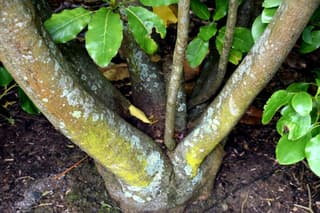
Meryta is a genus of about 28 species of evergreen trees and shrubs in the Araliaceae family, native to subtropical and tropical islands of the Pacific Ocean, with the greatest diversity in New Caledonia and further species from New Zealand (M. sinclairii, the "puka"), Norfolk Island, and the Marquesas. This is a genus-level care profile rather than a single species, since most Meryta share similar growth habits and care needs. They are prized for their large, glossy, simple leaves that give a bold, tropical look to gardens and interiors, are dioecious (separate male and female plants), fast-growing, and tolerant of coastal wind and salt spray, but are frost-tender and require protection in cooler climates.
Common Ice Plant
Mesembryanthemum
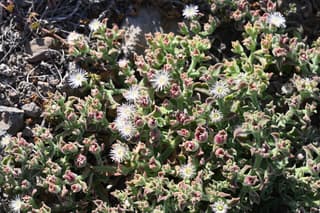
Mesembryanthemum is a genus of succulent annual or biennial plants in the family Aizoaceae, native to southern and eastern Africa. It is best known for the glistening, bladder-like epidermal cells (papillae) covering its leaves and stems, which give the plant a frosted, ice-crystal appearance and inspired both its common and scientific names. It is a facultative halophyte, tolerating saline soils by storing salt in these epidermal bladder cells, and it can shift from C3 photosynthesis to Crassulacean Acid Metabolism (CAM) under drought or salt stress. Widely grown as an ornamental ground cover in coastal and rock gardens, it is also used as a leafy vegetable and in traditional medicine.
Baby Sun Rose
Mesembryanthemum cordifolium
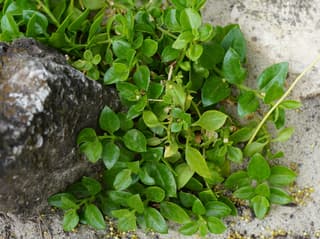
The Baby Sun Rose is a perennial trailing succulent, native to South Africa, known for its bright green, fleshy heart-shaped foliage. Its flowers are small, vibrant, and daisy-like, opening only under direct sunlight. It is an extremely resilient plant, ideal for ground cover in sunny areas or for adorning hanging baskets, where its branches can cascade down.
Common Ice Plant
Mesembryanthemum crystallinum
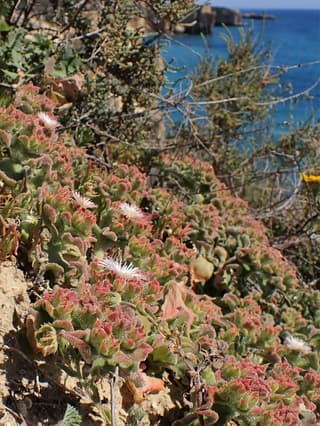
Mesembryanthemum crystallinum, commonly known as the common ice plant, is a low-growing halophytic succulent native to the coastal sands and salt marshes of South Africa, now naturalized along Mediterranean and other mild coastlines worldwide. Its leaves and stems are covered in glistening, bladder-like epidermal cells that store water and salt, giving the plant a frosted, ice-crystal appearance. It is grown both as an ornamental groundcover and as a gourmet edible green, prized for its succulent, slightly salty leaves eaten raw or cooked.
Slender Iceplant
Mesembryanthemum nodiflorum
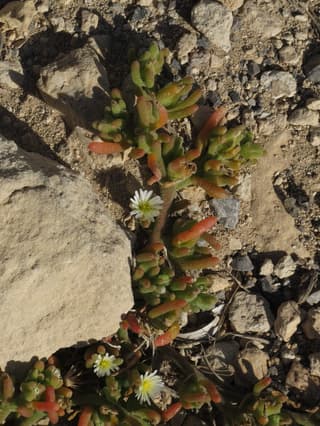
Mesembryanthemum nodiflorum, known as slender iceplant, is a low-growing succulent annual herb in the ice plant family (Aizoaceae). Native to the coastal Mediterranean Basin, Macaronesia, southern Africa, and the Middle East, it forms prostrate mats of fleshy, cylindrical leaves covered in glistening bladder cells that give the plant its characteristic icy sheen. Small white to pale yellow flowers appear from spring through summer. Highly salt- and drought-tolerant, it thrives in sandy coastal soils, dunes, and saline wetland margins, and has become naturalized in parts of Australia and the western United States.
Medlar
Mespilus germanica
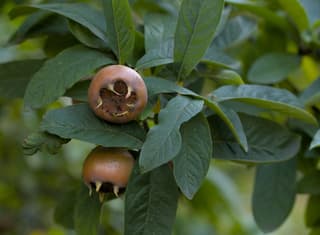
The medlar (Mespilus germanica) is a small deciduous tree or large shrub in the rose family, native to the mountains of southeastern Europe, the Caucasus, and northern Iran. It grows slowly into a spreading, rounded crown 4-8 m tall and wide, with dark green oblong leaves that turn russet in autumn. Its five-petaled white to pale-pink flowers open late, in May or June, well after most other fruit trees have finished blooming. The brown, apple-shaped fruit does not ripen on the tree; it must "blett" (soften through frost or storage) before it becomes sweet and edible.

Dawn Redwood
Metasequoia glyptostroboides
Metasequoia glyptostroboides, known as the Dawn Redwood, is a fast-growing, large deciduous conifer native to the mountain forests of central China. Considered extinct for millennia—known only from fossil records—it was rediscovered alive in 1941 in Hubei province, becoming one of the most remarkable botanical finds of the 20th century. It is the only extant species in the genus Metasequoia. In spring and summer, it displays delicate, light green foliage similar to ferns; in autumn, it transforms into stunning shades of orange and copper before shedding all its leaves. The mature trunk develops deeply fissured, reddish-brown bark. It can reach up to 30 meters in height in gardens and parks, with an elegantly pyramidal habit.
Pohutukawa
Metrosideros excelsa
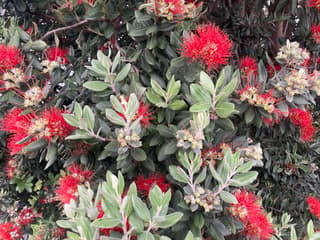
Metrosideros excelsa, widely known as the Pohutukawa or New Zealand Christmas Tree, is a majestic coastal tree. It is famous for its explosion of bright red flowers composed of long stamens that appear at the height of summer. Its leaves are leathery, deep dark green on the upper surface and covered with dense white hairs on the lower surface, giving it a silvery appearance. It is an extremely resilient species, capable of growing on rocky cliffs and withstanding strong salt winds.

Canela-de-velho
Miconia albicans
Canela-de-velho (Miconia albicans) is a shrub or small tree native to the Brazilian Cerrado, belonging to the Melastomataceae family. It can reach 1 to 4 meters in height, with leathery leaves whose undersides are covered with characteristic whitish down. Its white to greenish-cream flowers appear in panicles at the end of the dry season, peaking in September. It is a pioneer species, common in Cerrado areas and recently disturbed sites, well-known in Brazilian folk medicine for the use of its leaves in anti-inflammatory teas and ointments.
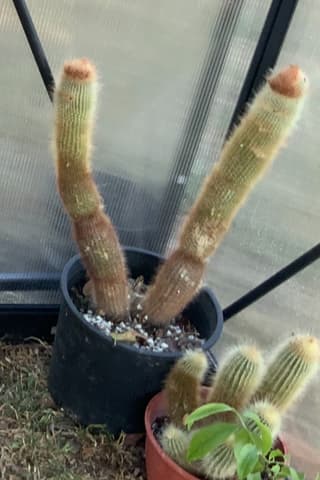
Micranthocereus
Micranthocereus
Micranthocereus is a genus of columnar cacti endemic to Brazil, with about ten species distributed mainly throughout Bahia and Minas Gerais, in Caatinga environments, rocky fields (campos rupestres), and quartzite rock outcrops. The stems are erect, branched at the base, and covered by low ribs and woolly areoles from which white to brown spines emerge. A woolly cephalium—a whitish fuzzy structure from which flowers bloom—forms at the top of older stems. The flowers are tubular, usually white, sometimes yellowish or pinkish, opening at night and pollinated by bats and moths, followed by globose and fleshy fruits. It is a hardy plant, adapted to long periods of drought, intense light, and poor, well-drained soils, making it highly sought after by cactus collectors for its sculptural form and resilience.
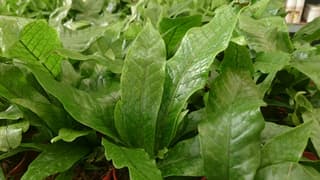
Crocodile Fern
Microsorum musifolium
Microsorum musifolium, commonly known as the Crocodile Fern, is a lush tropical plant native to Southeast Asia and Australia. Its unique fronds, featuring a texture reminiscent of crocodile skin, are its most striking feature. With its vibrant green color and elongated, wavy shape, it is an excellent choice for adding an exotic and natural touch to any indoor space or shaded outdoor area.
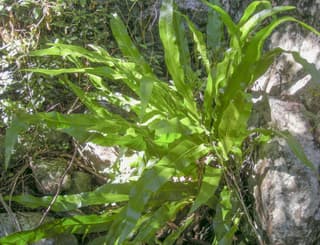
Fishtail Fern
Microsorum punctatum
Microsorum punctatum, commonly known as the Fishtail Fern or Ox-tongue Fern, is a tropical evergreen fern native to southern Asia, ranging from India to China and across the Pacific Islands. It features long, leathery, glossy bright-green fronds with wavy margins, making it an attractive ornamental plant for both indoor and outdoor shaded environments.
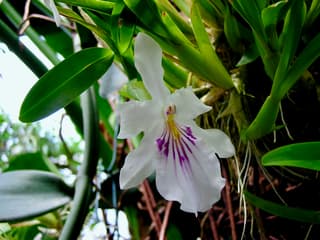
Miltonia Orchid (genus)
Miltonia
Miltonia is a genus of Neotropical epiphytic orchids in the family Orchidaceae, native to the tropical rainforests of Brazil and surrounding regions. Unlike the closely related Miltoniopsis, true Miltonia orchids are warmer-growing and thrive in USDA zones 10–12. They produce spectacular blooms on arching spikes during spring and summer.
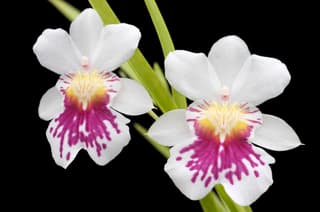
Pansy Orchid
Miltoniopsis phalaenopsis
Miltoniopsis phalaenopsis, commonly known as the Pansy Orchid, is a cool-growing epiphytic orchid native to the cloud forests of the Colombian Andes. Its large, flat blooms closely resemble garden pansies and come in shades of white, yellow, pink, red and purple with distinctive waterfall patterning. It is considered one of the most beautiful orchids in cultivation but requires cool temperatures and high humidity.
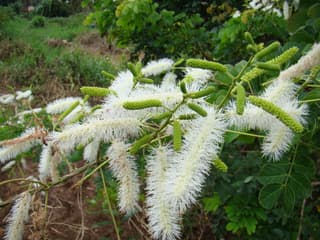
Sabia Mimosa
Mimosa caesalpiniifolia
Mimosa caesalpiniifolia, known as sabiá or sansão-do-campo, is a native tree of the Brazilian Caatinga and Cerrado biomes, particularly from the Northeast region. Belonging to the Fabaceae family, this fast-growing species is prized for its hardiness, rapid growth, and multiple uses: ornamental, fodder, medicinal, and timber. Its thorny branches make it ideal for living fences, while its white-cream flowers attract pollinators, especially bees. The species is listed as Vulnerable on the IUCN Red List and is found exclusively in Brazil.
Find the Perfect Plant
Our plant guide helps you find ideal species for your experience level and time of year.
Browse by Difficulty, Season & More
Use the filters below to narrow this catalog by care difficulty, season, environment, or search directly by name. Each filter leads to a focused list tailored to your specific growing conditions.