Complete Plant Guide
Explore plants by difficulty, season and more. Find the perfect plant for you.
Difficulty
Categories
Plants by City
🗺️ Plants by City3454 plants found
Showing 2413-2448 of 3454
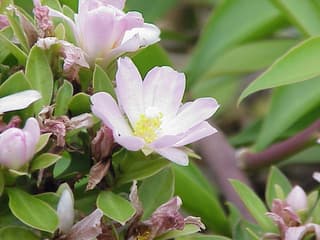
Rose Cactus
Pereskia grandifolia
Pereskia grandifolia, known as the rose cactus, is a tree-like cactus native to eastern and southern Brazil. Unlike typical cacti, it has broad, non-succulent leaves and a spiny woody stem. It grows 3-6 m tall and produces showy bright pink flowers from spring through summer. It is widely grown as an edible leaf vegetable and as an ornamental hedge.
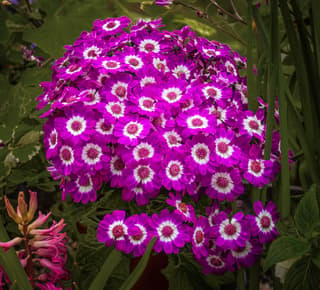
Florist's Cineraria
Pericallis × hybrida
Florist's Cineraria (Pericallis × hybrida) is a popular cool-season annual celebrated for its spectacular daisy-like flowers in vivid shades of blue, purple, pink, red, and white, often with striking bicolor patterns. Native to the Canary Islands, it is widely grown as a potted plant and bedding annual during winter and early spring. It belongs to the Asteraceae family and is a hybrid of several Pericallis species, formerly classified as Senecio cruentus or Cineraria.
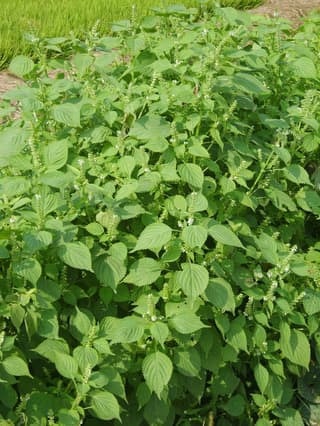
Shiso
Perilla frutescens
Shiso (Perilla frutescens) is an annual aromatic herb from the Lamiaceae family, native to Asia. The plant reaches a height of 18-48 inches (45-120 cm) and features decorative, soft leaves that are green or purple depending on the variety. The leaves have a characteristic aroma reminiscent of a combination of mint, anise, and lemon. During summer and fall, the plant produces white to light purple flowers in spiked inflorescences. It propagates easily by seed and often self-seeds.
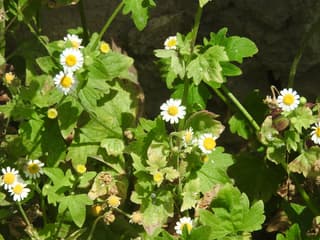
Small-tongue rock daisy
Perityle microglossa
Perityle microglossa is an annual herb of the Asteraceae family, erect or decumbent, 15 to 60 cm tall, with fine and aromatic foliage. It is native to arid and rocky areas of northern and central Mexico (Sonora, Sinaloa, Baja California Sur, Bajío) and the southwestern United States, where it grows wild in rock crevices, stony slopes, and poor soils in full sun. It produces small flower heads with short white ray florets and yellow disc florets, blooming mainly in spring and summer. In several regions, it is considered a weed due to its ability to colonize disturbed soils.
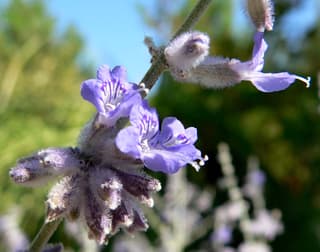
Russian Sage
Perovskia atriplicifolia
Russian sage (Perovskia atriplicifolia), sometimes botanically classified as Salvia yangii, is a perennial subshrub in the Lamiaceae family, native to Central Asia, Afghanistan, and western China. It is characterized by silvery-gray, deeply lobed leaves with an intense, sage-like scent and numerous small flowers in shades of purple and blue that appear from July to September on upright, woody stems. Reaching 80-150 cm in height, the plant is extremely drought and heat tolerant, and its airy, misty habit makes it a perfect addition to flower beds and gravel gardens.
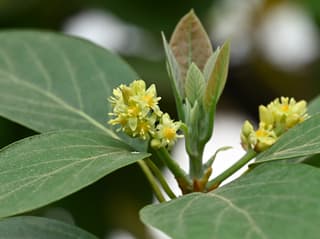
Avocado Tree
Persea
Persea is a genus of approximately 200 evergreen trees in the family Lauraceae, native to tropical and subtropical Americas, eastern Asia, and Macaronesia. The most famous species is the avocado (P. americana), cultivated worldwide for its nutritious fruit. The genus also includes the redbay (P. borbonia) of the southeastern United States and other ornamental species prized for their glossy, aromatic foliage.
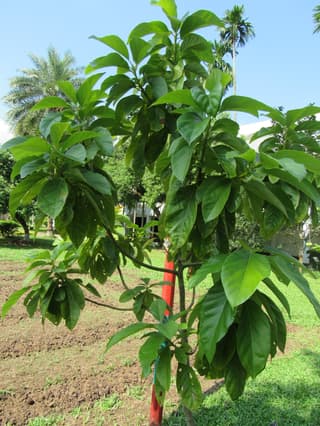
Avocado
Persea americana
Persea americana, commonly known as the avocado, is an evergreen fruit tree native to south-central Mexico and Central America, belonging to the family Lauraceae. It is one of the most economically important and widely cultivated fruit trees in the world, celebrated for its creamy, nutrient-dense fruit rich in healthy monounsaturated fats, vitamins, and minerals. The tree can reach up to 18 meters in height in its natural habitat, bearing large, glossy, dark green leaves.
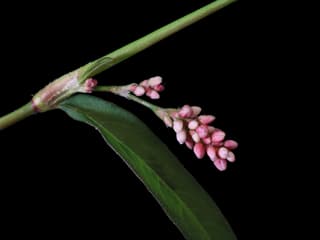
Smartweed
Persicaria
The genus Persicaria (Polygonaceae family) includes over 130 species of annual and perennial herbs, commonly known as smartweed, water pepper, or knotweed. Adapted to temperate and tropical climates, they thrive in moist soils, riverbanks, marshy areas, and field edges. The stems are jointed with prominent nodes; the lanceolate leaves often feature a characteristic dark blotch. The dense spike-like inflorescences—colored pink, white, red, or crimson—bloom from summer to autumn, attracting bees, butterflies, and other pollinators. Many species have traditional medicinal and culinary uses, in addition to high ornamental value in border gardens, groundcovers, and naturalized gardens.
Water Pepper
Persicaria hydropiper
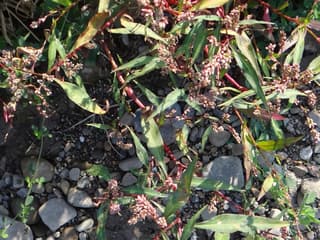
Persicaria hydropiper, commonly called water pepper or marshpepper knotweed, is a fast-growing annual herb in the buckwheat family (Polygonaceae). Native to wet habitats across Eurasia and North Africa, it thrives along stream banks, pond edges, ditches, and soggy woodland margins. Its narrow, peppery-tasting leaves and slender spikes of small greenish-white flowers make it a distinctive wetland plant, prized in parts of Asia as a pungent culinary herb.
Pale Persicaria
Persicaria lapathifolia
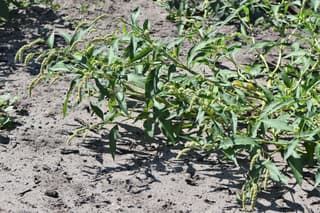
Pale Persicaria (Persicaria lapathifolia) is a fast-growing annual of the buckwheat family, found across much of the world in damp, disturbed ground. It reaches up to about 1.5 m, with lance-shaped leaves often marked with a dark blotch and dense nodding spikes of tiny pink, white or greenish flowers from spring to autumn. It is a common wetland and field weed, valued mainly for wildlife - its seeds feed birds.
Lady's Thumb
Persicaria maculosa
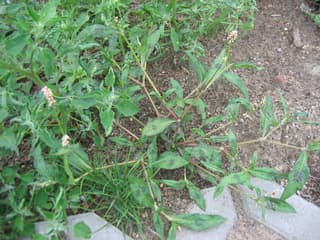
Lady's thumb (Persicaria maculosa) is an annual herb in the buckwheat family (Polygonaceae), native across Eurasia and now naturalized throughout North America and beyond. It grows erect to sprawling with reddish, jointed stems and narrow lance-shaped leaves that typically show a dark blotch in the center. From summer into fall it produces dense, upright spikes of small pink to deep-purple flowers. It thrives in moist, disturbed ground such as ditches, shorelines, waste places and field edges, where it behaves as a common weed.
Butterbur
Petasites hybridus
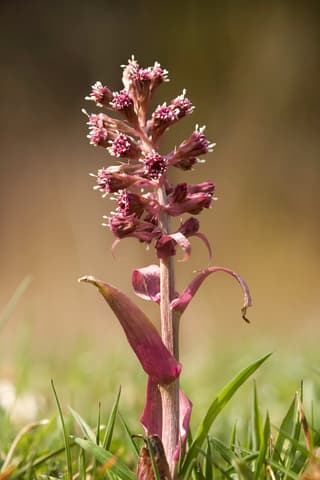
Butterbur (Petasites hybridus) is a perennial herb in the Asteraceae family, known for its giant, heart-shaped leaves that can reach up to a meter in width. The plant blooms in early spring, often before the leaves emerge, with pinkish-purple inflorescences rising from the bare soil. Butterbur spreads vigorously via creeping rhizomes and forms dense colonies along streams, rivers, and damp forest edges throughout most of Europe. The name refers to an old belief that the leaves and roots could cure the plague, as well as the historical use of the large leaves for wrapping butter and other goods.
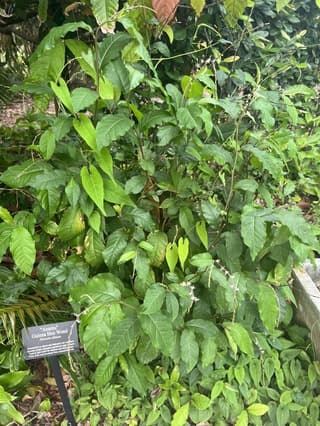
Guinea Hen Weed
Petiveria alliacea
Guinea Hen Weed (Petiveria alliacea) is a perennial tropical subshrub, 20 to 100 cm tall, with aromatic roots and leaves that emit a strong garlic odor when crushed. Its delicate white inflorescences appear in spikes, mainly from November to March. It is a hardy plant, well-adapted to Brazilian tropical and subtropical climates, and has been incorporated into the medicinal and spiritual heritage of Afro-Brazilian traditions for centuries.
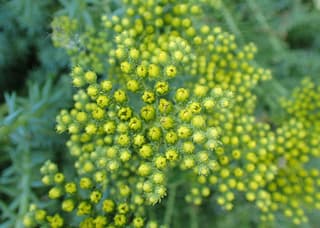
Stonecrop
Petrosedum
Petrosedum is a genus of hardy, mat-forming stonecrops segregated from Sedum, including the popular blue and Jenny stonecrops (such as P. rupestre). These evergreen succulents form low spreading carpets of needle-like blue-green to golden foliage and lift bright yellow star-shaped flowers on short stems in summer.
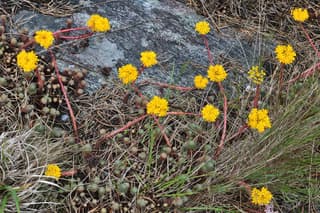
Rock Stonecrop
Petrosedum forsterianum
Petrosedum forsterianum, commonly known as Rock Stonecrop, is a mat-forming evergreen succulent native to rocky cliffs and coastal outcrops of Atlantic Europe. It produces dense cushions of blue-green foliage and bright yellow star-shaped flowers in summer.
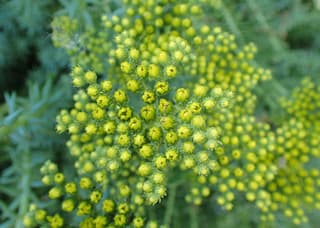
Blue Stonecrop
Petrosedum rupestre
Petrosedum rupestre, formerly known as Sedum rupestre, is a creeping perennial succulent native to Europe. Its leaves are cylindrical, pointed, and have a bluish-green or grayish hue, resembling small pine branches. In summer, the plant produces upright stems bearing dense clusters of star-shaped yellow flowers, which are highly attractive to pollinators.
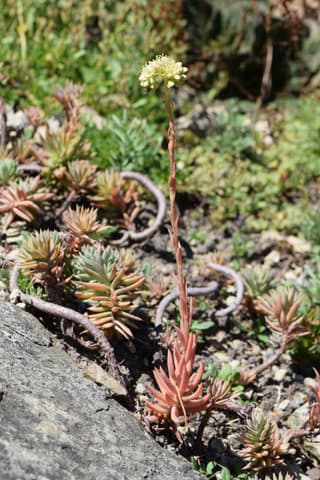
Pale Stonecrop
Petrosedum sediforme
Petrosedum sediforme (syn. Sedum sediforme) is a Mediterranean perennial succulent in the family Crassulaceae. It forms dense mats of compact rosettes with fleshy blue-green or grey-green leaves and produces pale yellow to cream flowers in late spring and summer. Exceptionally drought-tolerant, it thrives in rock gardens, walls, and xeriscape plantings across USDA zones 7–10.
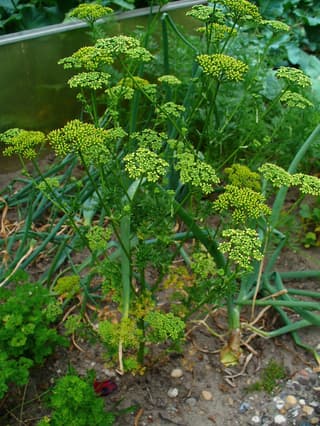
Parsley
Petroselinum crispum
Parsley (Petroselinum crispum) is a biennial aromatic herb from the Apiaceae family, native to the Mediterranean region of Southern Europe. One of the world's most widely used culinary herbs, it is grown fresh or dried to season dishes globally. Its bright green leaves are rich in vitamins C, K, and antioxidants, making it valued both culinarily and in folk medicine.
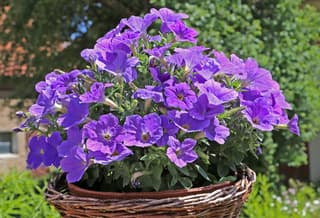
Petunia
Petunia × atkinsiana
Petunia × atkinsiana is one of the most popular garden flowers in the world, valued for its trumpet-shaped blooms and vibrant colors. This hybrid is extremely versatile, adapting well to flower beds, borders, and hanging baskets. They bloom profusely from early spring until the first frosts of autumn, offering a continuous visual spectacle.
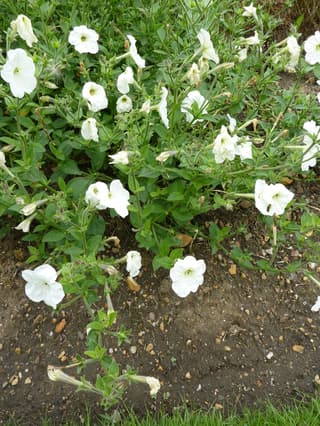
Large White Petunia
Petunia axillaris
Petunia axillaris, the large white petunia, is an erect annual to short-lived subshrub native to the temperate and subtropical grasslands of southern Brazil, Argentina, and Uruguay. It grows to about 60 cm tall, with sticky, glandular stems and opposite, elliptic to ovate leaves. Its trumpet-shaped white flowers, 3-7 cm long, are the only pure-white blooms in the genus Petunia and release a strong fragrance after dusk to attract nocturnal hawkmoths (Manduca sexta), their primary pollinator. Along with Petunia integrifolia, it is the wild ancestor of nearly all garden petunias grown today.
Wild Petunia
Petunia integrifolia
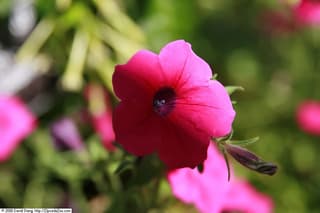
Petunia integrifolia, commonly known as Wild Petunia, is a species native to Argentina, Brazil, Paraguay, and Uruguay. Belonging to the Solanaceae family, it produces distinctive violet-purple flowers with entire petals, differentiating it from cultivated hybrids. It is a more compact and hardy plant than its hybrid relatives, well-adapted to the subtropical South American climate.
Garden Petunia
Petunia x hybrida
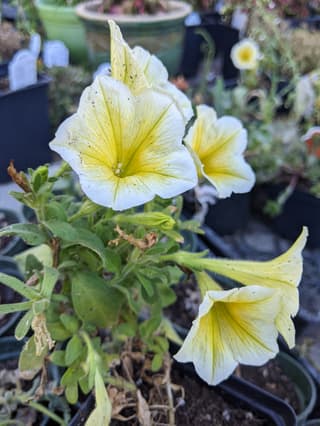
The garden petunia (Petunia x hybrida) is a herbaceous hybrid in the nightshade family (Solanaceae), bred from Petunia axillaris and Petunia integrifolia, both native to South America. Grown as an annual bedding plant nearly worldwide, it is one of the most popular flowers for beds, borders, hanging baskets, and containers thanks to its abundant, near-continuous bloom from spring until the first frost. Its trumpet-shaped flowers come in an enormous range of colors, from pure white to deep purple, plus pink, red, yellow, and bicolor combinations. Leaves are oval, green, slightly sticky, and softly fragrant due to fine glandular hairs. It is a fast-growing plant, ideal for gardeners who want quick, reliable color, but it demands full sun and regular watering to keep up its vigor and flower output.
Boldo
Peumus boldus
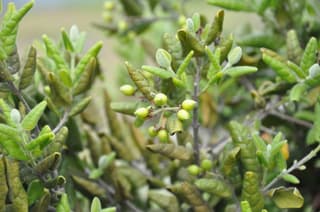
Peumus boldus, commonly known as Boldo, is an evergreen tree native to the central regions of Chile. Its leaves are leathery, grayish-green, and possess a very strong characteristic aroma due to the presence of essential oils and the alkaloid boldine. It is a slow-growing plant that can reach large proportions in its natural habitat, but in domestic cultivation or pots, it remains a robust shrub.
Bolivian Forest Cactus
Pfeiffera boliviana
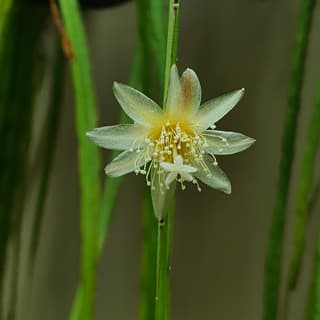
Pfeiffera boliviana (synonym Lepismium bolivianum) is an epiphytic cactus native to the montane forests of Bolivia and northwestern Argentina, where it grows hanging from tree branches and other plants in a non-parasitic manner. The species features flat, ribbon-like green stems with wavy margins that can reach up to one meter in length, making it a highly valued indoor hanging plant. During spring and summer, small funnel- or rosette-shaped flowers develop in white or pale pink, often appearing individually at the stem areoles. Unlike desert cacti, this species is adapted to a more humid, shaded forest climate and thrives best in filtered light with consistent watering.
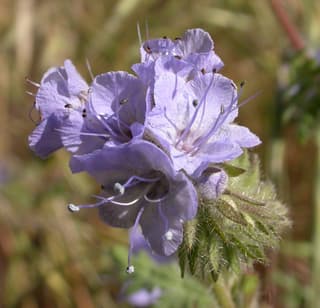
Lacy Phacelia
Phacelia tanacetifolia
Phacelia tanacetifolia, commonly known as Lacy Phacelia or Fiddleneck, is a fast-growing annual herb native to the southwestern United States. It produces masses of delicate, fern-like foliage and curling clusters of vibrant blue-purple flowers that are exceptionally attractive to bees, hoverflies, and other pollinators. Widely used as a cover crop and green manure in regenerative agriculture, it enriches soil, suppresses weeds, and supports beneficial insect populations.
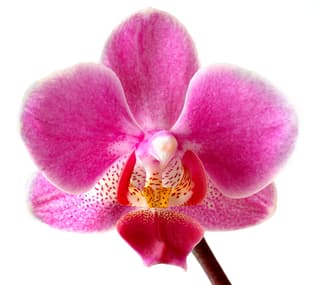
Moth Orchid
Phalaenopsis
The Phalaenopsis, commonly known as the moth orchid, is one of the most popular orchids in the world due to its elegance and ease of indoor cultivation. Its flowers, which can last up to three months, grow on graceful stems and come in a wide range of colors and patterns. Its leaves are broad, fleshy, and deep green, serving as water reservoirs for the plant.
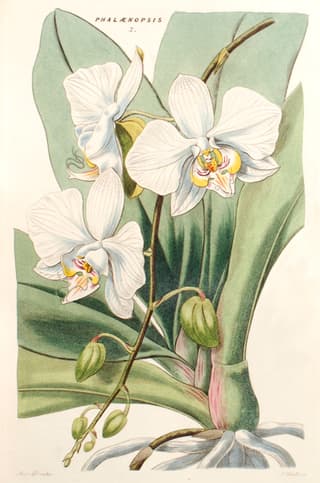
Moon Orchid
Phalaenopsis amabilis
Phalaenopsis amabilis is a stunning epiphytic orchid native to Southeast Asia, known for its large, pure white flowers that can bloom for several months. It is the national flower of Indonesia and one of the most popular orchids for indoor cultivation due to its elegant appearance and relatively easy care requirements.
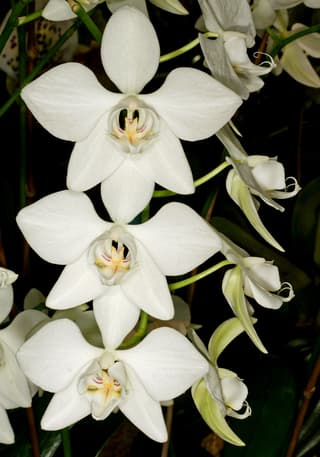
Moth Orchid
Phalaenopsis aphrodite
Phalaenopsis aphrodite, the Aphrodite moth orchid, is a species of epiphytic orchid native to the forests of the Philippines and southern Taiwan. It produces long, arching sprays of flat, pure-white flowers marked with a yellow-and-red throat, and its broad leaves persist year-round on a monopodial stem. It is the wild ancestor of countless modern Phalaenopsis hybrids sold as houseplants.
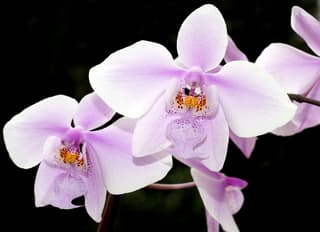
Schiller's Moth Orchid
Phalaenopsis schilleriana
Phalaenopsis schilleriana is an epiphytic moth orchid endemic to the Philippines, prized for its handsome foliage as much as its flowers. The leathery leaves are marked with alternating bars of silver-grey and dark green on top, with a purple flush underneath, remaining attractive year-round. In late winter to spring, arching, often branching sprays carry dozens of fragrant, rose-pink flowers with a spotted lip. Cooler autumn nights help trigger the bloom spike.
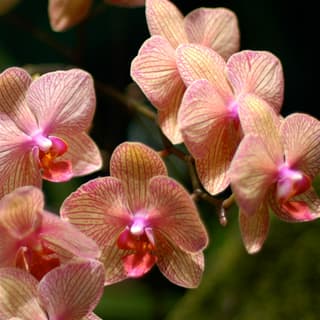
Phalaenopsis Hybrid Orchid
Phalaenopsis x hybridus
The Phalaenopsis Hybrid Orchid (Phalaenopsis x hybridus) is one of the world's most popular flowering houseplants, celebrated for its elegant arching flower spikes bearing large, flat blooms in a spectacular range of colors including white, pink, purple, yellow, and red. Native to the tropical forests of Southeast Asia, this epiphytic orchid thrives indoors with proper care, producing flowers that last months at a time. As a hybrid group derived from dozens of wild Phalaenopsis species, these orchids have been bred for extended bloom time, vibrant color, and adaptability to home environments.
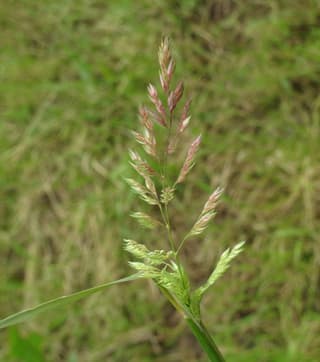
Canary Grass (genus)
Phalaris
Phalaris is a genus of grasses in the family Poaceae, comprising about 20 species of annual and perennial grasses. It includes the well-known canary grass (P. canariensis) and reed canary grass (P. arundinacea), widely grown as ornamentals and forage crops. These cool-season grasses thrive in temperate climates and are highly frost-tolerant.
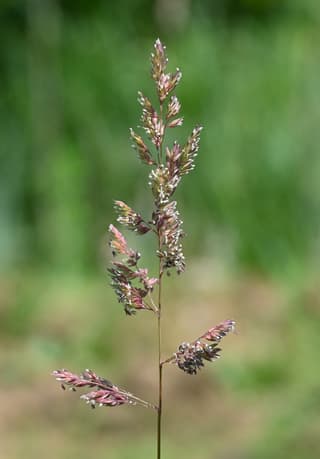
Ribbon Grass
Phalaris arundinacea
Ribbon grass (Phalaris arundinacea 'Picta') is a vigorous ornamental perennial grass prized for its striking green-and-white striped foliage. Native to Eurasia, it thrives in moist soils, water margins, and partly shaded borders. Its rapid-spreading rhizomes make it excellent for erosion control and mass plantings, though containment is recommended in garden settings to prevent invasive spread.
Common Stinkhorn
Phallus impudicus
The common stinkhorn is a striking and unusual fungus, best known for its pervasive, carrion-like odor. Its development begins with the 'witch's egg' stage, from which a porous, white stalk emerges remarkably fast, often within hours. The cap is covered in a dark green, slimy gleba containing the spores, which attracts flies to aid in dispersal.
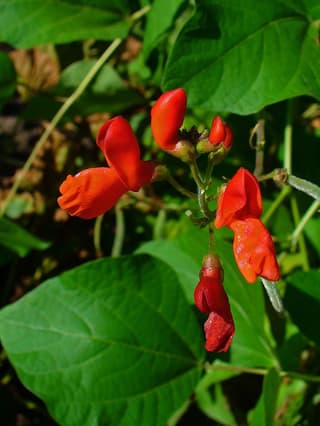
Scarlet Runner Bean
Phaseolus coccineus
The Scarlet Runner Bean (Phaseolus coccineus) is a vigorous annual climbing vine native to Central America, prized for its brilliant scarlet flowers and edible pods. It grows rapidly, reaching up to 12 feet tall, and produces vibrant blooms that attract hummingbirds and bees throughout summer and into fall.
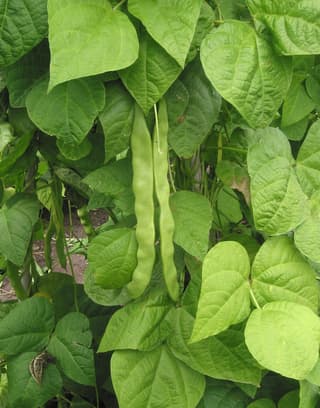
Common Bean
Phaseolus vulgaris
The common bean (Phaseolus vulgaris) is an annual plant in the Fabaceae family, native to Central and South America. It is one of the most widely cultivated and consumed legumes worldwide. The plant produces edible pods and seeds rich in protein, fiber, and essential minerals. It comes in two main growth habits: bush varieties and climbing varieties.
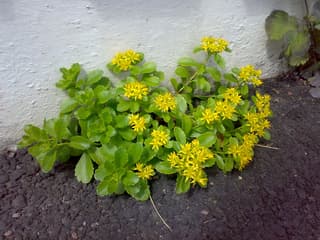
Siberian Stonecrop
Phedimus hybridus
Phedimus hybridus (formerly Sedum hybridum), commonly called Siberian stonecrop, is a low-growing succulent groundcover native to eastern and central Siberia and Central Asia, now widely naturalized across northern Europe. It forms dense mats via branching, woody rhizomes, with fleshy leaves and clusters of star-shaped yellow flowers appearing on short stems from late spring through summer. Extremely cold-hardy and drought-tolerant, it thrives in rocky, well-drained soils on sunny slopes and is a popular choice for rock gardens, green roofs, and ground cover plantings.
Find the Perfect Plant
Our plant guide helps you find ideal species for your experience level and time of year.
Browse by Difficulty, Season & More
Use the filters below to narrow this catalog by care difficulty, season, environment, or search directly by name. Each filter leads to a focused list tailored to your specific growing conditions.