Anthurium Care: How to Grow a Plant That Lives in Trees
Anthuriums aren't your typical potted plants. In the wild, they grow anchored to trees. This changes everything about their soil, watering, and why they stop blooming.

Most indoor anthurium problems come down to two things: suffocating roots or not enough light. Suffocating roots lead to limp leaves, wet brown spots, and a plant that wilts even when the soil is soaking wet. Too little light results in pale green leaves and zero new spathes, those famous heart-shaped red leaves.
Both problems stem from the same misunderstanding about where this plant lives. In the native habitat of the anthurium (Anthurium andraeanum), the rainforest of Colombia and Ecuador, the plant grows clinging to trees (NC State Extension).
Their roots live out in the open air, clinging to bark and moss. When you bury those roots in standard potting soil, you starve them of oxygen.
Quick summary:
The anthurium is an epiphyte in its native habitat: it grows on trees, not in the soil (NC State Extension). The genus is mixed, with terrestrial, hemiepiphytic, and epiphytic species spread from Central America to Brazil (UF/IFAS EP159).
The right substrate is coarse and airy: 1 part pine bark, 1 part perlite, and 1 part peat moss or coconut coir, in the proportion used in commercial production (UF/IFAS EP159).
Water when the top 2 to 3 cm of the substrate is dry. Indoors, this usually falls every 5 to 7 days.
The bright red part is actually a spathe, a modified leaf, not a flower. The real flowers are the tiny bumps on the spadix, the spike in the center.
Anthurium blooms in low light, but not in no light: indoor cultivars bloomed non-stop under 100 foot-candles (about 1,000 lux) for more than a year and a half (UF/IFAS EP159).
The entire plant is toxic to cats and dogs, due to calcium oxalate crystals present in the leaf, flower, stem, root, and sap (NC State Extension).
Anthurium care cheat sheet
Anthuriums want bright, indirect light, temperatures between 18 °C and 27 °C, and air humidity between 60% and 80%. Water when the top 2 to 3 cm of the substrate dries out, which indoors usually takes 5 to 7 days. It reaches 45 cm in height and is toxic to cats and dogs. Below 13 °C the plant suffers damage, whether visible or not (UF/IFAS EP159).
The complete profile for this species, featuring the same updated data from our plant database:
Why anthuriums rot in standard potting soil
The roots of an epiphytic plant evolved to live completely exposed. On a tree, they anchor to the bark, absorb rainwater as it runs down, and dry out within a few hours thanks to the surrounding air circulation. In nature, these roots never sit in stagnant water.
Standard potting soil keeps the roots trapped in water. It is fine-textured, meaning it collapses and seals off air pockets when wet, taking days to dry out in the center. The roots quickly run out of oxygen, the tissue dies, and fungi move in to feed on the dead tissue. Without proper drainage, root rot can set in within 10 days.
The top-ranking German care guides are divided on this. Out of the five I analyzed, two label the anthurium as an epiphyte. Only one, from the public broadcaster MDR, actually draws the right conclusion about the potting mix, warning readers not to use standard potting soil.
When it comes to concrete recipes, the score is two to two. Two guides recommend orchid bark or orchid mix. Two suggest standard potting soil, one specifying azalea soil. The fifth guide does not mention soil at all.
What breaks the tie is commercial production. The UF/IFAS substrate recommendation for potted anthurium is 1 part peat, 1 part perlite, and 1 part bark (UF/IFAS EP159). The stated reason is aeration. It is a mix you put together at home, or buy ready-made as orchid substrate.
To check if yours is in the wrong soil, water it and watch the clock. If the surface is still wet on the third day, your soil mix is far too dense.
How to spot root rot and save your plant
Root rot symptoms are tricky because they look exactly like dehydration. The leaves go limp and droop, the plant wilts, and your natural reaction is to water it more. But the soil is already wet. A wilted plant in wet soil almost always means the roots have lost their ability to draw up water.

Confirming it only takes five minutes:
Gently slide the plant out of its pot and crumble the soil away with your fingers, rinsing the roots under lukewarm running water.
Compare what you see. Healthy roots are firm, cream-colored, and resist a gentle squeeze. Rotten roots are dark brown or black, mushy, and the outer sheath will easily slide off between your fingers, leaving a thin thread behind.
Use clean shears to cut away all mushy roots until only firm, healthy tissue remains. If you can save at least a third of the root system, the plant still has a chance.
Repot the plant in a chunky, airy mix using a pot with drainage holes. Keep the pot as small as possible, just big enough to fit the remaining roots. A pot that is too large holds onto water that the roots cannot use.
Do not water for the first 3 days and hold off on fertilizer for 6 weeks. Freshly cut roots will burn if they come into contact with fertilizer salts.
Keep the plant in bright, indirect light while it recovers, never in direct sunlight.
A leaf that is already limp will not go back to normal, and this is not a sign that something went wrong. What you should monitor is the new leaf: one should appear in 3 to 6 weeks. Before taking the plant out of its pot, it is worth crossing the symptom with the probable causes.
How often to water an anthurium
Water when the top 2 to 3 cm of the substrate is dry to the touch. Indoors, this usually falls to every 5 to 7 days in warm weather and every 10 to 14 days in cold weather. The math changes with the pot, the temperature, and how well-ventilated the room is, so your finger is worth more than the calendar.
Top watering or bottom watering? Both methods work. This is actually one of the most common questions in German search queries about anthurium care, making up 2 out of 6 questions in the "People Also Ask" section. Yet, of the five guides I analyzed, only one touches on this, and only briefly.
Here is the practical answer:
Top watering is the standard way. Soak the soil thoroughly until water drains out of the bottom holes. Wait 15 minutes, then empty the saucer. Letting a pot sit in a saucer full of water is the fastest way to rot the roots.
Bottom watering is useful when the soil has dried out completely and shrunk, causing water to run straight down the sides without soaking in. Let the pot sit in a deep dish of water for 20 minutes, then discard the excess.
Bottom watering has one drawback: it never flushes the soil. Fertilizer salts will accumulate at the surface over time. If you prefer bottom watering, make sure to water from the top once every 4 or 5 waterings using plenty of water to wash those salts away.
When it comes to the water itself, three of the five German guides insist on using soft, lime-free water like rainwater or filtered water. I could not find any scientific studies to back this up for potted anthuriums. I view it as a cheap precaution: if your tap water is very hard, let it sit out for a few hours before watering.
Light: where to keep your anthurium, and why it stops blooming
Anthuriums need bright, indirect light all day long. An east-facing window is the classic spot. Direct afternoon sun will scorch the leaves, leaving bleached, dry patches that never heal.
Kept indoors, several anthurium cultivars bloomed continuously under 100 foot-candles, about 1,000 lux, for more than a year and a half (UF/IFAS EP159). In a production greenhouse, the same publication works with 1,000 to 2,500 foot-candles.
To put that in perspective for your living room: 1,000 lux is on the lower end for a tropical plant, but it still means placing it right next to a bright window. It is not the light you get on a bookshelf in the middle of a hallway, nor in a windowless bathroom. If your plant is more than 6 feet away from the window and is not producing new spathes, you have your answer.
The anthurium "flower" is not actually a flower
The bright red, pink, or white heart-shaped part is the spathe, which is actually a modified leaf. The true flowers are the hundreds of tiny bumps on the spike in the middle, known as the spadix. This is the exact same structure found in peace lilies and calla lilies, all members of the Araceae family.
This changes how you troubleshoot a plant that stops blooming. Since the spathe is technically a leaf, the plant needs plenty of light to grow new ones.
The guides are split down the middle on this. Of the five analyzed, two blame a lack of blooms on a lack of fertilizer, while two blame a lack of light. Our plant profile page sides with light. This disagreement changes your course of action: do you move the plant to a new spot, or do you go buy fertilizer?
My vote goes to light, for two reasons. The first is that, with adequate light, the anthurium blooms nonstop. Each spathe lasts up to 4 weeks (NC State Extension).
The second reason is that the risk of fertilizer is asymmetrical. Indoors, the recommendation is modest: 50 ppm of nitrogen per month. The same publication directs to reduce the dose when the soluble salt in the substrate exceeds 3 dS/m (UF/IFAS EP159).
Too much fertilizer will burn the roots. Too much light, when kept indoors, is almost never an issue.
Brown leaves vs. yellow leaves: how to tell them apart
Brown leaves are the most searched symptom, but they do not have a single cause. You can narrow down the culprit by looking at where the spots appear and whether they feel dry or mushy.

What you see | Where | Most likely cause | What to do |
|---|---|---|---|
Dry, brown tips and edges with a narrow yellow halo | Leaf edges and tips | Dry air or built-up fertilizer salts | Stop fertilizing for 8 weeks and flush the soil thoroughly with water |
Dark, mushy brown spots, limp leaves | Middle of the leaf, accompanied by wilting | Root rot | Remove from pot, rinse the roots, and cut away mushy parts |
Lower leaves turning completely yellow, wet soil | Older, bottom leaves | Overwatering | Wait longer between waterings until the top inch of soil dries out |
Pale green leaves, small or greenish spathes | The entire plant | Not enough light | Move the plant closer to the window |
Bleached, dry, flat patches | The side facing the window | Sunburn from direct sunlight | Move the plant away from the glass or use a sheer curtain |
Tiny pale dots, fine webbing on the undersides | Underside of the leaves | Spider mites | Treat for pests rather than adjusting general care |
Two lines in this table have their own guide. For yellowing, yellow leaves on houseplants. For the little dots and the web, houseplant pests. In the specific case of the anthurium, the page on yellow leaves on flamingo flower lists the causes by order of frequency.
If your symptoms do not match any of these descriptions, comparing a photo of your leaf to confirmed cases can save you a lot of time. Bloom can diagnose your plant from a photo, solving these mysteries much faster than a text search.
Toxicity: anthuriums and pets
The anthurium is toxic if ingested. The toxic principle is calcium oxalate crystals. They are in all parts of the plant: leaf, flower, stem, root, seed, fruit, and sap (NC State Extension).
Chewing on the plant breaks these crystals, releasing immediate irritation. Signs of ingestion include drooling, oral pain, swelling of the mouth, lips, and tongue, difficulty swallowing, loss of appetite, and vomiting. Skin or eye contact with the sap causes redness and a burning sensation. While the toxicity is classified as mild to moderate and the tough leaves make it hard for pets to eat large quantities, the discomfort is immediate.
If your cat or dog chews on the plant, take three quick steps: Rinse their mouth with fresh water. Offer water or something cold to help soothe the irritation.
Call your veterinarian if any swelling begins to interfere with their breathing or if vomiting persists. Do not induce vomiting on your own.
The guides differ on this point. Out of the five German sources analyzed, three mention toxicity and recommend keeping the plant away from children and pets. One of them, from MDR, claims the opposite. Citing an anthurium grower, it states that the toxin levels are so low that the plant can safely be kept in a child's bedroom.
None of the five guides provide specific advice for cats or dogs. I recommend following the NC State guidelines: keep the plant safely out of reach.
If this is your main constraint when choosing a plant, there are apps that warn you which plants are toxic to pets before your purchase.
Care calendar throughout the year
A methodological warning before the table. Of the five guides I analyzed, four give months or seasons and none says where they got the cutoff. Month is a shortcut for temperature and light, not a rule.
What matters is the plant's cycle. The anthurium grows while the days are long and warm and slows down when they shorten. If your winter is mild, or if the plant spends the year under the same artificial light, these two phases shift by a few months on the calendar.
The table below shows the year divided into these two phases:
Time of year | Months | What to do |
|---|---|---|
Balanced liquid fertilizer at a weak dose, 1× per month. Watering every 5 to 7 days. Repotting, if it is the year for it, in spring. | March to September | Balanced liquid fertilizer at a weak dose, 1× per month. Watering every 5 to 7 days. Repotting, if it is the year for it, in spring. |
No fertilizer. Watering every 10 to 14 days. No repotting and no moving it around. | October to February | No fertilizer. Watering every 10 to 14 days. No repotting and no moving it around. |
Two observations apply year-round. Repot every 2 to 3 years, or when the roots fill the pot (NC State Extension). A pot that is too large hinders blooming. Where winter is mild, dormancy is weaker: use plant growth as your guide, not the month.
Frequently asked questions
How often should I water my anthurium?
When the top 2 to 3 cm of the potting mix are dry to the touch. Indoors, this usually falls every 5 to 7 days in the heat and every 10 to 14 days in the cold. Stick your finger in before every watering, instead of following a fixed day of the week.
Should I water my anthurium from the top or the bottom?
Top watering is the standard: soak the soil until water runs out the bottom, then empty the saucer after 15 minutes. Bottom watering is great for extremely dry soil, leaving the pot in a deep dish for 20 minutes. If you only bottom water, make sure to top-water once every 4 or 5 times to flush out built-up fertilizer salts.
Why are my anthurium leaves turning brown?
It depends on where the brown is. Dry tips and edges with a yellow ring point to dry air or fertilizer salt buildup. Dark, mushy spots in the middle of a leaf, along with a wilting plant and wet soil, indicate root rot. Bleached, flat patches on the side facing the window are sunburn.
Why has my anthurium stopped blooming?
It is almost always a lack of light. The colorful part is the spathe, which is a modified leaf, and growing new leaves requires energy from light. Indoor varieties bloom continuously under about 1,000 lux, which is the light level right next to a bright window. Overly large pots and excess fertilizer can also reduce blooming.
Are anthuriums toxic to cats and dogs?
Yes. All parts of the plant contain calcium oxalate crystals. Chewing the plant causes drooling, oral pain, swelling, difficulty swallowing, and vomiting. While the overall toxicity is mild, the discomfort is immediate. Keep the pot well out of reach of pets and children.
What is the best soil for anthuriums?
A chunky, airy mix rather than standard potting soil. The mix used in commercial growing is 1 part peat moss, 1 part perlite, and 1 part bark, with a pH between 5.5 and 6.5. A pre-mixed orchid soil works wonderfully. Always use a pot with drainage holes.
Where to start
If your plant is struggling right now, run two quick checks. Stick your finger into the soil and see if it remains soggy two or three days after watering. Then, check if the plant is more than 6 feet away from the nearest window. Fixing these two common issues costs nothing and resolves most problems.
If your symptoms do not match anything in the table, a photo will tell you much more than a text search. Bloom can identify your plant and compare your symptoms to confirmed cases, and is available for iPhone and iPad.
Related articles
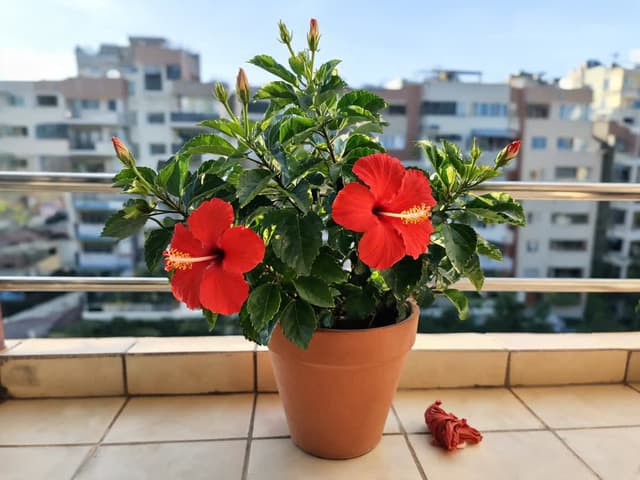
How to Care for Hibiscus: Sun, Watering, Fertilizer, and Pruning for Flowers
How to care for hibiscus: 6 hours of direct sun, evenly moist soil without waterlogging, half-strength fertilizer in spring and summer, and pruning in early spring. Find out why the flower lasts one day and why buds drop before opening.
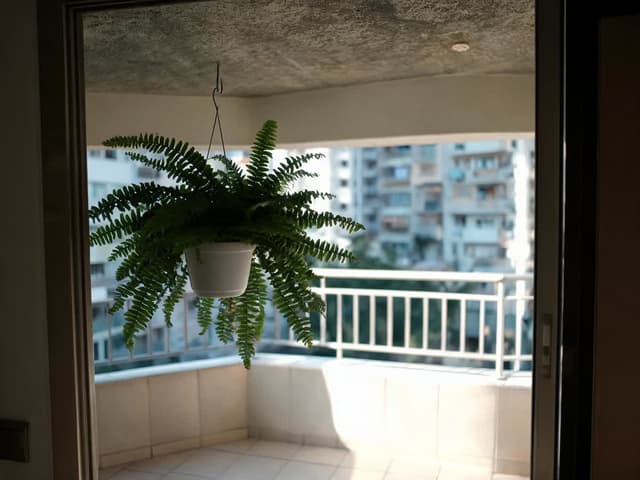
Do Ferns Like Sun or Shade? It Depends on the Type
Ferns prefer bright shade: plenty of light, but no direct sun on their fronds. Tuberous sword fern is the exception that handles sun. Here is the ideal light for each type, where to place pots, and how fronds show too much or too little light.
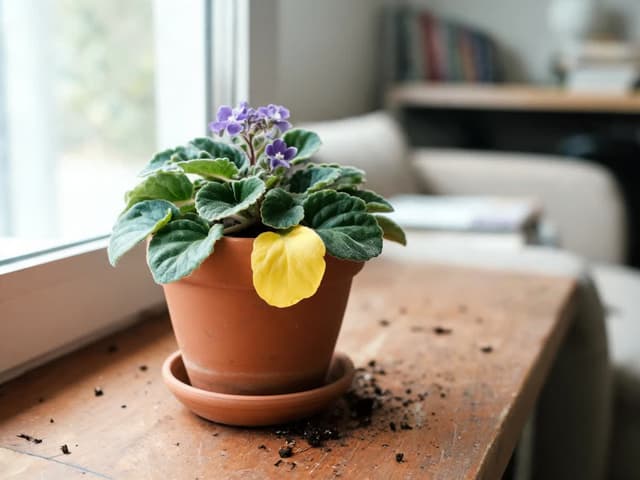
African Violet Yellow Leaves: Causes and What to Do
Yellow leaves on an African violet usually stem from overwatering, and the first place to check is the center of the plant. Losing one lower leaf at a time is normal. Identify whether age, watering, cold water, sunlight, cold drafts, or fertilizer is the culprit based on the yellowing pattern, and see what to do today.