How to Propagate Fig Trees from Cuttings in Brazil
To propagate a fig tree from cuttings, take an 8-inch woody branch during winter pruning (June to August in Brazil). Bury three-quarters of it in moist soil. Learn how much rooting hormone helps, how to air layer, and how to tell if the cutting is alive.
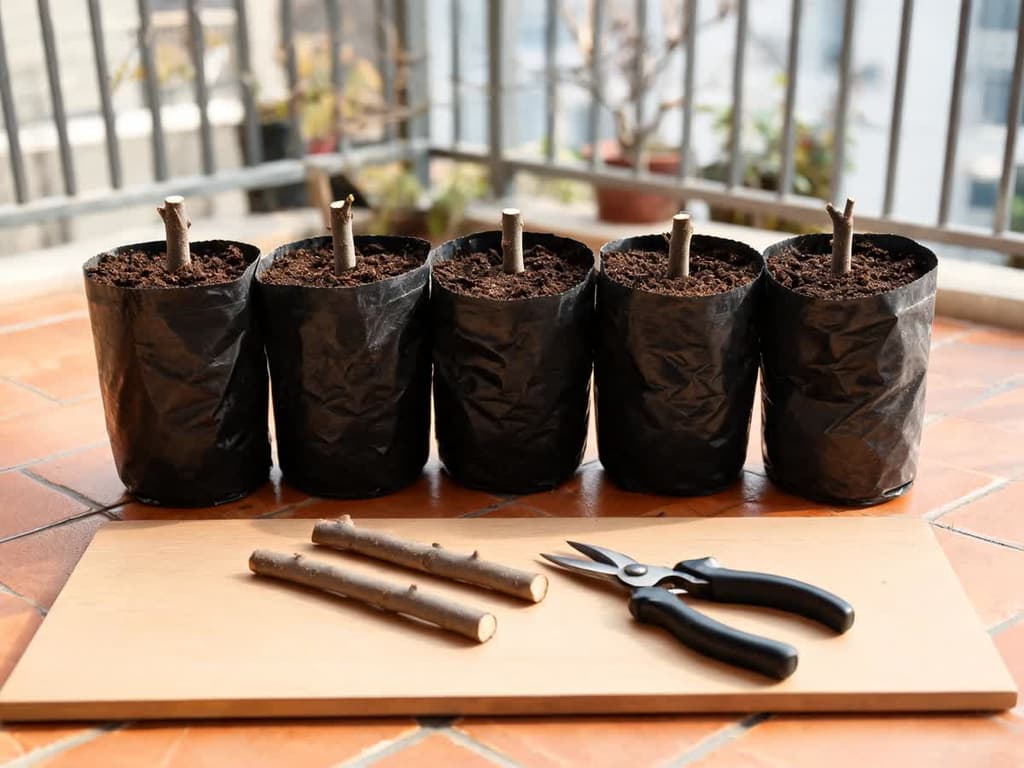
To propagate a fig tree from a cutting, cut a piece of woody branch (already hard, with brown bark) about 8 inches (20 cm) long and pencil-thick. Do this during winter pruning, which runs from June to August in Brazil. Bury three-quarters of the cutting in moist soil, keep the bag or pot in bright shade, and wait about 60 days for roots. This guide covers the common fig (Ficus carica), the purple fig; the prickly pear is a cactus and propagates differently.
Rooting hormone (powder or liquid hormone that stimulates roots) is not mandatory, but it increases the take rate, which is the proportion of cuttings that root. In cuttings of 'Roxo de Valinhos', the most planted variety in Brazil, harvested in July, 50% rooted without rooting hormone and 77% with it. Those who do not want to cut the plant can use air layering: rooting a branch while it is still attached to the fig tree, which takes 50 to 60 days.
Quick summary:
Branch: from the previous year, leafless, 8 inches (20 cm) long and pencil-thick (7 to 10 mm). The tip of the shoot works.
Timing in Brazil: June if you use rooting hormone, or August if you do not. Both dates fall during winter pruning.
Soil: washed sand or potting soil, moist without becoming waterlogged, in a 10-inch (25 cm) nursery bag.
Depth: 6 inches (15 cm) of an 8-inch (20 cm) cutting underground, with at least one bud above the surface.
Rooting hormone: optional; in research trials, it increased rooting success and multiplied the number of roots.
Living cutting: scratch the bark with your fingernail. Green underneath means the cutting is alive; brown and dry means it is dead.
Step-by-step: propagating a fig tree from cuttings
The steps below follow the method used in research on the 'Roxo de Valinhos' fig tree. The measurements and percentages come from these studies, cited in the following sections.
Choose a branch that grew the previous year, leafless, firm, and with grayish-brown bark. Wear gloves: the fig tree's white sap irritates the skin, according to the Royal Horticultural Society (RHS).
Cut 8-inch (20 cm) sections about pencil-thick (7 to 10 mm). Make a straight cut across the top and an angled cut at the base, right below a bud (the small pointed node on the branch). The base is the end that grew closer to the trunk.
If using rooting hormone, pour a small amount into a small cup and coat only the base of the cutting with the product, following the label rate. Never dip the cutting directly into the original container.
Fill a nursery bag or container about 10 inches (25 cm) tall with washed sand or potting soil, already moistened.
Bury the cutting upright, with the angled cut facing down: bury 6 inches (15 cm) of an 8-inch (20 cm) cutting. Leave the top 2 inches (5 cm), with at least one bud, exposed.
Keep it in bright indirect light, away from direct sun. The studies used shade cloth that blocked half the light.
Water whenever the surface of the soil begins to dry out. Keep the soil moist, never waterlogged.
After about 60 days, check whether roots appear through the drainage holes of the bag. Then pot up the cutting into a larger container or, during the rainy season, plant it directly in the ground.
Which fig branch works for taking cuttings
Use a leafless hardwood branch from the previous year, about 8 inches (20 cm) long and pencil-thick. That was the measurement used in the Brazilian studies: 8 inches (20 cm) long and 7 to 10 mm in diameter. The University of Florida (UF/IFAS) recommends 6 inches (15 cm), less than 1 inch (2.5 cm) thick, and a base of 2-year-old wood. This guide follows the measurements of the Brazilian studies, conducted with local fig trees and climate.
Studies from Universidade Estadual do Oeste do Paraná (UNIOESTE) tested only apical cuttings, the section of the shoot closest to the tip. With rooting hormone, 77% of them rooted in one study. This lets you make several cuttings using branches already removed during pruning.
Fig growers usually plant cuttings 40 cm long and 3 cm thick directly into the ground. According to a study by Pio and colleagues in Revista Ceres (2010), this method has a low rooting success rate. Winter planting falls outside the rainy season in the South and Southeast. At home, root the cutting in a bag or pot and only then plant it in the ground.
Before cutting, make sure the plant is indeed an edible fig tree. Weeping fig (Ficus benjamina) and fiddle-leaf fig (Ficus lyrata) are related species. The measurements and timing in this guide come exclusively from studies on the edible fig tree. If you are not sure, Bloom (available for iOS) identifies the species from a photo of the leaf.
When to propagate fig tree cuttings in Brazil
The best time to take fig tree cuttings in Brazil is June if you use rooting hormone, or August if you do not. Both dates fall during winter pruning, when the fig tree is leafless. A study by Ohland and colleagues (Ciência e Agrotecnologia, 2009) tested cuttings collected from May to September in western Paraná. With rooting hormone, June produced 75% rooted cuttings. Without rooting hormone, August produced 42.5%.
The authors recommend taking cuttings at the onset (June) or at the end (August) of winter dormancy. Dormancy is the phase where the fig tree stops growing and drops its leaves. At both ends of dormancy, the branch still holds the energy reserves (carbohydrates) that the new roots consume.
July, the middle of the dormant period, produced inconsistent results. Without rooting hormone, 0% of cuttings rooted in one study and 50% in another. With rooting hormone, 12.5% rooted in one study and 77% in the other.
Italian guides recommend taking cuttings in March, and the UK's RHS recommends autumn. These dates are for the Northern Hemisphere and would correspond, in Brazil, to September and to April or May. In Ohland's study, cuttings from May and September rooted at only 2.5% to 13.5%. That is why this guide sticks with June and August.
There are also softwood cuttings in summer, which use green shoots that still carry leaves. UF/IFAS explains that leafy cuttings lose moisture through their foliage and require frequent watering or humid air until they root. That is why Italian guides cover the cutting with a cut plastic bottle. Leafless winter hardwood cuttings do not need a bottle.
Do fig cuttings need rooting hormone?
Rooting hormone is not mandatory for fig cuttings, but it increases the percentage of cuttings that take and the number of roots on each cutting. The most thoroughly studied rooting hormone is IBA (indole-3-butyric acid), a plant hormone sold as powder or liquid in garden centers.
Study, 'Roxo de Valinhos' fig tree | Without rooting hormone | With IBA |
|---|---|---|
Tip cuttings collected in July (Ohland and colleagues, Revista Brasileira de Fruticultura, 2009) | 50% rooted, 10 roots per cutting | 77% rooted, 95 roots per cutting |
Tip cuttings without prior cold storage (Pio and colleagues, Revista Ceres, 2010) | 20% rooted | 65% rooted |
In both studies, the base of the cutting spent 10 seconds in an IBA solution at 2,000 mg per liter. Garden products come in different concentrations, so follow the rate on your product label.
Pour a little rooting hormone into a small cup and dip the cuttings there, never directly into the bottle. The Pacific Northwest Plant Disease Management Handbook (PNW Handbook) explains that a contaminated cutting passes the fungus to subsequent ones in the same container.
The refrigerator trick: storing cuttings in the cold before planting
Cold storage before planting increased rooting success even without rooting hormone. In the study by Pio and colleagues, cuttings were wrapped in damp newspaper, sealed inside a black plastic bag, and held at 39°F (4°C). After 45 days of cold storage, 90% rooted without rooting hormone. Without cold treatment, only 20% rooted.
Combining cold storage and rooting hormone resulted in 100% rooting for cuttings stored for both 15 and 45 days. The authors recommend 30 days of cold storage before applying rooting hormone.
To replicate this at home, bundle the cuttings together and wrap them in damp newspaper. Seal them in a black plastic bag and keep them in the refrigerator for 30 days. Then plant them according to the step-by-step instructions.
How deep to bury fig cuttings
Bury three-quarters of the cutting (6 inches / 15 cm of an 8-inch / 20 cm cutting) and leave the top 2 inches (5 cm), with at least one bud, above the soil. In the UNIOESTE trials, 8-inch (20 cm) cuttings were buried upright in moist sand, with two-thirds to three-quarters of their length buried.
A study conducted in Pelotas (RS) compared 6-inch (15 cm) cuttings buried completely, two-thirds, half, and one-third deep (Revista Científica Rural, 2020). The fully buried cutting developed the largest root area, 229 cm², compared to 135 cm² for the cutting buried only one-third deep. The difference in survival rates between the depths fell within the study's margin of error.
UF/IFAS calls for burying at least half of the cutting in the soil. Italian guides recommend burying half or 4 inches (10 cm). Only the Pelotas study compared planting depths directly. This guide uses three-quarters, based on the UNIOESTE trials that measured rooting percentage, because fully buried cuttings were tested in only one study.
Fig cuttings in water vs. soil
Fig cuttings do root in water, but soil is the method that has been researched. All studies cited here used sand or moist soil. We found no experimental trials comparing water and soil for figs.
A volunteer in the Master Gardener program (volunteer gardeners trained by a university extension) at NC State Extension places 6 to 8-inch (15 to 20 cm) cuttings in a container of water. When the roots appear, she transfers the cutting to soil. She estimates that about 75% take root, but that number reflects her own experience, not an actual count.
If you want to use water, transfer the cutting into soil as soon as the first roots show up. The source does not specify how often to change the water. Replace it whenever it turns cloudy, as the base of the cutting can rot in stagnant water.
Black cutting, no leaves, or mold: is it still alive?
The fastest way to tell if the fig cutting is alive is to scratch the bark with your fingernail. According to the RHS, green tissue underneath indicates a living branch, and brown tissue underneath indicates a dead branch. Scratch near the top and near the soil line, because one part can die before the other.
It sprouted, but the leaves turned yellow and dropped within a week
The cutting's first leaves sprout from energy reserves stored in the branch, before any roots form. In the study by Ohland and colleagues in Revista Brasileira de Fruticultura, hydrogen cyanamide, a product that breaks bud dormancy, caused cuttings to sprout earlier. Fewer cuttings formed roots, and the authors attribute this to stored reserves being exhausted by the new growth. New leaves wilting within the first week can indicate a simple lack of roots or rot at the base.
The scratch test distinguishes between the two. If the tissue is green and the base is firm, keep the soil moist, avoid waterlogging, and wait for roots. Do not increase watering because of dropped leaves. If the base is soft and dark, treat it as rot, as described in "The base turned black and mushy."
The base turned black and mushy
A dark, water-soaked base indicates rot, which can be soft or firm. The PNW Handbook, discussing azalea cuttings, describes rotten cuttings this way: the stem becomes water-soaked and dark, and rot can be slimy or firm. Leaves then wilt, turn yellow, and drop. In commercial nurseries, the recommendation is to discard diseased cuttings to avoid infecting others.
At home, with a single cutting of sentimental value, your remaining option is to prune above the dark area until you reach clean, firm wood. If at least 6 inches (15 cm) remain, make a fresh angled cut at the base and plant it in fresh sand or soil that is moist but not soggy. We found no study evaluating the rooting success of cuttings recut this way.
White mold and foul odor in water
A foul odor and a slimy base in water match the rot described above. None of our sources describes white mold in water, so handle it the same way. Remove the cutting from the water, run the scratch test, and trim off any soft or dark sections. If existing roots are white and firm, plant the cutting directly into moist soil instead of returning it to water.
How long fig cuttings take to root
Fig cuttings form calluses in two to three weeks between 50°F and 59°F (10°C and 15°C), according to UF/IFAS. Callus is the light-colored tissue that seals the cut before roots emerge. Brazilian studies checked for roots at 60 days. The RHS notes that, in the cool climate of the UK, cuttings root slowly over several months.
New leaves do not prove the cutting has rooted, because foliage grows on stored branch reserves. The reliable confirmation is roots showing through the drainage holes of the bag or container. Never pull on the cutting to check: new roots snap easily.
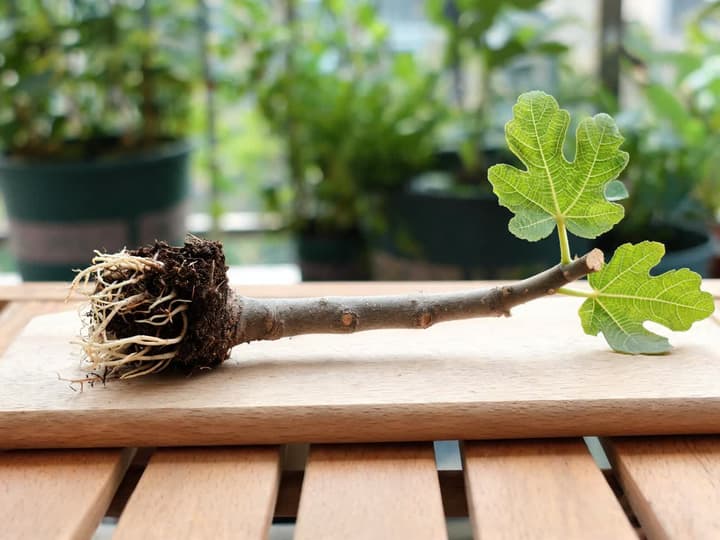
Air layering fig trees: propagating without removing the branch
Air layering makes the branch produce roots while still attached to the fig tree, wrapped in moist pine bark. Only after rooting is it cut and planted. The study by Daneluz and colleagues (Revista Brasileira de Fruticultura, 2009), with 'Roxo de Valinhos', concluded that the method works on fig trees.
The study evaluated four branch preparation treatments: intact, one cut, two cuts, and a complete ring of removed bark (girdling). The uninjured air layer rooted in 60% of cases, while girdling rooted in 37%. Branches with a ring and those with two cuts rotted at the wound site.
The authors recommend air layering in March or April, in Brazil, between the end of the harvest and the start of dormancy. This way, the harvest is not affected, and the air layer is removed along with the winter pruning. To air layer a fig tree, according to the same study:
Choose the middle section of a branch. Near the tip, the weight of the air layer snapped the branch.
Do not slice or girdle the branch. At most, make a single shallow cut, which rooted in 50% of cases in the trial.
If using rooting hormone, apply it to the bark at the chosen spot. In the study, 1,000 mg per liter of IBA increased rooting by 22.2%, reaching 53%. The wound treatments and the IBA treatments were tested separately, so their percentages are not directly comparable.
Wrap the node in moist pine bark, which gave the best results, and enclose it in plastic tied securely at both ends.
After 50 to 60 days, sever the branch below the air layer and pot the cutting into a nursery bag or container.
All air-layered cuttings were alive 30 days after potting.
Basal suckers: the clones fig trees make on their own
The fig tree produces many suckers, shoots that emerge from the roots or the base of the trunk, according to NC State Extension. Plant the sucker in a pot in the spring (in Brazil, from September to December), with any roots attached. The RHS advises leaving it in the pot until it becomes a young plant, with firm leaves and branches.
A sucker retains the identical variety of the mother tree when the fig tree is ungrafted. UF/IFAS states that fig trees are rarely grafted, so in most backyards, suckers develop true to the parent plant.
Can you grow a fig tree from seeds?
With figs harvested in Brazil, you cannot grow fig seedlings from seed. 'Roxo de Valinhos' forms figs without pollination, so the fruit has no seeds, according to Embrapa researchers interviewed by Revista Cultivar (2016). The wasp that pollinates the fig tree, Blastophaga psenes, was not yet present in the country in 2016, when Embrapa was studying introducing it.
Imported dried figs can carry true seeds because they come from fig trees pollinated by the wasp. A seedling grown from those seeds produces a unique hybrid fig tree, distinct from the parent. UF/IFAS explains that fig cultivars requiring wasp pollination will not set fruit where the wasp is absent. To preserve the exact variety, stick to cuttings, air layering, or suckers.
When to transplant fig cuttings into a pot or the ground
Move the cutting to its permanent spot once roots emerge through the holes of the container or bag. In research trials, roots were inspected at 60 days. Remove the cutting with the intact root ball, without shaking loose the soil around the roots. UF/IFAS recommends watering newly planted fig trees daily or every other day during the initial establishment period.
To plant in the ground, wait for the rainy season. This is what the UNIOESTE studies recommend, because the lack of rain in winter lowers the survival rate of cuttings planted directly into the planting hole. According to Daneluz and colleagues, a cutting taken in July takes two months to root. Then it takes another four to five months to sprout and be ready for planting.
Keep the cutting in bright indirect light while it is young. Mature fig trees require full sun and a large container. Our sources do not state the exact week to transition the plant, so move it into direct sunlight gradually. Care for established plants is covered in our guide on how to care for a fig tree.
When a cutting-grown fig tree produces its first fig
Fig trees bear fruit on new shoots produced during the current season, according to NC State Extension. Consequently, a vigorous young cutting can produce figs during its first summer. We found no experimental studies tracking the number of years until the first fruit harvest on containerized cuttings.
Frequently asked questions
How long does a cutting-grown fig tree take to produce fruit?
Fig trees produce fruit on current-season wood, so a cutting can bear its first figs during the first summer after rooting. No study we reviewed measured this specific timeframe in potted cuttings.
Are there male and female fig trees?
It does, but not in the common fig tree grown in Brazil. UF/IFAS separates fig trees into types: the caprifig bears male flowers and serves only as a pollen source, and other types require this pollen carried by the wasp. 'Roxo de Valinhos' is of the common type, which sets figs without pollination.
Can I propagate a fig branch with leaves?
Yes, but leafy cuttings transpire moisture through their leaves before roots exist. UF/IFAS advises frequent watering or high humidity until functional roots form. Covering the cutting with a cut plastic bottle traps humidity, though no study we consulted evaluated this setup. Leafless winter cuttings require far less upkeep.
Are prickly pear cactus cuttings propagated the same way?
No. Prickly pear is a cactus in the genus Opuntia and does not produce woody branches. This guide applies solely to the edible fruit-bearing fig tree, Ficus carica, which is a woody tree.
Next steps
If you are not yet certain your plant is an edible fig tree, snap a photo of its foliage. Before winter pruning, scrape a branch's bark with your fingernail. If green tissue appears underneath, take 8-inch (20 cm) cuttings from that branch.
Sources
Ohland, T. and colleagues. Rooting of 'Roxo de Valinhos' fig apical cuttings depending on collection period and IBA. Ciência e Agrotecnologia, v. 33, n. 1, p. 74-78, 2009: alice.cnptia.embrapa.br. Accessed October 13, 2026.
Ohland, T. et al. Enraizamento de estacas apicais lenhosas de figueira 'Roxo de Valinhos' com aplicação de AIB e cianamida hidrogenada. Revista Brasileira de Fruticultura, v. 31, no. 1, p. 273-279, 2009: ainfo.cnptia.embrapa.br. Accessed October 13, 2026.
Pio, R. et al. Rooting of cold-stratified 'Roxo de Valinhos' fig apical cuttings treated with IBA. Revista Ceres, v. 57, n. 3, p. 401-404, 2010: redalyc.org. Accessed October 13, 2026.
Daneluz, S. and colleagues. Propagação da figueira 'Roxo de Valinhos' por alporquia. Revista Brasileira de Fruticultura, v. 31, n. 1, p. 285-290, 2009: alice.cnptia.embrapa.br. Accessed October 13, 2026.
Planting depth of fig cuttings in polyethylene containers. Revista Científica Rural, Bagé, v. 22, n. 2, 2020: alice.cnptia.embrapa.br. Accessed October 13, 2026.
Hofstaetter, J. K. et al. Rooting of fig apical cuttings trained in a shoot-topping system. Scientia Agraria: redalyc.org. Accessed October 13, 2026.
Sarkhosh, A. and Andersen, P. C. The Fig (HS27/MG214). UF/IFAS Extension, University of Florida: ask.ifas.ufl.edu. Accessed on October 13, 2026.
Royal Horticultural Society. How to grow figs: rhs.org.uk. Accessed October 13, 2026.
Royal Horticultural Society. Why has my tree or shrub died?: rhs.org.uk. Accessed October 13, 2026.
NC State Extension. Ficus carica, Extension Gardener Plant Toolbox: plants.ces.ncsu.edu. Accessed October 13, 2026.
Wagoner, C. S. (Extension Master Gardener Volunteer). Propagating Figs Through Hardwood Cuttings. NC State Extension, Gates County, 2025: gates.ces.ncsu.edu. Accessed on October 13, 2026.
PNW Plant Disease Management Handbook. Azalea (Rhododendron spp.): Cutting Rots: pnwhandbooks.org. Accessed October 13, 2026.
Revista Cultivar. Brazil to study tiny wasp to pollinate figs, 2016: revistacultivar.com.br. Accessed on October 13, 2026.
Related articles
How to Care for Hibiscus: Sun, Watering, Fertilizer, and Pruning for Flowers
How to care for hibiscus: 6 hours of direct sun, evenly moist soil without waterlogging, half-strength fertilizer in spring and summer, and pruning in early spring. Find out why the flower lasts one day and why buds drop before opening.
Do Ferns Like Sun or Shade? It Depends on the Type
Ferns prefer bright shade: plenty of light, but no direct sun on their fronds. Tuberous sword fern is the exception that handles sun. Here is the ideal light for each type, where to place pots, and how fronds show too much or too little light.
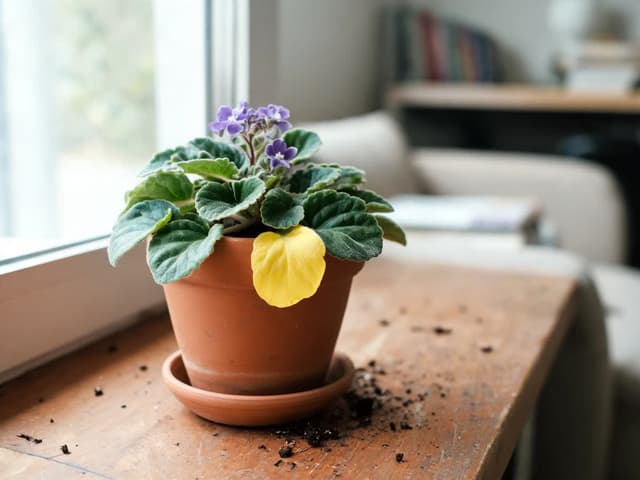
African Violet Yellow Leaves: Causes and What to Do
Yellow leaves on an African violet usually stem from overwatering, and the first place to check is the center of the plant. Losing one lower leaf at a time is normal. Identify whether age, watering, cold water, sunlight, cold drafts, or fertilizer is the culprit based on the yellowing pattern, and see what to do today.