Air-Purifying Plants: What the NASA Study Actually Measured
Every air-purifying plant list comes from a 1989 test done in a sealed chamber under 1 m³. See what each species removed there, how many you would need in your living room, and which are toxic to dogs and cats.
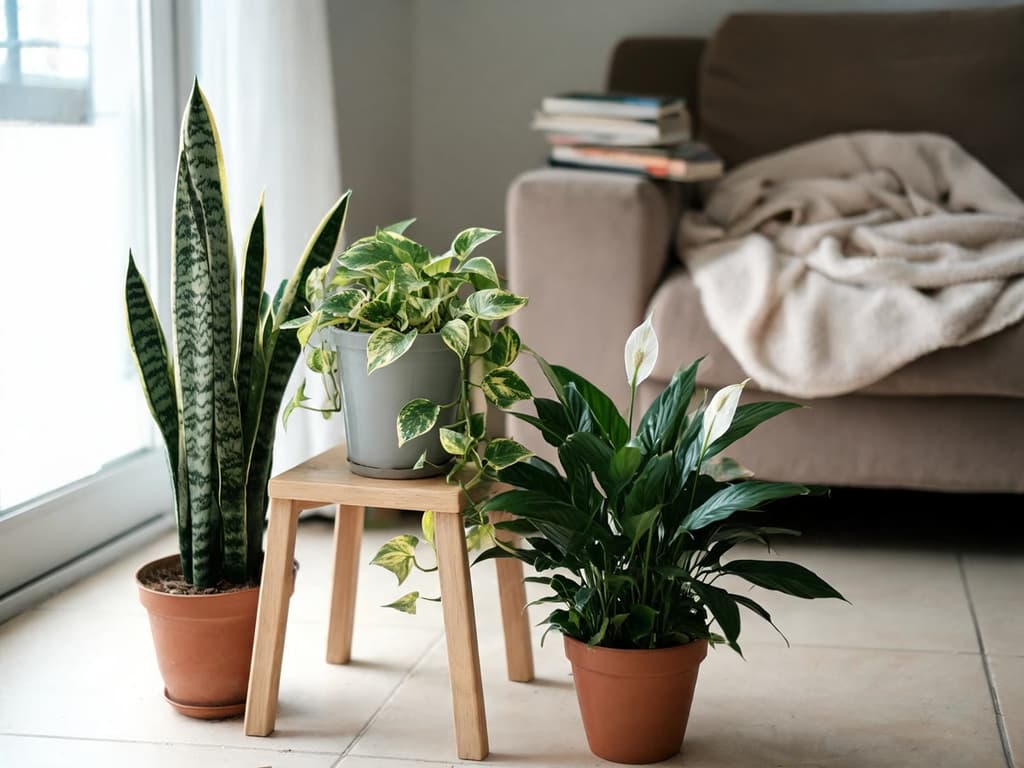
Every air-purifying plant list comes from the same place: a NASA report published on September 15, 1989. The experiment was real and the numbers exist. What almost never accompanies the list is the size of the container where the plants were tested. It was a sealed acrylic chamber, measuring 0.44 m³ to 0.88 m³.
A 2019 review calculated what that amounts to in a real home. A standard building exchanges indoor air for outdoor air about once per hour, without filters and without plants. For potted plants to match that exchange rate, you would need 10 to 1,000 plants per square meter of floor space. In a 14 m² living room, that equals 140 to 14,000 pots.
This does not invalidate the list. It changes the question it answers. The question stops being "which plant cleans my living room" and becomes something else: which species were measured in that test, which of them survive in the light your apartment gets, and which will poison your cat.
Quick summary:
The 1989 report screened 12 species and measured the removal of three chemicals: benzene, trichloroethylene, and formaldehyde. Each test lasted 24 hours inside a closed chamber.
In the first tables, the concentration used was 15 to 20 ppm, a measurement that counts parts of chemical per million parts of air. The report itself notes that this level is well above what is commonly found in indoor atmospheres.
The potting soil did most of the work. A dracaena marginata with no leaves removed 49.7% of the benzene; with all its foliage, it removed 58.0%.
The one that removed the most in the benzene and trichloroethylene tables was the gerbera daisy, which needs 6 or more hours of direct sun per day and does not survive indoors.
Seven of the nine species on this list are toxic to dogs and cats according to the ASPCA.
What the 1989 NASA study measured
The study was a chamber test. Potted plants were sealed inside acrylic boxes measuring 0.76 m on each side, with a fan circulating the air inside. One of the three chemicals was injected into the closed box. After 24 hours, researchers measured how much of it had disappeared. The full reference is Wolverton, Johnson, and Bounds, Interior Landscape Plants for Indoor Air Pollution Abatement, 1989 NASA/ALCA final report.
Four details of the method change how to read any number that comes out of it. They are in the report itself, which is public.
The first is volume. Two chambers measured 0.76 × 0.76 × 0.76 m, or 0.44 m³. The other two measured 0.76 × 0.76 × 1.53 m, or 0.88 m³. A 14 m² room with an 8.5-foot (2.6 m) ceiling has 36 m³, about 40 times the size of the larger chamber.
The second is concentration. In the screening tables, chemicals were introduced at 15 to 20 ppm. The report states, on that same page, that these values are "well above those commonly found in indoor atmospheres." In the second-year measurements, the concentration dropped to under 1 ppm, and that is where the percentages in this article come from.
The third is light. The tests ran at 125 to 150 footcandles, roughly equivalent to 1,300 to 1,600 lux, and at 30 °C. That is low light and considerable heat, a combination found in sealed offices and rarely in a home living room.
The fourth is time. Each measurement lasted 24 hours with the box sealed. In a home, air exchanges with the outdoors constantly, and it is this exchange rate that the next section compares with plants.
Potting soil removed almost as much as the whole plant
Researchers tested the same plant twice: once with all its foliage, and again after stripping off every leaf. In the second round, only the pot with soil and roots remained. The difference was small.
Test (benzene, 24 h) | With foliage | After removing foliage |
|---|---|---|
Dracaena marginata | 58.0% | 49.7% |
Janet Craig dracaena | 79.1% | 45.2% |
Golden pothos | 67.2% | 64.6% |
The three pairs above come from Table 7 of the report, an experiment in which each plant was measured twice. The percentages differ slightly from the screening values because they are separate test runs, using the same low concentration.
There was also a third test. Researchers covered the soil of a marginata with pea gravel without removing a single leaf. Benzene removal dropped from 79.0% to 66.3%. Covering the soil reduced performance; stripping the leaves reduced it only slightly.
The mechanism became clear in bacterial counts. An aglaonema exposed to benzene for the first time removed 47.6%. After six weeks of repeated exposures, the same pot removed 85.8%.
Over that same period, bacterial counts in the soil rose from 3.1 × 10⁴ to 5.1 × 10⁴ units per gram. The soil microorganisms adapted and began consuming the chemical.
The report summary recommends keeping soil and roots as exposed to the air as possible. It also treats activated carbon filters with a fan as "an integral part of any plan" that uses plants against indoor pollution. The final recommendation of the study is a device with a fan pulling air through carbon.
How many plants your living room would need
The math was done in 2019 by Bryan Cummings and Michael Waring of Drexel University and published in the Journal of Exposure Science & Environmental Epidemiology. They gathered 12 published chamber studies and converted the 196 experimental results into a comparable measure of air cleaning.
The median rate for a single plant came out to 0.023 m³ of clean air per hour. A standard building already refreshes its entire indoor air supply about once per hour. For plants combined to match that refresh rate, you would need between 10 and 1,000 plants per square meter of floor space. The range is broad because species and testing methods across the 12 studies vary widely.
Translated to your home: a 14 m² living room would need 140 plants in the best scenario and 14,000 in the worst. A 9 m² bedroom would need 90 to 9,000. It is not a matter of choosing the right species, but of order of magnitude.
An open window does that exact same job for free and in minutes.
Air-purifying plants: the 9 from the NASA test that survive in an apartment
The criterion for this list is deliberately narrow. The species must have been measured in the 1989 report and must tolerate the light levels of an apartment in Brazil. Each profile covers three things: what the plant removed in the chamber, the light it requires according to NC State Extension, and what the ASPCA says about toxicity to cats and dogs.
The snake plant was reclassified from Sansevieria trifasciata to Dracaena trifasciata. Because of this, five of the twelve screened species are dracaenas under their current scientific name.
1. Snake plant (Dracaena trifasciata)
It removed 52.6% of benzene and 13.4% of trichloroethylene in the low-concentration measurements, and 31,294 µg of formaldehyde in 24 hours. It had 2,871 cm² of leaf surface, five times less than the Janet Craig dracaena, which removed 48,880 µg of formaldehyde in the same test.
The NC State Extension recommends a spot with direct sun for part of the day, from 2 to 6 hours. It also tolerates very low light. From spring to fall, let the soil dry out between waterings. In winter, water only every one or two months.
The trap is water. A leaf that falls over and turns soft at the base is not thirsty; it is suffering from root rot caused by overwatering. Cut the soft leaf off at soil level and space out your waterings: the light your snake plant tolerates changes how often you can safely water it.
The ASPCA lists the snake plant as toxic to dogs and cats. The cause is saponins, compounds in the plant that irritate an animal's stomach, producing nausea, vomiting, and diarrhea.
2. Golden pothos (Epipremnum aureum)
In a separate run from the table above, it removed 73.2% of low-concentration benzene and 8,986 µg of formaldehyde. For trichloroethylene, it removed 9.2%, the exact same value as the control pot filled with soil and no plant.
NC State classifies its light needs as filtered sun, the kind that filters through a tree canopy. Indoors, this means the bright light of a window without direct sun hitting it.
The pothos trap is the opposite of the snake plant: pothos grows so vigorously that vines stretch and leaves end up spaced far apart. Pruning above a node, that ring where a leaf emerges, causes two new branches to sprout in place of one.
The ASPCA lists golden pothos as toxic to dogs and cats. It contains insoluble calcium oxalates, needle-shaped crystals that injure oral tissues, causing intense burning in the mouth and tongue.
3. Peace lily (Spathiphyllum)
It posted the best result in the low-concentration trichloroethylene table at 23.0%, and removed 79.5% of benzene along with 16,167 µg of formaldehyde.
NC State places the peace lily in deep shade, with less than 2 hours of direct sun per day or none at all. It is the species on this list that tolerates the darkest corner.
The trap is drooping leaves. It collapses all its foliage at once when the soil dries out, then bounces back within hours after watering. Using that droop as a watering cue works, but letting it happen every week burns the leaf tips. Peace lilies show thirst signs well before they fully wilt.
The ASPCA lists the peace lily as toxic to dogs and cats due to insoluble calcium oxalates.
4. Dracaena (Dracaena spp.)
The genus dominates the report. In the low-concentration runs, Janet Craig removed 77.6% of benzene and 48,880 µg of formaldehyde, the second-highest number in the table. In that same run, marginata removed 79.0% of benzene, while Warneckei removed 70.0% of benzene and 20.2% of trichloroethylene.
NC State calls for filtered sun and rates maintenance as low. All three varieties tolerate the same window light without direct sun.
The dracaena trap is brown tips, almost always caused by fluoride in tap water and accumulated excess fertilizer in the soil. Water with water that has rested overnight in an open container. Every three months, leach the soil by pouring water slowly until it runs freely out the drainage hole, and repeat the step twice in succession.
The ASPCA lists dracaenas as toxic to dogs and cats due to saponins, with vomiting that can sometimes contain blood, along with dilated pupils in cats.
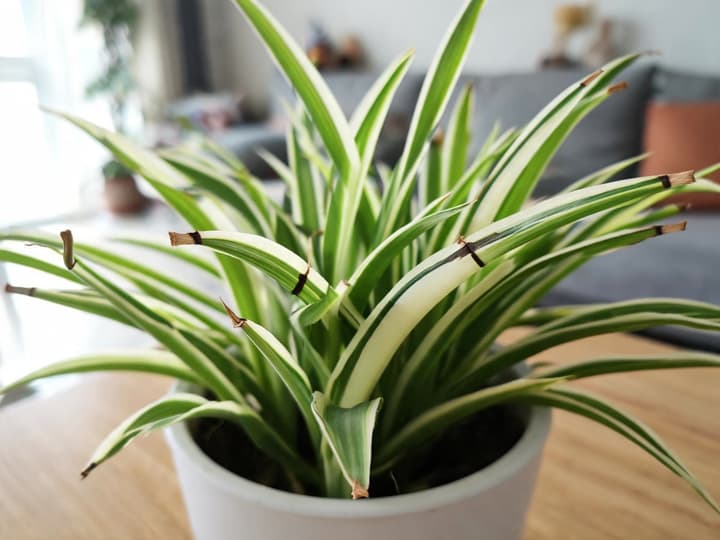
5. Spider plant (Chlorophytum comosum)
It removed 10,378 µg of formaldehyde in 24 hours, with just 2,471 cm² of leaf surface. The ASPCA does not list the spider plant as toxic to dogs and cats.
NC State describes the ideal light as medium, with tolerance for deep shade, and states that the plant cannot handle direct sun.
The spider plant trap is dry, brown tips, the most common complaint among people who purchase a plant labeled as an air purifier. On this plant, brown tips do not mean underwatering or overwatering. NC State is explicit: chlorine and fluoride in tap water burn the leaf tips. Use filtered water or water left out overnight.
6. Bamboo palm (Chamaedorea seifrizii)
It removed 76,707 µg of formaldehyde in 24 hours, the highest value in the entire table. It also had 14,205 cm² of leaf surface area, the second largest area among those tested, which explains much of the difference. For benzene, it removed 34,073 µg.
NC State calls for filtered sun, rates its maintenance as low, and lists a height of 0.9 to 2.3 m. It is the largest plant on this list and the one that takes up the most space in a living room corner.
The ASPCA maintains a profile for its relative Chamaedorea elegans, the parlor palm, and does not list it as toxic. There is no profile for Chamaedorea seifrizii. If you have a cat, choosing the right low-light indoor palm is a choice made by species, not plant category.
7. Chinese evergreen (Aglaonema modestum)
It removed 47.6% of benzene on the first exposure and 85.8% after six weeks of repeated exposures, the largest single jump in the entire study.
NC State calls for diffused sun or good indirect light and daytime temperatures between 21 and 27 °C. Keep the soil moist from spring to fall and reduce watering in winter.
The trap is cold. It cannot tolerate low temperatures, and a single night near an open window during winter in Southern Brazil turns the foliage black.
The ASPCA lists Chinese evergreen as toxic to dogs, cats, and horses due to insoluble calcium oxalates.
8. Weeping fig (Ficus benjamina)
It was the only ficus species tested. It removed 47.4% of formaldehyde, 30% of benzene, and 10.5% of trichloroethylene in the high-concentration measurements.
NC State notes that it does best in bright indirect light, but survives in shade. Kept as a houseplant, it stays between 0.6 and 3 m tall.
The trap is moving it. NC State notes that it is very sensitive to light changes and drops its leaves when relocated. New leaves emerge in their place, pre-adapted to the new lighting. Pick its spot before buying and avoid relocating it just because leaves are shedding.
The ASPCA lists weeping fig as toxic to dogs, cats, and horses. The responsible compounds are ficin and ficusin in its latex sap, causing stomach and skin irritation.
9. Aloe vera (Aloe vera)
It removed 1,555 µg of formaldehyde in 24 hours. This is the lowest value among the 14 plants in that table, and it also had the smallest leaf area, 713 cm².
NC State calls for full sun to partial shade, meaning at least 2 to 6 hours of direct sun per day. Let the soil dry completely between waterings and use a pot with several drainage holes, preferably terracotta.
The catch is the light. Aloe vera needs sun and dry soil, and in an apartment where no window gets direct sun, it stretches, turns pale, and flops over. It makes this list because it was measured, not because it is the most efficient.
The ASPCA lists aloe vera as toxic to dogs, cats, and horses due to saponins and anthraquinones, noting that the inner gel is considered edible.
Three study champions that cannot live in a living room
Gerbera daisy (Gerbera jamesonii) removed the most in the two tables where it appeared: 107,653 µg of benzene and 38,938 µg of trichloroethylene in 24 hours, well ahead of second place in both. NC State rates its light as full sun, 6 hours or more of direct sun per day. The usage description is border, outdoor container, and massing. Indoors it stops blooming and declines in a few weeks.
Florist chrysanthemum (Chrysanthemum morifolium) took second place in benzene removal at 76,931 µg, and removed 61% of formaldehyde in the percentage table. It is likewise a full-sun plant, sold in bloom to last only for the flowering window.
English ivy (Hedera helix) scored the highest benzene removal percentage across all low-concentration tests at 89.8%. NC State rates its maintenance as high and lists aphids, mealybugs, mites, caterpillars, and scale among its common problems. It is considered an invasive species in North Carolina, where it climbs and smothers trees. The ASPCA lists it as toxic to dogs, cats, and horses, noting that leaves are more toxic than berries.
Three plants from the list that were not in the study
Boston fern (Nephrolepis exaltata), areca palm (Dypsis lutescens), and rubber plant (Ficus elastica) frequently appear in selections credited to NASA. None of the three are in the 1989 report.
The document specifies the species tested in two places: the list of 12 screened plants in the methods chapter, and the 14 plants in the formaldehyde table. Boston fern, areca palm, and rubber plant appear in neither. The only ficus tested was benjamina.
All three make good indoor plants. The rubber plant is one of the toughest houseplants around, and the areca palm tolerates apartment lighting well. What fails scrutiny is slapping a NASA label on them.
Which plants the ASPCA lists as toxic to cats and dogs
The table below comes from checking species by species against the ASPCA toxic plant database.
Species | ASPCA | Toxic principle |
|---|---|---|
Snake plant | Toxic to dogs and cats | Saponins |
Golden pothos | Toxic to dogs and cats | Insoluble calcium oxalates |
Peace lily | Toxic to dogs and cats | Insoluble calcium oxalates |
Dracaena | Toxic to dogs and cats | Saponins |
Chinese evergreen | Toxic to dogs, cats, and horses | Insoluble calcium oxalates |
Weeping fig | Toxic to dogs, cats, and horses | Ficin and ficusin |
Aloe vera | Toxic to dogs, cats, and horses | Saponins and anthraquinones |
English ivy | Toxic to dogs, cats, and horses | Triterpenoid saponins |
Spider plant | Not listed as toxic | No toxicity record |
Parlor palm (Chamaedorea elegans) | Not listed as toxic | No toxicity record |
Gerbera daisy | Not listed as toxic | No toxicity record |
The four species with the highest benzene removal on this list, peace lily, dracaena, golden pothos, and snake plant, are four of the toxic ones. And "not listed" does not mean harmless. The ASPCA records what has been documented as toxic; leaves from any species in large quantities can cause vomiting in a cat.
If your selection criterion is your cat rather than the study, the answer is to look outside the report. Calathea tolerates the same low light as a peace lily, and the ASPCA does not list it as toxic.
Before buying, confirm which species you are actually bringing home. Store tags frequently mix up common names, and three very distinct plants are routinely sold as "indoor palms." The Bloom app identifies species from a photo and displays their toxicity profile.
What actually improves apartment air
The United States Environmental Protection Agency organizes the response into three strategies, in this order of effectiveness: source control, improved ventilation, and air cleaning. Plants are in none of the three.
Source control comes first because it is the most effective and the least expensive. It means adjusting gas stoves, sealing vapor-emitting materials, selecting low-emission paints and finishes, and avoiding smoking indoors.
Increasing ventilation means opening windows and doors on opposite sides of the room. It also means running the kitchen exhaust fan while cooking and the bathroom exhaust fan while showering. The EPA highlights when this matters most: during painting, paint stripping, soldering, sanding, and cooking, when emissions are high and concentrated.
Filtering the air comes last because it depends on two factors that most desktop devices do not deliver together: capture efficiency and the volume of air pulled per minute. The EPA also notes that most air purifiers are designed for particulate matter, not gaseous pollutants such as formaldehyde.
Frequently Asked Questions
Which plant purifies the air most?
No plant purifies the air of a room in measurable quantities. In the 1989 test, inside a sealed chamber smaller than 1 m³, the highest mass removal of benzene came from the gerbera daisy: 107,653 µg in 24 hours. The highest percentage removal of benzene at low concentrations was English ivy, at 89.8%.
Which plant removes 78% of airborne mold?
The 1989 NASA report did not measure mold. It measured three volatile organic compounds, chemicals that vaporize into the air at room temperature: benzene, trichloroethylene, and formaldehyde. Any figure regarding mold removal by plants originates from a different study, not the experiment behind air-purifying plant lists.
What is the best plant for a bedroom?
For a bedroom, practical criteria are light and toxicity, not air cleaning. The peace lily accepts under 2 hours of direct sun and tolerates dim rooms best. The ASPCA lists it as toxic to dogs and cats. With pets in the bedroom, a spider plant handles that same lighting.
How can you naturally purify air at home?
Open windows on opposite sides of the room to create cross-ventilation. Turn on the kitchen exhaust fan when cooking and the bathroom fan when showering. Cut off the source of the odor or steam: the EPA ranks source control as the most effective strategy of the three.
Related articles
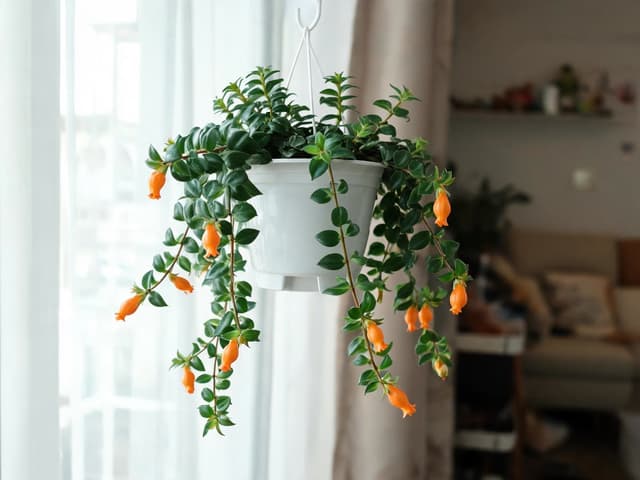
How to Care for a Goldfish Plant: Light, Watering, and Blooms
How to care for a goldfish plant: bright light without strong sun, water when the soil surface dries, and humid air. Learn how to tell a Nematanthus from a Columnea, why it drops leaves, and how to get it to bloom again.
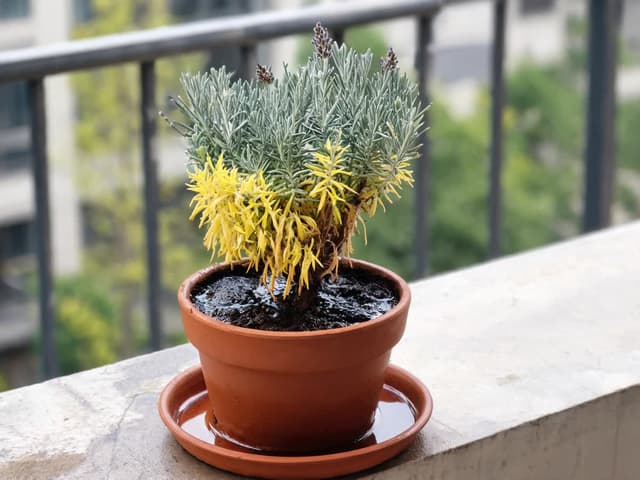
Lavender Leaves Turning Yellow: Where the Yellowing Starts Shows the Cause
Lower leaves turning yellow with moist soil means overwatered roots, the most common cause. Old leaves drying one by one on woody stems is normal. Take the stem and root test, see if your plant can still be saved, and find out what to do today.
How to Propagate Lavender: Where to Cut and Why Cuttings Rot
A lavender cutting comes from a non-flowering branch tip, about 4 inches long, planted in sandy soil that never stays soggy. Learn where to cut, rooting times, seasonality in Brazil, and what to do if the base turns black.