Best Plants for Bedroom: 10 Chosen for Light, Watering, and Pets
A bedroom demands low light and soil that dries out at the same time. Out of 231 indoor species in the University of Georgia chart, 23 meet both criteria, and the ASPCA lists 18 of them as toxic. Here are the ones that remain and why.
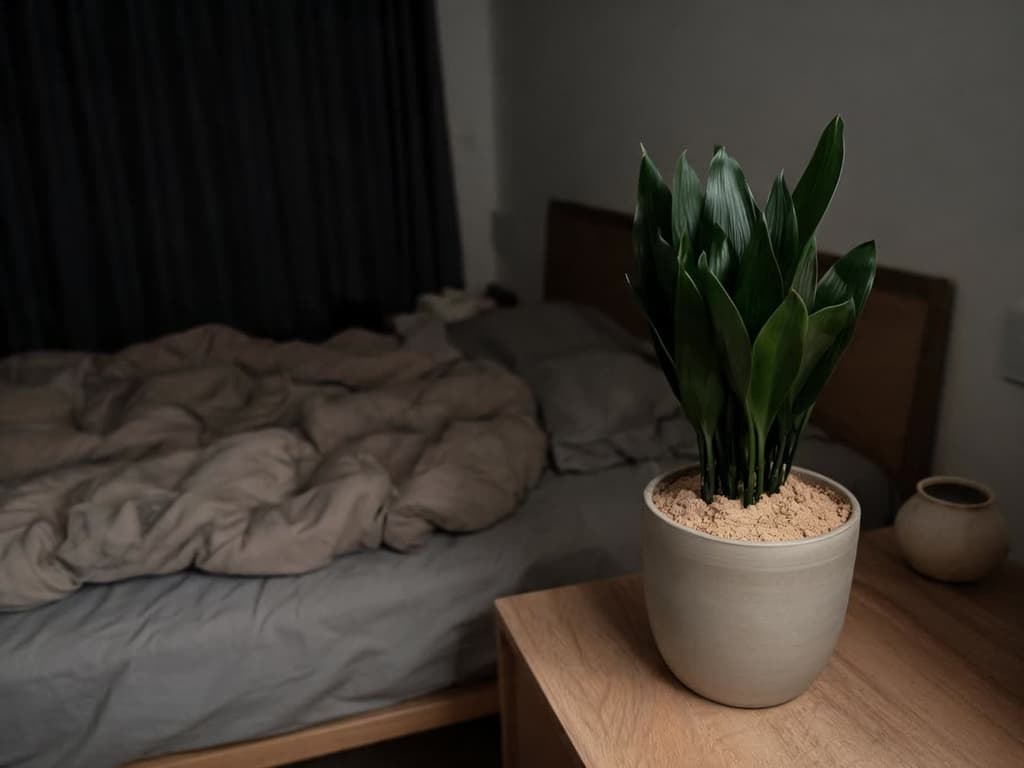
A bedroom demands two things from a plant at the same time. The curtains stay drawn for much of the day, so incoming light is low. And the pot spends the night near your head, so the soil cannot stay waterlogged. Constantly damp soil is where fungus gnats lay eggs. That is why the list of bedroom plants is much smaller than the list for living rooms.
I cross-referenced both requirements against the chart of 231 indoor species from University of Georgia Extension. It classifies each plant by light range and watering schedule. 23 species tolerate low light and let the soil dry out between waterings. Of those 23, 18 belong to genera the ASPCA lists as toxic: Aglaonema, Dracaena, Epipremnum, Monstera, Philodendron, Sansevieria, and Syngonium. That leaves five, and three of them are palms.
If no animal sleeps in your bedroom, the list is large. If a dog or a cat spends the night there with the door shut, the list shrinks to a handful of species.
# | Plant | Tolerated light | Watering | ASPCA |
|---|---|---|---|---|
1 | Cast-iron plant | low | let dry at the surface | not listed as toxic |
2 | Parlor palm | low | let dry at the surface | not listed as toxic |
3 | Kentia palm | low | let dry at the surface | not listed as toxic |
4 | Japanese aralia | low, and tolerates cold | let dry at the surface | not listed as toxic |
5 | Snake plant | low | can dry between waterings | toxic to dogs and cats |
6 | Peperomia | medium | let dry at the surface | not listed as toxic |
7 | Wax plant | medium | let dry at the surface | not listed as toxic |
8 | Prayer plant | medium | let dry at the surface | not listed as toxic |
9 | Spider plant | medium | wants soil constantly moist | not listed as toxic |
10 | Nerve plant | medium | wants soil constantly moist | not listed as toxic |
Do plants in the bedroom steal oxygen at night?
Not in any amount that matters. A potted plant respires at night: it consumes oxygen and releases carbon dioxide. The amount is negligible compared to a person sleeping in the same room. University of Illinois Extension measures the effect in the opposite direction and reaches the same conclusion. It would take 10 plants per square foot, about 108 per square meter of floor space, for plant oxygen to make a noticeable difference in the air.
The human side of the equation has already been measured in a sealed chamber set up to study sleep. Eleven adults spent four consecutive nights inside it under controlled ventilation. Average carbon dioxide emissions were 11.0 liters per hour per person (Fan and colleagues, Indoor Air, 2021). You are by far the largest source of carbon dioxide in your bedroom, and home ventilation replenishes the air.
The reverse version of the same myth does not hold up either. The snake plant became known as the plant that releases oxygen at night, and the explanation usually cites CAM metabolism. CAM is a form of photosynthesis where the plant opens its leaf pores at night instead of during the day. CAM is real, and the snake plant uses it.
What a CAM plant actually does at night, however, is the opposite of the myth. In the dark, it absorbs carbon dioxide and stores it inside the leaf as malic acid. Only the next day, with light, does that carbon dioxide enter the cycle that produces sugar and releases oxygen. This description comes from Ask A Biologist at Arizona State University.
The plant does not remove enough oxygen from your bedroom for you to notice, nor does it add any. Choose the plant for what it can endure inside the bedroom. None of them will improve your sleep.
The same math applies to air purification. Cummings and Waring gathered 12 chamber studies and 196 volatile compound removal results (Journal of Exposure Science & Environmental Epidemiology, 2019). It would take between 10 and 1,000 plants per square meter to match the natural air exchange a house already provides. An open window is what actually improves bedroom air.
What really determines a bedroom plant
Five conditions, and all five belong to the bedroom, not the plant.
Drawn curtains. The bedroom is where curtains stay pulled for hours, leaving low light behind. Low light has a measurement: 25 to 75 foot-candles, the unit indoor plant charts use. A corner more than 2.4 m from a window usually falls into this range. Species that survive for years in this light range are few, and this list draws from them.
Soil next to the bed. Soil that stays constantly moist attracts fungus gnats, the 3 mm black flies that emerge from the pot. A female lays up to 200 eggs at once on the damp surface, according to University of Wisconsin Horticulture Extension. Adults fly toward light, which in a bedroom means the bedside lamp and phone screen. Letting the top 2.5 cm of soil dry before watering again breaks the cycle because larvae cannot survive in dry soil. The rest of controlling fungus gnats takes three to four weeks.
Strong fragrance. You spend eight hours breathing the same air. A single jasmine vine scents an entire room, according to the Missouri Botanical Garden plant profile. What smells pleasant for two minutes in a shop can become bothersome all night long.
Pollen and latex. Some houseplants release allergens into the room's dust. The weeping fig is a documented case, detailed further below.
Pets sleeping inside. Dogs and cats stay alone with the plant through the night behind a closed door. Toxicity that poses little risk in the living room has eight hours to happen in a bedroom.
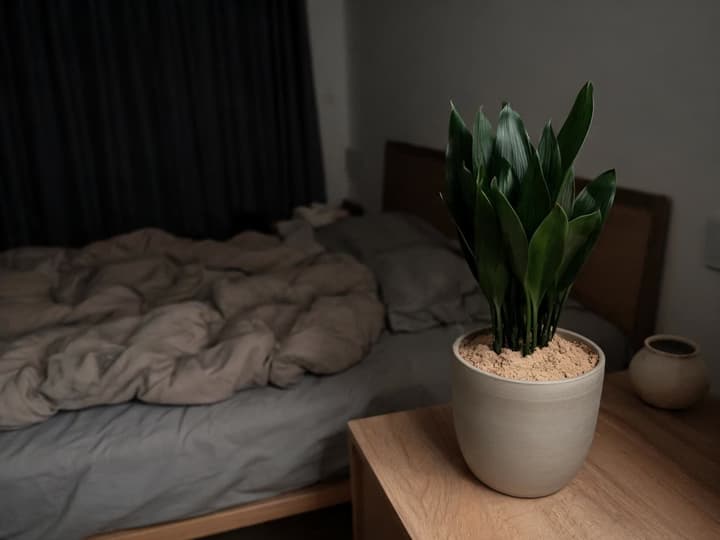
The 10 bedroom plants, and why each one qualifies
The first five tolerate the darkest corner of the bedroom, behind drawn curtains. The last five need medium light: they suit bedrooms with a brighter spot, or owners building their selection around pets rather than curtains.
1. Cast-iron plant (Aspidistra elatior)
The cast-iron plant handles low light and tolerates the soil surface drying out before the next watering. It also tolerates dry air in the 5% to 24% relative humidity range, typical of bedrooms with heaters or air conditioning running. No other species on this list checks all three boxes. The ASPCA does not list it as toxic to dogs, cats, or horses.
2. Parlor palm (Chamaedorea elegans)
The parlor palm is the palm that thrives away from windows. It tolerates the same low light range as the cast-iron plant and requires the soil surface to dry between waterings. Its fine foliage fills vertical space without consuming floor space. The ASPCA does not list it as toxic to dogs or cats. The bamboo palm (Chamaedorea erumpens) shares the same light and watering requirements. It lacks its own ASPCA entry; the genus listing covers Chamaedorea elegans.
3. Kentia palm (Howea forsteriana)
The kentia is a large palm that still performs in low light. It spans the entire chart, from high light to low light, and requires the soil surface to dry out. It is the choice for anyone wanting height in a room lacking good windows. The ASPCA does not list it as toxic to dogs or cats.
4. Japanese aralia (Fatsia japonica)
Japanese aralia tolerates low light and requires the soil surface to dry. Unlike the other nine, it fits into the cool category of Georgia's classification: 10 °C nights and 18 °C days. An unheated winter bedroom that stresses tropicals is where it fares best. Its foliage is broad and lobed, featuring five to nine lobes. The ASPCA does not list it as toxic to dogs, cats, or horses.
5. Snake plant (Sansevieria trifasciata)
The snake plant is the toughest plant on this list, and the only one requiring a decision regarding pets. It spans high to low light and tolerates dry air between 5% and 24% humidity. It also allows the soil to become moderately dry before the next watering. Georgia's chart places it in succulent soil, which drains quickly. In low light it halts growth while staying alive, and the light that keeps it growing is higher than what keeps it alive. Do not pick it for nighttime oxygen: it releases none at night. The ASPCA lists it as toxic to dogs and cats, causing nausea, vomiting, and diarrhea.
6. Peperomia (Peperomia obtusifolia)
Peperomia leaves are thick and store water. The plant survives delayed watering without wilting, and the surface soil can dry out between waterings. In return, peperomia demands medium light rather than the darkest corner of the room. Thick, water-storing leaves will also rot at the base when watered too frequently. Watering peperomia less often than seems necessary is what keeps it alive. The ASPCA does not list it as toxic to dogs or cats.
7. Wax plant (Hoya carnosa)
The wax plant tolerates low relative humidity, between 5% and 24%, and wants the soil drying out between waterings. When it blooms, however, its scent intensifies at night. If you are sensitive to smells while sleeping, move the pot out of the bedroom during its flowering month and return it later. Blooms always emerge on the same spur, a short stalk you must never cut: propagating hoya is done through stem cuttings. The ASPCA does not list it as toxic to dogs or cats.
8. Prayer plant (Maranta leuconeura)
The prayer plant folds its leaves up at night and unfolds them in the morning. It accepts medium light and the soil surface drying out. Tap water is the catch. Georgia Extension lists prayer plants among species sensitive to fluoride and chlorine. Leaf tips scorch brown with treated municipal water. Let water stand in an open container for 24 hours before watering. Calathea, a close relative with patterned foliage, sits on the same sensitive list, and calathea care relies on that same rested water. The ASPCA does not list prayer plants or calathea as toxic to dogs, cats, or horses.
9. Spider plant (Chlorophytum comosum)
The spider plant joins this list with a clear condition. It tolerates medium light and wants constantly moist soil, unlike the first eight plants on this list. That exact moisture profile attracts fungus gnats. If you keep a spider plant in the bedroom, set the pot in the most ventilated spot, far from the headboard. Water it with less volume at a time and more frequently than the others here, and never let water sit in the saucer. It compensates by producing readymade plantlets on runners that root in water. The ASPCA does not list it as toxic to dogs or cats.
10. Nerve plant (Fittonia verschaffeltii)
The nerve plant fits in a 10 cm pot and tolerates medium light, making it this list's bedside-table candidate. In return, it requires constantly moist soil and a relative humidity of 50% or higher. That is the exact opposite of an air-conditioned bedroom. When underwatered, it wilts entirely in a matter of hours, recovering within an hour after being watered. The ASPCA does not list it as toxic to dogs, cats, or horses.
You received a plant as a gift, it sits beside your bed, and you do not know its name. The name is the first thing to discover. Without knowing the species, you cannot determine light needs, watering, or toxicity risks. Bloom identifies plants by photo (iOS).
If a dog or cat sleeps in the bedroom, the list shrinks
The species best suited to bedroom conditions appear almost entirely on the ASPCA toxic list. That does not rule them out completely. Access is the deciding factor: a toxic plant on a high shelf in a room where a cat jumps on everything represents access. That same plant on the floor of a room with a dog that never touches pots poses low risk.
Species passing the bedroom filter | ASPCA | Signs recorded on the sheet |
|---|---|---|
Snake plant (Sansevieria trifasciata) | toxic to dogs and cats | nausea, vomiting, diarrhea |
Pothos (Epipremnum aureum) | toxic to dogs and cats | oral irritation, intense burning of mouth, tongue, and lips, excessive drooling, vomiting, difficulty swallowing |
Swiss cheese plant (Monstera deliciosa) | toxic to dogs and cats | oral irritation, intense burning of mouth, tongue, and lips, excessive drooling, vomiting, difficulty swallowing |
Heartleaf philodendron (Philodendron hederaceum) | toxic to dogs, cats, and horses | oral irritation, pain and swelling of mouth, tongue, and lips, excessive drooling, vomiting (not in horses), difficulty swallowing |
Chinese evergreen (Aglaonema modestum) | toxic to dogs, cats, and horses | oral irritation, pain and swelling of mouth, tongue, and lips, excessive drooling, vomiting (not in horses), difficulty swallowing |
Dracaena (Dracaena spp.) | toxic to dogs and cats | vomiting (occasionally with blood), depression, anorexia, hypersalivation, dilated pupils in cats |
Arrowhead plant (Syngonium podophyllum) | toxic to dogs, cats, and horses | oral irritation, pain and swelling of mouth, tongue, and lips, excessive drooling, vomiting (not in horses), difficulty swallowing |
Peace lily (Spathiphyllum) | toxic to dogs and cats | oral irritation, intense burning of mouth, tongue, and lips, excessive drooling, vomiting, difficulty swallowing |
Cast-iron plant (Aspidistra elatior) | not listed as toxic | no clinical signs recorded |
Parlor palm (Chamaedorea elegans) | not listed as toxic | no clinical signs recorded |
Kentia palm (Howea forsteriana) | not listed as toxic | no clinical signs recorded |
Japanese aralia (Fatsia japonica) | not listed as toxic | no clinical signs recorded |
The peace lily deserves its own mention because its watering requirements are deceptive. It requires constantly moist soil, unlike the first four on the list, and a peace lily wilts completely and recovers hours after watering. Treating wilting as a sign of illness leads to overwatering and root rot.
7 plants I would remove from the bedroom
None of them are bad plants. All of them are wrong for a bedroom, for different reasons.
Aloe vera (*Aloe vera*). Aloe vera shows up on almost every bedroom plant list. It falls into the highest light category in Georgia's chart: at least four hours of direct sun daily. Behind drawn curtains it stretches, pales, and its leaves spread flat rather than growing upward. The ASPCA lists it as toxic to dogs, cats, and horses.
Lavender (*Lavandula angustifolia*). Lavender usually makes bedroom lists because of its fragrance, and it dies there for two reasons. Illinois Extension is direct: lavender demands two things, full sun and exceptionally well-drained soil. The same publication notes that "it is moisture, more than cold, that kills lavender plants." A bedroom is the opposite of both requirements, and growing lavender succeeds in garden beds or outdoor containers with direct sun. The ASPCA lists lavender as toxic to dogs, cats, and horses.
Weeping fig (*Ficus benjamina*). This is the case with the most evidence against it. The weeping fig allergen is in the plant's latex. A study published in Clinical & Experimental Allergy in 1995 found the allergen in dust on the surface of the leaves. It also appeared in floor dust in rooms where the plant was kept. The allergen spreads through the room's dust, instead of remaining restricted to the plant. In 2004 the same journal tested 2,662 allergic patients and found a reaction to weeping fig latex in 66 of them, or 2.5%. The ASPCA lists the genus Ficus as toxic to dogs, cats, and horses.
English ivy (*Hedera helix*). English ivy fails in a bedroom for three combined reasons. It requires medium to high light, prefers cool 10 °C nights, and the ASPCA lists it as toxic to dogs, cats, and horses. The record indicates the leaves are more toxic than the berries. Because it trails, cats can easily reach it.
Lilies (*Lilium* spp.). Large-flowered, strongly scented lilies are not the same plant as peace lilies, and the difference is critical. The ASPCA lists Lilium as toxic to cats, with kidney failure as the clinical sign. If you own a cat, lilies must never enter any room of the house. Add to that staining pollen and fragrance that has nowhere to disperse inside a closed bedroom.
Jasmine (*Jasminum* spp.). The issue with jasmine is not toxicity: the ASPCA does not list it as toxic. The problem is fragrance intensity. The Missouri Botanical Garden profile states that a single jasmine vine scents an entire room, and it blooms for months. On a balcony, the scent disperses. Inside a closed bedroom, it surrounds you all night.
Night-blooming jasmine (*Cestrum nocturnum*). It opens its flowers at night, precisely when you are in the bedroom. The Missouri Botanical Garden profile is explicit: indoors, the floral scent "can be almost overpowering." The same source notes that the species' leaves and berries are poisonous. It also requires intense sunlight to bloom.
Where to place the pot in the bedroom
Three placement choices solve most bedroom plant problems.
Away from the headboard, close to the brightest spot. The darkest corner of a bedroom is usually beside the bed, which is where people put pots. A dresser against a window wall receives several times more light than a nightstand. It also moves the soil away from your head while you sleep.
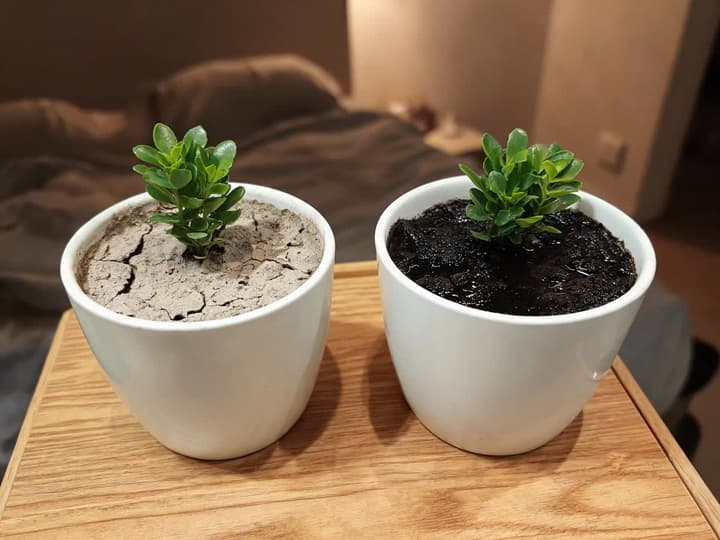
Never leave standing water in the saucer. A full saucer keeps soil wet from the bottom up, fostering fungus gnats and root rot. Water until moisture runs out the drainage hole, wait ten minutes, and empty the saucer.
Two small pots instead of one large one. Soil volume equals moisture volume. Two 15 cm pots dry out much faster than a single 30 cm pot, delivering the same amount of greenery to the room.
Frequently asked questions
Is having plants in the bedroom bad for you?
It is not bad because of oxygen. A potted plant consumes a negligible fraction of ambient oxygen at night, and home ventilation replenishes the air. What can cause issues is entirely different. Saturated soil breeds gnats and mold. Excessive fragrance disrupts eight straight hours of sleep, and species like weeping fig release allergens.
Which plants release oxygen at night?
None in meaningful amounts. Plants with CAM metabolism, such as snake plants and cacti, absorb carbon dioxide at night and store it in their leaves as malic acid. Oxygen release only occurs the following day when light powers photosynthesis. The overall volume is tiny: you would need roughly 108 plants per square meter to produce a noticeable effect.
Which plant purifies bedroom air?
None in a real-world bedroom. Cummings and Waring reviewed 12 chamber studies covering 196 pollutant removal tests. You would need 10 to 1,000 plants per square meter to match natural home ventilation rates. Leaving a window open for ten minutes exchanges far more air than any arrangement of pots.
I bought an alocasia for my bedroom and all the leaves dropped. Can it be saved?
Most likely yes, and the cause is usually inadequate light combined with excessive watering. Unpot the plant and squeeze the corm, the thick rounded underground structure that stores water. A firm corm means a living plant, even with zero leaves remaining. A soft corm has rotted. If firm, repot in well-draining soil, move to the brightest spot in the house, and water only when the top 2.5 cm dry out.
I received a plant, it sits beside my bed, and its leaves are turning yellow. Should I repot it?
Repotting is almost never the cure for yellowing foliage. Check the soil first: yellow leaves paired with wet soil indicate overwatering. A larger pot worsens the situation because extra soil retains more moisture. Repot when roots push out drainage holes or water runs straight through without moistening the root ball. Until then, fix watering habits and light levels.
Do grow lights compensate for closed curtains?
Yes, provided they are dedicated grow lights run for extended hours. Standard ceiling bulbs 2 m away emit little usable light for plants. A grow light placed close to foliage and kept on for several hours daily supplies medium light levels. Exact distances and runtimes depend on the model and manufacturer specifications. In a bedroom, the operational hours can be inconvenient.
How this list was created
I started with Table 3 from University of Georgia Extension bulletin B1318. It classifies 231 indoor species across light, temperature, humidity, and watering regimens. I filtered two criteria simultaneously: species tolerating low light (25 to 75 foot-candles) that do not require permanently moist soil. That left 23.
I cross-referenced those 23 against ASPCA species records. I then supplemented the list with medium-light species lacking recorded toxicity in ASPCA files to address pet-friendly bedrooms. No species made the list due to popularity, and none were excluded without documented reasoning.
No potted plant improves sleep, air quality, or overall health for bedroom occupants. No empirical measurements support those claims, and the sources cited here demonstrate the opposite.
Related articles
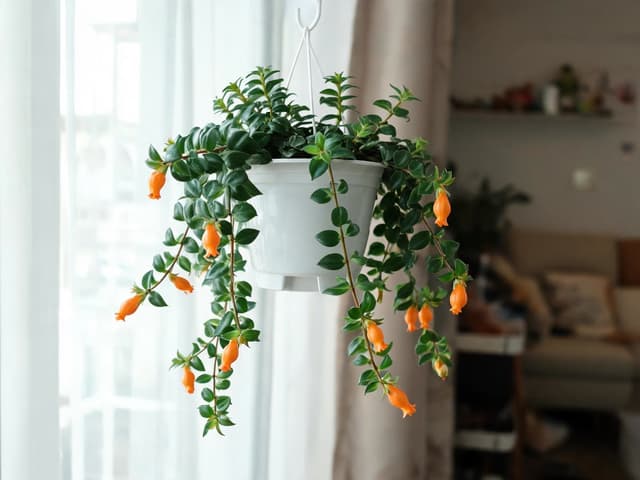
How to Care for a Goldfish Plant: Light, Watering, and Blooms
How to care for a goldfish plant: bright light without strong sun, water when the soil surface dries, and humid air. Learn how to tell a Nematanthus from a Columnea, why it drops leaves, and how to get it to bloom again.
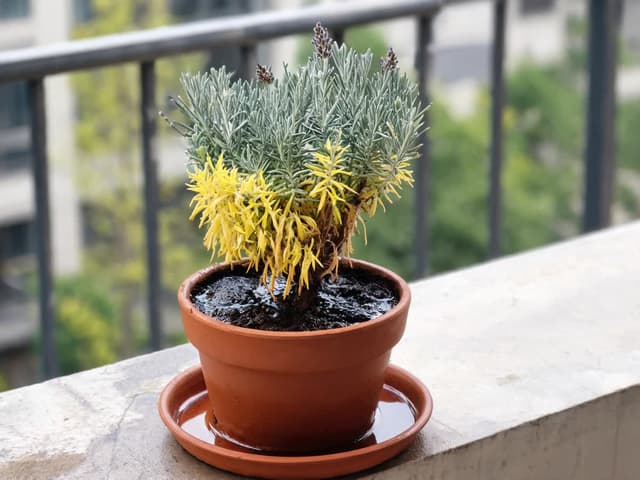
Lavender Leaves Turning Yellow: Where the Yellowing Starts Shows the Cause
Lower leaves turning yellow with moist soil means overwatered roots, the most common cause. Old leaves drying one by one on woody stems is normal. Take the stem and root test, see if your plant can still be saved, and find out what to do today.
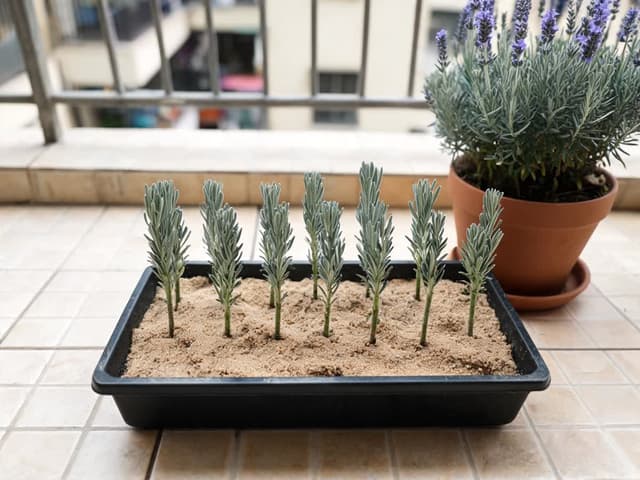
How to Propagate Lavender: Where to Cut and Why Cuttings Rot
A lavender cutting comes from a non-flowering branch tip, about 4 inches long, planted in sandy soil that never stays soggy. Learn where to cut, rooting times, seasonality in Brazil, and what to do if the base turns black.