1451 Easy Pet Safe | 2026 Guide - Page 18
Find 1451 easy pet safe. Complete guide for your garden.
1451 Pet Safe with easy level
Showing 613-648 of 1451
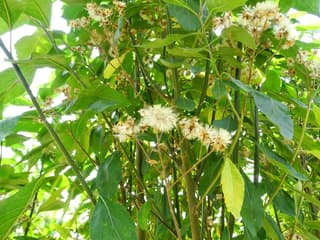
Bitter Leaf
Gymnanthemum amygdalinum
Bitter Leaf (Gymnanthemum amygdalinum) is a perennial shrub native to tropical Africa, widely cultivated for its edible and medicinal leaves. Known for its characteristic bitter flavor, it is a traditional vegetable in many African cuisines and holds well-documented therapeutic properties. It can reach up to 8 meters tall under ideal conditions.

Chin Cactus
Gymnocalycium
Gymnocalycium is a genus of small, globe-shaped cacti native to Argentina, Bolivia, Brazil, Paraguay, and Uruguay. Named for the naked (spineless) flower buds that emerge from woolly areoles, these compact plants form ribbed, spherical bodies topped with short, curved spines and a distinctive chin-like bump beneath each areole — the trait that gives the genus its common name. Gymnocalycium cacti bloom generously from spring through summer, producing funnel-shaped flowers in white, pink, red, or yellow that often dwarf the plant body itself. Slow-growing and low-maintenance, they are popular beginner cacti for sunny windowsills and rock gardens in warm climates.
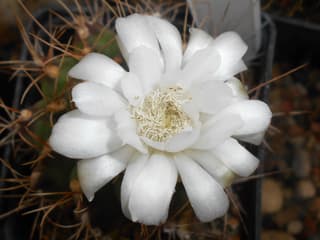
Chin Cactus
Gymnocalycium anisitsii
Gymnocalycium anisitsii, commonly known as the Chin Cactus, is a small globular cactus native to southern Brazil, Paraguay, and Bolivia. It features a grayish-green body with 8 to 11 prominent ribs, yellowish or brownish spines, and funnel-shaped white to pinkish flowers. It is an easy-to-grow species, ideal for beginners and collectors.
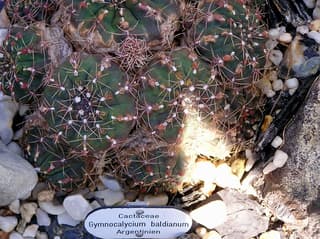
Dwarf Chin Cactus
Gymnocalycium baldianum
Gymnocalycium baldianum, commonly known as the Dwarf Chin Cactus, is a compact globular cactus native to the Catamarca and Salta provinces of Argentina. It is celebrated for its striking crimson to pink-purple flowers that bloom readily even on young plants, making it one of the most floriferous cacti for home cultivation.
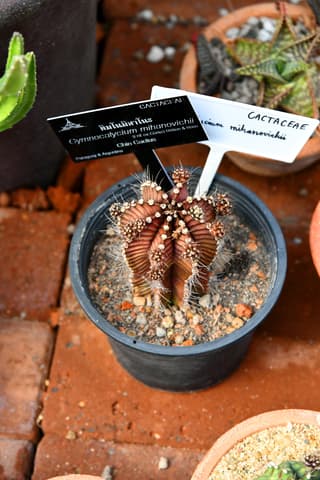
Moon Cactus
Gymnocalycium mihanovichii
Gymnocalycium mihanovichii is a small globular cactus native to Paraguay and Argentina. It is famous for its brightly colored varieties (red, orange, yellow, pink) that lack chlorophyll and must be grafted onto another cactus to survive. Natural green forms can grow on their own and produce beautiful flowers in spring and summer.
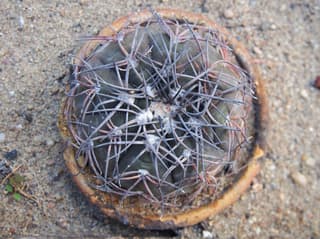
Pflanz's Chin Cactus
Gymnocalycium pflanzii
Gymnocalycium pflanzii is a slow-growing, globular cactus native to Bolivia and Paraguay, belonging to the Cactaceae family. It reaches approximately 15 cm in diameter and produces attractive pink, white, and orange flowers atop the plant during spring and summer. It is highly drought-tolerant and well-adapted to arid environments.
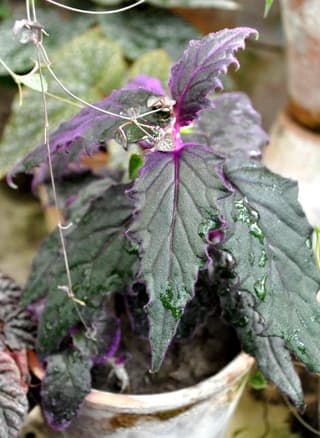
Purple Passion Plant
Gynura aurantiaca
Gynura aurantiaca is a striking tropical plant native to Java and Sumatra, known for its velvety purple-haired foliage that shimmers in the light. A member of the Asteraceae family, this fast-growing evergreen makes an excellent houseplant and is particularly stunning in hanging baskets where its trailing stems can cascade gracefully. While it produces small orange-yellow flowers in fall and winter, many growers pinch them off due to their unpleasant smell.
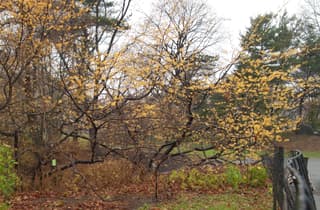
American witch-hazel
Hamamelis virginiana
Hamamelis virginiana, the American witch-hazel, is a large deciduous shrub or small tree (15-30 ft) native to eastern North America. It is notable for its late blooming period: from late fall into winter, thin, thread-like, bright yellow flowers appear, often while the last leaves are still falling. The species is globally renowned as the source of the classic skincare extract "witch hazel," derived from the bark and twigs, which has been used for centuries by North American indigenous peoples and later the pharmaceutical industry for its astringent and anti-inflammatory properties.
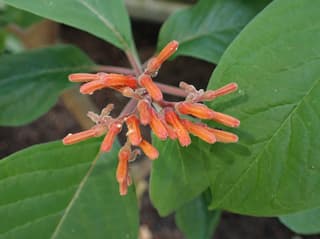
scarletbush
Hamelia patens
Hamelia patens, commonly known as firebush or scarletbush, is a fast-growing perennial shrub native to the American subtropics. It is highly prized for its vibrant, tubular reddish-orange flowers that bloom almost year-round in warm climates, serving as a primary nectar source for hummingbirds and butterflies. The foliage often turns a beautiful bronze-red in the autumn.
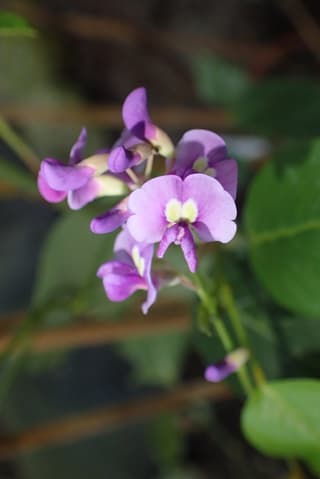
Purple Coral Pea
Hardenbergia violacea
Hardenbergia violacea is a woody, evergreen climbing vine native to eastern and southern Australia, prized for cascading sprays of pea-shaped purple to violet flowers that appear from late winter into spring. Its dark green, leathery lance-shaped leaves stay attractive year-round. Vigorous but well-behaved, it can be trained onto trellises and fences, allowed to scramble as a groundcover, or grown in large containers.
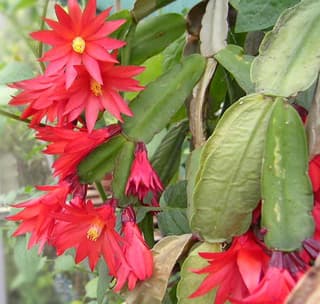
Easter Cactus
Hatiora gaertneri
The Easter Cactus (Hatiora gaertneri) is an epiphytic cactus native to the subtropical forests of southern Brazil, found in the states of Paraná, Santa Catarina, and Rio Grande do Sul. Unlike desert cacti, it grows on trees and moist rocks within the Atlantic Forest, thriving in filtered shade and high humidity. Its stunning red, pink, or orange flowers appear in spring, typically around Easter time, giving it its common name. It is widely appreciated as an ornamental houseplant and is non-toxic to pets and humans.
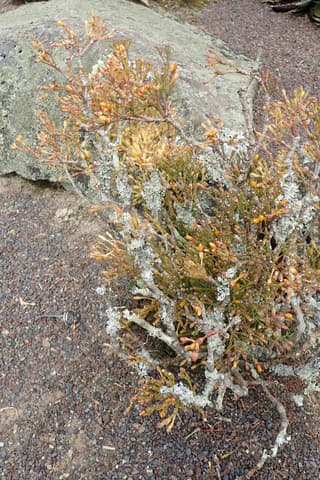
Dancing bones cactus
Hatiora salicornioides
Hatiora salicornioides, commonly known as the Dancing Bones Cactus, is a unique epiphytic cactus native to the Brazilian rainforests. It is characterized by its unusual, many-branched stems made of small, bottle-shaped segments that resemble tiny bones or joints. Unlike desert cacti, it lacks spines and produces delicate, bell-shaped yellow or orange flowers at the tips of its branches during late winter and early spring.
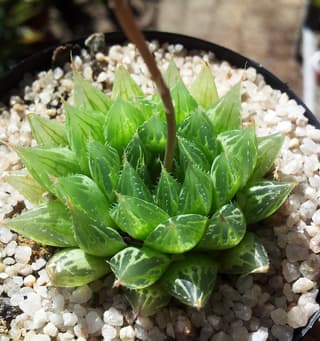
Haworthia (genus)
Haworthia
Haworthia is a genus of soft-leaved succulent plants native to southern Africa, particularly South Africa. These compact, rosette-forming plants are prized as houseplants for their tolerance of low-light conditions and ease of care.
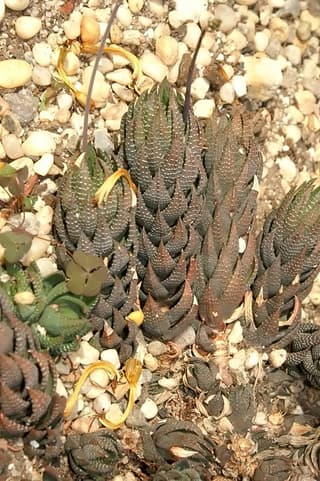
Crowded Haworthia
Haworthia coarctata
Haworthia coarctata is a slow-growing succulent that forms upright columns of tightly packed, incurved dark-green leaves dotted with white tubercles. Under bright light the towers stay compact and flush attractive red-bronze tones. It is an easy, forgiving houseplant that clumps into small colonies over time.
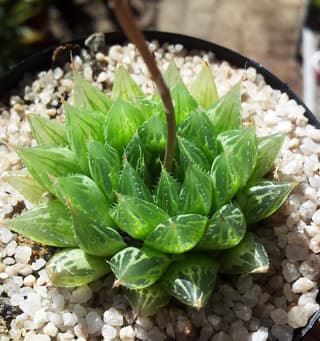
Cooper's Haworthia
Haworthia cooperi
Haworthia cooperi is a charming dwarf succulent native to the Eastern Cape of South Africa. It forms compact rosettes of fleshy, translucent-tipped leaves that appear almost jewel-like when light passes through them. Naturally adapted to growing semi-buried in soil with only its translucent leaf tips exposed to capture sunlight, this plant is a true marvel of nature.
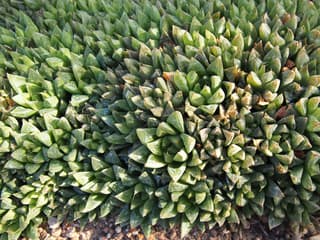
Cathedral Window Haworthia
Haworthia cymbiformis
Haworthia cymbiformis, commonly known as Cathedral Window Haworthia, is a small, clump-forming succulent in the Asphodelaceae family native to the Eastern Cape region of South Africa. It forms low rosettes of thick, translucent-tipped leaves that resemble tiny windows, allowing light to filter into the leaf tissue for photosynthesis even when much of the plant is buried in sandy or rocky crevices in habitat. Unlike many succulents, its leaves are relatively soft and pliable rather than rigid, giving the rosette a cushion-like appearance. It slowly produces offsets around the base, eventually forming dense mounding clusters. In late spring to summer, thin wiry stalks rise above the foliage bearing small white to pale pink tubular flowers.
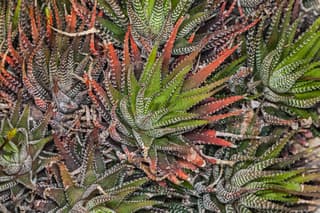
Zebra Plant
Haworthia fasciata
Haworthia fasciata, commonly known as Zebra Plant, is a small, slow-growing succulent native to South Africa. It features dark green, pointed leaves arranged in a rosette pattern, adorned with distinctive white horizontal stripes (tubercles) on the outer surface. Rarely exceeding 15 cm in height, this compact plant is perfect for windowsills and desks. It is an excellent choice for beginners due to its low maintenance requirements and resilience.
Marumian Haworthia
Haworthia marumiana
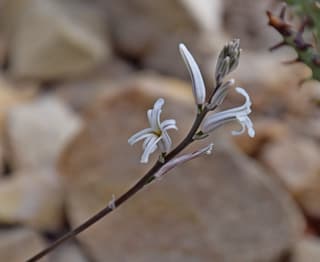
Haworthia marumiana is a compact, clumping succulent native to the rocky Karoo region of South Africa. It forms dense rosettes of soft, semi-translucent leaves adapted to grow in partial shade between rocks. One of the most graceful haworthias for container growing.
Mirable Haworthia
Haworthia mirabilis
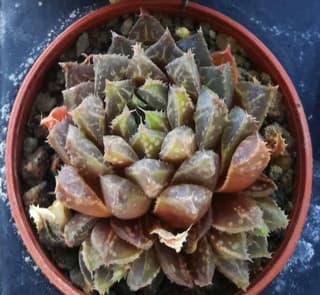
Haworthia mirabilis, commonly known as the Mirable Haworthia, is a small compact succulent native to the Western Cape of South Africa. Its green leaves feature pale longitudinal lines and translucent leaf tips that act as "windows," allowing light to penetrate to the photosynthetic tissues beneath. A slow-growing, drought-tolerant plant ideal for indoor cultivation.
Star Cactus
Haworthia retusa
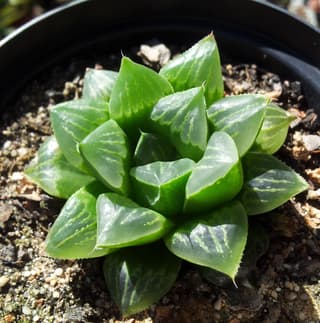
Haworthia retusa is a compact succulent native to the Western Cape of South Africa. It forms star-shaped rosettes with triangular, translucent-tipped leaves that act as windows filtering sunlight. One of the easiest succulents to grow indoors.
Haworthiopsis (genus)
Haworthiopsis
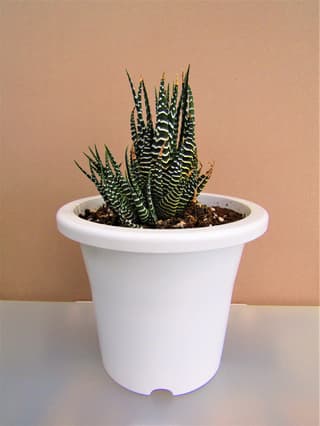
Haworthiopsis is a genus of small, robust succulents native to the arid regions of South Africa. Their fleshy leaves, often adorned with white stripes or tubercles, form compact and elegant rosettes, ideal for indoor cultivation.
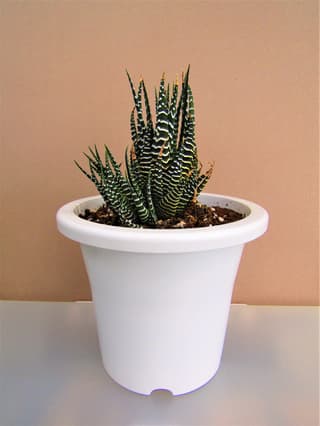
Zebra Haworthia
Haworthiopsis attenuata
Haworthiopsis attenuata, commonly known as Zebra Haworthia or Zebra Plant, is a compact succulent native to the Eastern Cape Province of South Africa. Its fleshy rosette leaves are adorned with distinctive white raised stripes (tubercles) resembling zebra stripes, making it one of the most recognizable and decorative succulents. A slow-growing, extremely hardy plant ideal for beginners and collectors alike.
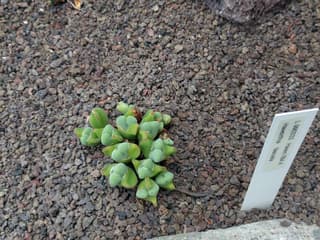
Zebra Haworthia
Haworthiopsis fasciata
Haworthiopsis fasciata, commonly known as Zebra Haworthia or Zebra Plant, is a popular compact succulent native to the Eastern Cape of South Africa. It forms tight rosettes of dark green, fleshy leaves adorned with distinctive white horizontal stripes or tubercles on the outer surface — a pattern reminiscent of a zebra. Formerly classified as Haworthia fasciata, this slow-growing gem is one of the most recognizable succulents in cultivation. It is often confused with its close relative Haworthiopsis attenuata, which has white bumps on both leaf surfaces rather than only on the underside.
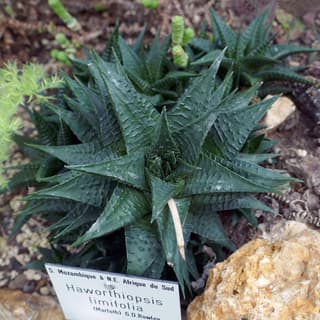
Fairy Washboard
Haworthiopsis limifolia
A fascinating and hardy succulent, characterized by its rigid triangular leaves arranged in a rosette. The most striking feature is the raised horizontal ridges on its dark green leaves, resembling an old-fashioned washboard or crocodile skin. It is a slow-growing plant, ideal for beginners due to its tolerance for neglect.
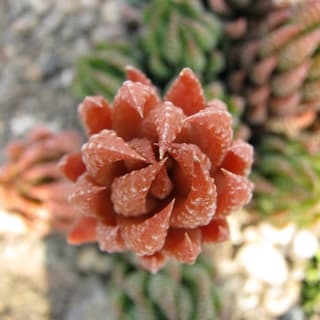
Zebra Wart
Haworthiopsis reinwardtii
Haworthiopsis reinwardtii, commonly known as zebra wart, is a compact succulent native to the Eastern Cape province of South Africa. It forms spiraling rosettes of fleshy, dark green leaves covered in raised white tubercles that resemble zebra stripes. This slow-growing succulent readily produces offsets, forming dense clumps over time. In spring it sends up slender stems bearing small tubular pinkish-white flowers.
Silver Dollar Hebe
Hebe 'Silver Dollar'
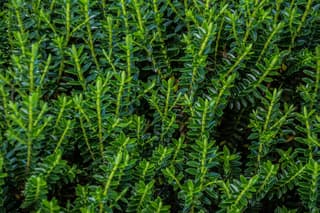
Hebe 'Silver Dollar' is a compact, evergreen, mound-forming ornamental shrub known for its grey-green leaves with creamy-white margins. The leaf edges turn burgundy in autumn and a vibrant pinkish-magenta shade during winter and spring, ensuring the plant remains spectacular even in the colder months. In summer, it produces small clusters of pale lilac or whitish flowers during a long-lasting blooming period. It possesses excellent drought tolerance once established and copes well with coastal, windy locations.
Fragrant Hebe
Hebe odora
Fragrant Hebe is a slow-growing evergreen shrub native to New Zealand, featuring small, glossy, dark green leaves. It blooms in late spring and early summer with short spikes of pure white flowers. It is very frost-hardy and suitable for coastal and rock gardens with minimal maintenance.
Hechtia
Hechtia
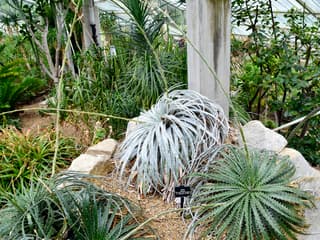
Hechtia is a genus of xerophytic terrestrial bromeliads native to Mexico and Central America, forming striking spiny rosettes adapted to arid, rocky environments. Prized for their dramatic appearance and exceptional drought tolerance, they are ideal for rock gardens and xeriscape plantings.
Ginger Lily / Garland Flower (genus)
Hedychium
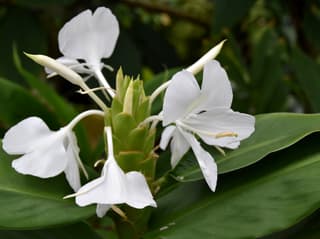
Hedychium is a genus of tropical and subtropical flowering plants in the family Zingiberaceae, native to the Himalayan foothills and Southeast Asia. Prized for their bold, fragrant blooms in shades of white, yellow, orange, and red, these fast-growing rhizomatous perennials thrive in warm, humid environments. Notable species include H. coronarium (the national flower of Cuba) and H. gardnerianum (Kahili ginger). They are excellent garden specimen plants, pond-edge plantings, and container subjects.

Yellow Marsh Ginger Lily
Hedychium chrysoleucum
Yellow Marsh Ginger Lily (Hedychium chrysoleucum) is a tropical perennial from the Zingiberaceae family, native to Brazil. It produces fragrant cream-yellow flowers throughout the year, with greatest abundance in spring and summer. A robust and low-maintenance plant, it is highly valued in landscaping near water bodies, ponds, and wetlands.

White Ginger Lily
Hedychium coronarium
Hedychium coronarium, commonly known as White Ginger Lily or Butterfly Lily, is a robust perennial herb in the Zingiberaceae family, native to the Himalayas and Southeast Asia. Renowned for its intensely fragrant, white butterfly-shaped flowers, this striking plant grows up to 1.8 m tall with bold lance-shaped leaves on tall, erect stems. It is the national flower of Cuba and has naturalized across tropical regions worldwide. Blooming in summer through fall, its flowers are most fragrant in the evening, attracting night-flying pollinators.

Sunflower
Helianthus
Helianthus is a genus of roughly 70 flowering plant species in the family Asteraceae, native mainly to North America. Its best-known and most widely cultivated species, Helianthus annuus (common sunflower), is a fast-growing annual that can reach several meters in height, producing a large yellow flower head that displays heliotropism (tracking the sun) while young. It is grown worldwide for its edible seeds, oil, and ornamental value.
Sunflower
Helianthus annuus
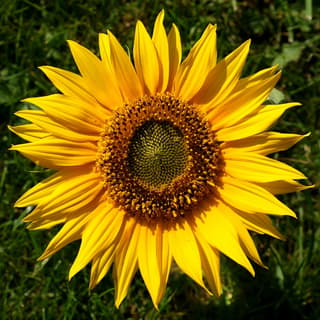
The Sunflower is an annual plant in the Asteraceae family, known for its large yellow flowers that follow the sun's movement (heliotropism). Native to the Americas, it is cultivated worldwide for both ornamental purposes and the production of seeds and oil.
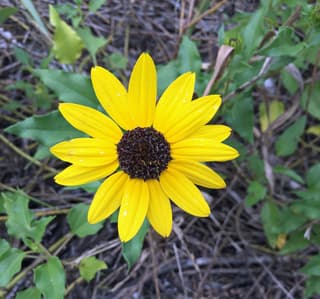
Beach Sunflower
Helianthus debilis
Helianthus debilis, commonly known as beach sunflower, is a sprawling, short-lived perennial native to coastal regions of the southeastern United States. This vigorous groundcover produces a dense carpet of bright yellow flowers, blooming almost year-round in warm climates. Individual flowers measure 2-3 inches across with sunny yellow rays surrounding a dark reddish-brown central disk. The distinctive triangular, slightly lobed leaves resemble cucumber foliage, which is the origin of its alternate common name, cucumberleaf sunflower. This species is exceptionally salt-tolerant, drought-resistant, and well-adapted to harsh coastal environments, making it an excellent choice for beach gardens, dunes, and low-maintenance landscapes. The plant grows rapidly, self-seeds prolifically, and spreads via underground runners. It attracts butterflies and songbirds, making it valuable for pollinator gardens.

Prairie Sunflower
Helianthus petiolaris
Helianthus petiolaris, commonly known as the Prairie Sunflower or Lesser Sunflower, is a fast-growing annual native to the dry prairies and sandy soils of western and central North America. It produces cheerful bright yellow daisy-like flowers with dark brown central discs from summer through fall, attracting bees, butterflies, and other pollinators. As one of the most widely distributed wild sunflowers in North America, it thrives with minimal care in open, sunny locations and poor soils where other plants struggle.
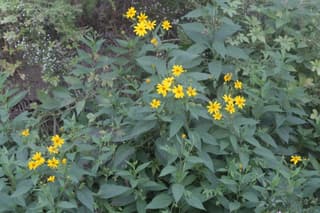
Jerusalem Artichoke
Helianthus tuberosus
Helianthus tuberosus, commonly known as Jerusalem Artichoke or Sunchoke, is a vigorous perennial sunflower native to central and eastern North America. It grows up to 3 meters tall, producing bright yellow sunflower-like blooms in late summer and fall, while developing knobby, edible tubers underground. One of the most productive and hardy food crops, it thrives in a wide range of conditions and was a staple food of Native American peoples long before European contact.
Easy Care Pet Safe
Our selection of 1451 easy pet safe combines the characteristics of this category with reduced care needs. Perfect for beginners who love this category.
Why Choose Easy Pet Safe?
Combining the beauty of pet safe with easy difficulty level lets you enjoy this category without excessive maintenance worries. Each plant was selected to offer the best characteristics of the category at the care level you are looking for.