1448 Easy Pet Safe | 2026 Guide - Page 17
Find 1448 easy pet safe. Complete guide for your garden.
1448 Pet Safe with easy level
Showing 577-612 of 1448
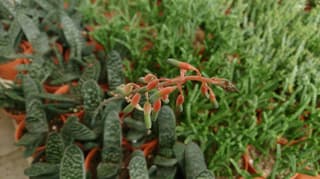
Namaqua Ox Tongue
Gasteria pillansii
Gasteria pillansii, commonly known as the Namaqua Ox Tongue, is a slow-growing succulent native to the arid winter-rainfall regions of Namaqualand in southwestern South Africa and southern Namibia. It produces thick, strap-shaped leaves arranged in two opposite rows (distichous), mottled with white tubercles. In summer, it sends up tall racemes of tubular pink to red-orange flowers with greenish tips, beloved by nectar-feeding birds. It is one of the hardiest Gasteria species and thrives with minimal care.
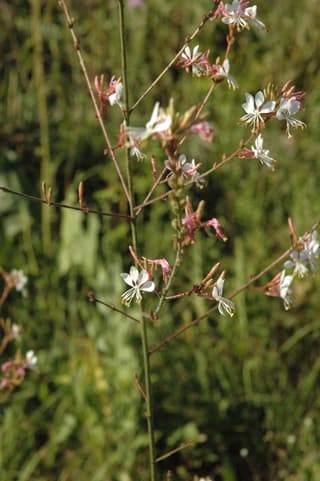
Biennial Gaura
Gaura biennis
Gaura biennis, commonly known as Biennial Gaura or Biennial Beeblossom, is a tall native wildflower from the eastern United States in the family Onagraceae. It grows up to 6 feet (1.8 m) tall, producing delicate white to pink flowers that open in the evening and flutter gracefully in the breeze. Though each plant lives only two years, it self-seeds prolifically, ensuring a lasting presence in the garden.
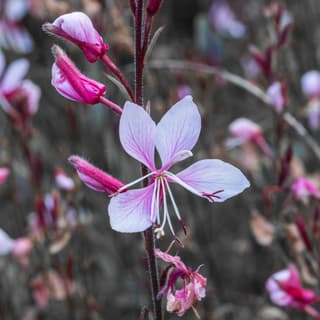
White Gaura
Gaura lindheimeri
Gaura lindheimeri is a graceful perennial native to south-central United States and Mexico, celebrated for its airy white-to-pink flowers that flutter on wiry stems like dancing butterflies. It forms loose, arching clumps 50–150 cm tall, blooming abundantly from spring through first fall frosts.
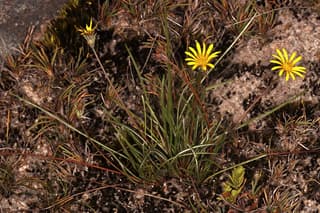
Treasure Flower
Gazania linearis
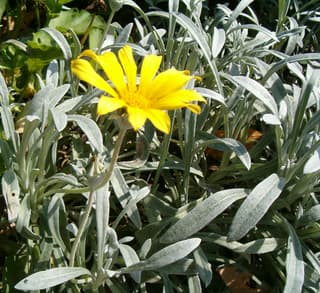
Gazania linearis, commonly known as the Treasure Flower or Narrow-leaved Treasure Flower, is a fast-growing perennial herb native to South Africa, belonging to the family Asteraceae. It produces striking, solitary daisy-like flower heads in vivid shades of yellow and orange with a contrasting dark center disk. The flowers open in full sunlight and close at night or on overcast days. It forms low, compact clumps ideal for borders, rock gardens, and ground cover in sunny, low-water landscapes.
Treasure Flower
Gazania rigens
Gazania rigens, commonly known as Treasure Flower, is a vibrant daisy-like flowering plant native to South Africa. It produces stunning blooms in shades of yellow, orange, red, pink, and white, often with bold contrasting centers. A cheerful, drought-tolerant annual or short-lived perennial, it thrives in full sun and well-draining sandy soils.
Cranesbill
Geranium
Geranium (cranesbill) is a large genus of about 430 species of flowering perennials and annuals in the family Geraniaceae. Unlike the tender Pelargonium commonly sold as "geranium" in shops, true Geraniums are hardy perennials that die back in winter and reliably regrow each spring. They are beloved in temperate gardens for their delicate saucer-shaped flowers in shades of blue, purple, pink and white, and their attractive deeply-lobed foliage that often turns vivid shades in autumn. Cranesbills are remarkably adaptable, thriving in sun or partial shade and a wide range of soil types.

Dove's-foot Crane's-bill
Geranium molle
Dove's-foot crane's-bill is a low-growing annual (occasionally biennial) wildflower in the Geraniaceae family, native to the Mediterranean and sub-Mediterranean regions and now naturalized across much of Europe, North Africa, temperate Asia and North America. It forms a soft, hairy, branching mat of grey-green, deeply lobed leaves topped with small pink to purple-pink flowers with notched petals, blooming from April to September. It thrives in dry meadows, hedgebanks, lawns and disturbed, nutrient-poor ground, readily self-seeding.

Meadow Crane's-bill
Geranium pratense
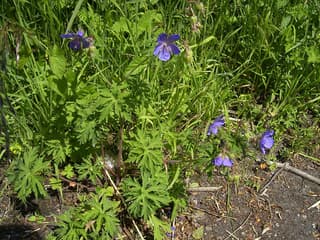
Meadow crane's-bill (Geranium pratense) is a hardy herbaceous perennial native to Europe and Asia, widely grown in borders, cottage gardens, and wildflower meadows. It forms neat clumps of deeply cut foliage and bears large, saucer-shaped blue to violet flowers from late spring through summer.
Hedgerow Cranesbill
Geranium pyrenaicum
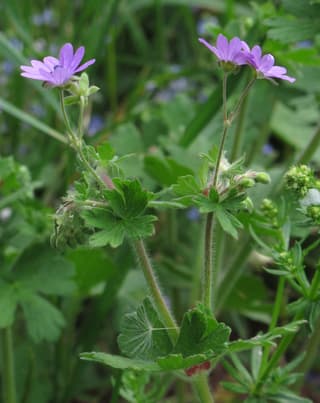
Geranium pyrenaicum, commonly known as Hedgerow Cranesbill, is a semi-evergreen hardy perennial native to southern Europe and the Pyrenees. It produces a profusion of small, vivid purple-pink to blue flowers with deeply notched petals from late spring through autumn. The plant forms a bushy, spreading mound of rounded, lobed leaves and is prized for its long flowering season, tolerance of varied soils, and wildlife value as a pollinator plant.
Avens
Geum
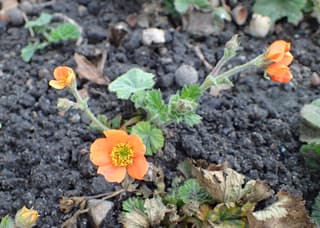
Geum is a genus of over 50 herbaceous perennial plants in the Rosaceae family, celebrated for their cheerful cup-shaped flowers in shades of red, orange, yellow, pink, and white. Native across Europe, Asia, and the Americas, Geums are tough, adaptable garden plants beloved in cottage gardens, borders, and rock gardens.
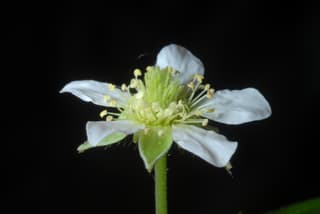
White Avens
Geum canadense
White avens is a native North American woodland perennial in the rose family, forming low clumps of semi-evergreen, lobed foliage. From late spring into early summer it sends up wiry stems tipped with small, five-petaled white flowers that draw in bees and other pollinators. Once flowering ends, the seed heads develop hooked bristles that cling readily to fur and clothing, aiding seed dispersal. It spreads gently as a shade-tolerant ground cover in woodland gardens and naturalized borders.
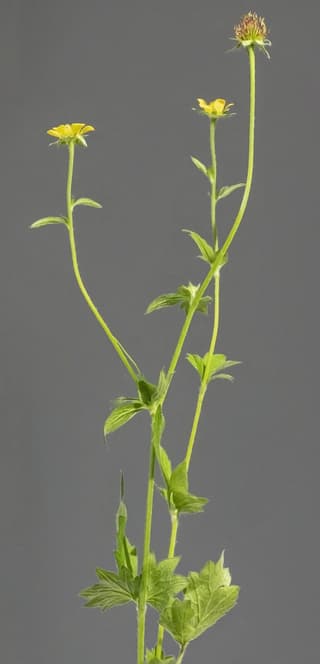
Wood Avens
Geum urbanum
Wood Avens (Geum urbanum) is a herbaceous perennial in the Rosaceae family, native to the temperate regions of Europe and Asia. It grows naturally along woodland edges, hedgerows, and shaded, moist ground, reaching up to 60 cm in height. It produces glossy compound basal leaves and small five-petaled yellow flowers from May through August. When cut, the root releases a clove-like scent due to its eugenol content, earning it the folk name "Clove Root." Historically it was one of the most valued medicinal herbs in medieval Europe, used as a digestive tonic and in herbal infusions.
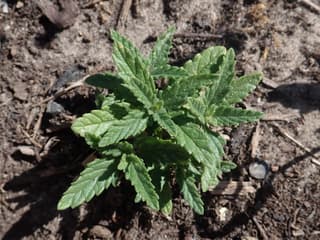
Garden Verbena
Glandularia x hybrida
Garden verbena (Glandularia x hybrida, synonym Verbena x hybrida) is an ornamental plant of hybrid origin, resulting from crosses between South American species of the genus Glandularia. With a low-growing, trailing, or slightly upright habit, it forms compact mounds covered by dense, colorful flower clusters from early summer through fall. It is widely cultivated in gardens, window boxes, hanging baskets, and flower beds for its abundant and prolonged blooming, as well as its ability to attract butterflies and pollinators.
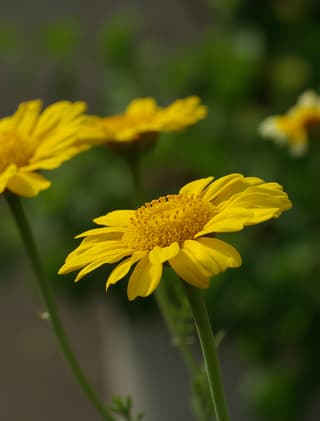
Garland chrysanthemum
Glebionis coronaria
Glebionis coronaria, the garland chrysanthemum, is an annual herb in the Asteraceae family native to the Mediterranean. It features aromatic, deeply serrated leaves and yellow to white daisy-like flowers. While grown as an ornamental garden plant, it is highly valued in East Asian cuisine as a leafy vegetable (Japanese shungiku, Chinese tong hao, Korean ssukgat) added to soups, stews, and salads.
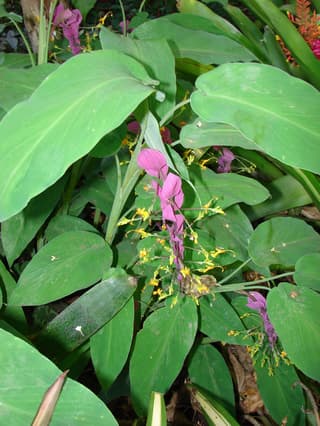
Dancing Lady Ginger
Globba winitii
Globba winitii, commonly known as Dancing Lady Ginger, is a stunning tropical plant native to Thailand. It belongs to the Zingiberaceae family and produces elegant drooping sprays of small yellow flowers with showy purple or white bracts that resemble dancing ladies. The plant is deciduous, dying back in winter and re-emerging in spring with lush green foliage.
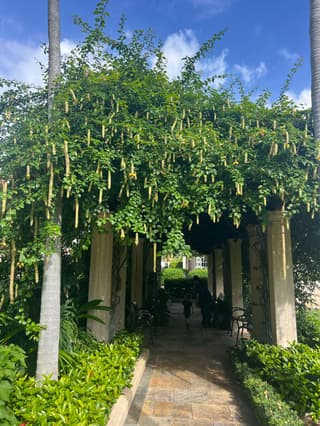
Parrot's Beak
Gmelina philippensis
Gmelina philippensis, commonly known as Parrot's Beak or Philippine Gmelina, is a tropical shrub or small tree native to the Philippines, belonging to the Lamiaceae family. It can reach between 5 and 8 meters in height, with drooping, thorny branches that give it a unique appearance. Its bright yellow flowers, grouped in pendant inflorescences with overlapping reddish-brown bracts, resemble a parrot's beak—hence its common name. The leaves are oval, 5 to 10 cm long, dark green on the upper surface and light green on the lower. The fruit is small, pear-shaped, and contains a single seed. Widely cultivated as an ornamental in tropical and subtropical regions worldwide, it is also an important resource for pollinators such as butterflies and hummingbirds.
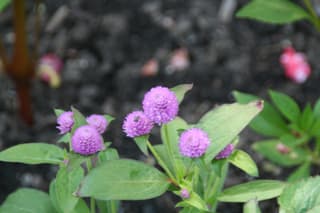
Globe Amaranth
Gomphrena globosa
Gomphrena globosa, commonly known as Globe Amaranth, is an annual flowering plant native to Central America, belonging to the Amaranthaceae family. It produces striking globe-shaped flower heads in shades of purple, pink, white, red, and orange that retain their color long after cutting. Highly tolerant of heat and drought, it thrives in full sun and is an excellent choice for garden borders, containers, and dried flower arrangements.
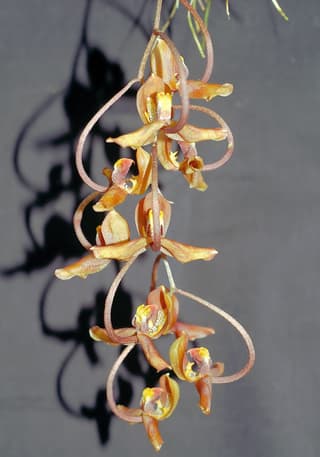
Helmet Orchid
Gongora galeata
Gongora galeata is a medium-sized epiphytic orchid endemic to southern Mexico, where it grows naturally in montane cloud forests and cloud forests between 600 and 1,800 meters in altitude, frequently associated with sweetgum (Liquidambar) trees. Its ovoid-pyriform, longitudinally furrowed pseudobulbs support two plicate leaves per plant. It produces basal, pendent floral racemes 15 to 20 cm long, with numerous fragrant flowers about 5 cm in size, mottled in shades of orange, yellow, brown, and purple, with a shape reminiscent of a helmet (hence its epithet 'galeata', meaning 'helmeted'). It blooms in summer and fall.
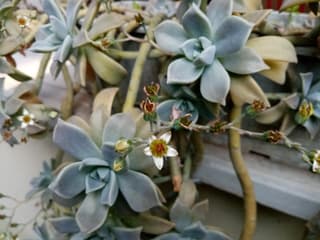
Ghost Plant
Graptopetalum
Graptopetalum is a genus of succulents in the Crassulaceae family, native to Mexico and southern Arizona. It forms compact rosettes of thick, triangular leaves in dusty grey-blue or pinkish tones with a pearlescent sheen, which is why it is nicknamed "ghost plant" or "mother-of-pearl plant". The most widely grown species, Graptopetalum paraguayense, is a popular indoor and outdoor succulent thanks to its high drought tolerance and effortless propagation from leaves.
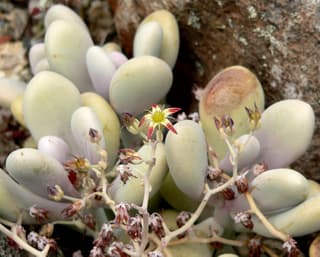
Lavender Pebbles
Graptopetalum amethystinum
Graptopetalum amethystinum, commonly known as Lavender Pebbles or Jewel-Leaf Plant, is a stunning rosette-forming succulent native to the deserts of Mexico. Its thick, fleshy leaves display a captivating lavender-pink to blue-grey hue coated with a powdery farina, giving it the appearance of delicate gemstones. In spring, it produces charming star-shaped flowers in cream to yellow with reddish tips. A low-maintenance beauty beloved by succulent collectors worldwide.
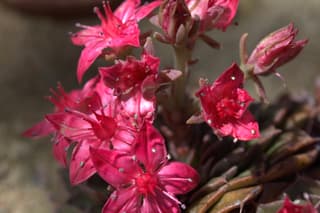
Chihuahua Flower
Graptopetalum bellum
Graptopetalum bellum, commonly known as the Chihuahua Flower, is a perennial succulent in the family Crassulaceae, native to the rocky mountains of Chihuahua and Sonora in northern Mexico at elevations around 1,460 m. It forms flat rosettes up to 10 cm in diameter with smooth, triangular, gray-bronze leaves. The plant produces spectacular deep pink to red star-shaped flowers in late spring and early summer, earning the Royal Horticultural Society's Award of Garden Merit.
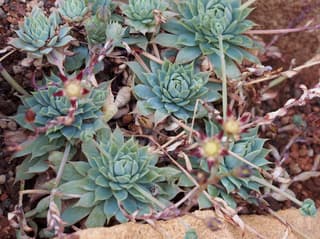
MacDougall's Stonecrop
Graptopetalum macdougallii
Graptopetalum macdougallii is a compact succulent endemic to the mountains of Oaxaca, Mexico. It forms elegant rosettes of blue-grey, slightly translucent leaves that can take on pink or purple hues under intense sun exposure. Highly resilient and low-maintenance, it is perfect for both beginners and experienced succulent collectors.
Ghost Plant
Graptopetalum paraguayense
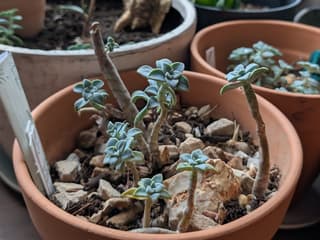
Graptopetalum paraguayense, commonly known as the Ghost Plant, is a perennial succulent native to Mexico. Its rosettes are composed of fleshy, pointed leaves that range in color from bluish-gray to lavender and pink, depending on sun exposure. It is famous for its extreme resilience and the ease with which its fallen leaves grow new roots, making it a favorite among succulent beginners.
Caricature Plant
Graptophyllum pictum
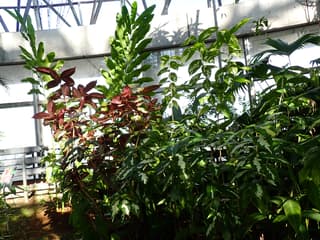
Graptophyllum pictum, commonly known as the Caricature Plant, is a tropical evergreen shrub native to the Pacific islands, particularly the New Guinea and Solomon Islands region. It is celebrated for its striking variegated leaves, which display patterns of green, yellow, and red that some observers liken to caricatures of the human face. Growing to 3.5 metres in ideal conditions, it is a popular choice for tropical landscaping and indoor cultivation in temperate climates.
Graptosedum
Graptosedum
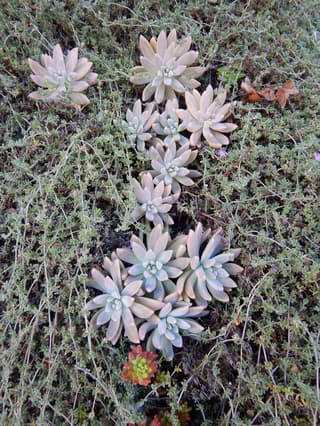
Graptosedum is a cross-generic hybrid between Graptopetalum and Sedum. These succulents are characterized by their thick, fleshy leaves arranged in beautiful rosettes. They are highly prized for their 'sun-stress' colors, where the foliage shifts from blue-green to vibrant shades of bronze, pink, or orange when exposed to bright sunlight. They are hardy, low-maintenance, and perfect for rock gardens or containers.
California Sunset
Graptosedum 'California Sunset'
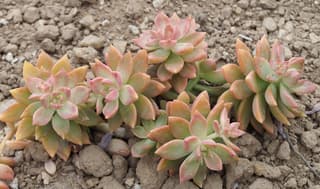
Graptosedum 'California Sunset' is a striking hybrid succulent between Graptopetalum and Sedum, prized for its trailing rosettes that shift from soft blue-green to fiery coral-pink and orange when grown in bright, stressed light. Easy to grow and drought-tolerant, it forms dense mats or spills gracefully over pots and rock gardens.
Pink Sedeveria
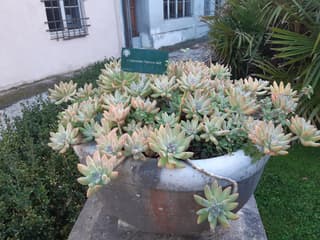
Graptosedum 'Francesco Baldi'
Graptosedum 'Francesco Baldi' is a succulent hybrid of Graptopetalum paraguayense and Sedum pachyphyllum, in the family Crassulaceae. It forms branching, slightly trailing stems topped with compact rosettes of plump, grayish-green leaves that blush pink and peach under bright light and cooler temperatures. A slow-to-moderate grower, it is popular in rock gardens, hanging baskets, and mixed succulent arrangements.
Graptoveria
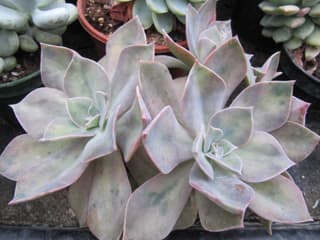
Graptoveria
Graptoveria is an intergeneric hybrid genus resulting from crosses between Graptopetalum and Echeveria, part of the Crassulaceae family. It forms compact, fleshy rosettes with thick leaves ranging from grayish-green to pink and lilac tones, often covered with a fine powdery coating (farina) that protects the plant from intense sun. It is an easy-to-grow succulent, very popular among beginners for its drought tolerance and low maintenance needs.
Graptoveria Ellen
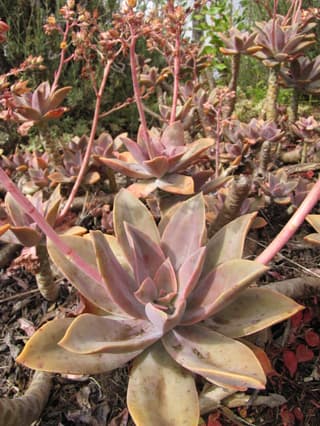
Graptoveria 'Ellen'
Graptoveria 'Ellen' is a fascinating hybrid succulent that forms dense, fleshy rosettes. Its leaves feature a coloration ranging from mint green to soft pink and apricot when exposed to intense sunlight. It is a compact plant, ideal for arrangements and small pots, standing out for its hardiness and delicate beauty.
Silk Oak
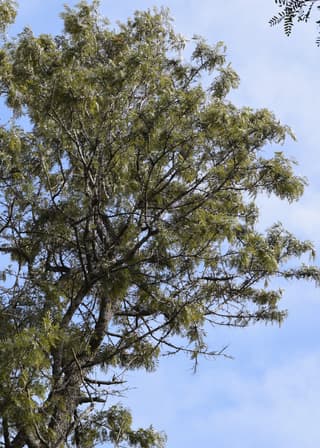
Grevillea robusta
The Silk Oak is the largest species in the genus Grevillea, native to the east coast of Australia. It is a fast-growing tree, famous for its delicate fern-like foliage and spectacular golden-orange brush-like flowers. Although it can reach great heights in the wild, it is often grown in pots when young due to the beauty of its silver-backed leaves.
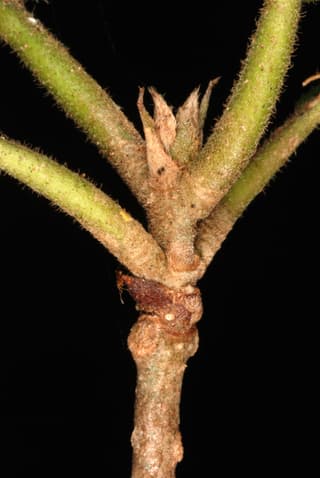
Rough Velvetseed
Guettarda scabra
Rough Velvetseed (Guettarda scabra) is an evergreen shrub or small tree in the Rubiaceae family, native to the Caribbean and Florida Keys. It features distinctively rough, velvety-textured leaves and small white, intensely fragrant flowers that bloom at night, attracting moth pollinators. Plants can reach 3 to 10 meters tall with an open, spreading crown. Highly tolerant of coastal conditions including salt spray, limestone soils, and strong winds.
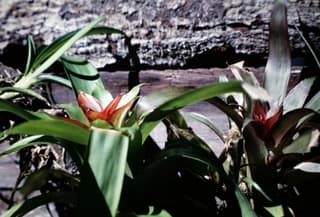
Guzmania Hope
Guzmania 'Hope'
Guzmania 'Hope' is a compact, evergreen bromeliad cultivar prized for its long-lasting, star-shaped bract in vivid red that rises from a rosette of glossy, strap-like green leaves. Like all Guzmania bromeliads, it is epiphytic in habitat, drawing water and nutrients through a central "tank" formed by its overlapping leaves rather than through an extensive root system. It is monocarpic: the mother rosette flowers only once, the colorful bract persists for several months, and the plant then produces offsets ("pups") around its base before slowly declining. Native to the tropical rainforests of Central and South America, it thrives as a low-maintenance houseplant given bright, indirect light and high humidity.
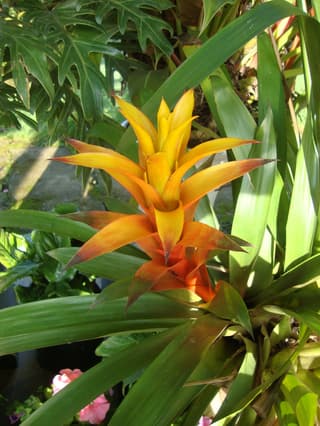
Scarlet Star
Guzmania lingulata
Guzmania lingulata is a tropical bromeliad native to Central and South America. It is famous for its striking red, orange, or yellow bracts that surround small white flowers. An epiphytic plant, it naturally grows on trees in rainforests, absorbing moisture and nutrients from the air.
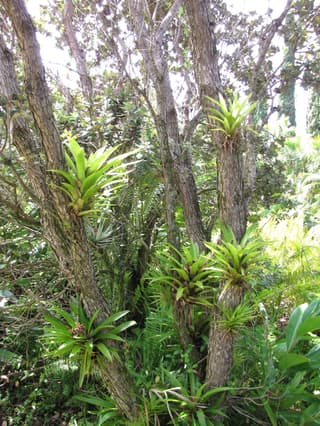
West Indian Tufted Airplant
Guzmania monostachia
Guzmania monostachia is an epiphytic bromeliad native to Florida, the Caribbean, and tropical Central and South America, where it grows perched on tree branches rather than rooted in soil. Its glossy, strap-shaped leaves form a rosette around a central water-holding cup, and once mature it sends up an upright spike of bracts that shift from green to red, studded with small white or yellow tubular flowers that can last for months.
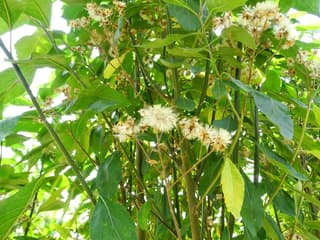
Bitter Leaf
Gymnanthemum amygdalinum
Bitter Leaf (Gymnanthemum amygdalinum) is a perennial shrub native to tropical Africa, widely cultivated for its edible and medicinal leaves. Known for its characteristic bitter flavor, it is a traditional vegetable in many African cuisines and holds well-documented therapeutic properties. It can reach up to 8 meters tall under ideal conditions.

Chin Cactus
Gymnocalycium
Gymnocalycium is a genus of small, globe-shaped cacti native to Argentina, Bolivia, Brazil, Paraguay, and Uruguay. Named for the naked (spineless) flower buds that emerge from woolly areoles, these compact plants form ribbed, spherical bodies topped with short, curved spines and a distinctive chin-like bump beneath each areole — the trait that gives the genus its common name. Gymnocalycium cacti bloom generously from spring through summer, producing funnel-shaped flowers in white, pink, red, or yellow that often dwarf the plant body itself. Slow-growing and low-maintenance, they are popular beginner cacti for sunny windowsills and rock gardens in warm climates.
Easy Care Pet Safe
Our selection of 1448 easy pet safe combines the characteristics of this category with reduced care needs. Perfect for beginners who love this category.
Why Choose Easy Pet Safe?
Combining the beauty of pet safe with easy difficulty level lets you enjoy this category without excessive maintenance worries. Each plant was selected to offer the best characteristics of the category at the care level you are looking for.