1537 Easy Pet Safe | 2026 Guide - Page 41
Find 1537 easy pet safe. Complete guide for your garden.
1537 Pet Safe with easy level
Showing 1441-1476 of 1537
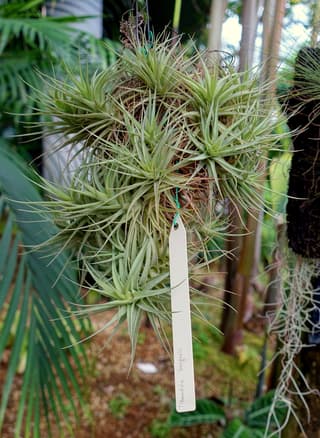
Berger's Airplant
Tillandsia bergeri
Tillandsia bergeri is an epiphytic and rock-dwelling bromeliad in the family Bromeliaceae, native to southern Brazil (Rio Grande do Sul), Uruguay and Argentina down to Buenos Aires, where it grows on trees and granite cliffs. It forms dense clumps of rosettes with narrow, grey-green, scaly leaves up to 14 cm long. In spring it produces a short spike of rose-pink bracts with pale lilac flowers with wavy petals. It needs no soil: it takes up water and nutrients through its leaves.
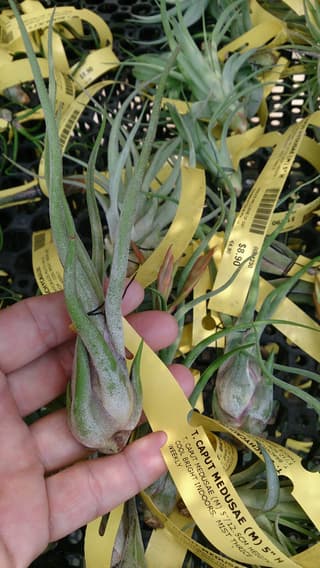
Medusa's Head Air Plant
Tillandsia caput-medusae
Tillandsia caput-medusae is an epiphytic bromeliad native to Mexico and Central America, where it grows attached to tree branches at elevations up to 2,000 meters. Its name comes from the bulbous base of the rosette, from which twisting, silvery-green leaves emerge, resembling snakes or the tentacles of an octopus. The leaves are covered in fine trichomes that absorb water and nutrients directly from the air. It is a hardy, slow-growing species, widely used in terrariums and mounted displays since it needs no soil at all.
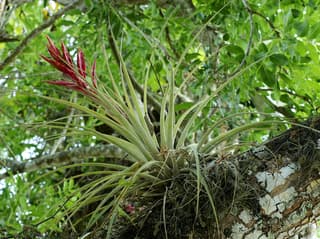
Giant airplant
Tillandsia fasciculata
Giant airplant (Tillandsia fasciculata) is an epiphytic bromeliad native to Florida and Georgia, Mexico, Central America, the Caribbean and northern South America. It forms rosettes of stiff, leathery, grey-green leaves 30 to 70 cm long and, when flowering, a branched spike of showy red, orange or yellow bracts with small violet flowers. In the wild it clings to tree trunks, especially bald cypress, taking up water and nutrients through its leaves.
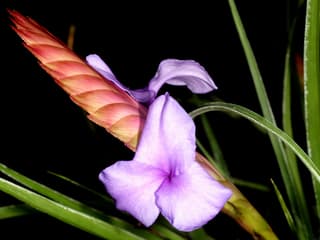
Guatemalan Air Plant
Tillandsia guatemalensis
Tillandsia guatemalensis is an epiphytic bromeliad native to forests from Mexico to Panama. It forms a rosette of silvery-grey leaves and produces a striking flower spike with deep rose-pink bracts and tubular violet-blue flowers. As a true air plant, it absorbs water and nutrients directly from the air through specialized leaf scales called trichomes.
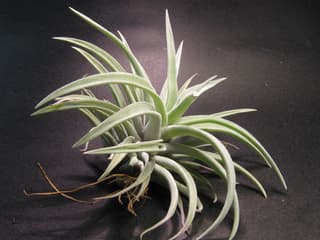
Harris's Air Plant
Tillandsia harrisii
Tillandsia harrisii is a slow-growing epiphytic bromeliad endemic to the dry rocky slopes of Zacapa, Guatemala. Its silvery, densely trichome-covered leaves form a tight rosette on a short stem, giving the plant a soft, fuzzy, almost white appearance that helps it survive intense sun and low humidity in its native habitat. After a year or two of growth it produces an upright spike with coral-red to orange bracts and violet-blue flowers, after which pups form at the base.

Sky Plant
Tillandsia ionantha
Tillandsia ionantha is a fascinating epiphytic plant from the bromeliad family, native to Central America and Mexico. Known as the air plant, it does not need soil to grow, absorbing water and nutrients directly from the air through its silver trichome-covered leaves. During flowering, its central leaves turn vivid red, contrasting with the delicate purple flowers.
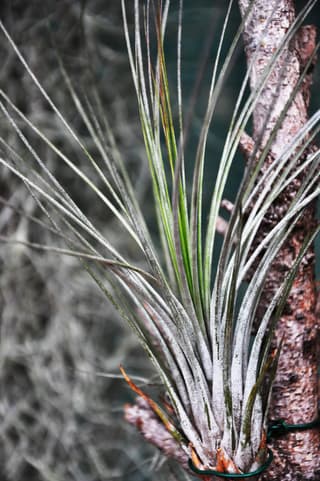
Rush-leaf Air Plant
Tillandsia juncea
Tillandsia juncea, the rush-leaf air plant, is an epiphytic bromeliad found from Mexico, Central America and the West Indies down to Colombia, Venezuela, Ecuador, Peru, Bolivia and eastern Brazil. It lives on tree trunks and branches from the lowlands up to mountain forests; in Mexico it is a classic fog-catcher, sitting high in the exposed canopy and drinking moisture from mist through the silvery scales (trichomes) that cover its leaves. It forms an upright clump up to about 40 cm tall of long, very narrow, grey-green leaves that look like rushes or grass. In spring and summer a mature plant sends up a spike of red bracts with small purple tubular flowers. Like other air plants it needs no soil: its roots only anchor it to bark. Each rosette flowers once, then produces offsets (pups) that carry on the clump.
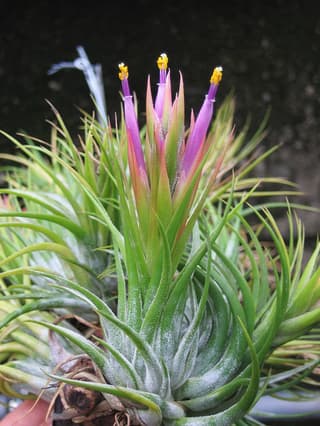
Kolbii air plant
Tillandsia kolbii
Tillandsia kolbii is an air plant (epiphytic bromeliad) native to Oaxaca and Chiapas in Mexico and to Guatemala, where it clings to trees and rocks at altitude. It forms a small, compact, upright rosette 6-12 cm tall of narrow, slightly curved leaves covered in silvery scales (trichomes) that give it a grey-green tone. At bloom time the central leaves blush red and purple tubular flowers appear. It was long sold as Tillandsia ionantha var. scaposa, a name now treated as a synonym.
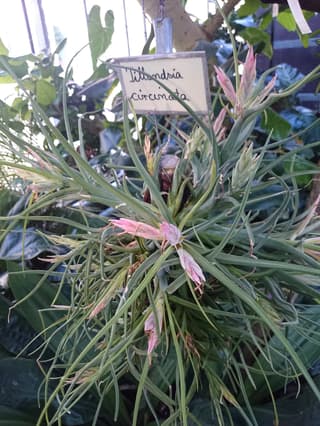
Potbelly airplant
Tillandsia paucifolia
Tillandsia paucifolia, often sold as Tillandsia circinnata, is an air plant in the bromeliad family that grows attached to trunks and branches, with no soil. It is native to Florida, the Caribbean, Mexico, Central America, Colombia and Venezuela. The rosette is about 18 cm tall and 15 cm wide, with a swollen bulb-like base and 5 to 10 thick, recurved leaves covered in silvery scales that take up water and nutrients from the air. When it blooms, in spring and summer, the plant blushes pink and sends up a spike with pink bracts and tubular purple to lavender flowers. It then produces pups that grow at right angles, like spokes on a wheel.
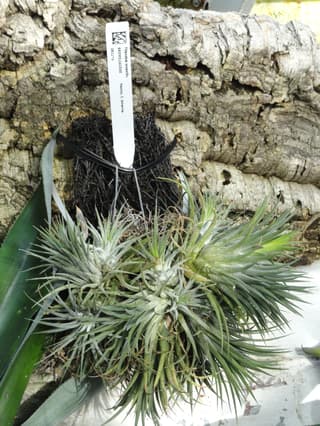
Air Plant
Tillandsia sp
Tillandsias, commonly known as air plants, belong to the Bromeliaceae family and represent its largest genus with over 660 species. Native to the tropical and subtropical Americas, from the southern United States to Argentina, these fascinating epiphytes require no soil to thrive. Instead, they absorb water and nutrients directly from the air through specialized leaf structures called trichomes. Their ability to adapt to diverse environments—from tropical rainforests and cloud forests to arid deserts and rocky mountainsides—makes them among the most versatile and unique plants in the world.
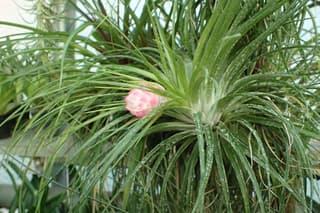
Upright Air Plant
Tillandsia stricta
Tillandsia stricta, commonly known as the Upright Air Plant, is an epiphytic bromeliad native to eastern South America, ranging from Venezuela to northern Argentina. Unlike most plants, it requires no soil to thrive — it absorbs water and nutrients directly through its silvery trichome-covered leaves. It produces stunning blooms in shades of red, pink, blue, and purple in spring and summer, making it one of the most ornamental air plants available.
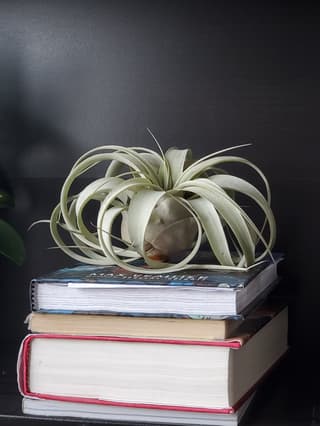
King of Air Plants
Tillandsia xerographica
Tillandsia xerographica is known as the "King of Air Plants" due to its impressive size and beautifully curled silvery-green leaves. This epiphytic plant is native to southern Mexico, Guatemala, and El Salvador. It can reach up to 90 cm in diameter and is highly prized for its sculptural rosette shape. Like all tillandsias, it doesn't need soil to grow and absorbs water and nutrients through its leaves. It is protected under CITES due to past overharvesting in the wild.

Tipu tree
Tipuana tipu
The Tipu tree (Tipuana tipu) is a majestic, fast-growing tree native to South America. Known for its broad, leafy umbrella-shaped canopy, it provides dense and refreshing shade. During spring and early summer, the tree is covered in clusters of vibrant yellow flowers that, when they fall, create a beautiful golden carpet on the ground. Its leaves are compound and light green, and its fruits are winged samaras, similar to those of a maple.

Mexican Sunflower
Tithonia
Tithonia is a genus of flowering plants in the family Asteraceae, native to Mexico and Central America, widely grown as a garden ornamental worldwide. The most popular species, Tithonia rotundifolia, is celebrated for its brilliant orange daisy-like blooms that attract butterflies, bees, and hummingbirds. Fast-growing and highly heat- and drought-tolerant, it is an outstanding choice for sunny summer gardens.
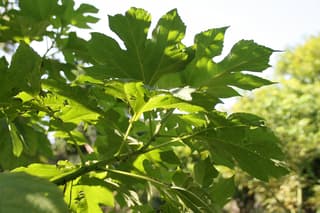
Mexican Sunflower
Tithonia diversifolia
Mexican Sunflower (Tithonia diversifolia) is a fast-growing shrub in the Asteraceae family, native to Mexico and Central America. It reaches up to 4 meters tall and produces vivid orange and yellow flowers from summer through fall. Widely naturalized across the tropics, it is prized as an ornamental, green manure crop, and medicinal plant.

Mexican Sunflower
Tithonia rotundifolia
Mexican Sunflower (Tithonia rotundifolia) is a fast-growing annual native to Mexico and Central America, celebrated for its bold orange, red, and yellow daisy-like blooms. Growing up to 8 feet tall, it is a magnet for butterflies, hummingbirds, and bees throughout summer and fall.
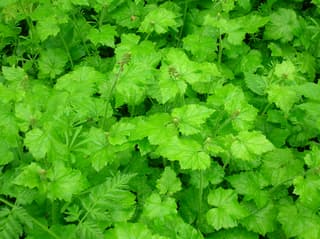
Piggyback Plant
Tolmiea menziesii
Tolmiea menziesii, commonly known as the Piggyback Plant, is a charming evergreen perennial native to the moist, shady forests of the Pacific Northwest coast of North America. It earns its whimsical name from its unique ability to produce tiny plantlets directly at the base of its mature leaves — babies riding "piggyback" on the parent leaf. With soft, hairy, maple-like leaves and a lush mounding habit, it makes an attractive ground cover outdoors and a delightful cascading houseplant indoors.
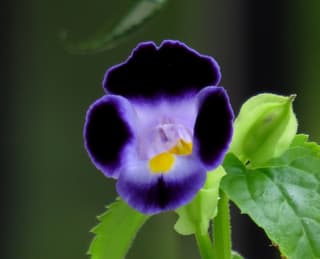
Wishbone flower
Torenia fournieri
Torenia fournieri, commonly known as the Wishbone flower, is a compact and charming herbaceous plant. Its trumpet-shaped flowers feature vibrant colors, usually with a contrasting yellow blotch on the throat. Unlike traditional pansies, this species is highly heat and humidity tolerant, making it ideal for tropical and subtropical gardens.
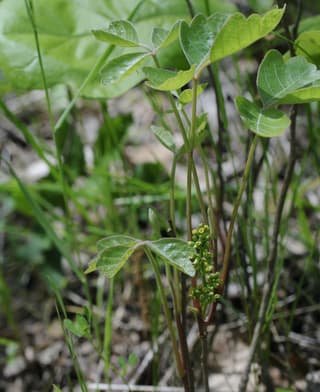
Atlantic Poison Oak
Toxicodendron pubescens
Atlantic poison oak (Toxicodendron pubescens) is an upright, deciduous shrub in the sumac family (Anacardiaceae), not a true oak. Native to the southeastern and central United States, it grows in open pine and oak woods, thickets and dry, sandy fields. It usually reaches 0.6-1.2 m and spreads by rhizomes into colonies. Each leaf has three lobed, oak-like leaflets that are hairy on both sides and turn orange-red in autumn. In spring it bears small clusters of yellow-green flowers, followed by whitish berries that birds eat. Every part of the plant contains urushiol, the same oil found in poison ivy, which causes strong contact dermatitis in most people.
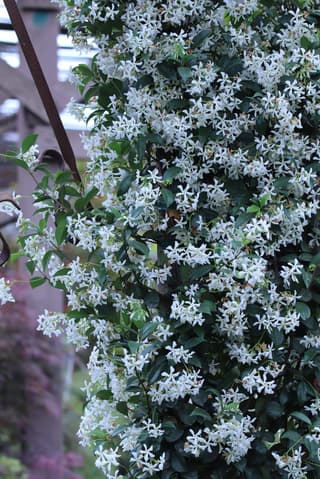
Trachelospermum
Trachelospermum
Trachelospermum is a genus of evergreen, woody, twining vines in the dogbane family (Apocynaceae), native mainly to East and Southeast Asia, from Japan, Korea and China to the Himalayas and Indochina. In the wild the stems climb 12 m or more into trees. The leaves are opposite, glossy and oval, and the very fragrant, star-shaped flowers, usually white or pale yellow, have five twisted petals joined in a tube. The two species grown in gardens are T. jasminoides (star or Confederate jasmine), a vigorous climber, and T. asiaticum (Asian jasmine), mostly used as a low groundcover. Despite the name, they are not true jasmines (Jasminum); broken stems ooze a milky latex.
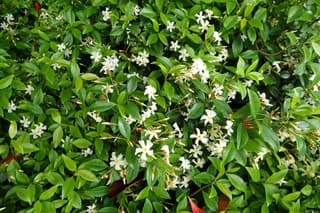
Asian Jasmine
Trachelospermum asiaticum
Asian Jasmine (Trachelospermum asiaticum) is a vigorous, evergreen woody vine native to China, Japan and Korea. Grown low and dense, it is one of the most popular groundcovers in warm climates, forming a glossy dark-green carpet studded with small cream-to-yellow star-shaped flowers in late spring and early summer. Left to climb, it will scale trellises, walls and fences with twining stems.
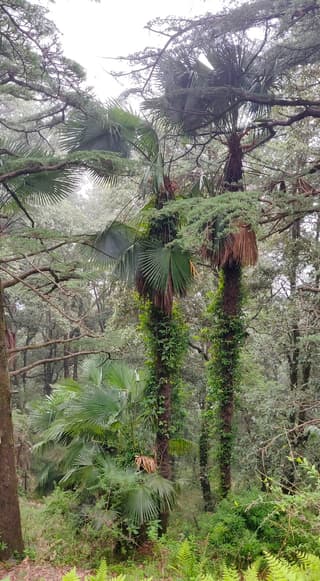
Kumaon palm
Trachycarpus takil
Trachycarpus takil is a fan palm in the family Arecaceae, endemic to the Himalaya in the Kumaon region (Uttarakhand, northern India) and neighbouring western Nepal, where it grows at 1,800-2,700 m in cool, moist oak and rhododendron forest that gets snow every winter. It has a single trunk covered in tightly clasping chestnut-brown fibre and, with time, reaches 10-15 m. The fan leaves, almost three-quarters of a circle, are 1-1.2 m across and split to the middle into 45-50 stiff segments that do not droop at the tips. It is dioecious (separate male and female plants). It ranks among the most cold-hardy tall-trunked palms. In the trade it is often confused with Trachycarpus fortunei, and plants sold as "takil" are sometimes another species.
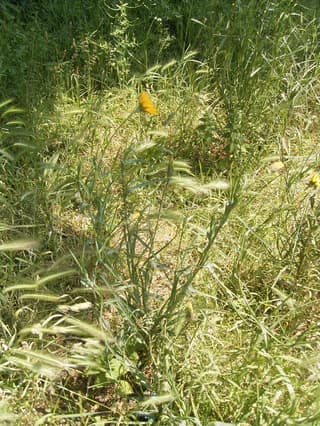
Goat's Beard
Tragopogon
Tragopogon is a genus of biennial or perennial herbs in the Asteraceae family, native to Europe and Asia, with narrow grass-like leaves and milky sap. It produces large daisy-like flowers in shades of yellow or purple, followed by large fluffy seed heads. The most widely cultivated species, salsify (T. porrifolius), is grown for its edible root, prized for its subtle oyster-like flavor.
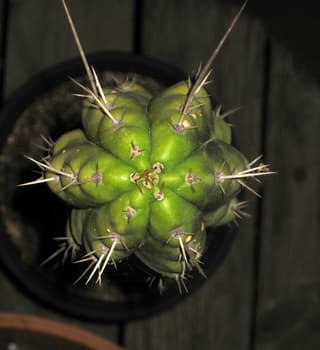
Peruvian torch cactus
Trichocereus peruvianus
Trichocereus peruvianus (synonym Echinopsis peruviana) is a large columnar cactus native to the Andes of Peru and neighbouring regions. It forms erect, branching, blue-green stems with a few well-defined ribs and spines that vary with light conditions. Mature plants can reach several metres in height. The large white flowers open at night near the tops of the stems in late spring and summer. It is a striking architectural plant, popular in xeric gardens and cactus collections, and it tolerates drought well when grown in full sun and very free-draining, gritty soil.
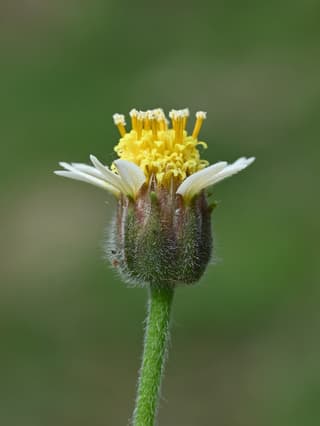
Coatbuttons
Tridax procumbens
Coatbuttons (Tridax procumbens) is a creeping herbaceous plant in the Asteraceae family, native to tropical Americas and now naturalized throughout the tropics worldwide. It produces small daisy-like flowers with white ray florets and yellow centers, and is widely used in traditional medicine for wound healing, antifungal, and anti-inflammatory purposes.
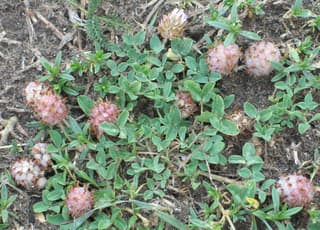
Strawberry Clover
Trifolium fragiferum
Trifolium fragiferum, commonly known as strawberry clover, is a perennial creeping legume native to the Eastern Mediterranean, Southwest Asia, and Northwest Africa, including mainland Portugal and Madeira. It is distinguished by its round, pale-pink flower heads that, after fruiting, inflate into strawberry-like globes — giving rise to its common name. The plant spreads vigorously through creeping stolons that root at the nodes, forming a dense ground cover. It is one of the most salt-tolerant and waterlogging-tolerant clover species commercially available.
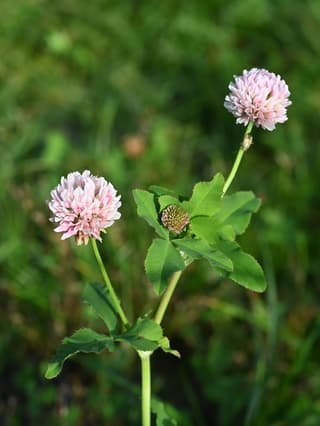
Alsike Clover
Trifolium hybridum
Alsike clover (Trifolium hybridum) is a perennial herbaceous plant in the Fabaceae family, native to southern Europe and southwestern Asia. It produces globose flower heads ranging from white to pink during summer and is widely used as a forage crop, ground cover, and nectar source for pollinators. It fixes atmospheric nitrogen through symbiotic root bacteria, enriching the soil naturally.

White clover
Trifolium repens
Trifolium repens, commonly known as white clover, is a low-growing, perennial herbaceous plant in the pea family Fabaceae. It is native to Europe and Western Asia but has been widely naturalized throughout the world. It is characterized by its trifoliate leaves and dense heads of white flowers. It is often found in lawns, pastures, and meadows, and is known for its ability to fix nitrogen in the soil.
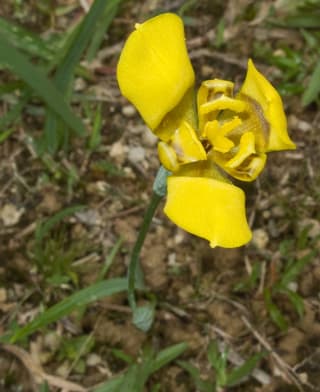
Yellow Walking Iris
Trimezia
Trimezia is a rhizomatous herbaceous plant native to the Americas, highly valued in tropical landscaping. Its leaves are long, green, and sword-shaped, growing in dense fans. The flowers are a vibrant yellow with tiger-striped brown spots in the center. Although each individual flower lasts only one day, the plant produces continuous flower stalks that ensure a visual spectacle during the warmer months.
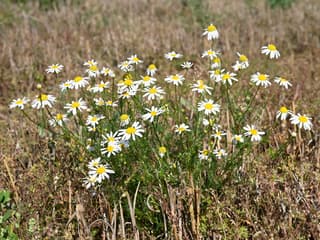
Scentless Chamomile
Tripleurospermum inodorum
Scentless chamomile (Tripleurospermum inodorum) is an annual or biennial herb from the Asteraceae family, native to Eurasia and widely distributed in cultivated fields, roadsides, and waste ground. The plant is characterized by fine, feathery leaves and classic white daisy-like flowers with a yellow central disc, 3–5 cm in diameter. It grows 20–80 cm tall and blooms from June to November. Unlike true chamomile, it completely lacks the characteristic apple scent – hence the name.
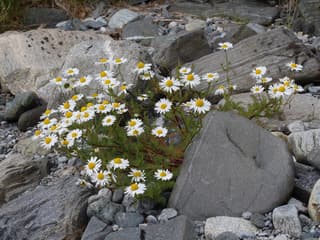
Sea Mayweed
Tripleurospermum maritimum
Sea Mayweed (Tripleurospermum maritimum) is a short-lived perennial in the daisy family, native to the coasts of Europe, Greenland, and the Azores. It forms sprawling, fleshy-leaved mounds along drift-lines, shingle beaches, and cliff tops, producing classic daisy-like flowers with white ray petals around a yellow disk from early summer into autumn. Its succulent, finely divided foliage is an adaptation to salty, windswept habitats, and mature stems often turn purple by late summer.
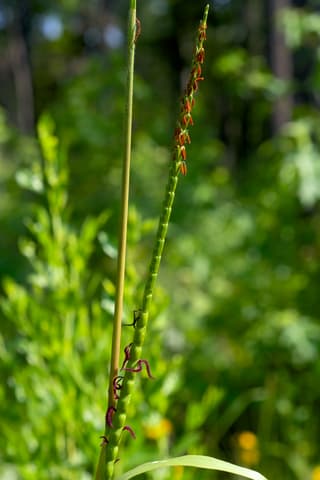
eastern gamagrass
Tripsacum dactyloides
Tripsacum dactyloides, commonly known as Eastern Gamagrass, is a robust, native perennial bunchgrass of North America. A distant relative of maize, it forms large, impressive clumps of arching, wide green leaves. It is highly valued for its deep root system, which aids in soil stabilization and drought resistance, and its unique flowering spikes that feature distinct male and female sections.
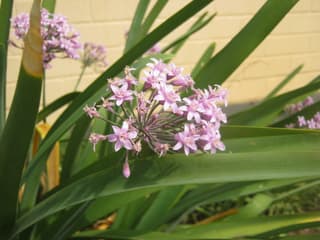
Sweet Garlic
Tulbaghia simmleri
Tulbaghia simmleri, commonly known as Sweet Garlic, is an elegant, clump-forming evergreen perennial native to the grasslands and rocky slopes of South Africa. It produces slender grey-green strap-like leaves and bears delicate umbels of sweetly fragrant pink to mauve-pink tubular flowers from spring through autumn. Unlike its relative Society Garlic, its flowers carry a pleasant sweet scent rather than a garlicky one.
Pearl Plant
Tulista pumila
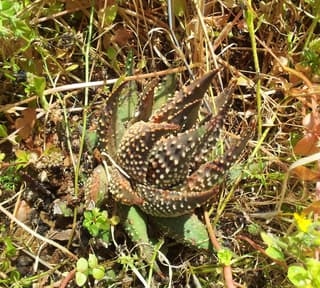
Tulista pumila (formerly Haworthia pumila / Haworthiopsis pumila) is a small South African succulent from the Asphodelaceae family, native to the Western Cape Karoo in the Robertson-Worcester region. It forms compact, stemless rosettes with rigid, upright, and slightly incurved leaves covered in rounded whitish tubercles that resemble pearls—hence its common name. In summer (November-December in its native habitat), it produces a thin flower spike with small tubular flowers in shades of white and pink. It is a slow-growing, long-lived plant (capable of living 30-40 years) and is highly prized as an ornamental indoor succulent and in rock gardens.
White Buttercup
Turnera subulata
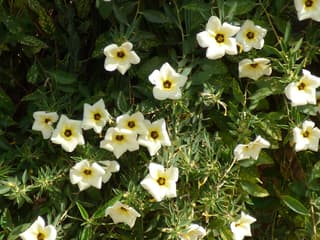
White buttercup (Turnera subulata) is a low, woody-based perennial subshrub native to Central and South America, from Panama south through Brazil, and now naturalized across many tropical regions including Malaysia, Indonesia, the Pacific Islands, the Caribbean and Florida. It grows to about 80 cm tall, with oval, toothed leaves up to 9 cm long and white-haired undersides. Its five-petaled white to pale-yellow flowers have a darker purple-brown throat and open in the early morning, closing again by around 11 a.m. The plant blooms nearly year-round and is a reliable nectar source for bees.
Southern Cattail
Typha domingensis
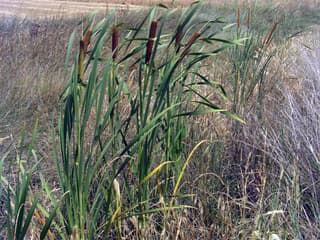
The Southern Cattail (Typha domingensis) is a perennial herbaceous plant from the Typhaceae family, native to wetlands, marshes, and the banks of rivers and lagoons in tropical and subtropical regions of the Americas. It forms dense reed beds up to 4 meters high thanks to its creeping, vigorous, and colonizing rhizomes. Its leaves are long, flat, and upright, and its flowers are grouped in a characteristic brown cylindrical spike reminiscent of a cigar. It tolerates flooding up to 1.5 meters and saline soils, playing a key ecological role by purifying water and providing shelter for aquatic wildlife.
Easy Care Pet Safe
Our selection of 1537 easy pet safe combines the characteristics of this category with reduced care needs. Perfect for beginners who love this category.
Why Choose Easy Pet Safe?
Combining the beauty of pet safe with easy difficulty level lets you enjoy this category without excessive maintenance worries. Each plant was selected to offer the best characteristics of the category at the care level you are looking for.