1451 Easy Pet Safe | 2026 Guide - Page 19
Find 1451 easy pet safe. Complete guide for your garden.
1451 Pet Safe with easy level
Showing 649-684 of 1451
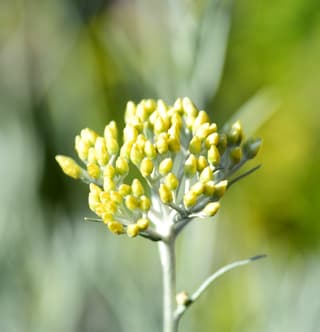
Curry Plant
Helichrysum italicum
Helichrysum italicum, commonly known as the Curry Plant, is a drought-tolerant, aromatic evergreen subshrub native to the Mediterranean region. Its silvery-grey needle-like leaves release a distinctive curry-like fragrance when touched, though it is not related to the culinary spice. In summer, clusters of small, bright yellow button-like flowers bloom, making it a favourite in herb gardens, rock gardens, and dried flower arrangements. It is also highly valued in traditional herbal medicine for its anti-inflammatory and regenerative properties.
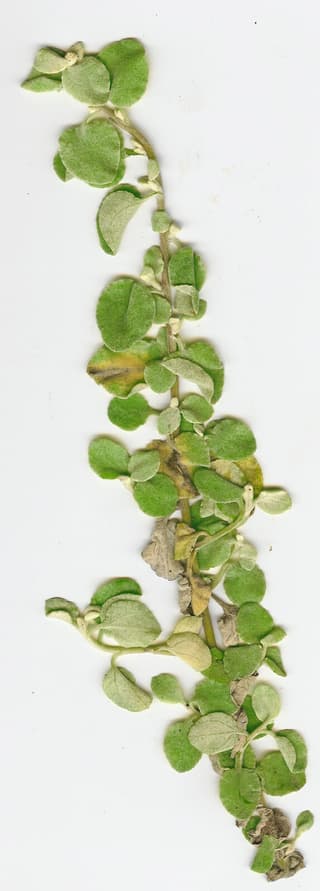
Licorice Plant
Helichrysum petiolare
Helichrysum petiolare is a fast-growing, evergreen trailing subshrub native to the Cape Provinces of South Africa, where it is known locally as kooigoed or impepho. It is grown almost exclusively for its soft, felted, silvery-grey rounded leaves, which release a faint licorice-like scent when brushed or crushed. The plant spreads and cascades vigorously, making it a favorite "spiller" in mixed containers, hanging baskets and window boxes, and it also works well as a fast, drought-tolerant groundcover in dry, sunny borders. Its small creamy-white flower clusters appear in summer but are considered insignificant compared to the foliage.
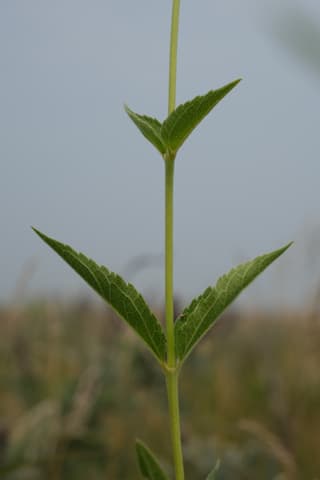
False Sunflower
Heliopsis helianthoides
Heliopsis helianthoides, commonly known as False Sunflower or Oxeye, is a native North American herbaceous perennial belonging to the Asteraceae family. It produces abundant bright golden-yellow daisy-like flowers from mid-summer through early fall, attracting pollinators such as bees and butterflies. A tough, adaptable wildflower, it thrives in full sun and well-drained soils, making it an outstanding choice for prairie gardens, naturalized landscapes, and pollinator gardens.
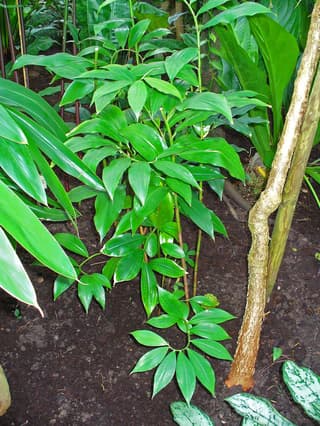
Crepe Ginger
Hellenia speciosa
Crepe ginger (Hellenia speciosa, formerly Costus speciosus) is a striking tropical perennial herb in the Costaceae family, native to South and Southeast Asia. It grows from thick underground rhizomes into an upright, spiraling clump up to 2 m tall, with glossy spiral-arranged leaves and dense terminal spikes of crepe-paper-like white flowers emerging from showy red bracts after the onset of the rainy season.
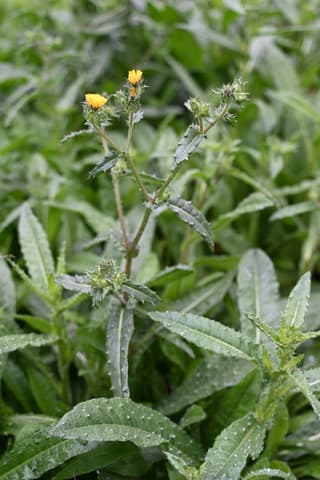
Bristly oxtongue
Helminthotheca echioides
Bristly oxtongue (Helminthotheca echioides, syn. Picris echioides) is an annual or biennial herbaceous plant in the Asteraceae family, native to the Mediterranean region and now widespread as a ruderal plant throughout much of Europe and the world. It is easily recognized by its erect or prostrate, striated, and reddish stem, covered in stiff, hooked hairs that give it a bristly feel, and by its lanceolate leaves dotted with small pearly white spots at the base of the bristles. It produces yellow flower heads similar to small dandelions, which bloom from May to October. It grows spontaneously on uncultivated land, roadsides, field margins, and disturbed soils, where it is considered a fast-growing weed.
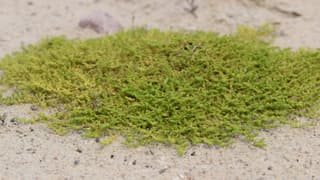
Smooth Rupturewort
Herniaria glabra
Herniaria glabra, commonly known as Smooth Rupturewort or Green Carpet, is a low-growing perennial herb in the Caryophyllaceae family, native to Europe and Western Asia. It forms a dense mat just 1-3 cm tall with tiny oval leaves and inconspicuous green flowers in summer. The foliage may turn bronze or red in winter, adding seasonal interest.
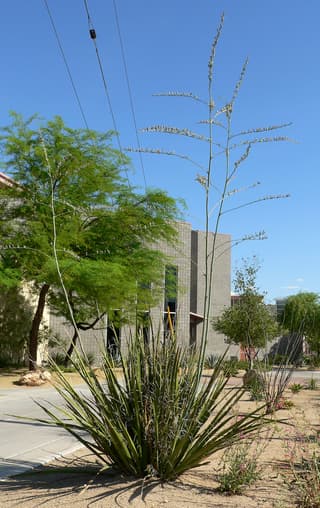
Giant Hesperaloe
Hesperaloe funifera
Hesperaloe funifera, commonly known as Giant Hesperaloe, is a striking succulent native to the Chihuahuan Desert of northern Mexico and southern Texas. It forms a dramatic rosette of long, narrow leaves up to 6 ft tall, sending up spectacular flower stalks reaching 10-15 ft with creamy white blooms in spring and summer.
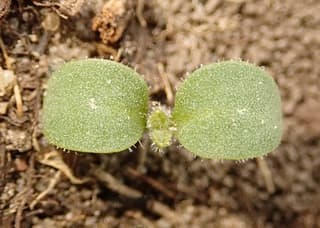
dame's rocket
Hesperis matronalis
Hesperis matronalis, known as Dame's Rocket, is a fragrant biennial or short-lived perennial in the Brassicaceae family. It features clusters of four-petaled flowers in white, pink, or purple. While prized for its sweet evening scent, it is considered invasive in some regions of North America due to its prolific self-seeding.
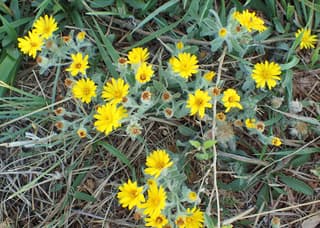
Golden aster
Heterotheca
Heterotheca is a genus of about 25 to 30 species of perennial herbs and subshrubs, native to North America, from Canada to Mexico, belonging to the aster family (Asteraceae). It is commonly known as "golden aster" or "camphorweed" due to the camphor-like aroma released by some species when their leaves are crushed. It produces bright yellow daisy-like flowers throughout much of the year and lanceolate leaves covered in rough hairs. It is a pioneer plant, extremely drought-tolerant, and typical of poor, sandy, or rocky soils.
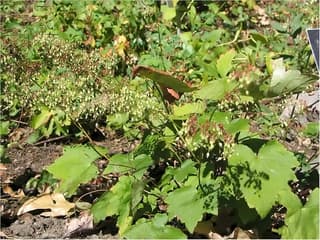
Hairy Alumroot
Heuchera villosa
Heuchera villosa, commonly called hairy alumroot, is a clump-forming woodland perennial native to the Appalachian region of the eastern United States, from New York south to Georgia and west to Missouri. It forms low mounds of softly hairy, maple-like leaves and sends up airy spikes of tiny white to pink bell-shaped flowers from midsummer into fall. Prized for its outstanding heat and humidity tolerance compared to other coral bells, it thrives in shaded rock gardens, woodland borders, and containers.
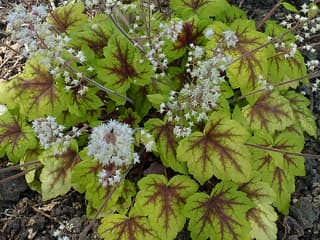
Foamy Bells
Heucherella
Heucherella is an intergeneric hybrid between Heuchera (Coral Bells) and Tiarella (Foamflower), commonly known as 'Foamy Bells'. The plant forms compact leaf rosettes with colorful, decorative foliage in shades of green, gold, orange, red, and bronze—depending on the variety. It is particularly popular in shade gardens where it produces airy, cloud-like flower spikes in white and pink from late spring to midsummer. The foliage is semi-evergreen and provides winter structure in mild climates.
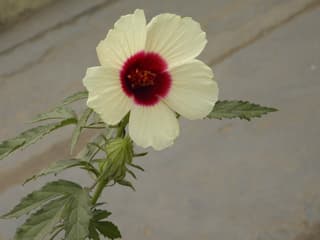
Kenaf
Hibiscus cannabinus
Kenaf is a fast-growing, upright hibiscus relative in the mallow family, cultivated worldwide since prehistoric times for its strong bast fiber. It produces tall, cane-like stems topped with pale yellow, hibiscus-like flowers with dark purple centers, maturing from seed to full height in just three to four months.
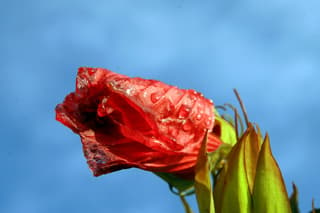
Scarlet Rosemallow
Hibiscus coccineus
Hibiscus coccineus, commonly called scarlet rosemallow or Texas Star hibiscus, is a tall, deciduous perennial in the mallow family native to marshes and swamps of the southeastern United States. It produces striking star-shaped scarlet-red flowers up to 6 inches wide atop maple-like foliage from late summer into early fall, reaching 6-8 feet in height. It thrives in consistently moist to wet soil and full sun, making it a favorite for pond edges, rain gardens, and pollinator plantings.
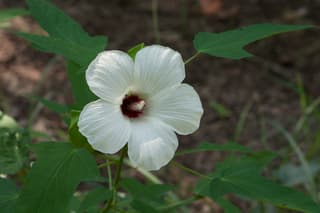
Halberdleaf Rosemallow
Hibiscus laevis
Hibiscus laevis is a stout, upright herbaceous perennial native to North American wetland margins, named for its distinctive three-lobed, halberd-shaped leaves. From summer into fall it bears large, hollyhock-like flowers in white to pink with a deep maroon throat that open by day and close at night.
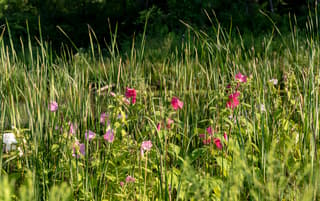
Swamp Rose-mallow
Hibiscus moscheutos
Hibiscus moscheutos, commonly known as Swamp Rose-mallow or Crimson-eyed Rosemallow, is a hardy perennial native to eastern North America. It produces enormous dinner-plate blooms — up to 12 inches across — in shades of white, pink, red, and burgundy, often with a striking crimson eye. Despite its tropical appearance, it is fully cold-hardy to USDA Zone 4, dying back to the ground each winter and re-emerging in spring.
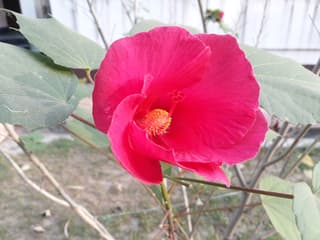
Confederate Rose
Hibiscus mutabilis
Confederate Rose (Hibiscus mutabilis) is a fast-growing deciduous shrub or small tree native to southern China. It is celebrated for its spectacular flowers that open white or pale pink in the morning and deepen to rich crimson red by evening — all within a single day. Plants can reach 15 feet tall and produce abundant blooms from late summer through fall.
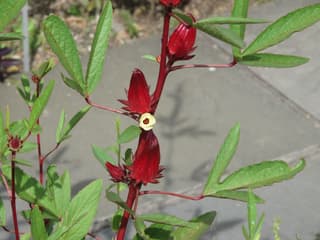
Roselle
Hibiscus sabdariffa
Hibiscus sabdariffa, commonly known as Roselle, is a fast-growing annual or short-lived perennial shrub native to West Africa. It is celebrated worldwide for its vibrant red calyces used to make hibiscus tea, jams, and medicinal preparations. The plant produces striking pale yellow flowers with a deep red center and grows up to 3 meters tall in warm climates. Its calyces, leaves, seeds, and roots are all edible and valued both ornamentally and medicinally.
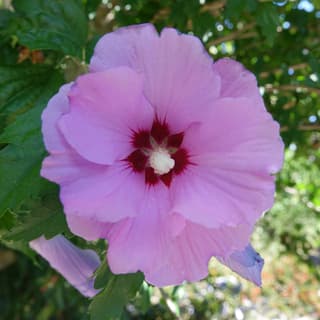
Rose of Sharon
Hibiscus syriacus
Rose of Sharon (Hibiscus syriacus) is a deciduous flowering shrub native to East Asia, widely grown for its showy blooms in shades of white, pink, purple, red, and lavender. It blooms from midsummer through fall, bridging a gap when few other shrubs are in flower. It is the national flower of South Korea, known as Mugunghwa, symbolizing perseverance and eternal love.
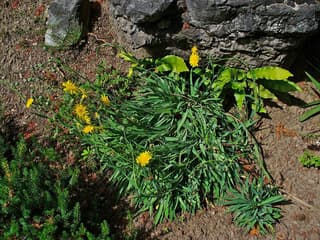
Hawkweed
Hieracium
Hieracium is a large, taxonomically complex genus of flowering plants in the daisy family (Asteraceae), commonly known as hawkweed. The genus name comes from the ancient Greek 'hierax' (hawk), tied to an old legend that hawks used the plant's milky sap to sharpen their eyesight. Hawkweeds are herbaceous perennials that form basal rosettes of hairy, often bristly leaves and send up erect flowering stems topped with clusters of small, dandelion-like yellow or orange flower heads. Reproduction is unusual: most species reproduce apomictically, producing genetically identical seeds without fertilization, which has led botanists to describe anywhere from a few hundred to several thousand microspecies. While some Hieracium species are valued as low-maintenance wildflowers for naturalized gardens and pollinator plantings, many others (such as orange hawkweed and meadow hawkweed) are aggressive colonizers classified as noxious, invasive weeds in North America, New Zealand, and parts of Australia, where they outcompete native vegetation and forage grasses.

Narrowleaf Hawkweed
Hieracium umbellatum
Narrowleaf hawkweed is a perennial herb in the Asteraceae family, native to temperate regions across the Northern Hemisphere (Europe, Asia, and North America). It forms a basal rosette with narrow, toothed leaves and produces umbrella-shaped clusters of dandelion-like yellow flowerheads from mid-summer to fall. It is a hardy, adaptable plant commonly found along roadsides, in open woodlands, and on sandy or disturbed ground.
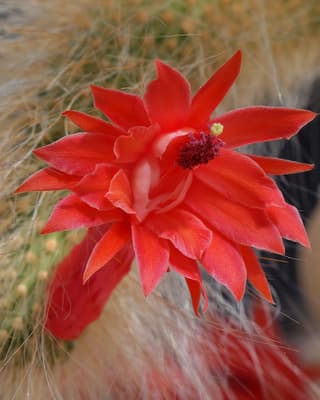
Monkey's Tail Cactus
Hildewintera colademononis
Hildewintera colademononis, also classified as Cleistocactus colademononis, is an epiphytic and pendulous cactus native to the moist rocky slopes of Florida province in the Santa Cruz department of Bolivia, where it grows hanging from cliffs at altitudes of up to 1,500 meters. Its cylindrical stems, 3 to 7 cm in diameter, can reach up to 2.5 meters in length and are covered by dozens of white, thin, and hair-like soft spines that resemble a monkey's furry tail—the origin of its popular nickname. Between spring and summer, it produces vibrant red flowers up to 8 cm long that bloom almost horizontally along the stems. It is a relatively fast-growing species, ideal for hanging baskets, and has received the prestigious Award of Garden Merit from the Royal Horticultural Society.
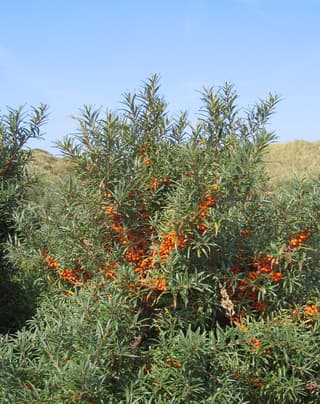
Sea buckthorn
Hippophae rhamnoides
Sea buckthorn (Hippophae rhamnoides) is a thorny deciduous shrub from the Elaeagnaceae family, native to the cold and temperate regions of Eurasia—ranging from the coasts of the Baltic and North Seas to the Himalayan foothills. It is characterized by silvery-gray narrow leaves and bright orange berries that densely cover the branches from late summer to autumn, which are highly valued for their vitamin C content and other antioxidants. It is a dioecious plant (separate male and female individuals), extremely resistant to frost, drought, wind, and salty coastal air.
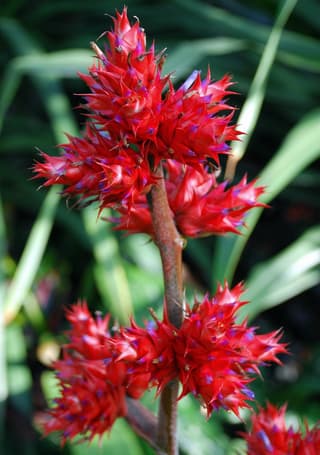
Hohenbergia
Hohenbergia
Hohenbergia is a genus of bromeliads in the family Bromeliaceae, comprising roughly 53 species native to the West Indies, the Yucatan Peninsula, and northern South America (Colombia, Venezuela, Brazil). Plants form rosettes of broad, stiff, often spine-edged strap-like leaves that converge at the base into a central "tank" that holds water and organic debris. A single tall, showy flower spike is produced from the rosette center, lasting for months, with bracts and flowers in shades of red, salmon, pink, white, or purple — the feature that most distinguishes the genus from its close relative Aechmea.
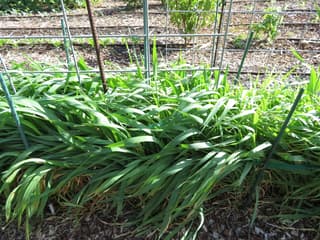
Barley
Hordeum vulgare
Barley (Hordeum vulgare) is one of the oldest domesticated cereal grains, originating in the Fertile Crescent of the Middle East roughly 10,000 years ago. It is a hardy annual grass widely grown for malting, brewing, animal feed, and human food, and remains one of the world's major cereal crops.
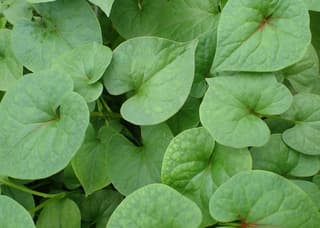
Chameleon plant
Houttuynia cordata
Houttuynia cordata, commonly known as the chameleon plant, is a deciduous ground-covering perennial from the Saururaceae family originating in East Asia. The plant is known for its heart-shaped leaves, which are often variegated in green, yellow, red, and cream, as well as for its small white flowers with cone-shaped, lime-green spikes that appear from early to late summer. When the leaves are crushed, they emit a sharp, fish-like scent—hence the name 'fish mint'. Chameleon plant thrives in moist to wet soil and spreads aggressively via underground rhizomes, so it should be planted with caution.
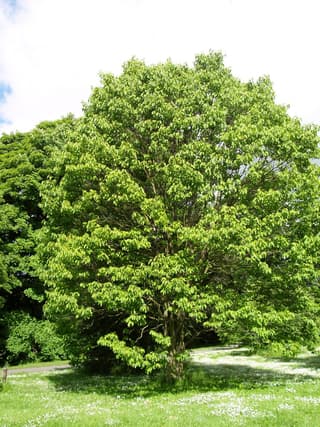
Japanese Raisin Tree
Hovenia dulcis
The Japanese Raisin Tree (Hovenia dulcis) is a medium to large deciduous tree native to East Asia (China, Japan, and Korea), widely planted as an ornamental shade tree and for its sweet edible fruit stalks. It belongs to the Rhamnaceae family and can reach up to 10 meters in cultivation. This exceptionally hardy species adapts to a wide range of soils, tolerates cold winters down to -15°C, and is largely resistant to pests and diseases, making it an excellent choice for gardens, parks, and urban landscaping.

Kentia Palm
Howea forsteriana
The Kentia Palm (Howea forsteriana) is an elegant, slow-growing palm native to Lord Howe Island, Australia. Renowned for its graceful, arching fronds and tolerance of indoor conditions, it became the quintessential Victorian parlour palm in the 1870s. Queen Victoria herself kept these palms in all her homes. With its single trunk and dark green, pinnate fronds reaching up to 3 meters long, it adds a sophisticated tropical touch to any space while being remarkably low-maintenance.
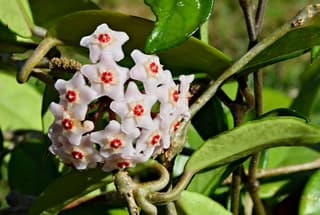
Wax Plant
Hoya
Hoya is a large genus of tropical and subtropical climbing and epiphytic plants in the family Apocynaceae, native to Asia, Australia, and the Pacific islands. With over 300 species, Hoyas are among the most beloved houseplants in the world, prized for their thick waxy leaves and clusters of star-shaped, often fragrant flowers. They are exceptionally well-suited to indoor growing and are considered ideal plants for beginners due to their low maintenance requirements.
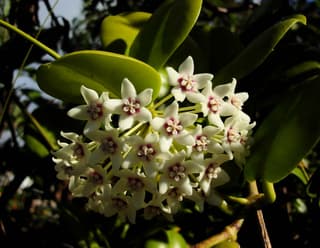
Common Waxflower
Hoya australis
Hoya australis, known as the common waxflower, is a fast-growing evergreen vine native to eastern and northern Australia, Papua New Guinea, and nearby Pacific islands. Its thick, glossy, succulent-like leaves store water, helping the plant withstand occasional drought. Established plants produce rounded clusters of up to 40 star-shaped, waxy white flowers with deep red centers, prized for their strong, sweet fragrance and abundant nectar.
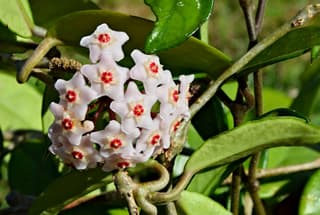
Wax Plant
Hoya carnosa
Hoya carnosa is a beloved tropical vine native to East Asia and Australia, prized for its waxy, succulent-like leaves and stunning clusters of star-shaped, fragrant flowers. This long-lived houseplant can thrive for decades with minimal care, making it perfect for beginners. The plant produces unique umbrella-shaped flower clusters that are pink or white with red centers and emit a sweet fragrance, especially in the evening. It has received the Royal Horticultural Society Award of Garden Merit.
Krimson Queen Wax Plant
Hoya carnosa 'Krimson Queen'
Hoya carnosa 'Krimson Queen' is a variegated cultivar of the classic wax plant, an epiphytic vining member of the Apocynaceae family native to East and Southeast Asia. Its thick, heart-shaped leaves carry a broad creamy-white margin that blushes pink under strong light, framing a deep green center. A slow but rewarding grower, mature plants produce ball-shaped clusters of small, star-shaped, waxy, fragrant pink-and-white flowers.
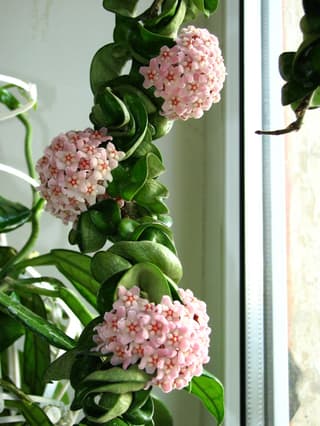
Hindu Rope Plant
Hoya compacta
Hoya compacta, commonly known as the Hindu rope plant, is a cultivar of Hoya carnosa prized for its thick, waxy leaves that curl and fold back on themselves along trailing, rope-like stems. Native to East Asia and Australia, this slow-growing epiphytic vine is grown indoors for its unusual sculptural foliage and clusters of fragrant, star-shaped flowers.
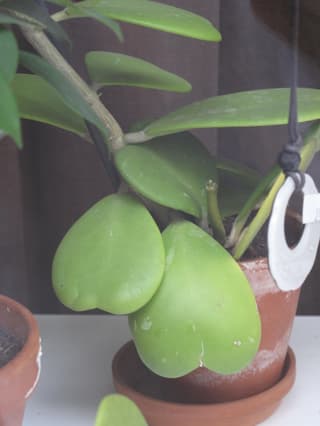
Sweetheart Hoya
Hoya kerrii
Hoya kerrii is a charming tropical vine native to Southeast Asia, famous for its thick, heart-shaped succulent leaves. This slow-growing epiphyte produces fragrant star-shaped flowers in clusters and is beloved as a symbol of love and affection.

Wax Plant Memoria
Hoya memoria
Hoya memoria, also known by its synonym Hoya gracilis, is a trailing epiphytic vine native to the Philippines. It features dark green, pointed, slightly succulent leaves with a distinctive waxy texture. Beloved by indoor plant enthusiasts, it produces clusters of fuzzy, raspberry-pink star-shaped flowers with a sweet caramel fragrance during spring and summer. Its vining habit makes it ideal for hanging baskets and shelves.
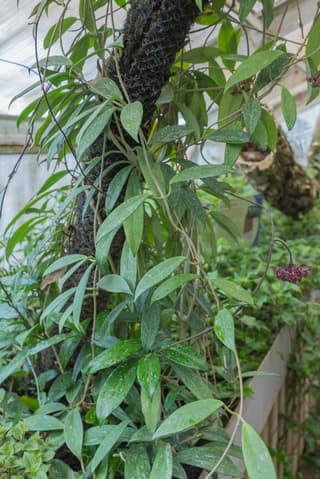
Wax Flower Vine
Hoya pubicalyx
Hoya pubicalyx is a vigorous tropical vining plant native to the Philippines, prized for its glossy, lance-shaped leaves and spectacular dark-pink to deep-crimson star-shaped flowers arranged in rounded umbels. The blooms have a sweet, pleasant fragrance and appear repeatedly from the same spurs, making it a long-lived flowering houseplant. It is one of the most popular hoyas in cultivation due to its reliable blooming and ease of care.
Hoya Burtoniae
Hoya sp. aff. burtoniae
Hoya sp. aff. burtoniae is a fuzzy-leaved trailing epiphyte closely related to Hoya burtoniae, native to the forests of the Philippines. Its small, velvety, almond-shaped leaves blush deep burgundy-red in bright light, and mature vines reward patient growers with clusters of tiny, fuzzy, star-shaped flowers with a red-and-gold corona and a sweet, honey-like fragrance. Grown in a hanging basket or on a trellis, it makes a striking, low-maintenance addition to any bright indoor space.
Easy Care Pet Safe
Our selection of 1451 easy pet safe combines the characteristics of this category with reduced care needs. Perfect for beginners who love this category.
Why Choose Easy Pet Safe?
Combining the beauty of pet safe with easy difficulty level lets you enjoy this category without excessive maintenance worries. Each plant was selected to offer the best characteristics of the category at the care level you are looking for.