2315 Easy Plants | 2026 Guide - Page 17
Discover 2315 easy plants for your garden. Complete care guide.
2315 Easy Plants
Showing 577-612 of 2315
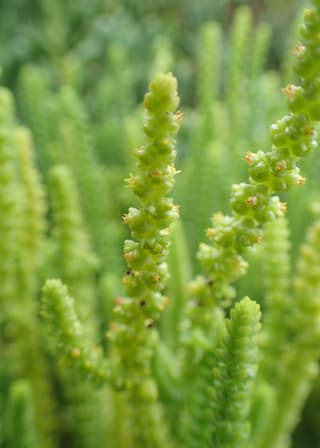
Watch Chain Plant
Crassula muscosa
Crassula muscosa, commonly known as the Watch Chain Plant or Zipper Plant, is a slow-growing succulent native to South Africa and Namibia. Its tiny, tightly overlapping scale-like leaves create a distinctive chain or zipper pattern along its stems. An excellent choice for bright windowsills, terrariums, and succulent arrangements.
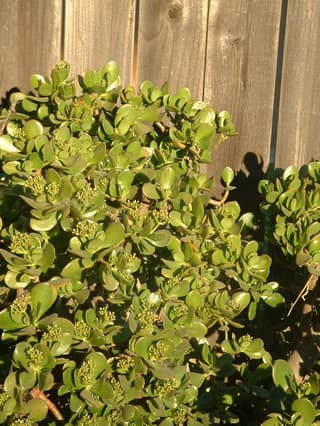
Jade Plant
Crassula ovata
The Jade Plant (Crassula ovata) is a beloved succulent native to South Africa and Mozambique, known for its thick, fleshy, oval-shaped leaves that resemble jade gemstones. This easy-care plant can live for decades, potentially reaching 70-100 years, and grows into an attractive shrub or small tree. Its compact growth and striking appearance have made it one of the most popular houseplants worldwide.
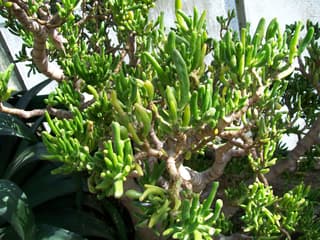
Gollum Jade
Crassula ovata 'Gollum'
A cultivar of Crassula ovata with cylindrical, tubular leaves that flare into a funnel-shaped tip, resembling fingers. It forms a slow-growing, branching succulent shrub.
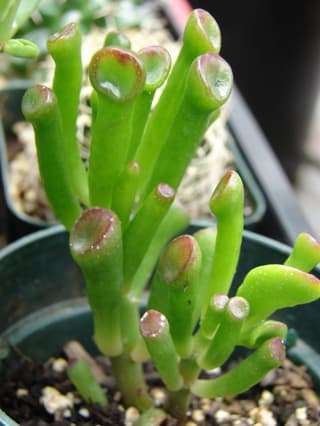
Hobbit Jade
Crassula ovata 'Hobbit'
Hobbit Jade is a cultivar of Crassula ovata distinguished by curled, tubular, finger- or trumpet-shaped leaves, unlike the flat oval leaves of the common jade plant. A perennial succulent descending from the South African parent species, it is a popular low-maintenance houseplant valued for its slow, compact growth. Leaf tips blush red under bright direct sun.
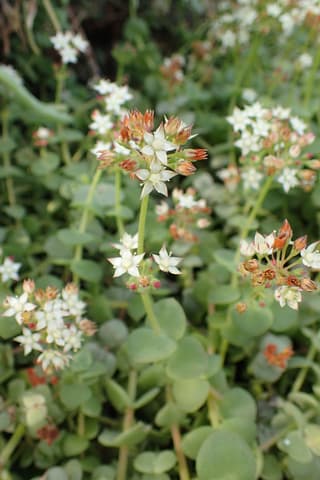
Calico Kitten
Crassula pellucida
Crassula pellucida is a low-growing, trailing succulent native to shaded, rocky forests of eastern and southern Africa. Its small, rounded to slightly heart-shaped leaves form a dense, cushion-like mat and range from pale green to reddish-pink depending on light exposure, and the variegated cultivar Calico Kitten (subsp. marginalis) is prized for its cream, pink, and purple marbled foliage. In spring and summer it produces clusters of tiny white to pale pink star-shaped flowers.
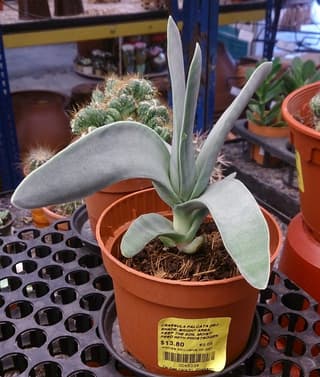
Propeller Plant
Crassula perfoliata
Crassula perfoliata is a South African succulent subshrub best known through its popular cultivated variety, var. falcata (also called var. minor), the propeller plant, prized for its thick, grey-green, sickle-shaped leaves arranged in neat opposite rows. In summer it produces dense, rounded clusters of small scarlet-red flowers held high above the foliage on stiff stems, a striking contrast to the muted leaf color. Native to rocky, sun-baked slopes of South Africa's Eastern and Western Cape, it is a tough, drought-tolerant plant that thrives on neglect.
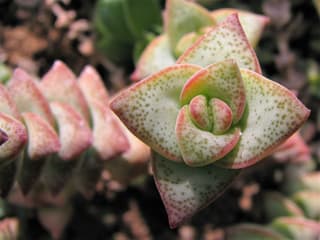
String of Buttons
Crassula perforata
Crassula perforata is a South African succulent in the Crassulaceae family, known for its distinctive stacked triangular leaves threaded along trailing stems. The leaves are grey-green with rosy pink margins that intensify under bright light. It grows upright when young and becomes trailing with age, reaching up to 60 cm. An easy-care plant that thrives in bright light and well-draining soil, it produces tiny star-shaped white to pale pink flowers in spring.
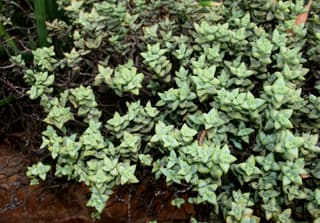
Concertina Plant
Crassula rupestris
Crassula rupestris is a charming stacked succulent native to South Africa, featuring triangular fleshy leaves threaded along creeping stems. Its geometric, bead-like foliage pattern gives it its popular names: Rosary Vine and Buttons on a String. In spring and summer it produces small star-shaped pink to white flowers.
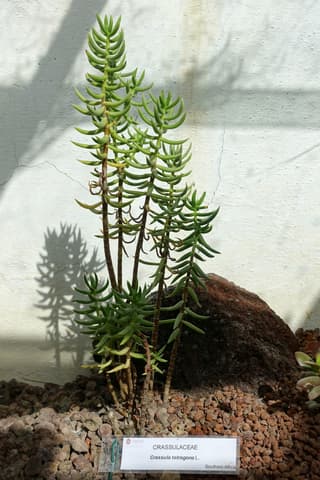
Miniature Pine Tree
Crassula tetragona
Crassula tetragona is a shrubby succulent native to South Africa, known for its narrow, needle-like leaves that resemble a tiny pine tree. Popular for bonsai styling and rock gardens, it grows slowly, forming woody, branching stems. In late spring to early summer it may produce small star-shaped white to cream flowers.

Hawthorn
Crataegus
Hawthorn (Crataegus) is a large genus of thorny shrubs and small trees in the rose family, native mostly to the Northern Hemisphere. Prized for spring clusters of white or pink flowers, glossy serrated leaves, and bright red autumn berries, hawthorns are tough, adaptable plants used widely as ornamental trees, hedging, and wildlife habitat.
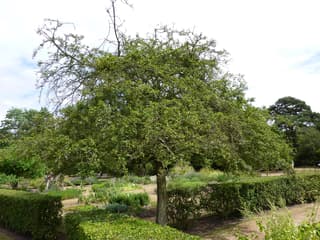
Midland Hawthorn
Crataegus laevigata
The Midland hawthorn (Crataegus laevigata) is a thorny, deciduous tree or shrub native to European woodlands. It is prized for its fragrant white blossom in spring, its clusters of red haws in autumn, and its long history in European folklore, where it is known simply as "the May tree". It grows 3-8m tall and wide, tolerates poor and clay soils, and is widely planted as a hedging and specimen tree.
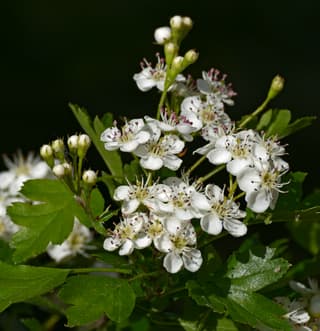
Common Hawthorn
Crataegus monogyna
Crataegus monogyna is a thorny, deciduous large shrub or small tree native to Europe, North Africa, and Western Asia. Prized for its clusters of white blossom in spring, deep red autumn haws, and dense, thorny growth, it has long been used as a hedging and wildlife plant across the British Isles and mainland Europe.
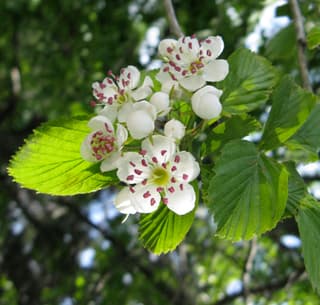
Dotted Hawthorn
Crataegus punctata
Dotted Hawthorn (Crataegus punctata) is a deciduous tree in the Rosaceae family, native to eastern North America. It grows up to 9 meters tall with a dense, rounded crown and characteristic thorns up to 7 cm long. In late spring, it develops white flowers in dense clusters, and in autumn, it is abundant with red fruits (pomes) with white dots, for which the species is named. It is particularly valuable for wildlife—the fruits attract migratory birds.
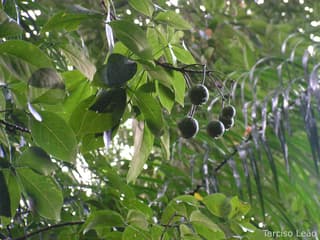
Garlic Pear
Crateva tapia
The Garlic Pear (Crateva tapia) is a tree native to the Americas, ranging from Mexico to southern Brazil, where it is common in the Caatinga, Cerrado, Pantanal, and Amazonian riparian forests. It can reach 4 to 15 m in height, with a broad, rounded crown and a twisted trunk with grayish bark that exudes a garlic odor when cut. The leaves are trifoliate, and the tree blooms between August and November, covered in white flowers with long reddish stamens that attract bees, butterflies, moths, and bats. The fruits, which are globose berries, ripen between February and April and have an edible pulp with a sweet flavor.
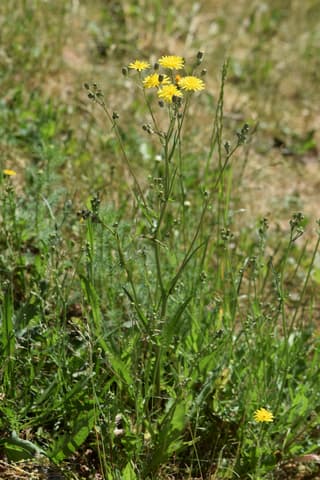
Hawksbeard
Crepis
Crepis is a genus of roughly 200 annual, biennial, and perennial wildflowers in the daisy family (Asteraceae), commonly called hawksbeards for their dandelion-like yellow flower heads and beaked seeds. This is a genus-level care profile — it covers general growing conditions shared across Crepis species rather than one particular species, since individual hawksbeards vary somewhat in height and habit. Native mainly to the Mediterranean Basin, Europe, Asia, and Africa, many Crepis species have naturalized worldwide along roadsides, lawns, and disturbed ground, where their nectar and seeds support bees, bumblebees, and seed-eating birds.
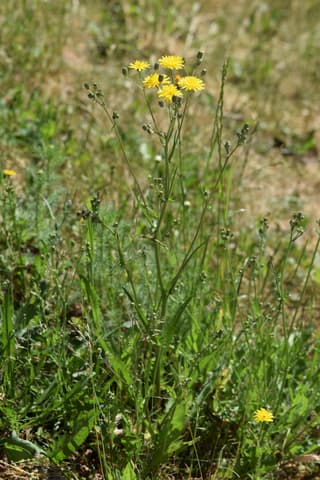
smooth hawksbeard
Crepis capillaris
Smooth hawksbeard (Crepis capillaris) is an annual or biennial herb in the Asteraceae family, native to Europe and western Asia and widely naturalized worldwide. It produces small yellow dandelion-like flowers in clusters that bloom from spring through autumn. Highly adaptable, it thrives in disturbed ground, roadsides, gardens, and grasslands. Young leaves are edible and have historically been used in Mediterranean salads.
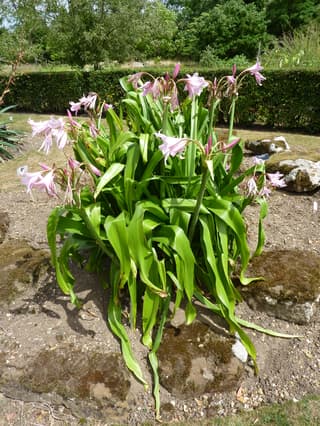
Swamp Lily
Crinum
Crinum is a large genus of about 180 bulbous plants in the family Amaryllidaceae, native to tropical and subtropical regions across Africa, Asia, and the Americas. Known as swamp lilies or crinum lilies, these bold, clump-forming plants produce strap-like leaves and spectacular fragrant flowers in shades of white and pink, typically in summer. Common species include C. asiaticum (giant crinum), C. moorei (Moore's crinum), and the garden hybrid C. × powellii.
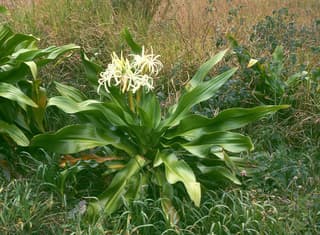
Poison Bulb
Crinum asiaticum
Crinum asiaticum, commonly known as poison bulb or giant crinum lily, is a large tropical bulbous plant in the family Amaryllidaceae. Native to coastal areas of tropical Asia, it produces spectacular umbels of fragrant white flowers on tall scapes above a rosette of long, strap-like evergreen leaves. Widely cultivated in tropical and subtropical gardens for its bold, dramatic appearance.
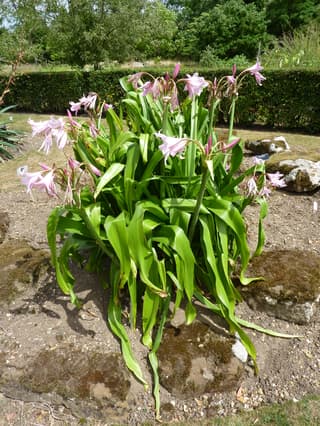
Powell's Crinum Lily
Crinum x powellii
Crinum x powellii, commonly known as Powell's Crinum Lily, is a stunning hybrid bulbous perennial resulting from a cross between two South African species, Crinum bulbispermum and Crinum moorei. It produces large, strap-like leaves and tall flower spikes bearing fragrant, trumpet-shaped flowers in shades of pink to white during late summer. A hardy and long-lived garden plant, it thrives in borders, cottage gardens, and warm temperate climates.
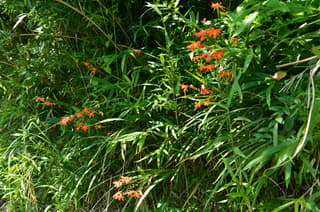
Montbretia
Crocosmia × crocosmiiflora
Montbretia (Crocosmia × crocosmiiflora) is a hybrid perennial corm-forming plant in the family Iridaceae, created by crossing Crocosmia aurea and Crocosmia pottsii by French horticulturist Victor Lemoine in 1880. It produces arching stems bearing funnel-shaped flowers in vivid shades of orange to red from mid-summer through early autumn. The foliage consists of bright green, sword-like leaves that emerge in spring and die back in winter. Widely grown in temperate gardens, it can naturalise readily and spread vigorously in mild, moist climates.
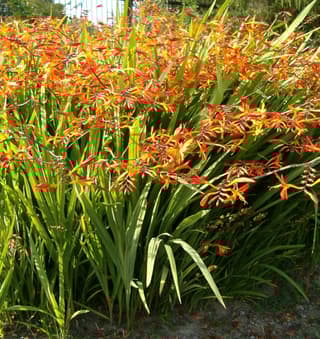
Montbretia
Crocosmia crocosmiiflora
Crocosmia crocosmiiflora, commonly known as Montbretia, is a vigorous cormous perennial from South Africa belonging to the Iridaceae family. It produces arching sprays of bright orange, red, and yellow tubular flowers in mid to late summer, making it a striking addition to borders and cottage gardens. Its sword-like foliage remains attractive throughout the growing season, and the plant naturalizes readily, forming impressive clumps over time.
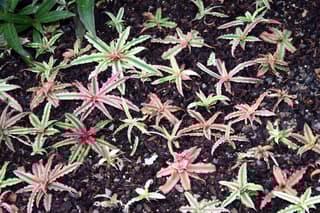
Earth Star
Cryptanthus bivittatus
Cryptanthus bivittatus, commonly known as Earth Star, is a terrestrial bromeliad native to Brazil. It forms flat rosettes of stiff, wavy leaves marked with longitudinal stripes in pink, green, and silver tones. Ideal for terrariums and indoor settings, it is an easy-care and low-maintenance plant.
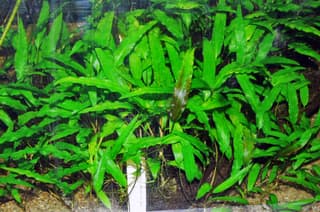
Wendt's Water Trumpet
Cryptocoryne wendtii
Wendt's Water Trumpet (Cryptocoryne wendtii) is an exceptionally popular and hardy aquatic plant from the Araceae family, native to Sri Lanka. It forms dense clusters of lanceolate to wavy leaves, with colors ranging from green to brown or reddish depending on the variety and light intensity. It spreads via underground runners (stolons) and gradually creates a thick carpet on the aquarium floor, making it one of the most widely used plants for the foreground or midground of an aquascape. It flowers only when grown above the water surface (emersed) – while submerged, it remains non-flowering but is highly valued for its low maintenance and stable growth.
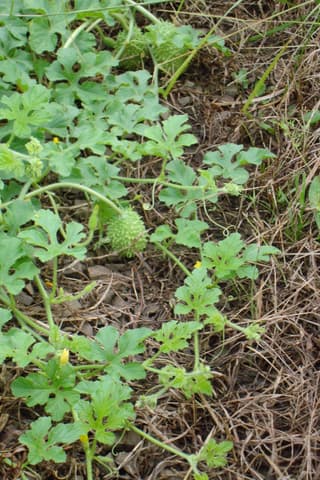
West Indian Gherkin
Cucumis anguria
Cucumis anguria, the West Indian gherkin, is a fast-growing annual climbing vine in the Cucurbitaceae family. Native to tropical Africa and naturalized across the Caribbean and South America, it produces small, oval, spiny fruits prized in tropical cuisines.
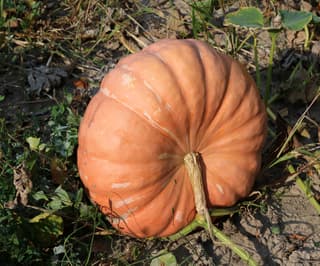
Pumpkin
Cucurbita maxima
Cucurbita maxima, commonly known as pumpkin or winter squash, is a vigorous annual trailing vine. Its leaves are large, heart-shaped, and rough, while its flowers are a vibrant yellow. It is widely cultivated for its nutritious fruits, which can vary drastically in size, shape, and rind color, being one of the species that produces the largest fruits in the plant kingdom.
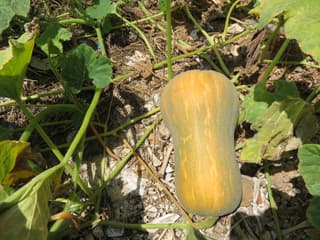
Butternut Squash
Cucurbita moschata
Cucurbita moschata, commonly known as Butternut Squash or Butternut Pumpkin, is an annual vining cucurbit native to Central and South America. It produces tan-skinned, pear-shaped fruits with sweet, orange flesh that is rich in vitamin A, potassium, and dietary fiber. One of the most popular and widely cultivated squash varieties worldwide, it is prized for its culinary versatility, long storage life, and nutritional value.
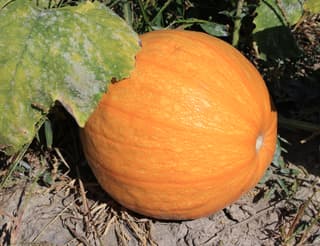
Zucchini
Cucurbita pepo
Cucurbita pepo is a highly versatile species of the Cucurbitaceae family, native to Mesoamerica, encompassing many popular cultivars including zucchini, pumpkin, acorn squash, spaghetti squash, and ornamental gourds. It is a fast-growing annual cultivated worldwide for food and decoration.
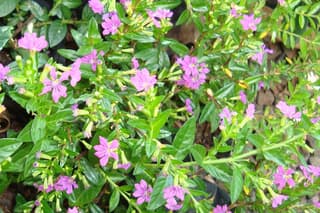
Slender Cuphea
Cuphea gracilis
Slender Cuphea (Cuphea gracilis) is a compact, evergreen perennial herb native to Brazil, beloved for its delicate foliage and year-round blooming. Growing up to 30 cm tall, it produces masses of tiny lilac, white, or pink flowers that make it a standout in gardens, containers, and border plantings.
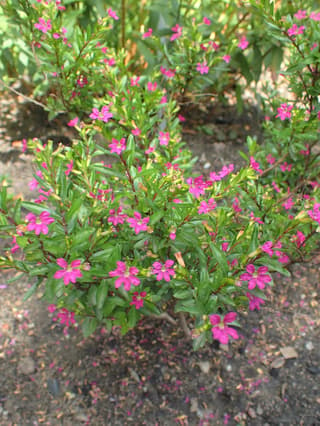
Mexican Heather
Cuphea hyssopifolia
Cuphea hyssopifolia, commonly known as Mexican Heather or False Heather, is a small evergreen shrub native to Mexico and Guatemala. It is famous for its dense, branched foliage with tiny lance-shaped leaves and a profusion of delicate flowers that bloom almost year-round. It is an extremely versatile plant, used in garden borders as well as in pots and window boxes.
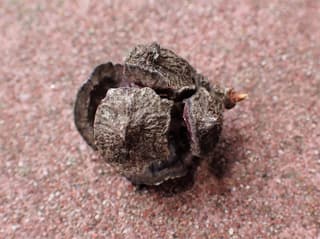
Mexican Cypress
Cupressus lusitanica
Cupressus lusitanica, commonly known as Mexican cypress or Cedar of Goa, is a large evergreen conifer native to Mexico and Central America. Growing at elevations between 1,500 and 3,000 meters, it forms an elegant conical to columnar crown reaching up to 35 meters tall. Its reddish-brown fibrous bark and dark green scale-like foliage make it a highly prized ornamental tree in parks and avenues, while it is also widely planted for timber, windbreaks, and reforestation projects across tropical highlands worldwide.
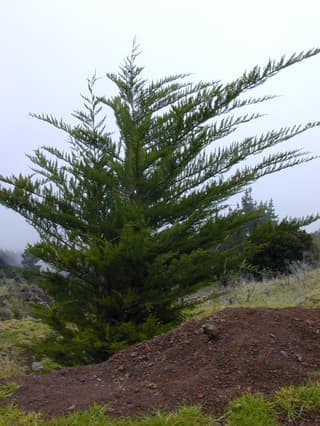
Monterey Cypress
Cupressus macrocarpa
Monterey Cypress (Cupressus macrocarpa) is a majestic evergreen conifer native to the central California coast. Famous for its dramatic windswept silhouette along the Monterey Peninsula, this fast-growing tree develops a broad, flat-topped crown in exposed coastal conditions. Its scale-like foliage emits a pleasant lemony fragrance when crushed. Though its natural habitat is restricted to two small groves near Monterey, it has been widely planted worldwide as a specimen tree, hedge, windbreak, and coastal screen.
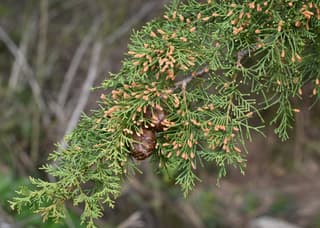
Italian Cypress
Cupressus sempervirens
Cupressus sempervirens, known as the Italian Cypress, is a majestic evergreen conifer with a narrow columnar shape. Native to the Mediterranean region, it is famous for its longevity, capable of living for centuries. Its leaves are small and scale-like, exuding a characteristic resinous aroma when crushed. It is widely used in classical landscaping to create vertical lines and formal hedges.
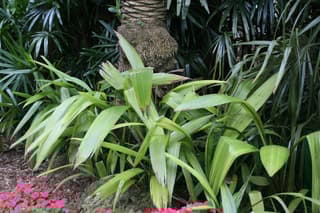
Palm Grass
Curculigo capitulata
Curculigo capitulata, commonly known as Palm Grass, is a lush evergreen perennial native to Southeast Asia. It produces bold, palm-like strap leaves up to 90 cm long that form dense, tropical clumps. Small yellow flowers emerge from the leaf bases and are sweetly scented. A remarkably adaptable plant suitable for both indoor and outdoor cultivation.

Hidden Ginger
Curcuma petiolata
Curcuma petiolata is a clumping tropical ginger grown for its lush, broad, paddle-shaped leaves and cone-like summer blooms whose showy pink-and-white bracts hide the true flowers tucked inside. Growing from a rhizome, it goes dormant in winter and returns each spring, making a bold accent in shade borders and large containers.
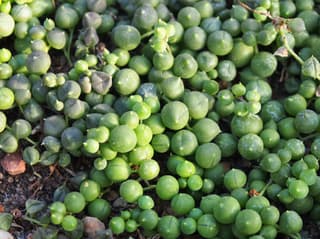
Curio (genus) — formerly Senecio succulents
Curio
Curio is a genus of succulent plants in the family Asteraceae, split from Senecio in 2012. It encompasses popular trailing and groundcover succulents such as String of Pearls (C. rowleyanus), String of Bananas (C. radicans), and Candle Plant (C. articulatus). These plants are prized for their unusual foliage and low-maintenance care.
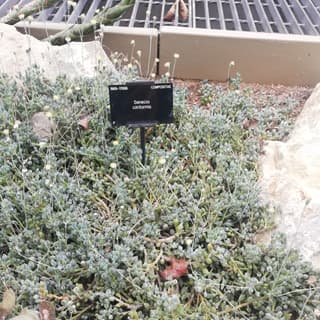
String of Tears
Curio citriformis
String of Tears (Curio citriformis) is a charming trailing succulent native to the arid regions of South Africa, Lesotho, and Eswatini. Its slender, arching stems bear plump teardrop- or lemon-shaped leaves with a characteristic translucent stripe called a window that channels light for internal photosynthesis — a remarkable adaptation to its dry native habitat. A slow-growing plant with a graceful cascading habit, it is ideal for hanging baskets and elevated planters where its long, trailing stems can drape freely. In late summer and fall, it produces small daisy-like flowers in creamy yellow to white, attracting bees and butterflies.
What are Easy Plants?
Easy Plants are ideal for beginners or people with little time for care. These species are tolerant of watering mistakes, light variations, and don't require constant attention. Perfect for those just starting out with plants.
Tips for Growing Easy Plants
To succeed with easy plants, remember: less is more. Avoid overwatering, choose a spot with adequate light, and let the soil dry between waterings. Most of these plants prefer to be 'forgotten' occasionally.