2315 Easy Plants | 2026 Guide - Page 18
Discover 2315 easy plants for your garden. Complete care guide.
2315 Easy Plants
Showing 613-648 of 2315
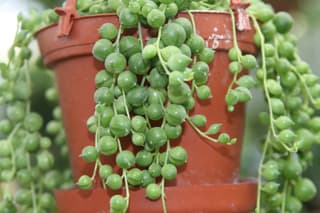
String of Watermelons
Curio herreanus
Curio herreanus, commonly known as String of Watermelons, is a charming trailing succulent native to East Africa. Its distinctive bead-like leaves feature dark green striping reminiscent of tiny watermelons, cascading gracefully from hanging baskets or shelves. This drought-tolerant gem thrives with minimal care and is a favorite among succulent enthusiasts.
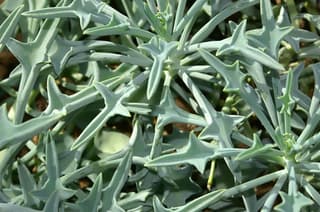
Spear Head
Curio kleiniiformis
Curio kleiniiformis, formerly known as Senecio kleiniiformis, is a fascinating succulent plant native to South Africa. It is distinguished by its fleshy, blue-green or glaucous leaves, which have a unique spearhead or trident shape with slightly serrated edges. It grows in a compact, shrubby manner, producing long flower stalks that hold small, pale yellow daisy-like flowers during the warm months.
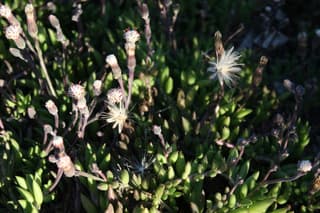
String of Bananas
Curio radicans
Curio radicans, commonly known as String of Bananas (syn. Senecio radicans), is a trailing succulent native to South Africa. Its distinctive banana-shaped leaves hang in long cascading strands, making it one of the most popular hanging basket succulents. Belonging to the Asteraceae family, it produces small white or pale yellow daisy-like flowers in winter and spring.
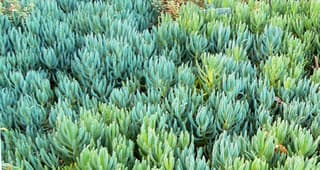
Blue Chalksticks
Curio repens
Curio repens, still widely sold under its older name Senecio serpens (and formerly Kleinia repens), is a low-growing succulent groundcover native to the rocky sandstone slopes of South Africa's Western Cape. Its cylindrical, powder-blue leaves cluster densely along sprawling stems, forming a striking blue-gray mat that spreads readily in containers, rock gardens, and water-wise landscapes.
Blue Chalksticks
Curio talinoides
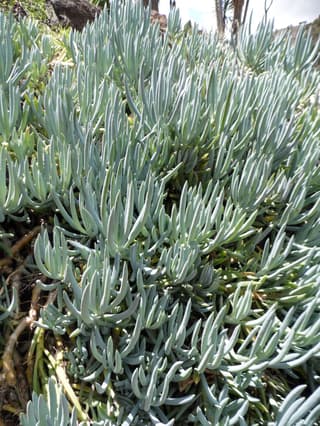
Curio talinoides, commonly known as Blue Chalksticks, is a striking succulent native to South Africa. It forms dense, low-growing mats of pencil-like, glaucous blue-grey leaves with a distinctive waxy coating that gives the plant its signature silvery-blue appearance. A member of the Asteraceae family, it produces small white daisy-like flowers in summer. Highly valued in xeriscape and Mediterranean gardens for its dramatic color contrast and minimal water requirements.
Assegai tree
Curtisia dentata
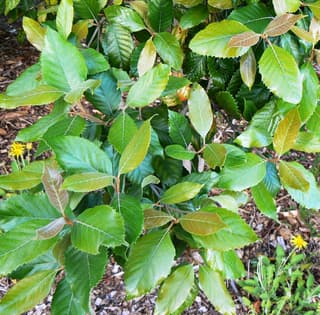
Curtisia dentata, commonly known as the Assegai tree, is a majestic evergreen tree native to Southern Africa. It features leathery, glossy dark green leaves with very characteristic serrated edges. Its bark is dark gray and becomes fissured with age. Historically, its extremely dense and durable wood was used by indigenous peoples to manufacture spear shafts (assegais). It produces small white fruits that attract various bird species.
Cabbage Tree
Cussonia spicata
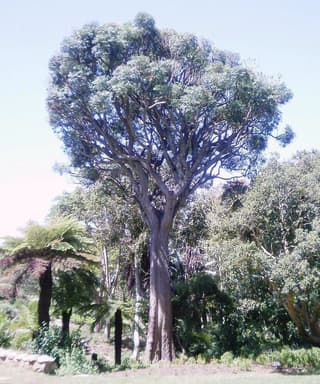
Cussonia spicata, known as the cabbage tree, is a fast-growing evergreen tree native to the wetter regions of Southern and Eastern Africa, where it occurs from dry forests to savannas at altitudes of 200 to 2,550 m. It is characterized by a thick, succulent trunk and large palmate leaves arranged in dense spherical clusters at the ends of the branches. At maturity, it grows up to 15 m tall and produces striking spike-like inflorescences of yellow-green color in summer, from which it received its specific name. Unlike many houseplants, it is not considered toxic to humans or pets.
Pussy Ears
Cyanotis somaliensis
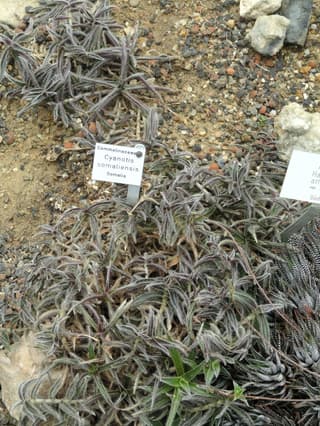
Cyanotis somaliensis, known as Pussy Ears or Kitten Ears, is a creeping perennial succulent in the Commelinaceae family, native to northern Somalia in East Africa. Its small, fleshy, lance-shaped leaves (about 4 cm) are covered in a dense, soft white fuzz that gives it a unique velvety texture, resembling a kitten's ears. It is a slow-growing and compact plant, reaching about 12 cm in height, with trailing stems that can extend up to 60 cm, making it ideal for hanging baskets. In summer, it produces small three-petaled purple or blue flowers with showy yellow stamens that create a charming contrast. The species has received the Royal Horticultural Society's Award of Garden Merit.
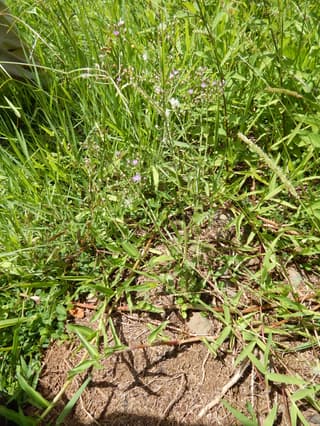
Little Ironweed
Cyanthillium cinereum
Cyanthillium cinereum (synonym: Vernonia cinerea), commonly known as little ironweed, is an annual or short-lived perennial herb in the Asteraceae family that can grow up to 120 cm tall. Native to tropical Africa and Asia (India, Sri Lanka, Indochina, Indonesia), it has become a pantropical weed naturalized in Australia, Central and South America, and Florida. Its tiny, flat-topped inflorescences contain pinkish-purple flower heads without ray florets. It frequently appears along roadsides, open spaces, and abandoned fields, while it has played an important role in Ayurvedic and folk medicine for centuries.
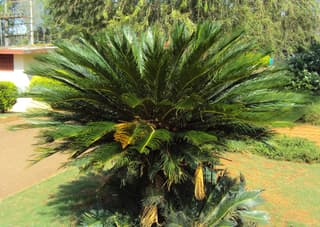
Sago Palm
Cycas revoluta
Cycas revoluta, commonly known as the Sago Palm, is not actually a palm but one of the oldest living seed plants on Earth — a true living fossil. Native to southern Japan, this slow-growing cycad features a stout trunk crowned with a rosette of stiff, dark green, glossy pinnate leaves. Despite its prehistoric origins, it thrives as a popular ornamental plant both indoors and in warm-climate gardens.
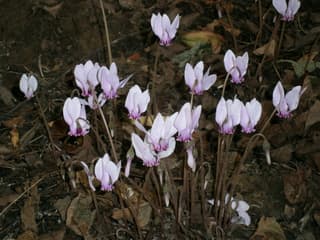
Ivy-leaved Cyclamen
Cyclamen hederifolium
Cyclamen hederifolium, commonly known as ivy-leaved cyclamen or hardy cyclamen, is a tuberous perennial native to the Mediterranean regions of southern Europe and southwestern Turkey, including Italy, France, Greece, and the Balkans. A member of the Primulaceae family, it is one of the hardiest and easiest-to-naturalize cyclamen species for temperate gardens. Its specific epithet, hederifolium, refers to the ivy-like (Hedera) shape of its leaves, which display striking silver marbling. Pink to magenta or white butterfly-shaped flowers with reflexed petals appear in late summer and autumn, typically emerging before or alongside the new foliage. After flowering, the plant produces ornamental leaves through autumn and winter before going dormant in summer, when the tuber rests beneath the soil. It is widely grown as ground cover beneath deciduous trees and shrubs, where it naturalizes into extensive carpets over the years.
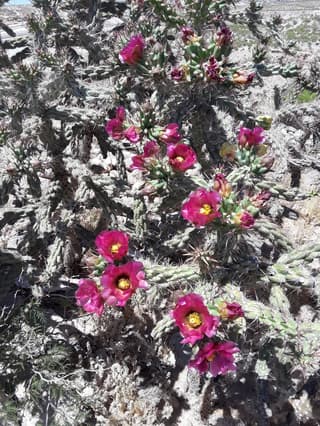
Cane Cholla
Cylindropuntia imbricata
Cane cholla (Cylindropuntia imbricata) is a large, shrubby to tree-like cactus native to the arid grasslands and high deserts of the southwestern United States and northern Mexico. Its cylindrical, spiny stems are covered in overlapping tubercles, giving the plant a braided, chain-like appearance. In late spring and summer it produces striking magenta to purple flowers, followed by long-lasting yellow fruits that persist into winter. Remarkably cold-hardy for a cactus, it tolerates temperatures well below freezing and thrives in poor, rocky, well-drained soil with minimal care.
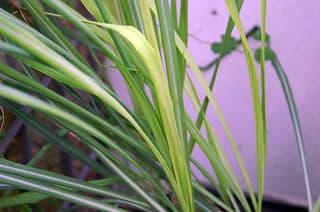
Lemongrass
Cymbopogon citratus
Lemongrass (Cymbopogon citratus) is a tropical aromatic grass native to tropical Asia, widely cultivated for its intense citrus fragrance and its extensive culinary and medicinal applications. It forms dense clumps with long, slender leaves that can reach up to 1.8 m in height.
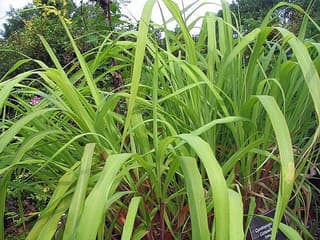
Citronella Grass
Cymbopogon nardus
Cymbopogon nardus, commonly known as citronella grass, is a perennial clumping grass with long, narrow, aromatic leaves and a strong citrus scent. Native to Sri Lanka and Southeast Asia, it is widely cultivated in tropical and subtropical regions for its essential oil, prized as a natural insect repellent.
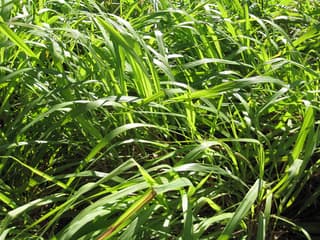
Java Citronella
Cymbopogon winterianus
Java Citronella (Cymbopogon winterianus) is a tropical perennial grass native to Southeast Asia, particularly the island of Java, Indonesia. It is widely cultivated for its essential oil, rich in citronellal and geraniol, which is used in insect repellents, cosmetics, perfumery, and aromatherapy. The plant forms dense, aromatic clumps of long leaves and can reach up to 2.5 meters in height under favorable conditions.
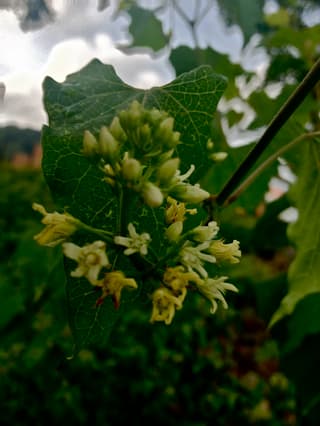
Honeyvine Milkweed
Cynanchum laeve
Cynanchum laeve (honeyvine milkweed) is a vigorous, twining perennial vine in the dogbane family (Apocynaceae), native to central and eastern North America. It bears opposite, heart-shaped leaves and a deep fleshy taproot, climbing 3–6 m or more on any available support. From June to September it produces dense clusters of small, fragrant, creamy-white star-shaped flowers that attract bees and butterflies, followed by smooth teardrop-shaped seed pods. A larval host for monarch butterflies, it is valued in wildlife gardens yet considered an aggressive weed in agricultural settings due to its deep roots and prolific wind-borne seed.
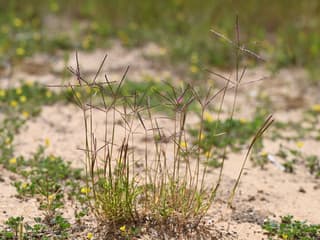
Bermuda grass
Cynodon dactylon
Cynodon dactylon, commonly known as Bermuda grass, couch grass, or devil's grass, is a perennial grass species widely distributed across tropical and subtropical regions. It is known for its ability to form a dense and resilient carpet, frequently used in lawns, sports fields, and as forage. It possesses both underground rhizomes and surface stolons, which provide great vigor and recovery capacity.
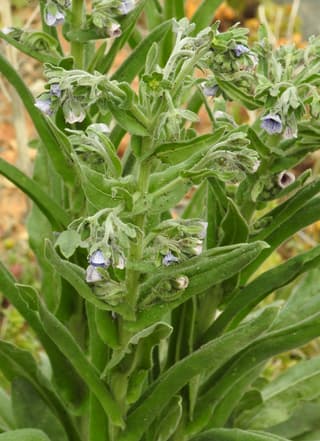
Blue Houndstongue
Cynoglossum creticum
Blue Houndstongue (Cynoglossum creticum) is a biennial or perennial herb in the family Boraginaceae, native to the Mediterranean Basin including the island of Crete. It produces distinctive pale blue to violet flowers with darker blue veins, blooming from spring through early summer. Well adapted to dry, rocky soils and full sun, it is popular in wildflower and Mediterranean-style gardens. WARNING: contains pyrrolizidine alkaloids — severely toxic to humans, cats, and dogs.
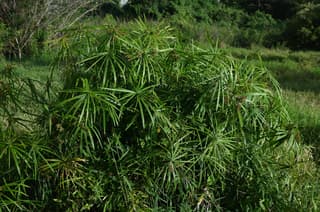
Umbrella Sedge
Cyperus
Cyperus is a large genus of approximately 700 species in the family Cyperaceae, distributed across tropical and temperate regions on all continents. Well-known cultivated species such as Cyperus alternifolius (umbrella sedge) are prized for their striking architectural form — upright stems topped with radiating leaf bracts resembling an umbrella or parasol. Naturally found in wetlands, along riverbanks and pond margins, these semi-aquatic plants thrive in consistently moist to waterlogged conditions. They are popular as ornamental houseplants, pond plants, and water garden specimens.
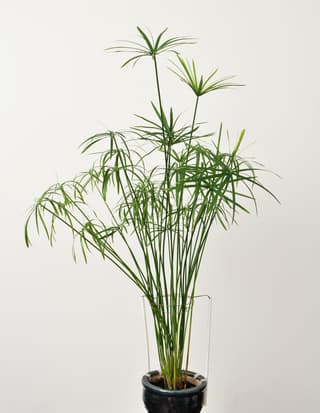
Umbrella Papyrus
Cyperus alternifolius
Cyperus alternifolius, known as Umbrella Papyrus, is a semi-aquatic perennial sedge native to Madagascar. Its distinctive radiating bracts at the top of tall stems resemble an open umbrella, making it a striking architectural plant for water gardens, pond edges, and indoor containers. It belongs to the Cyperaceae family and thrives in consistently wet or waterlogged conditions.
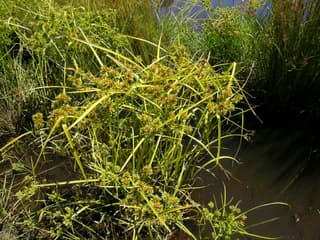
Tall Flatsedge
Cyperus eragrostis
Cyperus eragrostis, commonly known as Tall Flatsedge or Pale Galingale, is a tufted perennial sedge native to subtropical and tropical South America, now naturalized worldwide. It thrives in wet environments such as wetlands, ditches, riverbanks, and pond margins, growing 25–90 cm tall. Its umbrella-like flower heads with yellow-green-brown spikelets make it an attractive ornamental for water gardens and rain gardens.
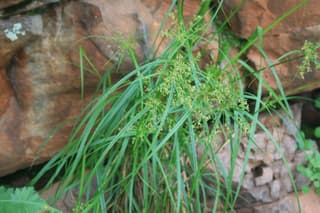
Tiger Nut
Cyperus esculentus
Tiger nut (Cyperus esculentus) is a low-growing perennial sedge in the papyrus family, grown worldwide for its small, sweet, nutty-flavored underground tubers - the base of Spain's popular horchata de chufa drink. The same plant is also known as yellow nutsedge, one of the world's most persistent agricultural weeds: left unmanaged, its rhizomes and tubers spread rapidly and can be extremely difficult to eradicate from lawns and cropland. Grow it deliberately in a contained bed or large pot for its edible harvest, never in open ground near vegetable beds you want to keep nutsedge-free.
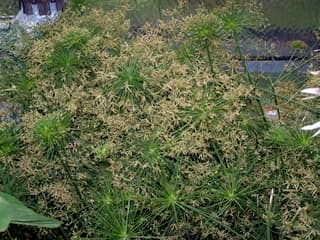
Dwarf Papyrus
Cyperus haspan
Dwarf Papyrus (Cyperus haspan) is a compact semi-aquatic sedge native to pantropical regions across Africa, Asia, and the Americas. It thrives in ponds, water gardens, aquariums, and bog areas, producing slender upright stems crowned with delicate umbrella-like flowerheads. Its graceful appearance and fast growth make it a popular choice for water features.
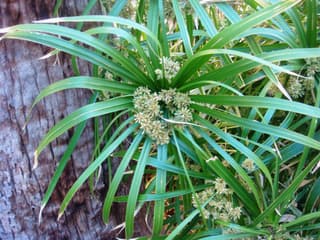
Umbrella Plant
Cyperus involucratus
Cyperus involucratus, commonly known as the Umbrella Plant, is a graceful semi-aquatic sedge native to Madagascar. Its distinctive radiating bracts form an elegant umbrella-like crown atop tall, slender stems, making it a striking architectural plant for both indoor and outdoor settings. Thriving in wet conditions, it is one of the few houseplants that actually benefits from standing water, making it nearly impossible to overwater.
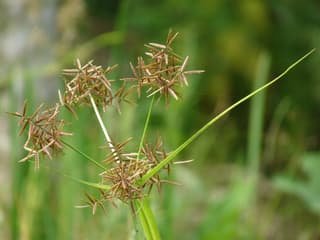
Purple Nutsedge
Cyperus rotundus
Cyperus rotundus, purple nutsedge, is a fast-spreading perennial sedge with glossy, grass-like leaves and triangular stems topped by reddish-brown flower spikes. It grows from chains of small underground tubers, which make it one of the world's most persistent weeds but also the source of the aromatic tuber known as nagarmotha or musta in traditional medicine.
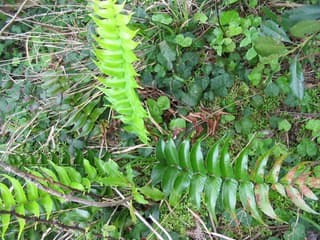
Japanese Holly Fern
Cyrtomium falcatum
Cyrtomium falcatum is an elegant evergreen fern native to East Asia, prized for its glossy, dark green, leathery fronds that resemble holly leaves. It forms dense, vase-shaped clumps and is one of the most adaptable and resilient ferns for both indoor and outdoor cultivation. Its sickle-shaped pinnae give it a bold, architectural appearance that stands out among other ferns.
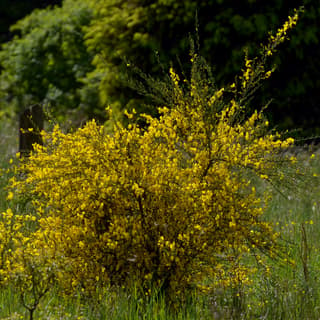
Scotch broom
Cytisus scoparius
Scotch broom (Cytisus scoparius) is a deciduous shrub in the legume family (Fabaceae) that grows 50–250 cm tall. Its green, five-angled, slender branches continue to photosynthesize even in winter; its small, quickly shedding leaves are undivided at the top and trifoliate at the bottom. In May and June, bright golden-yellow, pea-like flowers appear, forming dense, fragrant clusters along the stems. The flattened seed pods that develop from the flowers turn black upon ripening. Native to Western and Central Europe, it thrives in sunny habitats with dry, sandy, acidic soil—such as hillsides and sand dunes. Due to its hardiness and rapid growth, it has naturalized in many areas and is considered invasive in several regions.
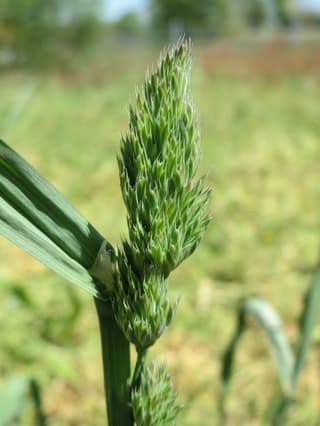
Orchard Grass
Dactylis glomerata
Orchard grass (Dactylis glomerata) is a perennial, clump-forming cool-season grass native to Europe, temperate Asia and North Africa, now naturalized across much of the world. It is one of the most important forage grasses used in pastures and hay production, valued for tolerating both drought and partial shade far better than most pasture grasses.
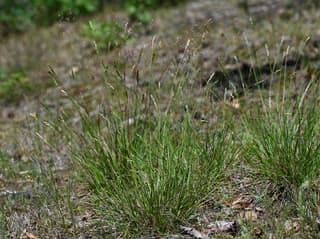
Heath-grass
Danthonia decumbens
Danthonia decumbens, commonly known as heath-grass, is a low-growing perennial grass native to European heathlands and acid grasslands. It forms dense, compact tufts of narrow bright-green leaves with a characteristic decumbent (sprawling) habit, with tips turned upward. In summer it produces small panicles of silvery-green to purplish spikelets, many of which self-pollinate while still enclosed. It is a specialist of nutrient-poor, acid soils and is considered an indicator of ancient, undisturbed grassland habitats.
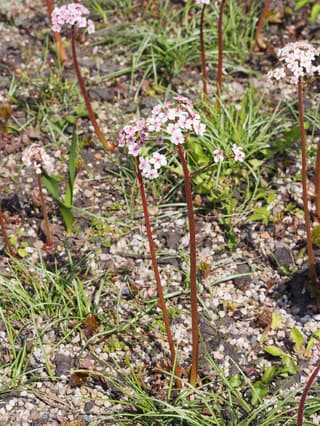
Indian rhubarb
Darmera peltata
Indian rhubarb (Darmera peltata) is a bold, clump-forming perennial of the saxifrage family, native to streamsides in northern California and southern Oregon. In spring, tall leafless stems carry domed clusters of pale pink to white starry flowers before the foliage appears. The rounded, glossy, umbrella-like leaves then expand up to about 45 cm across and turn red in autumn. It spreads slowly by creeping rhizomes, reaching 1 to 1.5 m tall. Hardy through the UK and northern Europe, it holds the RHS Award of Garden Merit and suits pond margins, bog gardens and damp borders.
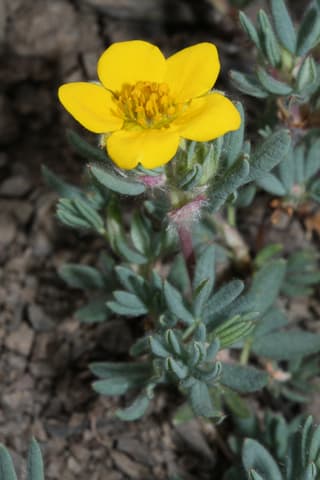
Shrubby Cinquefoil
Dasiphora fruticosa
Shrubby Cinquefoil (Dasiphora fruticosa, syn. Potentilla fruticosa) is a deciduous shrub in the rose family (Rosaceae), native to the cold and subarctic regions of the Northern Hemisphere, where it often grows in high-altitude alpine areas. It grows to a height of approximately 0.5–1.2 m, featuring small, pinnately compound leaves with a gray-green to dark green color, and blooms with small, saucer-shaped flowers from spring until the first frosts. It is exceptionally resistant to both frost and drought, making it one of the most low-maintenance ornamental woody plants for gardens and parks.
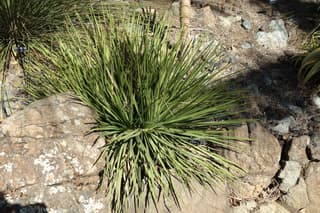
Mexican Grass Tree
Dasylirion longissimum
Dasylirion longissimum, commonly known as the Mexican Grass Tree or Toothless Desert Spoon, is a xerophytic perennial plant in the Asparagaceae family, native to the Chihuahuan Desert and arid regions of northeastern Mexico (Tamaulipas, San Luis Potosí, and Nuevo León). It forms a dense, symmetrical rosette of cylindrical, thin, flexible, blue-green leaves over a meter long, emerging from a thick, woody trunk. It is very slow-growing—taking over a decade to develop a visible trunk—and is extremely tolerant of drought and moderate frosts (down to about -9 °C / 15 °F). In summer, it produces long flower spikes with small cream or white flowers, which later form attractive clusters of reddish seeds. It is primarily cultivated as an architectural ornamental plant in xeriscapes, rock gardens, and low-maintenance landscapes.
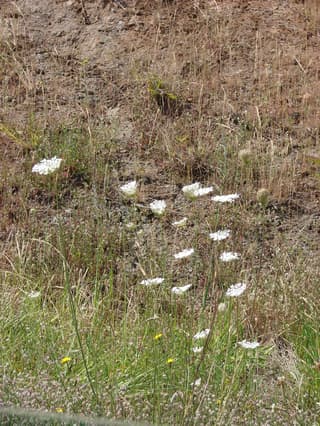
Wild Carrot
Daucus
Daucus is a genus of flowering plants in the family Apiaceae, best known for Daucus carota (wild carrot), the ancestor of the cultivated carrot. Native to temperate regions of Europe, northern Africa, and Asia, wild carrot produces delicate, lacy white umbels of flowers and a slender, pale taproot. It thrives in meadows, roadsides, and disturbed ground, and has naturalized across much of North America and Australia.
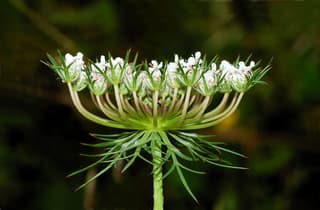
Carrot
Daucus carota
Daucus carota, commonly known as the carrot, is a biennial herbaceous plant. While the wild form is often called Queen Anne's Lace, the domesticated subspecies is one of the world's most important root vegetables. It features finely divided, fern-like foliage and produces a large, fleshy taproot that is typically orange, though purple, yellow, and white varieties exist. In its second year, it produces an umbrella-shaped cluster of small white flowers.
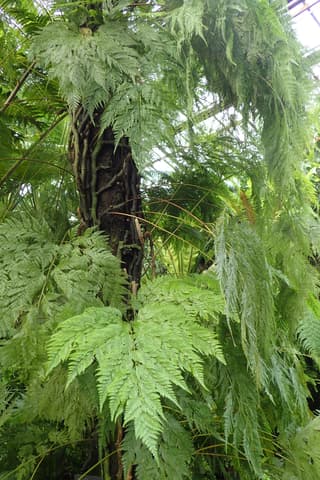
Rabbit's Foot Fern
Davallia fejeensis
An enchanting epiphytic fern from Fiji, the Rabbit's Foot Fern is beloved for its delicate, lace-like fronds and distinctive furry rhizomes that creep over the edges of pots. These soft, brown-scaled rhizomes resemble a rabbit's foot, giving the plant its charming common name. It thrives in bright indirect light and appreciates consistent humidity, making it an excellent choice for hanging baskets or elevated planters where its creeping rhizomes can cascade gracefully.
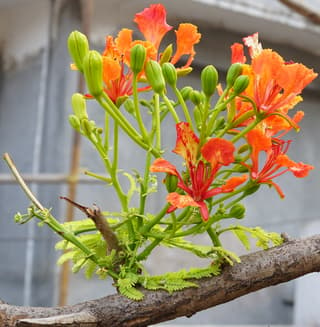
Royal Poinciana
Delonix regia
The Royal Poinciana is considered one of the most beautiful trees in the world. Native to Madagascar, it stands out for its massive umbrella-shaped canopy and its exuberant flowering in shades of red and orange. Its leaves are finely pinnate, giving the tree a light texture even when not in bloom.
What are Easy Plants?
Easy Plants are ideal for beginners or people with little time for care. These species are tolerant of watering mistakes, light variations, and don't require constant attention. Perfect for those just starting out with plants.
Tips for Growing Easy Plants
To succeed with easy plants, remember: less is more. Avoid overwatering, choose a spot with adequate light, and let the soil dry between waterings. Most of these plants prefer to be 'forgotten' occasionally.