1155 Medium Easy Care | 2026 Guide - Page 2
Find 1155 medium easy care. Complete guide for your garden.
1155 Easy Care with medium level
Showing 37-72 of 1155
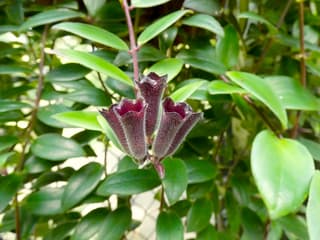
Lipstick Plant
Aeschynanthus
Aeschynanthus is a genus of trailing, epiphytic plants in the Gesneriaceae family, native to the tropical forests of Southeast Asia, including Thailand, the Malay Peninsula, Sumatra, and Borneo. Grown widely as a hanging houseplant, it produces glossy, leathery dark-green leaves along cascading stems and tubular scarlet flowers that emerge from dark maroon calyces, resembling tubes of lipstick -- the source of its common name.
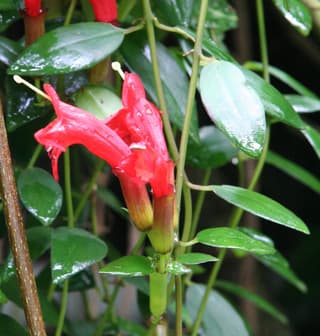
Lipstick Plant
Aeschynanthus radicans
The Lipstick Plant (Aeschynanthus radicans) is a stunning tropical epiphyte native to the humid rainforests of Southeast Asia. Known for its cascading vines adorned with glossy, waxy leaves and striking tubular red flowers that emerge from dark burgundy calyxes resembling a lipstick tube, this plant is a favorite among indoor gardeners. It thrives in hanging baskets where its trailing stems can gracefully drape, creating a lush, eye-catching display.
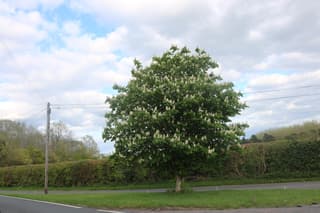
Horse Chestnut
Aesculus hippocastanum
The horse chestnut (Aesculus hippocastanum) is a large, fast-growing deciduous tree native to the Balkan Peninsula, prized across Europe and North America as a stately shade and ornamental tree. It has a broad, rounded crown, palmately compound leaves with five to seven leaflets, and produces spectacular upright clusters of white flowers with yellow-to-red throats each spring. In autumn it drops its glossy brown seeds, known as conkers, encased in spiny green husks.
Pavement mushroom
Agaricus bitorquis
Agaricus bitorquis, known as the pavement mushroom, is an edible species of fungus in the family Agaricaceae. It is characterized by an exceptionally firm, fleshy fruiting body and a distinct, double-edged ring on the stem. Frequently found in urban environments, it is capable of pushing through asphalt or compacted soil on sidewalks. It features a white or slightly creamy cap and pale pink gills that darken to chocolate brown as it matures.

Queen Victoria Agave
Agave victoriae-reginae
Agave victoriae-reginae, or Queen Victoria Agave, is an extremely slow-growing monocarpic succulent native to the Chihuahuan Desert in the Mexican states of Coahuila, Durango, and Nuevo León. It forms a compact and perfectly geometric rosette of short, rigid, dark green leaves marked with white lines that appear hand-painted. After several decades of growth, it produces a single inflorescence several meters high with cream-colored flowers, after which the mother rosette dies, often leaving offsets at its base.
Common Fieldcap
Agrocybe pediades
Agrocybe pediades is a small, cosmopolitan saprophytic fungus that frequently grows in nutrient-rich soils, such as lawns, gardens, and pastures. It is characterized by its initially hemispherical cap that flattens with age, displaying a yellowish-ochre or cinnamon color. It is an essential organism for the decomposition of organic matter and nutrient recycling in the soil. Although edible, its small size and the potential for confusion with similar toxic species require caution.
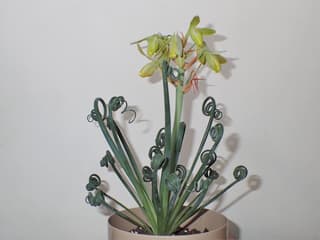
Slime Lily
Albuca
Albuca is a large genus of bulbous geophytes in the family Asparagaceae (subfamily Scilloideae), with over 100 species native mainly to southern Africa, extending into tropical Africa and Arabia. The genus name and the common nickname "slime lily" refer to the mucilaginous sap released when the leaves or bulb scales are cut. Most species are winter-growers: they produce leaves during the cool, wet months, flower in late winter to spring, then lose their foliage and go fully dormant through the hot, dry summer. Popular cultivated species such as Albuca spiralis and Albuca namaquensis are prized for their narrow, curly, spiral-tipped leaves and upright stalks of pendent, yellow-green, vanilla-scented flowers. As desert-adapted geophytes they are tough and forgiving once their dormancy cycle is respected, but are highly sensitive to overwatering while the bulb is dormant.
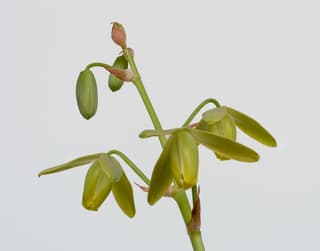
Curly Tamarak
Albuca spiralis
Albuca spiralis, commonly known as 'Frizzle Sizzle', is a unique bulbous succulent native to South Africa. It is celebrated for its distinctive, corkscrew-shaped leaves that curl more tightly when exposed to high light levels. In late spring, it produces spikes of nodding, bell-shaped yellow-green flowers that emit a sweet vanilla fragrance. The plant undergoes a summer dormancy period where its foliage may die back completely.
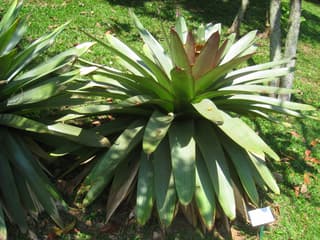
Imperial Bromeliad
Alcantarea imperialis
Alcantarea imperialis, commonly known as the Imperial Bromeliad, is one of the largest bromeliads in the world and a truly spectacular ornamental plant endemic to Brazil. Native to the rocky slopes of the Serra dos Órgãos mountain range in Rio de Janeiro state, this magnificent species forms enormous rosettes of leathery leaves that can reach 1.5 m in diameter, with a central tank capable of holding up to 30 liters of rainwater. When it eventually blooms — an event that occurs after 10 to 40 years — it produces a towering flower spike up to 3.5 m tall bearing white-yellowish flowers with reddish bracts that attract hummingbirds and other pollinators.
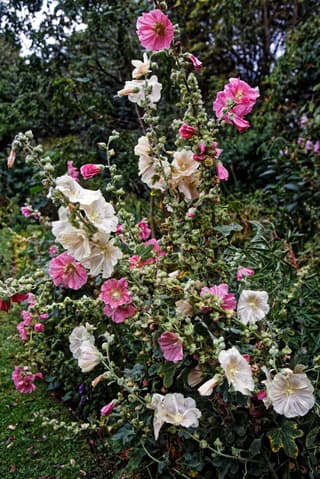
Hollyhock
Alcea
Alcea is a genus of about 60-80 tall, showy flowering plants in the mallow family (Malvaceae), native to southwestern and central Asia and southeastern Europe. The most widely cultivated species, Alcea rosea, is a beloved cottage-garden classic prized for its towering flower spikes, which can reach 2-3 m and bear large, saucer-shaped blooms in shades of pink, red, white, yellow, purple, and near-black. Hollyhocks are typically grown as biennials or short-lived perennials, flowering in their second year before often self-seeding. They are a favorite backdrop plant for cottage borders, fences, and walls.
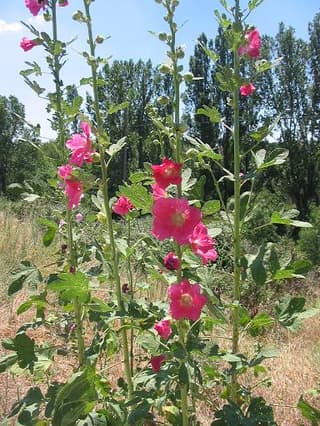
Hollyhock
Alcea rosea
Hollyhock (Alcea rosea) is a biennial or short-lived perennial flowering plant in the family Malvaceae, native to southwestern and central Asia, including Turkey and China. Renowned for its towering flower spikes reaching up to 2.5 metres (8 feet) in height, it produces abundant blooms in shades of pink, red, white, yellow, purple, and orange throughout summer. A cottage garden classic, hollyhocks thrive along fences, walls, and borders.
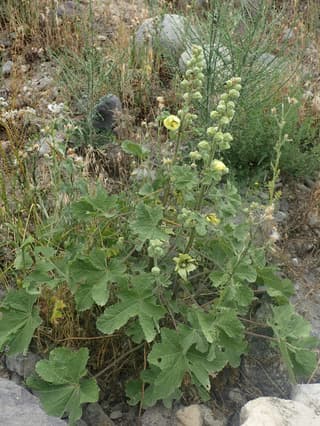
Russian Hollyhock
Alcea rugosa
A vigorous biennial or short-lived perennial native to Ukraine, Crimea, southern European Russia, and the Caucasus. Alcea rugosa is prized for its superior resistance to hollyhock rust compared to common hollyhock varieties. The plant produces tall, sturdy flower spikes with outward-facing, funnel-shaped, pale yellow flowers adorned with conspicuous staminal columns. Flowers bloom from bottom to top throughout late spring and summer, attracting hummingbirds and bees.
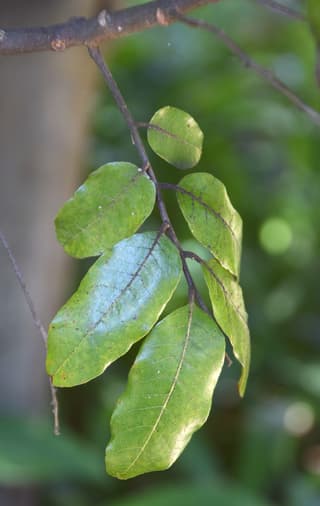
Alectryon
Alectryon
Alectryon is a genus of roughly 30 species of evergreen trees and shrubs in the soapberry family (Sapindaceae), ranging from low shrubs to canopy trees over 30 m tall. The genus is native across Australasia, Melanesia, Polynesia and Southeast Asia, with its greatest diversity in eastern Australia; its best-known member, the New Zealand titoki (Alectryon excelsus), reaches 15-20 m with fluted black bark and glossy pinnate leaves. Small crimson flowers are followed by leathery seed capsules that split open to reveal a bright red, fleshy aril wrapped around a single black seed - a display recalling a bird's eye, or the cockscomb that gives the genus its Greek name (alektryon, "rooster").

Lanceleaf Water Plantain
Alisma lanceolatum
Alisma lanceolatum is an aquatic and marginal perennial herb native to Europe, Asia, and North Africa, where it grows rooted in mud along pond margins, ditches, streams and marshes. It forms a rosette of lance-shaped leaves and produces branched spikes of small, three-petaled pink flowers from June to August.
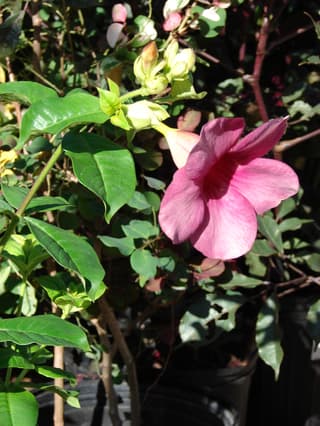
Purple Allamanda
Allamanda blanchetii
Purple Allamanda (Allamanda blanchetii) is a woody, semi-climbing tropical shrub in the Apocynaceae family, native to Bahia, Brazil. It produces large, trumpet-shaped flowers in shades of reddish-purple to lavender-pink with a contrasting yellow throat, blooming profusely from spring through fall. The velvety, elliptical leaves are arranged in whorls along flexible stems that can be trained on a trellis or pruned into a compact shrub. It is a moderately fast-growing tropical plant that demands full sun and warmth, and is sensitive to frost. The entire plant, especially its milky sap, is toxic and a skin irritant, so gloves should be worn when handling or pruning.
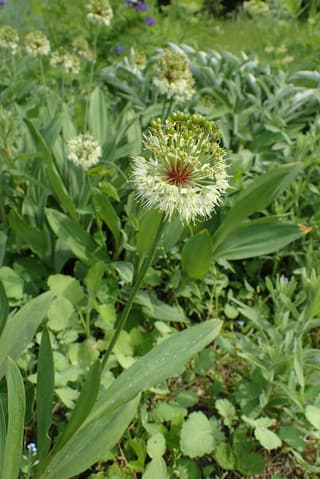
Victory Onion
Allium victorialis
Allium victorialis is a hardy perennial bulbous plant in the Amaryllidaceae family, native to alpine and subalpine regions of Europe and Asia. Remarkably cold-hardy, it withstands temperatures down to -30°C (USDA hardiness zone 4). The plant forms compact clumps of broad, glossy, dark green foliage resembling leeks. It produces tall, leafless flowering scapes (30-70 cm) with loose hemispheric umbels of 20-35 small white to creamy-green flowers blooming May through August. Small bulbs (10-20 mm diameter) cluster on a short rhizome, naturally self-dividing over time to create expanding colonies.
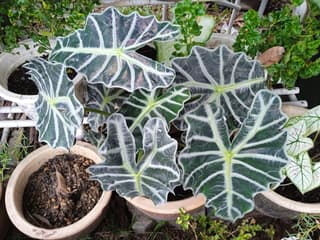
Alocasia Polly
Alocasia × mortfontanensis
Alocasia × mortfontanensis, commonly known as the African Mask Plant or Alocasia Amazonica, is a stunning hybrid featuring large, arrow-shaped leaves. The foliage is a deep, dark green, almost black, with dramatic, thick silvery-white veins and wavy, scalloped edges. It is a centerpiece plant that brings a tropical, prehistoric aesthetic to any indoor space.
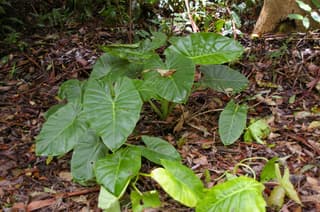
Cunjevoi
Alocasia brisbanensis
Alocasia brisbanensis, commonly known as Cunjevoi, is a large-leafed tropical perennial native to the rainforest margins of eastern Australia. It features dramatic, glossy, spade-shaped leaves up to 70 cm long on long purplish-green petioles, making it a striking ornamental plant. All parts of the plant contain calcium oxalate crystals and are highly toxic if ingested.

Green Shield Alocasia
Alocasia clypeolata
Alocasia clypeolata, commonly known as the Green Shield Alocasia, is a compact evergreen aroid endemic to the Philippines, first collected on the island of Mindanao. It belongs to the Araceae family and is prized by collectors for its rounded, shield-shaped leaves marked with dark, contrasting veins radiating outward from the center of each leaf. Reaching a modest height and spread of around 30 cm, this rhizomatous perennial forms a dense rosette of around six firm leaves atop a short central stem. In its native tropical rainforest understory, it grows in rocky, well-drained soil at low elevations, sheltered from direct sun. Like most Alocasia species, its tissues contain calcium oxalate crystals, making it toxic if ingested by pets or humans.
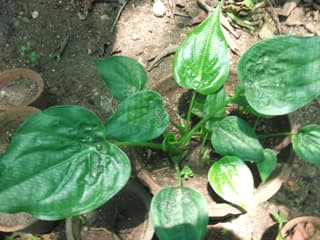
Chinese Taro
Alocasia cucullata
Alocasia cucullata, commonly known as Chinese Taro or Buddha's Hand, is a compact tropical plant native to Southeast Asia. It features glossy, heart-shaped to arrow-shaped leaves on long petioles, held upright in a striking architectural form. This evergreen perennial thrives in warm, humid environments and is widely cultivated as an ornamental houseplant. Revered across Thailand and Laos as a sacred plant of good fortune, it is traditionally placed at home entrances and Buddhist temples.
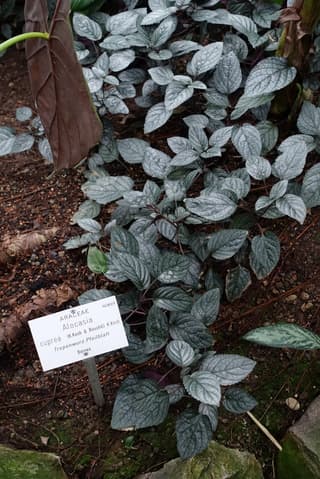
Jewel Alocasia
Alocasia cuprea
Alocasia cuprea, known as the Jewel Alocasia or Mirror Plant, is a rhizomatous evergreen aroid prized for its thick, deeply quilted leaves with a metallic copper-purple sheen on top and a wine-red underside. Native to the lowland and hill rainforests of Borneo, it belongs to the Araceae family and is a favorite among collectors for its lacquered, almost artificial-looking foliage.

Dwarf Upright Elephant Ear
Alocasia gageana
Alocasia gageana, commonly known as the dwarf upright elephant ear, is a perennial aroid native to the tropical rainforests of Myanmar, Laos, Thailand, and southern China. Its emerald-green, arrow-shaped leaves have deeply etched veins and gently scalloped edges, growing up to 50 cm across. Despite its common name, it is not truly tiny; it can reach up to 1 m tall with good care.
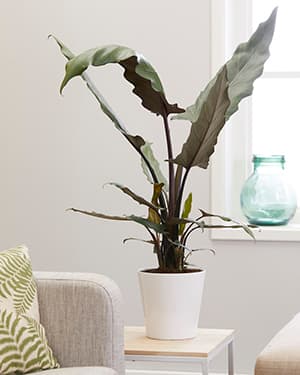
Purple Sword
Alocasia lauterbachiana
Alocasia lauterbachiana, better known as the Purple Sword, is a striking aroid prized for its long, narrow, sword-shaped leaves. The glossy dark green upper surface contrasts dramatically with a deep purple-maroon underside, and new growth often emerges with a metallic sheen. Native to the humid understories of New Guinea, it grows as a compact rhizomatous perennial that rarely tops 1.2-1.5 m indoors, forming an upright clump of upward-arching foliage rather than sprawling. Like most Alocasia, it prefers to be left slightly on the drier side between thorough waterings and is sensitive to both soggy roots and prolonged drought, making consistency the key to happy growth.
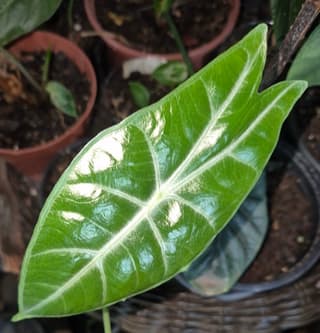
Dragon Scale Alocasia
Alocasia longiloba
Alocasia longiloba is a striking tropical plant native to the humid rainforests of Southeast Asia — Borneo, Malaysia, and Thailand. It is best known for its dramatic arrow- or heart-shaped leaves adorned with silvery-green venation that stands out boldly against a deep green background, giving it the popular name 'Dragon Scale Alocasia.' The texture of the leaf surface can appear almost reptilian, especially in the highly sought-after 'Dragon Scale' and 'Silver' cultivated forms. As a houseplant it typically reaches 60–120 cm tall, making it an elegant focal point in living rooms, offices, and indoor gardens. It belongs to the family Araceae and shares its genus with approximately 90 other fascinating species.
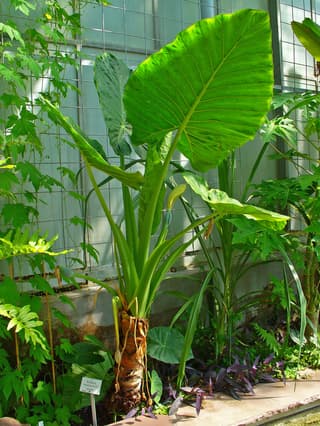
Giant Taro
Alocasia macrorrhizos
Alocasia macrorrhizos is a spectacular tropical perennial from Southeast Asia, prized for its enormous upright arrow-shaped leaves that can reach up to 1.5 meters in length. Known as Giant Elephant's Ear, this fast-growing plant makes a bold architectural statement both indoors and in tropical gardens. It belongs to the Araceae family and features thick, prominently veined, glossy green leaves on sturdy upright stems.
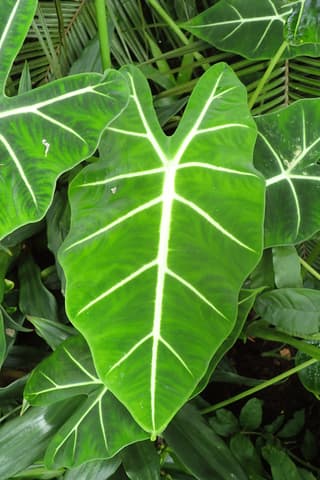
Green Velvet Alocasia
Alocasia micholitziana
Alocasia micholitziana, commonly known as the Green Velvet Alocasia or Frydek, is a striking tropical houseplant native to the Philippines. It is prized for its velvety dark green leaves with dramatically contrasting white veins and a deeply ribbed texture. A member of the Araceae family, it thrives as an indoor plant in warm, humid environments and can be a stunning focal point in any home.
Batwing Alocasia
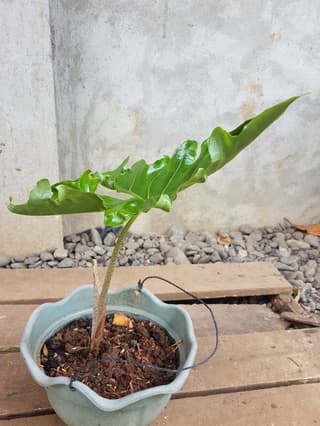
Alocasia nycteris
Alocasia nycteris, commonly called the Batwing Alocasia, is a rare aroid endemic to lowland forests of Panay Island in the Philippines. It is prized by collectors for its dark, glossy, arrow-shaped leaves whose rear lobes flare outward at nearly a right angle, evoking the outstretched wings of a bat. First displayed publicly in 2003 by Filipino hobbyist Antonio Advincula, it was formally described as a new species in 2007. In its native habitat it grows on rocky, shaded slopes and forest edges at very low elevation, and indoors it forms a wide, horizontal clump up to about 1.5 m tall.
Night-Scented Lily
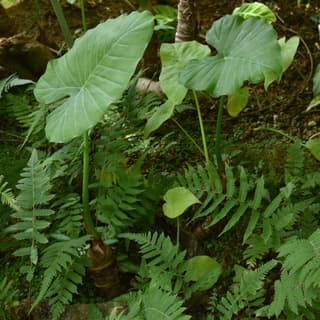
Alocasia odora
Alocasia odora, commonly known as the Night-Scented Lily or Asian Taro, is a striking tropical plant from the Araceae family, native to East and Southeast Asia. Its large arrow-shaped leaves can reach up to 60 cm in length, and the plant can grow to 2.4 meters tall. It produces fragrant cream-to-pale-peach flowers on a spadix during spring and summer, notably scented at night. WARNING: Toxic to humans, cats, and dogs when ingested raw due to calcium oxalate crystals.
Black Metallic Taro
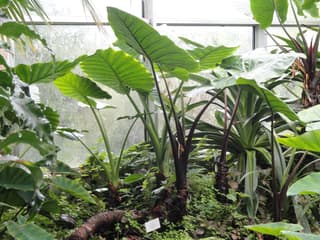
Alocasia plumbea
Alocasia plumbea, commonly known as the Black Metallic Taro, is a robust rhizomatous aroid native to tropical Southeast Asia. It is prized for its large, heart-shaped leaves with a striking metallic sheen ranging from olive-green to near-black purple, accented by contrasting veins and dark petioles. In cultivation it can reach up to 1.5 m (5 ft) tall. Its inflorescence -- a typical aroid spathe and spadix -- is inconspicuous and rarely appears indoors.
Black Velvet Alocasia
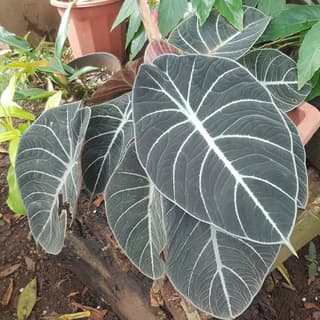
Alocasia reginula
Alocasia reginula, commonly known as Black Velvet Alocasia, is a striking compact tropical plant native to the rainforests of Borneo. It is prized for its deep, near-black velvety leaves adorned with contrasting silvery-white veins. Unlike larger Alocasia species, this jewel alocasia stays small and manageable, making it an ideal statement houseplant. Its thick, succulent-like rhizomes store water, giving it some drought tolerance but also making it highly susceptible to root rot if overwatered.
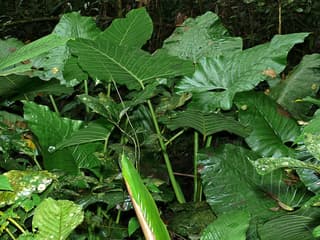
Yucatan Princess
Alocasia sarawakensis
Alocasia sarawakensis, popularly sold as 'Yucatan Princess', is a large tropical aroid from the swamp forests of Borneo. It forms a dramatic clump of glossy, arrow-shaped, dark green leaves with wavy edges and reddish-purple undersides, rising from sturdy reddish-brown stems. In the wild it can reach up to 2.4 m (8 ft) tall, though potted specimens usually stay more compact.
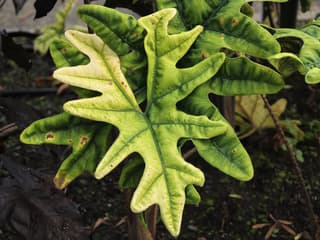
Alocasia Jacklyn
Alocasia tandurusa
Alocasia Jacklyn (Alocasia tandurusa) is a rare and spectacular tropical plant native to the humid rainforests of Sulawesi, Indonesia. Its enormous arrow-shaped leaves with prominent venation and deep green coloration make it one of the most sought-after alocasias among plant collectors worldwide. When grown indoors, it can reach up to 4 feet in height, becoming a stunning focal point in any space.
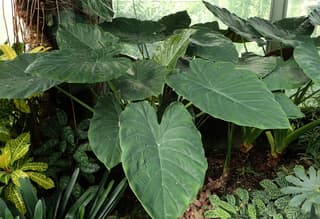
New Guinea Shield
Alocasia wentii
Alocasia wentii, commonly called the New Guinea Shield or Hardy Elephant Ear, is a robust aroid prized for its large, glossy, arrow-shaped leaves with a bronze-green sheen and dark purple undersides. Native to the highlands of New Guinea, most plants sold under this name in the houseplant trade are believed to be vigorous hybrids rather than the true wild species. It forms a dense clump of upright leaves on sturdy petioles and tolerates a wider range of indoor conditions than many other Alocasia varieties.
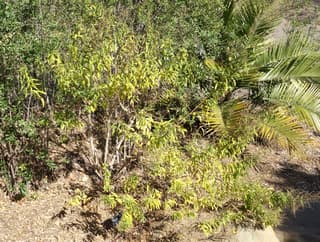
Lemon verbena
Aloysia citrodora
An aromatic perennial shrub native to South America (Argentina, Chile, Peru, and Bolivia), belonging to the Verbenaceae family. The lanceolate leaves, 5-8 cm long, release an intense lemon scent when rubbed. It blooms between summer and early autumn with small white or purplish flowers gathered in spikes. Introduced to Europe in the 17th century by Spanish and Portuguese sailors, it is now cultivated primarily for culinary use, herbal medicine, and as an aromatic ornamental balcony plant.
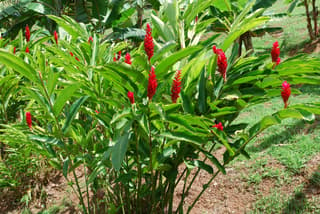
Red Ginger
Alpinia purpurata
Red Ginger (Alpinia purpurata) is a stunning tropical plant native to the South Pacific, celebrated for its dramatic crimson-red flower spikes rising above glossy lance-shaped foliage. A member of the Zingiberaceae family, it is widely cultivated as an ornamental in tropical and subtropical gardens and as a potted plant in warm interiors. Its long-lasting blooms make it highly prized for floral arrangements, leis, and landscape use.
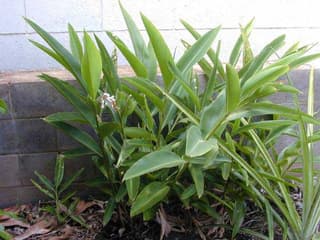
Shell Ginger
Alpinia zerumbet
Alpinia zerumbet, commonly known as Shell Ginger, is a magnificent tropical perennial native to East Asia (Japan and China). Belonging to the Zingiberaceae family, it produces large, lush, lance-shaped evergreen leaves and spectacular arching clusters of waxy, shell-shaped flowers in white and pink with yellow accents. It is widely cultivated as an ornamental plant in tropical and subtropical gardens worldwide and can also be grown indoors in bright conditions.
Medium Care Easy Care
Our selection of 1155 medium easy care combines the characteristics of this category with moderate care needs. Ideal for those with basic experience.
Why Choose Medium Easy Care?
Combining the beauty of easy care with medium difficulty level lets you enjoy this category with a balanced care commitment. Each plant was selected to offer the best characteristics of the category at the care level you are looking for.