1160 Medium Easy Care | 2026 Guide - Page 3
Find 1160 medium easy care. Complete guide for your garden.
1160 Easy Care with medium level
Showing 73-108 of 1160
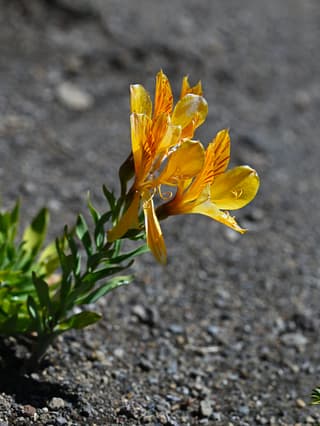
Golden Inca Lily
Alstroemeria aurea
Alstroemeria aurea, commonly known as the Golden Inca Lily or Peruvian Lily, is a hardy perennial native to the slopes of Chile and Argentina (Patagonia). It produces striking flowers in shades of yellow, orange, and gold — often streaked or spotted — from spring through fall. It is prized as both a garden ornamental and a long-lasting cut flower.
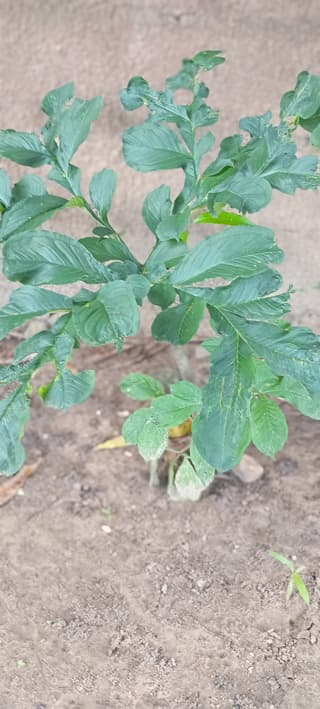
Voodoo Lily
Amorphophallus
Amorphophallus is a captivating genus of approximately 200 tropical and subtropical tuberous herbaceous plants in the family Araceae, native to Asia, Africa, and Australasia. They are renowned for their spectacular inflorescences — some of the largest in the plant kingdom — which emit powerful odors to attract pollinators. A. konjac is cultivated for its glucomannan-rich corms used in Asian cuisine. A. titanum, the "corpse flower," produces the world's largest unbranched inflorescence.
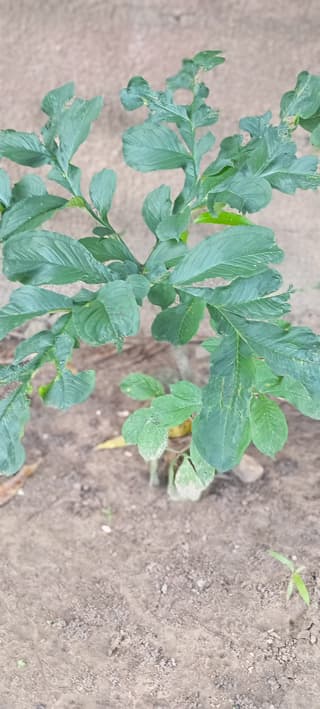
Konjac
Amorphophallus konjac
Amorphophallus konjac is an exotic tuberous plant native to Southeast Asia. It is famous for producing a single giant leaf that resembles a small tree and a spectacular dark purple inflorescence that emits a strong odor to attract pollinators. Its underground tuber is widely used in Asian cuisine for the production of konjac flour and jelly.
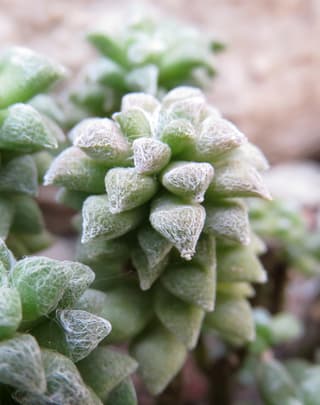
Spiderweb Anacampseros
Anacampseros arachnoides
Anacampseros arachnoides is a small, charming succulent native to South Africa, prized for its compact rosettes adorned with fine white thread-like trichomes that resemble a spider's web. It belongs to the family Anacampserotaceae and thrives in bright, direct sunlight with minimal watering.
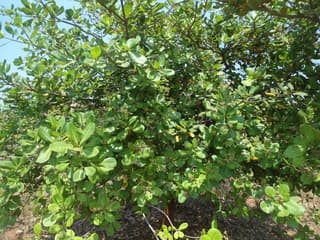
Cashew
Anacardium occidentale
The cashew tree (Anacardium occidentale) is a tropical fruit tree native to northeastern Brazil, now cultivated worldwide in over 30 countries. It produces the cashew apple (a fleshy pseudofruit) and the cashew nut — one of the world's most popular snacks. Trees can grow up to 20 meters tall with a dense, spreading canopy. Small pink-white flowers bloom in the dry season, attracting bees and birds. The raw shell contains urushiol (a skin irritant related to poison ivy), but roasted cashew nuts are completely safe to eat.
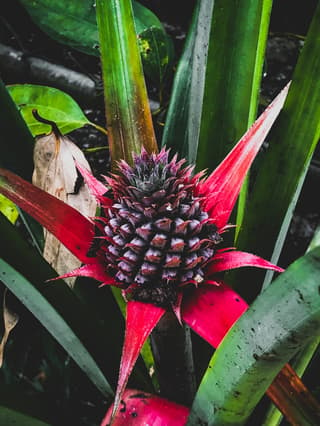
Red Pineapple
Ananas bracteatus
Ananas bracteatus, commonly known as the Red Pineapple, is an ornamental terrestrial bromeliad native to Brazil, Paraguay, Uruguay and northern Argentina. It forms a dense rosette of stiff, arching, spine-edged leaves and produces a compact, upright fruit surrounded by vivid red-orange bracts, which is more decorative than sweet. Grown outdoors in warm climates or as a striking container specimen elsewhere, it is prized for its bold silhouette and long-lasting color.
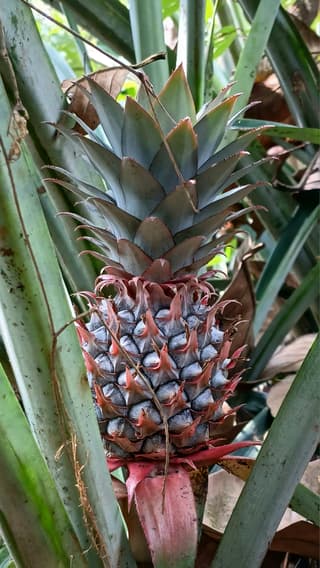
Pineapple
Ananas comosus
Ananas comosus, popularly known as the pineapple, is a perennial tropical plant in the bromeliad family. It is characterized by a rosette of stiff, spiny, sword-shaped leaves, from which a central stalk emerges to produce the inflorescence and, subsequently, the composite fruit. It is a CAM plant, meaning it releases oxygen at night, making it excellent for indoor environments.
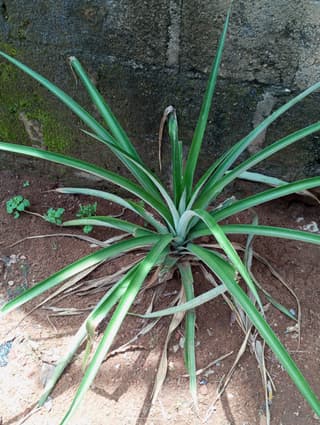
Dwarf Pineapple
Ananas nanus
Ananas nanus, commonly known as dwarf pineapple, is a terrestrial bromeliad native to Brazil, grown mainly as a compact ornamental plant. It forms a tight rosette of stiff, serrated leaves and produces a small inflorescence followed by a tiny, tart, low-pulp fruit typically used as a decorative accent in pots and arrangements.

Poppy Anemone
Anemone coronaria
Anemone coronaria, the poppy anemone or Spanish marigold, is a tuberous perennial in the buttercup family (Ranunculaceae), native to the Mediterranean basin from southern Europe to the Middle East. Each knobby, dormant tuber sends up finely divided, fern-like foliage followed by a single, poppy-shaped bloom on a slender stem -- typically red, white, blue, purple or pink, with a striking dark, almost black center. Widely grown both as a garden bedding plant and as a florist's cut flower, it flowers profusely in spring and, in mild climates, again in autumn, then dies back to its tuber to rest through the hottest or coldest months. It is easy to grow from soaked tubers but does carry mild toxicity, so it is best kept away from pets and curious children.
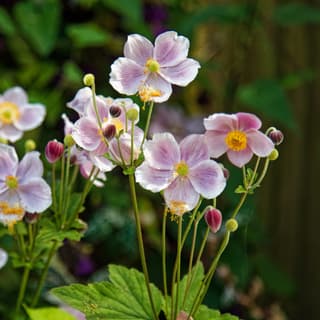
Japanese Anemone
Anemone hupehensis
Japanese Anemone (Anemone hupehensis) is a perennial ornamental plant belonging to the buttercup family (Ranunculaceae), native to the Hubei province of Central China. It forms a dense rosette of dark green leaves, from which 5-7-petaled flowers emerge from August to October, in shades of pink, white, or purple with yellow centers. The plant spreads slowly via its underground rhizomes and is excellent for perennial beds, bringing color to the late summer and autumn landscape. All parts of the plant contain protoanemonin, which is mildly toxic to both humans and pets.
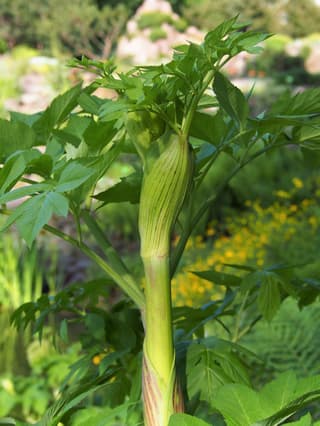
Angelica
Angelica
Angelica is a genus of approximately 90 species of aromatic herbs in the family Apiaceae, native to the temperate regions of the Northern Hemisphere. These biennial or short-lived perennial plants can grow up to 2.4 m (8 ft) tall, producing large umbrella-like flower clusters (umbels) in white, green, yellow, purple, or pink during summer. Prized for centuries for both medicinal and culinary applications, angelica has a distinctive musky, licorice-like aroma and flavour.
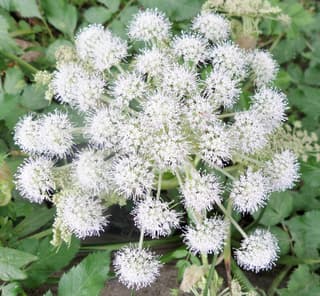
Wild Angelica
Angelica sylvestris
Wild Angelica (Angelica sylvestris) is a biennial or short-lived perennial herb in the family Apiaceae, native to Europe and temperate Asia. It thrives in moist, shaded environments such as riverbanks, woodland margins, and damp meadows, growing up to 2 metres tall. Its white to pale pink flowers, arranged in large compound umbels, are a magnet for bees, hoverflies, and butterflies. The plant has a long history of medicinal use across Europe, valued for its digestive, diuretic, and expectorant properties.
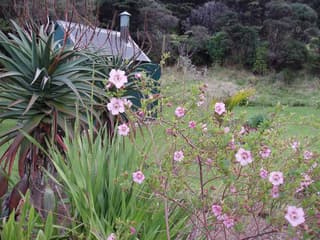
Cape Mallow
Anisodontea capensis
Anisodontea capensis, known as Cape mallow or false mallow, is an evergreen shrub native to South Africa and a member of the Malvaceae family. The plant is characterized by its gray-green, deeply lobed leaves and delicate, hibiscus-like flowers that bloom from spring to fall in shades ranging from pink to dark reddish-purple. Growing 24-40 inches (60-100 cm) tall, it is an elegant ornamental plant for balconies and gardens.
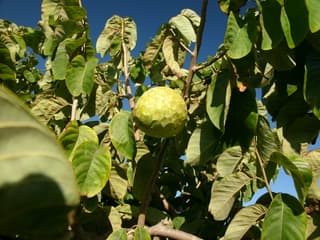
Cherimoya
Annona cherimola
The cherimoya (Annona cherimola) is a subtropical fruit tree native to the Andean valleys of Peru, Bolivia, and Ecuador, where it has been cultivated for over 2,000 years. It reaches between 7 and 9 meters in height with a spreading canopy and deciduous foliage of large, velvety leaves. Its flowers, greenish-yellow with purple spots, are fragrant and hermaphroditic. The fruit is the tree's true treasure: heart-shaped, with green skin and creamy white pulp with a sweet and exotic flavor, described as a blend of pineapple, mango, and strawberry. Mark Twain called it 'the most delicious fruit known to men'.
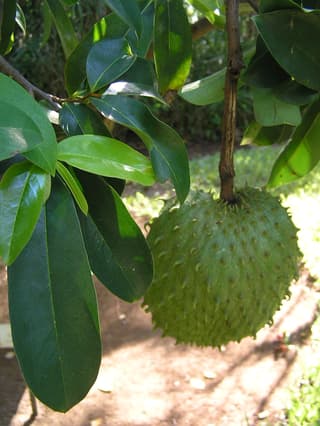
Soursop
Annona muricata
Annona muricata, popularly known as soursop, is a small to medium-sized evergreen tree native to the tropical regions of the Americas and the Caribbean. It produces large, green fruits with soft spines, whose white pulp is widely appreciated for its sweet-and-sour flavor and creamy texture. In addition to its fruits, the plant is valued for its traditional medicinal properties, although its seeds contain neurotoxic compounds that require caution.
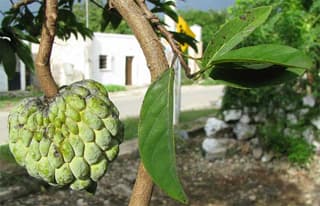
Sugar-apple
Annona squamosa
Annona squamosa, commonly known as sugar-apple or sweetsop, is a small tropical fruit tree. Its fruits are famous for their sweet, creamy white pulp, protected by a green skin composed of protruding scales. It is a plant that thrives in heat and humidity, losing its leaves during periods of drought or intense cold.
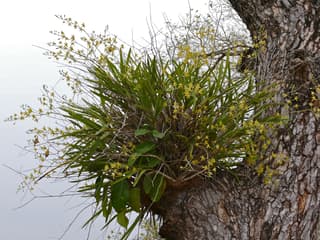
Leopard Orchid
Ansellia africana
Ansellia africana, the leopard orchid, is a large epiphytic orchid native to tropical and southern Africa, where it grows in the forks of tall trees along rivers and coastlines. It forms dense clumps of cane-like pseudobulbs topped with leathery, lance-shaped leaves, and produces branching sprays of yellow flowers boldly marked with brown spots reminiscent of a leopard's coat.
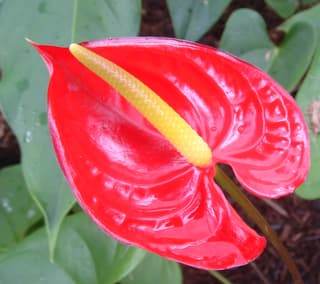
Anthurium / Flamingo Flower (genus)
Anthurium
Anthurium is a large genus of tropical plants in the family Araceae, comprising over 1,000 species native mainly to Central and South America. Renowned for their striking inflorescences with colorful spathes and spadices, anthuriums are popular ornamental houseplants worldwide.
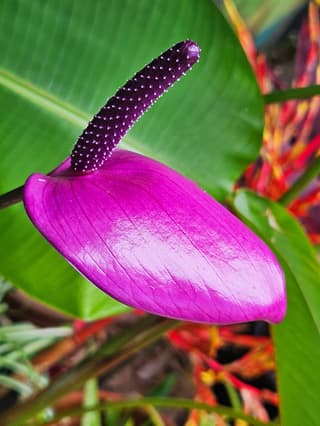
Tulip Anthurium
Anthurium amnicola
Anthurium amnicola, commonly called the tulip anthurium, is a compact epiphytic aroid native to the wet montane forests of Panama and parts of northern South America. It is prized for its tulip-shaped white spathes with contrasting yellow spadices, produced repeatedly through the year on a low, clumping plant that rarely exceeds 30 cm in height.
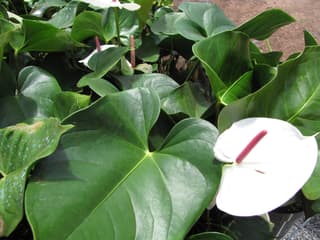
Flamingo Flower
Anthurium andraeanum
Anthurium andraeanum is a tropical plant native to the rainforests of Colombia and Ecuador. It is famous for its glossy heart-shaped spathes that come in vibrant colors like red, pink, white, and orange. Its leaves are large, shiny, and dark green. It is one of the most popular houseplants due to its nearly continuous flowering throughout the year.
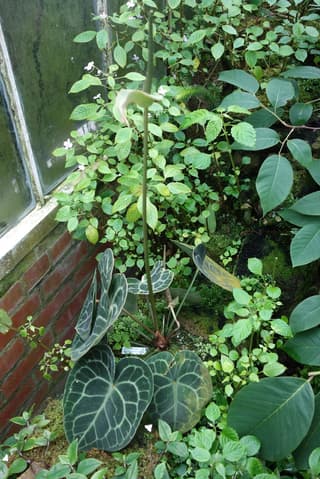
Velvet Cardboard Anthurium
Anthurium clarinervium
Anthurium clarinervium, known as the velvet cardboard anthurium, is a striking aroid native to the karstic rainforests of Chiapas, Mexico. Its thick, heart-shaped leaves have a matte, velvety texture in deep green, crossed by a network of bold silvery-white veins that make it one of the most sought-after ornamental anthuriums among collectors.
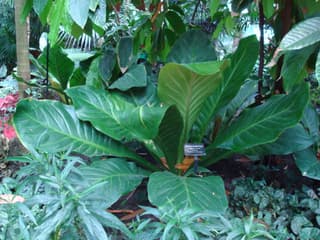
Bird's Nest Anthurium
Anthurium hookeri
Anthurium hookeri, commonly known as the Bird's Nest Anthurium, is a striking tropical plant in the Araceae family, native to the Caribbean islands and northern South America. Its broad, glossy dark-green leaves grow in a rosette arrangement resembling a bird's nest, making it a prized ornamental houseplant and garden specimen.
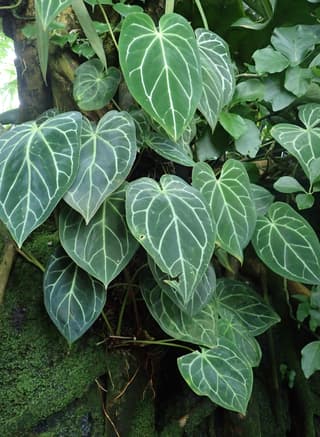
Magnificent Anthurium
Anthurium magnificum
The Magnificent Anthurium (Anthurium magnificum) is a terrestrial aroid native to humid tropical forest at low to intermediate elevations on the western slopes of the Colombian Andes. It is grown chiefly for its foliage: large, heart-shaped, deep green leaves with a velvety texture and striking silvery-white venation. Its quadrangular (four-sided) petioles help distinguish it from closely related species such as Anthurium crystallinum. It is a highly sought-after species among aroid collectors and a popular parent for velvet-leaf hybrids.
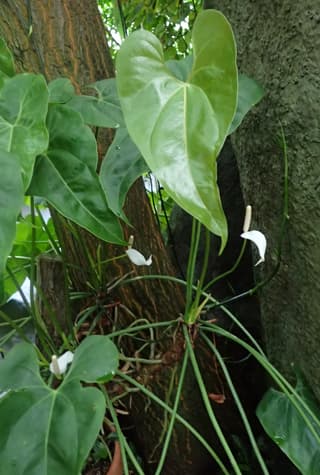
Water-Lily Anthurium
Anthurium nymphaeifolium
Anthurium nymphaeifolium is a rare and striking species native to northern South America, particularly Venezuela and Colombia. It produces large, peltate (shield-shaped) leaves arranged in an impressive rosette, resembling the leaves of water lilies (Nymphaea). This tropical foliage plant is highly prized by collectors for its exotic, architectural appearance.
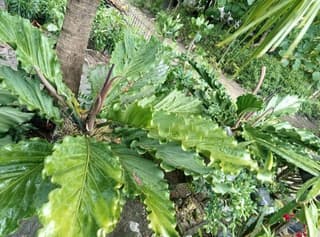
Wave of Love Anthurium
Anthurium plowmanii
The Wave of Love Anthurium (Anthurium plowmanii) is an epiphytic aroid native to the tropical rainforests of South America, including Ecuador, Peru, Bolivia and Brazil. It is prized for its large, leathery, wavy-edged leaves that grow in a rosette resembling a bird's nest. It is grown mainly for its dramatic foliage and rarely flowers indoors.
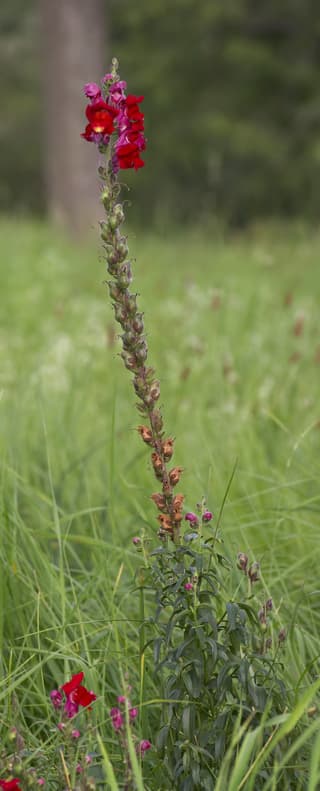
Snapdragon
Antirrhinum majus
The Snapdragon is a classic herbaceous garden plant, famous for its vertical flower spikes that open like a jaw when pressed on the sides. Native to the Mediterranean region, it is prized for its wide range of colors and for attracting pollinators such as bees and bumblebees. Although technically a short-lived perennial, it is frequently grown as an annual in cooler or temperate climates.
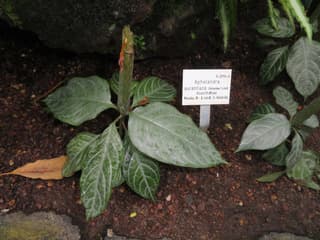
Fiery spike
Aphelandra aurantiaca
A tropical evergreen shrub in the Acanthaceae family, native to a range spanning Mexico to Brazil and Bolivia, growing in partial shade along riverbanks, forest edges and paths between 100 and 1800 m elevation. Reaches 50 cm to 1 m tall, with large opposite leaves (10-30 cm) marked by prominent veining. Produces showy terminal spikes of orange-red bracts with yellow flowers, attractive to hummingbirds.
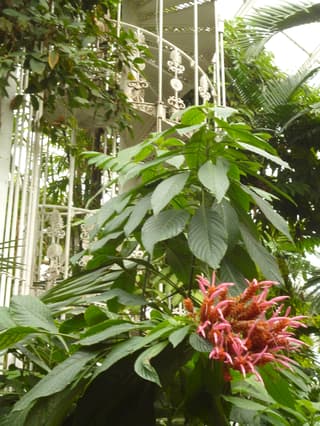
Coral Aphelandra
Aphelandra sinclairiana
Aphelandra sinclairiana, commonly known as Coral Aphelandra or Panama Queen, is a tropical evergreen shrub native to Central America, particularly Panama and Costa Rica. It can grow up to 3 meters tall and is celebrated for its spectacular coral-orange flower spikes with brilliantly colored bracts that remain decorative for weeks. The large, opposite, deep-green leaves with prominent white veins make it a striking ornamental plant for both indoor spaces and tropical gardens.
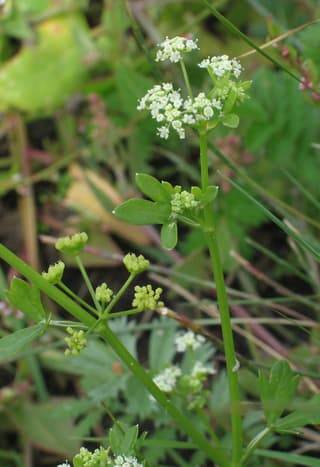
Celery
Apium graveolens
Celery (Apium graveolens) is a biennial plant in the Apiaceae family, cultivated for over 3,000 years as both a food crop and medicinal herb. Native to temperate regions of Europe, Asia, and North Africa, it is widely grown in vegetable gardens for its crisp stalks, aromatic leaves, and flavorful seeds.

Apoballis
Apoballis acuminatissima
Apoballis acuminatissima is a striking tropical perennial native to the rainforests of Sumatra. It is highly prized for its ornamental foliage, which features elongated, lance-shaped leaves decorated with intricate silver-green mottling and patterns. As an understory plant, it has adapted to lower light conditions but requires high humidity to maintain its lush appearance. It was formerly classified under the genus Schismatoglottis.
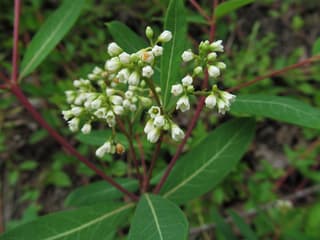
Indian Hemp
Apocynum cannabinum
Apocynum cannabinum, commonly known as Indian Hemp or Hemp Dogbane, is a native North American perennial herb in the Apocynaceae family. Despite its common name, it is not related to Cannabis — the name derives from the historical use of its strong bast fibers as cordage by Native Americans. The plant produces clusters of small white bell-shaped flowers in summer and spreads aggressively via rhizomes. CRITICAL WARNING: All parts of this plant contain potent cardiac glycosides that can cause fatal cardiac arrhythmias. It is highly toxic to humans, dogs, cats, horses, and livestock.
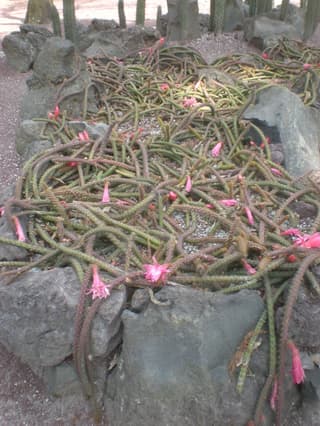
Rat Tail Cactus
Aporocactus flagelliformis
Aporocactus flagelliformis, commonly known as the rat tail cactus, is an epiphytic succulent native to Mexico (Hidalgo, Puebla, and Veracruz states). Its long, cylindrical, trailing stems, covered in fine brown spines, can reach up to 150 cm in length, making it ideal for hanging baskets. In spring, it produces vibrant tubular flowers in shades of pink, red, and crimson, which last only a few days but are exceptionally beautiful.
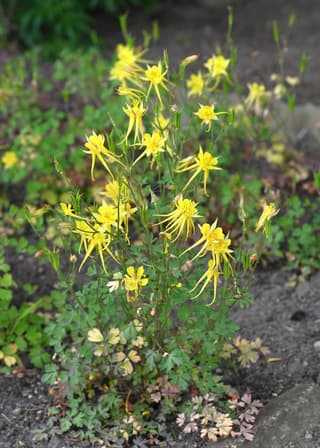
golden columbine
Aquilegia chrysantha
Aquilegia chrysantha, commonly known as the golden columbine, is a herbaceous perennial native to the Southwestern United States and Northern Mexico. It is celebrated for its large, canary-yellow flowers that feature exceptionally long, outward-curving spurs. The plant produces delicate, fern-like, blue-green foliage that remains attractive throughout the growing season. It is a favorite for pollinators, particularly hummingbirds and hawkmoths, which are attracted to its nectar-rich blooms.
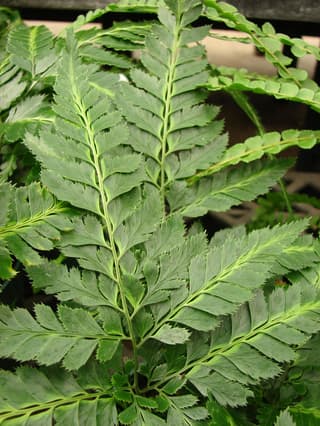
East Indian holly fern
Arachniodes simplicior
Arachniodes simplicior, commonly known as the East Indian holly fern or variegated shield fern, is a perennial fern native to China, Japan, Korea, and Vietnam. Its leathery, glossy fronds of deep dark green feature a striking yellowish-green or lime central stripe, giving it an almost waxy appearance that adds an exotic touch to shaded indoor and outdoor spaces. It forms compact, slow-growing clumps that rarely exceed 24 inches in height.
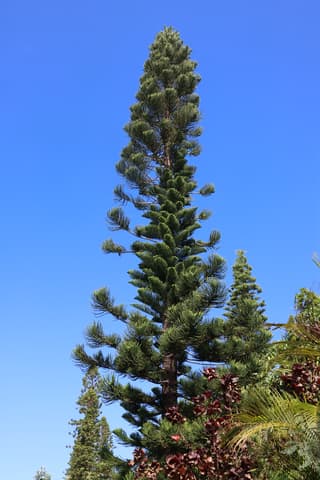
Cook Pine
Araucaria columnaris
The Cook Pine (Araucaria columnaris) is a majestic conifer native to New Caledonia, renowned for its distinctive columnar silhouette and a fascinating biological quirk: its trunk tilts toward the equator, regardless of which hemisphere it grows in. A slow-growing tree that can reach 60 meters in the wild, it typically stays 15-20 meters in cultivation. Widely used as an ornamental tree in coastal and subtropical gardens.
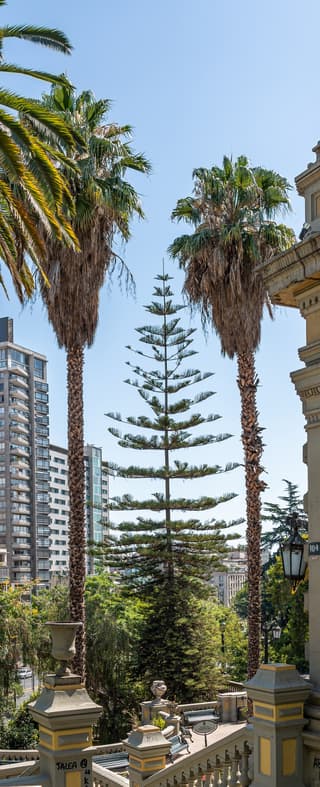
Norfolk Island Pine
Araucaria heterophylla
The Norfolk Island Pine (Araucaria heterophylla) is a slow-growing evergreen conifer endemic to Norfolk Island in the South Pacific. Renowned for its symmetrical, tiered horizontal branches and star-like silhouette, it is widely cultivated as an ornamental houseplant and outdoor landscape tree. In its native habitat it can reach over 60 meters tall, but indoors typically stays under 2 meters.
Medium Care Easy Care
Our selection of 1160 medium easy care combines the characteristics of this category with moderate care needs. Ideal for those with basic experience.
Why Choose Medium Easy Care?
Combining the beauty of easy care with medium difficulty level lets you enjoy this category with a balanced care commitment. Each plant was selected to offer the best characteristics of the category at the care level you are looking for.