1158 Medium Plants | 2026 Guide - Page 6
Discover 1158 medium plants for your garden. Complete care guide.
1158 Medium Plants
Showing 181-216 of 1158

Angels Trumpet
Brugmansia suaveolens
Angels Trumpet (Brugmansia suaveolens) is a woody shrub native to Brazil, prized for its large, pendulous, trumpet-shaped flowers that can reach up to 30 cm long. The white, pink, or yellow blooms release an intensely sweet fragrance, especially at night, attracting pollinating moths. Despite its striking beauty, every part of the plant contains highly toxic tropane alkaloids, requiring extreme caution around children and pets.
Snowrose
Buchozia japonica
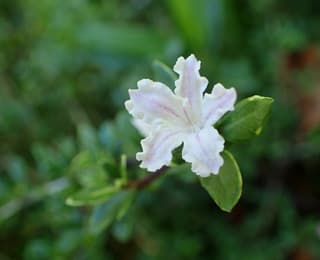
Buchozia japonica is currently recognized by Plants of the World Online (Kew) as a synonym for Serissa japonica, an evergreen or semi-evergreen shrub in the Rubiaceae family, native to the subtropical regions of East Asia (China, Japan, India). Typically growing 24-48 inches tall, it features small, oval, dark green, leathery leaves that emit an unpleasant odor when crushed, which led to its former name Serissa foetida. It produces a nearly continuous bloom from spring to autumn, featuring small white funnel-shaped flowers (sometimes double or pink-veined) preceded by pinkish buds. It is one of the most popular species for bonsai in Europe and North America, also known as the 'Tree of a Thousand Stars' or 'Snowrose'.

Sagewood
Buddleja salviifolia
Buddleja salviifolia, commonly known as Sagewood or South African Sagewood, is a fast-growing semi-evergreen shrub native to southern and eastern Africa. In spring it produces narrow panicles of small, highly fragrant flowers ranging from white and cream to lilac and pale mauve, with a distinctive orange throat. Highly valued for attracting butterflies, bees and birds, it is an excellent choice for wildlife gardens. Its hard, heavy wood has traditionally been used in Africa for assegais and fishing rods.
Pale Umbrella Orchid
Bulbophyllum longiflorum
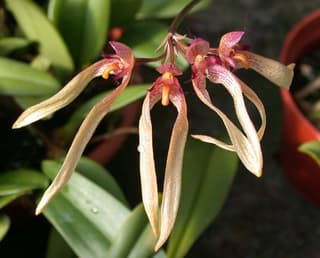
The Pale Umbrella Orchid (Bulbophyllum longiflorum) is a widespread epiphytic or lithophytic orchid native to rainforests and hill forests across Africa, Madagascar, the Mascarenes, Seychelles, Southeast Asia, New Guinea, New Caledonia, Fiji and northern Australia. It grows from a creeping rhizome bearing widely-spaced, dark green pseudobulbs, each topped with a single fleshy leaf. Its most striking feature is the umbrella-like flower cluster: a semicircular umbel of small, greenish cream to yellowish blooms speckled with purple, held on an arching stem above the foliage.
Peanut Butter Fruit Tree
Bunchosia argentea
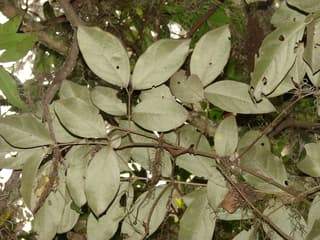
Bunchosia argentea, commonly known as the Peanut Butter Fruit Tree, is a small tropical tree or large shrub in the family Malpighiaceae, native to the tropical forests of South America — including Venezuela, Colombia, Peru, Brazil, Guyana, and Suriname. It produces small oval fruits that ripen from orange to deep red, with a dense, sweet pulp that has a remarkable peanut butter-like flavor and texture. It is valued both as an ornamental plant and for its unique edible fruit.
Bursera
Bursera
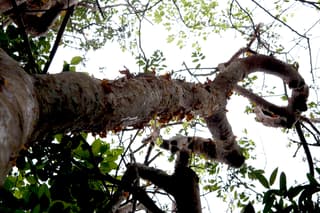
Bursera is a genus of about 100 species of trees and shrubs in the family Burseraceae, native to tropical and subtropical regions of the Americas, from Mexico to Argentina. They are known for their thin, papery, peeling bark and aromatic resin (copal), used for centuries in incense and purification rituals. Representative species include Bursera simaruba (gumbo-limbo) and Bursera graveolens (palo santo).
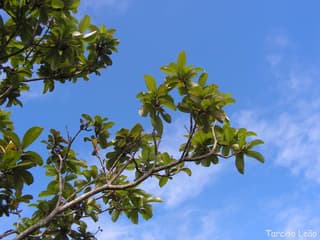
Murici
Byrsonima verbascifolia
The murici (Byrsonima verbascifolia) is a small shrub or tree, ranging from 1 to 6 meters in height, native to the Cerrado, Pantanal, Caatinga, and open areas of the Amazon and Atlantic Forest, also occurring in Bolivia, Colombia, Venezuela, the Guianas, and Trinidad. It is characterized by opposite, oval leaves densely covered in fine hairs (tomentum), a twisted trunk 15 to 25 cm in diameter, and yellow flowers that turn reddish over time, gathered in small nectar-rich clusters. It blooms from July to November and bears fruit from October to December, producing small yellow globose fruits with sweet and acidic pulp, highly prized by birds, mammals, and the local population. It is an extremely fire-resistant species adapted to sandy, poor, and acidic soils typical of the Cerrado, surviving long periods of drought once established.
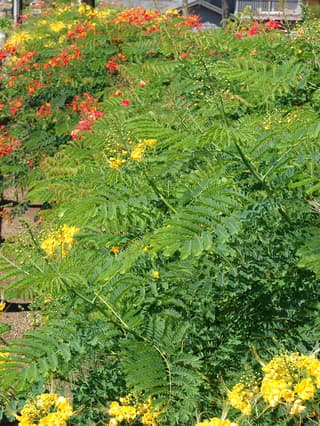
Pride of Barbados
Caesalpinia pulcherrima
The Pride of Barbados (Caesalpinia pulcherrima) is a perennial shrub or small tree native to the American tropics and subtropics, widely cultivated in tropical gardens for its showy blooms. Its leaves are bipinnate with numerous oval leaflets, and the branches feature thorns. The flowers appear in racemes, with orange or red petals and long stamens, attracting hummingbirds and butterflies. It is the national flower of Barbados.
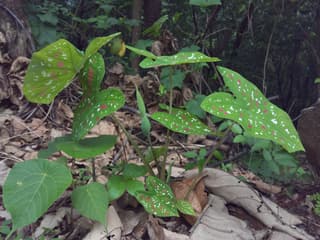
Angel Wings
Caladium bicolor
Caladium bicolor is a tropical tuberous plant native to South America, prized for its large, heart-shaped leaves in striking combinations of red, pink, white, and green. A deciduous perennial that goes dormant in winter, it is one of the most popular foliage plants for adding color to shaded gardens and indoor spaces.
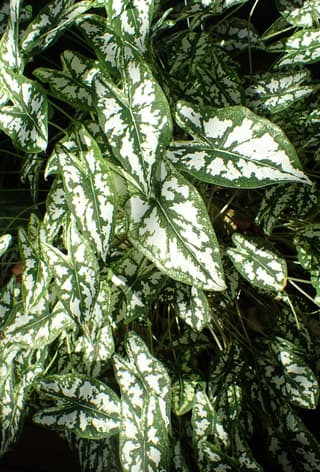
Miniature caladium
Caladium humboldtii
Caladium humboldtii, known as the miniature caladium, is a compact tropical aroid native to South America. Its small green leaves are adorned with striking white spots and veins, making it a prized specimen for terrariums, desktops, and humid indoor spaces.
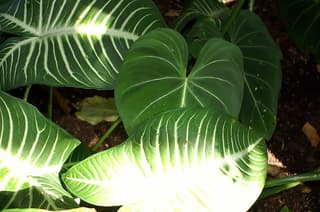
White-veined Caladium
Caladium lindenii
Caladium lindenii, commonly known as White-veined Caladium or Linden's Caladium, is a spectacular tropical foliage plant native to Colombia and Venezuela. A member of the Araceae family, it is celebrated for its dramatic heart-shaped leaves adorned with striking white veins against a deep green background. This deciduous species goes dormant in winter and reemerges in spring with lush, ornamental foliage, making it a prized specimen for indoor plant enthusiasts.
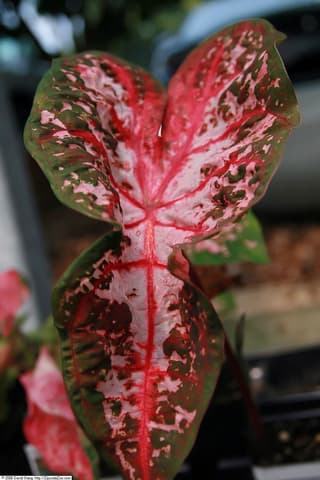
Fancy-leaf Caladium
Caladium x hortulanum
Fancy-leaf Caladium (Caladium x hortulanum) is a tropical foliage plant prized for its stunning, paper-thin leaves in combinations of red, pink, white, and green. Native to tropical South and Central America, it is widely grown as an ornamental houseplant and shade garden specimen.
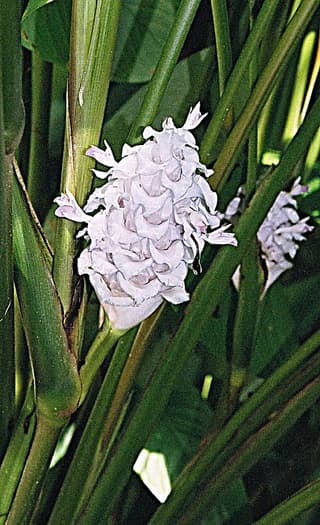
Fishbone Prayer Plant
Calathea burle-marxii
Native to the tropical forests of Brazil, the Fishbone Prayer Plant (Calathea burle-marxii, syn. Goeppertia burle-marxii) is a low, compact foliage plant in the Marantaceae family, prized for the silvery fishbone pattern on its gray-green leaves and their reddish undersides. Like other prayer plants, its leaves fold upward at night and open again during the day, following the light cycle.
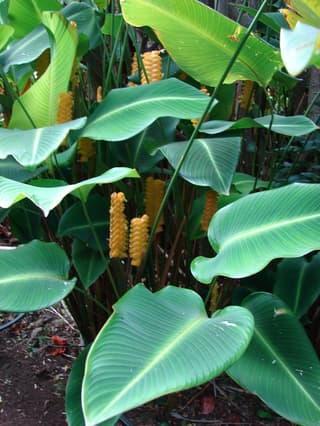
Yellow Rattleshaker
Calathea crotalifera
Calathea crotalifera, commonly known as the yellow rattleshaker, is a rhizomatous perennial herb in the family Marantaceae, native to the humid tropical forests of Central America and northern South America. It is grown for its large, glossy green foliage and its yellow, spike-shaped inflorescences that resemble the tail of a rattlesnake.
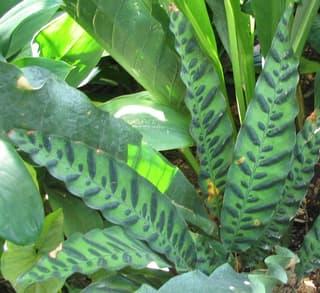
Rattlesnake Plant
Calathea lancifolia
The Calathea lancifolia, commonly known as the Rattlesnake Plant, is a tropical plant native to the rainforests of Brazil. Its elongated leaves display a dark green pattern with lighter green spots resembling rattlesnake markings, with a reddish-purple underside. Part of the Marantaceae family, it is known for its nyctinastic leaf movement, where leaves fold up at night like hands in prayer.
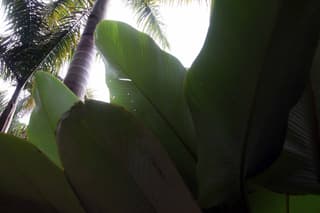
Cigar Plant
Calathea lutea
Calathea lutea, commonly known as the Cigar Plant or Cuban Cigar Calathea, is a large Neotropical Marantaceae native to tropical Americas. It is one of the tallest calatheas, with broad paddle-shaped leaves that can reach up to 1 meter long, featuring a distinctive waxy, pruinose silver-grey underside. It is widely used in tropical landscaping and traditionally used to wrap cigars in some regions.
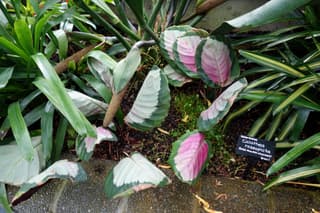
Rose Painted Calathea
Calathea roseopicta
Calathea roseopicta is a perennial rhizomatous herb native to the tropical rainforests of Brazil and South America. Part of the Marantaceae family, it is admired for its oval dark green leaves with pink and silvery-green markings, plus a purple underside. Known as a "prayer plant" because its leaves fold up at night like hands in prayer.
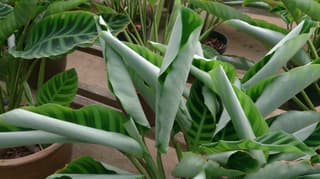
Zebra Plant
Calathea zebrina
Calathea zebrina is a tropical plant native to Brazil, belonging to the Marantaceae family. Its velvety leaves feature light green zebra-like stripes over a dark green background, with reddish-purple undersides. Known for its nyctinastic movement, the leaves fold upward at dusk as if praying.
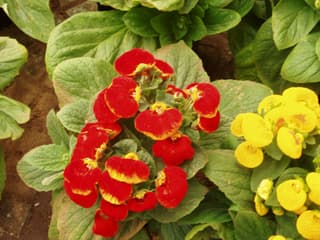
Pocketbook Plant
Calceolaria x herbeohybrida
The Pocketbook Plant (Calceolaria x herbeohybrida) is a hybrid ornamental native to the Andean regions of South America. It captivates with its extraordinary blooms — pouch-shaped flowers in shades of yellow, orange, red, pink, and bicolor. Grown as a houseplant or cool-season annual, it thrives indoors in bright indirect light and cool temperatures.
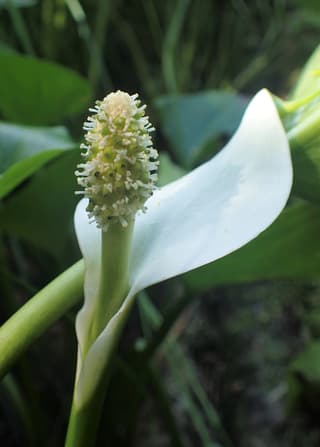
Bog Arum
Calla palustris
Calla palustris, commonly known as Bog Arum or Wild Calla, is an aquatic perennial in the Araceae family. Native to the northern temperate zones of Eurasia and North America, it grows at the margins of lakes, bogs, and wetlands. It produces an elegant white spathe in spring-summer. The entire plant contains calcium oxalate crystals and is toxic if ingested.
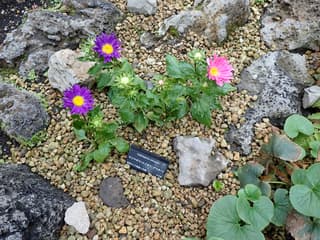
China Aster
Callistephus chinensis
China Aster (Callistephus chinensis) is a stunning annual flowering plant native to China, beloved for its vibrant, daisy-like blooms in shades of white, pink, red, blue, violet, and purple. A member of the Asteraceae family, it blooms from late summer through fall, making it a favorite for cut flower gardens and seasonal borders.
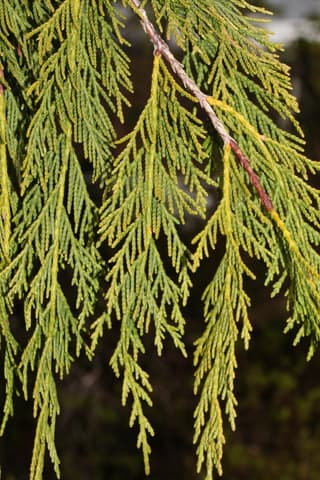
Nootka Cypress
Callitropsis nootkatensis
Nootka Cypress is a slow-to-medium growing evergreen conifer native to the cool, wet coastal forests of the Pacific Northwest, from Alaska down to northern California. It has a graceful, often weeping habit with drooping branchlets of gray-green, scale-like foliage, and matures over decades into a tall, narrow tree prized for its durable, aromatic wood. In gardens it is grown as a specimen or hedging conifer rather than a houseplant, doing best in cool, humid climates with consistently moist but well-drained soil.
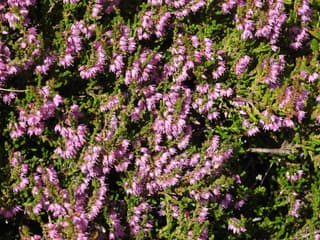
Common Heather
Calluna vulgaris
Calluna vulgaris, commonly known as common heather or ling, is a low-growing evergreen shrub native to Europe, western Asia, and parts of North Africa. It is the sole species in the genus Calluna and a defining plant of moorland and heathland ecosystems. Its tiny, scale-like leaves densely cover wiry stems, and from late summer into autumn it produces masses of small bell-shaped flowers in shades of purple, pink, and white that attract bees and other pollinators. Hardy and adaptable to poor, acidic soils, heather is prized in gardens for year-round foliage color and its ability to thrive where little else will grow.
Small Stagshorn
Calocera cornea
Calocera cornea is a saprophytic jelly fungus that grows in clusters on decaying hardwood from broadleaf trees. Its fruiting bodies are small, bright yellow or orange, with a cylindrical or horn-like shape that tapers to a point. Unlike other similar fungi, its texture is firm and elastic when hydrated, becoming hard and brittle upon drying. It is a fascinating species for bioactive terrariums that mimic a temperate forest floor.
Purple-spored puffball
Calvatia cyathiformis
Calvatia cyathiformis, commonly known as the purple-spored puffball or cup-shaped puffball, is a saprobic fungus characterized by its globose fruiting body that becomes cup-shaped as it matures. Its flesh is white and firm when young, turning into a dark purple spore mass as it ages.

Capirona
Calycophyllum spruceanum
Capirona (Calycophyllum spruceanum) is a majestic Amazonian canopy tree belonging to the Rubiaceae family. Its most remarkable feature is its smooth, highly polished green-yellow bark that naturally sheds once or twice a year, exposing a fresh, gleaming surface underneath. This unique phenomenon protects the tree from lichens, fungi, epiphytes, and climbing vines, making it exceptionally resistant to pests and diseases. The dense, high-quality timber is prized for construction and woodworking, while the bark and leaves have recognized medicinal properties in traditional Amazonian medicine.
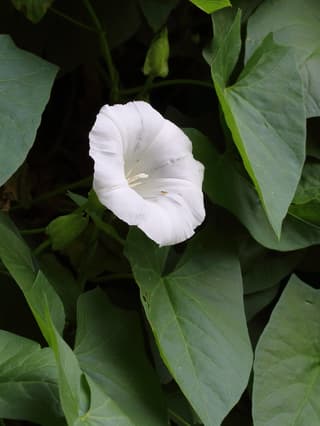
Hedge Bindweed
Calystegia sepium
Calystegia sepium, commonly known as hedge bindweed, is a vigorous perennial climber in the Convolvulaceae family. It grows rapidly by twining around fences, hedges, and other plants, reaching up to 3 meters in length. It produces white to pink trumpet-shaped flowers during the summer, similar to morning glories. It is considered invasive in many temperate regions.
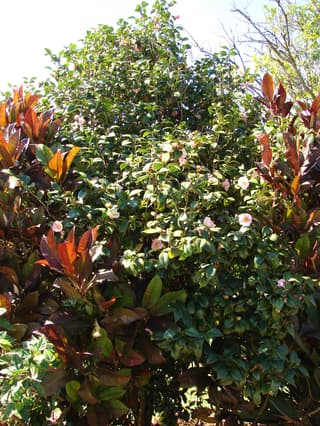
Japanese Camellia
Camellia japonica
Camellia japonica, commonly known as the Japanese camellia or common camellia, is an evergreen shrub or small tree native to China, Japan, and Korea. It is celebrated for its stunning, showy flowers in shades of red, pink, and white that bloom from late winter to early spring, brightening gardens when little else is flowering. Its glossy, dark green leathery leaves provide year-round ornamental interest.
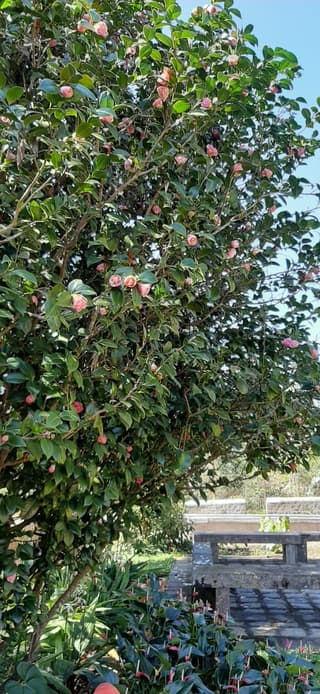
Sasanqua Camellia
Camellia sasanqua
Camellia sasanqua is an evergreen ornamental shrub native to Japan, belonging to the Theaceae family. Unlike many flowering shrubs, it blooms in fall through early winter — a season when most garden plants lie dormant — producing fragrant single or semi-double flowers in shades of white, pink, red, and cream. Mature plants reach 6 to 14 feet tall with a spread of 6 to 10 feet, bearing glossy, dark green leaves year-round. Compared to Camellia japonica, the sasanqua is more sun-tolerant, faster-growing, and more adaptable to a variety of landscape uses including hedges, screens, espaliers, foundation plantings, and container gardens. With minimal care once established, it can live for 50 to over 100 years.

Tea Plant
Camellia sinensis
Camellia sinensis is the evergreen shrub whose young leaves and buds are processed into green, black, white and oolong tea. It has glossy, leathery, dark green leaves with finely toothed edges and produces fragrant, nodding white flowers with golden stamens in autumn and winter. Slow-growing and long-lived, it is usually kept as a compact bush in gardens and containers.

Canterbury Bells
Campanula medium
Canterbury Bells is an ornamental biennial native to Southern Europe, in the family Campanulaceae. It forms a low rosette of leaves in its first year, then sends up tall flowering stems in its second year bearing large, bell- or cup-shaped blooms in shades of blue, violet, pink and white from spring into summer.
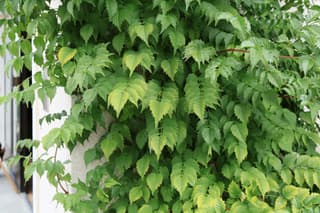
Trumpet Vine
Campsis × tagliabuana
Campsis × tagliabuana is a vigorous, deciduous flowering vine born from a cross between Campsis radicans and Campsis grandiflora, first bred in Italy by the Tagliabue brothers. It climbs by aerial rootlets and produces large clusters of trumpet-shaped, salmon-to-orange-red flowers from midsummer through late summer, making it a favorite for covering pergolas, fences, and walls while attracting hummingbirds and pollinators.
Pale Brittlestem
Candolleomyces candolleanus
Candolleomyces candolleanus, commonly known as the Pale Brittlestem, is a saprobic fungus frequently found in lawns, gardens, and woodlands. It features a fragile, honey-colored to white cap that flattens with age, often with veil remnants at the margin. As a mushroom, it plays a vital role in breaking down organic matter like wood chips and dead roots.
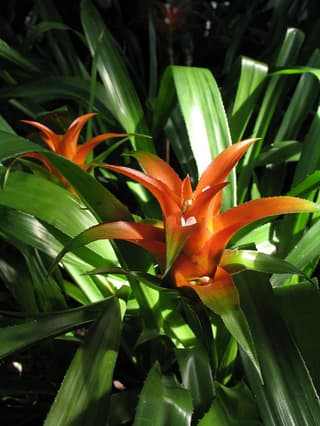
Billberg's Nidularium
Canistropsis billbergioides
Canistropsis billbergioides is a bromeliad endemic to Brazil's Atlantic Forest, celebrated for its long-lasting, colorful inflorescences that remain vibrant for 3–4 months. It forms a compact basket-shaped rosette with dark green, serrated leaves and occurs in at least 9 distinct color forms including yellow, orange, pink, red, and purple.
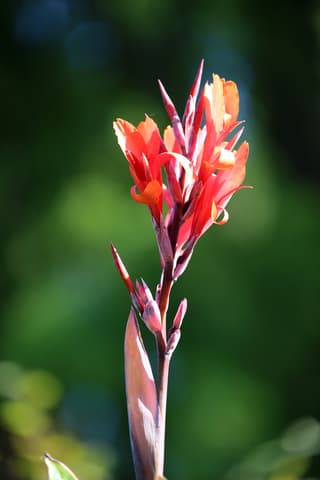
Canna lily
Canna × hybrida
Canna × hybrida, commonly known as the Canna lily, is a spectacular perennial ornamental plant with a tropical feel, popular for its large, paddle-shaped leaves reminiscent of banana plants and its vibrant, exotic flowers. This hybrid group is extremely diverse: flowers can be red, orange, yellow, pink, or white, often with spotted or bicolor patterns, while the foliage ranges from green and burgundy to variegated stripes. A rhizomatous, fast-spreading plant, it grows 240–240 cm (2–8 feet) tall and blooms from summer to fall. It requires a sunny, warm location and nutrient-rich, well-draining soil; its cold hardiness is limited (down to USDA zones 7–10), so in colder climates, the rhizomes must be lifted for winter.
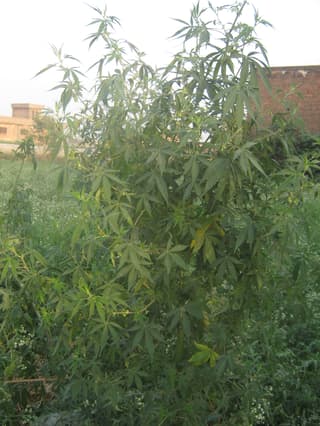
Indica Cannabis
Cannabis indica
Cannabis indica is a broad-leaf annual subspecies native to the Hindu Kush mountain range of Afghanistan and Pakistan. It is distinguished by its compact stature, wide dark-green leaflets, and dense resin production. Adapted to cold, dry high-altitude climates, it completes its flowering cycle faster than Cannabis sativa. It has been used for millennia in South Asian cultural and medicinal traditions. Cultivation, possession, and use are regulated in most jurisdictions worldwide and illegal in many countries — laws vary significantly by location. This entry is strictly a botanical reference, not a cultivation guide.
What are Medium Plants?
Medium Plants require a bit more attention and basic gardening knowledge. These plants thrive with regular care and some cultivation experience. Ideal for those who already master the basics.
Tips for Growing Medium Plants
medium plants need a balance between attention and freedom. Keep a regular care routine, watch leaves to identify problems early, and adjust watering by season.